Home Blog Page 992

MAL applauds CoL quick action to retrieve land for Biosecurity work

Biosecurity officer, Jack Susulu read the notice of resumption pinned up at the main access gate that Excellent Resources Management Limited heavy machineries and vehicles use to enter through the Biosecurity land

Quick action by the Commissioner of Lands (CoL) Mr Alan Mcneil to take back the land at Ranadi sold by Honiara City Council (HCC) to Excellent Resources Management Limited, an Asian Company, for Biosecurity work is highly commended.

This followed a request by the Ministry of Agriculture and Livestock (MAL) to resume the land for biosecurity waste disposal.

MAL expressed the gratitude after a Notice of Resumption was served by CoL to the new owner, Excellent Resources Management Ltd this week (Tuesday, March 16).

The Notice of Resumption dated March 16, 2021 and addressed to Excellent Resources Management Ltd reads:

“Dear Mr Lam,

“I refer to Grant of Fixed Term Estate (“FTE”) over Parcel 192-010-033 (“the Grant”) dated 26 September 1986 to Honiara City Council. This FTE was subsequently transferred to your company.

“In accordance with Clause 3 of the Grant, the Grantor (Commissioner of Lands) has the right, on giving one month’s notice in writing to the Grantee, to take back such portion of the land that may be needed for roads or other public purposes. Since the FTE has been transferred to you, this right of resumption can be exercised over your FTE.

“The whole of Parcel 191-010-033 is required for the purpose of biosecurity quarantine incinerator. As such, I am hereby giving you one month’s notice that the FTE over this parcel is to be resumed for this public purpose. You are required to do all things necessary to allow the Grantor to take back possession of this land.

“Compensation will only be paid for actual loss sustained in respect of improved land, otherwise compensation is not payable if the land has not been developed.

“Thank you for your cooperation in this regard,” end of notice of resumption.

The issue of the sale made headlines in the media last week with heated debate on social media platforms by citizens after MAL publicly condemned HCC’s disrespectful action to sell off the piece of land that housed MAL Biosecurity Incinerator without consulting MAL.

The land is used by Biosecurity for destruction of all garbage remove from international vessels and aircraft coming into Solomon Islands.


Excellent Resources Management Limited heavy machineries. The machines have to drive/pass through the Biosecurity land to get to the main road.

Permanent Secretary Mrs Ethel Tebengi Francis said the prompt action taken by Commissioner of Lands on MAL’s request to resume the land at Ranadi for biosecurity work is welcoming news for her ministry (MAL), so she on behalf of MAL thanks the Lands Commissioner for seeing it fit to take this action.

She said the piece of land is crucial to biosecurity treatment and disposal work as it serve public interest and the national security of the country during this Covid-19 pandemic as wastes from flights into the country poses a huge threat.

Director of Biosecurity of MAL, Francis Tsatsia earlier said, “It’s a requirement that Garbage of this sort must be offloaded and incinerated as biosecurity risk is very high. Normal garbage for incinerator in this premises are plants and plant products and animal and their products.

“The area is best suited for BSI operation. It’s away from residential properties and has good security fencing. MAL has invested a lot of money for treatment facilities of imported products not meeting SI standards. The area was to house the first abattoir in the country but the house was not completed and well suited for an abattoir so was then decided to be used for waste disposal thus the incinerator so MAL has been using this land for over twenty years. Facilities here include a building for chemical storage, a room for animal product treatment and an incinerator for general garbage disposal.

“This operation is not only protecting Solomon Islands from further incursion of pest and diseases through garbage remove for foreign vessel and international aircraft but also has been a revenue earner for the Solomon Islands Government by way of fees and charges as well as safeguard Solomon Islands from the risk of new pest and disease coming in to the country Biosecurity regulated risk items.”

–MAL PRESS

Slow police investigation adjourns Rennell murder case

0
Death in Paradise

BY JENNIFER KUSAPA

The case into last month’s killing incident in West Rennell has been adjourned since police are yet to complete investigations.

Prosecution told court yesterday that investigation into the killing at Avatai village is yet to be completed.

Prosecution said police investigators will travel to Rennell today for further investigation into the case as only partial disclosures have been obtained.

Therefore, further adjournment was granted and the case will be mentioned again in court on March 31, 2021.

Meanwhile the court was also informed that the accused is still without a lawyer to represent him with his case.

This is the case of Ashley Ghapuika who is alleged in the murder incident of a 28-yr-old male person on February 15, 2021.

The allegation said that the deceased and his uncle were in their kitchen at Avatai Village in west Rennell trying to light a roll of cigarette.

It was when the deceased was trying to light his smoke, when the suspect entered the door of the kitchen with a long bush knife and walked straight to where the deceased was standing and allegedly cut the deceased once on the back of his neck.

It is believed the deceased was not able to defend himself due to the sudden attack. The suspect later went outside from the kitchen and walked away with his bush knife full of blood.

The deceased was rushed to the Tigoa mini-Hospital in West Rennell in a vehicle but was confirmed dead by the nurse in charge.

Violent man gets two and half years jail time

0

BY JENNIFER KUSAPA

A 23-year-old man has been sentenced to two years six months for wounding two victims on dates in 2019 and 2020.

The accused man is Junior Daoga of Malaita province and he committed the offences at White River, west Honiara.

Principal Magistrate Fatimah Taeburi in her sentence said the accused is not a man of good character. He had prior criminal convictions in 2017; he was convicted in the Magistrates Court for common assault and malicious damage and there should be specific deterrence considered in this case.

“This prisoner must be taught that it is wrong to resort to violence, he must learn that people who use weapons to cause harm and fear to others and cause damage to property will be punished, we live in a society with other people, we must learn to respect other people and their properties, only then can we peacefully co-exist,” Ms Taeburi said.

The prisoner pleaded guilty to two counts of unlawful wounding contrary to section 229 of the penal code.

The first count was in relation to an incident on August 30, 2019; he met the first victim at a market stall at Tasahe B in Honiara. He left the market and went back to his home. Upon his return to the market stall after a few minutes, he asked the victim about some rumours; it was at that time he hit the victim on the head using a weapon called nunchaku. The victim fell unconscious and sustained an injury to his head. The victim was admitted at the National Referral Hospital; he released after two days.

Magistrate Taeburi said it was strange there was no medical report presented in court by the prosecution to describe the extent of the injury sustained by the first victim.

“I cannot convict the prisoner for unlawful wound in count one. I am also satisfied that the circumstances of the offending in count one proves all the elements of the offences of unlawful wounding. Although the counsels have conceded in the agreed facts that the victim in count one, sustained an injury, there is no medical evidence or any other material to describe the extent of the injury sustained, without medical evidence, I cannot be certain that the injury sustained by the victim in count one satisfies the definition of a wound as provided in the penal code,” Taeburi said.

Therefore, she convicted the accused on count one on a lesser offence of assault causing actual bodily harm contrary to section 245 of the Penal Code

The second count relates to an incident on November 8, 2020; the prisoner met the second victim at Whiteriver in Honiara, he enquired about the whereabouts of his girlfriend, and there he stabbed the victim on the chest with a scissors.

The victim was also taken to the National Referral Hospital, the medical report showed that he sustained a wound of one centimeter to the left side of his chest, he was given some antibiotics and released the same day.

Court took into account his actions that he was armed on both occasions and used dangerous weapons to cause harm to both victims, he struck both victims at vulnerable parts of the human body. He hit the first victim on the head with a nunchaku and he stabbed the second one on the chest with a scissors.

Magistrate Taeburi imposed a sentence of one year for count one and one year six months for the second count. The sentences are to be served consecutively, therefore a total sentence of two years and six months imprisonment is imposed.

Court also made direction that period spent in custody to be considered.

Right to appeal within 14 days.

Free medicine to kava farmers on Malaita

Solomon gold kava is the best quality kava now in the world

BY SAMIE WAIKORI

AUKI

KAVA farmers in Aisiko and surrounding communities on Central Kwara’ae have received free medicine supplies last week in Auki.

The support was provided by Dr Wale Tobata on behalf of the Solomon Organic Kava (SOK) group in Auki to kava farmers.

President of the Malaita Provincial Youth Council, Philip Subu who also played a major role in kava development in the province, said the supply was part of SOK’s social support to kava farmers.

He said the initial plan was to support kava farmers in the province, but to begin with, it started with a few communities in the central kwara’ae constituency.

Subu said the support is to ensure farmers get medicines when needed and to stay healthy to drive the kava development in the province.

He said the support was provided to Aisiko and nearby communities of Aitolo, Ngalingaki, Namosalade and other catchment areas.

Subu said health workers, especially nurses in the area will look after the supply and make prescription to farmers during medication or when needed.

He said as one of the kava advocators in the province, he thanked SOK group for the support towards kava development in the province.

Subu said SOK is a local group established in Auki to advocate and support development of the kava sector on Malaita province.

Church leaders told to show unity ahead of election

BY SAMIE WAIKORI

Auki

A member of the South Seas Evangelical Church (SSEC) in Sikitae, Auki has called on SSEC leaders to put aside personal greed ahead of the upcoming election of the church’s new bishop.

The church member who wishes to remain anonymous made the call following experiences in the past in electing leaders to lead the church.

He said the election is expected for this week and SSEC members must pray for the election of a leader who is after God’s own heart and will.

The church member said it is obvious some leaders are working behind the scene to direct those under their regions and associations to cast their votes for candidates they prefer to become the next leader of the church.

“These people have their own agendas and motives to gain power to use the name of the church for their personal gain.

“All church leaders must be vigilant as they will be coming into the camp to devour and deceive you from voting the person that God has predestined to be the next leader of the SSEC,” he said.

The church member said SSEC is going down a road where the church has never experienced before and most of the church’s infrastructures are running down.

He said the SSEC educational institutions are deteriorating and even the spiritual life of the church is also growing cold because of the absence or lack of vision for the spiritual awakening of the church.

“We need a leader who will embrace the church with love and unity and not a leader that fragments the body of Jesus Christ by their self-indulgence and wrong ambition.

“We do not want unethical practices in the church,” the church member said.

He said a classic example happened in one of the regions in the SSEC where the regional office first appointed and formed its regional executive before electing the regional superintendent.

“In other words, the successor was preselected by his predecessor and all his cronies before the actual voting took place,” he alleged.

He said according to church procedure the regional superintendent is the first person to be elected, before he/she appoints his executive.

The member stressed that the church is not an avenue to play political games, but a place people can seek God’s guidance and wisdom to lead the church.

Alarming coral bleaching in Marovo Lagoon: study

Marovo lagoon. PHOTO: UN PHOTO

BY BEN BILUA

GOVERNMENT’s institutions have demonstrated lack of capabilities in research and welfare of the country’s environment and are depending on International Non Government Organisations to provide necessary information.

This was demonstrated in the current coral bleaching event which is affecting coral reefs in Marovo Lagoon, New Georgia and Vungunu Island.

Earlier this year, World Conservation Society (WCS) with the help of local conservation group in Western Province found coral bleaching events raising alarm for proactive respond.

Three months since the event occurred, Ministry of Fisheries states have not received any formal report.

Ministry of Environment, Climate Change, Disaster Management & Meteorology states that they have received reports through WWC and Community Conservation Rangers but unable to do further intervene due to lack of capacity.

“This report was received by the Ministry and we have to depend on our Partners (WCS & WWF) on ground for verification. As well any Fisheries Officers in the Western Province,” Deputy Director Conservation, Josef Hurutarau said when contacted yesterday.

He said the coral bleaching event occurs due to increasing temperature and that it’s a natural cause which is quite difficult to address.

“I think this reporting is a natural cause of increasing temperature which might result in the coral bleaching.

“So I am coming from the angle of verification or reliability of such causes as reported. This is why we have to depend on Partners to provide such reports,” Hurutarau said.

He said addressing the issues is beyond the ministry’s capabilities and capacity as it is a natural cause.

“If it is caused by some anthropogenic activities (developments) then we can easily intervene/assist.

“In this case, I would say it will be very difficult to address the issue of rehabilitating coral etc,” Hurutarau said.

He said coral bleaching is a global issue and of equal concerns for Gov’t, NGOs, communities and he is hoping there are ways to compensate such natural damages.

Information sharing important: Dr Alec

BY BEN BILUA

MANAGER of Wildlife Conservation Society (WCS) Dr Alec Hughes says institutions and organisation need to share important information that would help establish better understanding on environment threat and to make sound decision towards environment issues and mitigation strategies.

In an interview with ABC, Dr Alec emphasized and encourages environment warriors to work together in terms of research ahead of the global climate conference which will be held later this year.

“The important message is, if we continue with the business usual approach without taking the necessary steps to eliminate global emission then bleaching event will become frequent leading to reduction in biodiversity of our shallow water reefs ecosystems.

“So with that in mind, I think it is important to note that later this year our global leaders will be meeting at the global climate conference,” he said.

Commenting on Wildlife Conservation Society’s operation in Western Province, Alec said, WCS will continues to work with Community Conservation Networks to improve land management practices in effort to reduce potential torrential base run off that can damage coral reefs and fisheries that are depended on coastlines downstream.

He said WCS, World Fish Centre and Local Marine Management Network have established a policy analysis and roadmap for greater conservation activities not only in Western province but through our Solomon Islands.

Alec said the policy analysis highlighted the need for more focus on regulating and monitoring extractive industries such as logging which is prevalent in the Solomon Islands.

Noni is unique in many ways

0
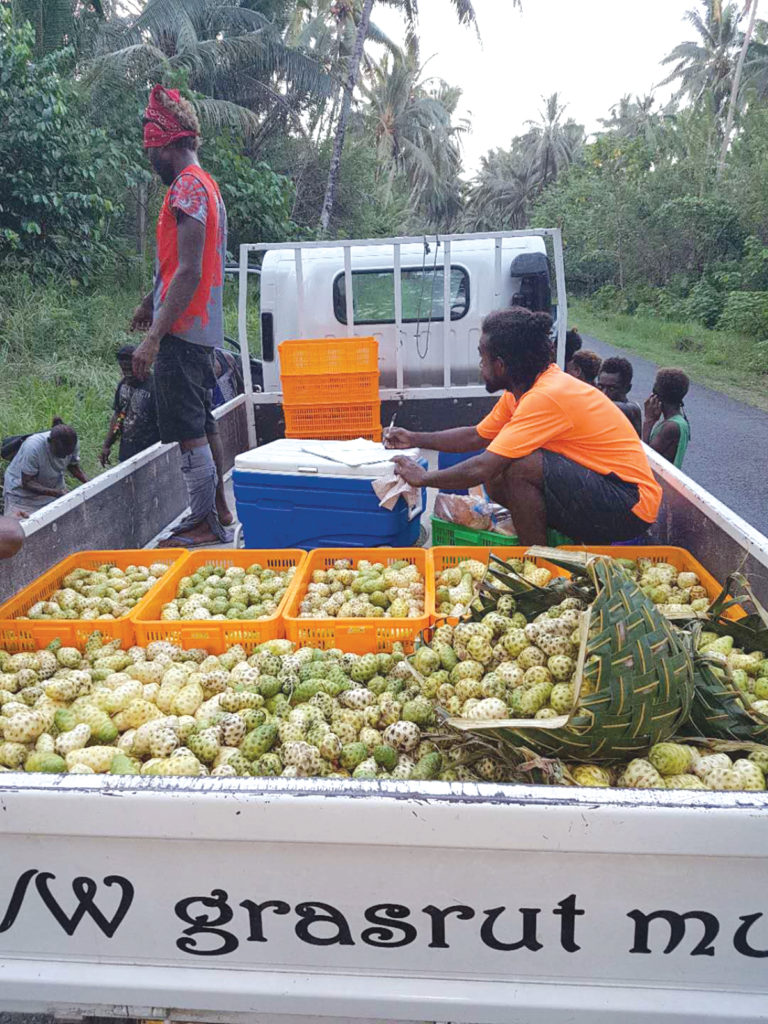
Noni fruits ready for transportation

A response to Bodo Dettke’s media claims

BY WALTER FOLOTALU

Former politician

Noni (Kikiri or Kobu) farmer

AS a local noni farmer from the province (Malaita), I wish to challenge MP Bodo Dettke’s statement over the SIBC recently, calling on all local noni farmers in the provinces to discontinue work on noni farming due to unavailability of processing equipment in the provinces.

While I respect his call, I see such views as mere political rhetoric rather than looking for a way forward for this potential industry in the country and more particularly the rural areas where more than 80% of our rural dwellers find ends to meet.

According to researches, noni as a crop is unique in many ways and is said to be robust and climate-adatable.

The tree is hearty and grows in unusually wide range of soil and environmental conditions.

It has an exceptional tolerance to heat, wind, fire, flooding, saline, and drought that make it arguably the most durable climate-change immune crop in commercial production anywhere today.

Its fruit is harvested continuously throughout the year, containing high vitamin content and potential health benefits unmatched by popular produce.

Also, unlike other agricultural exports noni is very new to Solomon Islands in terms of industry and trade.

It is unique in terms of trade, something that does not exist for other food commodities, such as a lack of market data, product standards, supporting institutions, and established markets with predictable demand.

Therefore, we need proper strategic plans to determine Noni trading rather than discouraging farmers to venture into farming.

We desperately need innovation that would create opportunities for industry growth and value-added products instead of monopoly in the industry.

Solomon Islands is way behind our Pacific neighbors like Hawaii, Tahiti, Samoa, Cook Islands and Fiji, which has created a noni gold rush among producing countries, that quickly established commercial farming and processing facilities.

In the early 2000s. for example, noni alone as an important agricultural export in Samoa provided income for more than 17,000 smallholder semi-subsistence farming households and contributing more than SAT$10m [SBD$32m] annually to the country’s economy.

With this Noni production as a new potential source of income for locals should never be discouraged, also experts have predicted billion-dollar retail noni product market valuations by the end of the decade.

We must never make the mistake of over polarizing the industry without doing a good research into its trend of farming, processing and trading the crop as an export commodity.

Even if we have some experience and potential to offer noni juice and other noni products, there is the tendency that the wholesale market of trade for noni will remain very much immature without differentiating value beyond meeting minimum standards for product safety and regulatory compliance.

I strongly believe the government should prioritize this industry otherwise we will be faced with the burden of high costs of production and distribution due to remote location, inefficient traditional methods such as non-intensive smallholder farming, non-government support, unavailability of certification facilities to name a few.

Solomon Islands without proper strategic plans could be placed in the unenviable position of being a premium supplier in a commodity market where anyone can quickly be a less expensive competitor, and worse still, this will result in an unstable and unpredictable market where client-supplier relationships are purely transactional based on short term factors of convenience without long-term stability where disposable supplier relationships are low value and easily substitutable.

The turbulent environment created by these factors will present the noni industry with the need to innovate in order to protect its economic future and as noni producers, without immediate or relevant actions, we will be at risk becoming a high-cost supplier of wholesale commodities in an unpredictable market with increased competition from substitutes thus threatening its economic contribution or prospects to offer an alternative livelihood for thousands of families as highly advocated by people like Bobo for his constituency.

We must also know that we are competing against existing noni trading countries in the Pacific like Hawaii, Tahiti, Samoa etc. These countries have been in this industry for many years.

Noni trees produce fruit within two years after planting and are relatively easy to maintain and any country in the Region has the potential to quickly become a noni grower, also commercial fruit juice production facilities are said to be relatively inexpensive as compared to other manufacturing industries.

With this, Solomon Islands noni producers and stakeholders must make every effort to work in collaboration with each other and with the government to take the lead and set the industry’s highest standards for quality to create value while concurrently transforming into niche specialty consumer product manufacturers.

We must strive to establish ourselves as a consumer product maker rather than wholesale ingredient supplier, and in this regard we will not only set a market message for the noni industry but build consumer confidence and geographic brand loyalty whereby noni producers will capture new value from downstream consumer sales leading to creating new manufacturing jobs, and an increasing demand for noni fruit from farmers, and better market communication unhindered by layers of middlemen.

Women and youths in particular stand to benefit from this as they will participate only in the far up-stream low value segment of the value chain, yet offer a diversity of perspectives that promise the potential of innovation to reach to new markets.

Consumers motivated by authenticity, utility, and sustainability will pay for the added value provided by specialty noni goods. Wholesale noni juice can be produced anywhere, but there will be no substitutes for a strong brand reputation that we can achieve.

Noni tree produces fruit with uniquely desirable biochemistry and while it is being misunderstood and historically misrepresented by opportunists, it offers nutrition health benefits comparable to or far better than most widely consumed fruits available today.

Encouraging commercial and semi-subsistence households throughout the country, will benefit locals and increase noni production and value.

Some potential exists to expand noni exports as a wholesale ingredient, but this strategy will be short-lived due to increasing low-cost competition and the availability of numerous superfruit substitutes.

The value of noni exports from Polynesia noni exporters has doubled in the past five years, and we must ensure we have a better strategic plan to excel in our aim to compete in this industry.

We must take a leadership role in advancing commercial interests and brand image of noni fruit, which is to our benefit. Fruit ingredient suppliers are easily substitutable hence to ensure consistent long-term market demand, we must advance into consumer markets as a supplier of innovative retail products with a strong brand identity among consumers.

I also believe that the future of Solomon noni industry is far from secure and without proper coordination to strengthen its position and consumer interest in noni, the market is doubtful and will eventually collapse.

Priorities should include setting a high standard and have in place national standards and grading system for fruit and preparations, document best practices for farming and cultivation, contribute to international standards and implement resulting safety standards. We should build such capacities and establish a national body like, Solomon noni association with innovations to participate in retail niche markets as a trade association and to provide extension training and reference tools for smallholder farmers, develop a supply chain for women produced products, and encourage women’s ownership of noni businesses, facilitate development of new range of products targeting healthy lifestyle (including natural foods and nutritional supplements), livestock and pet products industries, provide certification assistance in relevant and popular schemes (HACCP, organic, Fair Trade, non-GMO, kosher, gluten free, and others)

In commercializing noni we need to collect market intelligence, develop Solomon noni origin brand and assets, establish and implement a marketing communications plan, conduct targeted marketing campaigns in high-value markets, participate in relevant industry trade events and missions, establish trade representation and distribution partners or facilities in consumer markets, and most importantly conduct a study to ensure a better understanding of the global market for production and consumption of noni and noni-based products and to provide useful information for Solomon Islands noni industry represented by a national body in order to increase competitiveness and recommend opportunities that add new value to noni production with the main objective to improve the welfare of Solomon noni industry, particularly smallholder farming families, including women, youths and people with disabilities or special needs:

With this we can set a clear picture of the market for noni and noni products, technical and strategic advice for Solomon noni value chain based on study findings, opportunities to improve returns from sales of current products in existing and new markets, opportunities for diversification and value adding from the development of consumer products, mechanisms for Solomon noni to improve capacity:, collecting and communicating market information, and providing quality assurance services and traceability, issues affecting gender equality, disability, and social inclusion within the value chain, with suggestions on how they may address issues of relevance that occur during the duration of the study, which includes potential COVID-19 impacts.

Noni is a highly promising and potential industry and the government and stakeholders must support our rural farmers to venture into semi-subsistence or large commercial farming as well as downstream processing in order to compete in international trade and to boost the economy, with this our motto “to lead is to serve” is so appropriate now, so let’s support our rural framers, tagio tumas.

Virtual session on Right to Information

Dr. Derek Mane, the Deputy Secretary to the Prime Minister of Solomon Islands and Vardon Hoca, Project Manager for UNDP Solomon Islands are opening the virtual session on Right To Information

The UN Pacific Regional Anti-Corruption (UN-PRAC) project, a United Nations Development Programme (UNDP) and the United Nations Office on Drugs and Crime (UNODC) joint project, and experts from Australia, New Zealand and Vanuatu in close partnership with the Solomon Islands Office of the Prime Minister and integrity institutions, hosted a virtual informative session on Right to Information sharing best practices for building resilient, transparent and accountable institutions in Solomon Islands.

The virtual discussion happened yesterday in Honiara and served as a platform for sharing experiences and best practices. The participants and speakers had a chance to exchange their experiences on establishing and implementing ‘Right to Information’ with the Integrity Institutions and the Office of Prime Minister.

“Equal and transparent access to information is the foundation of a democratic society, the key to its successful development and the rule of law,” said Dr Derek Mane, the Deputy Secretary to the Prime Minister of Solomon Islands, in his welcome remarks.

Mane thanked the development partners for their continuous support. He said, “We are very grateful to our partners for supporting and contributing to the sustainable development of Solomon Islands through helping improve key principles of the right to information and build resilient and transparent institutions.”

The Right to Information is at the core of United Nations values. It is an integral part of the fundamental right of freedom of expression, as recognized by Article 19 of the Universal Declaration of Human Rights, which encompasses the freedom to “to seek, receive and impart information and ideas through any media and regardless of frontiers.” 

Ms. Florence Dafanisi, Senior Analyst Policy Development Coordinator is making notes during the presentation

UNDP and UNODC are committed to supporting the Government in developing Right to Information frameworks that will empower individuals and communities by giving them a role in ensuring governments are accountable and transparent.

Right to Information and Freedom of Speech support institutions to establish mechanisms that provide necessary information to the public on Government decision-making and provide the basis for the public to access topics of particular concern, such as global health crises and climate change and serve as significant steps in bridging the dialogue between the government and the public. 

“The right to information is not only about the commitments of the governments, it is also about empowerment of people to participate, advocate and monitor for meaningful progress against the Sustainable Development Goals (SDGs).

 The right to information is a precondition to achieving progress on sustainable development and therefore, an important target under SDG 16 on Good Governance,” said Sonja StefanovskaTrajanoska (PhD), Regional Anti-Corruption Adviser for the UN-PRAC Project, UNDP Pacific Office in Fiji.  

One of the most significant highlights of the session was that both speakers and participants were encouraged to work with each other and discuss key principles to consider when drafting and implementing the Right to Information legislation. 

“UNDP actively supports and welcomes the Government’s efforts to transform the public sector by increasing efficiency, effectiveness, transparency, accountability, access to information and public services, and citizen participation,” said Vardon Hoca, Transparency and Accountability for the People of Solomon Islands Project Manager, UNDP in Solomon Islands. 

Group photo of the virtual session’s participant and speakers

He also stressed the importance of further cooperation. He added, “Teamwork makes the dream work. UNDP remains a reliable partner of the Solomon Islands Government as transparency and accountability are fundamental for UNDP in delivering development results for Solomon Islands people.”

The virtual session is being hosted by the UN-PRAC project, implemented jointly by UNDP and UNODC with support from the Australian and New Zealand Governments; and the Transparency and Accountability for People of Solomon Islands Project (TAP) that is implemented by UNDP in Solomon Islands with support from the governments of Solomon Islands, the United Kingdom and Japan who have been actively working with Pacific Island countries to support their obligations as parties to the relevant international and regional instruments, including the United Nations Convention against Corruption and the 2030 Agenda.

With the 2030 Agenda as a guiding thread, UNDP aims to reduce corruption and develop effective, accountable and transparent institutions at all levels to ensure effective and timely achievement of national development outcomes.

–UNDP MEDIA

From White River to Nauru

Jonathan Paul Atanikakia in his Nauru Police uniform.

How a young man overcame hardship to become police officer

BY ALFRED PAGEPITU

Financially crippled as a young man in the Solomon Islands, Jonathan Paul Atanikakia has found his calling in the tiny Pacific nation of Nauru.

The 29-year-old, with links to Guadalcanal and Nauru, recently joined the Police force of the Republic of Nauru- after years of financial hardship growing up in White-river, a place he regards as home and where his dream of becoming a full-time Police officer was born.

His story is a reminder of looking at the positives and of a man who defied the odds after leaving high school, his experience in securing informal jobs and later travelling to Nauru where he was fortunate to get recruited into the Police Force.

Mr Atanikakia recalled living in White River as challenging, an environment that modeled his life to where he is now.

“Most people see White River as a place where young people are influenced by drugs, alcohol, beggars and where most young people are into a lot of social activities,” he said.

Despite the social issues at White River community, Atanikakia said many children have lived there since they were kids and have grown to become better citizens today.

When the Sun Weekender asked what go him to secure his job, he emphasized that it was God’s plan even though he was not educated.

Atanikakia had three brothers and seven sisters and lost his father from Guadalcanal when he was only a little boy.

“I was born in Nauru on the 07th July 1997 at the Lieu ae naissance and was only two-month-old when my dad took us back to the Solomon Islands where we resided at White River.

“I was raised in the Solomon Islands and lots of my friends are at White River where we all grew up together.

“The Atanikakia Clans in Honiara are related to my Dad and my mother is originally from Nauru,” he said.

Mr Atanikakia attended White River School from Kindergarten up to grade six.

He then made it through to form one at White River Community High School (CHS) in 2011, but because of the influence of friends was sent home to reside with his uncle on East Guadalcanal to help with gardening to earn money for a living.

“I was disappointed as my education will not continue if I continued to stay with my uncle, so I decided to find another way to earn a living.

“I was interested in attending a computing school, so my parents agreed with me to take computing courses to engage me from other unwanted activities back home.

Despite attending computing class, he was not really interested and only wanted to make use of his life. That alone brough happiness to his parents who saw his intentions of changing is attitude.

“My parents were happy with me so they agreed to put me back to White River CHS to continue with my education. Something strange happened and was not able to complete my form two class.

“I skipped from form one direct to form three,” he recalled.

“After completing my form three, I made it to form four following which outside influence go hold of me again and I was not able to complete my education.

He said that life was really hard for him so he withdrew and left school.

 “I focused then on looking for a job to help my brothers and sisters.

While looking for an opportunity, Atanikakia secured his first job in joining his brother’s construction work at the ITA Hardware where he earned little money to help his brothers and sisters.

“I was not satisfied, so my family made arrangements to fly me to Nauru to look for a job.

“Two weeks later, in 2019, I was in Nauru and joined my uncle’s local construction company where I usually get paid at the end of a week.

“I was inspired and encouraged to apply for the police force in Nauru, but something always reminds me that I did not formally complete my education.

He said his uncle encouraged him to apply to join the force.

 “Later on, that day I submitted my application with hope.

“I thanked God for his love as one week later I was accepted,” he said.   

Since being accepted, he tried his best to meet the stated requirements and obey the Laws mandated in carrying out his duty.

Jonathan Paul Atanikakia and his fellow comrades

“This is my second year in the force and I am learning new experiences and handling a lot of challenges. One of the great challenges I have gone through is completing cases which are so difficult for me but I am doing my best.

“I am proud to protect my country here in Nauru and hope to return to Solomon Islands to serve my country.

Atanikakia encourages young people to never give up on life and keep trying because there are a lot of chances in life.

“I would like to call on those young people who have been through the same road I’ve been on to never give up on life.

“Please my good friends and young people, stop drinking kwaso and involvement in unwanted activities back home that will ruin your life. One day I will be visiting White River to make a difference in the future, to educate our young people.

Today, if you visit the Republic of Nauru, you will see a proud Jonathan Paul Atanikakia wearing a blue uniform of the Nauru police force.

Atanikakia concludes that if one door closes, try look for another door where you can find peace and happiness in your life.