
Home Blog Page 788

GP BOYCOTTS MPGIS MEET

Ministry fails us, says Tahisihaka

BY MAVIS N PODOKOLO

Guadalcanal Province Executive has boycotted a two-day meeting/training organised by the Ministry of Provincial Government and Institutional Strengthening (MPGIS).

The training was scheduled to begin yesterday.

GP government has presented its reasons to the MPGIS for the boycott.

GP’s Minister for Finance and Administration Andrew Tahisihaka explains his government’s decision:

“MPGSI has failed to seriously pursue and facilitate the submission from the Provincial Assemblies to the Parliamentary Entitlement Commission (PEC) through MPGSI for the review of the Members of the Provincial Assembly entitlements since 2019.

“It has become apparent the MPGIS through its policies and approach is indiscriminately targeting the Members of the Provincial Assembly by subjecting them to increasing scrutiny this is evident through the trend observed in the recent audit reports and policy direction.”

Tahisihaka added that the third point is that the current approach by MPGIS regarding policies developed and implemented is not empowering the leaders of Guadalcanal province.  

He said the fourth reason is, members of the Guadalcanal Executive strongly believe that the Permanent Secretary of MPGIS is not using the correct communication channel to discuss and address the issues raised to MPGIS by Guadalcanal.

He said the fifth point is that Guadalcanal and Malaita provinces continue to have the Federal Government System at heart as stipulated in the Townsville Peace Agreement (TPA).

“The political goal for greater autonomy, GP including Malaita and the rest of the province in the country, remains critical thus the progress towards achievement of such vision should be embraced by MPGIS in its relationship with all the provinces.

“Point number six, in relations to the failure of dealing decisively with the gazetting of the 10 Ordinance passed by the Guadalcanal Provincial Assembly in 2020 is unacceptable.”

He stressed one of reason also is poor planning for the current training, the administrative function of the province has been severely affected for the past three weeks. 

Tahisihaka said the last point is Members of the Provincial Assembly are elected by the people of Guadalcanal being an elected member of the Assembly, they are vested with certain powers in carrying out its functions and providing provincial services.

Comments are being sought from the MPGIS.

Motion against speaker still stands: Suidani

0

BY SAMIE WAIKORI

Auki

The motion of no-confidence against the Speaker of the Malaita provincial assembly still stands, says Premier Daniel Suidani.

He says the motion will be tabled in the coming provincial budget sitting.

Speaking to Island Sun yesterday, Suidani said initially the motion was for the speaker and his deputy, but the one against the deputy has been withdrawn since he has joined the executive.

This leaves Butala alone to face the motion.

In an interview, deputy speaker Joe Heroau said he was asked to join the executive if he wanted the motion against him dropped.

“I accepted the offer and condition given and I’m happy to be part of the executive government,” Heroau said.

Suidani said in preparation for the budget meeting; MARA government proposed its executive meeting to begin on Monday, October 8 to look at the provincial budget.

After, the Provincial Publics Account Committee (PAC) will look into the budget before debating it in the full assembly on the following week.

“The motion against the speaker will table during the meeting.”

The motion was filed by Suidani on October 19 against both speaker and his deputy, a day after a notice of no confidence motion has issued against premier.

The motion against premier Suidani failed to reach the floor of the assembly after the people of Malaita staged a peace march on the mover of the motion, Elijah Asilaua, urging him to withdraw it.

Since then, the MARA government after suffering numerical strengthen had been recovering and the recent inclusion of Heroau has made MARA government back in number with 17 MPAs in the 33-ward province.

Short supply sends betel nut prices up

By EDDIE OSIFELO

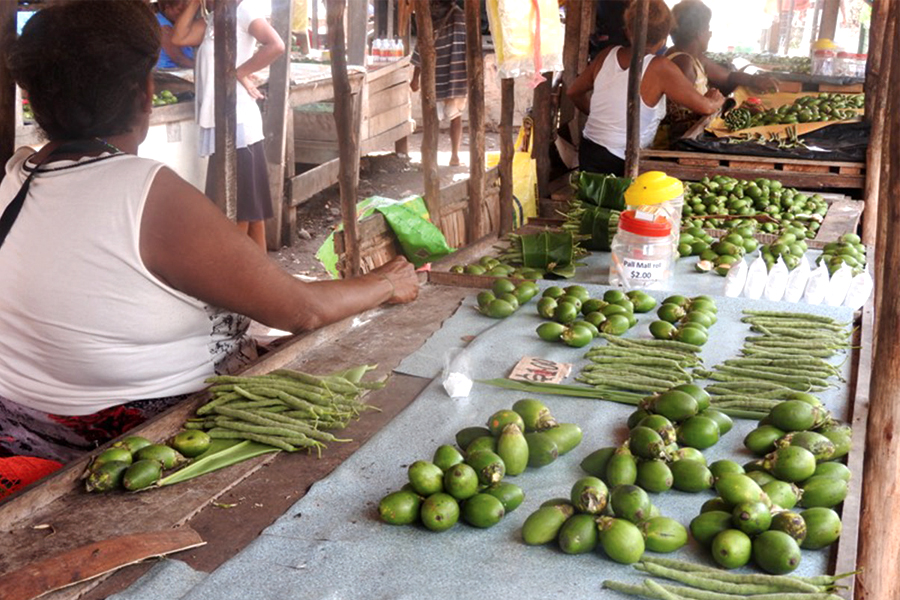
BETEL nut prices have skyrocketed to $4 this week due to scarcity of the product from suppliers on Guadalcanal.

According to one vendor, a 10 kilogramme bag betelnut used to cost $80 to $90 but now is nearly $200.

While the 20kg bag of betelnut used to cost $170-$190, it has now increased between $500 and $700.

“This is the reason why we increase the price of our betel together with its leaf to $4.

“The small betel nuts with its leaf cost about $3,” the vendor said.

One vendor said she told her customers to take betelnuts through credit in order to make profit from the sale.

“If I allow people to take on credit, I will not make any profit because the bag of betel nuts is very expensive now,” she said.

With the country now in the rainy season, vendors are expecting low supplier of betelnuts until next year.

According to University of Hawaii, the scientific name for betel nut, sometimes spelled betelnut, is Areca catechu.

It is currently only found in cultivation so the exact origin of the species is unknown. South Asia, southeast Asia, and the Philippines have been suggested as areas of origin.

The kernels of both green and ripe fruits (often called “nuts”) are chewed as an astringent and stimulant, often in combination with the leaves or fruit of betel pepper (Piper betel) and lime.

Betel nut was introduced to New Guinea, the Solomon Islands, and the western Micronesian islands by early indigenous voyagers.

Since then, its use and cultivation has spread eastward to Fiji, Samoa, and other Pacific islands.

It is a major commercial crop in south Asia where it is widely used, but in the Pacific, it is generally grown for local consumption or for interisland trade.

Bigger countries fail Paris Agreement

0
Climate change effects on the Mangrove habitat in Isabel Province

BY BEN BILUA
Gizo

THE Paris Agreement is one of the important frameworks to mitigate effects of climate change through ambitions to reduce global emission.

The agreement also establishes an avenue for financial assistance to most vulnerable countries who are incapable of helping themselves due to poor financial capacity.

Solomon Islands is one of the vulnerable countries who has very limited financial capacity to fight against climate change.

In an interview with Island Sun Gizo, Deputy Secretary (Technical) of the Ministry of Environment, Climate Change, Disaster Management and Meteorology, Chanel Iroi, said decision on Long Term Finance (LTF) must be reached at the COP26 meeting.

He said endorsement of the LTF will not only provide financial leverage to struggling small island states but also honor the Warsaw International Mechanism for Loss and Damage which was one of the resolutions of Paris Agreement.

Iroi said Intergovernmental Panel on Climate Change (IPCC) report on the effect of climate change in the coming years reemphasized the need for world leaders to endorse and roll out the LTF to vulnerable countries.

He said ground work on Loss and Damages must continue at the same time global leaders must make the right choice to reduce emissions so as facilitating financial resources towards mitigation and adaptation programs.

Iroi said priority areas for slow onset events and non-economic losses on the international stage while incorporate “limits to adaptation” in National Adaptation Plans and other GCF proposals is important.

Island Sun understands that IPCC is a piece of information that would save the world if world leaders listen and take the report’s recommendation seriously.

According to UN Secretary-General António Guterres, evidence of climate change danger is irrefutable and that greenhouse gas emissions are choking the earth and placing billions of people in danger.

He said global heating is affecting every region on Earth, with many of the changes becoming irreversible.

“We must act decisively now to avert a climate catastrophe,” Guterres said.

The IPCC report was compiled by a group of scientists who the United Nation described them as the “a code red for humanity”.

Nepotism a drawback to local voices

BY BEN BILUA
Gizo

Solomon Islands has entered an alliance with Small Island States to voice concern over the effects of climate change at the COP26 meeting.

Head of Solomon Islands Delegation to COP26, Channel Iroi said the approach will make it easier for Solomon Islands to be heard at the international level.

He said Solomon Islands continues to face challenges when it comes to voicing its concerns as bigger countries always put their voice at the top while suppressing small island states who are more vulnerable to climate change.

“Solomon Islands is a Least Developed Country (LDC) and a Small Island Developing State that is highly vulnerable to climate change impacts, voicing our issues and key positions through negotiation groups such as the LDC group and Alliance of Small Island States (AOSIS) is vital,” he said.

Iroi said Solomon Islands already submitted its revised nationally determined contributions (NDC) Agreement on the “Common Time Frame” for elaboration at the COP26 meeting.

He said Solomon Islands position is to have a “5 plus 5” time frame.

“Every five years, countries must communicate two consecutive NDCs at the same time – one is an update, and the other is a new NDC for the period starting in five years’ time,” Iroi explained.

Australia supports Temotu’s remote Reef islands

Matema community welcomes the DAP project visit and looks forward to the completion of the project

The Australian Government through the Direct Aid Programme (DAP) has funded a new permanent pigpen project, led by Mathew Nare, to assist the Nola community in the Reef islands, Temotu province, generate income by selling their pigs.

Australian High Commission First Secretary Political Jessica Carpenter handed over the pigpen on October 19 during a wonderful cultural celebration at Nola.

The communities of Nola thanked the Australian Government for funding the project, which will encourage small sustainable economic growth and increase food security for the local community.

Father Arthur Amble and Chief John Mark Paso, the community representatives of Nola Village, expressed their gratitude for Australia’s support during the handover ceremony.

“This is the first visit from the Australian High Commission and the first Australian funded project we received in our community,” said Chief Paso. “Australia has not forgotten us.”

Ms Carpenter thanked the people of Nola for their warm and friendly welcome, proudly demonstrating their culture. Congratulating the local community for successfully completing the project, she said:

“The Australian Government is proud to be working with the people of Nola to ensure that men and women in the communities learn and acquire new skills on modern livestock and farming methods. We look forward to seeing this farm up and running soon, providing a lasting benefit for the community into the future.”

As part of the trip to the Reef Islands, on October 20 the DAP team travelled to Matema Island where the Australian Government through DAP funded four 5,000 litre water tanks. Facing the impacts of climate change, including salination of ground water, these tanks are crucial for the water security of the community going forward. The Matema community welcomed the DAP team upon arrival with song, dance, entertainment and feasting.

The High Commission looks forward to visiting Matema again in the future, once the project is complete. As a remote island, transportation of materials has been a challenge. We applaud the community for its resilience and commitment in the face of hardship.

The Direct Aid Program is a small grants fund managed by the Australian High Commission in Solomon Islands, which supports community-led projects and seeks to improve living standards.

–AUSTRALIAN HIGH COMMISSION

Launching Digital Governance here

Permanent Secretary McKinnie Dentana with Australian High Commission Counsellor Kevin Playford pictured with staff of the ICT Center, at the launch of several new ICT projects.

IN the ever-increasing global digital economy, electronic governance or ‘e-governance’ is the way of the future – more and more governments around the world are digitising their services to maximise efficiency and make government administration more transparent, quick, and accountable.

At the request of the Solomon Islands Government Australia is dedicated to working with partners to help modernise major Solomon Islands Government Information and Communications Technology (ICT) systems.

The recent completion of several upgrades to Government ICT systems builds on Australia’s infrastructure investment in the high-speed fibre optic internet cable project, the Coral Sea Cable System, alongside which the importance cyber security and infrastructure resilience must be recognised.

Timely upgrades to both software and hardware ensures government services are available to citizens in a convenient, safe, and transparent manner, and the networks and devices we use are protected from attempts to damage or destroy their function.

In a world where we are increasingly reliant on technology in our day to day lives, prioritising cyber security strengthening also preserves data privacy and protects sensitive information.

To this end, recent upgrades to the Windows Server operating platform and licences now align with Microsoft support and security recommendations, making internet access and anti-virus protection function more effectively and securely.

Further, the installation of security cameras and access controls, and procurement of storage hardware from Australia for the Solomon Islands data-center, has bolstered the physical security of the new ICT premises built with Australian support in 2019.

Since March 2020, the COVID-19 pandemic has compounded challenges to the ICT landscape, in Solomon Islands and across the world.

Yet at the same time, the pandemic has created opportunities, including for Solomon Islands ICT Services, by fast-tracking enhancements to connectivity.

Reliable access to external technical assistance, training through virtual meetings, and better ICT security enables large-scale access to the benefits of remote working.

To support remote connectivity is Australia’s investment in the upgrade of Citrix, the platform which enables users to access government ICT servers virtually.

These advancements are part of a package of eight ICT support projects supported by Australia totaling approximately SBD $8.9 million.

At the launch on 3 November, Permanent Secretary of the Ministry of Finance and Treasury McKinnie Dentana congratulated the ICT Services staff and acknowledged the importance the Government of Solomon Islands places on enhancing ICT:

“In this growth industry, we need to move forward with the commitments under our ICT strategy – including enhancing security and infrastructure and expanding IT services into the provinces.”

“E-commerce and e-governance are priority areas, and we value the continued support of our stakeholders, as we continue to grow the skills of our workforce and contribute to Solomon Islands’ economic growth”.

Australian High Commission Counsellor Kevin Playford, also acknowledged the critical role ICT plays in service delivery for governments:

“ICT is such a critical part of our world these days and an essential tool for the effective functioning of the public service.

“There are changes and evolutions all the time, it’s hard to keep up, but it’s becoming increasingly vital for the effective functioning of government.”

Counsellor Playford also paid tribute to the Solomon Island Governments’ leadership and commitment in modernizing ICT systems software, and applications to improve the delivery of services for the people of this country.

It takes time and effort to coordinate and sequence priorities and stay on the front foot of emerging changes to both technology and its supporting infrastructure, and yet Australia’s partnership with Solomon Islands to date has brought significant improvements of which we can be proud, and excited.  

We are delighted to continue partnering to harness the incredible and life-changing power of technology and help the government improve its delivery of services for the people of the Solomon Islands”.

Australia has been supporting Solomon Islands Government ICT Services since 2003.

More recently, since 2017, Australia has delivered key investments including the new ICT Services Building in Lengakiki, the Data Centre, the 5-year ICT Strategic Plan, an ICT Training Lab, Solomon Islands Government Portal and Mobile APP, the Security Operations Centre, license upgrades in the Service Monitoring Centre, and significant upgrades to the IT Service Management System.- Australian High Commission Press

210,439 DOSES TAKEN

Only 11% of population fully vaccinated

BY MAVIS N PODOKOLO

A total of 210,439 doses of COVID-19 vaccines have been administered so far.

They include both AstraZeneca and Sinopharm, health Permanent Secretary Pauline McNeil says.

She added said the 210,439 figure was recorded as of 29 October 2021.

“With this, the number of people who completed their second doses is   47,417 which is equivalent to 11.4 percent of population,” McNeil said.

“I thanked those of you who have come forward and get your full dose of COVID-19 vaccines.”

McNeil said the number of people who have received their first dose is 115,309, adding some need to come forward for their second doses.

“So that is still our call to urge those of you who have your second dose overdue to come forward.

“Those of you who are yet to get your first dose please come forward also and those in the provinces that are yet to be reached by our health teams to please be on standby.”

Attorney General John Muria Junior also urges unvaccinated people to come forward and get their COVID-19 vaccine to help protect themself, family, community, and country.”

SICCI produces paper on infrastructure development

0

By EDDIE OSIFELO

Solomon Islands Chambers of Commerce and Industry has come up with a Local Content Paper to guide the development in infrastructures in the country.

Chief Executive Officer, Natalina Hong explained the paper at the end of the two days’ 2021 Infrastructure Symposium at FFA recently.

Hong said SICCI is developing the paper and the outcome of this symposium is crucial to the development of the paper and for their discussion with the government.

“We the Chambers of Commerce has reached a point in its relationship with the Solomon Islands Government but also with the private sector and also with the donor partners to come together and actually seriously not just discuss but also find ways to effectively approach government in its level of now trying to understand and develop a way forward for local content.

“It is clear that there is no local content paper but the paper identified that there are some works in the level of industry, some work in the level of business, administration, medium and small enterprises that have already looked in the idea of localization or local participation,” she added.

Hong said it doesn’t mean there is a vacuum, it means there have already been some stages and platforms that have been set already out there.

“This paper begins to tell us that this is the direction we think is the best way in terms of infrastructure development and private sector to position itself so it can advocate for more local content,” she added.

SICCI said presentations and papers from contributors and panelists will be compiled and made available to the public on line or as SICCI infrastructure document and mapping of all infrastructure projects next five years.

This in turn will provide opportunities for local contractors or consultancy to gather information on opportunities on how they can be involved in major projects.

Key messages from the symposium outcome are fundamental to developing the proposals for local content to key stakeholders.

About 100 participants have participated in the Symposium organized by SICCI.

PM: no jab, no enter!

Solomon Airlines airbus

ANY traveller that is 18 years and older must be fully vaccinated before they can enter the country.

Prime Minister Manasseh Sogavare in his nationwide address on Monday this week said intending travellers must undertake their final vaccination dose 4 weeks prior to their travel date.

“No one 18 years and older will be allowed to enter the country if they are not vaccinated,” the Prime Minister strongly emphasized.

The Prime Minister adds as children of older age groups become eligible for vaccination, this provision will also apply to them if they are travelling to Solomon Islands.

Moreover, Prime Minister Sogavare says the National Cabinet has also approved the recommendation by the Oversight Committee to group countries into three risk categories – COVID-19 free, moderate-risk and high-risk.

“This re-categorization of risk is another measure to prepare the country on its journey toward the full reopening of our borders,” he said.

The Prime Minister said the key change is the reduction of post arrival quarantine period across all three risk categories.

He said other changes also include the reduction in pre-departure and post-arrival COVID-19 testing regimen based on scientific analysis and the fact that all returning adults must be fully vaccinated.

The Prime Minister highlighted the requirements for each of the three new risk categories in the regulation as follows:

  1. For travellers from COVID-19 free countries
    1. One Pre-departure test within 72 hours of arrival.
    1. 7 days quarantine post arrival.
    1. One test during quarantine on day 6 or 7 and discharge on day 7 if negative.
    1. If traveller transits through moderate risk country – 10 days quarantine and two tests.
    1. If traveller transits through high-risk country – 14 days quarantine and three tests.
  • For travellers from moderate risk country
    • One pre-departure test within 72 hours of arrival in Solomon Islands
    • 10 days quarantine post arrival.
    • Two tests during quarantine on day 2 and days 9-10 and discharge on day 10 if both tests are negative.
    • If person transits through high-risk country – 14 days quarantine and three tests.
  • For travellers from high-risk country
    • Two pre-departure test between days 9-11 days before departure and within 72 hours of arrival.
    • 14 days quarantine post arrival.
    • 3 tests during quarantine on day 2, 7 and days 13-14 and discharge on day 14 if all 3 tests are negative.

For each of the 3 categories, the IC may increase the pre-departure and post arrival requirements based on risk assessments.

Meanwhile, Prime Minister Sogavare said as for children under 18 years of age that cannot be vaccinated, the duration of quarantine for families traveling with children under 18 years old will be as follows:

  1. Families with children travelling from COVID-19 free countries – 10 days quarantine and 2 tests.
  2. Families with children travelling from moderate risk countries – 14 days quarantine and 3 tests.
  3. Families with children travelling from high-risk countries – 21 days quarantine and 4 tests.

Prime Minister Sogavare has also announced that the National Cabinet has lifted the suspension on incoming international flights as part of the measures to slowly reopen our borders.