Home Blog Page 594

ANOTHER PROBLEM

0
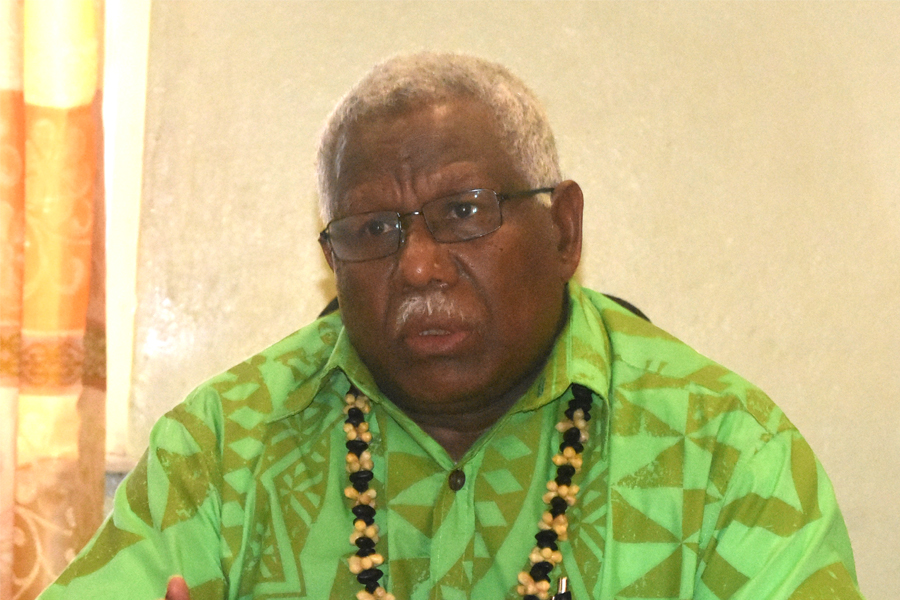
Managing Director of Liberty Security Services Mr Fred Yakasa.

Security firms urges GOC to release upfront payment for mobilisation

BY NED GAGAHE

Several security firms contracted to provide their services at the Pacific Games are calling on the Games Organising Committee (GOC) and the National Hosting Authority to release their first batch of payment.

The security firms were supposed to have been paid 50 percent of their dues as mobilisation funds immediately after they signed their contracts last month. The remaining half to be paid at the end of the event.

To date, nothing has been paid, and the security services say GOC officials dealing with them are playing delay tactics, which will only serve to ruin this important service for the Games.

Many of these security firms are yet to mobilise their personnel to their assigned venues because of this delay by GOC.

With only 31 days before the Pacific Games is scheduled to kick off from November 19 to December 2 in Honiara, it is crucial that the security firms are well prepared and ready.

Island Sun understands 12 private firms have been approved and have signed their contract to deliver security services during the games.

Speaking to Island Sun yesterday, Managing Director of Liberty Security Services said they are still waiting.

Fred Yakasa said under the terms of contract they should be receiving the 50 percent to assist them in their mobilisation effort.

He said the delay has negatively affected their preparations.

Similar sentiments were echoed by one of the co-directors of Guadalcanal Plains Security Firm, Henry Saea.

Mr Saea said after the company signed the contract in late September, they are yet to mobilise their security officers to their designated sites because they have not yet received any funds from GOC.

“This has really affected our preparations, it is a costly exercise to mobilize our workers, logistical aspect. The authorities are aware of this, they should act accordingly because it is in the contract.” Mr. Saea said.

GOC has been contacted for comments.

Hou expresses concerns over amendments to CBSI bill

0
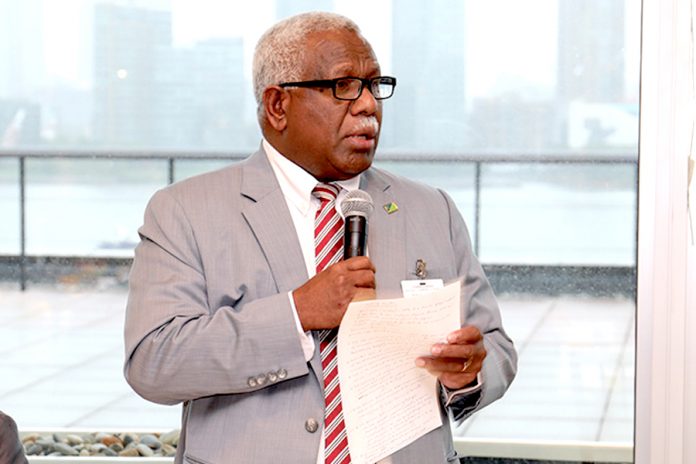
Hon Rick Hou

By EDDIE OSIFELO
FORMER Prime Minister Rick Hou has raised concerns about certain provisions within the Central Bank of Solomon Islands (CBSI) Amendment Bill, particularly regarding credit utilities and non-bank credits.


These concerns were voiced during the parliamentary debate on the bill yesterday.


Clause 16 of the Central Bank of Solomon Islands (Amendment) Bill introduces an amendment to Section 29 (1) of the Principal Act.


This amendment seeks to include credit utilities and non-bank credits as part of the broader credit information system.


While this amendment is intended to strengthen the credit information system, Rick Hou questioned its practical implications, especially in the context of the Solomon Islands.


In his parliamentary address, Hou expressed doubt about the advantages of this amendment in the local situation.


He cited the common occurrence of defaults in utility payments, such as water and electricity bills.
According to Hou, every time an individual defaults on these payments, that information is recorded in the creditworthiness database that banks maintain.


Consequently, when individuals approach banks for loans or open new accounts, their creditworthiness is compromised.


Hou further pointed out that this measure could have a severe impact on the majority of Solomon Islanders, many of whom might default on payments due to reasons beyond their control.


As an example, he mentioned that he had experienced water supply cuts because he did not receive an invoice on time, which led to immediate disconnection on the day of the invoice delivery.


Addressing another issue, Hou raised concerns about “politically exposed persons” (PEPs). He referred to the global practice of “know your customer” policies and highlighted that PEPs encompass family members and individuals conducting business with politicians.


This, he argued, could affect numerous small businesses and individuals seeking to open bank accounts, including the country’s 50 Members of Parliament.


Hou emphasized the potential consequences of these amendments in a money laundering context.
He noted that political leaders have been a significant source of money laundering globally and expressed reservations about how these measures might impact Solomon Islanders.


He concluded by stating that these changes might inadvertently push many Solomon Islanders into the “black market” or encourage them to keep money in unconventional places like boxes, beds, and pillows.
He questioned the feasibility of the CBSI’s financial inclusion policy, which encourages banking for all, particularly in the provinces.


While acknowledging the necessity of measures to ensure a clean banking system, Rick Hou underscored his concerns about the potential negative repercussions that these amendments might have in the Solomon Islands’ unique socio-economic context.


The debate on these amendments continues, as Solomon Islands’ lawmakers deliberate the potential impact and implications of these changes on the nation’s financial landscape and its citizens.

Media must be committed to reporting children issues: PS Alependava

0
Permanent Secretary of the Ministry of Women, Youth, Children and Family Affairs, Dr Cedric Alependava

BY INDY MAEALASIA

MEDIA representatives who attended a workshop last Friday were told to be committed when reporting on child protection Issues.


Permanent Secretary of the Ministry of Women, Youth, Children and Family Affairs, Dr Cedric Alependava said this while delivering his keynote address at the two-day media training workshop hosted by UNICEF at their office.


In preparation of the pacific games next month, the workshop focused on helping journalists and communication officers on how they could report on child protection issues.


Alependava said the influx of people could possibly affect children, the most vulnerable of our communities.


“There is more to the pacific games than just athletics. During major event, we inevitable expect an influx of people and thus vulnerable groups of people are at a heightened risk of abuse,” he said.
He also reminded the media representatives of the vital role they play in publishing stories and to be accountable when reporting.


“You have a huge responsibility to produce stories that are accurate, independent and balanced. In the same path, you have the responsibility to ensure that the narrative does not harm anyone and that you hold yourself accountable with holding us accountable at the same time,” Alependava said.


He further added that the government acknowledged the contribution the media has done to address child protection issues and such workshop will help strengthen their reporting.


Alependava also said that such opportunity could help create strong relationship with the government, civil societies and the media.


Media representatives who participated in the workshop were from the mainstream media and communication departments.

Poultry farmers and livestock officers undergoes broiler rearing training in Indonesia

0

BY NED GAGAHE
Twenty officials which includes 10 local poultry farmers and 10 Livestock Officers from the Ministry of Agriculture and Livestock (MAL) have left the country for Indonesia to attend a month-long intensive training on broiler rearing.


The team is currently in Bath, Indonesia and have already commenced training at Indonesia Centre for Livestock training (ICLT) from 9 October – November 5th.


MAL Permanent Secretary Lottie Vaisekavea and other Senior MAL Officials were present during their departure last week.


Speaking to Island Sun PS Lottie said this is the first cohort of farmers and Livestock Officers to participate on the first of its kind training abroad.


The Permanent Secretary expressed sincere gratitude to the Government of Indonesia and Solomon Islands Government for making this possible for the farmers and MAL officials.


Mr. Vaisekavea said trip is made possible through diplomatic arrangement between the two countries.
He urged all participants to make full use of the opportunity to learn from the training.


He adds that this is just the beginning of more similar trainings to come where farmers will extremely benefit from.
Solomon Poultry Farmers Association (SPFA) Programme Coordinator David Suata who is also part of the team have expressed deep gratitude to MAL, the Government of Indonesia and Solomon Islands to facilitate the training.
Suata said this is a unique opportunity to experience firsthand, grasp new ideas and learn from farmers in Indonesia.


Another participant Melu Vote, a Livestock Officer at MAL based in Buala, Isabel described the training opportunity as an eye opener for him to learn from the advanced technologies used by farmers in poultry industry in Indonesia.


The team left on Saturday 7th October and are expected to return on 5th November 2023.

Member of parliament warns against excessive government debt

0
Rick Hou.

By EDDIE OSIFELO
MEMBER of Parliament for Small Malaita, Rick Hou, has issued a stern reminder to the Solomon Islands government, urging it to avoid a return to past financial crises.


Mr Hou’s remarks came during a debate on the Central Bank of Solomon Islands (Amendment) Bill in Parliament yesterday, with a specific focus on Clause-19 of the legislation.


Clause 19 of the Central Bank of Solomon Islands (Amendment) Bill seeks to bring about significant changes to the government’s borrowing regulations. Of particular note, it proposes to amend Section 36 (6) of the Principal Act, effectively raising the threshold for government advances from the current five percent to a new, higher threshold of 15 percent. This represents a threefold increase from the existing limit.


Additionally, this clause introduces provisions that would allow the Central Bank of Solomon Islands (CBSI) to provide additional temporary advances to the government, but only in the case of a State of Emergency. These temporary advances should not exceed five percent of the threshold, which is calculated based on the annual average government ordinary revenue for the preceding three financial years. Importantly, any such additional advances to the government must be fully repaid within a strict two-year timeframe.


Hou, in his parliamentary address, stressed the need for caution in managing government debt.
He pointed to previous instances when financial institutions and banks were reluctant to lend to the government due to excessive debt levels.


Notably, he recalled a situation in 2005 when both domestic and international banks, including the Asian Development Bank, World Bank, commercial banks, and the Solomon Islands National Provident Fund (SINPF), refused to provide further financial assistance.


Hou also referenced the “Honiara Club,” an arrangement established with creditors and banks at the time.


Under this arrangement, all creditors agreed to accept reduced repayments, a practice commonly known as taking a “haircut”.


Bilateral partners, most notably Australia, played a pivotal role in resolving the financial crisis by clearing arrears and setting the precedent for the existing five percent threshold.


In his closing remarks, Hou emphasised the paramount importance of avoiding a repeat of the dire financial circumstances experienced in the past.


He called on the government to exercise fiscal prudence and responsible financial management to prevent the nation from reaching a point where financial institutions once again refuse to lend due to unsustainable debt levels.


For the Solomon Islands, these words of caution serve as a timely reminder of the need for careful economic stewardship and debt management as the nation navigates its financial future.

Hou expects CBSI amendment bill to address high banking costs

0
MP, Rick Hou

By EDDIE OSIFELO


Member of Parliament for Small Malaita, Rick Hou, has expressed optimism that the Central Bank of Solomon Islands (CBSI) Amendment Bill would effectively tackle the issue of high margins and interest rates in commercial banks.


Mr Hou made these remarks during his contribution to the bill’s discussion in Parliament yesterday.
The CBSI Amendment Bill seeks to amend the CBSI Act of 2012 (No.6 of 2012) to address legislative gaps, adapt to technological advancements in the financial sector, expand the scope of CBSI’s participation in the securities markets, rectify ongoing interest market failures in the Solomon Islands, and address related financial matters.


Hou, who is a former prime minister and a former Governor of CBSI, highlighted the exorbitant cost of doing business in the Solomon Islands, with the banking sector being one of the most expensive sectors.
He noted a lack of confidence in the economy, which is largely influenced by these high costs.


The Member of Parliament expressed his concern over the determination of lending rates in the country, which are heavily influenced by these factors. He pointed out that this has led to a situation where interest margins in the Solomon Islands are among the highest in the world.


Hou specifically mentioned that margins of 10 percent or higher are virtually unheard of in most parts of the world, including among regional neighbours where margins are less than 5 percent.


He underscored the challenges faced by individuals and businesses, where they are not only required to keep money as deposits but also pay fees to the banks for the privilege of holding their deposits.


In light of these concerns, Rick Hou expressed his hope that the CBSI would utilize the provisions within the Amendment Bill to guide the nation toward a scenario where margins and interest rates are significantly reduced and more sustainable for both the government and the public.


The CBSI Amendment Bill, if successful in addressing these issues, could potentially lead to a more cost-effective and accessible banking system in the Solomon Islands, contributing to a more favourable economic environment for its citizens and businesses.

Intimidation case trial date set for Nov 30

0

BY ROMINAH FAKA

The trial date into the case on a man charged with intimidation is set for November 30.
Dudley Hiroari was charged with one count of intimidation and he pleaded not guilty.


Prosecution informed court during the interim mention that they had no issue regarding the trial date.
However, the defence lawyer was absent for the interim mention.


Court suspended hearings for October 24, 2023 at 9am for final interim mention. And, defence has been instructed to attend.


Allegations say Hiroari and other men went to the Putu logging camp in Isabel Province on November 12, 2022 to check on their land boundaries.


The next day, Hiroari allegedly went to the complainant’s house and threatened her at her own home.
The complainant said that Hiroari approached her looking very angry and shouting at her saying abusive words.


Complainant reported the matter to Buala police and Hiroari was later arrested.
Police Prosecution appears for the Crown and Private law firm appear for the defence.

SETTLERS WARNED

0

University calls for stop to intrusion into Panatina and Kukum campuses

BY NED GAGAHE

The national university has called on settlers outside the boundaries of its two campuses to stop encroaching into its lands.


Solomon Islands National University (SINU) Executive Management issued a public notice warning the settlers along the boundaries at Panatina and Kukum campuses to stop further illegal encroachment and activities on its land.


The warning comes as SINU prepares to commence its security fencing project at both campuses soon.
The statement which was posted on SINU’s Facebook yesterday said, “Those Illegally Settling on Panatina and Kukum Campus Land Boundaries.


“Subsequent to the Notice issued on 15 June 2022, the Solomon Islands National University issues this final Notice as follows:
“1. SINU is the registered owner of the Fixed Term Estates (FTEs): –
Panatina Campus: Parcel 192-002-131 comprising 44.27 hectares.
Panatina Campus: Parcel 192-007-31 comprising 3.0857 hectares.
Kukum Campus: Parcel No.191-038-84 comprising 56.56 hectares.


“2. SINU hereby reminds all illegal settlers on Panatina and Kukum Campuses to stop further illegal encroachment and activities on SINU land.


“3. SINU respectfully requests all illegal settlers on Panatina and Kukum Campuses to move out from the SINU land boundaries with immediate effect.


“4. SINU shall commence its Security Fencing Project at Panatina and Kukum Campuses very shortly.


“5. SINU shall commence legal eviction against the perpetrators who failure to uphold the provisions in 2 and 3 above.


“6. Anyone who claims ownership on the FTEs 1 (a) (b) and (c) have the right to seek justice in relevant tribunals or the Court of Law.” SINU said.

Expert Explores Complexity of Value-Added Chain in Fisheries at EASI Gathering

0
Xavier Vincent, a World Bank Lead Fisheries Specialist.

By EDDIE OSIFELO
Xavier Vincent, a World Bank Lead Fisheries Specialist with 30 years of experience in fisheries aquaculture in marine environments, shed light on the intricate nature of the value-added chain in the fisheries sector.


He shared his findings during his presentation at the Economic Association of Solomon Islands (EASI) gathering, held at Heritage Park Hotel last Thursday.


Vincent’s presentation delved into the complexity of the value-added chain in fisheries, emphasizing that it involves a multitude of interconnected processes.


He explained, “We are talking here about fishing a tuna, bringing it onshore, putting it into a container, running to your factory, processing it, putting it into camps, packing it, selling it to the market, selling it to a shop, and selling it to somebody.”


He likened the value chain to a string of interconnected elements, stating, “In French, the value chain is described as a string that is connected together, and we will produce this rope. So, this is a very difficult exercise, as you need to understand what I call the handset connection in order to have a vessel that is working. You need a crew, gas, ice, satellite services, and all the necessary inputs for the industry to function.”


Vincent clarified that it’s not merely a chain but a continuous flow of products and services that work in harmony to produce a final product that moves through the supply chain.


To comprehend this intricate web, he emphasized the need to consider various elements, such as organizational structure along the value chain, the flow of main products, and the market’s demands at the end of the chain.


He acknowledged that managing this complexity presents numerous challenges, particularly when considering different interests and requirements in each segment of the value-added chain. For instance, in the processing phase, factors like energy, water, labor, and more become essential components in ensuring smooth operations.


The World Bank is actively collaborating with the Ministry of Fisheries and Marine Resources on the second phase of the Pacific Islands Regional Oceanscape Program (PROP), which succeeded the Pacific Regional Oceanscape Program for Economic Resilience (PROPER) in September 2021.


Under PROP, the World Bank is working closely with Pacific governments, regional organizations, and communities to bolster sustainable ocean and coastal fisheries management and strengthen institutions responsible for conservation.


PROP’s objectives encompass enhancing ocean management across the Pacific, with a focus on:
Promoting more sustainable fishing practices.


Enhancing surveillance of Pacific Exclusive Economic Zones.
Enforcing fishing regulations more effectively.


Improving access to regional and international markets.


Vincent’s insights underscored the importance of understanding the intricate dynamics of the fisheries value-added chain, which plays a critical role in the sustainable management of ocean resources and the economic growth of the region.

Road Improvement Project in East Malaita Commences with World Bank Funding

0
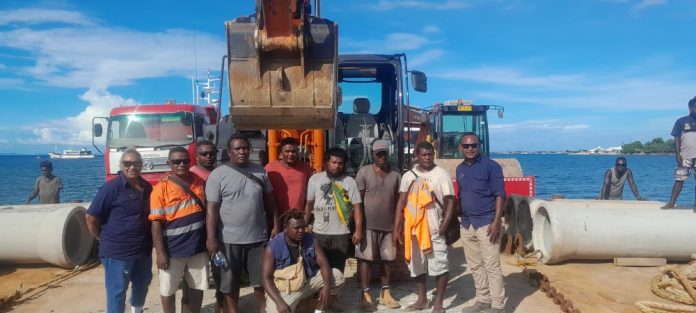
Employees of Trades Transformation Company Ltd on board a badge in Honiara before its departure to upgrade the deteriorating road in East Malaita last Thursday.

Work on a critical 21-kilometer road project in East Malaita is set to begin today, thanks to funding from the World Bank through the Ministry of Communication & Aviation and Ministry of Infrastructure Development.


This project, which is part of the Solomon Islands Road and Aviation Project (SIRAP) Phase 1, will address the longstanding challenges posed by the region’s deteriorating road conditions.
Trades Transformation Company Ltd, the company responsible for the project, successfully transported its machinery to the project site last Thursday.


The project is planned to span a period of six months, and its scope is categorized into three phases: emergency maintenance, periodic maintenance, and routine maintenance.


Billy Holosivi, Project Director/Administrator of TTC, emphasized that the project’s scope of work encompasses 19.9 kilometers of gravel road and 1.1 kilometers of concrete pavement road, particularly addressing steep hills along the 21-kilometer route.


Work is slated to commence at Fosi market in Dala and extend up to Kware’e bridge.
Ambrose Kirei of SMEC, the supervision consultant for the project, noted that mobilization efforts had already commenced last week and that actual construction was scheduled to begin today.


Kirei highlighted the project’s importance for the people of East Malaita, as it will facilitate the transport of their products to Auki, enhancing regional connectivity and trade.


Despite delays attributed to stringent measures imposed by the World Bank, Stephen Maesiola, the Permanent Secretary of the Ministry of Infrastructure Development, expressed his satisfaction that the project was finally getting underway.


The region had long grappled with poor road conditions, and the upgrade was eagerly anticipated, especially with the Christmas season approaching.
Maesiola emphasized that the Ministry of Infrastructure Development aimed to provide a smoother travel experience for residents and visitors alike.


However, it’s essential to note that contracts have not yet been awarded for the central and eastern sections of the road, extending up to Atori.


These areas have been severely affected by continuous rainfall, resulting in challenging travel conditions for vehicles.


Disturbing images shared on social media showed vehicles mired in mud, prompting local residents to employ ropes to free them onto a flat surface.


This outcry on social media has prompted calls from public to the Member of Parliament for East Malaita, Manasseh Maelanga, for swift action from the government to address the road conditions in these sections.


The road improvement project is expected to have a significant impact on the region’s transportation infrastructure, promising smoother travel and delivering substantial benefits to local communities and businesses.


The upgraded road is poised to enhance connectivity, support economic activities, and provide a more comfortable travel experience for residents and visitors in East Malaita.