Home Blog Page 726

Plan to combat threats

Oil spill on Rennell Island

By EDDIE OSIFELO

THE Immigration Department has 10 years Strategic Plan to counter and combat eminent threats facing the country now and into the future.

Some of the eminent threats include irregular migration, people trafficking and smuggling, environmental crimes, economic crimes, drugs smuggling, geopolitics and transnational crimes.

The purpose of the Strategic Plan is to provide direction and guideline of Immigration division to enhance its development in the immediate, medium and long term.

Deputy Director of Immigration, Chris Akosawa stated this during his presentation on the plan at the Immigration Strategic Planning Workshop in Honiara yesterday.

Akosawa said Solomon Islands has experienced irregular migration like the arrival of Bangladesh and Asian.

He said more people want to come to Solomon Islands after the reopening of the border after the World Expo in Dubai recently.

Further to that, he said Solomon Islands has experienced people trafficking and smuggling in the logging, mining and fishing industries, which is the main figure of labour exploitation and exposing communities to threat like sexual violence.

Akosawa said on environmental crimes, there are illegal harvesting of resources.

He said in economic crimes, there are cases of companies operating illegally in the country.

Akosawa said in drugs and smuggling, Solomon Islands is a transiting spot from the route of South America down to here and heading to Australia, New Zealand and Europe.

He said on geopolitics, Solomon Islands has experienced the impacts of Ukraine war and need to prepare for Bougainville Independence which the Papua New Guinea Parliament will ratify in 2025.

Akosawa said it is important for Immigration to have a plan to protect the citizens and economy.

The Immigration Division will coordinate with National Border Security and National Security Strategy which Ministry of Police and National Security is the custodian.

The Immigration Division used to come under Royal Solomon Islands Police Force from 1978 to 1983 before it moves to Ministry of Commerce, Industry, Labour and Immigration.

Covid-19 picking up again on Malaita

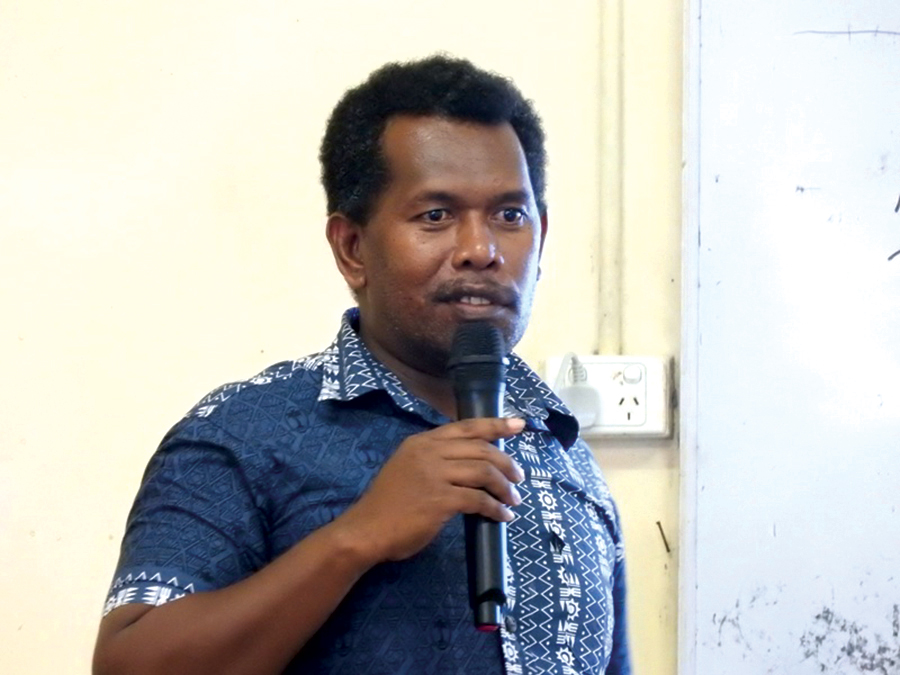
Director of Malaita Health, Dr Rex Maukera.

BY SAMIE WAIKORI

Auki

COVID-19 community transmission is reportedly picking up again in Malaita province.

Malaita’s emergency operation centre (EOC) chairman Dr Rex Maukera said in the recent weeks they have been receiving new cases from as far as Malu’u in northern region and also from Atoifi hospital in the eastern region.

Maukera, who also the Director of Malaita provincial health, said most of the cases were picked in Auki – at Auki clinic, Kilu’ufi hospital and at the passengers’ swabbing centre at Auki wharf.

He said this calls for public to continue observing covid-19 regulations and safety measures.

Maukera said people are urged to continue wearing facemask, apply social distancing, hand-washing, sanitiser and if tested positive they must go into home care and isolation.

He said provincial health continues to monitor and provide support to health centres across the province.

Maukera also called on the public of Malaita who are planning to travel to Honiara that swab testing for passengers at Auki wharf is compulsory to all.

He said the exercise is important as it tries to curb the transmission of the virus, thus public’s adherence is important in this collective fight.

Maukera said most cases from Auki in the recent days were picked at Auki wharf and those people were not granted permission to board vessels to Honiara until they’re free of covid-19.

He called on public across the province that the virus is still at large and people must continue to uphold basic covid-19 measures at home and in public spaces.

Maukera said on Tuesday this week they have two admitted covid-19 patients at Kilu’ufi isolation centre with mild conditions. 

Kilu’ufi investigates sale of drugs in Auki

0
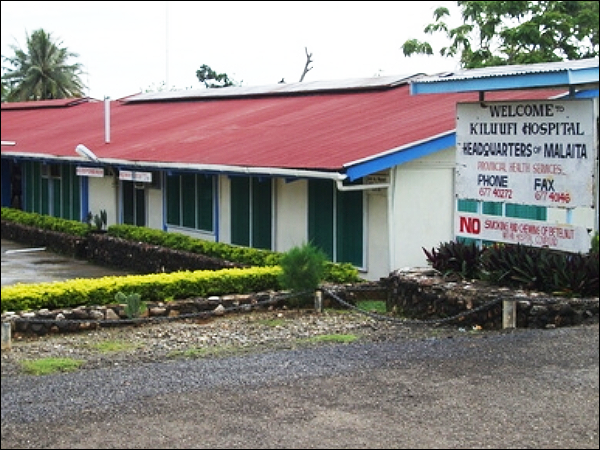
Kiluufi hospital

BY SAMIE WAIKORI

Auki

KILU’UFI hospital is investigating the sale of drugs in Auki reported to have been linked to the hospital.

Director of Malaita Provincial Health Authority, Dr Rex Maukera told this paper yesterday according to reports, there was a recent public sale of drugs particularly panadol in Auki.

Maukera said since then they have lodged an internal investigation at Kilu’ufi and in Auki; this investigation is yet to complete, he adds.

He said Kiluufi hospital would like to deny any involvement in this matter, and is urging everyone to wait for the investigation result.

Maukera said they have a strong monitoring system in place in all departments at Kilu’ufi hospital and any such illegal activity should be detected.

However, he does not rule out the slight possibility that some people may have found a way to bypass their security system.

Maukera also poses the possibility that the country has other outlets which sell the drug, and that the recent incident in Auki could have got its source from one of these outlets, such as a pharmacy.

He said sale of whatever drugs or medicine is prohibited and those involved in the activity as reported are asked to stop.

Maukera said only health professionals are trained and authorised to prescribe and give drugs to people who need medication especially the sick.

Land Matters with Allan Mcneil- Applying for land

Commissioner of Lands Alan McNeil

By ALAN MCNEIL, Commissioner of Lands

Today I’d like to tackle a subject that everyone is interested in. How do you apply for land?

First though, it’s important to consider the role and responsibility of the Ministry of Lands.

In my view, there has been a fundamental misconception in how the public perceives the Ministry and what it is there to do.

While the Ministry has divisions that administer land-related professions such as surveying, valuation and physical planning, there are also land administration units that manage land dealings over government-owned land.

Our land administration units do not deal with other people’s Perpetual Estates, only government-owned Perpetual Estates.

I don’t have an exact figure on how much land in Solomon Islands is in the perpetual ownership of the government, although seeing as around 20 per cent of the country’s land area is registered, it is certainly less than 20 per cent.

A lot of registered land is in the perpetual ownership of Solomon Islanders, and if we take a rough estimate that half of all registered land is owned by government and half is owned by Solomon Islanders, it means that about 10 per cent of the total land area of the country is in the perpetual ownership of the government.

In other countries around the world, if you want to buy or sell land, you visit a real estate agent.

The agent will have a portfolio of land parcels that people want to sell, and will then match these up to people who want to buy land.

This is how it works in a free market economy, so that people who no longer have a need for their land can sell it, and people who have an interest in buying land will have a range of parcels to choose from.

In these countries, it is unthinkable to ask the government for any spare land.

It is possible that there could be schemes in other countries to buy public housing units or buy land in a properly planned land subdivision if and when the government has surplus land somewhere, but it is inconceivable that the government would be faced with random applications for land all over the country, and even more inconceivable that the government might actually consider such applications when it hasn’t even said the land is available for sale.

That however is the situation in Solomon Islands, and the Ministry of Lands has unfortunately been perceived for decades as being like a real estate agent, where all and any government land is potentially up for grabs at prices far below the commercial market price, if you know how to work your way through the system.

This perception must change. The government only holds about 10 per cent of the land area of the country, and much of it is already allocated with Fixed Term Estates meaning the government can’t use those areas for any future government purposes.

Whatever is left is mostly just roads and government buildings and if there’s anything else left over, everyone is scrambling to get it, and calling it “waste land”.

So much of Honiara and the surrounding areas in Guadalcanal Province have already been given out as Fixed Term Estates to the point where the government has nothing left for essential services such as clinics and schools.

If there had been a strict physical planning and land administration regime decades ago, we could have preserved land for public needs, such as playing fields in every neighbourhood, but those opportunities were lost long ago, and squatters have hindered any efforts to preserve public spaces.

So, getting back to the question: how do you apply for land?

I suggest you visit a real estate agent to see what land they have available for sale.

 In Solomon Islands it’s common to find land for sale on Facebook as well, but buyers beware of conmen who don’t actually own the registered land titles.

If and when the government has surplus land available, the Land Board will likely require it to be advertised for public tenders, and it’s then (and only then) that you should apply.

The Ministry has also been facilitating the upgrading of Honiara’s informal settlements, in which case the occupiers of these areas should not apply, but instead they should wait until such time as the whole area has been properly planned out and subdivided.

RISKS ARE THERE

Solomon Airlines airbus

But gov’t plans to reopen border in July still stands

By EDDIE OSIFELO

THE Immigration Department is finalizing its operational plan called ‘Keepem me safe’ ahead of the reopening of the national borders in July.

Damien, who worked for Australian Immigration and Border Force for 21 years and invited by the government to establish a plan to reopen the borders for Solomon Islands, confirmed this during the Immigration Strategic Planning workshop in Honiara yesterday.

He said the Immigration Department will work with the Oversight Committee and National Security working group to implement the plan.

“Immigration is not a lead organization to dictate timing of reopen,” Damien explained.

“We need to work particularly with Department of Health, they will assess what the impact will be once the we open the border,” he said.

Damien said the main driver for the reopening could be economics, get people coming into tourism industry and so on.

“But got to balance the risks in terms of covid. It is still a real risk, a lot of people got covid, some recovered,” he said.

According to the plan, the Deputy Director of Immigration is the operation command.

His deputy command is the Chief Immigration officer and the Border Operation team will be the coordinating centre.

The forward command are the individual units in the Immigration teams like Passport Unit, Border Enforcement, Employment Visa, Immigration Operation, Border Control and Ports of Border.

Damien said the document will be finished off this week and submitting next week for approval and begin operation in terms of Immigration.

Further to that, Damien said Immigration recognised the risk of reopening the border as it could see rise of Covid 19 infection but got to balance it.

He said they need to be mindful as they are going to have organized criminal activities.

“Once border reopen, criminal networks will start targeting the country as well. We need to be on top of it,” he added.

Furthermore, Damien said it will be threat to frontline workers so need to ensure a covid free environment for them.

According to the Framework for the reopening came up by Oversight Committee, Solomon Islands is currently operating the Phase one that is easing of restrictions on international maritime and gradual increase of international flights.

Damien said Phase 2 is due to commend in May, that is removal of restriction at some point and increase flights, subject to vaccination rate.

He said Phase 3 is opening of border for provisions for bubble, some of the stuff still working on it, and commence in June.

Damien said in Phase 4, the border fully open with limited quarantine with three days only.

He said the thinking maybe July, up to medical advice and Oversight Committee to progress it with certain milestone they are happy with.

The workshop ends today.

Students encouraged to get vaccinated

BY MAVIS N PODOKOLO

Students who have not been vaccinated are urged to do so, with those yet to complete theirs told to complete it before going back to school.

This call was strongly emphasised by the Ministry of Education and Human Resources Development (MEHRD)

Tongoua Tabe, an officer of MERHD, says:

Student is strongly encouraged to go to the vaccination centres to get their vaccinations or to complete their doses.

“Again the Ministry of Health and Medical Services MHMS in collaboration with MEHRD and individual schools should fast track the vaccination programme for schools and make vaccines available for primary school age pupils between the ages of five to 11 years.”

He adds, teachers in schools and parents must take note that there is risk of covid-19 infection when students return to schools so strict health measures must be followed to contain or to reduce the spread.

“It is a requirement for all schools to take note the following requirement.

“The school must have a covid-19 response plan and protocols and this should be communicated with the community so, therefore your covid-19 response protocols in schools must be communicated to nearby communities,” Tabe said.

He said only vaccinated teachers and staffs will be on school grounds. It is recommended that teachers and staffs must be vaccinated. Therefore this is a requirement before you go back to your schools.

Ministry and EAs to help schools reopen

0
Form three exam starts today.

BY MAVIS N PODOKOLO

THE Ministry of Education and Human Resources Development (MEHRD) and Education authorities have confirmed they will provide additional support for schools to open safely.

This was echoed by Tongoua Tabe on behalf of the Ministry of Education when speaking of the school grant and additional support.

“The Ministry of Education and Education authorities they will provide additional support for schools in order to be ready to open safely,” he said.

Tabe said in supporting the schools during this covid-19 crisis in the country school principals are advised to use 60 percent of the grant on covid-19 preparedness and response related expenditure the remaining 40 percent of the grant that you received should be use for the teaching and learning resources.

Deputy Secretary for MEHRD James Bosamata adds that dates for the reopening of schools are as follows; Forms one to six and Rural Training Center to re-open on 30th May 2022, Pre-primary and Primary on 13th June and Early Childhood Education (ECE) on 4th of July.

“Starting date for classes is different from all sub sectors,” Bosamata said.

Gov’t says nothing sinister about Blue Economy MOU

0

THE Office of the Prime Minister says there is nothing sinister nor trivial about the Blue Economy Memorandum of Understanding (MOU) that is yet to be formalized between the government of Peoples’ Republic of China (PRC) and the Solomon Islands government.

A government statement clarified this following what has been described in the social media as an ‘MOU document leakage’ between the government and PRC government.

The statement said the Blue Economy MOU is a normal bilateral development initiative and at present it is in the consultation process with six other line government ministries.

“The MOU is still in its draft form, awaiting more insights and inputs from the line government ministries, however, its underlying objective is to tap on potential economic investment opportunities relating to ocean resources,” the statement added.

“Amongst other things, the MOU aims at enhancing and regulating foreign investments while protecting national interests and eradicate resource exploitation, it further aims to ensure that foreign investments are aligned with the government’s development aspirations and policies.”

The statement further explained that the MOU is a show of intent and this is testified by its broadness, as and when it will be signed between the parties then a technical or an investment agreement will be drawn up in which it will outline the investment implementation plans.

The OPMC statement highlighted that at the end of the day the beneficiaries of the Blue Economy MOU will be Solomon Islanders and anyone who opposed it is a stumbling block to the economic development and welfare of the people.

Government has repeated with emphasis that it remains stand firm to regional unity, maintains its respect for each other’s sovereignty, and will continue to explore pathways for development partnerships for the common good of the Pacific family.

The OPMC statement reiterated that the MOU is still work in progress and government did not flinched one bit about the document’s revelation, as the MOU is fully compliant to national and international laws and treaties.

“In the event that the MOU is signed by PRC government and the government respectively, its implementation will have to comply with other statutory obligations as required by our domestic laws and regulations,” the statement reiterated.

Hike in fuel price affects fishermen

Fish sales by local fisherman at the Central Market.

BY JENNIFER KUSAPA

Fishermen and public transport in the rural areas, OBM boats, are feeling the pinch in the current fuel price hike.

They are among the many business types in the country which are affected by the rise in fuel prices.

A fisherman from the Central Islands told this paper that increase of fuel prices has really affected them because they have to travel from their home village to Honiara to sell their catch.

The fisherman who identified himself as John said with the increase in fuel prices it has affected his fishing business.

“I am expected to work extra hard like catch more fish in order to earn extra profit, because if my catch is less, I will not be able to make profits, but all the money earned will go towards fuel.

“We the fishermen all faced with the same problem and I am calling on our leaders to do something to help us local fishermen,” John said.

Meanwhile according to an analysis of the increase of fuel price by the Central Bank of Solomon Islands (CBSI), the steep price increases were seen in ‘Tapis oil’ price, the main imported fuel for Solomon Islands.

The analysis has it that, the average monthly retail fuel price in Honiara has increased from SBD$9.66 per litre in January 2022, to SBD$10.94 per litre in March and climbing to SBD$12.30 per litre in April, an increase of SBD$2.64 within a span of only three months, the highest increase the country has ever experienced.

In terms of Tax, fuel excise in Solomon Islands is 15% GST on every litre of fuel purchased. In addition to 15% GST, the Fuel Wholesalers in Solomon Islands pay taxes for Sales of 10cents per Litre (used to be a levy for road users charged at service stations, now shifted to fuel wholesalers, paid for by everyone), Duty of 50 cents, Pipeline levy of $0.0275 per Litre (charged by SIPA) contributing to the current fuel increase price at Service Station Operators, that is being experienced in this month of April 2022.

For other businesses indirectly, cost of fuel increases is in the form of high electricity costs especially in terms of power tariffs processes. Solomon Islands is a net importer of oil, therefore, unless non-oil imports fall, an increase in oil prices will result in a wider current account deficit, which indicates higher net foreign debt and lower consumption.

MONEY CRIME CHALLENGES

Immigration highlights biggest challenge

By EDDIE OSIFELO

THE Immigration Department faces challenges in combatting transnational crimes.

Deputy Director of Immigration, Chris Akosawa confirmed this during the opening of a three-day Immigration Strategic Planning Workshop at Pacific Casino yesterday.

The purpose of the workshop is to:

  1. enable Immigration officials and stakeholders’ sharing and contributing their inputs to the Immigration strategic plan, restructuring and the Immigration reform;
  2. to evaluate the progress of the implementation of border reopening plan including the annual work plan and;
  3. to finalize Immigration border reopening plan, Immigration strategy and review of Immigration structure.

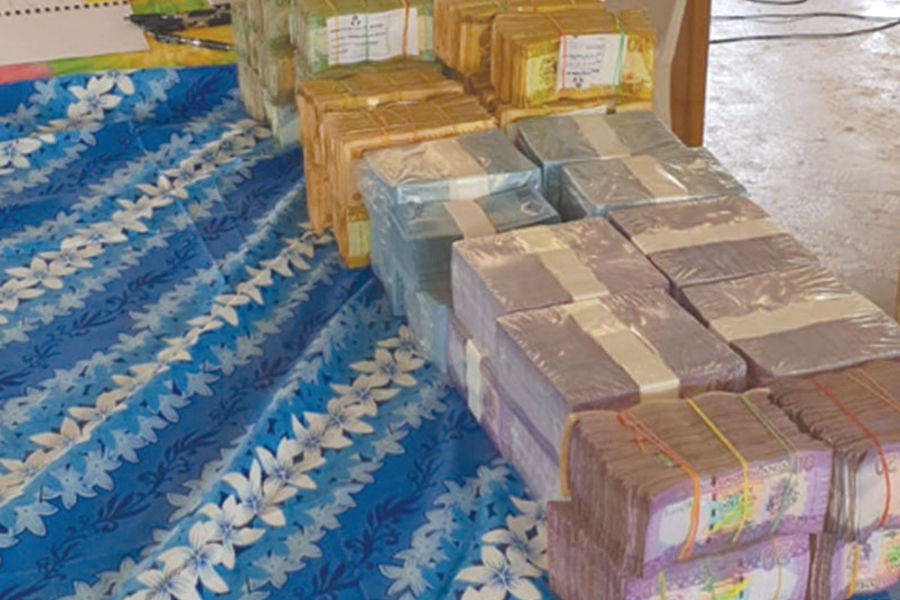
Akosawa said Immigration has detected cases related to transnational organised crimes which involved criminal syndicates using our commercial system to launder money and committing the acts of proceeds of crimes in the country.

He said it is a serious concern for any country with a weak and struggling economy like Solomon Islands to combat organised crime and proceed of crimes.

“Money laundering and proceed of crimes is more complex to investigate in which the Immigration laws, even do not have the teeth to bite.

“Immigration can provide supports for investigation, but need specific laws to combat proceed of crimes.

“I am always sad to see criminal syndicates operated onshore targeting our extractive and commercial sectors which are real threat to our economy and border security.

“Therefore, this workshop provides avenues to finalize Immigration reform and strategic plan addressing transnational orgniased crimes involving, fraud, coercion, official corruption and abuse of power embedded in our system silently undetected,” he added.

In the meantime, Immigration has achieved some milestone between 2020 and 2021 despite border restrictions.

Akosawa said Immigration revenue collections for 2020 and 2021 was $27 million, which was a decline of equivalent of 30 percent to 40 percent of collections.

He said mostly the revenues came from Passport, visa and border controls and border compliances.

The workshop ends tomorrow.