Home Blog Page 662

‘USE BED NETS’

0
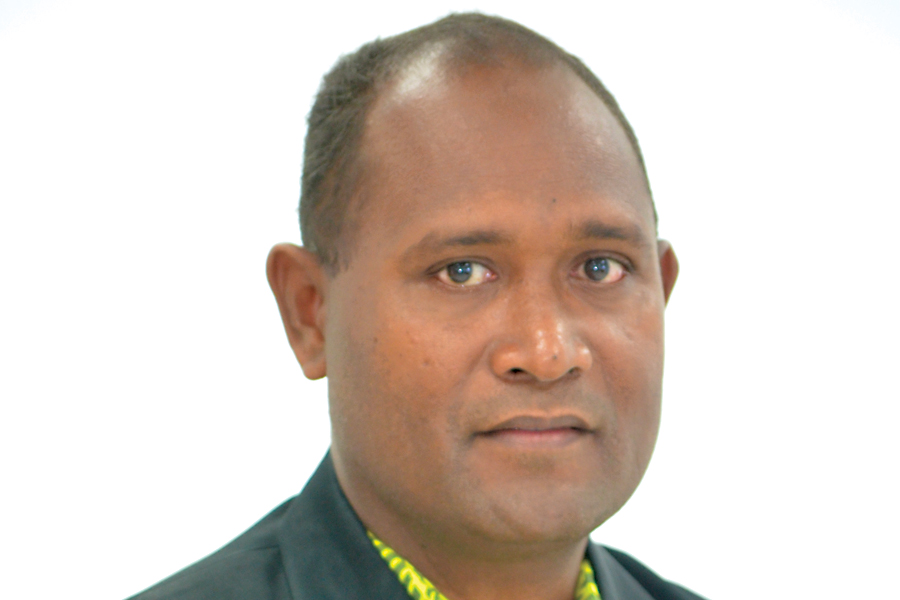
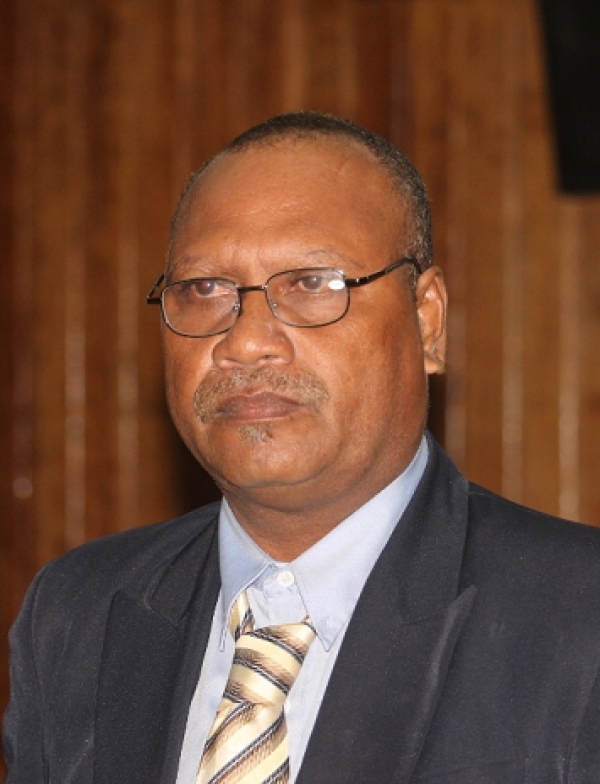
Minister for Health and Medical Services Dr Culwick Togamana

Ministry of Health’s answer as more Malaria vaccines are available globally

BY MAVIS N PODOKOLO 

BED nets is the ministry of health’s (MHMS) answer to Malaria, even though vaccines are now available globally.

Malaria vaccine RTS,S/AS01 (RTS,S) was declared by the World Health Organisation (WHO) in October 2021; and the latest – R21 – was announced by the University of Oxford earlier this year at 80 percent effective in preventing the disease in children.

Sadly, Solomon Islands cannot access these vaccines, Health Minister Dr Culwick Togamana told parliament last week.

Malaria remains to be one of Solomon Islands’ most common diseases.

Togamana also told parliament one of the vaccines was created based on the work of a Solomon Islander – malaria specialist Dr Nathan Kere.

Togamana does not explain why the vaccines are not available for Solomon Islanders. Neither does he offer any hope – whether his ministry has any plan to bring in the vaccines and make them available to Solomon Islanders.

Instead, he gave a crash course to the Speaker, members of parliament and the country on the ozone layer and how to use bed nets, treat bed nets and take care of bed nets.

“We would like to enforce the use of bed net and so the Ministry is continuing to distribute bed nets to our people in the rural areas and even up to now. But the choice of using that bed bet comes back to individuals.

“But from the Ministry’s view we are pleading with the public to ensure they use the bed net and after sometimes the effectiveness will decline and they need to get a replacement.

“The spray was used way back before, but it was no longer practised now days because they found out that the DDT use to spray the houses can remain for a very long time in an environment, it is a chlorinated carbon as well.

“Therefore once chlorine is disintegrated and evaporates into the atmosphere it can also have impact on the greenhouse effect (the trapping of the sun’s warmth in a planets lower atmosphere) or depletion of ozone layers,” Togamana explained.

The RTS,S malaria vaccine was announced by WHO on October 6, 2021.

WHO Director-General Dr Tedros Adhanom Ghebreyesus in announcement of the vaccine said: “This is a historic moment. The long-awaited malaria vaccine for children is a breakthrough for science, child health and malaria control.

“Using this vaccine on top of existing tools to prevent malaria could save tens of thousands of young lives each year.”

The R21 is said to be an improved version of the RTS,S and with a more successful trial rate. However, Harvard scientists choose to wait and see as the R21 is being administered world-wide for “clearer” results.

Meanwhile, a scientific study published in June 2021 in the Malaria Journal says Solomon Islands is having some success in its campaign against the disease. The study covered 19 villages across four provinces in the country.


HHS looks at expanding into design, food technology and computer science

0
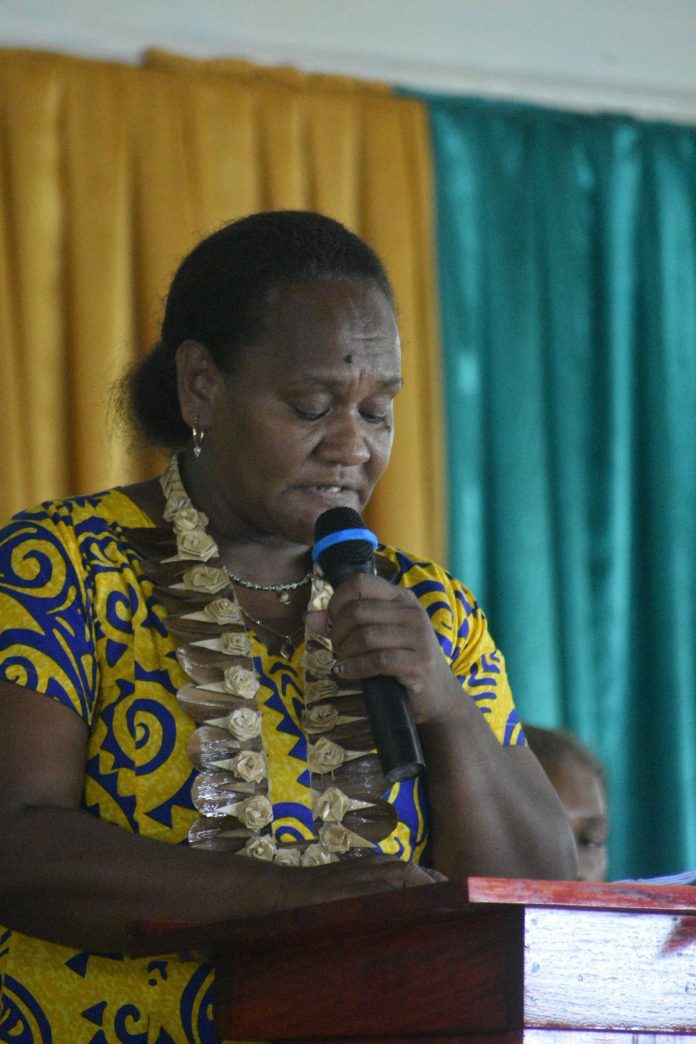
Honiara High School Deputy Principal Academic Neyleen Maeohu.

BY NED GAGAHE

Honiara Senior High School says they will expand their enrolment in terms of including design technology, food technology and computer science for forms six and seven students in the coming years.

This is according to the school’s Deputy Principal Academic Mrs Neyleen Lae Maeohu at Thursday’s annual graduation and prize giving ceremony.

Maeohu said the school has achieved some positive changes this year 2022, in terms of building positive working relationship amongst the staff members.

She said the school has taken another step in its physical development in terms of infrastructure.

“This building project is part of the school recovery process and is seen as a milestone achievement in which we are hoping will cater for the future endeavors of our school.

“I, on behalf of the school principal is proud to say that there is always collaboration among the teaching and supporting staff.

“Our guest of honour, Honorable Minister of Education, our Teaching Service Director, AusAID and New Zealand High Commission representatives, our aid donors, supporters, upon the completion of these buildings, the school will expand its enrolment in terms of including design technology, food technology, and computer science for our forms 6 and form 7 students.

“It is our aim to provide quality education and to produce quality students. Honiara Senior High School as you witness today has the highest enrolment of students. We believe in giving our students a second chance to education. Not every student is expected to excel academically, thus we provide a venue for them to identify their potentials and be able to look after themselves after leaving school.

“Again, all these will not be possible and the school will not be able to achieve these dreams without your support. For this, I on behalf of the school Principal would like to acknowledge our aid donors, supporters for your undying support.” Maeohu said.

Tanangada: half of SIG 2023 scholarship on TVET

0
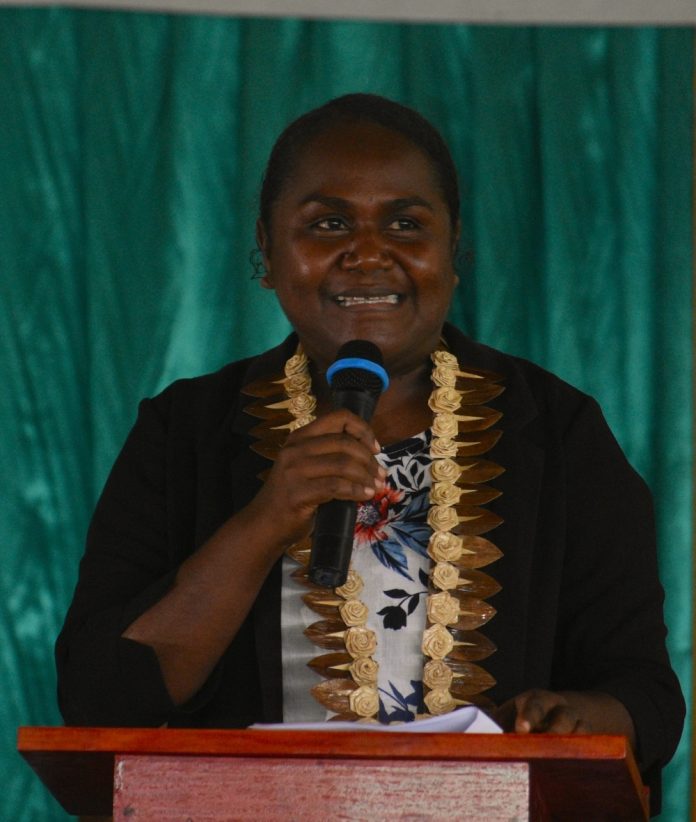
Minister of Education and Human Resources Development

BY NED GAGAHE

Almost half of the Solomon Islands Government (SIG) scholarships for 2023 will be offered on skills training in the Technical Vocational Training (TVET) sector.

This was highlighted by Education minister Lanelle Tanangada during the Honiara High School graduation and prize giving ceremony on Thursday December 8.

Tanangada said our country’s future depends on hands-on engineers and technologists, manufacturers, health workers and educators hence, we need to do more to encourage students in these fields.

“That is why our scholarships are focused more on skills training in the Technical Training Vocational Training (TVET) sector, where next year almost half of the scholarships are offered for skills training, which is a fulfillment of the government’s redirection policy of investing towards the productive sector and resource sectors.

“The country already has so many lawyers, pilots, engineers but job opportunities are less.

“I had the privilege of attending SINU graduation and it is evident that we have less numbers in the faculty of science and technology and faculty of agriculture, forestry and fisheries.

“We need human resources in the productive resource sectors of the government. Moreover, our country’s future depends on citizens who are literate, can numerate and use information to their benefits.

“Ladies and gentlemen, it is my perspective that if we crave to build a more hopeful Solomon Islands, then we must help to teach our students effectively, in order for them to gain the skills and competencies and to teach as far as their vision and character can take them (quotation from Mrs. Laura W. Bush).

“Education is one of the most important investments a country can make for future of its citizens, and is a powerful agent of change.

“Not only is education described as a driver of personal, national and global development, but those that are educated sufficiently do develop the right skills – as a result of their learning experiences can and will improve their health and livelihoods, contribute to social stability and drive long-term economic growth and benefit.” Tanangada said.

Honiara High School lauds teachers and stakeholders

0
Honiara High School Deputy Principal Academic Neyleen Maeohu.

BY NED GAGAHE

Honiara Senior High School has thanked teachers and stakeholders for standing with the school during recent trying times.

Deputy Principal Academic Neyleen Lae Maeohu made the acknowledgements at the school’s graduation and prize giving ceremony which also marked the closing of the school’s 2022 academic year.

“Lastly but not the least, may I register my sincere thanks to our good parents, guardians and supporters who have rendered and supported the school in paying up their children’s school fees and for giving us helpful advices and standing with the school in terms of finance. Your oceans of contributions this year have impacted our school programmes to some level of achievements.

“Today, our school Principal is proud of you all, you are our heroes in the battle of providing a sustainable and quality learning for our children. Remember that our children’s education is supposed to be a shared responsibility. ‘Education hem sam ting umi evri wan waka fo hem’.

“Let me take this time to acknowledge the government of Solomon Islands – through MEHRD for the continues support in one way or the other towards the teachers, school in terms of grants and financing the school with its projects.

“Also, to the Australia and New Zealand Governments, please convey our heartfelt gratitude to your office.

“To other private companies, the Tropical Glass Builders, sister schools, Solomon Islands National University, University of the South Pacific and other stakeholders, we salute you for standing with our school during these trying times. Please refer to the back of our program booklet for acknowledgement.” Maeohu said.

Reach Consultancy continues with its cattle vaccination

0
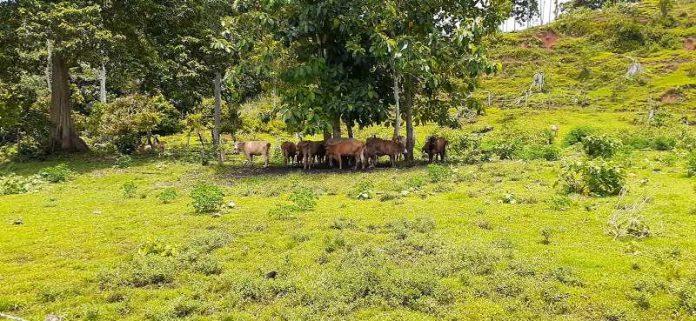
Cattle farm

BY SAMIE WAIKORI

REACH Consultancy group recently carried out vaccination on cattle farms along Kwaiba’ita River in East Kwaio.

The vaccination rollout is part of the whole initiative by Reach Consultancy aiming at producing quality cattle for market and local consumption.

Director of the Consultancy group, Mr Freddrick Faabasua said last week a Reach team visited cattle farmers along Kwaiba’ita River and vaccinated around 110 cattle.

He said the number of cattle vaccinated is roughly around 300-400 cattle along Kwaiba’ita River raised by individual farmers.

Faabasua said due to shortage of vaccines they could not cover the rest; however, arrangements have been made with a supplier overseas to supply drugs to continue with the programme.

He said drugs will be ready soon but that will be mostly for the second dose roll-out for farmers that they had visited with the first dose of the roll-out.

Faabasua said so far up to 180 cattle have taken the first dose and they are ready for the second dose, which will be in a couple of weeks’ time.

He said since the start of the roll out, they have visited parts of central and eastern regions of the province include Dala, Nambaula, Faarau, and farmers in West Kwaio and Kwaiba’ita in the east.

ENDs////////////////

MPG eager to back Malaitans in the productive sector

0
Former Malaita Premier, Daniel Suidani

BY SAMIE WAIKORI

PREMIER Daniel Suidani says the Malaita provincial government is keen to support and encourage Malaitans to venture into productive sector in the province.

In an interview with SunAuki, he said there are lots of talented Malaitans out there as well as many potential areas to explore and do business in the province.

Suidani said along that rationale, MPG has been supporting the Reach Consultancy – a Malaitan established group with little they could towards their cattle vaccination programme in the province.    

Similarly, he said MPG has also supported Reef Solomon through a fisheries project at Malu’u provincial sub-centre.

Adding that MPG would also like to see cooperation from Malaitans to go into other areas or sectors of business to boost development in Malaita province.

Suidani said MPG like other provincial government are public institution that cannot run businesses only services, but they want to support Malaitans to venture into businesses in the province.

And MPG has been providing supports in what they could do under their capacity to support Malaitans into the productive sectors in the province, he said

Suidani said with that MPG would like to encourage Malaitans to come back and discover many areas of development to support the province.

He reiterated that MPG is eager to work with developments partners and even interested Malaitans to see the growth of productive sectors in Malaita province.   

ENDs////////////////

National development strategy to be reviewed

0
Minister of National Planning and Development Coordination Rexon Ramofafia.

By EDDIE OSIFELO

MINISTRY of National Planning and Development Coordination will be undertaking a review of the National Development Strategy, the NDS 2016 – 2035 in early 2023.

Rexon Ramofafia confirmed this during his debate on the 2023 Appropriation Bill 2022 in Parliament on Thursday December 8.

“This review is important sir, as we have now reached a midpoint in the timeframe of implementation and it is important to take stock of how we have progressed implementation and advanced national development objectives,” he said.

More so, Ramofafia said covid 19 and the recent domestic and global disruptions have affected our context and greatly changed the environment and dynamics for national sustainable development.

“It is therefore necessary for us to take stock and recalibrate.

“I wish to thank UNDP through the Governance for Resilience Project and New Zealand for committing to support us in this important activity,” he added.

Apart from the, Solomon Islands has delayed its graduation out of Least Developed Countries category earmarked for 2024.

Ramofafia said “given the shocks that we have experienced and their implications on our ability to ensure a smooth transition and preparations to put us on a sustainable footing as we progress out of LDC category, the government has invoked with the relevant UN agency, the crisis response mechanism and requested for an assessment of the impacts of the covid pandemic, the recent riots and the flow through impacts of the Russia/Ukraine war on our ability to sustainably graduate.”

He said a United Nations Inter Agency Task Force is on the ground undertaking consultations as part of this assessment with a view to providing government with key evidence to inform how we proceed with the important issue of LDC graduation.

ALL EYES ON $4.6B

0
Minister of Finance and Treasury Harry Kuma

By EDDIE OSIFELO

PARLIAMENT started scrutinising the $4.6 billion budget for 2023 in the Committee of Supply.

This after members of both the Opposition and Government completed their debates from Monday to Thursday on December 5 to 8.

All have pledged their support behind the 2023 Appropriation Bill 2022 in their debates even though some members of the Opposition have questioned its credibility.

The theme of the 2023 Budget, “Iumi Together moving Solomon Islands forward”.

Minister of Finance and Treasury, Harry Kuma reiterated the need for unity, in order to the overcome the development challenges faced by the country.

The development challenges were further exacerbated by the Covid-19 pandemic, November 2021 riots and the Ukraine war.

Kuma said the number-one priority now is to rebuild the economy.

He said this is why the 2023 budget is not a ‘business as usual budget’ but a historical budget with a deficit to accommodate once in a lifetime Pacific Games next year.

Kuma said a deficit budget is not a bad thing but how you channel the funds is important in order to finance the deficit.

He said the Government will fund the deficits from:

  1. general supports from Development partners for an amount of $320 million;
  2. issue of SIG Development bonds and expects to raise $400 million from that;
  3. arrange for external borrowings,
  4. rolling over unspent development funds to next year and
  5. additional revenue policy measures.

In addition, Minister of Minister of National Planning and Development Coordination, Rexson Ramofafia said as Minister Kuma alluded to in his speech, whilst delivering the 2023 budget, the economy contracted by 4.5% in 2022.

He said inflation rose to 2.7%, in large part owing to high global fuel prices as a result of the Russia Ukraine war.

“Production and international trade have been affected as indicated by declines in exports and resultantly declines in our trade balance.

“These are but general economic indicators,” he said.

Ramofafia said the flow through impacts on people’s wellbeing and livelihoods have also been felt.

“It is very important for us to respond accordingly and implement measures that ensure that our country recovers and continues to grow, and that our people people’s wellbeing and livelihoods is protected. “Despite a challenging global and domestic environment and context, we must continue to maintain the focus on advancing our country and moving our people forward,” he added.

MPA calls on government to hasten making Copen illegal

0
Copen Drug. Photo Supplied.Photo By SOLOMON TIMES ONLINE.

BY IRWIN ANGIKI

The former provincial ward member for Wagina, Ward 1 Choiseul province is calling on the national government to hasten making the so-called new drug – Copen illegal.

Mofete Tupou, while welcoming Health Minister Culwick Togamana introducing the Copen issue into parliament early this week, believes that time is a crucial factor.

Wagina school teacher Mr Eribati also supports this call, saying he has witnessed his students’ academic performance dragged down by Copen.

And, a Solomon Islander living in Kiribati warns the Copen problem can get ‘very serious’ if government overlooks it.

A community leader’s dilemma

One obstacle handicapping leaders from stopping Copen usage and production in their communities is Copen not yet being nationally recognised as an illegal entity, or even as a drug, Mr Tupou said.

He shares that Copen is normalised in his community, Wagina – it is sold and consumed openly by both children and adults.

Tupou says he has received stiff resistance from many in his community when he voiced plans to create a by-law against Copen.

“Early this year, I shared my plan to create a by-law targeting the production and usage of Copen and received hostile reception from a lot of my people here, including parents, relatives of users and producers, even elders of the communities here.

“In our deliberations and arguments over the Copen issue, I always end up cornered without any answer when they ask me if Copen is illegal.

“They have a valid point because Copen is not illegal, and this is because it has not yet fully caught the attention of the national government and relevant authorities.

“But, I am saying that now is the time to act. Monday this week the Health Minister introduced Copen to the parliament. What we would like to hear next is it has been gazetted as an illegal entity.”

Tupou says it is difficult to remove Copen from his community because a ‘majority’ of people on Wagina use the substance, more so, many rely on it as an income earner.

A teacher’s sad observation

Eribati, with 20 years of teaching experience, says students using Copen are lagging behind in their education compared to those who are not users.

He said since 2018 when he first saw Copen in his community, he has seen bright students slide down the academic ladder once they got hooked to Copen.

“It had struck me that some of my top students started performing low, and later I would learn that they were addicted to the new drug that we were just starting to experience in 2018.

“Following years, this sad trend continued and grew worse as more students became hooked to Copen. Now, my top students are those that do not indulge in Copen use.

“In class it is very clear. Student users would become restless and agitated after the first period, and would excuse themselves to visit the loo, but we all know that they are going out for a Copen dose.

“When I tried suggesting banning Copen to be included in school rules, I met resistance from other parents, guardians and other staff. Their main argument is Copen is not illegal according to Solomon Islands laws.

“So, I took it upon myself to make it my classroom rule. I told students that I will not tolerate Copen in my class.

“Government should make it a law to ban Copen, its use and production, so that it will enable us to incorporate it into our school rule.”

Grim warning from Kiribati

Tupou says Copen was introduced into the country by Kiribati Solomon Islanders who travelled over to mainland Kiribati and brought back the substance plus the idea to produce it with them.

He puts this around 2017.

A Solomon Islander living in Kiribati who asks only to be named as Mary warns the Copen problem must not be taken lightly.

Speaking to Island Sun this week, she said in Kiribati ‘Couben’ [Copen] is rife and is recognised by communities there that it is a problem, allowed to reach an uncontrollable stage by authorities who had overlooked it.

“I am not sure if it is illegal or not. One thing for sure is although it is very common here, people deal it under cover.

“Users range from children to adults. While it is a stimulant that can be used in kava sessions, and other social gatherings, Couben has been blamed for low school performance of children, domestic violence, petty domestic nuisance such as stealing, health problems, and is also rumoured to be the cause behind some oral cancer cases here.

“Solomon Islands is still at the stage in which it can turn the tide on Couben. But it would mean national government and relevant authorities step in and make the necessary legislations, and fast.

“Do not leave communities, families and individuals to fight it alone,” Mary warns.

Meanwhile, Island Sun had reported in early November on the extent of Copen’s spread in the country.

Apart from Temotu and Makira-Ulawa provinces, Copen has penetrated schools and communities across the country.

In Honiara, where Copen is reportedly most prevalent, even prestigious Government and church-run schools are facing challenges with the substance.

In Renbel province, it was reported that Copen is suspected to be connected to the death of a youth earlier this year.

Mass disciplinary suspension of students has been reported across many of Honiara’s city council and government schools. In the Western province, a similar situation was reported in one of the major schools there earlier this year.

The ministry of women and youth (MWYCFA) had told Island Sun that government’s approach was to leave the Copen problem to be dealt with at the family and community level. [This is bound to change after the Ministry of Health (MHMS) announced in parliament it would investigate Copen]

Police has also admitted that they cannot do much except do community awareness because Copen is not recognised by law to be a drug, nor an illegal one.

Copen is taken orally, and is produced using household items such as colgate and food colouring.

////////////

Information is power! Solomon Islands needs a freedom of information law ASAP

0
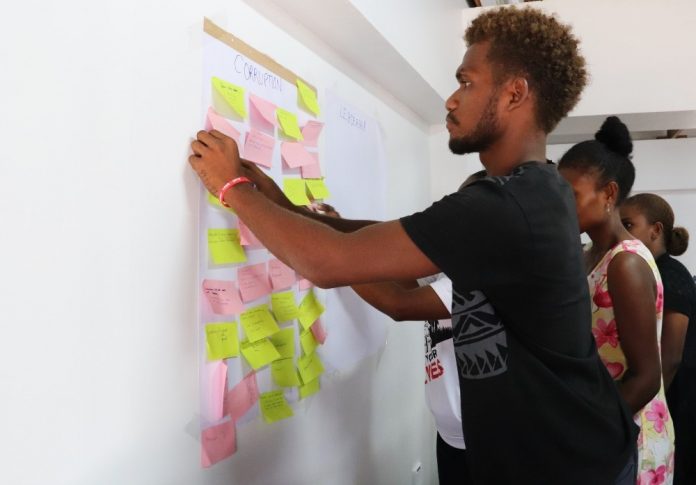
Corruption-Activity-Youth-Anti-Corruption-and-Integrity-Dialogue

More than 100 years ago, an American Supreme Court judge reflected on corruption and transparency and proclaimed that “sunlight is the best disinfectant”. These words still hold true today. Shining a light on corruption – exposing it to the world – is the best way of trying to make sure that corrupt people cannot get away with their dodgy conduct by hiding their actions.

In practice, one of the best ways of shining sunlight on corrupt practices is through a public right to information. The right to information (RT)), or freedom of information (FOI) as it is referred to in some countries, refers to the right of all persons to access information held by public bodies. In Solomon Islands, Article 12 of the National Constitutions provides for the freedom to receive and communicate ideas and information without interference, as part of the right to freedom of expression.

Article 12 of our Constitution reflects the principle that all information held by governments and public institutions is public information that should be freely available and should only be withheld from the public for legitimate reasons. By giving the public the RIGHT to receive information about the public money the Government spends, the contracts it enters into, and the services it provides, the public – and the media – can use that information to hold officials accountable for their conduct.

The right to information is globally recognized as an integral part of the fundamental right to freedom of expression. This right can be found in article 19 of the Universal Declaration of Human Rights and article 19 of the International Covenant on Civil and Political Rights. The UN Sustainable Development Goals recognize this explicitly – SDG-16, Target 16.10 calls on all governments to “ensure public access to information and protect fundamental freedoms, in accordance with national legislation and international agreements”. Article 10 of the United Nations Convention against Corruption also requires States parties to take measures to enhance transparency in public administration, including information on its organization, functioning and decision-making processes.

More than 125 countries around the world have some form of FOI law, which allows the public to access government information and requires government bodies to proactively and regularly publish certain types of information. In the Pacific, the Cook Islands, Fiji, Palau and Vanuatu have passed FOI laws, while the Federated States of Micronesia and Papua New Guinea have developed a draft FOI law and policy respectively, which are currently under review.

Solomon Islands has been considering FOI legislation for more than a decade, in order to operationalise the fundamental right that is already found in Article 12 of our National Constitution. In 2008, the Solomon Islands Ombudsman co-hosted a Regional FOI Meeting for Pacific Policy-Makers in Honiara, in partnership with UNDP and the Pacific Islands Forum Secretariat. Since that time, the Office of the Ombudsman has spear-headed efforts to work with other Government partners to develop a policy or draft law that will enshrine a right to information for all Solomon Islanders and impose duties on Government bodies to regularly publish information such as their budget and expenditures, contracts with third parties, grants and other government funding allocated to partners, project implementation reports, and the like.

On Friday, the world will celebrate International Anti-Corruption Day (IACD) which is commemorated on 9 December. IACD is not just a day of celebration but a day of action – an opportunity to reflect on what needs to be done to stop corruption in Solomon Islands.

One very practical approach is to pass an FOI Act as a matter of priority. To that end, the National Parliament and Provincial Assemblies are encouraged to work with the Ombudsman, and other anti-corruption offices such as the new Solomon Islands Independent Commission Against Corruption (SIICAC) and the Office of the Auditor General, to push forward with the current draft FOI Bill that the Ombudsman has been working on for many years. Members of the public can also call on leaders to make this right a reality.

Public information collected with public money for public purposes should be accessible by the public! Every person has a right to know what is being done by their government – an FOI law can make that a reality and is long overdue for Solomon Islands people.

BY THE OFFICE OF OMBUDSMAN