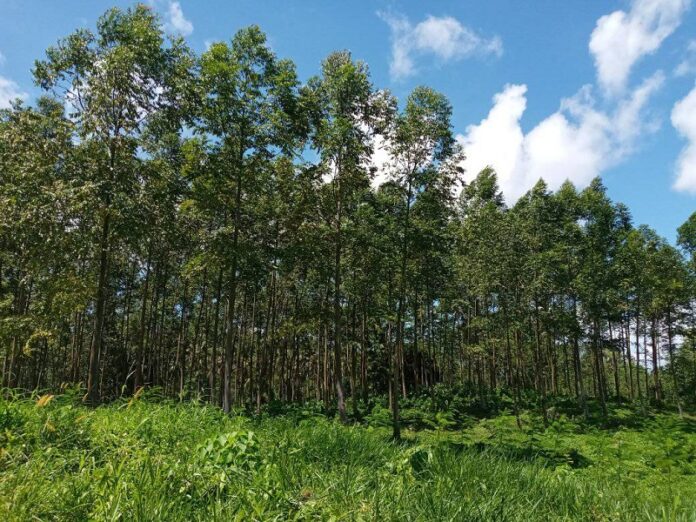
AUSTRALIA through the Strongim Binis programme is assisting Kolombangara Forest Plantation Limited (KFPL).
In an interview with Island Sun, General Manager of KFPL Edwin Schramm said his office is in contact with Australian counterparts every two weeks to expand the business further.
He said Australia is trying its very best to assist KFPL remain viable since the company suffered serious setbacks during and after covid-19.
Schramm said discussions look at other opportunities; most major focus will be redeveloping KFPL’s customer base.
He said the project also supports outgrower and downstream processing.
GENERAL Manager of Kolombangara Forest Products Ltd Edwin Schramm
Schramm said a total of 300 hectares of land have been engaged under the outgrowing project.
He adds that Australia also played a major role in the establishment of Pallet Plant next to the KFPL seaport.
“This project also helped us to establish the Pallet Plant. This was funded one hundred percent by Australia.
“Was it not for the Pallet Plant, we would have wasted our logs.
“We are processing these logs and produce pallets which are sold domestically,” Schramm said.
KFPL Necessary site
When ask about whether he welcomes Chinese investors, Schramm said he would prefer Australian investors over China.
“We would prefer Australia to have a greater interest in this business and we are talking to the High Commissioner so as other interested parties in Australia to take interest in this business.
“They could be our first preference
“But if it doesn’t happen, there not much we can do, I’m not encouraging China, this is not what I want to do.”
Australia support began in 2020 – a year after Chinese officials visited Kolombangara (2019).
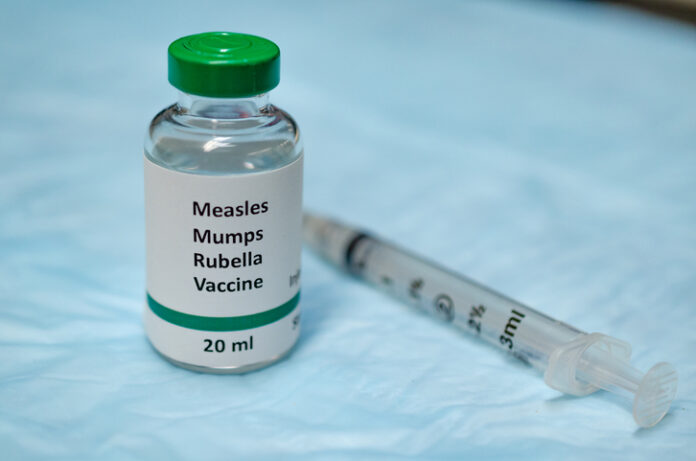
Increase in measles, rubella and monkey pox is a threat
BY MAVIS N PODOKOLO
THE increasing number of measles, rubella and monkeypox in the Pacific region is posing a threat to Solomon Islands
This was echoed by the Technical Advisor of the Ministry of Health and Medical Services Dr Yogesh Choudhri in a radio talkback show yesterday on the Solomon Islands Broadcasting Corporation
“In terms of other threats that are ongoing in Pacific we are seeing cases of measles and rubella being reported in Fiji. So they are trying to control the outbreak within their countries.
“And in Hawaii and Australia we are seeing increasing number of cases of monkey pox. Australia has actually double the number of cases of monkey pox in the last 10 days,” Choudhri said.
On the country’s vaccination progress, he said it has reached 70 percent.
“Vaccination for 18 years and above we have reached level of 70 percent. That means 70 percent of people in Solomon Islands have at least received one dose of the vaccine.”
He adds, 52 percent little bit more than half of the population have already received their two doses of the vaccine and 18 percent have received at least one dose.
“We request remaining people who have taken one dose to come for their second dose and the people who have not taken their vaccine to come start taking the vaccine,” Choudhri said.
He said in the age group of 12 to 17 years the progress has been faster than what they saw in 18 plus years age group.
“We have vaccinated 41 percent of eligible population and 12 to 17 years aged group with at least one dose.29 percent of this age group people have complete their two doses of covid-19 vaccination and 12 percent have taken one dose,” Choudhri said.
SOLID waste has become a critical environmental issue in Solomon Islands. Poor enforcement of the law as well as behavioral breakdown in society continue to be challenges in addressing the issue.
This report looks into the solid waste management crisis in Gizo and two communities close to Gizo.
Western Province is described as the tourist destination in Solomon Islands. It has beautiful islands with white sandy beaches, pristine forests and marine resources.
However, these prestigious tourist attractions have been threatened by poor solid waste management and the influx of plastics, aluminum materials and electronic devices in Solomon Islands and into Western Province adds the to the issue.
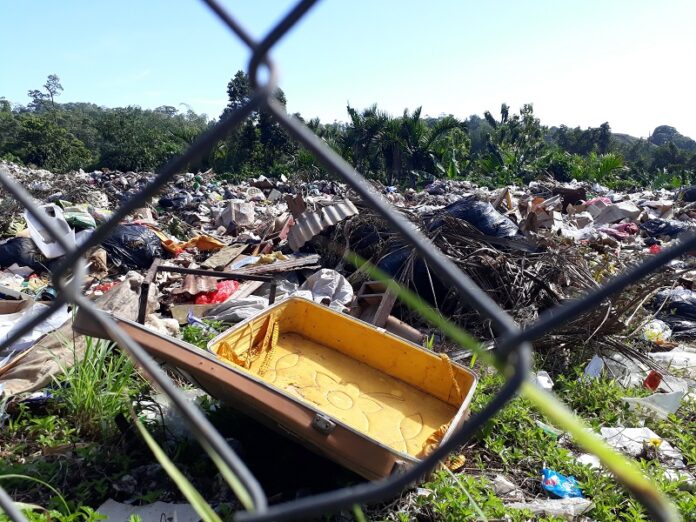
No rubbish segregation at Gizo dumpsite
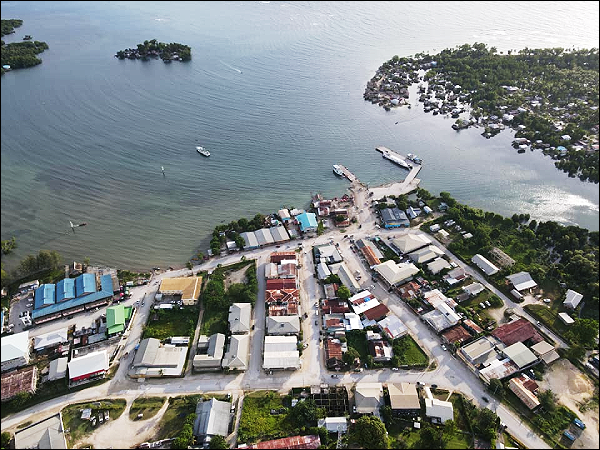
Gizo is like a one-stop small town with close to 21 Chinese retail and wholesale shops, and a few liquor shops. It’s where both the provincial administration and other national government institution offices are located. Gizo is the largest town in Western Province of Solomon Islands with a population of approximately 10,000 people; the number is increasing every year.
According to a census carried out in 2009, Gizo has a population of 7,177. In 1999, Gizo’s population was 5,323.
According to research carried out by Melchior Mataki as part of his PhD dissertation in 2011, a person generates 0.87 kilograms of waste per day in urban areas – a total of 20,516 tons of compacted waste annually for a population of 64,600 (Mataki, 2011).
Meaning for Gizo alone, at total of 8,700 tons of rubbish are generated per day.
The population of Gizo is made up of working class and traditional owners of the land. Gizo town comes alive every weekday as people from nearby islands come to the town to do their shopping, sell their local produce and also seek health and medical services. However, no one seems responsible to keep the town clean except the Gizo Town Council.
At the end of each day plastics, empty aluminum drink cans, disposable takeaway plates and cups can be seen everywhere within the town.
Some of this solid waste ends up in the drainage systems and later spills over to the ocean.
The clerk of Gizo Town Council, Mr Charles Kelly, agreed the influx of solid wastes such as plastics, aluminum materials, electronic appliance and asbestos materials is worrying.
Gizo Town Clerk Charles Kelly
“These toxic wastes can be found anywhere within Gizo Town Boundary and Gizo shorelines to nearby coastal communities.
“From Gizo Town Council perspective, our greatest weakness is lack of proper regulation to confront the issue,” said Mr Charles Kelly, adding that solid waste has been an unregulated and least prioritized environmental threat in Western Province of Solomon Islands.
He said the Province’s existing environment ordinance which provides provisions to regulate solid waste management is out of date.
“For example, we introduced a rule that single use plastics is prohibited at the Gizo market. This rule works very well at our local market as our existing ordinance does provide a provision for us to enforce this rule. If you go the market, no one is selling single use plastic, you will find baskets made from coconut leafs for customer to buy and use as shopping bag. However, this rule does not apply to the retail and wholesale shops because our existing ordinance does not allow us to enforce this rule on the shop owners.
“We proposed a budget to hire a legal drafter to review our ordinance but our provincial government was not very supportive of this proposal,” Kelly said.
He said Gizo Town is growing at a fast pace and it requires proper regulations to accommodate and address issues that are approaching.
(Projected population by province 2010 – 2025 shows that the population of Western province will reach 107,023.)
The calculation is based on the birth rate per day in the country.
“We will have more investors and more investor’s means there will be more shops and that becomes an issue when we are talking about solid waste and other garbage. Plastic waste, electronic waste and other waste is a product of development especially commercial activities – this means that we as a service provider need to improve our capabilities to dispose of these wastes. We need to look at ways to meet the challenge. Currently it’s very difficult for us to make changes; as I’ve said earlier, we don’t have the law to enforce rules and regulations that we put in place, he said.
“Gizo Town Council has been trying its best to dispose of all the garbage in Gizo but the garbage keeps on coming back on the streets, our shoreline and also backyards. This means that we need to look at different approaches,” Kelly added.
Roy Saunders, one of Gizo Town Council’s employees, who is responsible for collecting garbage on a weekly basis, said the pandemic has hit Gizo Town Council hard financially, and that rubbish collection schedules were delayed due to a lack of financial resources.
He said management of Gizo Landfill requires financial and technical support in order to maintain the site.
The other challenge in rubbish collection within Gizo town is rubbish segregation – and people’s mindsets.
“90 percent of households in Gizo fail to segregate their rubbish. And when you are understaffed and the task is to collect the garbage within the entire town, there is no time to segregate the garbage during collection. All you have to do is collect the rubbish and dump everything at the landfill,” he said.
Western Province Environmental Health Inspector Mrs Merilyn Vana agreed with Gizo Town Council’s Kelly and Saunders that the lack of budgetary support is a great challenge when it comes to solid waste management in Solomon Islands.
She also pointed out that people’s attitudes need to change.
“Most people see rubbish as something that you will never reuse for other purpose. They just use it once and when the value is gone, they throw it away. Rubbish is rubbish and getting rid of the rubbish by any means is what people want. They see rubbish as the yuckiest thing in life.”
“Throwing rubbish anywhere and everywhere is part our cultural behaviour. People just throw rubbish anywhere and [assume] nature like rain and floods will take care of it. Behavior and attitude needs to be changed, however, it’s very difficult to change people’s attitudes,” she said.
As a result of budget constraints and civic apathy, garbage – and its associated health and environmental risks – is a growing concern. Terry Anita from Babanga Community – a village less than one kilometer from Gizo, has witnessed different types of solid waste from plastics, slippers, shoes and diapers to empty cylinders and air-conditioners beached at his village’s shoreline.
“The garbage follows the sea current, and it’s like a system going in circles.
“During high tide, the current drags the waste that’s washed up on our shoreline; when it’s low tide, these wastes will litter our beach. Then the next high tide comes and this garbage will be dragged out to the sea by the sea current. It’s like they are swimming away while heavier waste such as scrap metal, crates and glass bottles remain on the beach,” Mr Anita said.
Garbage pollute parts of Gizo shoreline
He said coastal communities like Babaga have seen an increase in garbage polluting the ocean.
There is one thing that concerns Anita the most: “diapers”.
Anita said the introduction of disposable diapers has exacerbated the issue.
“I would say, it’s more like an environmental issue especially for coastal marine life,” he pointed out.
People throw used diapers into the sea polluting marine resources along the shoreline. “In the past we used to fish and collect seashells for consumption just in front of our houses. Now we have diapers and also toxic wastes such as solar batteries. The shoreline has become filthy and disgusting as some of the diapers still have human excreta,” Anita said.
He adds that the diapers have also attracted crown-of-thorns starfish to the shoreline.
He has witnessed the starfish feasting on diapers in many occasion.
“Scientifically we don’t understand why this sea creature is attracted to diapers. What we do know is that this creature is a threat to our kids who always playing on the shoreline. This creature is not friendly, it can cause harmful inflammation to your body when you step on it,” he said.
Anita is in his thirties and he recalled childhood memories playing on his village’s white sandy beach without thinking of anything that would hurt his feet.
Mr Nathaniel Edau from Fishing Village shared similar sentiments saying that plastics of many types frequently follow the sea currently and are beached at the Fishing Village sea front.
“Our village is located on the western tip of Gizo town and the current travels in two directions, going east and coming west. From experience, plastics and other solid waste thrown to sea by Gizo residents always ends up here when the current is going west-ward,” he said.
Mr Edau said empty bottles of portable gas are the most common form of waste littering the Fishing Village seafront, and his community has no idea how to properly dispose of the bottles.
“I think this product is newly introduced in the country. I did not see this product in the early 2000s. My family also bought one but the problem we have is how to dispose of the bottles when they are empty,” he said.
Empty bag of rice, tins and cans at a popular berthing place for communities from nearby islands
Like Anita and Edau observed, Mrs Randy Solomon, founder and president of Plastic Wise Gizo, a local non-governmental organisation based in Gizo, noted that the situation has worsened with the influx of imported products into Solomon Islands in recent years.
According to the World Bank, imports of goods and services for Solomon Islands were valued at 166 million US dollars in 2001 but by 2020, amounted to 556 million US dollars, growing at an average annual rate of 8.74% .She questioned whether national and local laws are strong enough to mitigate the haphazard disposal of new products that are coming into Solomon Islands.
Mr Edau said his family frequently carries out cleanups on the shoreline to keep their environment conducive and healthy to live in.
He said shoreline community cleanups are voluntary.
“Friday is our community cleanup day, and sometimes we organize our family members to do cleanups at the sea front when it’s needed.
“This is not a sustainable solution, but this is how far we can go to keep our environment clean,” Mr Edau said.
However, it’s not just visible waste that’s of grave concern.
When people use the ocean and rivers as “dump sites, ignoring the underwater world and the creatures that survive underwater,” as Mrs Vana pointed out, many plastics in the discarded items begin to break down into microplastics.
Merilyn Vana speaking during public awaress at Gizo
Research carried out in 2020 by group of scientists and environmentalists in Vanuatu and Solomon Islands found that there was a widespread occurrence of microplastics detected in all surface water and sediment samples collected at both Vanuatu and the Solomon Islands coastal waters.
The study is part of Commonwealth Litter Programme (CLiP) project on the increasing abundance of marine litter is impacting the environment, human health and economies in the South Pacific.
Data indicated that microplastics were present in a range of food items from terrestrial to marine sources at different concentrations for crabs, fish and Yellow Fin Tuna with an average number of 1.7 ± 2.27, 2.9 ± 4.6 and 4.3 ± 5.13 items per individual.
The report states that the occurrence of microplastics in biota has raised huge concerns ranging from its effects on biodiversity and populations to potential risks to food safety and human health.
“In late 90s, littering in public became an offence but recently there are no fine or penalties for throwing rubbish in public places. I don’t know what happened to our laws,” said Mrs Vana.
In Solomon Islands, the Environment Act [1998] provides a legal platform for a broader environment and sustainable development approach. The Environment Act defines wastes as liquid, solid, gaseous or radioactive materials, whether toxic or not, which are discharged into the environment or prescribed by regulation to be waste. The Act is the cornerstone for managing waste and pollution from development activities supported by a range of strategies, policies, legislations and ordinances.
Empty cans and plastics left behind by people from the Islands who visited Gizo
Mrs Vana said her department has carried out awareness programs with the limited funds allocated to her but she said more awareness is needed – meaning, more funds are needed.
She recalls in 2017, her department was not able to secure budgetary support from the province or the national government.
Mrs Vana said five years on, budget allocations for environmental awareness are still insufficient.
“We need financial support to carry out our duties and this budgetary issue has destroyed our morale to do our job,” she said.
Julie Misimake, who is Western Province’s Environment Officer, said budget allocation for this year has been very low, suchthat her office unable to carry out some of its programs.
“Our budget was SBD20,000.00 and this budget was only for improvement of Gizo Landfill. We expected to review our budget in the second quarter of this year but that didn’t work out as the provincial government dissolved for the next provincial election.
“Normally our budget is around SBD50,000.00 and this budget is for all our programs such as rubbish collection, managing the Gizo landfill, administrative allocation and other logistics. If you look at the budget, it is not enough. I mean the amount is not enough to meet all our programs,” she said.
Experts and concerned community members believe that budgets – and regulations – need to keep up with changing times.
“The challenge begins with the importation of goods driven by economic ambition. While it is a good thing to import goods or products, it is intriguing that there is little priority given to how to manage these goods or products when they lose their value,” said Mrs Solomon.
Imported goods and services include manufactured products from foods, equipment and chemicals.
“From experience, we can reduce and reuse some of the waste, not most of them, and this is the problem. Now, electronic devices are coming into Solomon Islands in huge numbers and I don’t see any policies or strategy from the government to deal with electronic waste.”
“We cannot recycle electronic waste and these products always end up in the landfill, our backyard and in the sea threatening our marine resources and the environment. Our seafood will be poisoned,” she added, pointing to the health risks associated with polluting the ocean with trash.
According to Mrs Solomon, it is time for the national government to start implementing a circular economy model to address the issue.
Founder of PlasticWise Gizo Mrs Rendy Solomon
She said Solomon Islands is financially incapable of addressing solid waste issues and that the last option is to enact legislation that promotes and encourages a circular economy.
“The UN declares a healthy environment a human right. Why can’t our government utilize this convention as a basis to draft domestic law that will encourage a circular economy model?” Mrs Solomon said.
A circular economy entails markets that incentivize the reuse of products, rather than scrapping them and then extracting new resources.
In such an economy, all forms of waste, such as clothes, scrap metal and obsolete electronics, are returned to the economy or used more efficiently.
In the meantime, Mrs Vana suggests that civic education on waste management is the way forward for Solomon Islands to address solid waste.
She adds that more budgetary support should be allocated to waste management programs to frequently carry out awareness campaigns among communities and schools.
“We need collective support from the national government, provincial government, NGOs, church groups and schools to address this issue.
“We all produce rubbish and it’s our responsibility to dispose of our rubbish properly,” Mrs Vana said.
For its part, the Solomon Islands government is trying to address solid waste management. A number of policies and strategies have been established with ongoing programs and activities.
Last year the Clerk of Gizo Town Council and the Director General of the Secretariat of the Pacific Regional Environment Programme (SPREP) signed a Memorandum of Understanding to implement an innovative and sustainable solution for Solomon Islands’ organic waste and recyclables management.
The MoU provides a framework of cooperation, project actions and responsibilities for both SPREP and the Gizo Town Council to work in partnership.
Project actions will include the design and implementation of an organic waste processing programme in Gizo that will collect and compost all organic waste generated at the Gizo Central Market.
The project investment will introduce an Advance Recovery Fee & Deposit (ARFD) system and legislation in the Solomon Islands to improve the recycling rate in the country and assist in the establishment of a recyclable collection center in Gizo.
Another effort to address the solid waste issue is led by a partnership between Japan and the Pacific. On 17th August this year, government ministries which included the Ministry of Environment, Ministry of Health and Medical Services, Honiara City Council, Gizo Town Council and the Japan International Cooperation Agency (JICA) sealed a partnership to fight solid waste issues through the implementation of a Japanese Technical Cooperation Project for the Promotion of Regional Initiatives on Solid Waste Management (J-PRISM) phase II. J-PRISM is a Pacific example of triangular cooperation, involving a major donor (JICA), and a technical partner (SPREP),
A stream littered with plastic bottles
Under Secretary/Technical at the Ministry of Environment, Climate Change, Disaster Management and Meteorology, Chanel Iroi highlights that the project is aimed at addressing waste management challenges in urban centers, especially Honiara and Gizo.
Efforts will focus on implementing plastic ban, tightening regulation in the near future, and building capacity of project counterparts through training
These efforts will build on SPREP and JICA’s Cleaner Pacific 2025: their Pacific Regional Waste and Pollution Management Strategy for a cleaner Pacific, which, outlined interventions to manage municipal solid waste, asbestos, electrical and electronic waste (e-waste), healthcare waste, chemicals (such as persistent organic pollutants, ozone depleting substances [ODS] and mercury), used oil and lubricants, marine debris, ship-sourced pollution, disaster waste and liquid waste.
They will complement the 2017-2026 National Waste Management and Pollution Control strategy, launched in 2017.
If successful, the strategy would result in clean, healthy and green happy isles.
While ambitious and promising, not all residents are convinced about the outcomes of these efforts.
Mrs Vana described them as good on paper but not on the ground as she sees little activity taking place in communities under these policies and strategies.
“This story was produced with the support of the Internews’ Earth Journalism Network”
Cabinet wants naval ships belonging to bilateral countries to provide details to the government for approval before they can be allowed to port in the country.
Special Secretary to Prime Minister, Albert Kabui explained this to the media yesterday after the government could not grant approval to the US Coast Guard Cutter (USGC) Oliver Henry and the HMS Spey on time.
As a result, US Coast Guard Cutter (USGC) Oliver Henry, which was making a routine trip stop to Honiara on 23 August had to divert to Papua New Guinea for stopover.
This happened after Prime Minister Manasseh Sogavare gave the approval for Oliver Henry to enter the country.
Kabui said they will review the process before informing the bilateral countries to apply.
He said this is to avoid naval ships entering the country before applying for approval to the government as was the practice in the past.
“You need to tell how many people are on board prior to entering Solomons waters.
“We are a sovereign country, we have our laws and other countries must respect our laws,” he said.
As such, Kabui said everything is on halt to review the process to make it efficient and get relevant information on time and give approval on time.
However, he said this does not affect the multilateral countries, mainly Forum Fisheries Agency, that are doing surveillance in our waters.
FFA has conducted Operation Island Chief on the waters of 11 participating FFA member nations – Fiji, Federated States of Micronesia, Kiribati, Palau, Papua New Guinea, Nauru, the Marshall Islands, Samoa, Solomon Islands, Tuvalu, Vanuatu and the high sea.
This was to look out for ships involved in illegal fishing in the Pacific waters.
DISCUSSION is underway to recruit a new Provincial Secretary (PS) for Malaita province.
Deputy Provincial Secretary, David Filia Tuita confirmed this to the paper yesterday, adding the issue is now with the provincial executive of Malaita province.
He said as notified from the Ministry of Provincial Government and Institutional Strengthen (MPGIS), the ministry wanted to get the views of the executive on the matter.
Tuita said this is where the matter is and as long as the Provincial Government advises the ministry on their decision, the recruitment processes will begin.
“So soon we are expecting a new PS to head the administration of the province,” he said.
Tuita also stressed the importance of filling up the PS position which was left vacant after the departure of the former PS, Mr Fredrick Faabasua.
He said the position is very crucial not only in the administration affairs of the province, but also it contributes to the required assessment under the PCDF program.
Tuita said his office also learned that other provinces are faced with similar issues and had their PSs interviewed and taken up position.
Tuita said the province needs the PS position to be filled to lead the administration of the province with the support of his office.
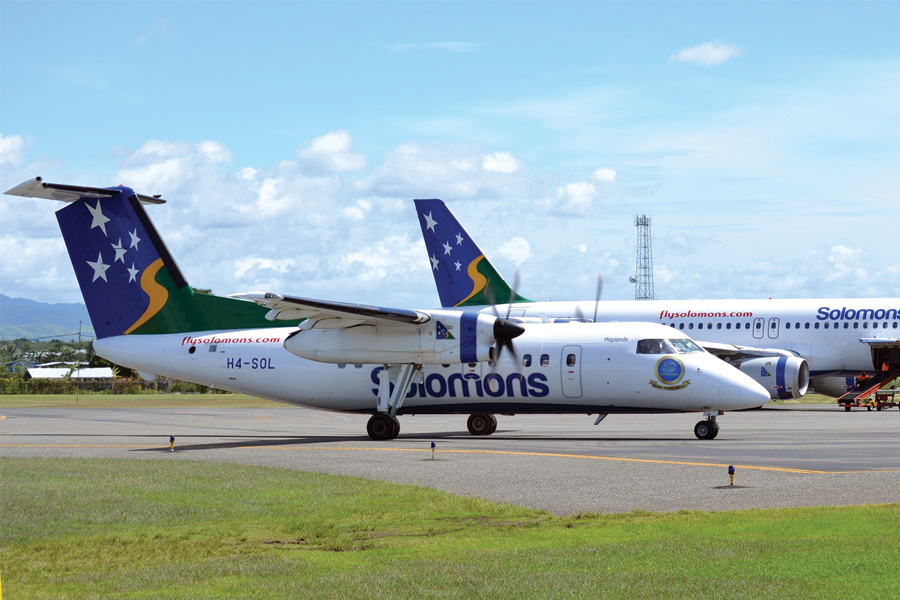
Solomon Airlines is looking forward to providing Dash-8 service to Rennell and Bellona province.
However, the national carrier says implementing this would depend much on the national government.
The province is in dire need of transportation service with capital Honiara.
And, SolAir’s Twin Otter is the only regular transport servicing the two-island province.
New Chief Executive Officer Gus Kraus in a media conference yesterday, says it is the Airline’s intention to provide Dash-8 service ‘almost everywhere in Solomon Islands’.
SolAir’s Board Chairman Frank Wickham says the route to Bellona and Rennell islands ‘is a very busy route for our domestic Twin Otters’.
“And we look forward to the day when we can get the Dash-8 into Rennell and Bellona,” he adds.
Renbel Premier Japhet Tuhanuku has welcomed the notion by Solomon Airlines, saying the Dash-8 service is a “huge and real need for his province and people”.
Tuhanuku in an interview yesterday thanks the airline for its service to his province which is the only transportation service keeping the province afloat.
He explains that services on the two islands are ‘very poor and remain to be so’ because of transportation from Honiara being confined to the few Twin Otter trips a week Solomon Airlines is providing.
This is made profound by the ‘very bad shipping service’, he adds.
“The whole of this year, MV Avaikimaine serviced the two islands only once. And with this very poor shipping services, the Twin Otter trips is not enough.
“It would have been enough if shipping service to Rennell and Bellona was good, and regular.
“But, since the bad shipping, we need that [Dash-8] service very badly.”
Meanwhile, SolAir Financial Controller Peter Soqoilo, during yesterday’s conference, explains that Solomon Airlines, as much as it would like to see Dash-8 service in Renbel, is only an operator, and the decision to maintain or extend airstrips belongs to the Ministry of Aviation (MCA).
Premier Tuhanuku agrees, saying it depends on MCA and ministry of infrastructure development (MID).
He adds that the national government has promised him and his Executive twice that the airstrips on Bellona and Rennell would be upgraded to cater for Dash-8 service.
“The Prime Minister and his Deputy, who is also the minister for Infrastructure [MID], they promised and they said that we [Renbel province] are among the recipients for projects for roads and airfield runway extension.
“We [provincial government] rely so much on aid donors and the national government.
“When we made a courtesy call on the Prime Minister earlier this year, he gave us this reassurance. During the Second Appointed Day celebrations this year, the deputy prime minister highlighted that the extension to the Tingoa and Bellona airfields will follow the wharf project, along with the road project.
“That is what the Central Government has promised us.”
Royal Solomon Islands Police Force and Correctional Service officers assemble during the joint demonstration with China Police at Rove field recently.
BY JENNIFER KUSAPA
POLICE Commissioner Mostyn Mangau has denied claims the Royal Solomon Islands Police officers is falling apart because of the presence of Australian and Chinese police in the force.
Mangau was responding to questions asked during a press conference yesterday over Police unity given the organization’s work with both China and Australia Police forces.
But Mangau denied any disunity, saying they are working closely with their partners, the People’s Republic of China Police and the Solomon Island Assistance Force made up of Australia and its partners.
He said they are working with them because of security interest and not geopolitics.
“Those countries that come in and work with us are our bilateral partners and we work with our security partners on strategic interest of the country and basically on security interest, where police can boost its security capabilities, and capacity and there is no issue with partners and agencies,” Mangau said.
He said the RSIPF has no issues working with the PRC police and SIAF.
“We work closely with them and identify which areas of policing they can support and assist us, so that we can increase our capacity and capabilities, so RSIPF is working well with everyone and the two agencies,” Mangau said.
He said those partners came in to support RSIPF after what happened last year and to look at building the capability of the officers and assisting the force.
Therefore, it is an advantage for the RSIPF to have worked along with SIAF and PRC, Mangau said.
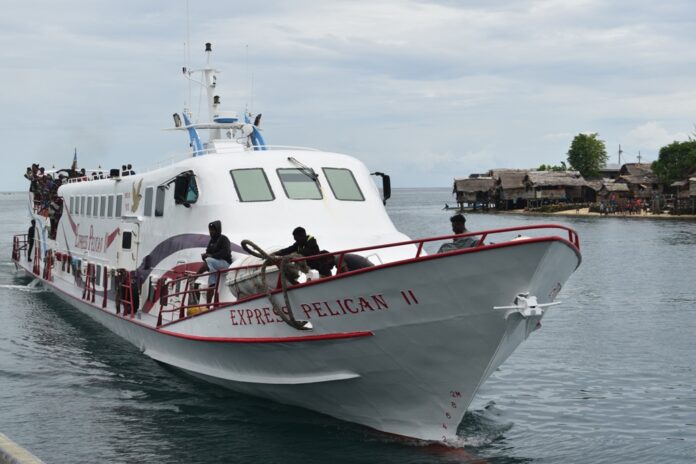
THE Malaita provincial government has granted approval for the Pelican Express shipping company to resume services to Auki.
This came after deliberations were held on the company’s operation license following the inclusion of their new vessel, MV Express 96.
Deputy Provincial Secretary for Malaita province, David Filia Tuita confirmed this to Island Sun yesterday.
““This week the executive has met and agreed for the Pelican Express to resume its shipping service to Auki,” he said.
Tuita said the approval came following challenges encountered by the shipping service to Auki since last week.
He said at the moment only the Auki Express, Taimareho I and Pelican Express are operating passenger services to Auki.
Thus, Tuita said the engagement of Auki Express with the US floating hospital, MV Mercy in Honiara and the ceasing of Pelican’s service to Auki has resulted in a shipping challenge.
He said these two boats provide regular services almost every day to Auki, except for MV Taimareho with only one or two trips to Auki per week.
Tuita said upon approval, Express 96 – the new vessel of the Pelican Express Company will be serving Auki as of this weekend.
He said the other boat, Pelican Express is current on maintenance and as soon as it is done, it will join Express 96 to provide service to Auki.
Tuita said Pelican Express shipping company has a valid operating license with the province and will expire by the end of this financial year, March next year.
He said that the Auki Express will also resume services to Auki after their engagement with MV Mercy maybe in two weeks time.
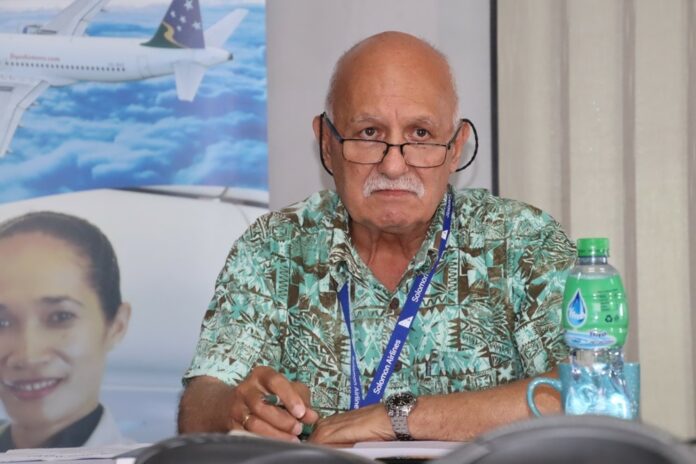
SOLOMON Airlines yesterday officially introduced Gus Kraus as its new Chief Executive Officer (CEO).
Chairman of Solomon Airlines Frank Wickham said Kraus brings with him more than 54 years of industry experience.
“I would like start by welcoming Mr Kraus. He has re-joined us here as Solomon Airlines CEO,” Wickham said.
“We had a board meeting this week and we welcome Kraus in the board meeting and we had a welcome get-together yesterday with management and staff,” he added.
“As you may know Kraus is former CEO of Solomon Airlines on an interim arrangement and was previously general manager ground operations as well as commercial.”
Wickham said with the full confidence of the board, Kraus he has accepted the role of the CEO to lead the Solomon Airlines’ ongoing operations.
He also thanked the former CEO Brett Gebers for the Aviation experience and expertise that he brought to Solomon Airlines over more than four years and for his strong contribution to the national carrier during what has been an immensely challenging period.
GOVERNMENT is developing a new policy that will guide the management and delivery of the highly controversial Constituency Development Fund (CDF).
Permanent Secretary of the Ministry of Rural Development (MRD) Dr Samson Viulu disclosed this to reporters yesterday,
Provincial-wide consultation, Viulu said, has begun in Isabel Province.
“This policy framework will set the basis for a MRD internal taskforce to develop the drafting instructions for the proposed review of the CDF Act 2013,” Viulu said.
“It will also further enhance the planning, coordination, implementation and management of the CDF,” he added.
Viulu said the new policy is also expected to address the issue of ownership of properties, equipment and machines purchased from CDF, but often taken over by the sitting MP after he or she lost the seat.
Furthermore, he said the police will explore the establishment of Constituency Development Centres to bring government services to rural people to grow the economy.
He said the policy will try to narrow down the focus of CDF because as it is now, “the scope is too wide”.
“Maybe focus on social, economic, infrastructures or livelihoods,” he said.
Viulu added the policy will also look at the governance of CDF – whether the delivery mechanism is already.
“The vision of the CDF policy is to achieve safe, clean, healthy, friendly, peaceful and vibrant rural communities across the country by 2035.”
Viulu mentioned that some national leaders are open to the idea to remove MPs from being signatories of the constituency bank accounts and leave it to constituency committees.
He said the police will also seek to establish strong and effective collaboration with other ministries on delivering the projects.
Under CDF, each constituency is allocated up to $6 million a year.
But these funds are currently controlled and managed by sitting MPs.
MPs also decide who benefits and how it is allocated.
Often, MPs have been accused of using the funds to pay supporters and keep them in power.
Although the funding was established to develop the 50 constituencies, there’s very little being translated into actual development.
Over the years, Solomon Islanders have been calling for the abolition of CDF and its removal from the control of MPs.
But those calls have fallen on deaf ears, and MPs continue to have access to the millions of dollars given in the name of constituency development.