Home Blog Page 1296

SIPA to hold workshop on effective workplace partnership

0

BY BARNABAS MANEBONA

SOLOMON Islands Ports Authority (SIPA) is organizing a two days’ workshop starting today at the Heritage Park Hotel purposely to educate its workforce on the various aspects that are related to their employment.

The workshop which is understood to be mainly for SIPA’s shop stewards, supervisors and managers will give opportunities for employees to listen, discuss and interact in full on the various aspects of the working relationship between the management and the employees.

It will also give the employees knowledge about the roles of the Union and the roles by various government agencies in dealing with industrial relations.

SIPA invite people from various government departments such as the Labour Division, Trade Dispute Panel and Inland Revenue to talk about the Tax system to the workers.

According to Mr James Gerea the Staff Training/Development and Policy Manager |Corporate Service of SIPA, the various topics that will be discussed include the role of SIPA, role of Union, Labour Act, role of Trade Dispute Panel and disputes resolutions, taxation system, workers’ rights, employer rights, the role of workers in the organization, building an effective workplace partnership and others.

“We hope that at the end of the workshop, employees and management will have a clear understanding of their roles and responsibilities, understanding of mechanisms for dispute resolutions, Labour Laws and mechanisms/procedures and union roles, etc.,” said Gerea.

“This will help to build an effective team and environment for working together to achieve our common interest as well as a productive port operation & quality services to customers.”

It is understood that this is the first time in SIPA history to have this workshop as they plan to also organize a similar programme at Noro Port for their workers.

The theme of the workshop starting today 9am and finishing tomorrow is: Building an Effective Workplace Partnership.

Concerns GPPOL plains roads deteriorating

0

BY BARNABAS MANEBONA

ROADS along north Guadalcanal plains are said to be deteriorating badly, forcing Guadalcanal Plains Palm Oil Limited (GPPOL) landowners to call on to the responsible authority for maintenance.

GPPOL landowners speaking to Island Sun express having the feeling that their roads are being neglected seeing it to be quite a while now for no maintenance to be carried out on them.

They stated from another view that the government is only giving more focus to the roads within Honiara.

“We are calling on the Ministry of Infrastructure and Development (MID) to do maintenance on the northern plains roads and other joining ones making up the GPPOL Plains which are now in very bad states,” said local GPPOL landowners.

“GPPOL plains adding having other industries being set up within its surroundings provide good contribution to the economy of Solomon Islands. For that, we think that our roads on this side of Guadalcanal Province should also be a priority for the government to maintain as well.”

The GPPOL landowners stand on the initiative as to why the roads were developed in the first place and that is to support the industries within that surrounding area.

Island Sun had been trying to get a response from MID since last week over this concern but have not received a response.

Access to clean drinking water, an important achievement for Temotu: MPGIS

0

BY LORETTA BRIGIDIA MANELE

TEMOTU province’s most important achievement of all efforts it has made through Provincial Capacity Development Fund (PCDF) is providing its people access to clean drinking water.

As expressed in a Ministry of Provincial Government and Institutional Strengthening report detailing the performance more or so, results of the province’s service delivery under PCDF through the Provincial Governance Strengthening Programme (PGSP) spanning a ten year period from 2008 to date, the province was able to deliver water supply to its people.

The ministry’s report shows that the province worked on a total of 33 water supply projects, the highest number of projects in contrast to other sector projects.

Temotu province’s water projects totaled to a cost of SBD $1,352,696 and created 64 jobs with 191 females and 158 males as the number of people who benefited from this sector.

With the sector having provided water supply/genset installation, 1 Nembo Water Pump Building, 30 Lata water tanks and1 Tikopia Ravenga water supply, the report furthered that that this has brought about reliable water supply resulting from the completion of the Nembo water pump infrastructure, increased access to water and improved access to good quality water supply by the Tikopia community.

Is cheap and faster internet the answer to our social and economic ills?

0

BY the time you are reading this, our Prime Minister Hon Ricky Houenipwela, would have well and truly settled down in his hotel suite in Brisbane, He is there to sign the agreement linking Papua New Guinea and Solomon Islands with Australia via the fibre optic undersea cable.

As one official put it, the project was “shoved down our throat” by and at the highest political level in Canberra. One doubts it is in our interest.

What makes this project so special that only Prime Ministers are privy to its contents and intention?

Politicians come and go. There is no guarantee it would be honored in perpetuity.

I have particular problems with many aspects of the undersea cable project and its overall intended impact in Solomon Islands and its 650, 000 souls.

My estimate is that only about 12 per cent of the population would have access to this global superhighway.

Take it down to the wire and you will find a large slice of the 12 per cent of the population will have access to this “cheap and faster” internet. They will do so to do nothing but the unmentionables.

This in itself will create further social ills for a nation that is already bursting on its seams with a plethora of crimes that our weak law enforcement regime is unable to adequately deal with.

There are rumours in the diplomatic circles that even the justice system in this country is at the point of collapsing.

Put all these together – a weak police force, a collapsing justice system and the low level of the number of people who will be using this new internet service – and you have on your hands a potential time bomb capable of blowing the nation apart.

And that is one my difficulties with the project. Is it going to improve the lot for the ordinary people who need a job to survive this harsh world of the cash economy?

There are even more serious questions. For example, is it the intention of the proponents and in deed the funder of the project that they are only interested in supporting just 12 per cent of the Solomon Islands’ population?

As it is, the ingredients for the social time bomb I have referred to are already gathering momentum. Take for example, our National Referral Hospital.

It is the nation’s first line of defence against diseases, and yet it does not have even the basic drugs to treat people.

The hospital has the finest trained workmen and women in the field and yet even the present government appears to have completely ignored the demise of this life-saving institution.

Prime Minister Ricky Houenipwela was asked about the sorry state of affairs at the NRH this very question during a recent business breakfast. His response could have come from a Grade six kid.

He reportedly blamed the way the budget was framed. Excuse me, the budget? The budget is framed by a group of people with a leader – that leader is none other than the Prime Minister himself.

It is the question of priority, Sir

It brings me to question the true benefits the so-called cheap and faster internet project would bring the non-working people of Solomon Islands.

As it stands, the project has zero benefits in terms of job creation and even the potential spin-off benefits are rather remote.

What is of urgent consideration is the fact we need to create jobs, not through cheap solar panels that even the World Bank has bought into.

Holy moley, how long are we going to allow foreigners to pull the wool over our eyes?

Job creation can only be done by engaging with those who have the resources to create new trade and investment opportunities in this country.

It is the only way to unleash the reservoir of the skilled, semi-skilled and unskilled individuals locked away in rural Solomon Islands.


Alfred Sasako

Objectivity important, lest we forget

0

THE intrusion of social media into our society has certainly caused an upheaval in how we do things. Everyone wants to be somebody, journalists become advocators and children become adults.

In journalism to remain objective is to present the facts whether or not one like or agree with those facts.

Objective reporting is meant to portray issues and events in a neutral and unbiased manner regardless of the writer’s opinion or personal beliefs.

Sad to say, with citizen journalism on the rise, the essence of objectivity is now missing and we have more disgruntled, misinformed citizens ever than before.

We have become a bunch of followers to one-sided stories with more assumptions and questions then facts and answers.

On top of that, those who were supposed to present the story in an unbiased manner are also carried away with the current trend and are the ones presenting their opinions the loudest.

How are we to present our story to the public with the intention to educate, inform and entertain when we do not report with objectivity? The use of social media tools especially Facebook has paved the way for macho behaviour, some hiding behind pen names and making unbecoming comments, threats and calls with journalists also joining in this platform to sing their song the loudest. Media is known as the fourth estate.

But what good is the fourth estate if it is bias, assumptive and irresponsible? Seditious comments made by citizen journalists on social media have tainted the image of the media industry as a whole.

Whilst the mainstream media at all times strive to uphold its code of ethics and conduct the unbecoming behaviour of journalists also wanting to be activists has made it difficult for the media to maintain its neutrality.

In these difficult times, it is important we go back to the basics of journalism and strive to deliver credible, evidence-based and engaging reporting as opposed by citizen journalism.

As journalists our role is to watch from the sidelines, witness the drama unfolding, but at a safe distance and report the information, tidbits and insights to the public. We need to be independent and not driven by any agenda.

Our job is to seek the truth and be a champion of core values of journalism. Lest we forget.

Romanian Ambassador presents credentials

0
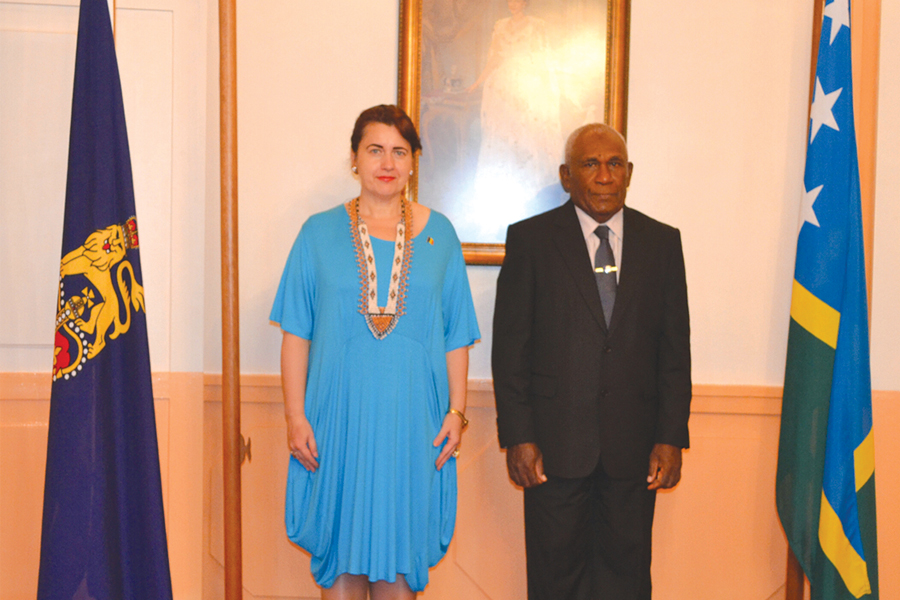
Romania Ambassador to Solomon Islands Her Excellency Nineta Barbulescu and Governor General His Excellency Sir Frank Ofagioro Kabui. Photo from GCU
Romania Ambassador to Solomon Islands Her Excellency Nineta Barbulescu and Governor General His Excellency Sir Frank Ofagioro Kabui. Photo from GCU

ROMANIA’S Ambassador to Solomon Islands Her Excellency Nineta Barbulescu presented her credentials to Governor General His Excellency Sir Frank Ofagioro Kabui, on Thursday last week at the Government House.

In her opening remarks, she briefly highlighted Romania’s geo-political timeline and highlighted the countries’ bilateral ties.

“As a European Union member state since 2007, Romania brought its contribution to the development of relations between the EU and the Solomon Islands and will continue to do so, in particular during the future Romanian presidency of the EU Council, next semester (2019).

“The huge geography between Romania and Solomon Islands didn’t prevent our bilateral cooperation under the United Nations flag, in particular after 1978, when Solomon Islands joined United Nations as its 150th independent state.

“Romania and Solomon Islands established diplomatic relations in New York, at the UN Headquarters, on February 1, 2011, an important milestone in our bilateral relationship,” Ambassador Barbulescu remarked.

She highlighted Romania’s strong support towards United Nations and its effective multilateralism as one of the main vehicles of addressing national and regional interests within the UN.

She points out for the past 63 years, Romanian has persistent engaged within the UN, constantly striving for the consolidation of the UN global profile, devoting political and diplomatic resources to support the organisation’s efforts in ensuring peace and security, fostering development and protecting human rights and the rule of law.

“All these underpin the candidature of Romania as a valuable non-permanent member of the Security Council.

“Romania would highly appreciate the valuable support of Solomon Islands to the candidature of Romania to the UN Security Council, at the elections to be held in June 2019 for 2020-2021 mandate.

“It will be our pride commitment to advance universal agenda, in particular for leveraging partnerships for action-oriented responses on climate change and to put it, together with sustainable development, at the heart of the UN agenda during our next mandate within the UN Security Council in 2020-2021,” the Romanian Ambassador said.

Barbulescu added that Romania is a champion of climate change with years in advance reaching the renewable energy targets annually and becoming top three EU countries independent of fossil fuels imports.

“In this framework Romania is considering financing, for the first time, the Pacific Islands Development Forum, a symbolic yet important project for supporting a representative regional organisation for Pacific.

“Romania is also considering various climate change projects of cooperation with the Pacific Regional Environment Programme (SPREP), benefitting too all Pacific nations, including the Solomon Islands,” she said.

Barbulescu said she will work tirelessly to advance the relations between the two nations and to grow the people-to-people bonds between Romanians and Solomon Islanders.

She also expresses her profound impression with the current 6th Melanesian Arts & Cultural Festival, an outstanding environment for learning and indulging into the Solomon Islands culture and its way of life.

The Governor General upon acceptance of the Letter of Credential cited his noting of the request.

Kabui said though the two countries are miles apart in terms of location, ‘in many ways, we are bound by humanity’.

“The issues discussed, debated and agreed are all matters to do with humanity such as human rights, the rule of law, international security, climate change, equality, economic enhancement and so on.

“The contributions your country has made on such issues and the impact of them on others in the developing world is noteworthy indeed.”

The Governor General said it is assuring also to note that Romania is willing to continue its efforts to pursue issues of global benefit in the United Nations.

“Your candidature for the United Nations Security Council election in June, 2019-2021 is therefore noted with appreciation.

“Although our relation has been modest so far, the potential to develop it further to new heights is possible,” he said.

Kabui pledges his support during the Romanian Ambassadors’ term in office.

–GOVERNMENT COMMUNICATION UNIT

World Bank approves the renewable energy project in SI

0

By Ezekiel Talatau

THE World Bank’s Board of Executive Directors has approved a $19.95 million project for the electricity access and renewable energy expansion for Solomon Islands.

More than 9,300 Solomon Islanders will benefit from new or improved electricity services, including renewable energy sources such as solar.

The project aim to assist the government in terms of increased renewable energy generation, increased access to grid-supplied electricity while dipping the expensive, imported fossil fuels.

The project will also receive a fund through a $5.5million Credit and a $4.75million grant from the International Development Association (IDA).

Solomon Islands Minister of Mines, Energy and Rural Electrification Bradley Tovosia stated that, the project is imperative to increase the quality of life of people of Solomon Islands and for the development of business.

Government is now working with World Bank and other partners to increase the access of electricity in low access remote areas.

It will focus on providing connection to health centres, households, schools, and throughout Honiara and surrounding towns and formal settlements.

The project will also focus on addressing gender inequity in the energy sector, which currently employs few woman by providing employment opportunities for rural woman to maintain solar panel and sites.

The project will sustenain Solomon power to build a reproductive and respectful workplace and culture through strengthening anti-bullying and harassment policy and supporting employers who may be affected by domestic violence.

Director from the World Bank Papua New Guinea and the Pacific Islands Country Michel Kerf quantified that Solomon Islands Electricity is among the highest in the world. Almost as double the average for the Pacific region as a whole, creating a financial affliction on families and business throughout the country.

To date, about 20 percent of the Solomon Islands population have access to an electrical power supply, and when electricity is available, it is costly.

Amnesty International puts pressure on Indonesia

0
Indonesia

By Mike Puia

THE issue of human rights violations has come to the forefront in West Papua’s quest for independence from Indonesia.

Amnesty International has mounted pressure on Indonesia to address issues of past human rights violations.

The London-based non-governmental organisation says Indonesia has failed to address past human rights violations.

In its 2017/2018 publication online, Amnesty International says the rights to freedom of expression, of peaceful assembly and of association has continued to be restricted by Indonesia.

Indonesia controls Papua, and West Papua forms the western half of the island of New Guinea.

Political control of the region has been contested for more than half a century and Indonesia has consistently been accused of human rights violations and violent suppression of the region’s independence movement.

The indigenous people of the province are Melanesian, ethnically distinct from most of the rest of Indonesia and more closely linked to the people of Papua New Guinea, Vanuatu, Fiji, New Caledonia and Solomon Islands.

Papua was retained by the Dutch after Indonesian independence in 1945 but the province was invaded by Jakarta in 1963.

Indonesia formalised its control over West Papua when in 1969 voting was done in favour of Indonesian takeover under a UN-supervised, but undemocratic, process known as the Act of Free Choice.

Many Papuans regard the Indonesian takeover as an illegal one and the Free Papua Movement has led a low-level insurgency for decades.

With the heightened police and military presence, there have been reports of security force abuses including extrajudicial killings, torture and arbitrary detention, excessive use of force and mistreatment of peaceful protesters.

Dozens of Papuans remain behind bars for peaceful demonstration or expressing solidarity with the independence movement.

Raising West Papua’s independence flag can send someone behind bars for 15 years.

Most observers estimate that about 500,000 native Papuans have been killed since 1963 by Indonesia.

Amnesty International says Indonesia’s human rights record has been examined under the United Nations (UN) Universal Periodic Review (UPR) process two months ago.

The process is a mechanism of the Human Rights Council (HRC) aimed at improving the human rights situation on the ground of each of the 193 UN Member States.

Although Indonesia accepted 167 out of 225 recommendations, it rejected, among other things, calls to investigate past human rights violations.

The organisation says Indonesian authorities have continued to prosecute those participating in peaceful political activities, particularly in areas with a history of pro-independence movements such as Papua.

Amnesty International says despite killings happening in West Papua, no perpetrators were known to have been held to account.

The recent incident at the 6th Melanesian festival that ended in Honiara yesterday where police confiscated the West Papua’s flag from local activists who held up the morning star flag in front of the Indonesian stall has again attracted much interest toward the issue of West Papua.

Indonesia, an associate member of the Melanesian Spearhead Group (MSG), took part in the festival on the invitation of the government.

West Papua, with a MSG observer status, is not included in the festival – an issue that also raised questions among local activists.

Local activists insist Indonesia is not a Melanesian country – West Papua is Melanesia.

The former Prime Minister, Manasseh Sogavare, has been vocal about West Papua’s issue.

Sogavare, who is now the deputy Prime Minister, earlier blamed the UN for showing little commitment towards the West Papua issue.

He said UN is responsible for facilitating the question of self-determination for the people of West Papua.

The principle of self-determination is embodied in article one of the UN charter. The first paragraph of the article in the UN charter stated that all peoples have the right to self-determination.

The issue of self-determination is recognised in many international and regional instruments.

These instruments include the declaration of principle of the international laws concerning friendly relationship and cooperation among states which was adopted by the UN assembly in 1970, the African charter of human and people’s rights 1981, the cooperation among states charter of parish for new Europe adopted in 1990, the Vienna declaration and program of action of 1993, committee on the elimination of racial discrimination and many others.

When it comes to human extortion, Sogavare said Solomon Islands stands to condemn it.

Solomon Islands has opened an Embassy in Indonesia with hope talks will continue to happen between the two countries about the issue of West Papua.

Indonesia has set up its own human rights committee to look at human rights violations issues there. The status of the work carried out by the committee is unknown.

Grand closing ceremony marks end of 6th MACFest

The Fijian dancers that stole the show in each of the performances at the MACFEST

BY LYNTON AARON FILIA

 THOUSANDS of locals and Melanesian visitors took part in the closing ceremony of the 6th Melanesian Arts and Cultural Festival 2018 at the Panatina Melanesian village on Tuesday.

The grand closing ceremony was a colourful finale to what has been a memorable 10 days of sharing, promoting and preserving the different cultures which were represented by the participants.

Jenny Ligo of Vanuatu presents a gift on their behalf to Deputy PM Sogavare.

Fireworks heralded the final minutes of the 6th MACFest last night as the diversity in Melanesian culture bade farewell to this year’s event.

The colours of the fireworks equalled that of the attires worn by the participants from the five MSG member countries; Solomon Islands, Fiji, New Caledonia, Vanuatu and PNG, and those from the friends of Melanesia; Taiwan, Torres Strait Islands and Timor Leste.

Tuesday’s event started with speeches, exchange of gifts, handover of MSG flag to Vanuatu as the next host country followed by entertainment including cultural and contemporary dancing.

Fiji representative reciprocates gift to Deputy PM, Sogavare

Acting Prime Minister and Minister for Finance and Treasury Mr Manasseh Sogavare in his keynote address acknowledged and praised the success of the event despite being faced with many challenges.

He said Solomon Islands is proud to host this festival twice. He said it is a remarkable success that officially concludes in magnificent performances.

“I’m delighted because it is for the second time in 20 years that Solomon Islands has successfully host this regional event.

“I always proud to see us Melanesian culture play, and we must be always proud about Melanesian heritage and show it to the world,” Sogavare said.

PNG rep, presents their gift to Deputy PM, Sogavare.

He thanked the participating countries and looks forward for the next Melanesian Arts and Cultural Festival in 2022 which will be hosted by Vanuatu.

Honiara City Mayor Andrew Mua also shared his excitement for the successful hosting of the regional event in Honiara city.

He acknowledged participants for the remarkable cooperation seen throughout the 10 days which has led to a peacefully, enjoyable, informative and successful MACFest 2018.

The ceremony ended with fireworks which made the event more interesting and recorded in the country’s history.

Diversity of culture at closing of 6th MACFest.
New Caledonia representatives
Participants from Papua New Guinea.
Representatives from New Caledonia.
Representatives from Solomon Islands.
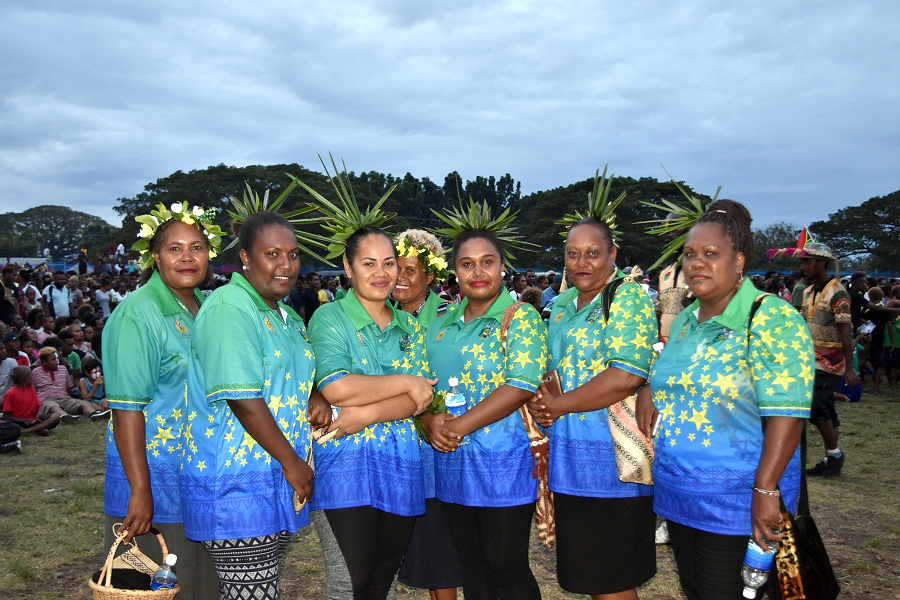
Solomon Islands women of ‘Stage of Change’ at the closing ceremony
Vanuatu celebrates after receving MACFest Flag to host the next festival in 2022.
Fiji delegates dancing at the closing.
Diversity of culture at closing of 6th MACFest.
Delegates from PNG at the official closing ceremony.
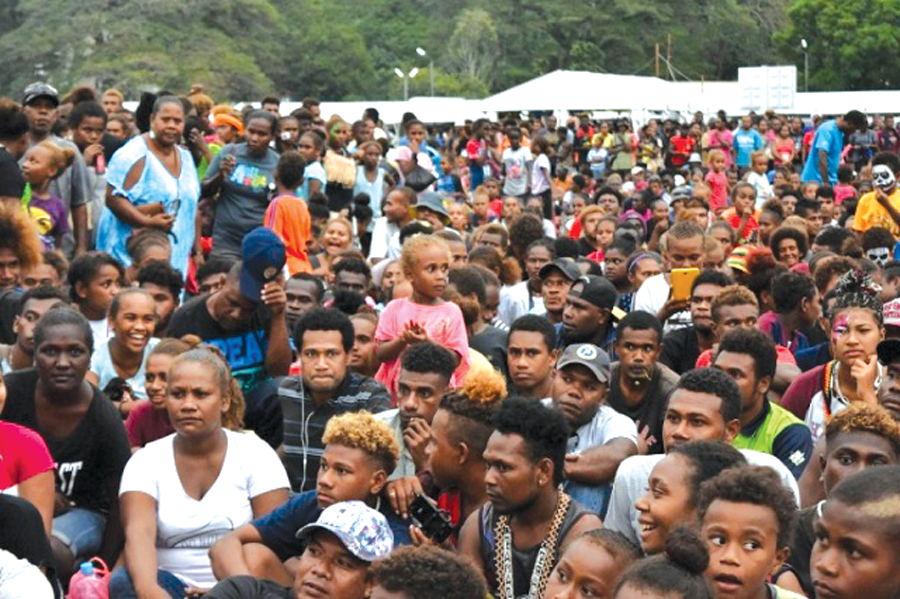
Crowd attendance at the closing ceremony despite slight showers of rain.

Sikua’s trial continues today

0

BY JENNIFER KUSAPA

TRIAL into the case against the former Permanent Secretary of the Ministry of Police, National Security and Correctional Service Edmond Sikua is currently ongoing in the Honiara Magistrate Court.

Prosecution is still calling their witnesses for the trial.

Mr Sikua is charged with seven counts of official corruption contrary to section 91(a) of the Penal Code Cap 26.

Sikua was charged in relation to the allegation on December 22, 2016 for allegedly awarding government tenders worth $630,436.50 to Beeds Investment, a company registered and owned by his two daughters.
Prosecution alleged the accused Sikua is by default the chairman of his ministry’s tender board.
The allegation said between December 18, 2015 and August 29, 2016 Beeds Investments responded to calls for tenders and was awarded business contracts for service delivery to the Ministry of Police, National Security and Correctional Services on seven different occasions.
The Ministry of Police, National Security and Correctional Services have made payments of $630,436.50 to Beeds Investments for these services.
Prosecution further alleged that Sikua used his position of power and influence within the Ministry of Police, National Security and Correctional Services to manipulate the tendering process for his own and his family’s pecuniary advantage.
Sikua is the third public officer to have been arrested by Janus, since the establishment of the joint taskforce.

Office of the Director Public Prosecution appears for the crown in court.