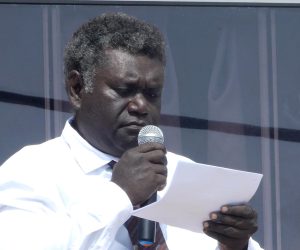
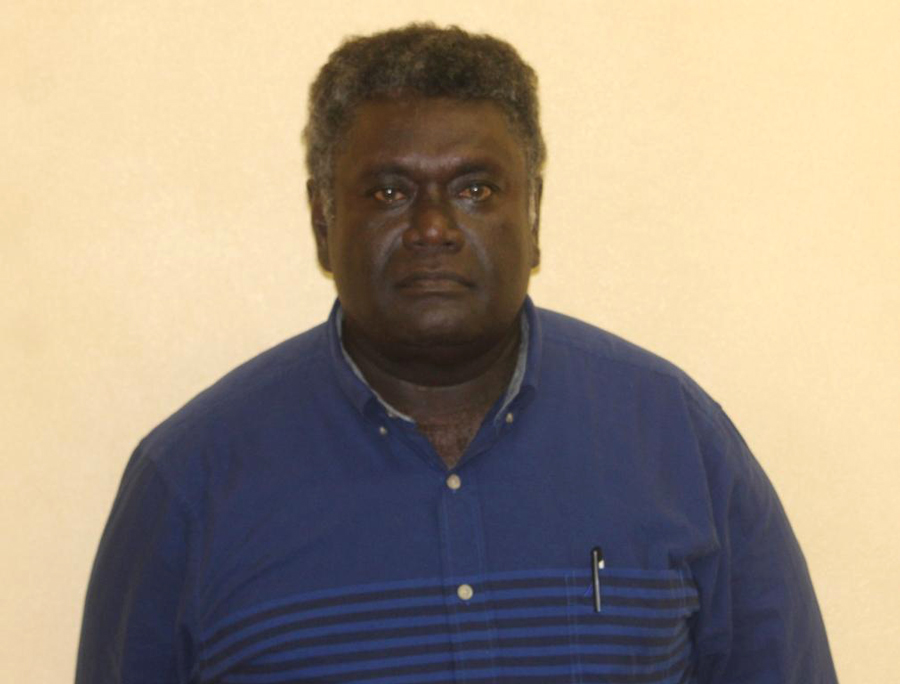
Newly elected Premier of Western province, David Gina
WESTERN Province Premier David Gina says his government is eager to build a strong and vibrant Western province.
Gina echoed this statement in his 40th Independence Anniversary speech on Friday held at the JF Kennedy Stadium with this year’s theme “Redirecting our Journey at 40” on Friday.
He said that on the pillars of “democracy, unity, good governance and faith in the living God”.
The People of the Western province firmly believes, that the way forward, would be achieved by providing good policies conducive to create favorable environment and situation in the Province.
Gina said people are empowered to raise themselves in the new era, where they would engage in beneficial activities and businesses so that our people of the Western Province would live a simple but acceptable standard of living, which reflects their dignity”.
“Our new WPG policy statement, Translation and Implementation documents will set out the directions and guidelines which our Provincial Government will progress the destiny of this Province in the years to come. It will focus on the major strategic areas of development to create a Peaceful, Progress and prosperous Western province”.
“This represents a significant redirection and brings to bear a new mission and vision in the roadmap for the future of the Western Province. The role and the Mission of my provincial Government are to make sure and ensure that all legislations, policies, and regulatory requirements and mechanisms are duly exercised in a manner benefiting our sovereignty and the mandate to govern and to develop our beloved Western Province,” said Gina.
He said WPG believes that equitable and sustainable development can only be achieved through strategically focused rural development policies which ensure economic growth in our Province.
Gina believes that in the fostering a greater senses of National Unity and Identity among our diverseness and in that, the Provincial Government that he leading will make and sure that Resources and logistics are shifted to focus on socio – economic infrastructural development, to ensure economic growth and rural advancement in the rural areas.
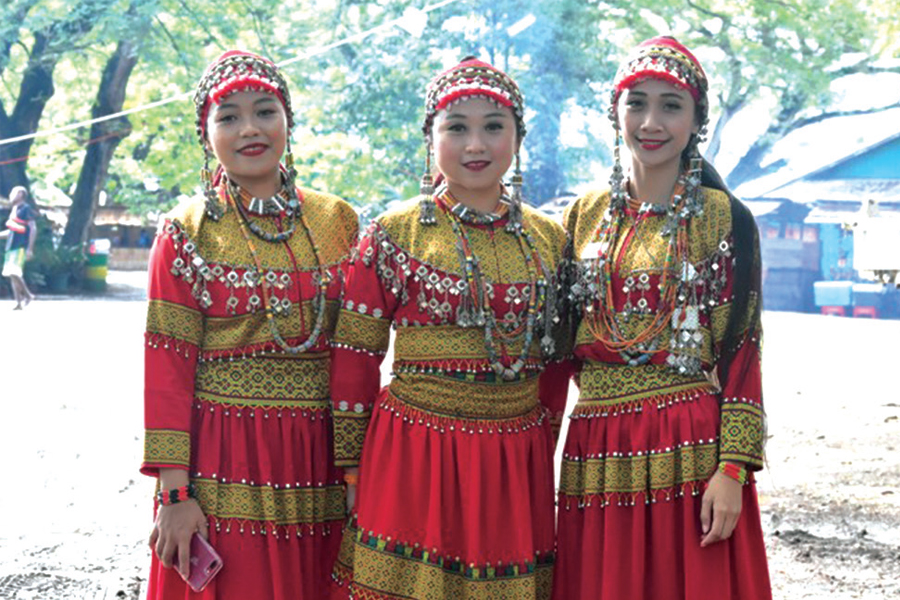
Girls from the Amis tribe wearin a colorful costume meaning a single girls. Photo by Lynton Aaron Filia
BY LYNTON AARON FILIA
Amis tribe, and the costume is a reflection of a married woman.
OTHER people occupying Taiwan are transforming its culture and tradition, according to the Director General for Indigenous People Cultural Development Centre, Council of Indigenous People in Taiwan.
Mr Tseng Chih Yung said their culture has changed.
He said, “The indigenous people living in Taiwan throughout the years other people came and occupied Taiwan and have transformed their culture a lot.
“Especially the ritual we used to do was forbidden, some of the festival not allowed and the clothing have changed.
“They started to learn how to write and read instead of writing songs and tattoos, and yes our culture been lost that’s why we try to bring it back to younger generations.”
With the plight of this transition, Yung said the Taiwan government has helped a lot in trying to revive their culture which was lost.
“Over the past 10 or 20 years, our government has helped us a lot to restore our culture and tradition working together with the villager.”
This is a costume reflecting the Paiwan tribe.
Meanwhile, the costume Naru Wan dancing group are wearing comes from the Paiwan tribe, people living on the mountains and Amis tribe, people live on the coastal area.
Some their activities are similar to Solomon Islands indigenous.
However, for the Paiwan tribe its costumes are designed with bit of colorful design which has been existed for many years and it has been passing down to generations.
The costume shows status of a person particularly chief and only chief can wear such, and the ordinary people their costume is not fancy but very simple.
Chief can only wear the costume only during festivals and each design on the costume presenting a traditional story.
Amis tribe—mostly is people live by coastal and its colorful red and decorated linen reflects their traditions.
The design with blue means a married woman and red colored designed means single woman.
Girls from the Amis tribe wearin a colorful costume meaning a single girls. Photo by Lynton Aaron Filia
SOLOMON Islands is building resilience at the community level through the Community Resilience to Climate and Disaster Risk in Solomon Islands Project (CRISP) project.
The project, which is carried out through the Ministry of Environment, Climate Change, Disaster Management and Meteorology, focuses on bringing climate change adaptation and disaster risk reduction into government policies and operations, setting up early warning systems and investing in vulnerable communities in the provinces.
As a small Island State Country, the Solomon Islands is highly prone to natural hazards such as tropical cyclones, volcanic eruptions, earthquakes, tsunamis, landslides, floods and droughts and is ranked among the 10 countries with the greatest exposure and vulnerability to natural disasters.
Seven major disasters have been triggered by natural hazards over the past three decades, causing loss of life and having a severe and adverse economic impact.
Climate change also have threatens to increase the frequency and severity of natural disasters in the Solomon Islands.
Notably, in 2014, flash flooding in Guadalcanal Province was estimated to have displaced 10,000 people and caused damages and losses equivalent to 9 percent of the country’s GDP.
Modelling predicts, natural hazards and climate change will lead to an average direct loss of US$20.5 million or 3 percent of the gross domestic product (GDP) annually for the next 50 years.
Other low lying atolls too have also faced the threat of coastal erosion as a result of sea level rise while their food supply has been affected by changing climatic patterns.
The growing intensity of natural hazards and climate change have made life especially low lying atolls in the Solomon Islands difficult for instance, where community’s struggle for water, brought on by the destruction of the village’s water supply system in major cyclones.
The project is supported by the EU-funded ACP-EU Natural Disaster Risk Reduction Program, managed by the Global Facility for Disaster Reduction and Recovery, and the Global Environment Facility’s Least Development Country Fund.
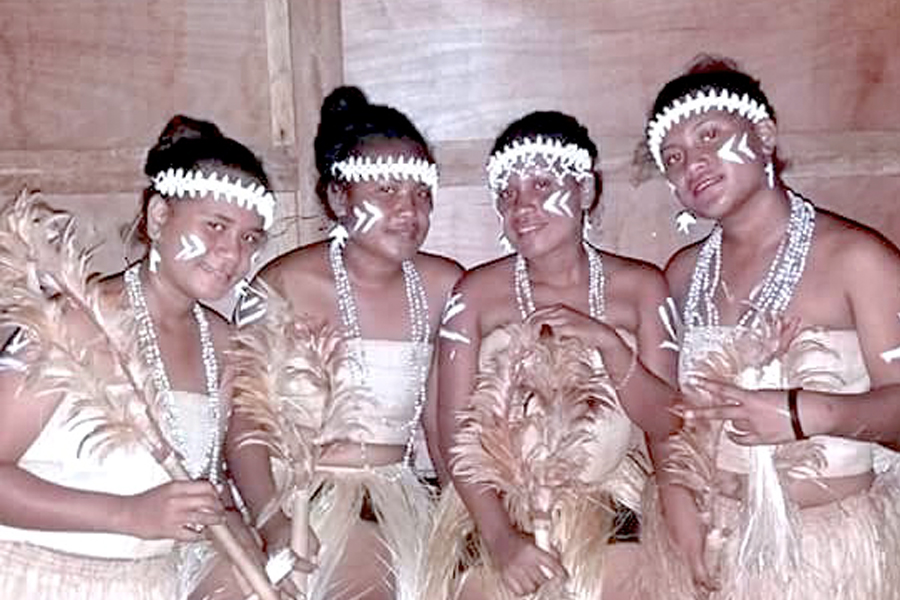
THE participation of the 4 during the MACFEST was a proud for me as a father, said Mr Chris Neo.
Mr Chris Neo is a proud and happy father, especially with the recent MACFest 2018.
He has four of his daughters directly involved in the MACFest acivities.
Neo said, “culture is the lifeblood of a vibrant society, expressed in the many ways we tell our stories, celebrate, remember the past, entertain ourselves, and imagine the future as well our creative expression helps define who we are, and helps us see the world through the eyes of others.
In addition to its intrinsic value, culture provides important social and economic benefits. With improved learning and health, increased tolerance, and opportunities to come together with others, culture enhances our quality of life and increases overall well-being for both individuals and communities.
Whilst, while highlighting about the importance of culture, Mr Chris encourages all parents as well young youths to take part in such programmes, as this was one way for youths to get rid of involving in any social problems or criminal activities.
“Participating in culture can benefit individuals in many different ways, some of which are deeply personal. They are a source of delight and wonder, and can provide emotionally and intellectually moving experiences, whether pleasurable or unsettling, that encourage celebration or contemplation.
Culture is also a means of expressing creativity, forging an individual identity, and enhancing or preserving a community’s sense of place,” he said.
In the meantime, he said that being so proud of his daughters, has stated that as such participation, though representing the IPYF cultural group but at the same time is a pride for the family, community as well the country as a whole, as they see and value culture importantly.
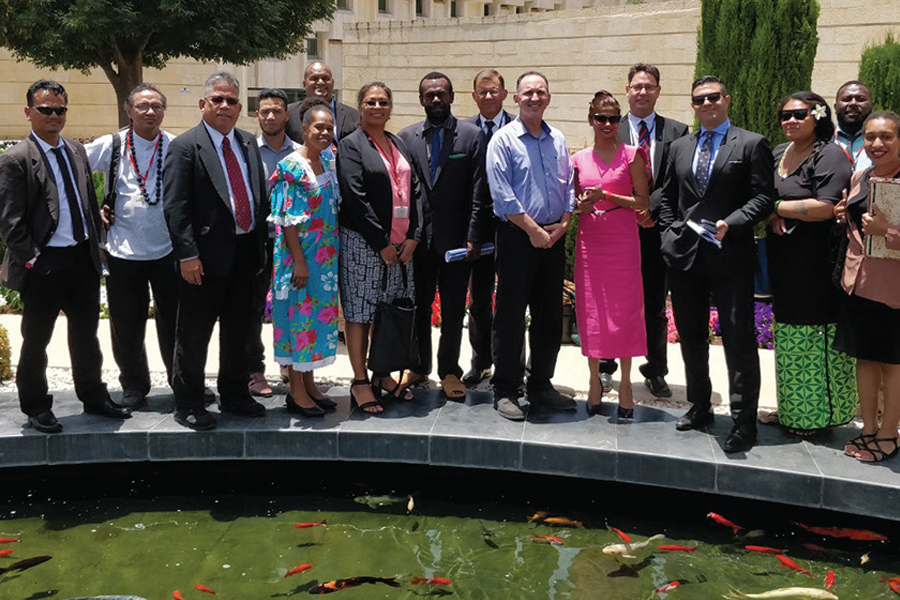
Pacific media practitioners at the Israeli Ministry of Foreign Affairs in Jerusalem.
By Mike Puia
SOLOMON Islanders don’t need visa to enter Israel. I did not mention this during the first part of this series which was published last Wednesday.
So, our first day in Israel was 17th June 2018.
We woke up to a bright Sunday morning in Jerusalem. Jerusalem is the most populated city in Israel. It’s one of the oldest cities in the world considered holy to the three major Abrahamic religions- Judaism, Christianity and Islam.
This city keeps renovate every day. Old structures are seen demolished and new ones going up.
Sunday is the first working day of the week which means every businesses and offices opened for business.
In our schedule, our first visit was to the Israeli Ministry of Foreign Affairs.
Israeli Ambassador to the pacific, Ambassador Tibor Shalev Schlosser.
As soon as all of us, media practitioners from the pacific who were invited to Israel by the Ministry of Foreign Affairs, are all set at the lobby we boarded our bus that was waiting outside the Leonardo Plaza hotel, our accommodation in Jerusalem for the next two days.
Our guide was Rony Geven. Geven was the person we were introduced to on arrival at Ben Gurion International Airport.
Jerusalem is so calm in the morning. Flowers bloom everywhere, outside the hotel and along the street. It almost looks like fake flowers but they are real. Flowers are colourful and pruned in order everywhere you turn to.
On arrival at the Ministry, we went through security check before we proceed to our meeting with the Director General of the Ministry, Ambassador Yuval Rotem.
Ambassador Rotem talks about many things including Israel’s history and commitment to the pacific. He took questions after.
Pacific media practitioners at the Israeli Ministry of Foreign Affairs in Jerusalem.
After the informative session with Ambassador Rotem, we moved to another room within the Ministry where we had sessions with Mrs Sarit Young of the Centre for policy research and Ambassador Gil Haskel, head of MASHAV- Israel’s Agency for International Development Cooperation within the Ministry of Foreign Affairs.
Mrs Young talked about the threat posed by Iran while Ambassador Haskel talked about the Israel’s aid program and areas Israel can be of helpful to pacific nations.
After lunch we visited the Yad Vashem, the world’s holocaust remembrance centre on the western slope of Mount Herzl. Yad Vashem is Israel’s official memorial to the victims of the Holocaust. It is dedicated to preserving the memory of the dead.
Important visiting dignitaries to Israel are given a tour to this site.
The centre honor Jews who fought against their Nazi oppressors and gentiles who aided Jews in need and researching the phenomenon of the Holocaust in particular and genocide in general with the aim of avoiding such events in the future.
Pacific media practitioners at the Israeli Ministry of Foreign Affairs in Jerusalem.
Yad Vashem, which was established in 1953, is known as the Mount of Remembrance, sitting in a height in western Jerusalem.
The memorial consists of a 180-dunam complex containing the Holocaust History Museum, memorial sites such as the Children’s Memorial and the Hall of Remembrance, the Museum of Holocaust art, sculptures and outdoor commemorative sites such as the Valley of the Communities, a synagogue, a research institute with archives, a library, a publishing house and an educational center, the International Institute for Holocaust Studies.
Young recruits to the Israeli army also come through Holocaust Studies.
Those recognized by Israel as Righteous Among the Nations are honored in a section of Yad Vashem known as the Garden of the Righteous Among the Nations.
Yad Vashem is the second most visited site in Israel after the Western Wall with around one million visitors each year.
Pacific media practitioners at Yad Vashem.
The museum offers a window to what the Jews people experience 79 years ago. One can see family photos retrieved from bodies of Jews who were murdered still intact and are now displayed in the museum. There is a section in the museum where a huge pile of shoes of people who were killed in concentration camps is kept.
In the evening after a tiring and emotional first day, we had dinner with Israeli Ambassador to the pacific, Ambassador Tibor Shalev Schlosser, who talks about the importance of education and culture and elaborate on Israel’s trainings programs and expertise pacific nations can take advantage of.
Ambassador Schlosser said people from across the globe should consider visiting Israel without fear as their people are their brothers and sisters.
He added they hope to receive more professionals from the pacific be to study in their learning institutes or to gain practical knowledge in any field.
Pacific media practitioners at the Israeli Ministry of Foreign Affairs in Jerusalem.Flowers bloom everywhere in Jerusalem.
THE newly elected Premier of the Western province, David Gina, has proposed a number of reforms especially in the revenue sector.
Mr Gina outlined a number of drastic measures to be undertaken which he explained will be part of an overall reform and restructure of existing revenue sources in the province.
“This includes the logging sector, general revenue collection through substation, business flow, as well as the Province’s business arm.”
He said his policy outline proposed to be announced at the first full Executive next week is to give due prominence on these key revenue source as they form the fabric of the Province’s economy.
He said the Western province should be a self enriched province but often the processes and regulations are undermined by previous governments purely on self interest.
Gina explained that the province should be a leader in terms of revenue.
Among the priorities the new Government is focusing on the Western Province Investment Corporation first.
It plans to investigate how the province’s financial arm has been managed.
On the logging industry, Gina proposes to grant fewer licences unlike before two to three licence holder all vying for one single logging concession.
The Premier said his executive like to introduce new control as a way to manage the Province’s level on revenue collection.
He said the businesses sector such retail and whole sale activity should involve a lot more by locals.
“We cannot afford to see the business sector is control by foreign merchant. He it is important local businesses will be assisted.”
Gina said the new Executive intends to impose new measure such as introducing new ordinance as way to run the province as a service deliverer but at the same time it should be able to live to the capacity of getting revenue and deliver services in the rural sector.
He pointed out that a major task which is expected under the proposed new reforms is to increase the delivery capacity of substation across the Western Province.
The Executive likes to see that sub stations undertake a fair amount of tasks and responsibility to stop the flow on centralized services.
“We should Administrators and also revenue clerks back in sub stations to help the rural sector livelier.”
He said that the Western Province is quite capable doing timely delivery of service but over the years this seemed to have dysfunctional that the new Executive intends to introduce changes as part of overall reform across key sectors.
WHAT is more important and fascinating here is the ability of the province to plan, procure and deliver such solid projects that facilitate service delivering in the province.
The above was expressed by the Ministry of Provincial Government and Institutional Strengthening’s (MPGIS) report outlining Temotu province’s results on the delivery of projects delivered under the Provincial Governance Strengthening Programme (PGSP) through the Provincial Capacity Development Fund (PCDF) for a 10 year period since the introduction of PGSP in 2008.
As stated in the report, Temotu province’s ability to perform such a task has been made possible because of the ministry’s efforts in ensuring continuous capacity building through its Provincial Governance Strengthening Programme (PGSP), now fully funded by the Solomon Islands government.
Moreover, outlined is a record of the province’s projects which include sectors namely; Administration, Youth and Sports, Education, Rural & Urban Transport, Income Generating Activities, Health, Fisheries and Marine Resources, Waste Management, Women Development and Water Supply.
The report also shows variation among the sectors in terms of which sector employed the highest number of people, which had a greater number of projects and which was the most costly.
In this case, MPGIS highlighted that the administration sector employed 97 people which the report proved to be the highest number of people employed and was also the most costly at SBD $2,426,789.
Meanwhile, fisheries and marine resources, health and women development sectors were allocated one project each with the fisheries and marine sector’s project amounting to be the overall least costly project at SBD$104, 500.
The sector with the highest number of projects is Water Supply sector with 33 projects.
Further stated is that the administration and education sector have ongoing projects where the administration’s only project still progressing is a provincial assembly chamber Temotu province sees to house assembly meetings and offices for the Speaker as well as offices for officers in the assembly division.
MORE awareness programs to educate them on the processes of how to report corruption practices is needed according to locals of Northwest Choiseul.
Speaking to Island Sun, Varisi Lavata’s Ward 12 Member for Provincial Assembly (MPA) Hon Nerio Ulemiki said they need the Leadership Code Commission, Ombudsman’s Office, police, Transparency Solomon Islands and other bodies who are dealing with corruption practises to go down to their grassroots level and assist them.
“In order to uproot corruptions being in all levels of society in Solomon Islands, everyone needs each other’s assistance,” said Hon Ulemiki.
He said trainings they seek for should also include educating them in knowing which bodies are dealing with specific issues of corruptions.
Solomon Islands is currently one of the countries in the world that is experiencing high rise of reports over corruption practises.
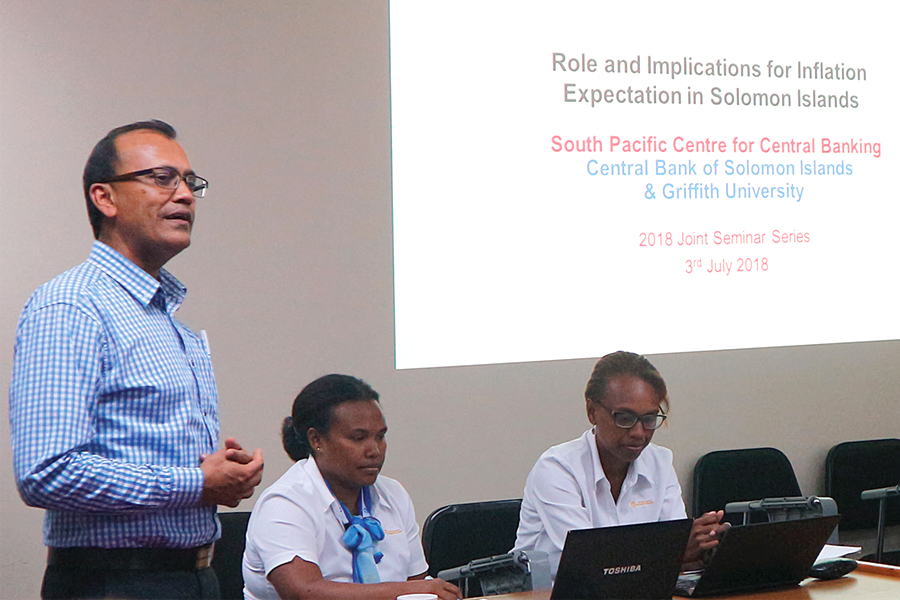
Head of Griffith Asia Institute’s South Pacific Studies group, Dr Parmendra Sharma from Griffith University speaking to CBSI staff.
Head of Griffith Asia Institute’s South Pacific Studies group, Dr Parmendra Sharma from Griffith University speaking to CBSI staff.
THE Central Bank of Solomon Islands (CBSI) in collaboration with Griffith University’s South Pacific Centre for Central Banking recently conducted an internal joint seminar series on July 3 at the CBSI training room.
According to CBSI, the joint seminar is part of the process to improve research capacity for the bank and including other Central Banks from around the region in countries such as Fiji, Vanuatu and Papua New Guinea.
The two proposed research topics presented at the seminar last week focused particularly on the “Role and implications of inflation expectation in Solomon Islands” and “Financial Development in a small island economy – the case of Solomon Islands”.
The presentations were conducted by co-authors from within CBSI’s Economics Research Department (ERSD) and Financial Market and Supervision Department (FMSD).
CBSI staff were able to learn about the research methods used, the data information collected and their results, and engaged with the presenters in short Q&A sessions.
CBSI Governor Denton Rarawa highlighted in his opening remarks to the seminar that staff are encouraged to build their research capacity and gain new knowledge.
Mr Rarawa stated that through such collaborative work, the skills gained could be shared with other groups and institutions in the country and further assist in evidence-based policy formulation.
He added that the seminar is conducted as part of the process to formally train regional Central Banks in research skills and to enhance professional development.
The two main convener’s of the seminar last week included the Head of Griffith Asia Institute’s South Pacific Studies group, Dr Parmendra Sharma from Griffith University and the CBSI Advisor to Governor, Dr Luke Forau.
ACCORDING to the Ministry of Provincial Government and Institutional Strengthening’s (MPGIS) Provincial Governance Strengthening Programme (PGSP), Temotu province through the Provincial Capacity Development Fund (PCDF) projects is making immediate impacts on the lives of its people.
Since the establishment of PGSP back in 2008, the province has embarked and achieved progress with an array of projects.
PGSP points out that Temotu province’s projects under its education sector have given students not only access to higher education but an opportunity to access higher education without having to travel far to Honiara to attain it.
In 2010, Temotu province provided decent dormitory for 120 male students and completed the construction of a two sixth form classroom block which saw more than 500 students passing sixth form education with some making it into various universities.
PGPS also expressed that Temotu province has from 2008 to 2018, achieved 5 projects under its education sector which are the construction of ; three Luesalemba staff houses, one Luesalemba boys dormitory and one Luesalemba form six two classroom block.
In addition, the total cost of these projects was SBD $1,315,000 and 43 people were employed to implement the projects.
The province saw changes after this endeavor which were; increased accommodation facilities for LPSS teaching staff, increased accommodation facilities for LPSS students and access to form six education for hundreds of students in Temotu.
On top of that, Temotu has so far made a total contribution of SBD $501,161 towards the construction of Education Ministry headquarter in Lata, one of the ongoing projects under the education sector.
“Of the total estimated cost of SBD $1,500, 000 of Education Headquarter, the TPG is expected to contribute about 40% of the cost with the objective of promoting education service delivery in Temotu”, said PGSP.
Temotu believes that providing the stadium wing for USP is facilitating access to higher education to people who would have otherwise found it impossible to enroll in those courses away from Lata.
Furthermore, the other project that is still under the scope of ongoing work is the development of a provincial library projected to provide access to those attending USP centre and for the public.