Home Blog Page 1058

3 under quarantine

0
A NERT officer at one of the quarnatine sites

BY MAVIS NISHIMURA PODOKOLO

THREE people who were exposed to countries recorded with positive Covid-19 cases are under quarantine at the institutional quarantine centre in Honiara.

Loti Yates, Director of the National Disaster Management Office, said his team is taking care of them.

“Currently we have three in quarantine and our team are continuing to look after them, one of the three will soon graduate and two fisheries officers may be next week,” he said.

Yates said camp management and instructional quarantine facilities is one very important component of the national operation against covid-19.

“As far as our capability concerns, NHA goes back to National Hosting Authority and also KGVI goes back to education.

“It leaves us with about 300 beds short on our quarantine facilities.

“We are left with GBR and VIMO apartments now may be up to 110 beds available. Securing another six beds at airport motel so our capability now and as far as quarantine facilities concerned, we can accommodate up to 120 people.

So, if we are expecting a bigger number to come in, we have to look further more for quarantine facilities,” he said.

Yates revealed the above at a recent talkback show on covid-19 updates at the Solomon Island Broadcasting Corporation.

Economic outlook for Solomon Islands bleak: CBSI

0
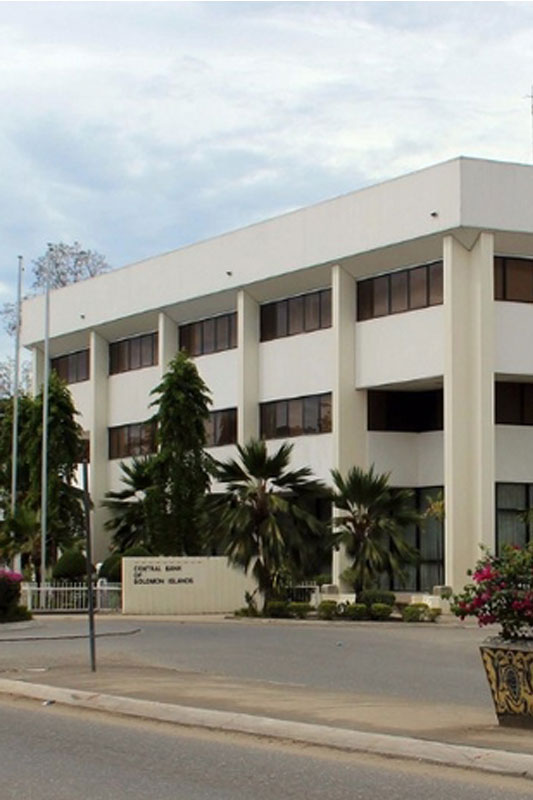
Central Bank of Solomon Islands. Photo by CBSI

BY CHARLES KADAMANA

THE Economic outlook of our country is quite bleak and likely will go into recession by the second quarter of this year.

This was highlighted by the Governor of Central Bank of Solomon Islands (CBSI) Dr Luke Forau during a soft launch of its 2019 annual report on Wednesday 13th May.

“Looking ahead, the outlook for the Solomon Islands economy this year is quite bleak.

“Although the country is still COVID-19 free, the impact of our preparedness against this pandemic on our economy, has taken a toll on our projected growth for this year. 

“As a result, for 2020, economic growth is projected to contract to around minus five percent,” Mr Forau said.

He said given the uncertainty surrounding the COVID-19 pandemic, the country’s external and domestic environments will continue to be affected by the health containment measures and the weak consumer demand.

He said already some sectors like tourism, transport, wholesale, retail, manufacturing, agriculture and forestry have been affected and will continue to be affected significantly.

He also adds that the economy will go into recession by the second quarter of this year. 

He said the uncertainty surrounding the duration and magnitude of the covid-19, let alone our continuous preparedness and containment measures, will continue to have negative impact on the economy.    

However, over the medium term, growth is expected to return to an average rate of 3.5 percent, as key infrastructure and development projects are implemented.

In addition, the positive flow on effects of the post-covid-19 recovery and stimulus are expected to persist over the next couple of years.

He said for last year the country economy was slowed down with real Gross Domestic Product (GDP) growth estimates at 1.2 percent.

He said this is lower than the 3.9 percent growth in 2018.

He said this outcome was attributed to very sluggish global market conditions and weaker domestic demand. 

On the domestic front he said the slowdown was seen in almost all sectors.

“There were falls in the commodities sector, particularly from agriculture and logs, a very flat secondary sector related to the decline in manufacturing, and a slowdown in the services sector. 

“It is worth noting that most of our primary commodities declined in 2019, except for fish catch and cocoa.

“As anticipated, total (natural and plantation) log production dropped by 2 percent to 2.68 million cubic metres due to weak demand from China. Similarly, output for palm oil, copra and coconut oil also declined, owing mainly to fallen international prices during the year.   

“The fall in commodities ultimately affected the country’s external sector. As a result, the trade in goods and services balance decreased to a deficit, resulting from declining exports, coupled with a rise in services payments,” Dr Forau said.

He said this has led to a deterioration in the current account deficit.

He said to finance this deficit, the gross foreign reserves declined by six percent to $4,706 million. At this level of reserves, it is equivalent to around 11 months of import cover.   

He said reflecting the subdued economic environment, monetary conditions weakened in 2019.

“Broad money declined by three percent to $5 billion due to the fall in net foreign assets. Total liquidity, along with excess liquidity both fell, although both remain at elevated levels. On the other hand, credit offered by banks increased by five percent to $2,557 million driven by borrowings to the personal, transport, distribution and construction sectors. 

“Fiscal conditions likewise, saw a reversal in the fiscal outcome, with the fiscal balance turning to a deficit of $202 million from the $191 million surplus recorded in 2018. Government revenue declined by 11 percent, stemming mainly from the downturn in logs, donor grants, as well as declines across most tax categories reflecting the weaker business conditions. Government expenditure however, fell by only one percent, reflecting mainly underspending in the development budget. 

“Government debt level, on the other hand, remained at a sustainable level of around 11% of GDP,” Forau said.

He said despite the weaker macroeconomic conditions, employment indicators remained positive during 2019.

Proxy indicators from the Solomon Islands National Provident Fund showed contributors grew by three percent to 60,643 members. Similarly, public service positions also rose by two percent to around 18,000 employees.

Moreover, there were also temporary employment opportunities for the national elections and the national census.

There was also an increase in seasonal workers to Australia and New Zealand, and contracted nurses to work in Vanuatu.

In terms of inflation he said the consumer prices remained at an acceptable level during the year.

The end period headline inflation for December 2019 was 2.8 percent compared to the 4.2 percent in December 2018.

The drop was driven by the falls in both the import and domestic prices, especially price falls for food, fuel, clothing and restaurants, while prices for betel nuts and utilities picked up. Meanwhile, annual average core inflation in 2019 levelled off at 1.6 percent as in 2018; this indicated that demand side pressures on consumer prices were minimal.

Half pay

0

…for public servants starts

By EDDIE OSIFELO

PUBLIC servants in non-essential services could be in for a shock when they get their salaries today (Thursday 14th May) with reports suggesting that some could get as little as $30 left in their take-home pay.

And to add salt to the wound, public servants who are yet to receive their share of the $2,500 travel allowance initially approved by the Government, are certain to miss out on the payment after the Permanent Secretary of Ministry of Finance and Treasury, Mackini Dentana reportedly issued a stop payment advisory against making the payment.

Island Sun emailed Mr Dentana on Wednesday 13th May but there was no response when this paper went to print last night.

The first pay in May is when public servants are due to get half their normal fortnightly pay.

Government insiders told Island Sun public servants were on Wednesday 13th May lamenting their plight when they received their payslips.

“Some will get as little as $30 in their pay packets. Others will get zero,” one Government insider said.

The 50 percent pay cut which comes into force today for all public servants was first announced by the Government on March 31 as a move to help ease the financial hardships on the government as a result of the potential risks from the intrusion of the covid-19 virus.

Cabinet made the decision on March 26 and instructed the Permanent Secretary of the Ministry of Public Service to advise all public servants of the move.

At the time public servants in the non-essential services were authorised to take emergency paid leave from March 31 until further notice.

They were also advised that after 30-day leave, their salaries would be halved until they were recalled to resume official duties.

On resumption of duties, full salaries would be reinstated. The 50 percent salary withheld during emergency leave would also be repaid in full.

Only salaries of non-established employees at levels 1 and 2 shall continue to be paid in full whether they have taken emergency leave or not.

Public Officers taking emergency leave shall be supported with a travelling assistance of $2,500 as a one-off payment irrespective of their destinations.

Essential Services ministries and agencies will continue their normal work but have been advised to adhere to all occupational health and safety measures in the course of their duties.

Any essential services officers who may have serious pre-existing health conditions are being advised to consult their respective responsible officers if they wished to take emergency leave.

Executive and senior management level – Permanent Secretaries, Under Secretaries, Directors, Financial Controllers and Human Resource Managers have been instructed to work from home to maintain communication.

Public officers are also encouraged to continue to seek God’s guidance as the country journeys through uncharted waters ahead created by the threat from covid-19 pandemic.

World Cup focus still alive

0
Kurukuru Brazilian Head Coach Vinicius Leite

SIFF to meet on football resumption   

BY PETER ZOLEVEKE II

SOLOMON Islands National Futsal team Kurukuru’s focus to compete at the ninth FIFA Futsal World Cup in Lithuania is still alive despite training suspensions due to the spreading Covid-19 pandemic.

Speaking in a Live Chat on Facebook on Tuesday night, Head Coach Vinicius Leite admits the need to resume active training but believes there’s time to prepare should the proposed World Cup date remains.

“The team’s anticipation is high; we can’t wait for things to return to normal so we could resume intact training. We still cannot train we are following the government and health advice, but we don’t have any dates set to resume,” Coach Vinicius said from Australia.

“The plans are the same as long as we can train again. We have got a lot of support from the national government and we are overwhelmed at this stage.

The Brazilian also revealed that the team will travel to Australia once the situation returns to normality to continue with preparations, including two planned overseas training camps.

Meanwhile, the Solomon Islands Football Federation in a statement confirmed a meeting this Friday 15th to discuss national teams’ training and football competitions to restart.

PRC Govt and her companies committed to help provincial health centres

0
Ivan Ghemu, PS Pauline McNeil, PRC Counsellor Yao Ming, Minister Dickson Mua and rep of China Harbour with the medical equiments.

By EDDIE OSIFELO

CHINESE Government together with her companies are committed to beef up the provincial health facilities in the provinces to cope with potential influx of coronavirus (COVID-19).

Counsellor Yao Ming, Deputy Head of Mission of the PRC Embassy in Solomon Islands stated this in a press conference after handing over of medical equipment to Ministry of Health and Medical Services in Honiara yesterday.

China Harbour Engineering (SI) Company donated 10,000 daily protective masks, packed in 4 cartons, 100 N95 masks and 500 gloves packed in 1 carton (not for medical use) to Ministry of Health and Medical Services for fighting against the entry and spread of the COVID-19.

Yao said he had visited health clinics in the provinces and saw people in the communities living in humble conditions.

He said the PRC government with her companies are committed to bolster their provincials’ health care facilities and improve the clinics to prepare for the COVID-19.

However, Yao said Solomon Islands is so fortunate to remain a COVID-19 free nation until today.

“We strongly believe and hope with support of international development partners including China, Solomon Islands Government will prevail over COVID-19 and has a safe and secure environment for its citizens and foreigners here,” he added.

In addition, Yao has defended the China medical suppliers which some people claimed were defects around the world.

He said China has supplied medical supplies to more than 150 countries including United States of America, Australia and Europeans.

“Most of all, these countries have expressed their appreciation for receiving Chinese PPEs.

“In some cases, some concerns were raised on the quality of Chinese made medical supplies, but I can assure you because all these countries have raised concerns because of some misunderstanding and misinformation base on different types for different purpose for usage, so it easy to cause misinformation,” he added.

Furthermore, Yao said ships carrying medical supplies to Solomon Islands have low chance to spread the virus because it takes two weeks of voyage.

He said coronavirus can survive for more than nine days on the surface.

As such, he said it is unlikely for the virus to invade Solomon Islands.

Ivan Ghemu, Director Planning and Policy in the Ministry of Health and Medical Services, said the Ministry needs the PPEs as part of its preparedness and response to supply provinces health centres.

“We don’t make these products and not everything is 100 percent perfect.

“But it is also true that we need to get medical supplies from integrity bodies,” he added.

Though facing challenges nurses take pride in their career

0
Some of the Nurses in the country who have recently become registered Nurses

BY JENNIFER KUSAPA

WITH this year’s theme ‘Nursing the World to HEALTH’ a female nurse who works at the National Referral Hospital says she is proud of her career in saving lives though facing much challenges.

The female nurse, who wants her name with-held, said May 12 every year is a special day for nurses around the world in commemorating their founder Florence Nightingale.

“We used to celebrate this day annually but today due to the COVID-19 pandemic there is no celebration.

“But we are proud to become nurses though we faced with challenges and criticisms every day, becoming a nurse is indeed a challenging and tough job but for me I take pride because I save lives and help my people and my country in saving lives and making sure our people’s health are taken care off”, the female nurse said.

She said though with limited facilities and resources they have at the National Referral Hospital they can still perform to their best to take care of sick patients visiting the hospital.

“And there were times we fail our patients due to lack of proper facilities but that did not let us down to continue and carry our jobs.

“I work as a nurse not for money but because of my passion in caring for the sick and the health of our people”, the female nurse said.

According to World Health Organization  message to mark the World Nursing Day, WHO said nurses are at the forefront of fighting epidemics and pandemics –  providing high quality and respectful treatment and care. They are often the first and sometimes the only health professional that people see and the quality of their initial assessment, care and treatment is vital.

Nurses account for more than half of all the world’s health workers, yet there is an urgent shortage of nurses worldwide with 5.9 million more nurses still needed, especially in low- and middle-income countries.

“The Covid-19 pandemic is a stark reminder of the vital role nurses play. Without nurses and other health workers, we will not win the battle against outbreaks, we will not achieve the Sustainable Development Goals or universal health coverage.

“As we mark this, day, we urge countries to ensure:

  • the occupational safety and health of nurses and all health workers, including notably, unhindered access to personal protective equipment so they can safely provide care and reduce infections in health care settings.
  • nurses and all health care workers have access to mental health support, timely pay, sick leave and insurance; as well as access to the most up-to-date knowledge and guidance required to respond to all health needs, including outbreaks.
  • nurses are given the financial support and other resources required to help respond to and control COVID-19 and future outbreaks.

“In this year of the Nurse and the Midwife, now more than ever, it is essential that governments support and invest in their nurses. COVID19 reinforces the need for investment in nursing jobs, education, leadership”, WHO stated.

In April, WHO and partners launched the first ever State of the Worlds’ Nursing Report, which provides a snapshot of the global nursing workforce as well as highlights the scale of the challenge we face and provides feasible policies for governments  to invest in nursing so that Health for All can become a reality.

By developing their nursing workforces, countries can achieve the triple impact of improving health, promoting gender equality and supporting economic growth. Strengthening nursing will have the additional benefits of promoting gender equity (SDG5), contributing to economic development (SDG8) and supporting other Sustainable Development Goals.

More complicated cases of NCDs increasing at the NRH

0
Dr Jones Gabu

BY MAVIS NISHIMURA PODOKOLO

MORE complicated cases of non-communicable diseases (NCD) are being recorded since April, giving cause for medical experts to raise the alarm.

The country is preparing for any possible entry by the global killer covid-19 and almost all national resources are devoted to this end, but in the meanwhile old diseases which had been quelled are returning to inflict pain and suffering on the people.

Dr Jones Gabu, senior consultant physician and head internal medicine at the national referral hospital (NRH), said NCD is still the major cause for admission to the NRH.

But, more worryingly, Gabu says that ‘more complicated cases of NCDs’ are being reported at the NRH.

More complicated cases means that doctors are having a harder time treating them.

Mr Gabu said according tomedical ward admission report for first quarter of 2020 a total of 84 percent or 330 cases admitted with NCD at NRH.

Gabu said admissions are at a total of 393 case of which there have been 49 deaths, or 13 percent death rate.

He said in terms of the type of disease admitted to the Medical Ward from January to April, 393 cases admitted are NCDs and 16 percent or 63 cases admitted with infections.

“The trend of the diseases we are seeing admitted are more like same for last year 2019 with more NCDs.

“Now we are seeing more complicated cases since April and now into May

“A lot of poor controlled diabetes and high blood pressure. A factor that contribute to preparedness and scare.

“I appeal to people with NCDs such as diabetes, high blood pressure to go to clinics or come to the Referral clinic of NRH on week days to see nurses and doctors there.

“We have the NCD team or nurses and one doctor stationed in the referral clinic every working day,” said Gabu.

He said the top causes of admissions are heart diseases with 19 percent, stroke (CVA) 12 percent, high blood pressure,11 percent, anemia seven percent, cancer six percent, malaria six percent, Kidney diseases (ESKD) five percent, upper GIT bleeding five percent, diarrhoea four percent, chronic liver diseases three percent and meningitis four percent.

Kenilorea Jnr resigns as deputy opposition leader

0
Peter Kenilorea Jnr

By EDDIE OSIFELO

THE Office of the Opposition has confirmed the resignation of Peter Kenilorea Junior as Deputy Opposition Leader.

“We want to confirm that Peter has resigned because he has other plans to do.

“We can’t say it’s political because Peter is still the member of the Opposition Group,” the Opposition Office said.

Mr Kenilorea Jnr made his resignation known on his social media page on Facebook.

“I thank the opposition group for their support during my tenure as Deputy Leader.

“I remain a loyal opposition member focusing on my role as Chair of the Parliamentary Foreign Relations Committee and MP for East Are Are Constituency,” he said.

Kenilorea Jnr said: “I still firmly believe that the opposition group can ably lead this nation forward in these uncertain times with confidence, should the opportunity be accorded to the group.

“Together, We Can,” he said.

Member of Parliament for Aoke Langalanga, Matthew Wale is the Leader of the Opposition Group.

Peter Kenilorea Jnr is 47 years of age.

His father Peter Kenilorea was the first Prime Minister of the Solomon Islands.

Kenilorea Jnr attended Su’u National Secondary School on Malaita, then transferred to Wesley College, Auckland, in New Zealand.

Upon the completion of secondary education, Kenilorea Jr. pursued a Bachelor of Laws at the University of Waikato, followed by a Master of Laws in international law at the University of Nottingham.

Kenilorea Jnr began his legal career with Jennifer Corrin Barrister & Solicitor in 1994.

He began working for the Attorney General of the Solomon Islands in 1996, and left his government position for the United Nations in 2000.

Kenilorea Jnr held several roles at the UN, returning to the government of the Solomon Islands in 2017 as permanent secretary of the Ministry of Foreign Affairs and External Trade.

Kenilorea Jnr contested the 2019 general election on behalf of the United Party, and was elected a member of parliament for East ‘Are’are.

The United Party supported Kenilorea Jnr’s candidacy for head of government, an office won by Manasseh Sogavare.

Soon after Sogavare’s fourth cabinet took office, his government chose to end diplomatic relations with the Republic of China.

Kenilorea Jnr sharply criticised the establishment of bilateral relations with the People’s Republic of China.

Crackdown finds shops hoarding expired goods in Auki

0
Cartons of expired twisties seized from one of the shop in Auki. Photo by Samie Waikori.

BY SAMIE WAIKORI

AUKI

SHOPS in Auki are reportedly hoarding expired goods for unknown reasons, a crack down by the province’s food safety and hygiene unit found out.

Malaita provincial office through its Food Safety and Hygiene unit is cracking down on expired food products being sold in shops in Auki.

On Monday this week, a load of expired cartons of junk food (twisty) was seized from a shop in Auki.

Food Safety and Hygiene officer, Ms Mercy Nunua said they have been visiting shops in Auki and continue to find expired items being kept.

She said most of the expired goods were found in shop’s cargo storage, and expiry dates go back as far as two years ago.

Nunua said their discovery has led them to be suspicious of the shop-owners’ motives in keeping the expired products.

Nunua appeals to all shop owners to cooperate with her team and to remove and dispose off any expired goods within their shop.

She also calls on shop owners who have goods nearing expiry dates to put the goods on special price to sell before they expire.

Nunua reiterated that her office will continue to monitor status of goods in shops in Auki and wants cooperation from shop owners.

Trapped with old enemies

0

Dengue cases increase at NRH as country prepares for possible covid-19 entry

BY MAVIS NISHIMURA PODOKOLO

WHILE Solomon Islands is mobilising almost all of its resources to keep covid-19 out, diseases which we have worked hard to stamp out are re-emerging in worrying rates.

Dengue, which have had few outbreaks in past years, was successfully silenced by national response, but with all attention now on covid-19 there is an increase in diagnosed dengue cases at the national referral hospital (NRH).

Since April the NRH has been admitting a growing number of dengue patients.

This was revealed yesterday to Island Sun by Dr Jones Gabu, senior consultant physician and head of internal medicine, NRH.

“We are also admitting ceases of dengue in the ward since April to now.

“Dengue is increasing therefore we need to take preventative measures to keep mosquitoes at bay or avoid being bitten by mosquito.

“Clean environment. If develop dengue, drink a lot of coconut juice, four to six coconuts or lots of water per day. Don’t drink juice or sugary drinks,” he said.

Gabu adds the Medical Ward Admission report for first quarter 2020 recorded an increasing number of dengue cases in March and April.

Also, in the month of February 2020 a high number of malaria cases was recorded as well.

He explains that as early as January cases of dengue were reported but at a relatively low rate, not until April before the worrying trend began.