Home Blog Page 693

First female rangers help save leatherback turtles

0
Ranger Madlyn Ero

SASAKOLO beach looks like any other in the South Pacific: a strip of sand buttressed by coconut palms, low green hill rising in the distance.

Located near Kafulapu community, this unassuming patch of land is one of the most important—and perhaps the largest—leatherback nesting beaches in the South Pacific. 

From October through February each year, a dozen or so turtles emerge from the waves each night, hauling themselves scooch by scooch up the beach.

They measure up to 6.5 feet long and weigh up to 1,300 pounds, dwarfing the rangers that look on from a distance.

Leatherbacks, like many other turtles, are long-distance ocean travelers.

The same turtles that can be seen by divers off the coast of southern California cross the width of the Pacific Ocean to nest on the narrow, palm-fringed beaches of the Solomon Islands.

A Last Chance for Leatherbacks

While the species is considered vulnerable at a global level, the subpopulation in the Western Pacific are faring far worse than others.

Scientists estimate that this population has declined to just 1,400 breeding adults, leaving them critically endangered.

Without action, it will continue to get worse.

Leatherbacks, like many other turtles, are long-distance ocean travelers.

By 2040 years, scientists predict that the Western Pacific subpopulation will be whittled down to just 100 nesting pairs each year. “They’re crashing hard, and it’s going to continue unless we arrest the decline,” says Peter Waldie, a fisheries scientist with The Nature Conservancy (TNC).

But conservationists can’t protect these turtles without data: where, when and how often they nest, how many hatchlings clamber from sand to sea and how many nests are washed away by rising tides.

TNC is partnering with the Solomon Islands government to start gathering these data from critical nesting beaches in Isabel Province, with funding from the US National Oceanic and Atmospheric Administration (NOAA).

In late 2021, TNC-trained rangers resumed monitoring at Sasakolo for the first time in more than 10 years.

And, in a first for the Solomon Islands, women rangers will now join the monitoring program.

Breaking Barriers to Save a Species

Strict gender roles dictate much of Melanesian culture.

“There are specific jobs for men and women, which creates a balance in communities,” explains Madlyn Ero, who leads TNC’s gender equity work in the Solomon Islands.

“And most of the time the roles that women play are domestic, they are in the house with children, cooking and other domestic-type work in the village.” 

Meanwhile, men dominate jobs that require technical expertise and make the majority of the decisions for family and community.

Ero explains that getting women to attend meetings about conservation or natural resource management can be difficult, even when those decisions impact their lives on a daily basis.

“Unless you specifically require women to attend, only men will turn up,” she says.

Rangers collect data and tag a nesting leatherback turtle.

But as conservation organizations like TNC build gender equity requirements into their work, the tide is slowly shifting. 

Five women attended TNC’s turtle ranger training in November, and three of those women are now working at Sasakolo.

Ero says that all three women showed up on the first patrol—even though they weren’t scheduled to work that evening—to shadow more experienced rangers and continue learning.

By far the biggest challenge, though, is convincing men in the community to accept that women are capable of the work. 

“We have to work hard to change how men think, so they realize for themselves that women can do this work,” says Ero. Usually, they need to see it to believe it.

Ero and her colleagues are consulting with the community to learn what else they can do to facilitate more female rangers to join.

The goal is to build the program to a 50/50 gender parity.

To get there, Ero says they will need to take into account the women’s safety, figure out ways to help offset domestic duties while women are working and build a separate family-friendly facility so women can bring their children and partners with them while they work. 

Long Nights on the Beach

Work as a ranger means long nights walking the beach by torchlight, searching for the tell-tale signs of a nesting turtle: tire-like tracks up and down the beach, or a very large, dark lump of heaving, snorting, salt-covered turtle in the dark.

When they find a female, the rangers wait patiently while she digs a hole in the sand and lays her clutch of eggs.

If they get the timing right, rangers can count the number of eggs in the nest as they drop from her cloaca.

Having laid her eggs, the female leatherback returns to the sea.

Then they mark the location, before gathering data about the female turtle and attaching a small metal identification tag to her flipper. 

Rangers on these patrols also check the older nests, looking for signs of hatching or disturbance.

Solomons Islanders can legally harvest turtle eggs for food, and many nests are predated by people.

Eventually, Waldie and his collaborators at NOAA hope to incorporate satellite tagging at Sasakolo to learn where these turtles travel during their non-breeding years.

Similar research from the Arnavon Islands, a significant hawksbill nesting site nearby, discovered that those turtles migrated as far as Australia’s Great Barrier Reef.

Building Long-Term Community Partnerships

All of this data will feed back to TNC and NOAA, who will use Sasakolo as an “index beach” to better understand what is happening to the Western Pacific subpopulation.

Sasakolo beach.

“The tricky thing with turtles is that they are a very long-lived species, so you need long-term data for 9 to 10 years to really understand a population’s nesting trend,” says Irene Kelly, NOAA’s sea turtle recovery coordinator for the Pacific Islands.

She says that most of the data on the Western Pacific sub-population comes out of Indonesia, with very little data available from Papua New Guinea and the Solomon Islands.

“The West Pacific leatherback turtle population is a difficult one to study because nesting areas are so remote and logistically challenging to access,” she says.

“But the more we look, the more we learn.” 

Data on how often females return to nest, the number of nests laid and hatchling survival rates will all feed into NOAA’s population models and status assessments.

Those, in turn, will help the agency better protect leatherbacks by refining management measures to mitigate interactions between turtles and US commercial longline fisheries.

They will also inform NOAA’s work with international governments and partners to help conserve the species.

Kelly emphasizes that, at the end of the day, NOAA alone can’t save the western Pacific leatherbacks.

“We need and rely on partnerships,” she says.

“We don’t want to just collect the data and leave, that’s not sustainable or realistic.

“We need to engage with communities and local partners to build capacity, so they have ownership over the project, which builds longevity.”

“We’re fighting against extinction at this point” Kelly adds.

“But there’s still hope and enough turtles, we believe, that the western Pacific leatherback population can recover. We haven’t hit the tipping point, yet.”

And that’s exactly what TNC and the community at Sasakolo are doing: fighting against extinction, one turtle at a time. – Source: The Nature Conservancy

Coastal villages hit hard by rising seas

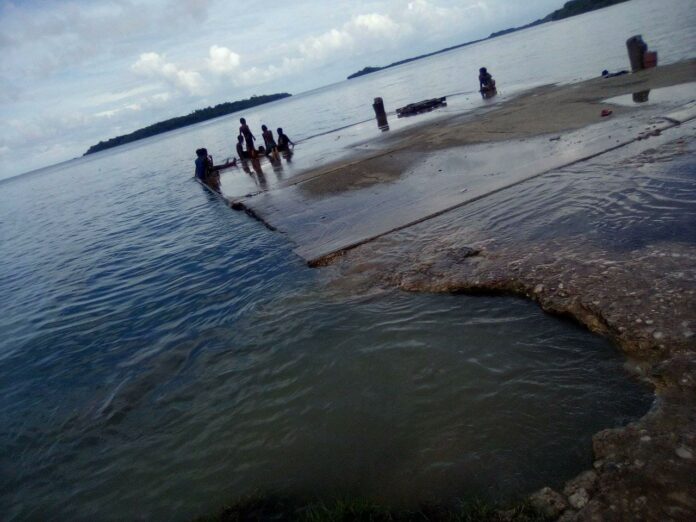
During high tide, water overflows on Buala wharf in Isabel Province. Pappa Steeviey

By EDDIE OSIFELO

The threat of sea level rise on the sea coasts of Solomon Islands is real.

The country lies east of Papua New Guinea and northwest of Vanuatu and 3,280 km to Australia, has nine big provinces and more than 900 small islands.

Most of the 700,000 population live alongside coastal areas in Solomon Islands.

Evidence shows some parts of the country have hit hard by sea level rise.

 At Buluabu village in Lilisiana, Langa Langa lagoon, Malaita province, the water has reached the floor level of some houses in the village.

Sea intrusion into Buluabu village in Langa langa lagoon in Malaita province. John Selogaga

While at Buala wharf in Isabel Province during low tide, the sea level drops very low but at high tide, the salt water

Furthermore, Solomon Star female reporter, Esther Nuria published a story and photos on the impact of climate change on people of Walande in South Malaita.

She covered the story after attending the Anglican Mother Union meeting in Walande.

The story landed her the first prize at the end of the six weeks National Security Reporting Course organized by Media Association of Solomon Islands and Australia Pacific Security College.

David Hiba Hiriasia, Director of the Solomon Islands National Meteorological Services in reference to sea level rise, said La Nina contributed to this as well.

Hiriasi said the trade winds push more warm water on our side of the Pacific and so sea level is expected to be higher than average

COP 26

Solomon Islands hoped for a decision to reach on Long Term Finance at United Nations Climate Change Conference (UNCCC), Conference of Parties 26 at Glasgow, Scotland, United Kingdom from 31 October to 13 November 2021.

Deputy Secretary (Technical) of the Ministry of Environment, Climate Change, Disaster Management and Meteorology, Chanel Iroi, said the endorsement of the LTF would not only provide financial leverage to struggling small island states but also honor the Warsaw International Mechanism for Loss and Damage which was one of the resolutions of Paris Agreement.

Iroi said Intergovernmental Panel on Climate Change (IPCC) report on the effect of climate change in the coming years reemphasized the need for world leaders to endorse and roll out the LTF to vulnerable countries.

He said ground work on Loss and Damages must continue at the same time global leaders must make the right choice to reduce emissions so as facilitating financial resources towards mitigation and adaptation programs.

Iroi said priority areas for slow onset events and non-economic losses on the international stage while incorporate “limits to adaptation” in National Adaptation Plans and other GCF proposals was important.

According to CarbonBrief, the “Glasgow Climate Pact” that emerged from the summit was welcomed by many for its commitment to doubling adaptation finance and requesting countries to present more ambitious climate pledges this year.

“Others were disappointed that this COP once again failed to provide vulnerable nations with the money to rebuild and respond to the unavoidable impacts of climate change.

“Much was also made of a last-minute intervention from the Indian environment minister Bhupender Yadav that saw language around moving beyond coal weakened in the final text,” CarbonBrief said.

It said the call to “phase down” unabated coal use is, nevertheless, unprecedented in the UN climate process.

COP 27

Solomon Islands and other Small Islands nations are preparing for the United Nations Climate Change Conference, COP27 in Sharm el-Sheikh, Egypt, from 7-18 November 2022.

Australia Foreign Minister, Penny Wong relayed positive messages to Fiji, Samoa, Tonga, New Zealand and Solomon Islands to tackle climate change.

Senator Wong told media following her visit to Solomon Islands that Australia is committed to reach 43 percent by 2030 and plan to host a United Nations Climate conference with the Pacific Islands nations.

“That would lead to in terms of renewable energy, that is 82 percent of our energy being renewable being provided from renewable energy sources. So, we are serious about this,” she added.

Furthermore, Senator Wong said other thing she want to talk with Pacific Islands countries is stronger engagement potentially holding Conference of the Parties to try and press issues.

“When I was Climate Minister and still today, I think the voices of smaller island nations have been powerful and authentic in the UN negotiations,” she added.

However, the new Labour government is to adopt a policy to deal with coal and fossil fuel in Australia.

Australia is showing commitment to address climate change through infrastructure design for projects.

Tony Telford, Infrastructure Management Leader in Hub for Solomon Islands Infrastructure Program said the impacts of climate change is real in the Solomon Islands after their scoping visits to Malu’u (Malaita), Buala (Isabel) and Seghe (Western).

“Just focusing on climate change and disaster resilience, certainly climate change is a very real threat and it is something that is considered at the very start of any design process.

“At Malu’u, the shoreline coming closer, so that is something we need to consider at the very start of the design process,” he said.

Furthermore, Telford said the other thing that they noticed at Buala, there is a wharf next to the market and looking at photos, the wharf is under water at few times each year.

He said that is another visible impact that climate change has and forefront on design process.

Strong message from UN GS

António Guterres, Secretary-General of the United Nations speaking ahead of the COP27 said the answer lies in renewables – for climate action, for energy security, and for providing clean electricity to the hundreds of millions of people who currently lack it.  Renewables are a triple win.

“There is no excuse for anyone to reject a renewables revolution. 

“While oil and gas prices have reached record price levels, renewables are getting cheaper all the time,” he said.

“The cost of solar energy and batteries has plummeted 85 per cent over the past decade.  The cost of wind power fell by 55 per cent. 

“And investment in renewables creates three times more jobs than fossil fuels,” he said.

The UN GS said of course, renewables are not the only answer to the climate crisis. 

He said nature-based solutions, such as reversing deforestation and land degradation, are essential. 

“So too are efforts to promote energy efficiency. 

“But a rapid renewable energy transition must be our ambition,” he said.

“As we wean ourselves off fossil fuels, the benefits will be vast, and not just to the climate. 

“Energy prices will be lower and more predictable, with positive knock-on effects for food and economic security,” Guterres said.

“When energy prices rise, so do the costs of food and all the goods we rely on. 

“So, let us all agree that a rapid renewables revolution is necessary and stop fiddling while our future burns,” he added.

While world leaders are still finding ways to phase out coal and encourage big nations to adopt renewable energy, the low-lying islands in the Solomon Islands are sinking as well in the Pacific.

Climate Change changes the atolls lifestyles

0
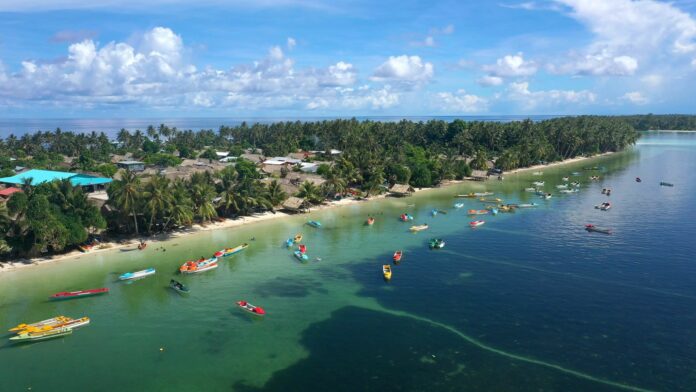
The island of Ontong Java in Malaita Outer Island.

By EDDIE OSIFELO

CLIMATE change is changing the social fabrics of the tiny atolls of Malaita Outer Islands in Solomon Islands.

The small community which practised communal system, starting to see it eroding because of the changing calamities that affects their way of live, scares food security due sea level rise, land disputes between families and increase criminal activities among youths.

Malaita Province government and National Government have been talking about relocation policies to relocate the islanders to mainland Malaita Province, but they struggled to implement them because of land issues and people reluctant to leave the atolls.

As part of adaptation programmes, Anglican Church of Melanesian has worked with Pacific Regional Environment Programme (SPREP) to initiate food security projects, but was a setback because of salt water intrusion.

Jenny Asua, who comes from the island confirmed to Island Sun in an interview in the past, the women of Ontong Java in Malaita Outer Islands used to harvest sea shells not far from the shores to sell for incomes.

She said today, the women abandoned their activities because the sea level rise has covered the harvesting areas.

“The women have to paddle far out of the shores to dive the sea shells,” Asua lamented.

She said this really makes life difficult for them compare to past years when the sea level was low.

As such, Asua said the women depends on men and boys to find money through harvesting of bech-de-mers or sea cucumbers.

Ontong Java is part of Malaita Outer Islands constituency which also includes Pelau, Luaniau and Sikaiana.

According to the statistics in the April 4 elections in 2019, there are 200 people living on Pelau, 1000 plus on Luaniau and 600 on Sikaiana.

The number on the islands normally reduced after the elections because the people returned to Honiara, capital of Solomon Islands.

MOI people are part of the Solomon Islands archipelago in the South Pacific, which her population expects to reach the 700,000 mark after the Census this year.

The elder of Ontong Java explains the salt water intrusion into their island that spoilt their kakake plant. Ontong Java

The country has a land mass of 28,896 km2 (11,157 sq mi) and the 22nd largest Exclusive Economic Zone of 1,589,477 km2 (613,701 sq mi).

However, the oceans are turning against the low-lying islands in the Solomons which are now vulnerable to climate change.

Fr Nigel Kelaepa, Mission Secretary of Anglican Church of Melanesia, said climate change is real for his people because it affects the economy, social and spiritual aspect of the island.

He said food security is an issue on the island because crops don’t grow well because the salt water has destroyed the swamps on the island.

“Our people depend on foods coming from Honiara and shops.

Fr Kelaepa said they cannot engage in fishing because you need freezers and blocks to keep them and transport to Honiara.

On the social front, Fr Kelaepa said due to the population increase on the island, there is also rise of land dispute among families because they compete for space to plant their food.

He said the communal system practised in the past has slowly eroded as family members resort to individual lifestyle as a means of survival.

“Families don’t share food with close relatives now,” he said.

Furthermore, Fr Kelaepa said there are also rise of criminal activities among youths, marriage breakdown among couples and underage marriage on the island.

He said youths are seen as bread winners because they get money from diving bech-der-mers.

“Some families allow their girls to marry the boys as means of survival because they can support them through earning money through diving bech-de-mers,” he said.

On the spiritual front, Fr Kelaepa said on Sundays, only old people and children attend the church service, while youths stay away.

Since 2010, Anglican Church of Melanesia and Secretariat of the Pacific Regional Environment Programme (SPREP) have initiated food security projects on Ontong Java because crops like kakake and taro were affected by the salt water that intruded in their gardens.

The project under SPREP was called the Pacific Adaptation to Climate Change (PACC) which involved the Ministry of Agriculture and Livestock.

However, Fr Kelaepa said the foot security project by SPREP and ACOM did not work out on the island because the crops did not grow well on land.

He said it is still the fear of the people on the loss of garden crops that will affect their local diets.

ACOM with the help of University of New South Wales in Australia and University of Southampton in United Kingdom have commenced a project on environment and climate change on four sites in Honiara.

The four sites were Selwyn, Red Beach on Guadalcanal and Walande and Fanalei on South Malaita.

Fr Kelaepa said under the projects, poles were placed on the four sites to collect the rise of the seas.

“The data collected can be shared to the government,” he said.

As part of adaptation, he said the church plans to plant self-resilient crops on the atolls like bed fruits, Pacific Yams and coconut that grow at low level.

He said this project is to address the food security crisis on the islands.

Furthermore, out spoken activist, Lawrence Makili said the Atolls have been used as marketing tool by the national government in international forums for many years now.

Makili said there needs to be autonomy for the Atolls to negotiate with Government and international donors on addressing climate change affecting his people.

Moreover, Pastor Geoffrey Alacky, said a non-charitably group calls Alliance of Vulnerable Islands Across our Nation is formed to negotiate with Government and donors on climate change issues affecting them.

He said the group is expected to launch its constitution soon.

However, Malaita Premier Daniel Suidani said climate change is a big issue that the national government can handle it because it will involve relocation of people to another land.

Suidani said the province is currently negotiating with landowners to relocate people living on vulnerable islands to mainland.

“For example, the people of Kwai and Ngongosila have relatives living on mainland.

“We can negotiate with them for the people on the island to move inland,” he said.

Suidani said the people of Fanalei and Walande have already moved in land in South Malaita.

For the people of MOI, Suidani said his government is still to find land for them.

Moreover, Director of Climate Change in the Ministry of Environment, Climate Change, Disaster Management and Meteorology, Hudson Kauhiona said climate change on the Atolls is very complex because it involves land issue when it comes to relocation.

Kauhiona said currently, there is no specific policy or strategy to deal with climate change on the Atolls.

However, he said past governments and current government have allocated $1.5 million for the Low Carbon Emission Programme and Solomon Islands Climate Action Programme in the national budget.

Kauhiona believes one option the government can take as part of relocation is to build a second home in urban centres that are closer to schools, health care and employments for relocation.

Solomon Islands government has presented the country’s case of climate change in regional meetings and international meetings like the United Nations Climate Change Conference (UNCCC), International Conference on Climate Change in past until today.

As a Small Islands Developing State (SIDS), Solomon Islands is part of the Association of Small Islands States (AOSIS), which includes countries in the Pacific and Caribbeans.

The future of Solomon Islands and members of AOSIS look bright if they see the global average temperature rises are limited to well below 1.5C; and that parties must reduce emissions by 45% below 1990 levels by 2020, and by 95% come 2050.

This should be complemented with adequate support for capacity building, technology transfer and a comprehensive, equitable and robust outcome.

All in all, the Atolls people of MOI are leaving in the reality of the climate change which already impacted their social, economic and spiritual lives.

Their only hopes if worse comes to worse is for the people in authority to relocate them to the mainland of Malaita province and the landowners to embrace them in their settings.

New vehicle for Renbel

0
Deputy Prime Minister and Minister of Infrastructure Development, Manasseh Maelanga, hands over a new hilux to Renbel Premier, Japhet Tuhanuku, while Renbel MP, Dr Tautai Angikimua Kaitu'u looks on.

By EDDIE OSIFELO

RENNELL and Bellona Provincial government will find it easy to deliver its services on land transportation on the island.

This was after Ministry of Infrastructure Development donated a new brand hilux to the province in Honiara yesterday.

Minister of MID and Deputy Prime Minister, Manasseh Maelanga said the hilux is funded under MID that looks after transport.

He said MID donated the new hilux to Renbel following request from its government to assist them in its administration work.

Premier of Rennell and Bellona Province, Japhet Tuhanuku thanked MID for the assistance and said it is gift that breaks the heart of the people in the province.

Tuhanuku said they will use it to do service delivery to the people of Renbel.

Wood tops SI export to NZ

Wood remains Solomon Islands top export to New Zealand

BY BEN BILUA

Gizo

WOOD remains top of Solomon Islands exports to New Zealand valued at $10.,159 million in 2021.

In 2020, wood exports to New Zealand dropped, after a steady progress in 2019 but in 2021 they bounced back significantly.

Second on the list of top exports is coconut oil export, followed by canned tuna, cocoa beans and chocolate, flour, meal and powder.

Coconut oil exports have steadily increased since 2019, accelerating in 2021 to $1.154 million. In 2019, exports of cocoa beans and chocolate wer valued at $56,663.00 rising in 2020 to $87,663.00

Similar trend has been seen for canned tuna. Canned tuna export has shown progress in 2020 and 2021.

Exports of Canned Tuna were valued at $102, 728.00 in 2020 and $273,674.00 in 2021.

Flour, meal and powder exports also showed  growth in 2019, 2020 and 2021. Flour, meal and powder export were valued at $24, 018.00 in 2019, $107, 414.00 in 2020 and $181,731.00 in 2021.

The total value of Solomon Islands exports to New Zealand generated from these commodities by year are as follows; and $8.883 million in 2019, $8.246 million in 2020 and $11.873 million in 2021,

Speaking to Pacific Journalists earlier this week, Pacific Trade Investment New Zealand, Trade Commissioner, Glynis Miller said Solomon Islands is rich with natural resources yet to find their footprint at the international market.

She said frozen agricultural products – which for one New Zealand supermarket chain is set to grow by 10% in 2 years is an immediate opportunity. 

Miller said the future for Solomon Islands export is in fresh produce and kava as well food and beverages.

She said Pacific Trade Investment New Zealand will visit Solomon Islands when international border opens and meet with businesses on the ground as well as alongside governments to improve the country’s export.

End///

NZ to support tourism here

(L-R) New Zealand High Commissioner Jonathan Schwass, Acting PS of the Ministry of Culture and Tourism Barney Sivoro, and PS of Ministry of Finance and Treasury McKinnie Dentana with the signed funding arrangement.

A funding arrangement of NZD$550,000 (SBD$2.8m) to support the tourism sector in Solomon Islands was signed on Tuesday at the New Zealand High Commission, between New Zealand Ministry of Foreign Affairs and Trade, the Ministry of Culture and Tourism, and the Ministry of Finance and Treasury.

A statement from the NZ High Commission said the agreement will support the recovery of the tourism sector after the challenges that have accompanied the pandemic.

“It will support the Ministry of Culture and Tourism to continue working with operators to use COVID-19 safety protocols and keep visitors safe; drive the development of tourism products and minimum standards, including investing in key national tourism assets ahead of the Pacific Games; and improve sector coordination,” the statement said.

“The aim is to drive a growing, sustainable, and inclusive tourism sector in Solomon Islands,” it added.

The agreement is part of a wide range of work underway to support the recovery of the tourism sector.

The Ministry of Culture and Tourism, with support from Strongim Bisnis, have trained operators in COVID-19 safety protocols, so that venues are ready to open their doors as tourists return.

New Zealand will also support technical advice and grant funding to Tourism Solomon Islands, to drive marketing and online communications, as well as small grants to tourism businesses through Business Link Pacific.

High Commissioner Jonathan Schwass noted the importance of partnership in rebuilding the tourism sector.

“New Zealand has been supporting tourism since 2017, because we see the tourism sector as critical to economic development in Solomon Islands, particularly in the provinces,” Schwass said.

“This arrangement represents a new chapter in New Zealand’s support to tourism, and we are excited to be seeing this work progress,” he added.

In acknowledging the support, Acting Permanent Secretary of the Ministry of Culture and Tourism Barney Sivoro thanked the New Zealand government for the assistance, and noted that it is timely as the country looks forward to the opening of international border in July.

Call to upgrade rundown Maluu nursing facilities

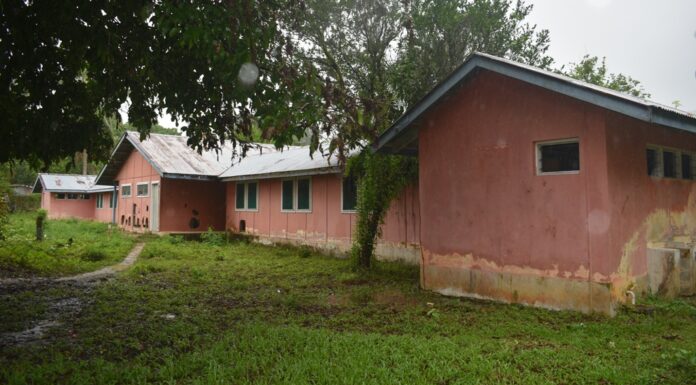
One of the facilities of the old Nursing School at Malu’u in north Malaita.

BY SAMIE WAIKORI

Auki

THE Ministry of Health and Medical Services has been urged to consider upgrading the dilapidated Malu’u old nursing school building in north Malaita.

Community Health Nurse Consultant for the Northern region, Lawrence Irobaea recently made the call with further suggestion of integration the buildings with the current health facilities at the Malu’u Area Health Centre.

Irobaea said since the nursing school closed some decades ago, the buildings were not used and are down at the moment.

He said whilst the facilities structures are there, the Ministry of health should consider upgrading them and merging them with the current facilities at Malu’u AHC.

Irobaea said the old nursing school is behind the Malu’u AHC and any plans to upgrade the facilities will be of benefit to the expansion of the health centre.

He also said integrating of the old nursing buildings will also address the demand for health services in the northern region of the province.

He said Malu’u AHC serves more than 50,000 people in the region and the expansion of the health centre should be a priority to cater for the population.

He said the proposal to take onboard the initiative will be an advantage to support the growth of Malu’u AHC in the delivery of health services for the people.

Irobaea said as somebody on the ground, he is prepared to provide support towards the interest to upgrade the old Malu’u nursing school for the expansion of Malu’u AHC.

Parties yet to settle negotiation on Nehemiah case

0

BY JENNIFER KUSAPA

THE case of a man alleged of obtaining credit by false pretence from Smart Technology shop at Chinatown in 2019 has adjourned to July 6 for prosecution and defence to settle negotiation and also for setting new trial date.

Police Prosecutor Iete Tebakota said there are some sort of ongoing negotiations regarding the case between the prosecution and defence.

However, since the presiding magistrate is currently on court circuit the matter can be adjourned to another date.

Principal Magistrate Tearo Beneteti then adjourned the case to July 6 and to be relisted before Principal Magistrate Fatimah Taeburi.

This is the case of Martin Pola Nehemiah who is facing three counts in relation to the alleged incident that alleged to have occurred on February 5 2019.

The allegation said the accused met with the owner of the shop and introduce himself as the president of the Accelerate Christian Education Schools of Solomon Islands.

Upon their discussion the shop owner at Smart Technology convinced and agreed for the accused to collect the items discussed and will be re-paid when the school grants are ready.

Later on, February 28 2019 around 10am the accused came and collected one mobile phone at a cost of $2, 250 as according to the agreement and walked out with a proforma invoice, again on 15 March 2019 he collected one notebook laptop14 inches and 1X 8c honour brand mobile, later on March 28 2019, he again went to the Smart technology shop and collected two Redmi mobile handsets.

The total cost of all items collected is $12, 150.00, couple of months later the shop owner made several attempts to call the accused to settle his credits but was unsuccessful.

The shop owner gave him enough time but till this year March 2021 the accused never turned up to settle his credits and the matter was reported to the police in which the accuse Nehemiah was arrested and charged.

Police Prosecutor Iete Tebakota appears on behalf of his colleague Watson Akwai yesterday.

Veke: Australia and Solomon Islands share a robust relationship

Minister Veke present certificate of appreciation to Commander Paul Osborne

The relationship between the Australian Government and Solomon Islands is ‘always robust’.

Anthony Veke, minister of police, said this during a farewell dinner for the Royal Solomon Island Police Force (RSIPF) and Australia Federal Police (AFP) Policing Partnership Programme (RAPPP) Commander Paul Osborne in Honiara on Tuesday this week.

“We have too much shared history, that it would be wrong not to acknowledge it. This country is forever grateful to Australia, and we will always be appreciative of your support especially in security and policing. It is my hope that this partnership will continue to grow and not cease.

“The partnership that the AFP and RSIPF share and continuity to nurture, is a clear testament of that relationship.

“We have a programme that is beneficial and outreaching in its span, and I expect that this will be built on in the years to come. It is the government’s hope that the RSIPF will grow into a discipline force with a capacity and capability that can be self-sustaining in the future.

“In the future you can all look back and see that RSIPF has grown positively with pride, and know that this was all possible because of your hard work, commitments and partnership. The RSIPF has a lot of areas required for improvement, and we are in a working progress with all our able partners. Therefore, I wish upon us to see it so, and work together to achieve those expected progress.

“Thank you so much for your time as leader of both the RAPPP programme and Deputy Commissioner under the Solomon International Assistance Force (SIAF) programme. These are not easy tasks, to tackle two priority areas simultaneously, and you have again proven yourself capable. I understand last year was not an easy time for our security since the November riots, and SIAF have since then been working hard to restore law and order, as well as, bring trust to our Police Force.

“I understand a lot is expected of SIAF under this program and I hope that as we continue we will address them collectively. I am sad that Commander Osbourne will be departing us at this time, but I trust that the SIAF programme will be in good hands.”

The farewell dinner programme concluded with some presentations of gifts to the outgoing commander.

SICA UPHOLDS STAND

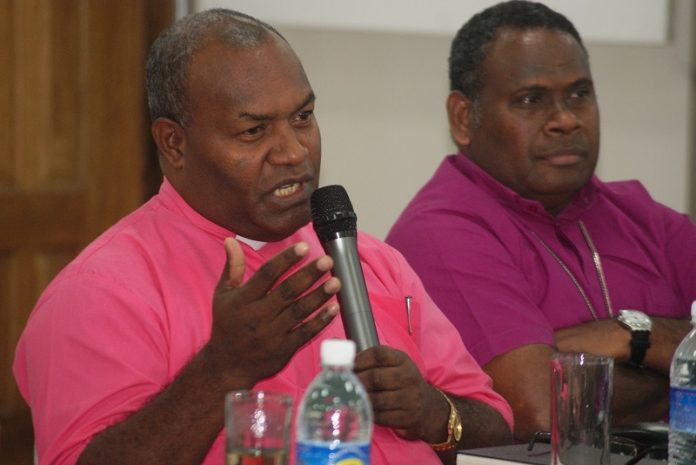
SICA Vice Chairman, Rev Bishop Eric Maefonea

Churches maintain opposition to gov’t plans to extend parliament

By EDDIE OSIFELO

SOLOMON Islands Christian Association (SICA) still maintain its stand in opposing the government’s proposal to extend the life of parliament from four to five years.

This came in the wake of a statement from the Office of the Prime Minister following an open dialogue on the issue with SICA and its sister association, the Solomon Islands Full Gospel Association (SIFGA) Monday this week.

The statement claimed the dialogue led to greater understanding by the two church bodies of the government’s intention.

However, SICA vice president, Bishop Rev. Eric Maefonea said there is no resolution or communiqué reached at the end of the dialogue.

Maefonea, who is head of the South Seas Evangelical Church (SSEC), said the officials of Office of Prime Minister and Cabinet only clarified further questions raised by SICA and SIFGA.

But he explained the clarification does not change the stand of SICA on the issue at all.

SICA’s voice adds to the growing string of disapproval by peoples and organisations in the country toward’s DCGA government’s proposal.

Late last month, East Kwaio constituents advised their member of parliament not to bother carrying out a planned visit to the constituency to discuss the extension proposal.

The National Council of Women (SINCW), Transparency Solomon Islands, the parliamentary opposition and independent groups, the umbrella body of civil societies – the Development Services Exchange (DSE), and other prominent bodies and individual citizens have come out since April last year disagreeing with this DCGA proposal.

SICA, which represents the main Christian churches in the country, said the churches “do not welcome the idea of the extension of parliament from [four] to [five] years per term, but would like to see the National General Elections (NGE) taking place next year 2023, few months before the Pacific Games in November.

“We feel that the national constitution and the Pacific games if weighed on a scale, the national constitution would have more weight than the Pacific games. Therefore, we feel that only the Pacific games can be pushed forward to take place in 2024, but not the NGE.

“We feel that the Pacific games (or any other games for that matter), is not in a better position to influence and change our national constitution, we need to avoid that bad precedence.”