Home Blog Page 1062

Customs hard at work against coronavirus

0
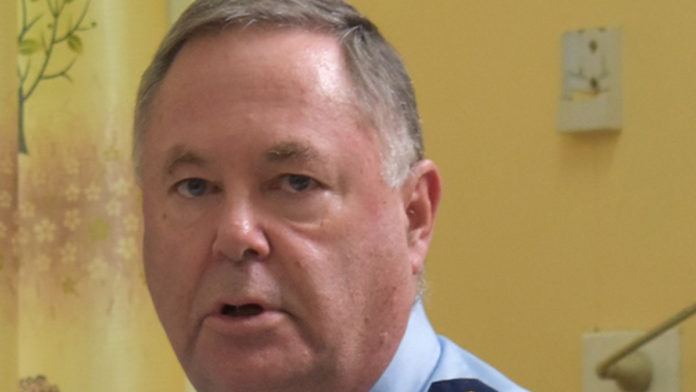
Solomon Islands Customs and Excise Division (SICED) Comptroller Jim Sutton

BY MAVIS NISHIMURA PODOKOLO

CUSTOMS assures public that it is monitoring all vessels coming into Solomon Islands.

SOLOMON Islands Customs and Excise Division (SICED) Comptroller Jim Sutton adds that they are taking measures to ensure that the China coronavirus does not enter the country.

Mr Sutton said there are many commercial vessels and private vessels in Solomon Islands waters they are currently monitoring.

“We are watching all of them we have been in touch and set up communication linkages as a group to all the shipping agencies and the vessel operators and liaising very closely with our friends in Royal Solomon Islands Police Force (RSPIF) and other agencies to try and prevent the importation of this virus,” he said.

Sutton said ships are being directed to come for clearance in Honiara, and they are managing up to five ships a day  

“We have a major set up task force in fact and we are working to managing up to five ships a day at a time but we can spend more.

“These are being updated on a daily basis so we know what’s going on and all of the shipping companies are complying voluntarily. So we are on to this and we very close of monitoring,” he said.

Mostyn Mangua, Acting Commissioner of Police, said they are also supporting the ministry of health and are also looking at assisting the SI customs.

“We are also looking at supporting the custom officers and also immigrations in providing public order and also providing public safety as well and also we are providing monitoring through the country,” said Mangau.

These statements were made at the recent media conference organised by the Ministry of Health and Medical Services in Honiara.     

Avoid making speculations about China coronavirus: McNeil

0
Permanent Secretary for the health ministry (MHMS), Pauline McNeil.

BY MAVIS NISHIMURA PODOKOLO

PERMANENT Secretary of Health Pauline McNeil is calling on public and media outlets to avoid speculations about the China coronavirus.

Mrs McNeil (MHMS) said the health ministry would like to remind public to practice commercial advocacy measures that go out from time to time.

“And we want to also remind the public also like I’ve said we would like to alert all of us and of course the media to avoid making speculations that may course.

“In terms of information I would like to request that any official media release from the ministry relating to coronavirus that is the only official information that would come out endorsed and approved by the ministry any other information that comes out from any sources of information is not verted by the ministry of health and therefore we are not responsible to answer in respond to,” she said.

McNeil said additional commercial measures the ministry would like public to exercise include practicing good and best practices in hygiene.

“General public are asked to be vigilant at all times, seek medical advice to avoid unnecessary panic and confusion, cover your mouth when you cough and sneeze, wash your hands with water and soap frequently, eat more fruits and vegetables, drink plenty of clean water and avoid non-essential travelling to coronavirus affected countries.”

2023 game changers

0
Kukum campus of the Solomon Islands National University (SINU).

SIEC outlines cost-cutting priority measures for orderly elections in next NGE

By Alfred Sasako

THE Chairman of the Solomon Islands Electoral Commission and Speaker of the National Parliament, Patteson Oti, has announced a range of measures that could be the “game-changers” in the 2023 National General Election.

“…I would like to highlight only the main areas I consider to be the game-changers in the way the 2023 General Election will be conducted if successfully implemented,” Mr. Oti said.

He was speaking at the Kukum campus of the Solomon Islands National University (SINU) where a Australian National University (ANU) team launched its 2019 Solomon Islands National General Elections Observation Report last Wednesday.

“The priorities of the Electoral Reforms Strategy Framework (ERSF) can also be regarded as ways the Commission will be addressing the main findings of the ANU observer team as well as other international observers.

The measures identified in six priority areas are intended to cut costs as well as to help improve the conduct of elections in this country.

Priority one, he said, is “Combining the conduct of national and provincial elections on the same day.

“The conduct of both the national and provincial election on the polling day of the 2023 General Election will be the first since Solomon Islands became independent in 1978.

“… it will release public funds usually allocated for election purposes at the provincial and local government level because, with the change, we will be conducting only one election instead of 11 elections (general election, 9 provincial elections and one Honiara City Council (HCC) election).

“This means that all elections for the national parliament, Honiara City Council and provincial assemblies will share the cost of election as the Electoral Commission will only have to engage once the venue as polling station and/or counting centre, temporary electoral staff usually recruited to help conduct the election, security officers arrangement (police officers and their equipment), transportation of electoral materials to and fro and the cost of administering the conduct of the election.

It could potentially save more than $20million to the Consolidated Fund, he said.

“It will also elevate the importance and credibility of provincial and local government elections now that the Electoral Commission will conduct them to international standards and subjected (to) international scrutiny,” Mr Oti said.

The second priority area is changing the voter registration phase to a continuing daily process throughout the year.

“Changing voter registration into a continuous process will have huge positive impacts on the election. It will solve many of the problems the Commission face(s) during the election year.

“The Commission spent $48.4million from September-December 2018 for the voter registration process. There are two main reasons for this high cost. First, the time allocated for voter registration (registration update, publication of provincial (provisional) list, objection and omission and public hearing) is usually short and tight.

“Second, because of the short and tight period, the Commission has no choice but to recruit more than 1,000 temporary election officials to manage the registration period to its completion,” the former diplomat and MP said.

“A continuous voter registration every day, annually, means that there is no pressure for time and there is no need to recruit 1,000 temporary election officials to help conduct voter registration. We have estimated that it will only be sufficient to have a budget of $7million each for years 1, 2, 3 and $10million for year 4 (of the election cycle) if we are to do continuous voter registration. The change will generate more than $15million savings to the Consolidated Fund,” he said.

“The change will also enable the Commission to publish the Final List of Voters the same day Parliament is mandatory dissolved. This is possible given that we would have more time to complete the inspection of the provisional list of electors, the objection and omission results, and the conduct of public hearing.

“The time period between the dissolution of Parliament and the General Election polling day can also be shorten(ed) as much as possible. In other words, because we can now publish the Final List of Electors on the day Parliament dissolves, this means that the Commission can request the Governor General within seven days, after Parliament dissolution, to proclaim the day for the General Election, i.e. the first Wednesday after the 56th day from proclamation.

The third priority is establishing SIEC’s Electoral Offices in all Provincial headquarters

This will enable the Commission to:

  • Conduct voter registration continuously;
  • Conduct pre-registration of 17-years old by visiting secondary schools in the provinces;
  • More effectively clean out dead people in the Electoral Roll of a constituency;
  • Conduct voter awareness and/or vote education programs in the provinces and Constituency level; and
  • Help prepare the constituency in the province for a by-election (national or provincial)

“The cost of delivering the above mandate by our electoral provincial offices is considered to be sufficiently covered by the additional annual $7million appropriation for year 1, 2, 3 and $10million for year 4 that we are asking Government in lieu of $48.4million budget we would normally require for the purpose of voter registration in an election year,” Mr. Oti said.

Re-defining “Ordinarily resident” is the fourth priority area the Commission has identified.

“The Commission has already commenced work in tightening the definition of ‘ordinarily resident’. This is a very important step to resolving the problem of cross-border registration. Notwithstanding a voter’s motive to register in a constituency, without the ability of the Commission to verify whether a voter is an ordinarily resident of a constituency, the problem of cross-border registration will grow and there is little we can do to stop this problem if we are unable to verify the claim by an applicant.

“We are hoping that with the new definition, which we hope would be more concise and pragmatic for enforcement, comes with obligations for the new voter and an existing voter applying to register in another constituency to provide proof during registration that he or she is indeed an ordinarily resident of the constituency she/he is applying to registering at,” he said.

The fifth priority is to introduce out-of-constituency voting.

“Doing away with out-of-constituency registration will go a long way to help stop cross border registration.

“On the other hand, introducing out-of-constituency voting will help reduce corruption during election, provide a level playing field for all candidates, and will also reduce campaign expenses that would normally be incurred by intending candidates because there is no longer a need to transport voters to vote in constituencies in the province they are registered at. Voters can vote for the constituencies they are registered at from designated out-of-constituency polling stations in where they live, either at the provinces or at Honiara city,” Mr. Oti said.

Amending the Electoral Act 2018 is the sixth priority area.

“There are a number of amendments that have been identified in the current Electoral Act. Most … are intended to bring clarity to certain sections of the Act.

“There are also other measures in the form of offences we are seriously considering to curb certain practices, for example the practice of Voter Identification Card being used as a promise for the voter to vote for the candidate.

“We are also seriously considering introducing other measures that would strongly discourage voters from taking steps that could be deemed to be an act of selling their votes for a benefit for cash or otherwise.”

Cabinet approves $20m to support MHMS emergency preparedness and response

0

BY MAVIS NISHIMURA PODOKOLO

CABINET has endorsed $20 million in support of the emergency preparedness and response in terms of the current situation, says Pauline McNeil, Permanent Secretary for Ministry of Health and Medical Services (MHMS).

Mrs McNeil said the approval of this budget follows a cabinet paper submission last week by the ministry of health.

She said this money will be shared with MHMS partner ministries to support their work in terms of emergency preparedness and response in terms of the current situation (coronavirus) the country is facing.

She said the ministry is thankful to cabinet for endorsing the money in support of the emergency preparedness and response.     

“The ministry of health has submitted a cabinet paper last week and thankfully to the cabinet it has endorsed an amount of 20m in support of the emergency preparedness and response

“But of course the support is dependent on how this scenario (coronavirus) will take place weather if it escalates then of course it would need a lot more budgetary support and resources.

“We have technical support and assistance from our partner urgency in the ministry in terms of Human Resource capacity, technical assistance and the financial assistance that is the commitment made by the government in allocating the ministry of health SBD20m but of course this will be also shared with our other partner ministry to see that we are jointly accessing the pot of money,” said McNeil.

She adds, “The country didn’t call for the coronavirus to come and didn’t plan for it and therefore the ministry didn’t plan any budget allocation for this emergency.

“I know we are prone to disasters and other natural disasters and we do allocate for disasters but for such emergency like what is happening right now (coronavirus) we have not put any budget aside in terms of our submission last year.”

Dr Yogesh Choudhri, Technical Advisor World Health Organisation (WHO) office in Solomon Islands, said WHO is supportive of initiatives by the MHMS to try and prevent the coronavirus and any other outbreaks from entering the country.

Choudhri said, “We work together in accorded manner to address and ensure that global health security.

“Also we are all in together and we are happy to provide support to the government of Solomon Islands.”

SI awaits test results for 4 coronavirus suspects

0
Permanent Secretary for the health ministry (MHMS), Pauline McNeil.

BY MAVIS NISHIMURA PODOKOLO

THE country is waiting for test results to its first suspected coronavirus cases.

Samples taken from the suspects were sent to Melbourne, Australia, on Tuesday this week for analysis and are expected to know what the results are 48 hours later.

Pauline McNeil, Permanent secretary for the health ministry (MHMS), said samples were collected from the suspected cases in the vessel by two trained health personnel, one doctor and one nurse from the emergency ward and have been shipped to a World Health Organisation (WHO) collaborating centre for Influenza in Melbourne, Australia.

 “The samples were taken and airlifted 10am yesterday [Tuesday 4th January] morning to our partner laboratory in Melbourne and the result of those samples should be available within the next 48 hours as of Wednesday 5th January

“Samples were taken from the four suspected cases were all on board and the total number of those onboard was about 45. Four were locals from Renbel and 16 were locals which are not in Renbel but all got onboard. So basically all 45 of them are all quarantine at the vessel,” she said.

Mrs McNeil said the laboratory department at NRH is keeping close track in the movement of the samples.

“Currently there is no detected case in Solomon Islands but we are investigating a cluster of suspected cases on board vessel coming in from China that was the recent mission we took to Rennell Bellona,” she said.

PS McNeil confirmed this on Wednesday 5th January in a local press conference with local media.

Debt choke

0
Solomon Islands National University

Private students top SINU’s unpaid tuition fees

By Alfred Sasako

THE Solomon Islands National University (SINU) is owed about $48 million in unpaid tuition fees with more than half the amount owed by private students, it was revealed yesterday.

Insiders told Island Sun hundreds of students face the prospect of being turned away this year for non-payment of tuition fees, which have been accumulating since last year.

The SINU management has been invited by Government Caucus to address what has been described as an “unfolding crisis” in the tertiary education sector. That meeting will take place next Tuesday.

According to insiders, private students topped the unpaid tuition fee tally, owing some $28 million. Members of Parliament come in second place, owing some $12.8 million in unpaid tuition fees.

Guadalcanal Province is in third place at $7.9 million in arrears, according to insiders.

One insider told Island Sun that SINU has taken a hard line on arrears informing students of a number of measures Management has taken to deal with the growing problem.

SINU has for example informed students that unless their outstanding tuition fees or arrears from last year are cleared, they would be denied registration to attend classes in the 2020 academic year. SINU has also introduced a new measure for new and continuing students

“They must pay 60 per cent of the semester’s tuition fee upfront before they are allowed registration,” the insider said.

“It’s tough but it is the only way to tackle what is a growing problem,” the insider said.

Outstanding fees have exacerbated SINU’s financial situation, given that the Government has never paid up its annual operational and development grants in any one year.

“SINU would be lucky to collect say fifty per cent of the grants in any one year. So tuition fees make up a lot for the shortfall in SINU’s annual budget,” the insider said.

One other insider said the MPs’ unpaid bill of $12.8 million was in the form of commitments that MPs and their Constituency Development Officers [CDOs] make to students without honoring them.

The insider said MPs found themselves in the same embarrassing situation last year when they could not clear their Constituency arrears. The Ministry of Education and Human Resources (MEHRD) had to intervene by clearing the millions of dollars MPs owed SINU in unpaid tuition fees.

It is possible MPs might again ask the Ministry to clear the $12.8 million in unpaid SINU tuition fees this year. “It is possible this would come up in the briefing with Government Caucus next Tuesday.”

Meanwhile it has been revealed that at one point East Kwaio Constituency owed SINU the highest amount in arrears, followed by Central Honiara Constituency.

According to figures obtained yesterday East Kwaio owed SINU about $865, 000 in unpaid tuition fees in the second semester of last year.

“The MP has since paid some but $349, 120 is still outstanding. Unless this amount is cleared, those students whose names appear against the arrears will not be allowed to register,” the insider said.

In the case of Central Honiara Constituency, the amount reportedly owing in unpaid tuition fees is $669, 604. That is the amount that is outstanding,” the insider said.

200 to 300 new cancer cases per year: NRH

0
National Referral Hospital. Photo supplied

BY MAVIS NISHIMURA PODOKOLO

SOLOMON Islands records between 200 and 300 new cancer cases a year, it is reported.

Dr Soma, the country’s very own Oncologist serving at the National Referral Hospital (NRH) revealed this alarming statistics yesterday in Honiara during the commemoration of the World Cancer Day   

“We have between 200 to 300-plus new cases of cancer every year. These data exposed that cancer cases is always been increasing.

“Our number-one cancer in the country is cervix cancer – the cancer that presents in the lower part of women’s placenta, and number-two is breast cancer. These are the two cancers that were recorded the highest,” he said.

Soma said these two types of cancer (cervical and breast) occur every year ahead of other types.

He said the other types of cancer on record are thyroid (occurs in the cells of the thyroid –a butterfly-shaped gland located at the base of the neck), lymphomas (blood cancer) and mouth cancer and all the rest follow suit.

Soma said with this alarming rate of cancer happening in the country, departments at the National Referral Hospital are working very closely to try and save lives of people who are presented with cancer.

“We have been working closely with other departments at the National Referral Hospital, the surgical ward, Medical Ward and other wards to help tackle this problem.

“With the collaborative working partnership we have we managed to cure some as they are still on the early stage but for some cases they were already on the complicated stage so we only provide palliative care meaning providing patients we comfortable life like being free form pain for the rest of the time they live with the diseases,” he said.

Soma adds that despite health care departments working together to combat cancer, they are being faced with many challenges – and one of the main common challenge is patients default treatment, meaning patients do not turn up at the right time to get their treatment.

 “With this, we urged patients present with cancer to come on time so we can help you complete your treatment,” he said.

Dr Geoffrey Kenilorea, Director Non-Communicable Diseases (NCD) Ministry of Health and Medical Services (MHMS), said NCDs risk factors and cancer risk factors are similar.

Kenilorea said according to data obtained from NRH, cancer is a third most common cause of death at the NRH followed by cardiovascular diseases.

“Cancer is one very common concern for our country and the ministry of health will continue the work through NCD department to support health workers fighting it,” he said.                  

Parliament ‘likely’ to resume in March

Solomon Islands National Parliament

By EDDIE OSIFELO

PARLIAMENT is expected to resume its meeting in March, says clerk David Kusilifu.

This follows Parliament session being in suspense after Prime Minister Manasseh Sogavare moved the sine die motion last month.

Kusilifu said so far there is no detail of the meeting but it was hinted by Prime Minister’s Office to likely be in March.

He said under Standing Order 7, 3, the Governor General announces the date of the meeting after consultation with the Prime Minister.

“Our Prime Minister decided on the meet and informs the GG to make the announcement.

“When Parliament receives the notification, it gives 13 days’ notice to inform Members of Parliament of the sitting date,” he said.

However, Kusilifu said consultation has started but nothing concrete has come up with a Parliamentary calendar.

He said at the moment there is no Parliament calendar to know exactly when the meeting starts every year.

“In other countries, they have Parliamentary calendar.

“If we adopt one, by December last year, there should be a Parliament calendar ready for this year,” he said.

In 2019, Parliament was adjourned many times by the Prime Minister to allow work on bills and budget.

Renbel battles with ‘huge’ arrears

0
Renbel

By Mike Puia

In Tigoa,

THE current Renbel provincial government was welcomed with huge arrears when it assumed office in August last year.

The first arrears the government battled with totaled $40,000, incurred to the Solomon Islands National Provident Fund (SINPF).

SINPF had reportedly opened a case against the Renbel provincial government. The case was eventually settled outside of court.

Renbel premier, Willie Tuhagenga, told Island Sun they had settled the arrear with SINPF resulting in the case being dropped.

Mr Tuhagenga also revealed when they assumed office there was another huge arrears the province was required to settle with the Inland Revenue Division (IRD) of the Ministry of Finance and Treasury.

The arrears with IRD was around $800,000. Late fees were automatically added on a monthly basis which brought the arrears to the above figure.

After meeting certain commitments imposed by the IRD and negotiations, IRD reduced this arrears to $500,000.

According to Tuhagenga, these arrears were accumulated by previous governments.

He said their government was left to fix it.

The current Renbel provincial government has announced that it has imposed strong cost-cutting measures to control and monitor its finances.

A recent development in the Tuhagenga-led government which saw the replacement of the provincial Education Minister, Richard Tepuke, last week is also part of the measures the current government is taking to reduce unnecessary spending.

The then Minister, who reportedly stayed for extra days at the Green Motel without authorization, has been replaced.

Efforts to cut provincial spending has prompted the provincial Secretary to also issue a memo to all heads of Division in the provincial office in Tigoa about changes to imprest usage.

In the memo the provincial secretary informed all divisions that provincial funds must be properly managed to reduce accumulating unretired imprests.

Check’em properly

Renbel provincial Premier, Willie Tuhagenga

Renbel premier calls on national government to do thorough screening of ships allowed into the province

By Mike Puia

In Tigoa

THE Renbel provincial Premier, Willie Tuhagenga, has appealed to the national government, through responsible authorities, to do thorough checks on foreign ships entering the country.

Premier Tuhagenga made this appeal yesterday reacting to reports that foreign ships entering his two-island province do not undergo medical checks.

Island Sun visited Tigoa, Renbel’s provincial centre in West Rennell, yesterday and was informed of the high number of foreign ships entering the province.

Logging and mining barges and ships moved in and out of Rennell island. These vessels find shelter at Lavagu Bay, Rennell’s main sea port.

These barges and ships are engaged by logging and mining companies that are active in West Rennell to ship out logs and raw bauxite.

The arrival of a ship to Lavagu Bay last Saturday night with four coronavirus suspects prompted the provincial premier to call for proper checks.

The ship reportedly came from China. It also reportedly came through quarantine and customs check at Noro Port in the Western province before heading to Rennell but there was no medical check done.

Tuhagenga said any foreign ship that comes to his province must come through thorough check including medical check on those onboard.

“We are concerned that ships are coming to our island regularly which poses a health worry,” Premier Tuhagenga said.

He said even domestic ships should come through thorough checks by responsible authorities to avoid the transfer of diseases and sickness.

A local doctor, who was flown to Rennell on Monday to get samples from the four coronavirus suspects, Dr Pedical Togamae, expressed that ships traveling to Rennell via Noro should be banned.

“In the future, it would be best to ban any incoming ships coming from these places (countries where coronavirus reached),” Togamae said.