Home Blog Page 1004

Musings from Baegu-Asifola

    0
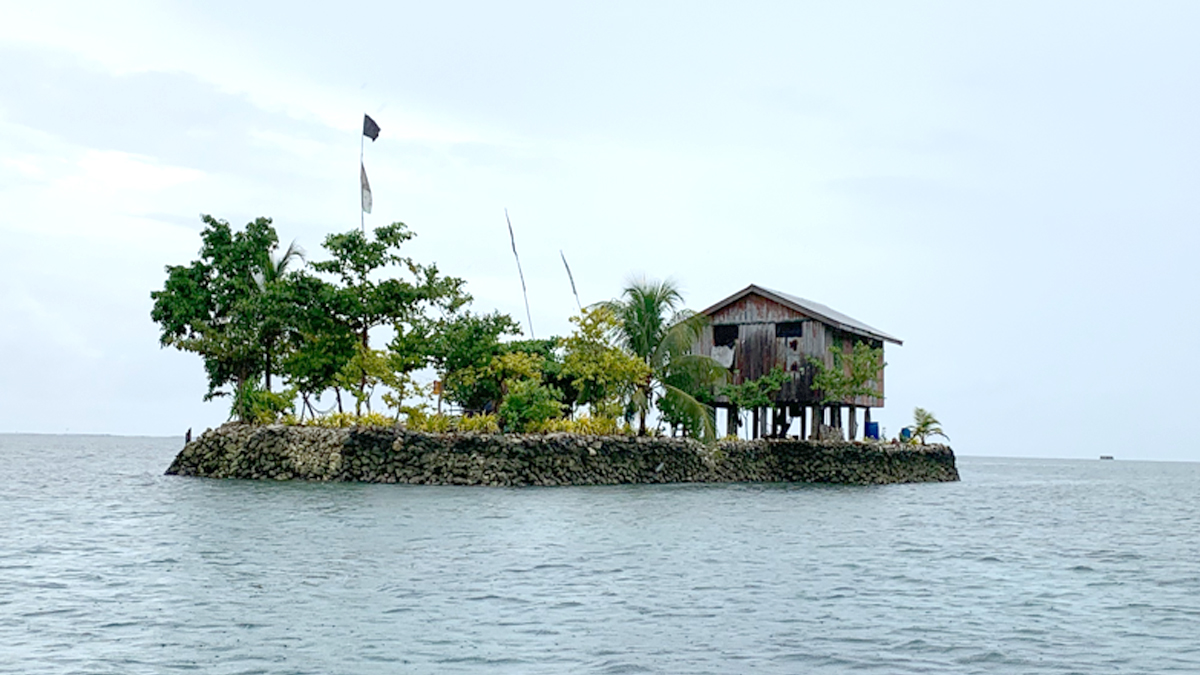
    One of the ferai'asi in Asifola during low tide.

    High tides, piped-water, internet and waterfall

    MOMENTS turned into memories are significant because they last in our minds.

    According to Willa Cather, an American novelist known for her novels concerning frontier life on the Great Plains, “some memories are realities”.

    This piece recounts memories from my recent trip to Baegu-Asifola during the festive season.

    This constituency offers interesting dynamics because it includes Tolo (“bush” – Baegu) Asi (“sea” – Asifola) peoples.

    It is, however, not the only constituency with such a tolo-asi composition.

    Here, the Asifola people have been living in ferai’asi (man-made islands) for centuries.

    These ferai’asi are often mislabelled as “artificial islands”.

    But there is nothing artificial about these people’s connections to and sense of home to ferai’asi; a place where mosquitoes are virtually non-existent and fresh wind from the calm and clear sea is never ending.

    There are lessons that can be learned from the Asifola people’s perseverance in withstanding the effects of climate change such as severe cyclones, rising sea level, and uncharacteristically high tides.

    It would be interesting to find out more and document how these ferai’asi were built, their resilience in the past, and the factors contributing to their demise. 

    Nowadays an issue that is particularly important to the Asifola communities is the extreme high tides which are intruding into and destroying the ferai’asi islands that are not just homes to the Asifola people but the lagoon’s mute witnesses of histories. 

    According to a resident of Liunasi, the challenges to adaptation are much more difficult these days than they were decades ago.

    High-tide at Ferasubua – one of the ferai’asi in Asifola.

    There is therefore a real need to mitigate the effects of climate change.

    The challenges associated with climate change are compounded by the Asifola people’s limited access to adequate and quality fresh water supply.

    According to a village wane baita (big-man) from Asifola, women and children paddle dugout canoes to and from the mainland to fetch drinking water. 

    This is a laborious daily chore.

    Like other parts of the Solomon Islands, the fact that adequate and quality water is not piped in has affected the villagers’ health, welfare and living conditions. 

    On the political front, an encouraging development is the establishment of a constituency office at Kaliana village, which has internet connection.

    Apart from the conveniences of communication between constituency officers, it connects the village to the outside world.

    But it still needs to be appropriately harnessed to take advantage of global connections and improve rural livelihood.

    Another issue is natural resources.

    Northeast Malaita hosts virgin forests, pristine rivers and cultural sites on customary lands. 

    An example is the Wuo customary land, where there is currently no commercial logging.

    This gives Wuo landowners the opportunity to plan and allocate land for sustainable development activities.

    But they will need proper advice and assistance from the government and non-state organizations.

    Also, the Ata’a river, which divides the Baegu-Asifola and Fataleka constituencies, hosts beautiful natural sceneries such as the Tatabau waterfall.

    These offer potential tourism attractions if they are appropriately packaged, marketed and made accessible.

    There are other parts of Baegu-Asifola with natural water sources that, if properly harnessed, could supply many villages in Baegu-Asifola with piped water supply.

    They could also be used to build mini-hydroelectricity that would generate energy that could be used for small-scale industries that are appropriate for rural areas.

    The current member of parliament (MP) is trying his best to deal with some of the challenges.

    These are articulated in the constituency’s development plan. 

    The MP has been working closely with ‘chiefs’ to address a range of customary land issues that need to be resolved in order to facilitate infrastructure development.

    Going forward, the Baegu-Asifola people will need to re-examine their development aspirations and chart appropriate pathways that will help improve their livelihoods. 

    This will need a sector-wide approach that will demand an ongoing rethinking and commitments that will require time, sacrifice, energy and compassion.

    It may be slow and long, but as the saying goes “Rome was not built in a day”.

    These stories about high tides, piped-water, internet, and waterfall in Baegu-Asifola, are fond memories and the musings of a visitor who was privileged and honoured to visit the constituency and be immersed in its challenges and opportunities, albeit for a short period.

    As I depart Baegu-Asifola and exit Lau’ala and through Lau’toli, I was captivated by the natural beauty of this region.

    A rainbow hovered over Malaita province against the backdrop of a cloudy sky.

    This was perhaps an omen of hope for better futures for the people of Beagu-Asifola.

    By DEREK G. FUTAIASI

    Fish flows in Gizo

    0
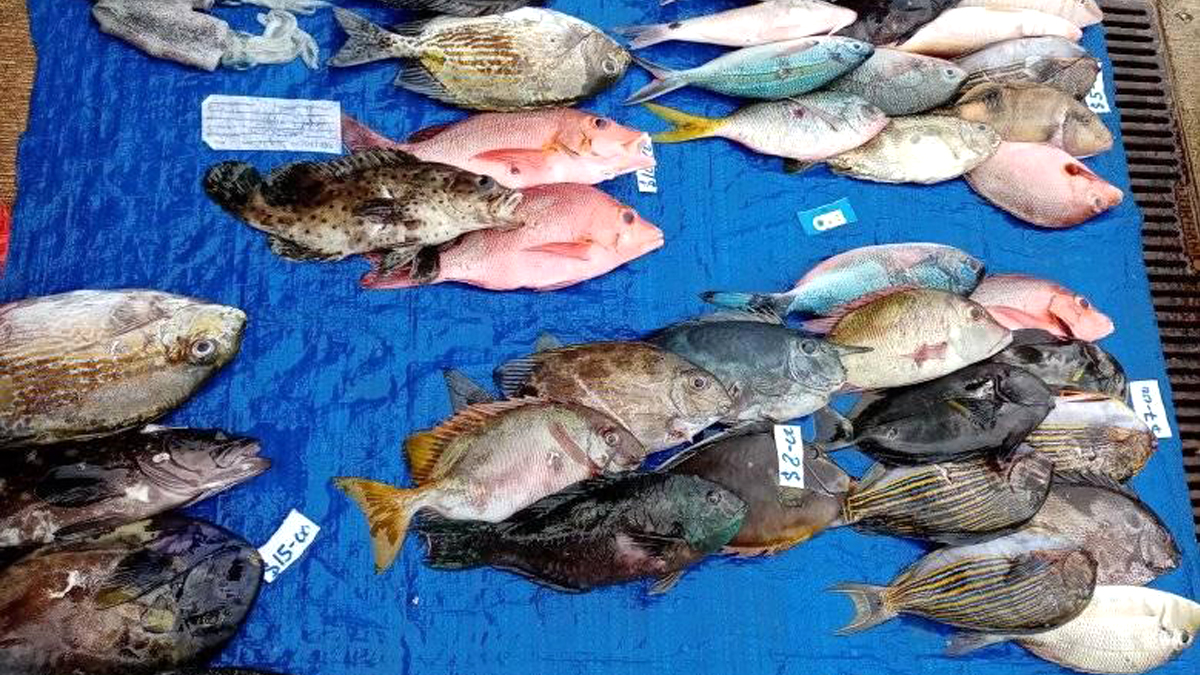
    Heaps of different varieties of reef fish sold at $2s , 3, and $15s in Gizo fish market. Photo Jamaica Tanito.

    BY ALFRED PAGEPITU

    WHILE Honiara is scraping hard with fish prices in its central market, Gizo is reportedly enjoying ridiculously low prices for fish.

    Heavy rains and bad weather is reportedly making fishermen spiking their prices high in Honiara, citing increasing operations costs and risks.

    However, in Gizo prices continue normal despite the bad weather.

    Sizes which attracts tens of dollars in Honiara are sold for $3 or $5 in Gizo. Big fish which are sold for hundreds of dollars in Honiara are priced at just $30 or so in Gizo.

    A Mr Simon explains, “We normally do our selling for only cheap price and at the end we earn little profit out of our daily catch at the market.

    “This is when we have good customers in the market, we maintain the same price.

    “But normally since we experience a poor weather conditions in the past week, the prices for fish is still cheap and those who sell their fish continue on with the same price so we still maintain the same price for our customers.”

    He said they don’t earn much profit, but little they earn is enough to help their family needs and wants including school fees for their children.

    Simon adds that in Gizo the supply of fish surpasses the demand, or the number of customers.

    Government eyes ‘student loans scheme’ chances

    0
    Around 200 USP SI Campus students left out from SIG’s Scholarship awards in 2018. PHOTOS BY MANEBONA BARNABAS

    BY BARNABAS MANEBONA

    GOVERNMENT is looking into the feasibility of implementing a student loans scheme and how it could ‘co-exist’ with the country’s current scholarships program to maximise benefits.

    Last week Wednesday, Solomon Islands Tertiary Education and Skills Authority (SITESA) and  the Ministry of Education and Human Resources Development (MEHRD) issued an expression of interest for a ‘Students Loan Scheme Specialist’.

    SITESA Chief Executive Officer (CEO) Constance Nasi said the intention is to engage a student loans schemes specialist who will work in collaboration with the ‘Student Loans Scheme Committee’ to investigate the feasibility of implementing a student loans scheme.

    Ms Nasi added that the outcome of the assignment will outline options for consideration and that public expectation for any implementation would be pending the outcome of the feasibility study.

    “The intention is to engage a student loans schemes specialist who will work in collaboration with the Student Loans Scheme Committee to investigate the feasibility of implementing a student loans scheme in the Solomon Islands and how it could co-exist with the SIG Scholarships program to maximise benefits. The outcome of the assignment will outline options for consideration,” said Nasi.

    3 active covid-19 cases

    0

    BY MAVIS N PODOKOLO

    THE country now has three covid-19 cases; one new one and two reactivated cases.

    The new one is a returning student from the Philippines, and the two reactivated cases are persons who had returned from the UK. They had recovered and tested negative, but later tested positive.

    This was confirmed by Prime Minister Manasseh Sogavare yesterday in his national address.

    “Since my last address, I regret to advise that we have registered one additional case of COVID-19. This new case who is one of the students that arrived from Manila on 21st January 2021, has now brought to 18 cases, the official number of COVID-19 cases in our country.

    “Apart from this new case, the last two cases from the UK that had turned negative had reactivated and have become positive again.

    “This means we have three positive Covid-19 cases, only one of whom is new and the other two are reactivations. However, as I had indicated in my special address on Monday 29th January, the reactivated cases do not alter our official numbers, which remain at 18,” he said.

    Sogavare said of these 18 cases, 14 are in the community, four are still at the field hospital including the student that had been brought back from Malaita province and who is still negative.

    “I wish to reassure the public that we will only release the people who are still positive after they test negative for three consecutive times seven days apart after they become negative.

    “Fellow citizens let me remind all of us that our fight against COVID-19 is far from over.

    “Our resolve and commitment have been tested. So far, we have contained the virus at our quarantine stations and the field hospital.

    “However, with God’s guidance and blessings, and together with the support from our development partners, and commitment from the people of this beautiful country, we have continued to move forward. God is our Redeemer,” he said.

    Fika denies issuing directive for Sunrise to sell seized logs

    0
    Minister of Environment, Titus Fika.

    By EDDIE OSIFELO

    MINISTER of Environment, Titus Fika has denied issuing a directive for a logging company to sell tubi logs which the government had previously seized from it.

    This denial contradicts documents sighted by Island Sun which show Fika instructing Customs and other authorities last December to facilitate the export of the logs by Malaysian logging company Sunrise Investment Ltd.

    Fika’s directive had angered landowners of Korona, on San Jorge island, who were already in the process of selling the tubi logs to a foreign buyer.

    “This is not fair,” landowner spokesman Wilson Tohidi told the Island Sun earlier.

    “These logs are from our land. We have the right to sell them,” Tohidi added.

    “The government cannot take those logs away from us and give them to the same company that tries to steal them.

    “If we have a government that cares, the right thing is to work with us landowners and provide the support we need to sell the logs.

    “The benefit to the landowners and the government will be huge if we do that.”

    However, Fika said it is a false information because he did not issue any directive.

    He said what happened was landowners sent his former student to ask him to reverse the decision made by former Minister Dickson Mua and remove the court case before the High Court.

    “High Court has the power to decide on the issue of tubi export between landowners and the company, not me.

    “In the case of tubi container in Noro, the decision of previous minister in allowing landowners to export, that still stand,” he said.

    “I’m consulting my PS and Director Environment for advice on this and until then, the decision made by former minister still stand,” he said.

    Fika said he is someone fighting against corruption and not a money oriented but task-oriented person.

    Sunrise Investment Ltd illegally harvested those logs during the course of its operation last year on Korona land.

    The company does not have a licence to fell tubi, which is a restricted species under the Environment Management Act.

    But it went ahead and fell over 9,000 cubic metres of tubi logs, which have been stockpiled at the Korona log pond, and its believed to be worth millions of dollars.

    Last year, landowners took out a court order that prevented Sunrise from shipping the logs out from Korona.

    When a Foreign Investment Division team toured Isabel last December to check on the operations of logging companies there, it found Sunrise Investment and other Asian loggers in breach of their felling licences.

    Sunrise and two other logging companies were each slapped with $1 million fines.

    At the same time, the Ministry of Environment referred Sunrise Investment to the police for prosecution.

    When owner of Sunrise Richard Song Sing Ngea, was brought into the Magistrates Court, he wasted no time in admitting guilt.

    He was subsequently fined $50,000, which he had no difficulty paying off.

    Tohidi said landowners don’t expect the Government to keep giving favours to a logging company that was caught stealing their resources.

    “Here is a logging company that was caught breaking our laws.

    “The right course of action for any government to take against such companies is to cancel their licence and deport its owners.

    “But look at what Minister Titus Fika has just done.

    “He used his ministerial powers to forfeit the logs then gave them back to Sunshine Investment to sell them.”

    A case over the ownership issue is before the High Court.

    AstraZeneca vaccine for SI confirmed

    0
    Covid-19 Vaccine. REUTERS/Dado Ruvic/File Photo

    BY MAVIS N PODOKOLO

    COVAX Facility has confirmed the allocation of a suggestive number of 108,000 doses of the AstraZeneca vaccine to Solomon Islands despite missing out on Pfizer vaccines.

    This was confirmed by Prime Minister Manasseh Sogavare yesterday in his national address.

    Sogavare said the country had got approval for AstraZeneca vaccine despite missing out on the Pfizer Vaccines for 0.25 percent of the country’s population.  

    “Despite missing out on the Pfizer Vaccines for 0.25 percent of our population, I am pleased to inform you all that the COVAX Facility has confirmed the allocation of an indicative number of 108,000 doses of the AstraZeneca vaccine to Solomon Islands.

    “We hope to receive 40 percent of the doses during the 1st quarter of 2021, and the remaining 60% during the second quarter of 2021.

    “I am pleased to inform you all that preparations are well underway for the for the roll-out of the AstraZeneca vaccine in Solomon Islands,” he said.

    Sogavare said the Oversight Committee together with the COVAX Coordinating Committee and the Technical Working Group on Vaccines hope to present our National Covid-19 Vaccination Policy and Implementation Plan to the Caucus and Cabinet next week for our consideration.

    He also adds that Health Ministry has activated its technical teams comprising of the country’s very own health experts supported by partners to coordinate and contribute to different aspects of the covid-19 vaccination planning and delivery process.

    Sogavare said the government is also communicating with partners to secure additional doses of covid-19 vaccines.

    Costly release

    0
    Director of Solomon Islands Maritime Authority Thierry Nervale.

    Maritime authority detains ship for spilling oil at Graciosa Bay

    BY BEN BILUA

    MARITIME authorities have detained a foreign log-ship which had spilled oil in Graciosa Bay waters, Temotu province.

    The vessel was at the Bay to pick up logs when the incident occurred.

    Solomon Islands Maritime Authority confirmed this on Monday 8th February.

    From assessments, it is likely that the ship’s captain will get a taste of the Solomon Islands Maritime Amendment Act 2018.

    Director of Solomon Islands Maritime Authority Thierry Nervale said the vessel has been detained by SIMA, adding that follow-up inspection also revealed deficiencies to applicable laws that made the vessel unsafe.

    He told Island Sun the master of the ship has been notified about the country’s existing maritime laws.

    “Of course, the Master has been notified, he committed offenses under applicable laws of Solomon Islands namely the Shipping Act 1998 as amended.

    “He will be charged for these offences before the High Court,” Nervale said.

    “We are still in the middle of the operation in Lata with a team led by the Solomon Islands Maritime Authority (SIMA) with specialists of the environment and disaster management.

    “And this pollution incident is classified at Tier-2 (out of three levels) as per the NATPLAN,” he added.

    Nervale explained that MV QUEBEC is a foreign vessel, which entered the country on a voyage to load logs at Graciosa Bay, near provincial capital Lata.

    He said the vessel spilled out black oil while in the bay which alarmed communities who later alerted the police.

    “I cannot give you detailed information yet on the extend of the pollution and the damage to the environment as it is early stage of our assessment and would be misleading.

    “What I can confirm is that it is serious enough and spread on the coast that require cleaning operations but should remain within our capacity in-country.

    “The crew is working on rectifying the deficiencies under SIMA’s control and in collaboration with the vessel’s Flag State,” Nervale said.

    He said the National Oil Spill Contingency Plan (NATPLAN) was activated following the report and a mission has been mounted led by SIMA with coordination support from the National Disaster Management Office (NDMO).

    Nervale said the mission is to inspect or investigate on board the vessel so as the impact assessment on the ground.

    Part (a) of the Solomon Islands Maritime Amendment Act 2018 general principles adopted the polluter pays principle – a clear provision stating that a person or entity who breach the law must pay for the damages.

    Covid-19 vaccine side effect very low: Rodgers

    0
    Dr Jimmy Rodgers

    BY MAVIS N PODOKOLO

    THE covid-19 vaccine side-effect is very low, says Dr Jimmie Rodgers.

    Rodgers, secretary to Prime Minister and deputy chairman to Over Sight Committee, clarified this in the recent radio talkback show due to lot of people being worried about side-effects of vaccine and reaction of the covid-19 vaccine.

    “Just to assure us in the public that published report on side effect of the vaccine stressed that it is very low. A big study in USA said that it comes roughly about one case in every 100,000. That figure is important it means it’s a rare event.

    “For all those, on our side our outpatient at the National Referral Hospital sees about 3000 patients every month, 36 thousand every year, they see two anaphylactic reactions (a life-threatening reaction to drug allergies that causes the widespread dysfunction of body systems) on a normal treatment in Solomon Islands,” he said.

    Rodger said hence, two means one in every 18 thousand that is higher than one in every one hundred thousand.

    “I want to say all things will have its side effects. I want to assure the public that we don’t know enough about it, we know that people can react to it but we should not spread message that will cause people to frightened of it.

    “Let us look at it with care and look at how it has improved people’s health in countries that recorded higher cases of COVID-19,” he said.

    Dr Yogesh Choudhri Technical Advisor to Ministry of Health Medical Services said outcome of the COVID-19 vaccine application for 0.25 percent of the country’s population is still unknown.

    Choudhri said the vaccine application is through the COVAX facility has been made and they offered us vaccine for the 0.25 percent of the population.

    Testing capabilities and current health facilities resources must step up

    0
    This is what a QPCR machine looks like. Photo courtesy: NanoMed Fab.

    BY BARNABAS MANEBONA

    RESOURCING of testing capabilities and existing health facilities is recommended to step up in order to ensure the country is fully prepared for a possible Coronavirus (Covid-19) outbreak.

    Under ‘challenges and gaps’ point three on resourcing of provinces in the recent ‘NATIONAL SITUATIONAL REPORT – 19 issued by the National Emergency Operations Centre (NEOC), testing capabilities and resources of provinces under the declared emergency zones is still lacking.

    With the recent illegal border entry at Malaita Outer Islands (MOI), NEOC state in its report that it has been noted there is still lack of resources should these kinds of scenarios trigger positive cases.

    On the other hand, Prime Minister Manasseh Sogavare in his recent nationwide address informed the nation that Covid-19 testing capabilities have been a main pillar in the country’s success to contain the virus (Covid-19).

    Mr Sogavare said more than 7000 tests have been conducted at the NRH Molecular laboratory and Gizo laboratory as the government is pleased to advise that both laboratories have been doing pre-departure testing for people leaving the country to other countries that require such tests to be done.

    “COVID-19 testing capability will shortly be in place in the Kiluúfi Hospital in Malaita province and the National Public Health Laboratory.

    “Plans are also underway to establish a COVID-19 testing capability at the Taro hospital in Choiseul province,” said Sogavare.

    High risk repa-flight arrives

    0
    Honiara International Airport. Photo by Alfred Pagepitu.

    BY MAVIS N PODOKOLO

    THE much talked about repatriation flight that would bring in passengers from markedly high-risk countries in terms of covid-19 arrived last night.

    Loti Yates Director National Disaster Management Office (NMDO) confirmed to Island Sun that the flight arrived at the Henderson International Airport yesterday evening around 7pm.

    Yates said this flight brough in nationals who are coming back home and foreigner nationals who will come in to work the major government project.       

    According to Dr Jimmie Rodgers, passengers coming on this flight are from United Kingdom, USA, Africa, Europe, Europe and Asia including Japan and Korea.

    Rodgers said technical experts from Afghanistan, Pakistan, India, Sri Lanka to work on various project in the country with aimed to boost infrastructure development.

    He said these countries are categorized as high risk and they are grouped together on one flight.

    Rodgers said all high-risk flights will be accommodated east side of the Mataniko river. That is part of the plan agreed by the Oversight Committee.

    “We cannot bring in high risk flights very regularly because we have limited accommodations on the east side of Mataniko River,” he said.