Home Blog Page 997

Alarming coral bleaching in Marovo Lagoon: study

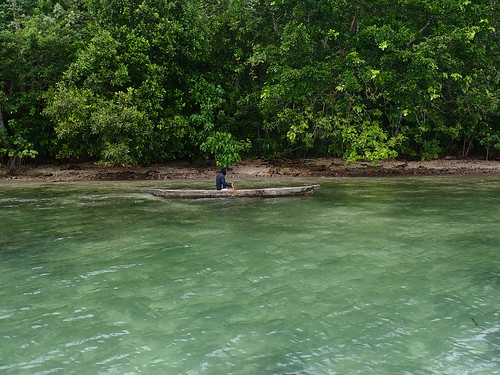
Marovo lagoon. PHOTO: UN PHOTO

BY BEN BILUA

GOVERNMENT’s institutions have demonstrated lack of capabilities in research and welfare of the country’s environment and are depending on International Non Government Organisations to provide necessary information.

This was demonstrated in the current coral bleaching event which is affecting coral reefs in Marovo Lagoon, New Georgia and Vungunu Island.

Earlier this year, World Conservation Society (WCS) with the help of local conservation group in Western Province found coral bleaching events raising alarm for proactive respond.

Three months since the event occurred, Ministry of Fisheries states have not received any formal report.

Ministry of Environment, Climate Change, Disaster Management & Meteorology states that they have received reports through WWC and Community Conservation Rangers but unable to do further intervene due to lack of capacity.

“This report was received by the Ministry and we have to depend on our Partners (WCS & WWF) on ground for verification. As well any Fisheries Officers in the Western Province,” Deputy Director Conservation, Josef Hurutarau said when contacted yesterday.

He said the coral bleaching event occurs due to increasing temperature and that it’s a natural cause which is quite difficult to address.

“I think this reporting is a natural cause of increasing temperature which might result in the coral bleaching.

“So I am coming from the angle of verification or reliability of such causes as reported. This is why we have to depend on Partners to provide such reports,” Hurutarau said.

He said addressing the issues is beyond the ministry’s capabilities and capacity as it is a natural cause.

“If it is caused by some anthropogenic activities (developments) then we can easily intervene/assist.

“In this case, I would say it will be very difficult to address the issue of rehabilitating coral etc,” Hurutarau said.

He said coral bleaching is a global issue and of equal concerns for Gov’t, NGOs, communities and he is hoping there are ways to compensate such natural damages.

Information sharing important: Dr Alec

BY BEN BILUA

MANAGER of Wildlife Conservation Society (WCS) Dr Alec Hughes says institutions and organisation need to share important information that would help establish better understanding on environment threat and to make sound decision towards environment issues and mitigation strategies.

In an interview with ABC, Dr Alec emphasized and encourages environment warriors to work together in terms of research ahead of the global climate conference which will be held later this year.

“The important message is, if we continue with the business usual approach without taking the necessary steps to eliminate global emission then bleaching event will become frequent leading to reduction in biodiversity of our shallow water reefs ecosystems.

“So with that in mind, I think it is important to note that later this year our global leaders will be meeting at the global climate conference,” he said.

Commenting on Wildlife Conservation Society’s operation in Western Province, Alec said, WCS will continues to work with Community Conservation Networks to improve land management practices in effort to reduce potential torrential base run off that can damage coral reefs and fisheries that are depended on coastlines downstream.

He said WCS, World Fish Centre and Local Marine Management Network have established a policy analysis and roadmap for greater conservation activities not only in Western province but through our Solomon Islands.

Alec said the policy analysis highlighted the need for more focus on regulating and monitoring extractive industries such as logging which is prevalent in the Solomon Islands.

Noni is unique in many ways

0
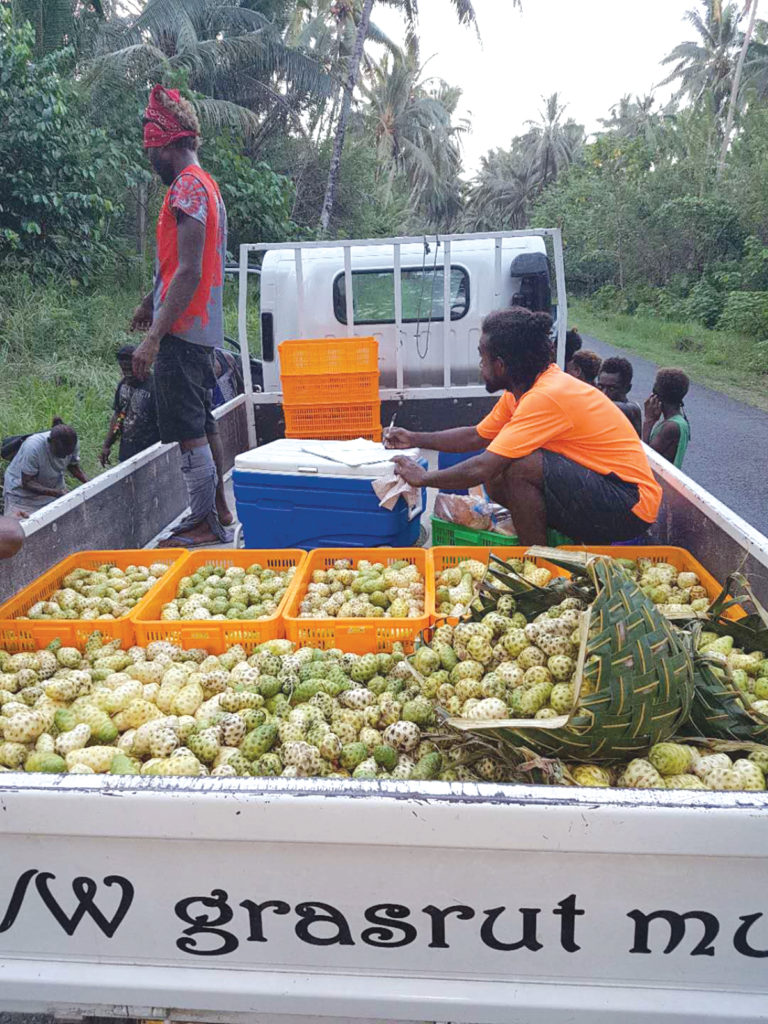
Noni fruits ready for transportation

A response to Bodo Dettke’s media claims

BY WALTER FOLOTALU

Former politician

Noni (Kikiri or Kobu) farmer

AS a local noni farmer from the province (Malaita), I wish to challenge MP Bodo Dettke’s statement over the SIBC recently, calling on all local noni farmers in the provinces to discontinue work on noni farming due to unavailability of processing equipment in the provinces.

While I respect his call, I see such views as mere political rhetoric rather than looking for a way forward for this potential industry in the country and more particularly the rural areas where more than 80% of our rural dwellers find ends to meet.

According to researches, noni as a crop is unique in many ways and is said to be robust and climate-adatable.

The tree is hearty and grows in unusually wide range of soil and environmental conditions.

It has an exceptional tolerance to heat, wind, fire, flooding, saline, and drought that make it arguably the most durable climate-change immune crop in commercial production anywhere today.

Its fruit is harvested continuously throughout the year, containing high vitamin content and potential health benefits unmatched by popular produce.

Also, unlike other agricultural exports noni is very new to Solomon Islands in terms of industry and trade.

It is unique in terms of trade, something that does not exist for other food commodities, such as a lack of market data, product standards, supporting institutions, and established markets with predictable demand.

Therefore, we need proper strategic plans to determine Noni trading rather than discouraging farmers to venture into farming.

We desperately need innovation that would create opportunities for industry growth and value-added products instead of monopoly in the industry.

Solomon Islands is way behind our Pacific neighbors like Hawaii, Tahiti, Samoa, Cook Islands and Fiji, which has created a noni gold rush among producing countries, that quickly established commercial farming and processing facilities.

In the early 2000s. for example, noni alone as an important agricultural export in Samoa provided income for more than 17,000 smallholder semi-subsistence farming households and contributing more than SAT$10m [SBD$32m] annually to the country’s economy.

With this Noni production as a new potential source of income for locals should never be discouraged, also experts have predicted billion-dollar retail noni product market valuations by the end of the decade.

We must never make the mistake of over polarizing the industry without doing a good research into its trend of farming, processing and trading the crop as an export commodity.

Even if we have some experience and potential to offer noni juice and other noni products, there is the tendency that the wholesale market of trade for noni will remain very much immature without differentiating value beyond meeting minimum standards for product safety and regulatory compliance.

I strongly believe the government should prioritize this industry otherwise we will be faced with the burden of high costs of production and distribution due to remote location, inefficient traditional methods such as non-intensive smallholder farming, non-government support, unavailability of certification facilities to name a few.

Solomon Islands without proper strategic plans could be placed in the unenviable position of being a premium supplier in a commodity market where anyone can quickly be a less expensive competitor, and worse still, this will result in an unstable and unpredictable market where client-supplier relationships are purely transactional based on short term factors of convenience without long-term stability where disposable supplier relationships are low value and easily substitutable.

The turbulent environment created by these factors will present the noni industry with the need to innovate in order to protect its economic future and as noni producers, without immediate or relevant actions, we will be at risk becoming a high-cost supplier of wholesale commodities in an unpredictable market with increased competition from substitutes thus threatening its economic contribution or prospects to offer an alternative livelihood for thousands of families as highly advocated by people like Bobo for his constituency.

We must also know that we are competing against existing noni trading countries in the Pacific like Hawaii, Tahiti, Samoa etc. These countries have been in this industry for many years.

Noni trees produce fruit within two years after planting and are relatively easy to maintain and any country in the Region has the potential to quickly become a noni grower, also commercial fruit juice production facilities are said to be relatively inexpensive as compared to other manufacturing industries.

With this, Solomon Islands noni producers and stakeholders must make every effort to work in collaboration with each other and with the government to take the lead and set the industry’s highest standards for quality to create value while concurrently transforming into niche specialty consumer product manufacturers.

We must strive to establish ourselves as a consumer product maker rather than wholesale ingredient supplier, and in this regard we will not only set a market message for the noni industry but build consumer confidence and geographic brand loyalty whereby noni producers will capture new value from downstream consumer sales leading to creating new manufacturing jobs, and an increasing demand for noni fruit from farmers, and better market communication unhindered by layers of middlemen.

Women and youths in particular stand to benefit from this as they will participate only in the far up-stream low value segment of the value chain, yet offer a diversity of perspectives that promise the potential of innovation to reach to new markets.

Consumers motivated by authenticity, utility, and sustainability will pay for the added value provided by specialty noni goods. Wholesale noni juice can be produced anywhere, but there will be no substitutes for a strong brand reputation that we can achieve.

Noni tree produces fruit with uniquely desirable biochemistry and while it is being misunderstood and historically misrepresented by opportunists, it offers nutrition health benefits comparable to or far better than most widely consumed fruits available today.

Encouraging commercial and semi-subsistence households throughout the country, will benefit locals and increase noni production and value.

Some potential exists to expand noni exports as a wholesale ingredient, but this strategy will be short-lived due to increasing low-cost competition and the availability of numerous superfruit substitutes.

The value of noni exports from Polynesia noni exporters has doubled in the past five years, and we must ensure we have a better strategic plan to excel in our aim to compete in this industry.

We must take a leadership role in advancing commercial interests and brand image of noni fruit, which is to our benefit. Fruit ingredient suppliers are easily substitutable hence to ensure consistent long-term market demand, we must advance into consumer markets as a supplier of innovative retail products with a strong brand identity among consumers.

I also believe that the future of Solomon noni industry is far from secure and without proper coordination to strengthen its position and consumer interest in noni, the market is doubtful and will eventually collapse.

Priorities should include setting a high standard and have in place national standards and grading system for fruit and preparations, document best practices for farming and cultivation, contribute to international standards and implement resulting safety standards. We should build such capacities and establish a national body like, Solomon noni association with innovations to participate in retail niche markets as a trade association and to provide extension training and reference tools for smallholder farmers, develop a supply chain for women produced products, and encourage women’s ownership of noni businesses, facilitate development of new range of products targeting healthy lifestyle (including natural foods and nutritional supplements), livestock and pet products industries, provide certification assistance in relevant and popular schemes (HACCP, organic, Fair Trade, non-GMO, kosher, gluten free, and others)

In commercializing noni we need to collect market intelligence, develop Solomon noni origin brand and assets, establish and implement a marketing communications plan, conduct targeted marketing campaigns in high-value markets, participate in relevant industry trade events and missions, establish trade representation and distribution partners or facilities in consumer markets, and most importantly conduct a study to ensure a better understanding of the global market for production and consumption of noni and noni-based products and to provide useful information for Solomon Islands noni industry represented by a national body in order to increase competitiveness and recommend opportunities that add new value to noni production with the main objective to improve the welfare of Solomon noni industry, particularly smallholder farming families, including women, youths and people with disabilities or special needs:

With this we can set a clear picture of the market for noni and noni products, technical and strategic advice for Solomon noni value chain based on study findings, opportunities to improve returns from sales of current products in existing and new markets, opportunities for diversification and value adding from the development of consumer products, mechanisms for Solomon noni to improve capacity:, collecting and communicating market information, and providing quality assurance services and traceability, issues affecting gender equality, disability, and social inclusion within the value chain, with suggestions on how they may address issues of relevance that occur during the duration of the study, which includes potential COVID-19 impacts.

Noni is a highly promising and potential industry and the government and stakeholders must support our rural farmers to venture into semi-subsistence or large commercial farming as well as downstream processing in order to compete in international trade and to boost the economy, with this our motto “to lead is to serve” is so appropriate now, so let’s support our rural framers, tagio tumas.

Virtual session on Right to Information

Dr. Derek Mane, the Deputy Secretary to the Prime Minister of Solomon Islands and Vardon Hoca, Project Manager for UNDP Solomon Islands are opening the virtual session on Right To Information

The UN Pacific Regional Anti-Corruption (UN-PRAC) project, a United Nations Development Programme (UNDP) and the United Nations Office on Drugs and Crime (UNODC) joint project, and experts from Australia, New Zealand and Vanuatu in close partnership with the Solomon Islands Office of the Prime Minister and integrity institutions, hosted a virtual informative session on Right to Information sharing best practices for building resilient, transparent and accountable institutions in Solomon Islands.

The virtual discussion happened yesterday in Honiara and served as a platform for sharing experiences and best practices. The participants and speakers had a chance to exchange their experiences on establishing and implementing ‘Right to Information’ with the Integrity Institutions and the Office of Prime Minister.

“Equal and transparent access to information is the foundation of a democratic society, the key to its successful development and the rule of law,” said Dr Derek Mane, the Deputy Secretary to the Prime Minister of Solomon Islands, in his welcome remarks.

Mane thanked the development partners for their continuous support. He said, “We are very grateful to our partners for supporting and contributing to the sustainable development of Solomon Islands through helping improve key principles of the right to information and build resilient and transparent institutions.”

The Right to Information is at the core of United Nations values. It is an integral part of the fundamental right of freedom of expression, as recognized by Article 19 of the Universal Declaration of Human Rights, which encompasses the freedom to “to seek, receive and impart information and ideas through any media and regardless of frontiers.” 

Ms. Florence Dafanisi, Senior Analyst Policy Development Coordinator is making notes during the presentation

UNDP and UNODC are committed to supporting the Government in developing Right to Information frameworks that will empower individuals and communities by giving them a role in ensuring governments are accountable and transparent.

Right to Information and Freedom of Speech support institutions to establish mechanisms that provide necessary information to the public on Government decision-making and provide the basis for the public to access topics of particular concern, such as global health crises and climate change and serve as significant steps in bridging the dialogue between the government and the public. 

“The right to information is not only about the commitments of the governments, it is also about empowerment of people to participate, advocate and monitor for meaningful progress against the Sustainable Development Goals (SDGs).

 The right to information is a precondition to achieving progress on sustainable development and therefore, an important target under SDG 16 on Good Governance,” said Sonja StefanovskaTrajanoska (PhD), Regional Anti-Corruption Adviser for the UN-PRAC Project, UNDP Pacific Office in Fiji.  

One of the most significant highlights of the session was that both speakers and participants were encouraged to work with each other and discuss key principles to consider when drafting and implementing the Right to Information legislation. 

“UNDP actively supports and welcomes the Government’s efforts to transform the public sector by increasing efficiency, effectiveness, transparency, accountability, access to information and public services, and citizen participation,” said Vardon Hoca, Transparency and Accountability for the People of Solomon Islands Project Manager, UNDP in Solomon Islands. 

Group photo of the virtual session’s participant and speakers

He also stressed the importance of further cooperation. He added, “Teamwork makes the dream work. UNDP remains a reliable partner of the Solomon Islands Government as transparency and accountability are fundamental for UNDP in delivering development results for Solomon Islands people.”

The virtual session is being hosted by the UN-PRAC project, implemented jointly by UNDP and UNODC with support from the Australian and New Zealand Governments; and the Transparency and Accountability for People of Solomon Islands Project (TAP) that is implemented by UNDP in Solomon Islands with support from the governments of Solomon Islands, the United Kingdom and Japan who have been actively working with Pacific Island countries to support their obligations as parties to the relevant international and regional instruments, including the United Nations Convention against Corruption and the 2030 Agenda.

With the 2030 Agenda as a guiding thread, UNDP aims to reduce corruption and develop effective, accountable and transparent institutions at all levels to ensure effective and timely achievement of national development outcomes.

–UNDP MEDIA

From White River to Nauru

Jonathan Paul Atanikakia in his Nauru Police uniform.

How a young man overcame hardship to become police officer

BY ALFRED PAGEPITU

Financially crippled as a young man in the Solomon Islands, Jonathan Paul Atanikakia has found his calling in the tiny Pacific nation of Nauru.

The 29-year-old, with links to Guadalcanal and Nauru, recently joined the Police force of the Republic of Nauru- after years of financial hardship growing up in White-river, a place he regards as home and where his dream of becoming a full-time Police officer was born.

His story is a reminder of looking at the positives and of a man who defied the odds after leaving high school, his experience in securing informal jobs and later travelling to Nauru where he was fortunate to get recruited into the Police Force.

Mr Atanikakia recalled living in White River as challenging, an environment that modeled his life to where he is now.

“Most people see White River as a place where young people are influenced by drugs, alcohol, beggars and where most young people are into a lot of social activities,” he said.

Despite the social issues at White River community, Atanikakia said many children have lived there since they were kids and have grown to become better citizens today.

When the Sun Weekender asked what go him to secure his job, he emphasized that it was God’s plan even though he was not educated.

Atanikakia had three brothers and seven sisters and lost his father from Guadalcanal when he was only a little boy.

“I was born in Nauru on the 07th July 1997 at the Lieu ae naissance and was only two-month-old when my dad took us back to the Solomon Islands where we resided at White River.

“I was raised in the Solomon Islands and lots of my friends are at White River where we all grew up together.

“The Atanikakia Clans in Honiara are related to my Dad and my mother is originally from Nauru,” he said.

Mr Atanikakia attended White River School from Kindergarten up to grade six.

He then made it through to form one at White River Community High School (CHS) in 2011, but because of the influence of friends was sent home to reside with his uncle on East Guadalcanal to help with gardening to earn money for a living.

“I was disappointed as my education will not continue if I continued to stay with my uncle, so I decided to find another way to earn a living.

“I was interested in attending a computing school, so my parents agreed with me to take computing courses to engage me from other unwanted activities back home.

Despite attending computing class, he was not really interested and only wanted to make use of his life. That alone brough happiness to his parents who saw his intentions of changing is attitude.

“My parents were happy with me so they agreed to put me back to White River CHS to continue with my education. Something strange happened and was not able to complete my form two class.

“I skipped from form one direct to form three,” he recalled.

“After completing my form three, I made it to form four following which outside influence go hold of me again and I was not able to complete my education.

He said that life was really hard for him so he withdrew and left school.

 “I focused then on looking for a job to help my brothers and sisters.

While looking for an opportunity, Atanikakia secured his first job in joining his brother’s construction work at the ITA Hardware where he earned little money to help his brothers and sisters.

“I was not satisfied, so my family made arrangements to fly me to Nauru to look for a job.

“Two weeks later, in 2019, I was in Nauru and joined my uncle’s local construction company where I usually get paid at the end of a week.

“I was inspired and encouraged to apply for the police force in Nauru, but something always reminds me that I did not formally complete my education.

He said his uncle encouraged him to apply to join the force.

 “Later on, that day I submitted my application with hope.

“I thanked God for his love as one week later I was accepted,” he said.   

Since being accepted, he tried his best to meet the stated requirements and obey the Laws mandated in carrying out his duty.

Jonathan Paul Atanikakia and his fellow comrades

“This is my second year in the force and I am learning new experiences and handling a lot of challenges. One of the great challenges I have gone through is completing cases which are so difficult for me but I am doing my best.

“I am proud to protect my country here in Nauru and hope to return to Solomon Islands to serve my country.

Atanikakia encourages young people to never give up on life and keep trying because there are a lot of chances in life.

“I would like to call on those young people who have been through the same road I’ve been on to never give up on life.

“Please my good friends and young people, stop drinking kwaso and involvement in unwanted activities back home that will ruin your life. One day I will be visiting White River to make a difference in the future, to educate our young people.

Today, if you visit the Republic of Nauru, you will see a proud Jonathan Paul Atanikakia wearing a blue uniform of the Nauru police force.

Atanikakia concludes that if one door closes, try look for another door where you can find peace and happiness in your life.

PM covid-vaccine pledge gains British envoy approval

A show of solidarity by the British High Commissioner rolling up his sleeve to show support to the Prime Minister for putting his hand up to be amongst the first to be vaccinated in Solomon Island

BRITISH High Commissioner to Solomon Islands Dr Brian Jones has spoken highly of the Prime Minister for raising his hands to be among the first to be vaccinated in the country.

The acknowledgement was made during a courtesy visit by the High Commissioner to the Prime Minister, Manasseh Sogavare today.

His Excellency Jones thanked the Prime Minister for assuring the people of Solomon Islands that he is willing to be amongst the first to be vaccinated when the time comes.

He also took the opportunity to acknowledge the Prime Minister and his Government for continuing to manage the COVID-19 situation in the country.

The British High Commissioner also shared United Kingdom’s experience with the vaccination roll out in the UK and its challenges and outcomes.

Dr Brian said around 25 million people in UK have been vaccinated to date, with 17 million in the EU and UK vaccinated with the Oxford/AstraZeneca vaccine.

He assured the Prime Minister that whilst there have been a small number of concerns raised with its side effects, and those are being rigorously investigated, it has proven to be effective and safe in the UK and has been declared safe by WHO.

“There had been a dramatic drop in cases since this vaccination rollout kicked off in UK compared to the last 3 months,” His Excellency Jones said.

Prime Minister Sogavare in response has shared with the British High Commissioner that he has put his hand up to be amongst the first to be vaccinated to show confidence to his people that the vaccine is safe.

The Prime Minister also briefed the High Commissioner of the arrival of the first batch of AstraZeneca vaccine this Friday.

“Yes, it will be here in the country this Friday and we are looking forward for its arrival,” he said.

This first batch of vaccines comes through the COVAX facility, set up by GAVI, the Vaccine Alliance, to ensure vaccines reach all countries, regardless of financial status.

The UK is one of the top donors to COVAX, supporting with £548m. 

Prime Minister Sogavare also acknowledged the experiences shared by the High Commissioner on UKs vaccination rollout program and its outcomes.

Other issues discussed also included the 2023 Pacific Green Games initiative, Pacific Islands Forum, education reform and carbon trading.

Meanwhile, the highlight of the meeting was a show of solidarity by the British High Commissioner rolling up his sleeve to show support to the Prime Minister for putting his hand up to be amongst the first to be vaccinated in Solomon Islands.

CoL moves to reclaim land from Asian logger

By EDDIE OSIFELO

COMMISSIONER of Lands, Alan McNeil has given a one-month notice for the resumption of land for public purposes to two owners at Ranadi, east Honiara.

Hong Jun Zhang and Malaysian logging company, Excellent Resources Management Limited held Fixed Term Estates titles over two different parcels.

Giving the notice on Monday, Mr McNeil said the land owned by Zhang is resumed for the purpose of drainage, sewerage outlet and public parkland.

He said the land owned by Excellent is resumed for purpose of biosecurity quarantine incinerator.

“The owners are given one month’s notice after which the government will take back possession of these parcels,” he said.

Honiara City Council transferred the FTE title to Excellent on 7th January with transfer costs of $800,000.

Initially, Commissioner of Land granted the FTE title to Honiara City Council on September 26, 1986.

Mcneil said for resumptions, compensation is payable for improved land.

He said there are “improvements” on this land but the question of compensation and how much has not been raised or discussed with the fixed-term estate owner yet.

Earlier, McNeil confirmed that he gave consent to the Council to sell the land, occupied by Biosecurity Division.

McNeil said he based his decision on valid documents that HCC held the Fixed Term Estate title and a minute to confirm the full Council had sanctioned the sale on October 29, 2020.

Further to that, he said a simple check was carried out to confirm whether the Council had paid the consent fee, certificate of FTE and browsed through his “black list” of parcels that are under forfeiture or resumption or before the High Court.

McNeil said the Council has satisfied all the requirements like confirmation of consent fee paid, valid certificate of FTE and it was not under the “black list” as there’s no case before the High Court, plus there was also a minute of the meeting last year.

However, two city council executives have denied the Full Executive had conducted a meeting on October 29, 2020 to sanction the sale of council land.

Charles Aiwosuga, who was deputy mayor until early this year, and another executive councillor who requested anonymity, relayed this to Island Sun last week.

This forced the City Mayor Wilson Mamae to order an investigation into the sale of the land.

He said the findings should be available next week.

Meanwhile, new information Island Sun obtained yesterday suggest councillors whose names appeared in the minute of the purported council meeting denied attending such meetings.

Council insiders told the Island Sun city clerk Rence Sore may have fabricated the minute to deceive the Commissioner of Land so that he could facilitate the transfer of the land.

Jab centres in Honiara identified

The Multi purpose hall used as a field hospital.

BY MAVIS N PODOKOLO

THREE vaccination centres to roll-out covid-19 immunisation have been identified in Honiara, says Prime Minister Manasseh Sogavare.

“In Honiara, three vaccination centers are being consideration each in East, Central and West Honiara.

“The Central Honiara location is the Triage area at the National Referral Hospital COVID-19 zone, at the eastern end of NRH,” Sogavare said on Monday this week.

He said for West Honiara talks are underway to secure the Royal Solomon Islands Police Force (RSIPF). The Marine Training school at Solomon Islands National University for East Honiara.

“We are also considering he possible use of the Central Field Hospital which is currently empty after all COVID-19 cases had been discharged almost two weeks ago. The field hospital has all essential back up facilities, including beds where people can rest after vaccination if required. Our health team will confirm during the week if we can use this facility,” said Sogavare.

He said vaccination sites in Choiseul province, Western province and Malaita Outer Islands will be finalised sometime this week.

“Ministry of health will keep us updated on the various locations for COVID-19 vaccination during the week. I will provide further updates on this subject in my weekly national address next Monday,” said Sogavare.

He said to demonstrate his confidence in COVID-19 vaccines, he will be honoured to take the first COVID-19 injection in Solomon Islands before everyone above 18 years of age can be vaccinated.

WOMEN IN SPORTS MEDIA

0
Female participants of the 2 days Women in News & Sports training

BY PETER ZOLEVEKE II

For the first time local female journalists are introduced to the basic model of sports media reporting  in a two-days Women in News & Sports (WINS) training.

The workshop started yesterday and gathered aspiring students from the Solomon Islands National University (SINU), freelance female journalists, broadcasters and the main stream media journalists.

Media Association of Solomon Islands (MASI) Training Chairlady Gina Maka’a in her opening remarks highlighted the importance of the workshop to encourage more females in the male dominated sport media industry.

Facilitators for the two days’ workshop are freelance journalist Elizabeth Osifelo together with the technical experience of Diane Justus a former SIFF Women Development Officer.

 “MASI is excited that such initiative is organized for the first time ever sports workshop for only females,” she says.

“You are the lucky bunch of females to participate in the country. This workshop will also aid to prepare you for the upcoming 2023 Pacific Games.

“Not only that but it will give you the opportunity and avenue for you to travel overseas to do sporting coverage on events,” Maka’a told the participants.

She also encouraged the participants to learn as much as possible from the workshop.  “We want you to get as much as you can during these sessions,” Maka’a said.

The WINS initiative is a training and mentoring program aimed at providing for female journalists in the Pacific and Asia.

It provides to enrich personal and professional capacities including interviewing, digital storytelling, building confidence and live coverage (commentary).

The program is initiated by the Australian Broadcasting Corporation’s International Development Unit (ABCID) and is supported by the Australian Government through the Team Up program until 2022.

This project builds on two previous phases since WINS began in 2016 and Solomon Islands is the tenth country to be part of the program behind fellow Melanesian countries Papua New Guinea (PNG), Fiji and Vanuatu.

Final day of the workshop today will involve a practical session where a scheduled field trip to Lawson Tama stadium for the mid-week Telekom S League (TSL) fixtures will be arranged for the female journalists.

The two days’ workshop will then wrap up with the handing of certificates by the Australian High Commission and MASI.

Leaked police report irks Isabel parties

0

BY JENNIFER KUSAPA

A leaked report on police investigations in the Nuha incident, Isabel province, is causing Isabel police and community leaders to be suspicious.

The report, dated February 22, 2021, is said to be confidential but was leaked to the media, and each party involved is denying being the source.

It is based on violent incidents which took place in Nuha, Katova district on January 17 and February 1 this year.

Provincial commander of Isabel police, Superintendent Leonard Tahnimana says he will lodge a formal complaint to the RSIPF professional standard internal investigations unit (PSSI).

“I am aware of that report as it was sent through me to the Assistant Commissioner Provincial in Honiara and not for public information.

“Officers when attending to any reports or incidents happening in the province, they have to compile a report and make submission of what we have attended and that was that report about,” Tahnimana said.

PPC Tahnimana also denied any police involvement with Sunshine nickel mining company, saying police were there when some people from Jejevo in Katova District, alleged to have acted disorderly in January and February this year.

However, Community spokesperson for Jejevo, Furona and Moluforu, Gabriel Manelusi said that Sunshine delegation with the Isabel PPC with some officers were drinking beer together prior to the meeting that was conducted in January this year.

He said the attitude of Police officers in Buala is pure negligence to their duty to deal with such issues happening in the communities.

Manelusi also said that it is suspicious why a police confidential report is accessed by the media.

“I will send a full complaint against the Assistant Police Commissioner Provincial, PPC Isabel and also the officers involved to the Police Professional Standard for full investigation.

“Such issues gave us no trust on the PPC Isabel and need to be removed from Isabel immediately,” Manelusi said.

Meanwhile, Police media when contacted about the incident said that police will deal with the matter.