Home Blog Page 1286

Do no harm: women’s economic empowerment and domestic violence in Melanesia

0
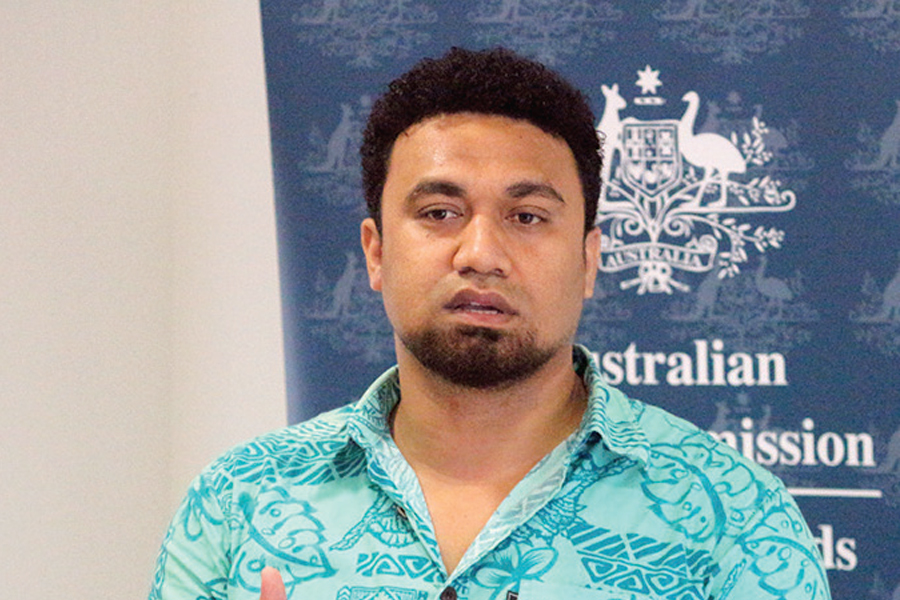
Staff from the Men Against Violence Against Women project in Solomon Islands. Photo by Irene Scott/DFAT/Flickr/CC BY 2.0

IT is often assumed that women are empowered when they are able to earn an income and that this puts them in a stronger position to negotiate with their partners.

However, this is not always correct. Neither is the view that earning an income reduces men’s violence against their wives.

In fact, those trying to promote gender equality through economic empowerment initiatives face the vexing issue that their efforts may have unintended negative consequences, improving one dimension of women’s lives but undermining others.

The ‘Do no harm’ (DNH) research, carried out between 2014 and 2018, addressed the question of how to improve women’s economic agency and the security of their livelihoods without compromising their safety.

To grasp the actualities women face in trying to improve their economic situation, the research gathered detailed verbal accounts from women about their work and home lives.

Field research in Solomon Islands and Papua New Guinea produced 485 interviews – 238 with women and 135 in-depth interviews with well-informed local leaders, both female and male.

The women who participated in this study valued the opportunity to earn an income and spoke positively about its benefits.

But, as they told us, income generation also has negative impacts, including the burden of extra work, difficulties finding childcare, problems accessing markets, and increased demand from husbands and relatives for money.

Overall, we found that partners rarely agree about household expenditure and that womens’ income generation often contributes to marital conflict and violence.

Much of the conflict and violence associated with money concerns men demanding or seizing money from their wives. Some conflicts occur because the husband expects full control of all the income that his spouse generates, even when he has not contributed to earning it.

Other conflicts about money occur over spending priorities for pooled income, wives usually prioritising family needs and men prioritising their own desires.

Some husbands require their wife to ask his permission for any expenditure of pooled income, but do not seek agreement for their own expenditure. If a wife challenges this demand, conflict is likely to follow.

Also, some men become angry if their wife is unable to complete domestic tasks as expected.

Men rarely assist their wives with household work, such as cleaning, cooking, subsistence gardening and child care, even when the wife is working hard to earn income for the household.

The research also showed that many men often reduce their own contributions to the household, or to contribute nothing at all, if their wife begins to earn an income.

At all field sites, women often bear total responsibility for the financial support of the household, even when their spouse has an income. Instead of increasing the pool of resources available to the household, women’s economic gains often result in men using all their own earnings for their own discretionary expenditure.

The impact of men’s resource-depleting behaviour on women’s workload and household well-being is a source of discontent and often results in domestic conflict.

Conflict often occurs when women exercise agency by refusing requests for money or by questioning their husband’s wasteful expenditure.

Many women reported that their partner’s alcohol consumption — particularly in the form of binge drinking — was central to marital discord.

They consistently reported that refusing requests for money for alcohol or questioning expenditure on alcohol was a trigger for violence.

Men resented being reproached by their wives for wasting money on themselves and depriving the family, and this was a frequent cause of men’s violence towards their partners.

The importance of making the potential for violence integral to the design of women’s economic empowerment interventions has been highlighted in recent international literature.

A recent DFID Guidance Note argues that programs to improve women’s business performance or increase women’s income are threatened or diluted by the impact of violence.

To defuse the risk and to optimise benefits of economic development, the authors stress that it is essential for such programs to address violence against women.

The DNH research provides insights into the gendered power dynamics at play in marital relationships, the specific factors that hamper women’s income-generating activities and the risk factors for violence in the Solomon Islands and Papua New Guinea.

Given the importance placed on women’s economic empowerment by donors, NGOs and governments, there is a critical need to recognise that women’s economic empowerment sometimes entails risks for women that development programming must counteract, something which is canvassed in the three detailed reports from the research (on PNG – including on Bougainville – and on the Solomon Islands).

The research was a collaboration between the Australian National University’s Department of Pacific Affairs (formerly State, Society and Governance in Melanesia Program) and the International Women’s Development Agency (IWDA) and funded by the Australian Government through the Department of Foreign Affairs and Trade’s Pacific Women Shaping Pacific Development program. The research is also summaried in these two DPA in briefs.

Richard Eves is an Associate Professor at the ANU Department of Pacific Affairs.

By Richard Eves

DEVPOLICY

Plastic waste accumulating at Kukum drainage pose health risk

Drainage at the Kukum market packed with plastic waste and betel-nut husk believed to provide a harmful environment to the surrounding communities.

BY LYNTON AARON FILIA

Drainage at the Kukum market packed with plastic waste and betel-nut husk believed to provide a harmful environment to the surrounding communities.

WALK past the Kukum betel-nut market in Honiara and one could literally feel despair at the huge amount of plastic waste there.

Residents and market vendors tell Island Sun that the plastic pollution is growing, worse still, left untouched by authorities.

The drainage along the road leading to the Kukum market is loaded with plastic garbage, and is a breeding ground for mosquitoes, germs, and odour.

The Honiara City Council has made several attempts to remove the litter but has failed.

One main reason behind HCC’s failure to get rid of the plastic dump there is the continuous careless behaviour of public in disposing rubbish at the drain.

The plastic mountain blocks any means of drainage, leading to flooding of the road during times of rain.

HCC’s Chief Inspector, Environment Division, Mr George Titiulu said council from time to time has removed the mixture of rubbish there, but the issue there is about the consistency of littering on that drainage.

Titiulu urged everyone residing and operating businesses there to cooperate with HCC; one of the reasons too is that the drain also lies within their 7-metre area, which means it is their responsibility to clean it up.

He explained according to the seven metre by-law under the litter ordinance, the shops there already commits an offence and such kind of bulky waste, people can fine with $10,000.

But the challenge is weather these littering is coming from the shops, market vendors, users or residence, he adds.

“More plastic waste accumulate is an indicator of people are not mindful of how they throw rubbish, people are not well inform of the dangers of the rubbish accumulation,” Titiulu said.

In terms of people’s health, the accumulation of plastic waste and blockage of drainage Titiulu said it will implicate negative impacts to people.

This is because of the place will become breading site for mosquitos, rats, and other harmful insects and produces foul smells and it comes to people’s health, he adds.

However, Titiulu said council will continue to remove that mess at Kukum area and people need to be part of controlling plastic waste as well for a safe environment and keep the Honiara Clean.

Ministry of Health and Medical services provides timeline for addressing drugs shortage at the national referral hospital

0
MHMS Permanent Secretary Dr Dalipanda

By Alfred Sasako

AS the drugs shortage crisis deepens, the Ministry of Health and Medical Services has provided further details on the steps it has taken to address the situation.

Permanent Secretary Tenneth Dalipada yesterday provided the table below which gives an overview and status of drugs replenishment between now and 2019.

In response to questions put to him by Island Sun, Dr Dalipada said some emergency drugs have already arrived in Honiara and are being cleared over the next two days

  1. The status of replenishments of our drugs and supplies with effect of today, Sunday 15 July 2018 are as follows:


Date Contract Awarded to Supplier  

Description


Delivery ETA

Status


Comments


April 2018


Interim Order

10 months drugs and supplies.

4 suppliers


Supplies being

sent progressively since end of June


Some supplies will arrive by end of July

Total 10 months supplies will be in the country by August / September.

Once in the country, the supply will cater for the period up to June 2019.

The 2019 supplies are anticipated to be in the country by April / May 2019.


7 May 2018


Critical drugs, dressings and consumables

3 suppliers.

To cover shortfalls in the period leading up to receipt of Interim Oder (‘10 months’ supply)


All supplies

airfreighted and now in the

Country. The final stocks will be cleared from the wharf in the next two days.


This supply mostly addresses NRH’s needs.


We still require an emergency stock up for the country


31 May

2018


Essential drugs, dressings and consumables

4 Suppliers


All these drugs and supplies will arrive in August.


These supplies do not duplicate other orders and are on schedule.


4 June 2018


Emergency Drugs, dressings and consumables

6 Suppliers


Orders have

already been

sent to each of the 6 suppliers.


Airfreight products will be ready for

shipment within 2 weeks.


Sea-freight will be within 2-3 months.


This is the most urgent to address. There are two

components – the airfreight and the sea freight which can come later.


The airfreight component needs to come in from within 2 weeks.


Government to advise Solomon Islands to prioritise Airfreight Drugs and Supplies ahead of other cargo in the next month.


Dr Dalipada said the most urgent action needed now is to bring in the emergency drugs which are shown in a separate attachment.

“If we can obtain emergency airfreight within the next 2 weeks, then together with the critical drugs (already in the country) and the essential drugs ((arriving in August) will tie the country over to when the interim order arrives in August/September.

Financing for the procurement

He also explained arrangement for financing the procurement.

“Existing arrangement with all our prequalified supplier is that will supply to order, and payment is made following receipt of products and validation of their quality. Basically, the only money we need to provide upfront is for the airfreight to the airlines,” he said..

Dr Dalipada said the Solomon Islands Government would be taking over the financing of drugs for the hospital from hereon. This, he said, would be lessened by the fact that SIG would be taking on the total financing of the country’s drugs and supplies.

Meanwhile Dr Dalipada has provided further details on Emergency Drugs and Dressing for airfreighting.

Below is the airfreight part which is being airfreight as well with estimated time of arrival (ETA) and deliveries after two weeks. Part of this list which is very critical, its ETA will be within the next two weeks.

1.0 AIRFREIGHT QUOTATION

Item Code Item Name Total Quantity required Preferred pack size
3467 ACETYLCYSTEINE INJ 200MG IN 1ML 10 Each
12 ACTINOMYCIN INJ 0.5MG 10 Each
42 AMOXYCILLIN TABS/CAPS 250MG 1,400,000 1000
4030 APPLICATOR STICKS,SINGLE,WOOD,COTTON TIP,PKT/100 3,000 1000
1475 AZITHROMYCIN TABLETS 500MG 12,000 Each
52 BACLOFEN TABS 10MG 200 100
3018 BANDAGE, GAUZE 10CM 2,000 Each
3019 BANDAGE, P.O.P. 7.5CM 500 Each
1672 BENZYLPENICILLIN 5 MEGA IU (3G) 3,500 Each
4095 BLOOD LANCETS BOX/200 300 Box/200
1190 CALCIUM GLUCONATE INJ 10% 10ML 20 Each
4139 CANNULA, INTRAVENOUS 24G YELLOW 1,400 Each
85 CARBIMAZOLE TABS 5MG 24,000 1000
4150 CATHETER, FOLEY, 2 WAY 14FG 380 Each
4151 CATHETER, FOLEY, 2 WAY 16FG 830 Each
4153 CATHETER, FOLEY, 2 WAY 20FG 60 Each
4154 CATHETER, FOLEY, 2 WAY 22FG 180 Each
4161 CATHETER, NELATON 12FG 30 Each
4162 CATHETER, NELATON 14FG 30 Each
4172 CATHETER, Y-SUCTION 16FG 50 Each
2120 CHLORHEXIDINE MOUTHWASH 0.2% BOT/200ML 300 Each
100 CHLORPHENIRAMINE MALEATE TABS 4MG 17,000 1000
1205 CHLORPROMAZINE INJ 50MG IN 2ML 150 Each
109 CHLORPROMAZINE TABS 100MG 12,000 1000
2124 CIPROFLOXACIN SYRUP 250MG IN 5ML BOT/100ML 15 Each
1213 CISPLATIN INJ 100MG IN 100ML 15 Each
126 CLOMIPHENE TABS 50MG 100 100
2127 CLOTRIMAZOLE PESSARY 500MG PKT/1 1,000 Each
2126 CLOTRIMAZOLE SKIN CREAM 1% TUBE/20GM 200 Each
2128 CLOTRIMAZOLE VAGINAL CREAM 2% TUBE 20GM/35GM 60 Each
133 CLOXACILLIN CAPS 250MG 330,000 1000
135 COLCHICINE TABS 0.5MG 5,000 100
145 DAPSONE TABS 100MG 100 100
150 DIETHYLCARBAMAZINE TABS 50MG 300 100
1256 DIGOXIN INJ 500MCG IN 2ML 100 Each
156 DIGOXIN TABS 250MCG 11,300 1000
3711 DRESSING,PARAFFIN GAUZE DRESSING,7M 150 Each
177 ERYTHROMYCIN SUSPENSION 200MG IN 5ML 260 Each
409 ERYTHROMYCIN TABS 250MG 24,000 1000
205 FERROUS SULPHATE 200MG & FOLIC ACID 0.4MG TABS 95,000 1000
1302 FLUCLOXACILLIN SUSPENSION 125MG IN 5ML /100ML 1,500 Btl
1300 FLUCONAZOLE CAPS 200MG 200 100
3737 FLUOXETINE CAPS 20MG 700 100
3860 GAUZE PAD, ABDOMINAL BP (O.T SPONGE) 38 X 50CM 960 38
240 GAVISCON TABS (or EQUIVALENT) 5,000 48
4280 GIVING SET, PAED, BURETROL 150ML 480 Each
4275 GIVING SET,IV,BLOOD 100 Each
4296 GLOVES, EXAMINATION LATEX NON-STERILE LGE BOX/100 600 Box/100
4302 GLOVES, SURGEON SIZE 7.5 8,500 Pair
260 GRISEOFULVIN TABS 500MG 33,000 1000
2265 HOMATROPINE 2% EYE DROPS BOT/10ML 600 600
1370 HYDROXYCOBALAMIN INJ 1MG IN 1ML 100 Each
1371 HYDROXYPROPYL METHYLCELLULOSE INJ 20MG IN 1ML 100 Each
293 HYOSCINE BUTYLBROMIDE TABS 10MG 2,000 100
992274 IBUPROFEN TABS 200MG 180,000 100
1385 IRON DEXTRAN INJ 50MG IN 2ML 50 Each
2310 ISOFLURANE ANAESTHETIC BOT/250ML 24 6
2517 IVERMECTIN TABS 3MG 200 100
2390 LIGNOCAINE ANTISEPTIC JELLY 2% + CHLORHEXIDINE 0.05% 150 Each
2425 LUBRICANT, JELLY, 15ML TUBE 850 Each
1540 MANNITOL INJ 20% 500ML 50 Each
1548 METHOTREXATE INJ 50MG IN 2ML 60 Each
1553 METHYLPREDNISOLONE INJ 40MG IN 1ML 250 Each
1554 METHYLPREDNISOLONE INJ IV 500MG 10 Each
2820 MORPHINE INJ 10MG IN 1ML 1,300 Each
555 MULTIVITAMIN TABS 110,000 1000
4527 NEEDLE, SPINAL DISPOS 25G , 3.5″ 350 Each
562 NITROFURANTOIN TABS 50MG 22,000 1000
565 NORETHISTERONE TABS 5MG 12,000 1000
3612 ORTHOPAEDIC WADDING,15CM X 2.7M ROLL 500 Roll
629 PARACETAMOL 500MG + CODEINE PHOS 8MG TAB 34,000 1000
1088 PARACETAMOL 500MG INJ VIAL/50ML 100 Each
635 PENICILLIN V TABS 250MG 190,000 1000
2971 PETHIDINE INJ 100MG IN 2ML 100 Each
2580 PHENYLEPHRINE HYDROCHLORIDE 10% EYE DROPS MINIMS 550 Each
2581 PHENYLEPHRINE HYDROCHLORIDE BP 2.5% EYE DROPS MINIMS 450 Each
1680 PHENYTOIN INJ 250MG IN 5ML 200 Each
705 PRAZOSIN TABS 1MG 1,300 Each
684 PROMETHAZINE ELIXIR 5MG IN 5ML BOT/100ML 10 Each
680 PROMETHAZINE TABS 10MG 55,000 1000
702 PYRIDOSTIGMINE BROMIDE TABS 60MG 800 100
3428 RESUSCITATION   MASK – ADULT 50 Each
3430 RESUSCITATION   MASK – NEONATAL 50 Each
3429 RESUSCITATION   MASK – PAEDIATRIC 50 Each
3426 RESUSCITATION BAG & MASK – ADULT 50 Each
3427 RESUSCITATION BAG & MASK – PAEDIATRIC 50 Each
1770 SALBUTAMOL INJ 0.5MG IN 1ML 50 Each
2660 SALBUTAMOL METERED DOSE INHALERS 100MCG DOSE 3,200 Each
2661 SALBUTAMOL NEBULISER SOL 5MG IN 1ML 30ML/BOT 750 Each
4632 SCALP VEIN SET, 23G 100 Each
3812 STOCKINETTE, 15CM ROL/20M 10 Each
732 SUMATRIPTAN TAB 50MG 100 200
5410 SUTURE, NYLON MONOFILAMENT 0 RBT BOX/12 10 Box/12
5440 SUTURE, NYLON MONOFILAMENT 1 RCT BOX/12 30 Box/12
5390 SUTURE, NYLON MONOFILAMENT 2/0 RCT BOX/12 20 Box/12
5360 SUTURE, NYLON MONOFILAMENT 3/0 RCT BOX/12 25 Box/12
5370 SUTURE, NYLON MONOFILAMENT 3/0 ST BOX/12 10 Box/12
5350 SUTURE, NYLON MONOFILAMENT 4/0 RCT BOX/12 30 Box/12
4708 SYRINGE, DISPOSABLE 10ML 7,000 Each
1820 THIOPENTONE SOD INJ 0.5G DP 100 Each
4760 TISSUE DRAIN, CORR/SHEET 10 Sheet
775 TRIFLUOPERAZINE TABS 5MG 1,200 100
2720 TROPICAMIDE EYE DROPS 1% 85 Each
4806 TUBE, STOMACH RYLES FG12 20 Each
4812 TUBING, STERILISATION, N/LAYFLAT, 100MM W, ROL/200M 30 Roll
4810 TUBING, STERILISATION, N/LAYFLAT, 75MM W, ROL/200M 10 Roll
2740 URINE TEST STRIPS,GLUCOSE,BOT/100 100 btl
1900 VERAPAMIL INJ 5MG IN 2ML 60 Each
1908 VERAPAMIL TABS 80MG 200 100
883 WARFARIN TABS 2MG – COUMADIN 5,400 100
881 WARFARIN TABS 5MG – MAREVAN 3,600 100


Chief vents anger over drug shortage

0

A tribal leader who is a victim of the current drug shortage that hits the National Referral Hospital (NRH) says the next time drugs runs out at the hospital more people will die.

Chief Alo Sangatango told Island Sun he was referred from his Bellona home to the NRH only to find out that there are no drugs.

Sangatango said it was a fearful experience for him and for other patients.

He directed his anger on the government.

Sangatango said to act only when something wrong happen does not say well about a government that cares for its people.

“The government should look ahead before something like this happen. We are suffering when the government acted only when something wrong happens,” Sangatango said.

He revealed when told that there are no drugs he went to the private doctor where he used up the money that was purposely to sustain him while in town.

Chief Sangatango said the government should ensure drug supply is replenished every time and enough drugs are stored in our hospitals and clinics for times like this.

“Be funding or procurement issues that cause this drug shortage, we simply want enough drugs to be stored here- ready for critical times,” Sangatango said.

He said the shortage of drugs experienced is a real frustration for sick patients.

Sangatango said the next time the government failed to see what’s coming- more people will die.

SICCI concerned over medication shortage

0
SICCI CEO, Mr Dennis Meone.

THE Solomon Islands Chamber of Commerce and Industry (SICCI) has expressed grave concerns over the medication shortage the country is facing that have reportedly led to mix up of medication as nurses and doctors work their best to substitute commonly used drugs for patient treatment.

SICCI urges the Government and the Ministry of Health and Medical Services (MHMS) to effectively address this distressing situation of medication shortage at the National Referral Hospital in Honiara as a matter of urgency.

Chief Executive Officer (CEO), Dennis Meone agrees that this is a national issue that requires urgent action and calls on all relevant stakeholders to work collectively with the Government and the Ministry to address it for the sake of our people.

Mr Meone said drug shortages present a challenge for health care providers, but more importantly ordinary Solomon Islanders especially those that are ill and most vulnerable.

“When shortages occur, health systems must act quickly to identify and obtain alternative products to prevent disruptions in patient care, because the health of our people both in Honiara and the Provinces must not be compromised.

“Imagine a situation where lives are lost simply because of communication breakdown.

“I think we owe it to our people to ensure we deliver the best medical services we can afford and provide.

“Let’s work together to rectify the problem,” says Meone.

Prime Minister Rick Hou has called for an emergency briefing with the Permanent Secretary of the Ministry of Health and Medical Services on Sunday who confirmed the country had experienced shortages of some essential drugs and supplies.

The shortage was due to a delay in the procurement process for our drugs for 2018.

Meanwhile, Meone commended the Ministry of Health and Medical Services for commencing the 2019 drug procurement process as of June to ensure we do not have a similar problem in 2019.

The order is anticipated to be awarded in September 2018, and supplies are expected to be in country by April 2019.

Special orders for Anaesthetic drugs and supplies are also expected to be air-freighted into the country over the next week.

Meone has also commended the Solomon Airlines for assurance that the airline will accord priority to transport emergency medical supplies as and when they are ready to be transferred to Honiara.

–SICCI PRESS

SIG in-country student Semester 2 registration issue addressed

0

BY BARNABAS MANEBONA

SIG in-country sponsored students’ situation of being halted from Semester Two registration at the University of the South Pacific (USP) has been uplifted.

USP Students Association (USPSA) President Mr Robert Tahi confirming this to Island Sun said USP has discussed with the Ministry of Education over the issue of SIG in-country students fees being not paid last Semester One and it is understood that the fees are now being dealt with along the process.

“The SIG students were already allowed to do registration during Friday on the week before last week but because due to the campus here facing a system breakdown (finance) last week linking from the main campus in Fiji, registrations have just continued this week,” clarified the USPSA President.

USPSA in SI is still collaborating with the Ministry of Education through NTU concerning the following issues of SIG students outstanding allowance payments for Semester, graduating students units being not offered locally here or online, remedy for Education Students whose courses are not offered here at all and the inconsistency in SIG allowance payment to students.

USP standing on its policies, SIG students studying in-country at the USP Honiara Campus were not allowed to continue with their Semester Two registrations earlier due to outstanding Semester One fees.

Speaking with concern and frustration then, affected USP students expressed their fear that if the Ministry of Education and the National Training Unit (NTU) do not address their issue quickly before registrations is closed then their studies will be affected.

No drugs, no funds

PM Rick Hou

The nation’s financial ills is worse than medicine shortage


BY ALFRED SASAKO

WHILE Prime Minister Rick Houenipwela has downplayed the seriousness of the acute shortage of medicines at the National Referral Hospital, there’s mounting evidence the nation’s economic situation is nose-diving – fast.

Public criticisms are mounting that the government has lost the handle on the nation’s finances. There are suggestions that heads could roll as a result of mishandling the timely procurement of life-saving drugs for the NRH.

While the government is frantically trying to deal with the situation, people are dying on a daily basis.

These deaths are either directly or indirectly connected to the shortage of drugs or medicines.

The latest victim was a child who perished while awaiting emergency treatment at the NRH’s emergency ward two days ago.

The Medical Ward is said to be the hardest hit.

Prime Minister Houenipwela told a joint news conference with the Permanent Secretary of the Ministry of Health and Medical Services Dr Tenneth Dalipada in Honiara on Sunday that the acute shortage of drugs was under control.

“Urgently-needed drugs would start arriving between now and September,” he said.

Dalipada told the news conference that it was not the question of money as the government had made adequate appropriation in this year’s budget for buying drugs and medicines for the NRH.

“It’s the question of the procurement process,” Dalipada said.

Of the $50 million allocated for drugs’ purchases, only less than $20 million was used up so far, he said.

According to figures published in Island Sun’s editorial yesterday, donors provide almost $900 million in funding various sectors of health services in Solomon Islands.

The Australian Government, for example, provides a four-year funding program at the cost of AUD47.8 million (about SBD321 million) beginning in 2016.

But the nation’s finances are worse than the drug shortage at the National Referral Hospital itself.

Government Ministries too have been hard hit with many officers finding out there was no money to pay for sea fares for them and their families who are going on leave.

It appears the Ministry of Police and National Security has been hard hit.

One officer who spoke on condition of anonymity told Island Sun yesterday that officers were issued cheques to pay for their sea fares only to find there was no money in the government accounts in the banks.

“The problem is when we presented the cheques the shipping companies simply turn around and say there is no money in the accounts. So we are stranded in Honiara, I don’t know for how long,” the officer said.

In Malaita, the Provincial Health Director, Dr Henry Kako said Kilu’ufi hospital has sufficient medicine and consumables for the next two months.

“There is enough drugs to sustain the health needs in the province for the months of July and August,” Kako said.

Meanwhile Dalipada again confirmed the drug shortage is known to the Ministry of Health and Medical Services and the Ministry is working “very hard to alleviate the situation.”

“The turnaround time is 6 months and once you missed that you would be delayed further. What MHMS is doing is to fly in emergency drugs and consumables to get the ministry to August when the interim order will arrive which will get us to June 2019.

“We have already started the full order for 2019. This lot will arrive in April of next year so the interim order that will arrive next month will stabilize the stock between now and next month we are flying emergency suppliers to keep theatre and other critical items available,” Dalipada said.

Town ground to host OFC matches

0
Town ground rugby pitch

By Taromane Martin

THE Town Ground rugby stadium will host matches for 2018 Oceania Football Confederation (OFC) Under-16 championship when Solomon Islands hosts the 18th edition of the biennial international youth football championship.

Sources say the rugby stadium could likely host Pool B matches while the Pool A matches will be played at the Lawson Tama Stadium.

The stadium is expected to be closed any time soon to allow SIFF’s turf specialists to upgrade and do maintenance on it to meet FIFA and OFC standards.

Meanwhile Solomon Islands Rugby Union Federation (SIRUF) Chief Executive Officer (CEO) Mr Gerald Oiaka said the partnership between SIFF and SIRUF is positive and encourages every federation to work together.

“SIRUF really appreciate this partnership. This is a good partnership not only for the two federations but for sports in general.

“It is very important that all federations work together in such circumstances to help move sports in our country forward,” Oiaka told SunSPORTS last month.

The 2018 OFC U-16 Championship will take place from September 8-22 here in Honiara and will see Vanuatu, New Zealand, Papua New Guinea, Fiji, New Caledonia, Tahiti and Samoa gracing our shores.

Group A

Pos Team Pld W D L GF GA GD Pts Qualification
1  Solomon Islands (H) 0 0 0 0 0 0 0 0 Knockout stage
2  Vanuatu 0 0 0 0 0 0 0 0
3  New Zealand 0 0 0 0 0 0 0 0
4  Papua New Guinea 0 0 0 0 0 0 0 0

First match(es) will be played on 9 September 2018. Source: OFC

Group B[edit]

Pos Team Pld W D L GF GA GD Pts Qualification
1  Fiji 0 0 0 0 0 0 0 0 Knockout stage
2  New Caledonia 0 0 0 0 0 0 0 0
3  Tahiti 0 0 0 0 0 0 0 0
4 Samoa 0 0 0 0 0 0 0 0

First match(es) will be played on 10 September 2018.

KOSSA appoints new Head Coach

0
KOSSA FC Head Coach Eddie Marahare marches on proudly as his players celebrate behind. KOSSA defeated Marist FC 4-2 on Saturday…Photo Taromane Martin

Marahare axed

By Taromane Martin

KOSSA FC Head Coach Eddie Marahare marches on proudly as his players celebrate behind. KOSSA defeated Marist FC 4-2 on Saturday…Photo Taromane Martin

TELEKOM Soccer League (TSL) side KOSSA Football Club has sacked their Head Coach Eddie Marahare as the new TSL season gets ready to kick off this weekend.

With Marahare gone the club has announced former national soccer and beach soccer player Mr Vivian Wickham as his replacement.

KOSSA wished Mr Wickham all the best in performing the important responsibilities of this position with the club.

“The club would like to announce the appointment of Vivian Wickham as the New Coach for Kossa FC in the upcoming S League season 2018/2019.

“The club send its best wishes for Viv Wickham continued wisdom, strength and commitment in performing the important and responsible duties of this position,” a club statement said.

Vivian Wickham spent his club career in Australia and New Zealand, also playing seven times for the national men’s football team.

He plays as a midfielder and has also played beach soccer for the country at the 2006 FIFA Beach soccer World Cup.

First playing for an Australian club in 2001, Wickham spent two years at the recently formed Toowoomba Raiders FC, based in Queensland.

From there, he moved to New Zealand club Central United, a bigger club then playing in the Northern Premier League.

After playing for United in 2002 and 2003, Wickham signed for Mangere United, also based in Auckland, ahead of the 2004 season.

Wickham made his debut for the Solomon Islands in a 9–1 win over the Cook Islands on 4 June 2001 in a 2002 FIFA World Cup qualifier. He played in three more qualifiers in June, against Vanuatu, New Zealand and Tahiti.

He scored twice in the space of thirty minutes in the 7-2 win over Vanuatu on 8 June.[1] These were the only goals of his international career.

In 2002, he played in OFC Nations Cup losses against New Zealand and Tahiti as well as a 0–0 draw with Papua New Guinea.

In November 2006, Wickham played for the Solomon Islands national beach soccer team at the 2006 FIFA Beach Soccer World Cup, held in Rio de Janeiro, Brazil.

Wickham made his debut in the competition in the 5–2 win over Cameroon on 2 November. He then played in the losses to Portugal and Uruguay as Solomon Islands were eliminated in the first stage.

Since ending his playing career, Wickham has coached the Solomon Islands beach soccer team, nicknamed the Bilikiki.

After the 2006 Beach Soccer World Cup, Wickham became the marketing manager of the Solomon Islands Football Federation, also holding the position of Business Development Executive in the Solomon Islands Tobacco Company.

He has since become the marketing manager of Solomon Airlines, acquiring this position in February 2010.

This role has included presenting both the Solomon Islands beach soccer and under-17 football teams with sets of shirts.

TSL starts this weekend

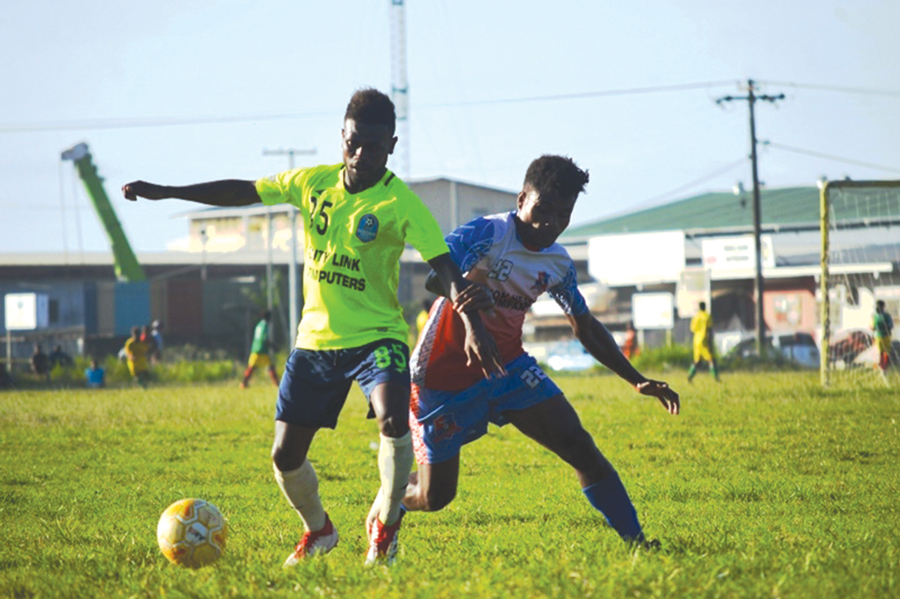
A Henderson Eels FC player shields a Malaita Kingz FC players during their HFA Premier division clash at the KGVI field yesterday. Eels won the match 3-2. Picture Taromane Martin

Malaita Kingz FC banking on youths

By Taromane Martin

THE new season of the Telekom Soccer League (TSL) will return this Saturday at the Lawson Tama Stadium if everything goes to plan.

TSL Treasure Mr Henry Kapu last month had told the media at a press conference that the new season will kick off on July 21.

Mr Kapu said teams have until July 15, which is yesterday, to register their players before the competition kicks off.

Meanwhile, Malaita Kingz FC for the new season of the TSL says they will be banking on their youngsters to lead the team this season.

Head Coach Rence Talo told SunSPORTS yesterday that he will be sticking to his young squad that reached the TSL top eight knockout championship semi-finals back in March and will look to add a couple of overseas flares in the team for the new season.

“We’re looking for a couple of imports to boost the squad this season but that is still to be confirmed,” Coach Talo said.

“For the meantime I will be sticking with my young squad that played in the TSL top eight championship knockout.

“Apart from the imports Malaita Kingz for this season will be sticking with the bunch of local players who are in the squad because we have a lot of youths joining the club so we’ll be focusing on developing them because they are the club’s future,” he said.

Talo said they are yet to kick off their training sessions properly due to the disturbance from the recent Melanesian Art Festival, which engulfed Honiara, but hopes to resume them this week.

“We’re yet to kick off our training sessions due to the major disturbance from the Melanesian Art Festival.

“Lucky for the boys we’ve been the HFA league has helped them keep in shape which is really helpful towards our preparations.

“But now that the festival is finally over we’ll likely resume our trainings this week in preparation for the new TSL season,” he adds.