Home Blog Page 1280

New batch of volunteers optimistic for assignment in Sols

0
Japanese Volunteers.

By Ezekiel Talatau

Japanese Volunteers.

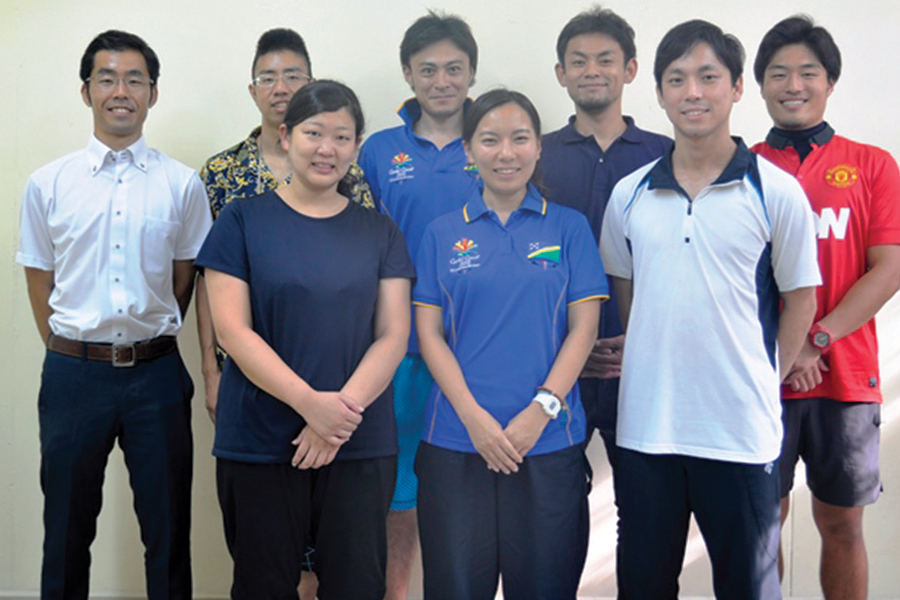
EIGHT new Japanese Volunteers, under the Japan International Cooperation Agency (JICA) are commencing their assignment in the country.

In an interview on Wednesday, most of them are really excited to contribute in helping the country in the respective areas they are assigned to within the two years period.

Two of the volunteers will be leaving Honiara for Auki on 25th of July, while another volunteer will be carrying duties in the Western Province and to leave Honiara for Munda on the 27th of July while the rest will be posted in Honiara.

Volunteer Yuzo Ebina says, most of them are currently on the last stage of their orientation and are ready to travel to their areas of assignment.

He added that, they are very excited and confident their contribution will greatly assist the country.

Another of the volunteers who is a physical Education teacher says he has a heart to teach people how to swim.

He added that, his aim is to see Solomon Islands to take part in the Olympics as a swimmers.

The volunteers are all excited and happy to try out the Solomon Islands way of life and culture.

They are, Genki IImore, Yuzo Ebina, Kazutaka Kojima, Daika Tozuka, Kensuke Nishida, Shoki Jin, Yoshiko Sugiyama and Nobuaki Matoba.

“Mindset transformation a need for Solomon Islands”

0

BY MAVIS NISHIMURA PODOKOLO

REVREND Graham Mark, Secretary Commission on Justice Reconciliation and Peace to the Anglican Church of Melanesia emphasized that Solomon Islands is in need of mindset transformation.

In a day three day conflict sensitivity training for local leaders in Honiara, Mark raised this matter following the increased number of mentally ill people in the country’s capital (Honiara).

He said this matter has affected individuals, families, communities, and the nation as whole.

“Hence it is essential churches, non-governmental organizational and the Solomon Islands government to consider this matter find possible ways on we can address it,” said Mark.

Meanwhile Georgianna Sogote’e an outspoken female participant contributed on the same matter saying it is good that all citizens of the country are trained and become equipped citizens. This includes children and elderly people. This is to avoid mind related issues

She said this needs to start with families first before communities and national levels.

“This is because if the family sounds good with a newer transformed mindset the public will sound good too,” said Sogote’e.

She said if this matter is fulfilled, there will be a decrease in mental illness because people will understand who they are and how they can help those who are already affected with mental illness.

“With the increased number of mentally ill people we can tell that something is not right along the way, hence mindset transformation is a need,” said Sogote’e.

Community leaders learns peacebuilding method

0
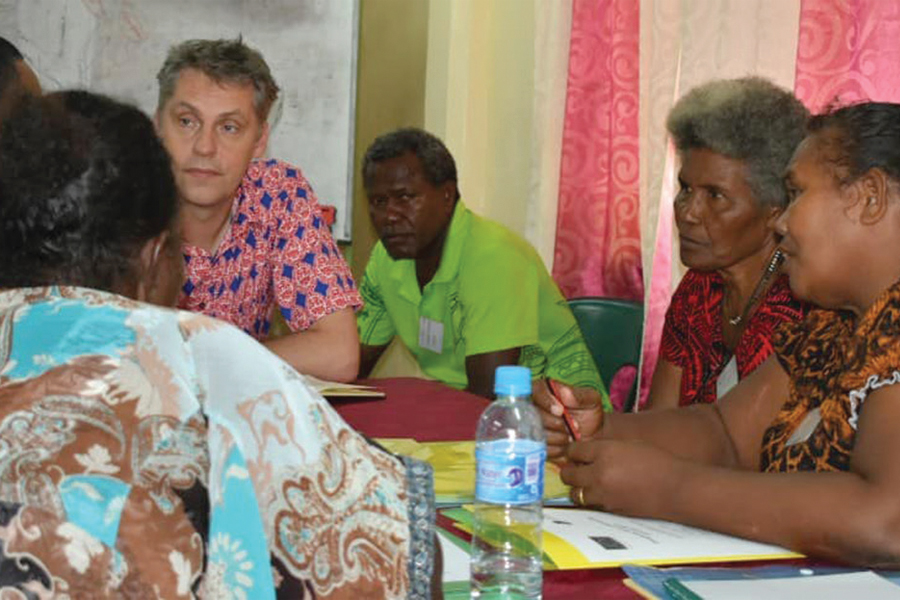
Group discussion on circle of process activity. Photo VBMS.

BY MAVIS NISHIMURA PODOKOLO

Group discussion on circle of process activity. Photo VBMS.

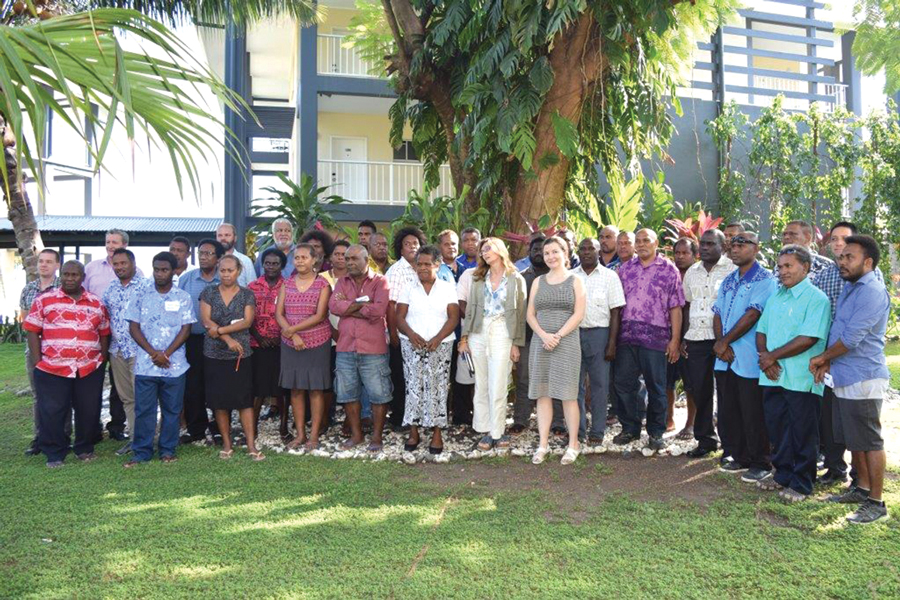
THIRTY local community leaders who have attended a conflict sensitivity training are introduced to an effective concept to resolve conflict in the community level.

This concept is called the circle of process. This has been said to be used by ancestors, where they gather around fire to discuss village matters and family matters.

Pacific Centre for peacebuilding office in Fiji believes this will work in Solomon Islands because it had already worked for other Pacific Island Countries.

Circle process is an inclusive process which brings together conflicting parties as well as other members form the community to talk on difficult issues.

Speaking in light of this topic Florence Swamy from the Pacific Centre for Peacebuilding said the main goal of this concept is to be connected with others in good spirit and to act from within our values under challenging circumstances in times of conflict.

She explained that this concept provides greater opportunities for listening and reflection. There are ground rules in this process where one person at a time can speak.

“Also ground rules which is essential in circle process and prescribes the conduct of participants in process and guidelines which provides directions and some information’s on how to begin with the concept.

“The purpose of having this process reintroduced to our communities is because it supports participants in bringing forward their core self, make visible our inter-connectedness even in the face if series differences and recognizes and access gifts,” said Swamy

She adds that this concept had contributed positively in peace making but has its own challenges.

“This includes circumstances where a person goes through the circle process and his/her burning issues resurfaces and as result it will be difficult for him/her to overcome the problem”.

Swamy said with this re-introduced concept it will help peace builders in the country address and manage different levels of conflict in the county peacefully.

The conflict sensitized training was held in Honiara as part of strengthening women’s peace building program in Honiara.

More Solomon Islanders uses bush meds then western treatments

0

BY LORETTA BRIGIDIA MANELE

ACCORDING to UNDP’s “Study report on the Valuation of Environmental Service from Forest Ecosystem”, most Solomon Islanders, particularly those in rural areas use bush medicines from forests instead of western treatments.

The report relates to the UNDP implemented Integrated Global Environment Commitments in Investment and Developing Decision Making (IGECIDDM) project for the Solomon Islands of which the government is currently working with UNDP to effectively implement the National REDD+ (Reducing Emissions from Deforestation and Forest Degradation) Roadmap.

UNDP emphasized that this report is relevant in terms of having a clear understanding of the Total Economic Value (TEV) of Solomon Islands forest ecosystems in order for the country to develop the economic and financial framework for the national REDD+ Roadmap.

Moreover, UNDP expressed that about 140 plant species are used as medicinal purposes of which some diseases treated by traditional medicine or locally termed as “kastom medicine” include; diarrhea, malaria, ulcers, constipation, diabetes, cancer, Sexually Transmitted Diseases (STIs), high blood pressure, asthma, yellow fever, pneumonia and hepatitis.

Estimating forest value can be based on various approaches such as market prices for modern medicine in treating the same aliment and the avoided costs of incurring modern medicine expenses.

“Therefore, value of forest as source of medicine is a function of percentage or population reliant on traditional medicine and the cost of modern medicine”, the report said.

Also mentioned, in 2006, an approximate 2.7% of the surveyed population turned to traditional healers first for all sicknesses. The estimated figure is however, deemed to be low.

Additionally, UNDP stressed that there are factors that explain why high percentage of Solomon Islanders use of traditional medicine.

High rural population with acute shortage of modern health facilities and low household income are two main factors identified.

UNDP further stated that the value of forest as source of medicine can be approximated at SBD 37.6m.

“A more conservative figure of 10 percent of the total population was adopted as a proportion of the population using traditional medicine.

On average, it is estimated that the average health expenditure in the Solomon Islands is USD$74/person. Assuming an average inflation of 5 percent, the average health expenditure was adjusted to USD$95/person. This value was estimated as the substitution cost between kastom and modern medicine”

“Using the population of 500,000, exchange rate of SBD 8/dollar, the value of forests as source of medicine can be approximated at SBD 37.6m”, said UNDP.

Kilufi’I hospital in the clear with medicines

0

BY GEORGE MANFORD

AUKI

KILUUFI hospital yesterday confirmed that medicine and drug storages in the Pharmacy department is enough until the next supply is due.

Dr. Henry Kako director of Kiluufi hospital confirmed this during an interview.

Dr. Kako said, their supply is enough to cater for the hospital until they receive their next supply in the coming months.

“It seems that our supply here at Kiluufi will sustain our admitted sick patients and the public especially at the outpatient department (OPD) where it will be enough for a month or two if our supply delays”.

He said, that they are not experiencing shortages at the moment and all their departments in the hospital are still in good form in providing health services to the sick patients and those in the OPD department.

“Maybe such shortages will be experienced in the future but at the moment we are still operating without any shortages of medicine here at Kiluufi hospital”.

Island Sun Auki understands National Referral Hospital is currently facing drugs shortages.

Dermatologist reaches out to Auki for clinical skincare visit

0
The Australian dermatologist specialist, associate professor Dr Anthony Hall during his visit to Kilu’ufi Hospital in Auki

BY SAMIE WAIKORI

AUKI

The Australian dermatologist specialist, associate professor Dr Anthony Hall during his visit to Kilu’ufi Hospital in Auki

AN Australian dermatologist specialist has concluded a three days clinical skin disease visit to Kilu’ufi hospital on Wednesday.

During his short visit, Associate Professor Dr Anthony Hall attended to lot of patients with skin diseases at the hospital.

In an interview he said he was invited by the Solomon Islands Government as part of an aid programme from Australia.

He said it was a pacific island programme funded by the Australian government as part of the consequence of the tension where Australia provided assistance to Solomon Islands through RAMSI.

Hall said under the programme Australia will continue to provide assistance and a component of that assistance was to send a medical specialist team to help doctors in the country

He said he was the only dermatologist invited by the medical superintendent at NRH who saw the need for skin a dermatologist.

Hall said during his visit to hospitals in the country he helped doctors run clinical service on skin diseases.

He thanked the Australian government through the Solomon Island government for allowing him to come Solomon Islands under the programme.

Auki Women Care Centre eyes bigger development plans

0
Malaita Provincial Council of Women care centre in Auki.

BY SAMIE WAIKORI

AUKI

Malaita Provincial Council of Women care centre in Auki.

THE Malaita Provincial Council of Women has set in place its plans to develop the Women Care Centre in Auki.

In an interview with the President of the organization, Martha Rurai on Wednesday, she said that there are a lot of things she is putting in place for the development of the organization.

She said one area her office is working on now is the development of the Women Care Centre.

Rurai said refurbishment of the building will soon take place as she is looking at improving the Centre into a modern standard building.

“This is our short plan for the development of the centre that will include adjustment and upgrading of the settings within the building.

“Our long term plan with the centre is we are looking at constructing another building within the area that will cater for conference and hosting other bigger programmes,” she said.

Rurai said there are many programmes under her radar for the development of the Women Council, but focus is firstly on developing it before going to other areas.

She said the Women Centre was the foundation of the organisation and it must happen for the development of the organization.

Island Sun understands that MPCW has been working tirelessly over the past years on women issues in the province.

One major area they continue to provide service on was rehabilitating victims of domestic violence.

Biometric technology still to be used

0
SIEC staff and RM and ROs posed for a group photo on Wednesday

BY MIKE PUIA

SIEC staff and RM and ROs posed for a group photo on Wednesday

SOLOMON Islands will continue to use the BIOMETRIC Technology first used in the 2014 national general elections registration process.

Speaking at the opening of the training, one SIEC’s commissioners, Ms. Taeasi Sanga said the biometric technology will again be used in the voter registration exercise.

Ms. Sanga said the biometric technology will reduce the incidence of multiple registrations that have occurred during previous exercises.

“Using biometric technology, the Commission hopes to produce a more credible register of voters for the 2019 National General elections,” Ms. Sanga said.

She encouraged participants of the training to involve all their community in engaging with them and to provide public awareness about the biometric voter registration program and voter information.

Ms. Sanga said she hopes the training package that is delivered will greatly assist those who are involved in the registration process know and perform their roles at a higher level.

Valapata Primary School in need of urgent repair

0

BY ALFRED PAGEPITU

GIZO

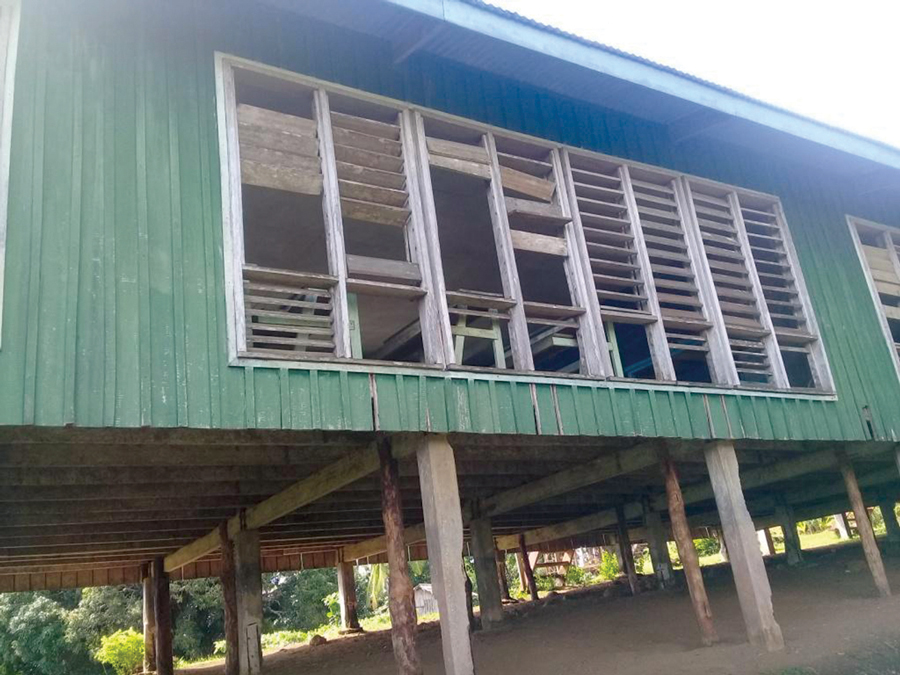
VALAPATA Primary School in South Vella la Vella Island urgently needs repair.

Headmistress Jennifer Kaniki is calling on the National government, Provincial government, Member of Parliament for South East Vella Constituency, Provincial Member for ward eight and Western Province Education Authorities to improve the infrastructure of Valapata Primary in Western Province.

Kaniki told Island Sun Gizo that the school staff houses, classroom and office have not been renovated yet and had not been improved since the School was established in 1989.

She said the School registered more than 140 plus students including 8 teachers with one extension school namely Baresama located within the School compound.

Kaniki said the School has now reach level seven, but the status of the building needs urgent repair and infrastructure development.

“I am concerned for our children and we need responsible members of the Western Province Education Authority and Wesley United Church Authority to quickly visit our school to improve the status of Valapata.”

“We want our government both provincial and National to re-build the school’s infrastructure for our children.”

“Children are the future of this province and nation but it seems our government and provincial members, communities around Valapata are not prioritizing education”, she added.

“This school is funded under Provincial Development Unit through Canadian fund way back in year 1989 until now, nothing have improved so we build one staff house but it was incomplete due to financial crisis,” said Kaniki.

Kaniki said the school is working close with the community to raise funds to slowly improve its status.

“Education is the key to success in everything and we need our children to learn in a good school environment”.

Invasive biotype of CRB damaging for country

0
Director Division Resources Terrestres (SPC) Mr Jan Helsen.

BY ELLISON.T.VAHI

Director Division Resources Terrestres (SPC) Mr Jan Helsen.

PACIFIC livelihoods and economies reliant on coconuts, oil palm and other palm species are under threat of an invasive biotype Coconut Rhinoceros Beetle (CRB).

According to Dr. Jan Helsen, Director of the Pacific Community (SPC) Land Resources Division, the new biotype of Coconut rhinoceros beetle (CRB), Oryctes rhinoceros was first discovered in Guam in 2007.

He said this biotype known as CRB Guam (CRB-G) is highly invasive with the ability to cause significant damage to palm trees. It can also rapidly adapt to its environment. Since its discovery, new invasions have been recorded on the Papua New Guinea (PNG) mainland (2009), Hawaii (2014), Palau (2014) and Solomon Islands (2015).

Helsen said that CRB Guam is resistant to known isolates of the Oryctes nudivirus (Or NV) which had previously proven effective against the CRB-Pacific (CRB-P) biotype.

He said that study of palms in CRB ‘hot spots’ with uncontrolled breeding sites yielded the following comparative results between the CRB-P and CRB-G biotypes, that is, that the CRB has a long life cycle of around 180 days.

“The adult beetles live up to 9 months, causing damage by chewing into the growing shoot of the palms, which results in the V-shape notches on the leaves after they unfurl, this is only noticeable sometime up to 4 months after the damage has been caused.

“Intensive feeding damage can also causes eventual death to the palms” he said.

He adds that the Tree mortality occurs when beetles destroy the growing tips (meristems) of palms in the immature stages and that the grubs feed on compost materials.

He further adds that the spread of CRB between islands, is highly dependent on human mediated activities.

‘’Soil and plant materials can contain the immature life stages of the beetle. The beetles are attracted to light from boats and planes, which can then transport them to new locations. Detection of first incursions usually results from evidence of physical damage symptoms on palm leaves” he said.

In the meantime Dr Jan said that Management initiatives to suppress CRB populations in infested sites may include; crop sanitation, pheromone trapping, biological control agents, cover-cropping, insecticide application and physical killing of beetles.

“The use of pheromone trap technology is common for CRB surveillance and National Biosecurity Authorities are encouraged to use them for early detection and monitoring programmes” he adds.