Home Blog Page 1281

The Government of New Zealand and the South Pacific Community (SPC) leading the fight against the threat of the Coconut Rhinoceros Beetle

0

DEAR EDITOR, it was in a Post issued by the Solomon Islands Chamber of Commerce and Industry (SICCI) in January 2017 that I first read of the real threat for the coconut and palm tree industry in the Solomon Islands if the spread of the Coconut Rhinoceros Beetle intensified and went untreated as a pest.

I was aware at the time of the damage the pest had already brought to coconut palms in both Samoa and Guam and also in Hawaii and the impact of the pest on some coconut and palm oil trees in Guadalcanal.

SICCI had reached the view that the country could face a national crisis given the severity of the potential damage the Coconut Rhinoceros Beetle could cause but had mentioned that the biggest challenge in combating the envisaged threat was the lack of resources and funding to carry out proper assessments and effective treatments.

Some 18 months after the SICCI warning the full extent of the damage caused by the spread of the beetle was revealed in a recent meeting in Honiara which had brought together Government, private sector and international participants to develop an extensive clean-up plan to tackle the Rhinoceros Beetle threat.

During that meeting, the Acting Permanent Secretary of the Ministry of Agriculture and Livestock (MAL), Oswald Ramo, told the gathering, “Over the last four years, 90% of the palms in Honiara had been severely damaged or dead, such devastation being due to the Coconut Rhinoceros Beetle.”

The New Zealand Ministry of Foreign Affairs and Trade is providing $NZ1 million (approx. SBD5.4m) to support this latest clean-up project and additional help is being given by the Pacific Community (SPC) Land Resources Division, who are providing MAL with administrative and some technical support for the project.

Both the New Zealand Government and the SPC are thanked for the generous help rendered to the Solomon Islands to try and contain the Coconut Rhinoceros Beetle threat and, hopefully, to eventually to be able to eradicate the foreign invading pest completely.

Yours sincerely

Frank Short

Taiwanese help in donating medical supplies to the NRH

0

DEAR EDITOR, I am aware that the Taiwanese government on Tuesday stepped in to donate medical supplies worth SBD$80,000 to the National Referral Hospital (NRH).

I believe this was done in response to the current drug shortage at the NRH and essentially to be used in the hospital’s surgical wards and the operation theatre.

I express my personal thanks to the Taiwanese Government and to the Taiwan Health Centre at the NRH for this timely and very generous donation.

Yours sincerely

Frank Short

Donations to good causes in the Solomon Islands  

0

DEAR EDITOR, last month I wrote in letters to the local media how my partner charity organization in New Zealand, ‘Take My Hands,’ (TMH) had donated and delivered some ninety packets of assorted clothing to the Malaita based Hearts of Hope Charity working to aid over 1300 young children and elderly widows.

 A subsequent article in the media later featured how more than forty tiny babies had been given sets of clothing, including shirts and caps from that initial delivery from TMH.

 The first supply of clothing to HOH was facilitated by the very kind donation of money by the Solomon Forest Association (SFA) which covered the container freight from New Zealand.

 The work of the dedicated team of volunteer workers of HOH, led by Ms. Janet Aihari, continues to reach out to many orphans and elderly people throughout Malaita Province.

 To provide the assistance that is increasingly needed across the province, HOH needs more help by way of clothing and donations to acquire mattresses, blankets, towels, soap, school exercise books, pens, pencils, colouring materials and footwear for women and boys and girls of all ages.

 A Singapore second-hand clothing trader has been in touch with me offering to send HOH all they need by regular supplies of clothing but at “competitive prices” which, of course, is a drawback given HOH is a charity essentially providing help without any funding, other than what is given locally, albeit still insufficient to meet the needs of the poor and needy HOH works to help.

 If anyone is able and willing to donate funds to continue to get more clothing collected and freighted from TMH or to help pay for at least and initial supply of clothing from the Singapore trader, please write to me via the link on my websitewww.solomonislandsinfocus.com.

 In terms of offering donations, let me end by reporting that a private donor from Australia has written to me offering to help the SI MOHMS with ‘dressing materials’ and ‘over the counter first aid supplies.’  This offer has been made known to the Medical Superintendent of the NRH and the assistance is now under consideration by the potential donor.

 Also, finally, I extend my personal thanks to the Taiwanese Government for the medical supplies most recently donated to the NRH as a result of the current shortages.

Yours sincerely

 Frank Short

Wantok System and its historical evolution, Colonialism and the Political Economy in Pre-independence Solomon Islands

0

By Derek Smiles Mane

IN the Pacific region, particularly in the Solomon Islands, the wantok system is seen as an informal social network that households or individuals employ to access much needed resources, government services, favours, or job and educational placements. Although many view or understands it as an important social network or a coping strategy of the poor, it has negative impacts.

In the Solomon Islands, individuals or groups use such wantok network to influence politics (who gets what), resource sharing, and to maintain peace. However, in the process, state rules and laws are often compromised and being abused by the wantok system. Political analysts, scholars, journalists and other commentaries often view the wantok system as the major stumbling block to modernisation in the Solomon Islands.

However, although the wantok system has negative impacts, there are some positive features we need to critically understand. For Solomon Islanders to convert the wantok system into social capital, we need to re-access how the contemporary wantok culture emerged and its historical transition. I felt that by understanding its history, we may be able to re-organise how we can utilise the wantok culture to drive rural development and meet our development aspirations.

The formation of the contemporary wantok system culture is associated with the spread of Christianity, the plantation network, and the birth of Pidgin English as a spoken language. The idea of the wantok system may have started much earlier with the missionaries. Mission schools were indeed a space for interculturalism. Similar cultural orientations can be seen later in the plantations. However, the compositions of labourers in the plantations were more diverse. Being isolated from their village the probability to interact, passing ideas and cultural elements with one another were high. Such space re-enforce ‘brotherhood’, or ‘oneness’ culture. Although their tradition and languages differed, cultural values were similar. The emergence of ‘pidgin’ as a common language eased the transition by disabling language barriers, misunderstanding, suspicious behaviour and improved effective communication to build personal relations. Soon after, such personal bonding evolved to group bonding and spread out of the plantation.

The spread of the wantok idea in the plantations soon travelled through the major shipping routes and ports aided by the pidgin language. Pidgin quickly becomes the language used for trading and selling. Villagers had to embrace and learn pidgin in order to trade. Back in the commercial plantations, the sense of wantokism had transformed into a bargaining tool for workers’ unification, challenging the ill-treatment by white plantation owners and working conditions. For example in Rabual, Papua New Guinea (around the early 1920s) on the German plantations for the first time white owners experienced labour strikes. There is no doubt; such news that transpired in Rabual via plantation shipping routes might have inspired wantok movements in the Solomon Islands.

In the Solomon Islands, the spread of the wantok culture become an avenue to confront imperialism. For example, in Santa Isabel (1920 or there about) the chair and rule movement (vaukola) organised by Father Fallows and his Christian chiefs demanded native voice in the British Advisory Council, the Ma’asina movement (1950) in Malaita (Are Are), the Mathew Belamataga’s freedom movement (1948), and the Moro movement (1950) in Guadalcanal are clear illustrations of such wantok movements.

Although the wantok culture was partly the reason for nationalism movements, what could we learn from it today? However, we also need to understand our colonial economy to plot our development future.

The post second world war government in the Solomon Islands continued as an experiment for modernisation projects. The British in the Solomon Islands established a Western economic system with copra being the largest source of income for its subjects and the government. Yet, production rates were low, with only 6,600 tons of copra in 1917, 21,000 tons in 1939 and 24,000 tons by 1960. This indicated that the economy had not improved since the pre-war era. Nonetheless, the situation gradually changed into the 1950s registering an economic growth of 5 per cent per annum. The growth can be associated with the colonial government’s shift in approach to the economy and the increased British foreign aid which has partly improved local infrastructure and communication. Yet such improvement were designed to attract foreign investment and not for local production.

Although the British colonial government played a minimal role promoting local production, it facilitates some investment in agriculture; particularly the village base agriculture projects. In Fiu village, Malaita, for instance a government demonstration farm was established in the early 1960s. The farm resembles farms in New Zealand, Australia, and other western countries. Although many locals participated in the farm, they were merely labourers. Whilst they mastered the routine farm work, none acquired managerial skills. This partly led to the failure of the farm. In other districts, agriculture diversification of cocoa, rice, chilli, peanut, and livestock, along with small business ventures were introduced. To their disadvantage, almost no incentive was undertaken to stimulate indigenous entrepreneurship training, nor loans (medium and long term) for establishing the local business. Education was solely the missionaries’ job, and even towards the late 1960s, there were no vocational schools, capable of training managers and businessmen and women. Moreover, such initiatives did not lead to significant agrarian technology change. For example, when the protectorate was established, bush knives, hand hoes, and steel axes were promoted as main tools for agriculture and were still the main tools.

So what does history inform us about our development plights today? After almost 80 years of colonial rule and 40 years of political independence what has changed? Today, most entrepreneurial or business activities are still in the hands of foreigners and Solomon Islanders continue to play the servant role. When will we start operating and managing our own investments? On the other hand, the government still continues to prioritise the interest of foreign businesses (mostly logging, mining and fishing) through tax exemptions and allow foreign companies to expatriate money overseas, while government subsidies to encourage local entrepreneurs and investment are limited and not prioritised. In the villages, most Solomon Islanders still view development as a gift foreigners will bring and dish out to them. They continue to rely on projects and funding rather than working for themselves. The Solomon Islands Government instead of eradicating this poor mindset has led a state sponsored dependency syndrome campaign by legitimating the use of government funds (RCDF) to feed this mindset. Farms are still subsistence oriented and technology remains primitive. Solomon Islands complained bitterly claiming that land is the issue to development, yet in rural areas, there are logging camps in every village sea front. So should we blame our culture and traditions for our misfortune?


Missing funds and resources too big to ignore: Wale

0
Opposition Leader and MP for Aoke Langalanga Hon Matthew Wale. Photo Credit; Pacificwin NZ Aus Pacific on LinkedIn.

MEMBER of Parliament for Auki/Langalanga, Matthew Wale says the amount of public funds and resources gone missing are simply too large to ignore.

Speaking on Wednesday in parliament on the Anti-corruption Bill, Wale says it is in their interest that public offices are protected from corruption. He says it is also in their interest that public services are protected from loss of government’s revenues and resources.

“We have had recent experience of Commissioners of Lands, Commissioners of Forests, Permanent Secretaries, Accounting staff facing charges of corruption. And this, it is said, is the tip of an ice-berg. The amount of public funds and resources that are lost to corruption are simply too large to ignore this problem in our public life”. He questions how much better funded could our healthcare system be if the resources lost to corruption were to be allocated to health?

“We run out of essential medicines for extended periods at a time. Yes, no doubt some of this is due to incompetence and mismanagement. But how much better would it be if there was adequate funding every year for medicines? The state of our hospitals and clinics is generally very poor, not to speak of the remuneration of healthcare professionals”.

He said much can also be said for the quality of our education system.

The Auki/Langalanga MP said schools are under resourced, poor quality facilities and poor remuneration of teachers.

“Corruption does have an impact on these public services. It adversely affects both the quality and the reach of those services to all our communities throughout these lovely islands. Some parts of the country never get to “feel” government because they do not access any government services in an entire year. The extent to which corruption deprives government of providing public services to these very remote communities is deplorable.

It is not right that there are no medicines at our hospitals and clinics. It is not right that avoidable deaths occur at our hospitals for lack of basic equipment. It is not right that some children do not go to school because there is not enough classrooms”.

Wale was one of the few Members of Parliament to contribute to the Anti-Corruption Bill.

PM says fight against corruption must be inclusive & endless

0

PRIME Minister Rick Houenipwela says the fight against corruption must be comprehensive and persistent.

The Prime Minister highlighted this in his speech during the second reading of the Anti-Corruption Bill 2017.

He said unlike other criminal offences like assaults; corruption is secretive and normally operates and thrives in the dark making it hard to prove a corruption allegation.

However, he stressed that there are three-prong approaches the Bill focuses on;

  1. the need to skilfully investigate corruption allegations and successfully prosecute them,
  2. the need to provide preventative measures through public education and training, and

III.       the need for Government to work in coalition with the private sector, civil society and the international community in the fight against corruption.

Mr Houenipwela said the first includes the establishment of a new body, i.e. the Solomon Islands Independent Commission Against Corruption (SIICAC).

“We need to develop and build up the capacity of a specialised body to investigate and prosecute corruption,” he said.

Hon. Houenipwela said it is justifiable to establish SIICAC to skilfully investigate and successfully prosecute corruption being that the nature and sophistication of the work of SIICAC does not necessarily fit into the mandates of existing institutions like the Leadership Code Commission, the Ombudsman or the Police.

The Prime Minister said the second approach, “stems from our conviction that it is cheaper for the country to prevent corruption rather than just wait for complaints, investigate and prosecute corruption.”

“The core functions of SIICAC has been constructed to ensure that it will pursue vigorously public education on the effect of corruption and, likewise, implement schemes embedded in the Act, that will ensure all public institutions, companies and organisations in Government and the non-government sector do take steps to prevent corruption,” he said.

He further stated that the third approach requires Government to work in coalition with other stakeholders.

“This approach is based on a lesson we have learned; that the fight against corruption is NOT just a fight by the Government. It is a fight by all of us Solomon Islanders. It is our fight and we can only be effective in our respective fights if we work collaboratively together,” Prime Minister Houenipwela said.

He also emphasised the need to collaborate with the international community.

The Prime Minister said this need for collaborative efforts curtail from the fact that we need to keep pace with the ever increasing sophistication of corrupt practices.

“We need to acknowledge the fact that corruption is a cross-border problem to all countries around the world.

“The proceeds of corruption syphoned out of the country need to be recovered and returned to Solomon Islands; and those who have fled the country after committing an act of corruption need to be extradited back to stand trial.”

–PM PRESS SECRETARIAT

MHMS forewarned on looming drugs crisis months before: Officials

0

By Alfred Sasako

THE Ministry of Health and Medical Services was forewarned of the looming drugs crisis, but the top echelon of the Ministry appeared to have ignored the warning, officials said.

“Someone from the National Medical Store (NMS) warned the Permanent Secretary that if the drugs situation was not addressed by May 2018, we would be in trouble,” officials told Island Sun on Wednesday on condition of anonymity.

“It was that serious,” one official said, adding other things might preoccupy the Permanent Secretary’s mind. He may now pay a heavy price for this blunder as fall-out from the crisis looms.

“We cannot play around with people’s lives.”

The Government on Tuesday ordered the entire drug shortage situation put under the microscope. Senior officials from the Office of the Prime Minister, the Ministry of Finance and Treasury and others yesterday convened at the Ministry of Health and Medical Services’ headquarters to assess the situation.

Blame-game occupied discussions often punctuated by heated arguments, forcing the Minister of Health and Medical Services Hon Dr Tautai Angikimua Kaituu to abandon chairing it.

“It was good the Secretary to the Prime Minister, SPM Jimmy Rogers, was there. He took charge by chairing the meeting,” senior officials confided in island Sun.

“It was a heated argument amongst all the health officials, one faction blaming the other.

“One thing was very clear there was absolutely no coordination at all between the Ministry and those looking after drugs,” one senior official said.

The official pointed to a recent incident when Health officials approached the Office of the Prime Minister for the purchase of three machines doctors use to test blood.

All three units were not working and need urgent replacement, the official said.

“Emergency funds were approved to buy the machines, only to find afterwards that a brand new machine was sitting in a crate at the medical store. The crate was never opened, the machine was never used

“This is the lack of coordination I am talking about. The National Medical Store was aware of this machine sitting there, those who are supposed to be using this machine were never told it was there,” the official said.

At Tuesday’s meeting, the Ministry of Health and Medical Services was ordered to create two templates – one showing drugs we have run out of, the other to show the quantity Provincial Hospitals have in stocks.

“The idea is to establish whether emergency drugs we urgently need are sitting in the Provinces, which could be used in the interim until drugs now being ordered start arriving next month, the official said.

The officials went back to the Ministry of Health and Medical Services to see whether there are life-saving drugs are in fact still in abundance in the country. Island Sun was unable to establish the Ministry’s findings.

Apart from concerns by members of the public, the drugs crisis has dominated social and mainline media discussions.

One asked: “Is there anyway the PM could take drastic measures and ordered needed meds to be flown into the country and dispersed to our hospitals ASAP?

“Sounds easier said than done but am sure some people would agree with me that we needed these medicines like yesterday… there have been claims that the situations could be prevented are happening, death(s) simply due to lack of appropriate medical supplies.

“This is purely negligence by responsible authorities, people get sued for this. whatever it is, just get the damned medical supplies into the country and start saving lives… for we only have one life to live… 1 life… not 1 and half, 1 life,” the frustrated poster said.

One official said Cabinet had decided that if it had to, the Government would charter an aircraft to flying urgently needed, life-saving drugs.

PM appeal to leaders to listen to people’s wish to pass ACB

0
Solomon Islands’ newly elected Prime Minister and MP for Small Malaita, Hon Rick Houenipwela. Photo by George Herming

PRIME Minister Rick Houenipwela said leaders in Parliament must listen to the pleas of the people to pass the Anti-Corruption Bill 2017.

“When there is an overwhelming desire by the people, when there is collective pressure by the people, for Government to do something about a particular matter and in this case the ACB, it is because the people are aggrieved by the existence of a problem,” he told Parliament.

The Prime Minister highlighted this when delivering his speech during the 2nd reading of the Anti-Corruption Bill 2017 in Parliament.

The Prime Minister encouraged Members of Parliament to be responsive to the wishes of the people and that is to pass the ACB 2017.

“We all know what corruption does to our people – whether they are in the urban areas or in the rural villages – throughout this country, corruption erodes all opportunities to better their wellbeing,” he said.

Prime Minister Houenipwela also said corruption hinders the achievement of good governance, a fundamental requirement to achieving optimal and sustainable economic development.

He said that where the problem of corruption persists and good governance does not exist; it will always be difficult to deliver public services effectively and the provisions of health and education service sub-standards.

The Prime Minister said that corruption diverts scarce public monies from public investments in infrastructures, in education, health and the productive sector.

“It is no surprise therefore, why there is an outcry from our people for us leaders and the Government to do something about corruption. The outcry of the people reflects the way corruption has and will continue to hurt them. It’s an outcry that no one else can do anything about it except us in this supreme law-making body of our beloved country,” the Prime Minister said.

–PM PRESS SECRETARIAT

Voter registration exercise commences with training

0
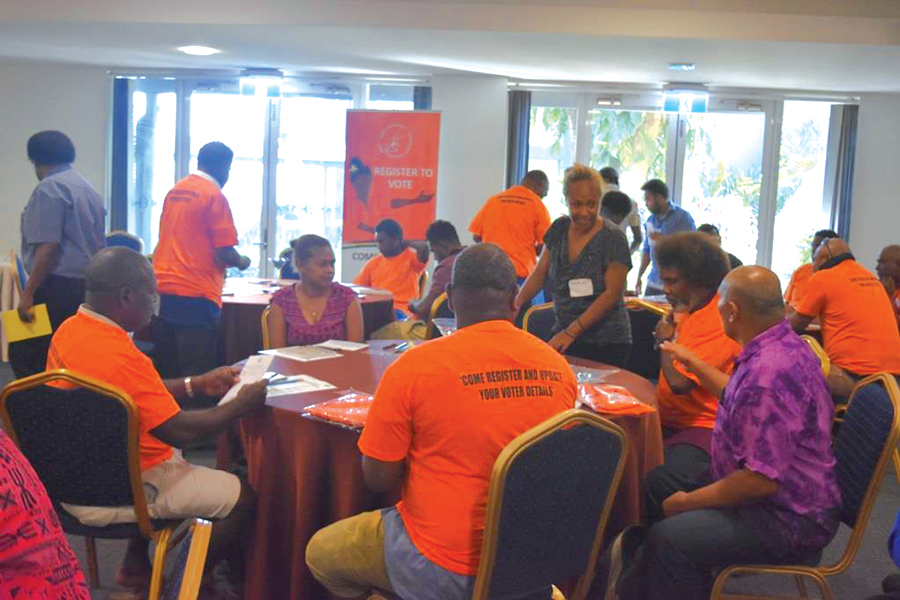
RM and ROs who are attending the 8-day training of trainers.

BY MIKE PUIA

RM and ROs who are attending the 8-day training of trainers.

10 Registration Managers (RMs) and 50 Registration Officers (ROs) are undergoing training-of-trainers in preparation for the National Voter Registration exercise.

Being an important role in overseeing the implementation of the Voter Registration exercise throughout the country, the training will help them understand their roles and responsibilities as well as professionalism and partiality in executing their roles.

In the Voter Registration exercise, RMs are responsible for each of the provinces while the Registration Officers (ROs) represent each of the 50 constituencies.

They are directly responsible for the coordination of registration teams that will be dispatched in constituencies to conduct voter registration.

The RMs and ROs will also be responsible for training of Registration Clerks (RCs) and Assistant Registration Officers (AROs) who will directly involve in the voter registration exercise.

The current training will prepare them to return to their provinces and conduct further training for RCs and AROs.

The current training covers a range of topics from roles and responsibilities and code of conduct to voter registration procedures and aspects surrounding conducting voter information sessions in communities.

Divided into two groups, the first group that commenced training yesterday were RMs and ROs from Malaita, Choiseul, Temotu, Renbel and Isabel Provinces. The next group of provinces will start their training Tuesday next week.

The training is being carried out by the Office of the Solomon Islands Electoral Commission (SIEC).

Voter Registration crucial exercise

0
Solomon Islands Electoral Commission (SIEC) Commissioner, Taeasi Sanga, when opening the training-of-trainers at the Heritage Park hotel on Wednesday

BY MIKE PUIA

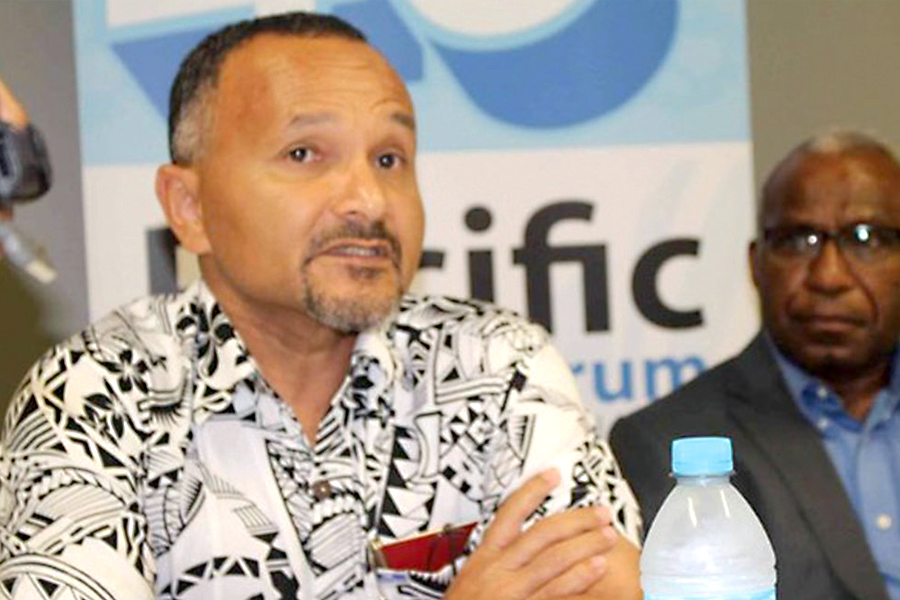
Solomon Islands Electoral Commission (SIEC) Commissioner, Taeasi Sanga, when opening the training-of-trainers at the Heritage Park hotel on Wednesday.

ELECTORAL Commissioner, Mrs Taeasi Sanga said the Voter Registration exercise is a very important one.

Speaking during the official opening ceremony of the training-of-trainers for Registration Managers (RMs) and Registration Officers (ROs) Sanga highlighted the importance of the Voter Registration exercise.

“Its aim is to create an accurate and verifiable record of all of those people who are eligible to vote and who have chosen to register,” Mrs Sanga said.

She said the roles and responsibilities of RMs and ROs are vital to the health of Solomon Islands democracy.

“Without an up to date and accurate Voter List, the National Election results can be compromised.

“Every registration official must therefore have a good working knowledge of the key rules and regulations governing Voter Registration in the Solomon Islands.

“Understanding these regulations will enable you to answer any questions posed by the public and assist you to lawfully perform your duties.”

Mrs Sanga acknowledged the group for putting their hands up to take up the responsibility.

“I am grateful that you have chosen to give your time to serve the nation as a registration official.

“I know some of you worked in 2014 and 2017 on the Biometric Voter Registration (BVR), so your experience will be invaluable this time round.”

The SIEC commissioner also acknowledged the support and contribution the OSIEC has received from the Australian Government, European Union and the UNDP through Strengthening the Electoral Cycle of Solomon Islands Project (SECSIP).

The training ends on July 28th after which, the RMs and ROs will return to their respective provinces and constituencies to conduct training for Assistant Registration Officers and Registration Clerks.