Home Blog Page 926

BSP extends services to Ulawa

0
L- R. MPA, Hon. Joe Takeli, BSP's officer, Stanley Jnr. Siapu and MUP's deputy Premier, Hon. Davis Maemae standing in front of the Bsp agency building

Bank South Pacific has successfully launched its branch- less agency on Ulawa island in the Makira Ulawa Province.

The launching ceremony took place last Wednesday at the Suholo village.

 It was witnessed by the Makira Ulawa provincial Deputy Premier, Davis Maemae, the Minister for Trade and commerce, Brook Wa’o and the Minister of Health and medical services, Benson Piringi as well as other public servants at Ulawa island.

Speaking on behalf of the people of Ulawa, Arthur Halu, a school teacher thanked those who have worked hard to see such development established on Ulawa.

“I would like to convey on behalf of the Chiefs and the people of Ulawa Island our sincere appreciation to the one behind this initiative, the MPA for Ward two, Joe Takeli for the vision and hard work to ensure that such services are accessible here at the rural areas”, Mr Halu said.

“On the same note I also want to thank Bank South Pacific as well as the Makira Ulawa provincial government for their support in seeing this as it also comes in line with the government’s rural development policies to ensure that such development is established here on Ulawa Island”, he further said.

The Deputy Premier of Makira Ulawa province was very happy to see this big achievement for the people of Ulawa as well as the province as a whole.

“I am very happy to be present today for this occasion and I want to applaud the initiator of bringing BSP on Ulawa Island, Joe Takeli for his courage and vision in bringing this into reality, as well as chiefs of Suholo to allow such development established in their village”, Mr Maemae remarked.

He further encouraged Ulawans to make good use of the services that can now be easily accessible.

Mr Takeli said he is humbled and that it is from past experiences that he decided to make this happen.

“All this comes from my past experience as a former education officer, where I find that teachers travelled to Kirakira during paydays and this has resulted in teacher’s absenteeism, making parents and communities complain” He adds.

“Some of our people have lost their lives at sea going to Kirakira for the sake of accessing banking services and with this mentioned, I come up with this initiative to address this issue by bringing this service to Ulawa Island so both teachers and nurses as well as visitors to Ulawa can easily access banking services whenever they want.

BSP officer Stanley Junior Siapu said Ulawa is fortunate to have a BSP agent on the Island.

“The people of Ulawa are very lucky now that you have this service brought right down to you in the rural level. With this agency now here, people will no longer spend large amount of money or risk their lives travelling by boat to Kirakira or Honiara to do banking as in the past”, he said.

“Those who are formally employed such as teachers, nurses and the police can now make withdrawals here at this agent. Customers can now send money through deposits, customers can now check their account balance here if they do not access mobile banking and also too you save members can also make deposits here making it easier for the people here”, Mr. Siapu added

Mr. Siapu further adds that the service provided by the branch less banking agent will be convenient, faster and much cheaper for BSP customers on Ulawa.

The Ulawa BSP banking agent is established under the bank’s digital banking, a new department of Bsp with the aim of bringing basic banking services to the rural areas.

By LIONEL TAORAO

In Ulawa

Taro needs govt support to turn it into tourist destination

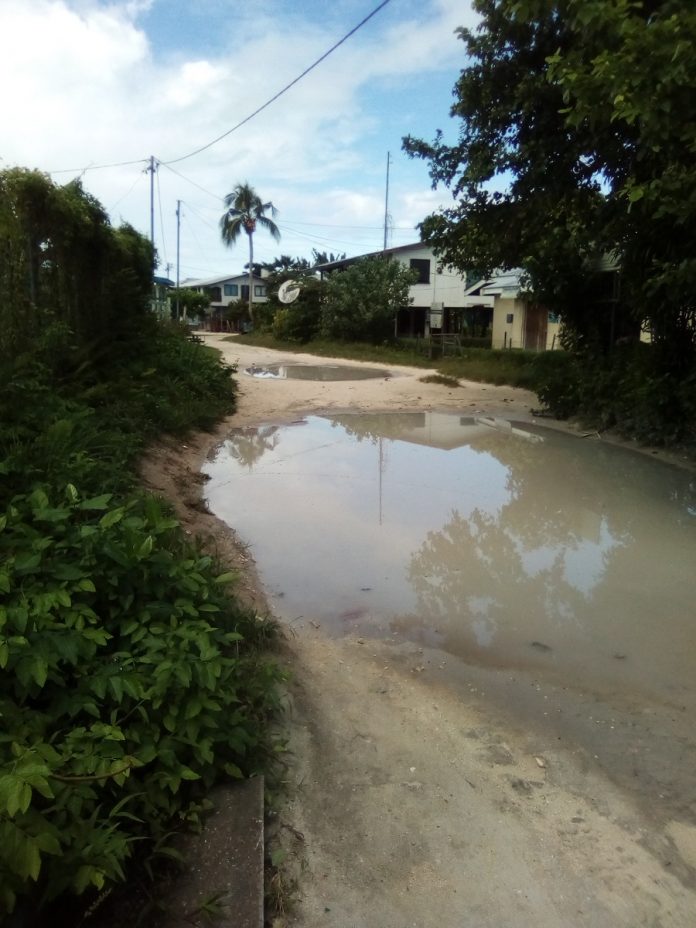
Taro pothole road to Airport Terminal.

BY ALFRED PAGEPITU

Choiseul MPA for Tavula Ward Clement Kengava says the Choiseul Province’s provincial capital Taro needs direct National Government support in terms of infrastructures to turn it into a tourist destination.

Kengava in an interview with this paper yesterday said the provincial authorities should request the Ministry of Infrastructures Development (MID) to assess Taro roads for better alignment and tar sealed surfacing.

He said Taro soil is mainly that of sand and with about ten vehicles using the sandy road, it has it’s fair share of potholes.

Taro wharf.

Kengava said the road improvement should be in line with Taro Airport upgrading to be funded by the New Zealand Government.

He added that the State-Owned Enterprises like Solomon Water Authority – Solwater to consider assess and provide reliable water supply to Taro as part of it’s social obligation.

“A salination plant or water from Choiseul Bay mainland could be solutions to seriously looked into.

“Also, Solpower (SIEA) is now becoming a main player by providing electricity in Taro and now extending to Supizae Island, just less than 100 metres from Taro Fisheries point,” he added.

“As part of it’s social obligation some lightings be provided at Taro Wharf and Taro Market for safety and security,” Kengava said.

Kengava said the Ministry of Culture and Tourism be invited by the provincial government to assess the island capital and plan for the province on how it can turn Taro into a tourist destination in this ‘top end’ province of Solomon Islands.

He said the local tourist operators and accommodation owners need to work together and form an organisation with the support of provincial government to pursue their cause for fundings, or joint venture with a hotel owner to build a hotel-resort in Choiseul Bay as collecting point for tour groups.

However, Kengava pointed out that to co-ordinate ‘Tourism Destination for Taro’, the provincial government should come up with a paper for the Assembly to adopt to specifically turn Taro into a ‘Tourist Destination’.

More Correctional Officers graduate

0
Recruits pose for a Group photo with the official guest and CSSI Commissioner after the official program at the Correctional Head quarter

Forty new Correctional Officers graduated last Friday and will become part of the Correction Service Solomon Islands work force after completing their 20 weeks of training.

The graduation was held at the Correctional Headquarter, Rove witnessed by family members, invited guests and officials from the CSSI.

Known as ‘Sir Peter Kenilorea Recruits 03/2019’, 26 of them are male and 14 women.

Speaking at the graduation ceremony Permanent Secretary of Ministry of Police, National Security and Correctional Services (MPNS&CS), Karen Qalokale said the graduation of 40 new Correctional Officers is significant as they prepare themselves for duties as Correctional Officers.

She congratulates the officers for successfully completing their 20 weeks of training which comprises of 27 units with 11 other essential areas of expertise.

“I wish to congratulate you for your hard work, perseverance and professionalism you have displayed during the 20 weeks of training.

“Your successful completion of 27 units together with 11 other essential areas of expertise from other stakeholders, affirms your capabilities and potentials as loyal correctional officers.” Qalokale said.

She said she is proud to see 14 female officers are graduating among the men.

“You have broken the barriers that our society thinks that CSSI is only for males.

 You undoubtedly face many challenges and I believe that you can do the work with much enthusiasm, vigor and competency as your male colleagues,” she said.

Qalokale highlighted that Correctional Officers play an essential role in any correctional facility and the criminal justice system.

She said precisely correctional officers form the ‘foundation of today’s correctional institution.

Charles Kimaere receives his dux award “Baton of Honour” from Australian High Commissioner to Solomon Islands, His Excellency Dr. Lachlan Strahan.

“As correctional officers take heart, your primary role in looking after the inmates is essential to human services professions.

Accept the fact that you are good role models to the inmates, and you should be respectful and lead by examples to them, helping them to cope with the many challenges of life they encounter behind bars.

 The hallmark of any profession in the commitment to a robust code of ethics and to task expertise,” Qalokale adds.

She encourages the new recruits to uphold their integrity and professionalism in executing their responsibilities as correctional officers.

“Your work ethics and goals must be guided by the vision and mission statements of CSSI.

 Do not work in fear or doubts or laziness but build your competency and confidence in yourself and use your best discretion to deal with various circumstances.

“Take pride in wearing your uniform, which symbolizes the values and virtues of the Correctional Service Solomon Islands,” she said.

Qalokale also acknowledges the Australian Government through the High Commission to Solomon Islands Justice Program for its ongoing commitment and assistance towards the training of CSSI and the rehabilitation and reintegration programs.

She also thanked the prominent Faith Based Providers – Solomon Islands Christian Association (SICA) and Solomon Islands Full Gospel Association (SIFGA) for capacity development on spiritual rehabilitation programs for inmates as they established hope when they return to their communities, homes and to their families. Simply, they should prepare to reintegrate back to their communities.

She commends the CSSI Commissioner and his officers for their commitment towards their duties.

“Let us be vigilant to create a safe and professional working environment for our officers and those we are called to look after with strong determination, let us move our CSSI organization forward for the betterment of our country, Solomon Islands,” she said.

–CSSI

Workshop on inclusivity for persons with disability ends on high note

0
Left-right) Susan, Francis, Claude, Janice and Silas join the workshop in singing the happy birthday song in the sign language for Janice, whose birthday fell on Friday

BY IRWIN ANGIKI

A workshop looking at ways to enhance inclusivity for persons with disability has ended in Honiara on a “high note”.

A thrilled Mr Casper Faasala summed up this milestone event with this idiom because of the achievements made during the course of the four days and the promising pathways paved going forward with the aim to make Solomon Islands a more inclusive home for the persons with disability (PWD) community.


.   Lead facilitator Ms Naomi Tai (left) and participants. Ms Ellena (right) and Grace Hilly of Strongim Bisnis (back turned).

Prime Minister Manasseh Sogavare failing to turn up and open the workshop on Tuesday did not dampen spirits, rather strengthened resolves to speak up, share and learn, network and improve, all for a greater inclusivity for the PWD.

Faasala, Manager of PWDSI (Persons With Disability of Solomon Islands), in closing the workshop on Friday said he would prefer calling it an adjournment, hinting at the need and prospects of more dialogues to come.

He adds that the workshop’s end signals the start of participants going forth and spreading the word on concepts and contexts learnt.


Casper concluding the workshop with remarks

Rashmi Chary of UNDP, in her remarks, concurs with this, reminding stakeholders including media: “We’ll keep this conversation going because from the four days we’ve spent together, we’ve built our confidence to talk openly with one another. And, we’ll just keep going because there are plenty resources.

“The most powerful [resource] is hearing the lived experiences from this community [persons with disability]. That has been a privilege.

“It is important that social inclusion is not just a box-ticking exercise or bringing people together and that’s it. Since the inception we have to be including everyone. Now it’s also not just about walking the talk, but also actioning the promises.

“During the workshop, a lot of things have been gained. And the conversations will continue as friendships and networks strengthen over time, that is important.”


Ms Jemina captivates the workshop with her beautiful voice and message in song.

Ms Naomi Tai, workshop lead facilitator, who is living with disability and has been a community worker since 2009, shares that the highlight for her is the workshop providing a space in which nearly 30 persons with disability came face-to-face with stakeholders such as media, UNDP, Ministry of women (MWYCFA), Ministry of health (MHMS), Parliament, Strongim Bisnis, civil society organisations via Development Services Exchange (DSE), and Ministry of Justice.

“Through this space the PWD community representatives can share their lived experiences and convey their preferences to help the society become more inclusive.


Visually impaired group in discussion

“We are not stopping here. Let’s add on to what we’ve built here. Let the fruits of our discussions help in making our country a more inclusive one for persons with disability.”

The workshop was capped off with a presentation on covid-19 by Dr Divinal Ogaoga, chair of the Technical Working Group for MHMS.

Ogaoga made simple what covid-19 is, how it is spreads, covid variants, measures to help avoid getting it, covid-19 vaccination and why it is important that we get vaccinated.

He also quelled concerns and fears expressed through questions in the Q&A segment.

Following Ogaoga’s talk, it was agreed that an arrangement be done to get participants with disability, including others not present at the workshop, vaccinated.

The objectives of the workshop include:

-Collate approaches, practices and tools applied by the PSO and the broader justice sector within the context of PWDs.

– Reflect on the participation and perspectives of PWDs, drawing from their direct experiences with the justice system.

– Design information dissemination tools and products that are closely linked with PWDs experience with the justice sector and with their vision for full participation.

– Share experiences of different actors in developing approaches, practices and tools to support PWDs, for potential use by the project and the broader justice sector.

In a post-interview, Ms Tai (PWDSI) says the workshop has achieved its objectives and more.


(Left-right) UNDP’s Jone chatting with MHMS’s Dian and PWDSI’s Casper

“Adding on to the objectives, participants with disability have made new friends and networks, media publicity have boosted the reach messages relayed in the workshop get throughout the country, and even overseas.”

Faasala, in his remarks conveyed to the workshop that issues raised have reached parliament level. Earlier that day he had had an audience with the parliament’s Bills and Legislations Committee (BLC).

“I informed the BLC, I made mention this workshop to them, that this workshop is about communication and outreach when I went before them regarding the public health bill they are sitting over.

“I brought our collective message to the BLC. I hope it is taken onboard including some of the suggestions I gave them.

“The BLC is interested in knowing more about the PWD community. BLC asked how many PWD we have in the country. And, this question implies that none of the politicians want to know the contents in CENSUS Report.

“I will submit a detailed data report to BLC on Monday [tomorrow].”

Faasala also announced that WHO (World Health Organisation) will launch a framework called ‘Action the Promises’.

He explains that this framework is important to furthering the cause of the PWD community as it may result in the fulfillment of the many promises that government had given to the PWD community.


(Left-right) Interpreter Stella Damutalau discussing with Francis, Janice, Susan, Claude, Silas, Eric and Jack (back turned).

On reflection, Ms Tai tells Island Sun that having worked with the PWD community for more than a decade, she has seen progress, “although slow, it’s progress nonetheless”.

“But, this workshop, for me, it is an actual boost, especially with the interaction with stakeholders and the media publicity of the workshop and the collective messages raised here.”

The workshop was run by the UNDP in partnership with PWDSI and Ministry of Justice and Legal Affairs through the Public Solicitor’s Office.

WHY THE DELAY?

Isabel Premier Leslie Kikolo.

Kikolo queries gov’t over promised development

BY JENNIFER KUSAPA

PREMIER of Isabel Province Leslie Kikolo has voiced his province’s disappointment to Prime Minister Manasseh Sogavare over the long delay in the relocation of the National Agriculture Research institute to Garanga land near Buala.

Premier Kikolo highlighted this disappointment in his speech during the 37th anniversary 2nd appointed day celebration in Buala.

“I’m disappointed after signing the MOU with Ministry of Agriculture Livestock for a total of 374 hectares of land in Garanga for the National Agriculture Research institute, cattle, livestock and rice farming, since the signing was done a couple of years ago, nothing has eventuated,” Kikolo said.

“If the National Government is not interested in utilizing that land, I might reclaim it for other purposes,” he added.

Kikolo said although Isabel doesn’t have commercial farms as in other provinces, there are still great opportunities in terms of the development of Kava, now an export commodity which has begun in this Islands 30 years ago.

He also highlighted that Isabel is the only province that owns almost 45 percent of its total land.

He also assured the Prime Minister that his government is willing to use those lands for National Development projects, either it be SIG funding or on PPP arrangements with equitable benefit sharing regimes.

Meanwhile, Sogavare said that his officers already made a follow-up on the issue and will update the province in due course.

“I do note your disappointment with the relocation of the National Agriculture Research Institute and Livestock, my officers have already followed up on this before we left Honiara, we will update you on this,” Sogavare said.

However, Sogavare said he is happy to note that there is a field experiment station at Garanga, and that is something the national government will work closely with the province.

Gov’t cautioned on impacts of mining

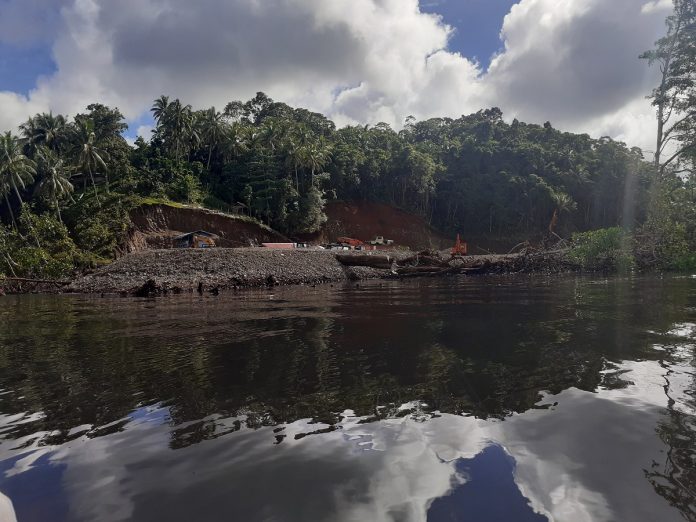
A recent mining exploration on Isabel Province. Photo by Axiom Mining Solomon Islands.

BY JENNIFER KUSAPA

THE national government has been urged to strongly consider the negative impacts of mining.

Isabel premier Leslie Kikolo made the reminder in his second appointed speech in Buala, Thursday.

Kikolo said with the current provision in the Mines and Mineral Act, it does not provide the legal right for the Province to say something regarding mining.

He said learning from the negative impacts of mining developments that has occurred in the country and also other countries, there is a need for the government to consider the negative impacts of mining.

“I urge the national government that as much as possible let those negative impacts on mining be not repeated in our province should mining take place anytime as from now,” Kikolo said.

He also said in one of the Isabel leaders’ summit there was a decision to halt mining operation until when the province is ready.

However, Kikolo said the province is also aware that with the current situation in order to sustain the economy of the country, in any event resource owners allow their land for mining, then the province want to see resources owners, surrounding communities living around the proposed tenement area and the province as a whole must receive the maximum benefit from such operation.

Half of Isabel’s revenue from logging

Logging Camp at Ngoibo Isabel Province

BY JENNIFER KUSAPA

ISABEL Premier Leslie Kikolo says about 51 percent of the provincial revenue is collected from logging royalty and licenses.

He said the total revenue collection makes up 57 percent in total, which is half of its revenue collected, while only six percent through other local collections.

“I understand, that there is no simple solution to transition from the logging industry, my government has envisage attracting foreign investment for tourism, the mining sector, agriculture and fisheries,” Kikolo said.

He said it is a fact that the current revenue regime is unstainable and his government are doing their best to redesign by looking at investing into the six percent revenue collection.

Meanwhile, Prime Minister Manasseh Sogavare said Isabel Province is second only to Western Province in production of round logs.

“From an economic perspective this is good but we all know that the current rate of logging is unsustainable, not only that, but we are also concerned about the social problems that came with logging which is on the rise.

“We have had situations where families are fighting each other because of land disputes, this ugly side of logging is a reminder that we cannot continue to rely on logging,” Sogavare said.

He said logging is an industry that needs to be reformed and better managed and the government is working on a new Forestry Bill, which should be presented to Parliament soon.

Sogavare also acknowledged the province’s idea for re-forestation on areas that have been logged.

“This is something that we would like to further develop and improve on especially as we put more focus towards rehabilitating and restoring our over-logged areas,” Sogavare said.

Western tourism badly affected

BY BEN BILUA
Gizo

TOURISM Industry in the Western Province was badly affected due to border restrictions in response to minimizing the spread of COVID-19.

Few operators have local guests visiting their resort while others remain open with no guests.

Tourism Officer of Western Province, Zaza Gina said tourism operators in Western Province are not certain what their future holds.

“Our operators are feeling the impact of COVID-19. I’ve visited some of the operators in Munda and overall respond is that they are badly affected,” she said.

Gina said some of the operators have undergone redundancy while some of the operators established new policies where employees takes turn to work.

“Like Agnes Lodge, they’ve established a policy where employees can take turn to work. Employees will work for certain period then stayed at home for a month for their turn,” she said.

Gina said Agnes Lodge established the policy to help its employees to stay afloat during this time of COVID-19 economic crisis.

Diarrhea scare in Gizo

Western Provincial capital Gizo

BY BEN BILUA
Gizo

A VIRAL diarrhea has alarmed Gizo residents, prompting the public to take extra precaution on what they eat as a way of maintaining good hygienic practices.

Reports reaching SunGizo office state that the viral diarrhea has claimed few lives at Gizo hospital last week.

Reports also state that there are increasing numbers of patients complaining of diarrhea since last week.

Director of Health and Medical Services for Western Province, Dr Dickson Boara said his office received the report and officers have been sent to the communities to investigate it.

“We have received the report and our staff have been sent to community concerned to investigate the issue,” Boara said.

“We are not in the position to say that this is an outbreak until we get to the bottom of this report,” he added.

“At the moment, we are waiting for the feedback of our team who are now in the communities investigating this report,” he said.

SunGizo understands that Gizo Primary School has taken urgent measures in respond to the report.

The school had stopped parents from selling food at the school and at the same time encourages parents to provide fruits and other healthy food for student’s lunch.

Are’are Land summit organized

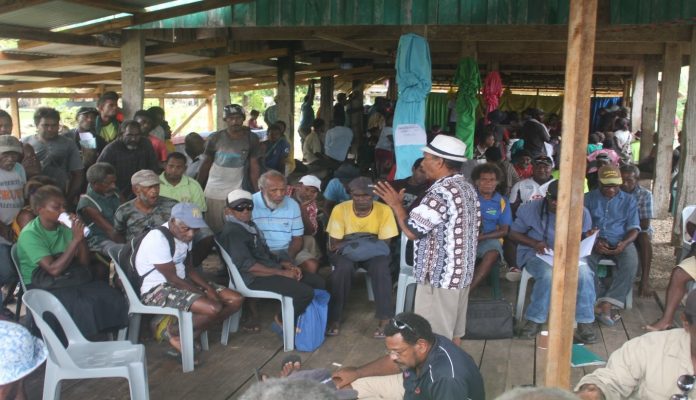
Leaders within Arahanimane Council of Chief participating in group discussion during the event.

A special gathering of leaders from the Are’are community on Malaita was held at the end of April.

The Are’are Leaders Land Summit was held at Kopo village, Waisisi frim 27 to 28 April and was organized by the West Are’Are Rokotanikeni Association in collaboration with the Are’Are planning committee based in Honiara as well as chiefs of the region.

This important event was hosted by Arahanimane House of Chiefs. It was co -funded by the Pacific People Advancing Change (PPAC) through the South Pacific Community, WARA and Member of Parliament for West Are’Are.

 The Land Summit was attended by more than three hundred leaders throughout the whole of Are’Are Region, covering three House of Chiefs namely; Arahanimane HOC, Hahuarahana HOC and Namoaraha HOC. Leaders who attended the Summit represented young people, women, Chiefs, Church leaders, Waisisi Community High School, Member of Parliament for West Are’Are, John Maneniaru, WARA staff and members, Planning Committee and community leaders.


Some of those that were part of the summit. This was within Kopo Village Waisisi, West Are’Are

Furthermore, it was attended by representatives of the Malaita Provincial Government led by the Deputy Premier of Malaita Province, Randell Sifoni who was also the Guest of Honour who officiated the opening ceremony. 

Also, the Director of Winrock International, Dr Morgan Wairiu and his Team were present and did an awareness talk about the roles and functions of Winrock International.

The purpose of the Land Summit was for Are’Are Leaders to come together to dialogue and discuss Are’Are land matters, meaning land and all that is on it, in it, above it and around it which are the most important resources of the Are’Are region.

In addition, that Chiefs sort out genealogies, tribes and leadership. 

There were five perspectives that Presenters spoke on. These perspectives are:

First, Chief John Pa’e, Chief Bernard Paurara and Chief Joel Hutaranimae spoke on the Are’Are Kustom/Traditional perspective on Are’Are land – meaning how does Are’Are Kastom see and embrace land a as useful resource.

Second, Dr Fr James Ereai spoke on the Biblical Perspective – how does the Bible/Holy Scripture see land in the past and the present.

Third, Nelson Naoapu spoke on the Government Perspective – how does the Solomon Island government see land, referring to the Acts such as the Land and Title Act etc.

Fourth, Max Totorea and Edward Huitarau from Maimasina Green Belt spoke on the Environment and Conservation Perspective – Should the Are’Are people conserve land?

Fifth, Pascal Oritaimae spokesman for Advance Technology talked on the Economic Development Perspective – introducing and explaining how Are’Are people can engage in economic development but in a sustainable way.

Following these presentations, the audience were divided into their House of Chiefs and had open dialogue and discussions on land issues that affect people and tribes and look more constructively on the Are’Are Land Tenure System. They also discussed on exploring economic development opportunities that are available for the people to engage in to raise cash to meet people’s needs.

Participants were encouraged to keep talking on land matters at the Summit and to continue talking afterwards to sort out any land issues and disputes that affect families, tribes and the rest of Are’Are communities. Participants were also called on to work together and restore relationships and map the way forward for peaceful coexistence and active participation in economic development. They were also called upon to strengthen Are’Are Traditional leadership at all levels. WARA wish to acknowledge all who support and made this event possible: The Pacific People Advancing Change (PPAC), South Pacific Community, the Are‘Are Planning Committee, the Waisisi community and hosting committee, Waisisi Community High School, leaders from both east and west Are’Are, Honorable Member for West Are’Are, Deputy Premier for Malaita Province and Team, Winrock International, Maimaasina Green Belt, Advance Technology Limited and everyone who were not mention but contributed one way or another towards and during the Are’Are Leaders Land Summit