Home Blog Page 1185

3 out of 3 for Kia

0
Referee Jay Makana lifts Henry Kia’s hand as the victor...Photo Taromane Martin.

Fans disappointed with judges

By Taromane Martin

Referee Jay Makana lifts Henry Kia’s hand as the victor…Photo Taromane Martin.

ITS three wins out of three meetings for Covenant Boxing Club’s Henry Kia who stopped Solomon Pride’s Petsy Seka over the weekend at the Multipurpose Hall.

Kia stopped Seka via judges split point’s decision in the main event of the 7th Honiara Amateur Boxing Association (HABA) tournament on Saturday to remain as number one in the men’s light welter weight division.

Seka looked good on the combinations scoring points early in all three rounds and at times forcing the referee to call on Kia to stop slapping.

However, Kia was too powerful with his combinations showing why he holds the fastest record for TKO since the bouts inception in 2016.

Meanwhile some boxing fans are calling on match officials and judges to stop their biasness during the HABA tournaments.

A number of fans approached SunSPORTS on Saturday to utter their disappointment with the way some of the judges handle fights and called on HABA to start identifying officials as well as athletes for the sport.

“I thought the judges were biased with their decisions for the Sam Ledi Jnr and Bronson Tanagu fight in the Welterweight division,” one disappointed fan commented.

“It was clear Tanagu dominated Ledi in that fight however because of family connections inside the judging team he was awarded the win.

“To me it was a disappointment and disgrace because I thought the best fighter was robbed of a win and I call on HABA to also start improving their officials by including new people as judges,” he adds.

Big win for Sharks

0
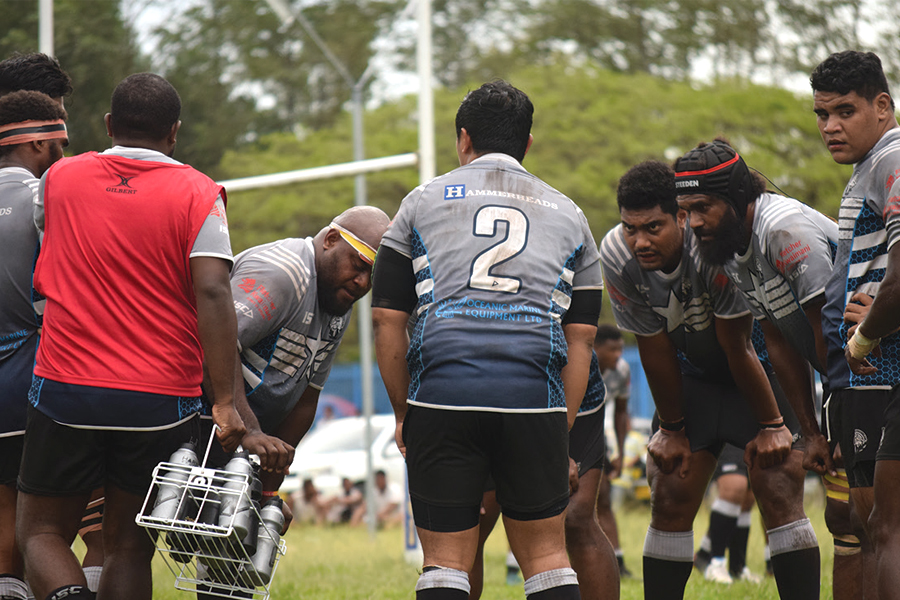
Henderson Hammerhead Sharks players huddle for their team talk during their 13-8 win over Avaiki. Picture Taromane Martin.

“Our preparation was poor” Puia

By Taromane Martin

Henderson Hammerhead Sharks players huddle for their team talk during their 13-8 win over Avaiki. Picture Taromane Martin.

HEAD Coach for the Henderson Hammerhead Sharks Philip Campbell says their clubs’ development is heading in the right direction following a huge win over the weekend.

Hammerheads jumped top of the Honiara Rugby Union Association (HRUA) competition table after defeating defending champions Avaiki 13-8 in their pool game at the Panatina Rugby Oval on Saturday.

A converted try and two Bobby Sade penalty conversions saw Hammerheads clawing their way back in the second to beat an impressive young Avaiki side.

Avaiki lead 8-0 at the break via an unconverted try and a penalty kick but saw their defence crumbling early in the second half, Sharks going over for their try.

Two sinbins in the second half worsened the situation for the defending champions giving Hammerheads the opportunity for three points.

Avaiki Head Coach Leslie Puia said he was satisfied with his boy’s performance despite a tough week in training and vows to start their preparations for the top four play offs in their remaining fixture.

“I’m not disappointed with the result because games are that way. They won because they worked and prepared really well for the competition,” Coach Puia said.

“Our preparation for this match did not go according to plan. We had to miss two days of training due to the death of a relative and due to some player’s rugby league commitments.

“It was a really short time for us because we resumed our training on Wednesday so really had trouble having our team run and going through our combination play.

“However, I’m very satisfied with the boy’s performance despite our preparation being affected like I explained.

“And it was obvious as our performance in the first half was different compared to our performance in the second half.

“For our next game the boys need to show more commitment to training because that is the only way to avoid getting such results.

“We are already through for the top four play offs and our preparation for this stage will definitely start in our next game,” he adds.

Meanwhile his counterpart, Coach Campbell said it was a pleasing result for his boys after an ill disciplined first half and looks forward to taking on MOI in their final round robin match next weekend.

“Thanks to Avaiki for a good game today. I’m very pleased with the result. It was a tough game the score lines obviously showing that, 13-8.

“Certainly the club is moving in the right direction and obviously a lot of the hard work put in is starting to pay off and it showed today that the boys, even going up against one of the best teams in the competition can still do one better yet.

“First half we were a bit ill-disciplined in some areas resulting in Avaiki taking an early 8-0 lead but responded well in the second half to come back from behind for the win.

“We just talked, encouraged and reminded the boys to always remember the positive things we worked on during training and obviously it worked out nicely for us.

“I’m happy for the boys and our win over Avaiki today certainly puts us on top of the table with one more round left till the semi-finals.

“We look forward for our next match with MOI but yes I’m really happy with the boy’s performance today,” he adds.

Visiting people with special needs in Isabel

0
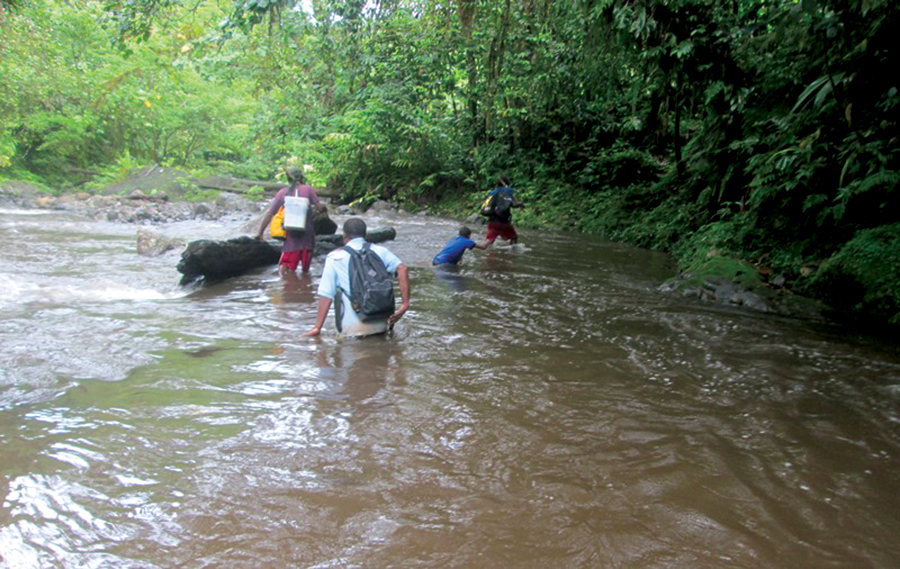
Crossing a river to reach Koge Village in Hograno highlands

BY LYNTON AARON FILIA

Crossing a river to reach Koge Village in Hograno highlands

PROVINCIAL officers of Isabel province have made a fruitful youth and community-based rehabilitation integrated tour raising awareness and assessing people with special needs.

They include Provincial Youth Coordinator Mr Edward Tadarea, Liaison Officer Mr Collin Poloso of the Isabel Provincial Government and the Community Based Rehabilitation Mr Jasper Boiregia and Self-help Group of Isabel Province Mr Benjamin Analau.

The tour covered remote villages in Maringe and Hograno highlands, including Tirotonna, Bara, Kolkofa,Koge, Nemei Primary School and Peopeko settlements.

Tadarea said such activity is a first of its kind, and it brought a lot of appreciation from the rural people.

He adds rural people are excited group of provincial leaders spent three to four hour walk through the jungle to meet with these people with special needs who have forgotten sometimes in the societies.

Analau said as an advocator for the self-help group from Isabel it is a wonderful opportunity to shares with the people with special needs.

He shared his life experience as being neglected by his friends and people in his communities once.

With the experiences, Analau encourages people in the communities to respect the rights special needs people and involve them in any social activities within the communities.

Thus this will empower them to live a happy life, he adds.

“Living as being disabled is for life-time and it’s good to participate and advocate them to any development in the communities,” Analau said.

Following that team is calling on donors and relevant Ministries to prioritise any activities that will support people with special needs in the communities and Solomon as a whole.

Boiregia said they have reach 1200 people living with special needs in 2005 and now it should be double this year.

He calls to relevant stakeholders to support such people with their sanitations and other special needs.

According to National Youth Policy 2017-2030 it has prioritize youths with disability which is a way forward to address social issues affecting them.

This tour is funded by Provincial Youth Division, Isabel province.

Catholics celebrate arrival of Cross

0
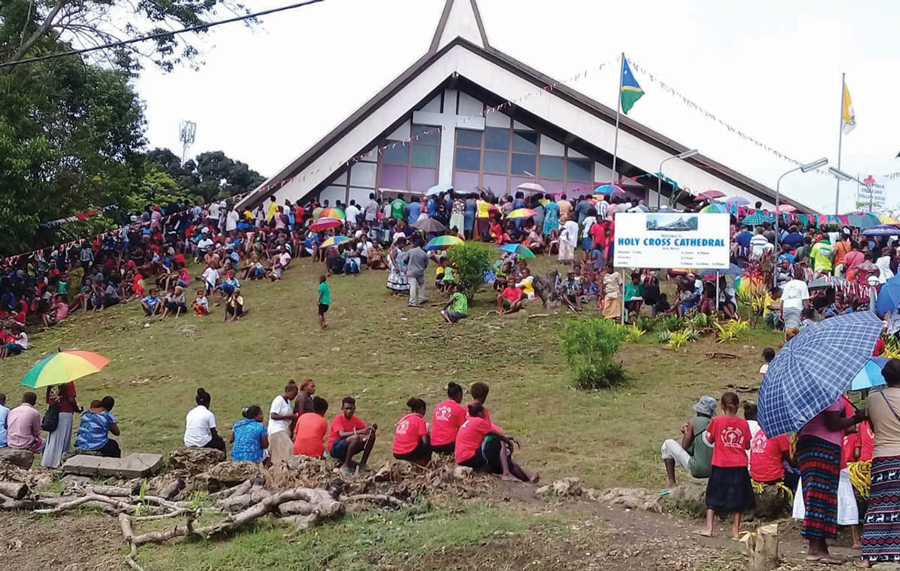
Holy Cross Cathedral was packed on Sunday.

BY GEORGINA KEKEA

THOUSANDS of Catholics from the Archdiocese of Honiara gathered at the Holy Cross Cathedral over the weekend for a commemoration celebration.

The events culminating at the Holy Cross Cathedral was to commemorate 450 years since the first cross was placed on our shores.

Alvaro de Mendana discovered Solomon Islands and it was believed that the Spanish Navigator placed the first cross in the area where the Holy Cross Cathedral is now situated.

Over the months, as part of the 450 years celebration, a cross depicting the first cross here in Solomon Islands had been visiting parts of the country.

Since Thursday last week, Catholic Parishioners including districts in the Archdiocese of Honiara was reported to arrive in Honiara for the anniversary celebration.

An enactment on the arrival of Mendana to Solomon Islands was also performed by Parishioners of the Catholic Church.

Apart from the Catholic’s celebration on the arrival of the cross, this is the only big even to commemorate the country’s history and the discovery and naming of Solomon Islands by Spanish Navigator Alvaro de Mendana.

Standing up for climate change in Ontong Java

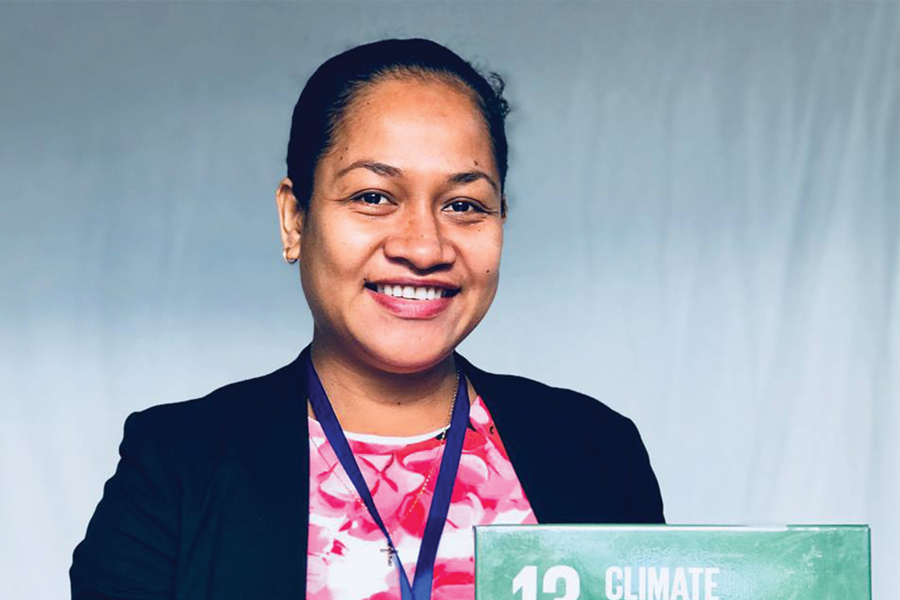
Wendy Amangongo standing up for climate action. Photo from UNDP Solomon Islands.

BY LYNTON AARON FILIA

Wendy Amangongo standing up for climate action. Photo from UNDP Solomon Islands.

INTENDING female candidate from Pelau in the Malaita Outer Islands, Wendy Amangongo has made a commitment to stand up for climate change which is heavily affecting the Ontong Java islands.

Situated some 500 kilometres (311 miles) north of Honiara, Wendy said the size of the Ontong Java is shrinking with the edges of the islands eroding away.

Recently, she joined a group of leaders and reporters from three leading media organisations in the country to get firsthand information about the situation Lord Howe atolls are facing.

From observation, Wendy said now the situation which Ontong Java is facing regarding climate change have detrimental effects on food and water sources.

She said water wells are being contaminated by salt water and crops have less land for growing.

”In some cases there is just not enough fertile ground for harvesting crops as they also are being contaminated by the sea—similar situation in Sikaiana.

“If I do not stand up to make differences particularly for climate change then who will? Climate change is not a new thing. We have all known about it for many years.

“We have witnessed the effects on Ontong Java and all Solomon Islanders have been reading about it in the newspapers and hearing it on the radio for so many years now.

“The question I asked myself is why has not anyone done anything about this yet?

“I have decided to be constructive and actually protect my people and bring about solutions, that is, if the people from MOI elect me and that is a decision from them.

“I am making preparations for taking real action – next week I will be travelling overseas to work with leading regional Environmental protection company with the objective to deliver the people of MOI good long term and sustainable solutions.

“I am looking forward to working on these solutions next year if elected.”

Wendy said her inspiration to run in the next election was sparked four years ago but did not go through with it as it was not the right time then.

With that she have seen lowering of respect and less assistance provided to the people of MOI which gives her inspiration to standup.

“I have also seen that not all of the CDF monies reach my people.”

Previously, Wendy was also approached by the National Women’s Council which run under Solomon Islands Government though the Ministry of Women, Youth, Children and Family Affairs.

She said from the council she trained many areas of government and politics to become good leader adding that the training has put her in good position to properly lead constituency, if that is the peoples wish.

“MOI needs a responsible person who has good reputation, good integrity and good intentions to manage climate change, the CDF situation and most of all to take proper good care of the constituents.

“I believe I can make a real difference to the people of the beautiful outer atoll islands.”

According to the UN General Assembly to the Lord Howe atolls, there’s an unstoppable movement to do right by our planet and help each other get ready for the coming storms of climate change.

“We don’t have a moment to lose,” UN said.

Why is empathy, compassion and responsibility so lacking here?

0

DEAR EDITOR, in the two decades I have written about events and issues in the Solomon Islands, including the many posts I have included in my website-www.solomonislandsinfocus.com

I cannot help but reflect that I have been struck, and often dismayed, by the reported conditions of rural health clinics and lack of health services to many thousands of rural people.

A case in point being the most recent report concerning the unfinished state of the health clinic at Luaniua Village on Lord Howe atoll where it has been claimed 3000 people have gone without health care for up to two years.

There have been many, many similar reports over several years and in practically all incidences it has taken a ‘whistle-blower’ to have had the courage and empathy to have spoken up.

I have found all of this deeply concerning for in a deeply Christian community such as there is in the Solomon Islands why is there so little empathy, compassion and concern for others as taught in the scriptures?

Individually, I know there are many that daily practice compassion and care in the Solomon Islands and I have often thanked them.

I do wonder though why it seems a great majority seemingly do little or nothing to concern themselves for the welfare and plight of others when custom, as well as Christian teaching, would otherwise have them do something.

I think if I was still in a position of some authority in the Solomon Islands, I would take my responsibility as a leader to have strong feelings of responsibility as being primary and especially important as a motivator for helping others.

Quote: “Corinthians 10:24 Try to do what is good for others, not just what is good for yourselves.”


Yours sincerely

Frank Short

Rove correctional centre is over crowded

0

DEAR EDITOR, the Rove Central Correctional Centre was overcrowded with a huge number of prisoners.

The USP Solomon Islands students undertaking DG102 course visited Rove Prison Services on the 5th of September noted that the prison is overcrowded with a total of 367 prisoners, 11 of them are female prisoners and 8 were juveniles.

Out of the 367 prisoners, 189 of them are remanded prisoners and 178 were convict prisoners.

This means that the populated prisoners are those who are remanded and waiting for nearly 2 – 3 years for the responsible person to stand on their behalf to the court.

However, there’s no one available for them to hear their voice in the court and these contributes to the overcrowding of the prison.

Whose responsibility to work with the remanded prisoners?

Aren’t you!

They are waiting two to three years remanded and who are in charge for these people, do we have to blame the prisoners or the people who will stand with them on their behalf or the public.

Finally, it so sad to see that there are a growing number of juveniles and females in the prison, which picture out that there must be something wrong in the society that we need to act urgently.

I call on you church leaders, chiefs, elders, parents and youths; let us work hand in hand alongside the RSIPF to implement crime prevention training in our societies, for our good and the nation as well.


Jeredy Boe

USP, Solomon Islands

Australian PM affirms climate commitment to Solomon Islands Prime Minister

0

DEAR EDITOR, in a very welcome move it was reported by Radio New Zealand today that the new Australian Prime Minister had assured Prime Minister Rick Hou of his government’s commitment to the Paris climate agreement.

Quoting the full Radio New Zealand bulletin it read:

“Australia’s prime minister has affirmed his government’s commitment to fighting climate change.

“Scott Morrison made the commitment to his Solomon Islands counterpart Rick Hou during talks in Canberra.

“Rick Hou is the first international leader to meet Mr Morrison since he became Australia’s latest prime minister last month.

“According to Solomon Islands’ High Commissioner to Australia, Collin Beck, Mr Morrison reaffirmed his government’s commitment to the Paris climate agreement.

“Australia’s commitment was criticised by some island leaders at last week’s Pacific Forum summit in Nauru.

“During its recent leadership change, elements of Australia’s ruling Conservatives party pushed for the government to drop its emissions-reductions targets.

“But Mr Morrison has since ruled out leaving the Paris Agreement, saying climate change action is the Pacific’s priority.

“He said such a move could lessen Australia’s influence in the region.”

Copyright @ 2018, Radio New Zealand.

As a footnote to this welcome development, it was mentioned in today’s Island Sun newspaper that Chief Peter Kalali on behalf of the people of Lord Howe had called on the Solomon Islands government to relocate them as the threat of rising sea levels intensifies in the atolls.

“Chief Kalali of Lord Howe, said Lord Howe is a tiny low-lying atoll vulnerable to sea level rise and within the current generation alone they have witnessed a stark difference in sea level, hence relocation is a must.

“Kalali called on the Solomon Islands government to consider the matter and relocate them to any other province with higher ground.

“He reportedly said the people of Lord Howe need to be relocated as the tides are eating into their homes.” (Quoting an extract from the Island Sun newspaper – 14 September 2018)


Yours sincerely,

Frank Short

Respond to – Gay On The Rise

0

DEAR EDITOR, I would like to draw attention to the article published in the Island Sun on 29/08/2018.

Firstly, I would like to thank the editors of the Island Star for their promotion of the work of SIPPA and our work to provide sexual and reproductive health for all Solomon Islanders.

We welcome everyone to our services.

The article drew attention to the sexual health issues experienced by many people from the gay community and for women and men who sell sex.

These communities are very vulnerable to contracting sexually transmitted infections because of the stigma and discrimination we as a society impose upon them.

It is very important that we respect people’s right to health and this includes their access to prevention, treatment and care for sexually transmitted infections.

The article also stated that the number of people identifying as gay was rising.

This does not mean that more men and women are becoming gay.

It means that the people who used to be very afraid to show that they were gay are now feeling more confident to live their lives the way they want to.

Even though there is still discrimination in our society towards gay people and women who sell sex, I am confident that we are all becoming more accepting of others who may live in different types of relationships.

This social acceptance means that vulnerable people will not be afraid to seek care to protect themselves and the people they love.

I would like to express my thanks again to the Island Sun editor for presenting this topic to the readers.

I hope that this will help everyone understand the difficulties some people in our community face.

Ben Angoa

Executive Director

SIPPA

Traditional role of chiefs, need for greater youth interest in custom and culture

0

DEAR EDITOR, we read in the local newspapers last week the story told by journalists who had returned to Honiara after making a visit to Luaniua in the Ontong Java region of the remote Malaita Outer Islands (MOI).

The story they filed revealed how the House of Chiefs for Luaniua and Pelau was playing a key role in maintaining law and order despite there not being a police presence.

Quoting what the journalist were told by Trevis Kilatu the Chiefs continue to play the role of law enforcement and their role is key to maintaining the upkeep of the law at all times.

Trevis Kilatu reportedly told the journalists the House of Chiefs is highly respected in the two islands.

“Chiefs continue to play the role of the law enforcement agencies in the Ontong Java region of the Malaita Outer Islands (MOI).

“This is because the atoll does not have any police post or officers.” Mr Kilatu said.

I was very pleased to read of the work of the House of Chiefs and the work the Chiefs are continuing to do in order to enforce the law and maintain the peace in the MOI.

We have all read of the need for ‘transformational change’ and leadership in the media over several years and, indeed, I have contributed my own thoughts on both matters.

As leadership is also an essential element in the making of transitional change, I would like to use the example of what we have been told about the way traditional justice is still being exercised by Chiefs in the MOI to focus a little about the need for transformational change in examining the need to bring a shift in the way Solomon Islands traditional justice system has broken down and where leadership is needed to see a restoration of the greater role played by chiefs and elders at the village community level.

Since independence, customary or traditional law has not had a significant role in the progression or development of the Solomons modern legal system, despite it still being possibly the best way to provide for local, village level, social regulation, conflict management and, vitally, reconciliation for most communities.

I believe the Regional Assistance Mission to the Solomon Islands (RAMSI) had law reform on its agenda, but nothing seemed to change benefitting traditional law.

It seem to me that beyond that of the formal law and justice sectors, local demand for a reform in the law has been relatively weak. Why is this? Is it because the formal law system is of marginal interest and that the primary needs of rural, village people regard their customary or traditional laws best for their communities?

If my assumption is correct, then it brings me back to the question of leadership and leadership that I consider is needed to restore the authority of chiefs, elders and native or local court jurisdiction.

We might now consider the benefits that might inspire the leadership needed to recognize the importance of what I have written so far.

In the context of Solomon Islands existing national laws, based on introduced, adapted common law, customary law, over time has proven to be, with some exceptions, the main source of social regulation and conflict management and, yes, bring in here the ongoing concerns over of domestic and family violence.

Why, again? Well, in customary law there is always an emphasis on restorative justice in dealing with intra-community issues and the use of compensation reconciling parties to conflict and restoring social harmony. All very well, I hear, but how will this return to customary law put a stop to the blight of family violence? It will take time I have no doubt with the widespread problems associated with alcohol, in all forms, and now drug abuse in the form of cultivated marijuana.

Firstly, tribal leaders must be given the authority and respect they deserve to exercise authority and to demonstrate their community leadership. What would we see as benefits? Examples I hope would be:

Problems to be resolved would likely be viewed as relating to the whole community rather than to a small number of individuals. Resolution would lead to collective – rather than individual interests;

Decisions to be made would most likely be based on a process of consultation;

There would be added emphasis on reconciliation and restorative justice;

The would be evidential and procedural informality and flexibility;

Consensual decision-making and

Enforcement through social pressure rather than coercion.

In my attempt to link ‘leadership’ with a return to the recognition of a functioning traditional justice system, I hope that I will have succeeded, in some way, to convince those international Agencies now determined to tackle the social ills of our domestic and family violence and who are willing and able to put money where it matters, to give thought to how our chiefs and elders, given a restoration of their authority and pride, can be leaders at the forefront of the national challenges we face today.

“In 1984 the Isabel Provincial Assembly passed a Council of Chiefs Resolution to recognize a Council of Chiefs and empower it “with respect to matters of tradition and custom.” What do such matters consist of? The first two of ten points listed were: (1) power to settle disputes in customary law and (2) customary land, reefs, and sea.

“Importantly, among several other duties listed was the need to “reviving and promoting traditions and customs,” “improving communication between elders and young people,” and “taking an active involvement in the setting of land boundaries and the settlement of land disputes.” Source: ‘The Politics of Tradition (G White, June 1991}

Today, there is an obvious and very important need for “reviving and promoting traditions” which requires that young people take an interest in local culture. In particular, in the knowledge of local history and ancestry.

Yours sincerely

Frank Short