Home Blog Page 1142

Youth entrepreneurship component frontload training ends

0
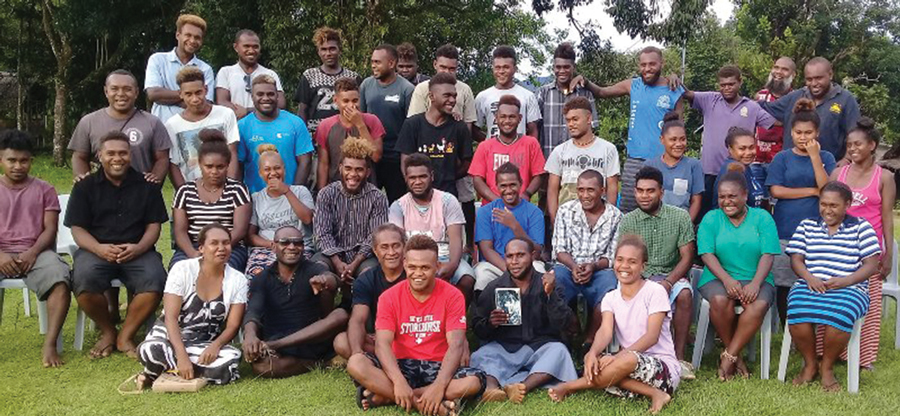
Youths pose in a group photo.

BY GEORGE MANFORD

AUKI

FIFTY youths in and around Kilusakwalo area have completed a two-week entrepreneurship front load training at kilusakwalo last Friday.

These youths have gone through topics including Self Esteem and positive mindset development, Goal setting, introduction to business, introduction to pig industry, agro- forestry, community base resource management, non communicable disease on its effect on youth population, sexual transmission infection, community policing, life in prison, Bank awareness from BSP bank, youth development and community service and youth empowerment strategy (Pacifica).

According to Richard Olita from the Youth@work office in Auki, these young people are well equipped with information from the lessons taught during the past two weeks.

Youths pose in a group photo.

“They are well informed with new ideas and learnt new skills from these two weeks of training.

Olita added these youths are also preparing for the next set of training after 14 days in community service programmes in their communities starting yesterday.

The next load of training will be for the next three weeks after the community service programme where it will mainly focuses on business training and agro-business.

Mr Olita said these 50 youth members will be graduated after the three weeks training starting by the end of this month and 50 projects will be given out after the training to the 50 recipients.

Mainly the projects are piggery projects, Olita revealed.

“I thanked SPC for their financial support towards this training and also for the projects.”

Act now for climate change: UNDP Solomon Islands

0
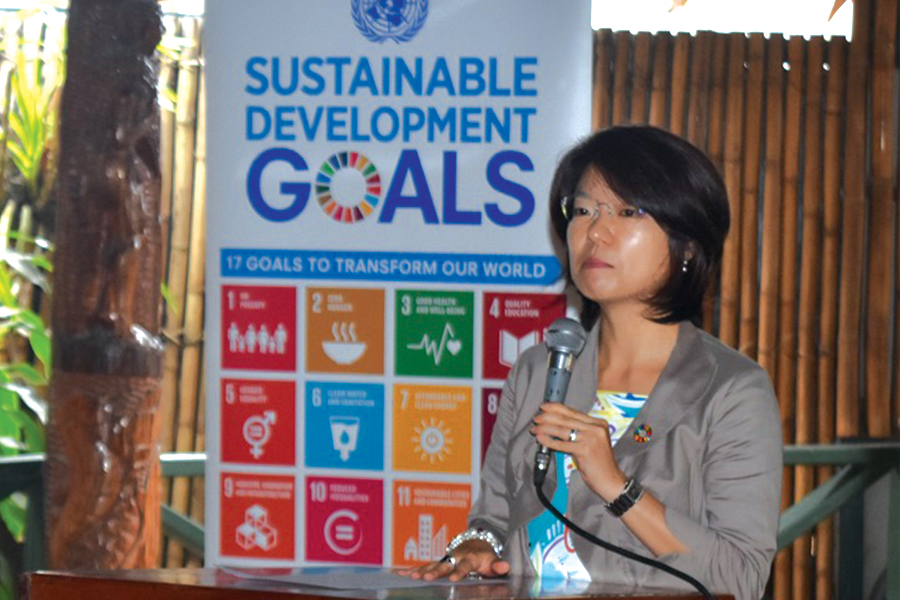
UNDP Country Manager Ms Azusa Kubota.

BY LYNTON AARON FILIA

UNDP Country Manager Ms Azusa Kubota.

THE United Nation Development Programme (UNDP) is urging Solomon Islands to act now for climate change.

The call is made following the 2018 report compiled by the Inter-governmental panel on climate change (IPCC) which highlighted increasing rate of sea-level rise by 0.5 degree Celsius.

It was reported the consequences of climate change in terms of extreme weather, rising sea level and other environment related issues at an alarming rate are result of climate change.

UNDP Country Manager Ms Azusa Kubota said, “We need to reduce carbon emissions now and for Solomon Islands to protect forest and plant new trees.

“By 2050 there’ll be more plastic than fish in our oceans. A world we know today will not be there in 20 to 30 years. The clock is ticking very fast and I want you to know as young leaders, there is no time, we must act now,” she said.

She urges young people in the country to act now saying the 17 Sustainable Development Goals is everybody’s business.

She said, “It’s not the responsibility of the government alone, every one of us, weather you’re a young person, a business leader, public sector official—everybody has the role to play in making sure we make progress towards SDGs.”

Globally, more than 109 countries negotiate the Paris Agreement on climate change and under the Inter-governmental panel on climate change (IPCC it was aimed to reduce fossil fuel by 1.5 degree Celsius.

This high level public private sector dialogue took place against backdrop of alarming news which comes from the 2018 report by the Inter-governmental panel on climate change (IPCC).

From the 2018 IPCC report Ms Kubota said scientists have painted the most vivid picture world have ever had between a temperature rises of 1.5 degree versus 2 degrees—this 0.5 degree difference makes world difference.

She explained the 0.5 degree Celsius will result with more heat waves for tens of millions of people for a greater loss of species and increase water scarcity in some parts of the world.

“This may means some communities in Solomon Islands would be under water at a rate much faster than what we expected, and more communities might suffer from chronicle lack of water due to sea level rise,” she said.

Following the experiences country now facing, UNDP Solomon Islands is calling saying such requires urgent and far more ambitious actions to cut emission by half by 2030 and with zero net emission by 2050.

Meanwhile, on regional scale over the past half century, there has been significant migration to coastal towns and cities, where flat land is available for agriculture, tourism and urban growth.

With the movement it has put pressure on water resources and agriculture, led to the clearance of mangroves, polluted lagoons, reduced the habitat of coastal fisheries, increased coastal erosion, and put communities at greater risk from flooding.

Following the activities already happened, a Pacific Marine Climate Change Report Card 2018 stated climate change is expected to exacerbate these pressures and have profound effects on human settlements.

In many cases, the report highlighted poor will suffer most since they live on land prone to coastal flooding and pollution, and are most reliant on the sea for food.

It is imperative that climate change adaptation begins now.

It is recommended flexible management systems, that are adaptive over time, are urgently needed which connect terrestrial and marine systems, link different sectors of government and industry and provide long-term planning solutions.

It is significant as well to engage social and cultural groups as fundamental part of successful climate action and their inclusion will benefit efforts to build climate change resilience.

Communities should be involved in research and knowledge collection, in decision-making, and in actions and programme and project outputs.

Enduring engagement of culture and traditional knowledge will help ensure the effectiveness of resilience strategies.

Ijo Maringi festival is our pride: Giroi

0
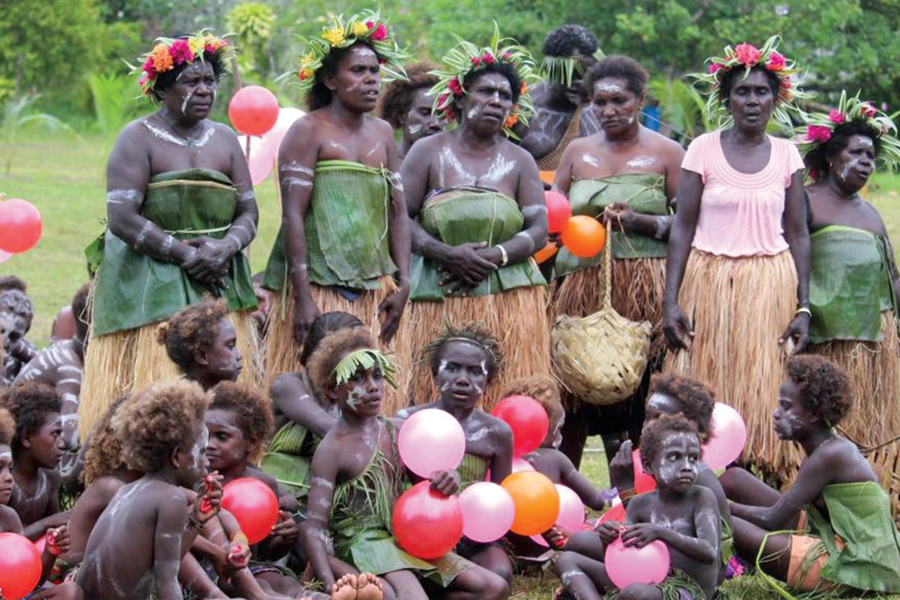
The Ijo Maringi Women Cultural group presenting their welcome song at the opening ceremony on Monday this week.

BY ALFRED PAGEPITU
GIZO

“IT is an event where our Ijo-Maringi Communities celebrate their Culture and History, and to use this knowledge to inform and strengthen themselves about Sustaining and Conserving the Environment in our Village,” said Chief William Giroi.

This is an approach deliberately aimed at raising consciousness among ourselves about our environment, our livelihood and development.

In an interview with Chief William Giroi last week, he said the Ijo Maringi festival celebrated on last week brings communities from Gizo and the other islands and share with them this consciousness and celebration.

He said that this is how they have their permanent theme for this festival at: Conserved Culture Conserves Environment.

Giroi said the Saeragi House of Chief host this festival every year – at the end of September or Octomber.

He said in this part of the country, the high-tide period in this time of the year is at day time and even the low tides at night the sea level is not low enough like low tides in the other periods of the year.

Giroi said September-October period is the time of the year where the sea-level rise impacts of Climate Change are witnessed most evidently against our shores here.

“Most importantly for the history here, this period of the year is the opposite season of the year to the season when the people of this island were annihilated by headhunting – that was in the season of low-tide during the day time, as we all witnessed in our Opening Drama.

“This is the 4th year of our hosting this Ijo-Maringi Festival this year 2018.

“We faced many challenges as we develop this festival, but we take all these as part of our learning as Communities and especially our Festival Committee.”

He added that we learn and we strive to improve and strengthen this event to be one of the flagship events for Western Province and for the Country.

Giroi said some comments have been made about giving funding support to this event as a means of getting government money especially into Saeragi village.

“I must explain that in these last three years our villages here have worked very hard to fundraise, seek other kinds of assistance, made gardens and worked to build and maintain our villages. so that we can prepare ourselves to bring in Communities from Gizo and the other surrounding islands to take part in our festival.

“We transport them her and back, we accommodate them, we feed them, we give them an opportunity to highlight their cultures, we give them the opportunity to demonstrate shows and skills that uplift their pride in themselves.

“In these last three years our communities here have worked very hard to provide these services and benefits to a number of communities in our surrounding islands. And it cost us time, money and effort, at the community and personal level.

“This year we have Nusa Baruku. We have communities over from Ranongga, and communities from Vella La Vella, We worked hard and prepared ourselves to service and benefit these groups and communities from these islands.

“Any government fund that can be given to assist us does not go to our villages here. Such help and support contribute to our servicing and benefiting these communities and islands that we bring in to this festival.

“Our heavy cost and the effort and time we put together in our communities to make this Ijo-Maringi Festival, not because of Self-Pity but to illustrate that this Festival costs us in our communities here and costs us personally. But we do this because we believe in what we are doing, because we want to do this, and because we enjoy doing this. And the support funding we get from government is a fraction of our cost, and it helps us to service and benefit the communities from Gizo and from our surrounding islands.”

Outline for early creation of a National Youth Orchestra in keeping with aims of National Youth Policy towards 2030

0

Introduction

THE concept for the creation of a National Youth Orchestra is essentially the further development of an idea I have long considered as means of furthering the latent talents of the youth with music education and a wider perception of the arts, given the inherent cultural association of Solomon Islanders with traditional forms of music, song and dance.

In the Solomon Islands music traditionally involves using percussion instruments, panpipes and flutes and various other homemade instruments.

Men often play ‘mouth bows’, using their mouths and a taunt plant fibre (now plastic fishing line), to create a harmonic effect. Large and small slit-drums are made from hollowed tree trunks, and can be used to send massages as well as for music.

In more recent years, the most ubiquitous modern music has been by string bands and panpipe dance groups.

The panpipes originally used a different tonal scale than European music, but this was modernized during the 1960s and 1970s.

Percussion orchestras play large bamboo or polythene pipes constructed of different lengths and sizes and struck with rubber thongs, often accompanying panpipes.

A unique musical, cultural talent that must never be lost.

With the launching of the National Youth Policy towards 2030.I saw the opportunity within the provisions of the policy for a shared vision for the future of young people, an opening platform to propose the early creation of a National Youth Orchestra that would not only enhance the musical talents of those youths already possessing instruments, or those already skilled in playing music, but also because the benefits of music education extend to a number of other societal and psychological outcomes.

Some international studies have found that youths involved with the arts become more cooperative, gain more self-confidence and are much less inclined to anti-social behavior, and have the lowest levels of lifelong use of alcohol, tobacco and illicit drugs among any groups in society.

Music education is a powerful way to develop students’ appreciation of music. But music education can also enhance children’s skills and abilities outside of music. The following benefits of music education illustrate some of the ways children are impacted.

Study after study proves that regardless of socioeconomic background, music-making students do better in school than those who have no music involvement.

Music education can help students develop spatial intelligence.

Spatial intelligence refers to the ability to visualize elements that go together. Students use this to solve math, art, engineering and computer problems.

In addition to developing abilities like spatial intelligence, music education can impact the way that the brain works. There’s some good neuroscience research that children involved in music have larger growth of neural activity than people not in music training.

Studies have shown that students who received music instruction had improved sound discrimination and fine motor tasks, Brown reports. Brain imaging showed changes to the networks in the brain related to those abilities.

Last week, the Speaker of the Solomon Islands National Parliament, Ajilon Jasper Nasiu, spoke on the history of the Youth Parliament and how participation in such a forum provided youths with an opportunity to express their ideas and to widen their educational experience.

He also stressed how participation helped to develop confidence, team work and broader awareness of community issues.

I fully endorse what the Speaker had to say about widening the experience of youths and broadening their education and their role in society.

It is very much for the same reasons that I would like to see the broadening of music education and the early creation and sustainability of a National Youth Orchestra in the Solomon Islands.

I believe participation in a youth orchestra would have a profound impact on the development of today’s youth.

Beyond being a recreational activity, it would create opportunities for leadership, engagement, and creativity.

Music builds leadership: Many music programs involve bands, choirs and orchestras, all of which involve working and communicating with others to achieve a common goal. This develops leadership and teamwork skills that can be applied to other areas of life.

A music education can provide the values for students to thrive in all areas of life from academics, to relationships, to careers. Having the understanding that practice makes perfect and sustained effort will achieve positive results is sure to take any music student far.

Implementation

I raised the idea of creating a Solomon Islands National Youth Orchestra in letters to the local media last week and I have been greatly encouraged to pursue the ‘dream’ by mail I have received from several members of the public who believe such an orchestra formed by youths, already with the inherent musical talents, interests and enthusiasm would be beneficial.

I have written to the British Council with offices in New Zealand to enquire whether the British Council, with an interest in furthering art in the wider Pacific region, would be interested in aiding the project aim I have outlined.   I wait to get a response.

As the Ministry of Women, Youth and Children Affairs is the local Ministry responsible for the National Youth Policy, which includes musical activities, with support from the Culture Division of the Ministry of Culture and Tourism, I very much look forward to being able to develop my ideas with the two Ministries to see how we might combine to get the idea of a home grown National Youth Orchestra off the ground in further music development and promotion.

I cannot preempt anything that I might receive by way of help from either the British Council or the two Ministries I have mentioned, but I do believe it would be essential to have a dedicated, qualified and motivated local person to coordinate things from the onset and to be able to oversee the selection and supervision of the youths that would make up the youth orchestra.

Alternatively, a volunteer professional from overseas could be encouraged to come to the Solomon Islands to undertake what I believe would be an exciting, interesting and uplifting opportunity to work with the young musicians selected to form the orchestra.

Perhaps, the Solomon Islands Music Federation could advise whether the possibility of getting a local person to do the necessary work, or say how a suitable VSO might be approached and recruited.

I know that VSO personnel have come to the Solomon Islands for a number of years from Australia, the UK , the USA, Taiwan, Japan and New Zealand and all have contributed in their own way to making life better for individuals, communities and the country as a whole.

A group of talented musicians in the UK stand ready to help in whatever way possible with the creation of a Solomon Islands National Youth Orchestra, especially with music training and education, but await news that local efforts to see to the implementation of my ‘dream’ have developed sufficiently to consider holding fund raising concerts in the UK.

Summarization

Such is the background as to why I would like to fulfill my ‘dream’ but especially today coupled with the realization that many young people are unemployed and I feel sure crave for a sense of belonging and have the need to contribute to society in a positive way.

I would dearly like to help the many talented young people find a communal sense of purpose and instill in them a renewable of pride and national identity, so often lacking and generally only witnessed by sporting achievements and prowess on the field.

In recent weeks, I was in contact with a group of highly skilled, talented and widely courted musicians in the United Kingdom with strong ties with the Commonwealth Secretariat, based in London.

To cut a long story short, this group has learned of my long held ‘dream’ to see the creation of a National Youth Orchestra in the Solomon Islands and has offered to be of considerable help in getting my idea off the ground.

It has been suggested that the group would be willing to host fund raising concerts in the UK to help cover the acquisition of any instruments needed by a local orchestra, should the youths not have any of their own.

Fund raising would also be a means of covering the expenses of the group of 5 musicians to come out to the Solomon Islands and to undertake music lessons and training to give a kick start to a local youth orchestra.

After waiting for so many years for the kind of support that now seems to be possible to pursue my desire to see the creation of a truly home grown youth orchestra, I can’t wait to get the same degree of encouragement from the SIG ministries and others most closely involved in youth affairs, culture and tourism.

In the meantime, I would really welcome reader’s views, comments and suggestions on what I have outlined. I can be contacted via the link provided in my website –www.solomonislandsinfocus.com.

I will end by referring you to the website of the UK musicians willing to go out of their way to help the Solomon Islands and especially the youth.

Addendum

This letter was sent to the Editors of local newspapers last week and it is fitting that I include what I had to say in the context of music education and the rewards that it brings.

PASI a voluntary association teaching music to young children doing creditable work.

Your readers will know of my ongoing efforts to try and form a Solomon Islands National Youth Orchestra and I am looking forward to getting support for its creation from the newly appointed Minister for the Ministry for Women, Youth and Children Affairs, the Hon. Mrs. Lanelle, Olandrea Tanangada.

As a former teacher, I know the Hon. Minister has a keen interest in the youth and their education.

In the course of writing about my idea, I received news of a hitherto unknown but very valuable Association that has been teaching music to young Solomon Islands children, helping them to play the piano and helping them sit for the annual Australia and New Zealand Cultural Arts (ANZCA) music examinations.

I was delighted to get news of this Association by the name of Piano Association Solomon Islands (PASI) and to learn of the outstanding contribution being made to the children’s education in music and the arts.

It occurred to me that PASI could well be associated with any future National Youth Orchestra and especially if the young, qualified musicians, could be encouraged to join the orchestra.

Whether or not the idea of a National Youth Orchestra gets off the ground or not, I believe PASI is truly deserving of support from the Solomon Islands government and, perhaps, recognized with support from one or more of the resident High Commissions or development partners with close ties to the Solomon Islands.

I understand from a parental perspective, learning music has opened up a new world for the young children being helped by PASI.

To all those involved in the voluntary work of PASI I extend my sincere thanks and the encouragement to continue the good work – and hope that the extra support needed to further the work of Association will soon be forthcoming.


Yours sincerely

Frank Short

Samoa farmers celebrate ripe bananas shipment to NZ

0

DEAR EDITOR, “Farmers in Samoa are celebrating sending the first shipment of ripe bananas to New Zealand in over 50 years.

“Samoa’s agriculture minister Lopao’o Natanielu Mu’a is the driving force behind the scheme in which farmers grow Jewish bananas introduced from South Africa.

“Lopao’o initially came under fire for coaxing big commercial farmers to spearhead the scheme which has now resulted in 500 cartons of bananas being sent to New Zealand.

“The Samoa Observer reports the President of the Banana Farmers Association, Tuisugaletaua Sofara Aveau saying he hoped the scheme continues to bear fruit as it will benefit the country as a whole.

“He said he and other farmers plan to be in New Zealand when the shipment arrives next week.

“The New Zealand market for ripe bananas is valued at over $US160 million.”

Copyright @ 2018, Radio New Zealand

The Solomon Islands hosts a rich diversity of bananas of good quality and Makira is believed to be the last stronghold of Fei bananas.

Could the Solomon Islands follow Samoa’s lead?


Yours sincerely

Frank Short

Right music ed partner for national youth orchestra

0

DEAR EDITOR, last week, the Speaker of the National Parliament, Ajilon Jasper Nasiu, spoke on the history of the Youth Parliament and how participation in such a forum provided youths with an opportunity to express their ideas and to widen their educational experience.

He also stressed how participation helped to develop confidence, team work and broader awareness of community issues.

I fully endorse what the Speaker had to say about widening the experience of youths and broadening their education and their role in society.

It is very much for the same reasons that I would like to see the broadening of music education and the early creation and sustainability of a National Youth Orchestra in the Solomon Islands.

I believe participation in a youth orchestra would have a profound impact on the development of today’s youth.

Beyond being a recreational activity, it would create opportunities for leadership, engagement, and creativity.

Music builds leadership: Many music programs involve bands, choirs and orchestras, all of which involve working and communicating with others to achieve a common goal. This develops leadership and teamwork skills that can be applied to other areas of life.

A music education can provide the values for students to thrive in all areas of life from academics, to relationships, to careers. Having the understanding that practice makes perfect and sustained effort will achieve positive results is sure to take any music student far.

Australia has several youth orchestra and the one in Sydney has a programme that provides orchestral training to young musicians between 6-25 years.

I believe if a National Youth Orchestra was created in the Solomon Islands participating youths would benefit from the social interaction of being part of an orchestra and lasting friendships would be developed as a result of the experiences they would share.

To get a National Youth Orchestra off the ground it would be my suggestion that approaches should be considered by the new Minister for Women, Youth and Children Affairs, the Hon. Lanelle Olandrea Tanangada, herself an accomplished pianist, to engage a voluntary service specialist from the VSO organizations regionally or from the United Kingdom.

Such a person, with the right qualifications in music education, coupled with determination and enthusiasm could become the essential ‘Partner in Music Education’ and see to the recruitment, selection and training of the youths that would make up the orchestra.

VSO volunteers from the United Kingdom reached 1.5 million people last year.

They brought inspiration, energy and vital practical skills to help achieve community goals and especially in education.

Much similar good work is being undertaken by volunteers from Australia and New Zealand.

I feel confident that there would be many volunteers willing to come to the Solomon Islands possessing high standards of musical excellence and a love of teaching.

Perhaps it is just for the want of asking, so why not?


Yours sincerely

Frank Short

Renewing friendships and thanks for past support in SI policing

0

DEAR EDITOR, last month I had the pleasure with catching up with an old friend and one who rendered considerable help to the Royal Solomon Islands Police Force during the early years following my appointment as the Commissioner of Police in the Solomon Islands from 1997.

Mr Khoo Boon Hui was the Commissioner of Police in Singapore from 1997 to 2010 and in more recent times till 2016 was the President of INTERPOL.

I took the opportunity at lunch to thank Mr Khoo for having made it possible for several senior officers of the RSIPF to go to Singapore in the period 1997-1998 to undergo training in Community Policing and to tell him how that training experience was put to good practice in the initiation of community policing policy and practice in the period leading up to the onset of civil disturbance in the Solomon Islands, a time when, very unfortunately, the community policing concept and operations were radically disrupted.

Mr Khoo also helped the RSIPF in those early years by giving surplus police uniforms when, on my arrival, I had found the members of the local police service had no change of uniform and there was no funds available to acquire uniforms and other accoutrements.

My Khoo retains a strong interest in the Solomon Islands and several times asked how community policing was now progressing.   I was happy to tell him that community policing was continuing and progress was being achieved.


Yours sincerely


Frank Short

Government plans to ban rice import

0

DEAR EDITOR, I refer to the above said subject matter at page 2 of your paper issue No 3036 dated Wed 17 Oct 2018.

It says that the Government plans to ban imported rice because “…the government believes eating rice contributes to the spread of infections from Non Communicable disease (NCD).” Para 5 page 2.

Further, it says the plan is to impose higher taxes to ” … discourage families to pay rice.”

Enough of such contradictions.

The plan is to ban, then, came the plan to impose higher taxes.

Who would believe such.

If it intends to ban, just do it.

If it is impossible because every Solomon islanders love that rice and that you don’t want to lose Sol Rais Company (believed to be locally owned or locally registered) and few Wakus who imported rice, don’t proclaim such.

Everybody heard it from doctors that rice is one of the main cause of diabetics and we would welcome the banning of rice.

We don’t believe it is going to be possible. It’s easy to say than do do.

Sincerely yours


Aaron Mane

Honiara


Adaption to climate change dependent on rate environmental changes occur

0

DEAR EDITOR, according to a recent article published in the Island Sun newspaper and from which I quote.

“The Office of the Auditor-General has conducted a Performance Audit on Climate Change Adaptation and Disaster Risk Reduction Strategies. This was in recognition of the impact that Climate Change has and will have on islands in the Solomon Islands.”

Arising from that report the article went on to say –

“The National Climate Change Policy needs to be updated. There needs to be a Food Security Policy developed. There needs to be sufficient budget provision from Parliament to ensure effective policies exist and to ensure that ministries have sufficient resources to implement them effectively and in full. “Solomon Islands cannot stop the rise in sea level but it can become one of the best prepared countries in the world to deal with its consequences and ensure that its people can not only survive but prosper in the post-climate change world.”

When it comes to adaption it should be understood that only when there is likely to be a slow-onset in prolonged environmental changes that communities will have time to react and possibly adapt, but should climate change bring about rapid environmental events, such as frequent cyclones, increased sea levels and inland flooding, people will rarely have any other option but to move to higher ground, if possible, or to migrate.

Already in Kiribati increasingly frequent king tides and storm surges, floods and longer droughts are new, unwelcome additions to the islander’s way of life

Sea level rise has turned freshwater resources salty, rendering the land unable to grow staple crops such as coconut and taro, and eating away the shoreline.

Islanders are being told that they may have to abandon their islands, the places where their ancestors have been buried, where their children have a home and an identity.

Small Pacific nations are increasingly under threat from climate change not of their own making and it is time that those nations, corporations and leaders accept the science and lower carbon emissions, as outlined and agreed upon at the Paris Climate Conference.

If they value the continuing betterment of all nations and an interconnected world, they must take the action that is necessary to preserve the way of life for future generations to enjoy.

Yours Sincerely

Frank Short

Movements can be positive if well planned: Dr Tammy  

0
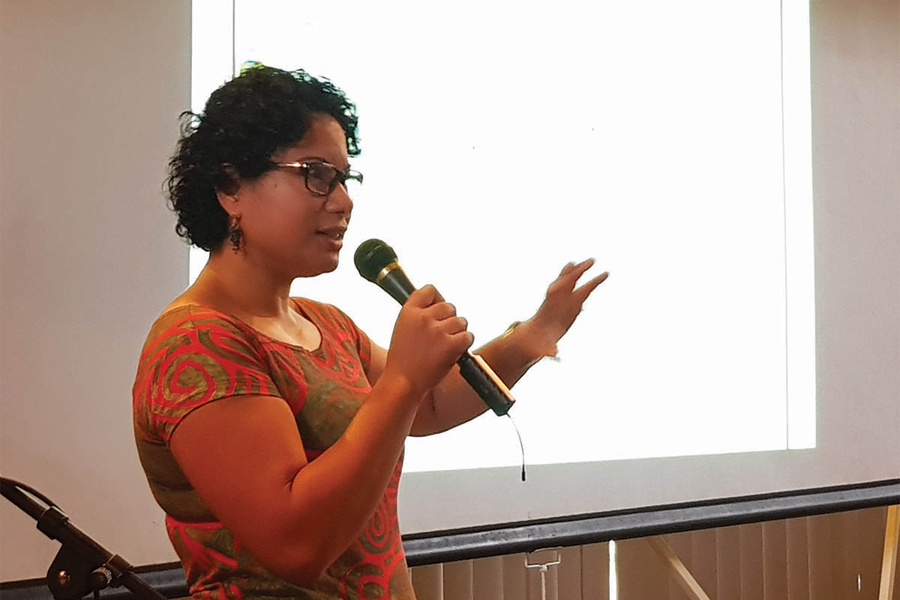
Dr Tammy Tabe doing a presentation for a Solomon Islands resettlement policy.

BY GEORGINA KEKEA

Dr Tammy Tabe doing a presentation for a Solomon Islands resettlement policy.

CLIMATE change will likely increase the rate of migration in the coming decades.

Speaking in the workshop on a proposed draft resettlement policy, Dr Tammy Tabe of the University of the South Pacific (USP) said such movements can be positive if it is well planned and documented.

Ms Tabe says such movement do not always have negative outcomes for those moving and those who are receiving.

She said if well planned and coordinated, migration will increase the capacity of people and communities to adapt to climate change.

“Movements should be voluntary. Involuntary migration or forced relocation should be the last resort,” she said in her presentation.

She said over the years, Solomon Islanders have encountered movement of some sort.

This includes movement because of natural disasters such as earthquake, floods, tsunami and landslide. Man-made relocation includes the ethnic tension.

Tabe said without proper planning and preparation, migration can displace people and communities.

“It can lead to conflict and instability within clans, between communities and within the country,” Tabe said.

She said from experience, government should have a ‘resettlement policy’ to safeguard future citizens of the country.