Home Blog Page 999

Premier Sade reacts to planned motion of no confidence

0

BY MAVIS N PODOKOLO

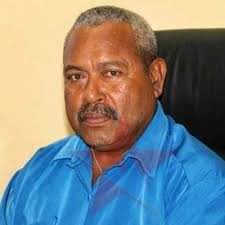
Guadalcanal premier Francis Sade has reacted to plans to oust him by way of motion-of-no confidence, welcoming it with open arms.

Mr Sade says he will defeat any motion of no confidence that comes his way.

Speaking to the paper yesterday, he said the plan is backed by ‘outside parties and forces’.

“A motion of confidence was proposed against me and my executive by my backbenchers who are backed by outside parities.

“To me as a premier am happy to receive that. It is always good and as part of my leadership to get information and receive criticism from outside, that would definitely help me and my team to set new directions and set new actions,” he said.

He said the proposed motion has 10 points of allegation.

“These reasons of the motion of no confidence against me are more on personal grudges. There is nothing stated that is really substantial and concrete in terms of what the government is doing.

“Yet, I am happy to challenge the 10 grounds of motion of no confidence against me.  

“To my people in Guadalcanal, we will defeat this motion and we will continue to do our best to improve the service delivery in Guadalcanal.

“What we are trying to do here is to expose the corruption that involved some of our national leaders and top leaders in the country,” said Sade.

He said at the moment his team, the executive members of Guadalcanal Provincial Assembly are focusing and making sure they stick to their solidarity statement.

Customs intercepts fake Stihl chainsaws

0

Custom officers standing alongside boxes of fake Stihl chainsaws

Customs officers this week intercepted 60 fake Stihl chainsaws.

This is according to the Customs Comptroller Jim Sutton.

“We have robust checking mechanisms at our borders. In this instance, Stihl have registered their trademarks in this country to protect their brand name and reputation for high quality manufacture of their products,” said Mr Sutton.

This means that counterfeit Stihl products will be stopped by Customs at the border and the matter will proceed to court.

Sutton said representatives from the Stihl company in Honiara have confirmed the chainsaws are counterfeit.

“The chainsaws which were destined for distribution to the provinces have been detained, while the matter is further dealt with by the Customs Investigations unit,” Sutton said.

The Comptroller conveyed his gratitude to his officers for their vigilance in the confiscation.

Sutton adds, Customs officers have found an increasing number of restricted and prohibited goods over recent months, resulting in detentions and seizures of vehicles, food items and cigarettes.

“Customs has an important role at the border to facilitate legitimate trade, and detect SIG revenue. We intend to maintain close attention to both imported and exported goods to ensure compliance with relevant regulations.”

Hotel work resumes despite stop notice

0

By EDDIE OSIFELO

WORK is expected to resume on the multi-million-dollar hotel, opposite the Iron Bottom Sound, Rove seafront, west Honiara.

This was despite the Physical Planning Division in the Honiara City Council issuing a “stop notice” to the developer as the building failed after the sea washed underneath the building.

The four-storey building, which can hold 30 to 40 rooms, is owned by the controversial appointed councillor for Honiara City Council and local Chinese businessman John Szetu.

An officer in the council’s Physical Planning Division, who wished not to be named, said a “stop notice” was issued last year based on an engineering report.

However, the officer said it seems the “stop notice” was not effective because of alleged political interference by the appointed councillor within the administration.

On the other hand, the National Government has welcomed the development of the new hotel because it will contribute to the tourism development in the country.

Ministry of Culture and Tourism permanent secretary, Andrew Nihopara said the building should open last September but was delayed due to COVID-19.

Nihopara said the Ministry is still to liase with the owner on the resumption of work on the hotel.

He said the government has supported the owner with exemptions to bring in materials and capital goods last year.

However, since the exemption has expired last year, Nihopara said he will liaise with Ministry of Finance and Treasury to give another exemption to the owner to complete the hotel.

Nihopara said the hotel is very important because it will support the room inventory.

He said since it is owned by a Chinese, the target market will be tourists from China when the hotel opens.

Work on the hotel commenced in 2017 but was disrupted from completion last year due to COVID-19.

Initially, the owner of the hotel wants to complete the development before the country hosts the Pacific Games in 2023.

Szetu refused to talk to Island Sun about the hotel.

LYING AYES

0

-HCC sells land using false documents to foreign logger

-DISPUTED – HCC meeting minutes given to Lands commissioner

By EDDIE OSIFELO

TWO city council executives have denied the Honiara City Council (HCC) conducted a meeting on October 29, 2020 to sanction the sale of council land at Ranadi to a foreign logger.

Charles Aiwosuga, who was deputy mayor until early this year, and another executive councillor who requested anonymity, relayed this to Island Sun yesterday.

This was after the Commissioner of Lands, Alan McNeil confirmed to Solomon Business Magazine he gave consent to the Council to sell the land, occupied by Biosecurity Division for the last 20 years, to a logging company.

Mr McNeil said he based his decision on valid documents that HCC held the Fixed Term Estate title and a minute to confirm the full Council had sanctioned the sale on October 29, 2020.

Further to that, he said a simple check was carried out to confirm whether the Council had paid the consent fee, certificate of FTE and browsed through his “black list” of parcels that are under forfeiture or resumption or before the High Court.

McNeil said the Council has satisfied all the requirements like confirmation of consent fee paid, valid certificate of FTE and it was not under the “black list” as there’s no case before the High Court, plus there was also a minute of the meeting last year.

But Aiwosuga told Island Sun every meeting he attended or was aware of last yesterday never discussed the land sale.

Villagers in fear after mining attack

0

BY ALFRED PAGEPITU

People in Jejevo, Isabel province, are said to be living in fear after an armed group of men from a mining company stormed their village destroying homes and properties.

Report says the incident occurred on Monday afternoon, this week, and the group of men were employees of Sunshine Minerals mining company.

Warren Dao Eaoleni told Island Sun yesterday the men were armed with chainsaws, bars and knives.

Eaoleni said the Jejevo community hall was damaged, villagers’ canoes destroyed, pigs killed, a resthouse damaged, solar panels and fibre boats.

He said it is believed that this action by the company stems from a disagreement it had with landowners.

He said it was hard for police to reach the village because it is in a remote area.

“I am deeply concerned at the way these security officers are treating the community,” he said.

“It is the same group that is causing a lot of nuisance for people of Jejevo.

They have now moved to damage our properties and threatened villagers with knife when some tried to stop them, but they feared them so they went off.

“Some have to leave the village and go to live in my bush camp.”

He said the sad thing was that villagers did not get any support from police to stop the security from destroying their properties because of no network coverage to quickly inform the police.

Meanwhile, Eaoleni is in Honiara to discuss the issue with the Police Commissioner to act upon the conflict between the security officers and the villagers.

When contacted Buala Police confirmed to Island Sun that they have received the report and follow up on them.

“We have a number of police officers including our response team deployed at the Camp site and Jejevo to assess the damage.

“We police would like to call on both parties to remain calm while we carry out the investigation, ” the officer said.

Comments could not be sought from Sunshine Mineral mining company.

Front-liners and certain population first to be vaccinated: Ogaoga

0

BY MAVIS N PODOKOLO

FRONT liner workers and certain groups of individuals are first to be vaccinated because potentially they can be diagnosed with the virus from those who are exposed to the virus.

This was echoed by Dr Divinyl Ogaoga, chair to Technical working group of covid-19 vaccine, yesterday at the first covid-19 vaccine talkback show.

He said those who are working at the airport and on ports and those looking at covid-19 patients at our hospitals will be first to be vaccinated.

Ogaoga said by looking at data available globally, there are certain groups of people from general public who are at a higher risk of getting the disease.

“They are those who have underlying long term medical conditions like those present with NCDs are one priority group to be vaccinated.

“Also, the older you are the risk of getting the disease at a higher risk a more on the older age group, so this are also prioritized in getting the vaccine.

“So, we are going to receive first 24 thousand doses, so the plan of the first round of vaccination will be in Honiara and surrounding Honiara in parts of Guadalcanal,” he said.

Nono lagoon, people and development, Decision making and survival in the midst of conflicting interests

0

People and the natural environment

According to Edward Hviding (2005), Nono Land consists of a small subsidiary lagoon on the south eastern-end of New Georgia Island in Marovo Lagoon in the Western Province. Traditionally, Nono Lagoon was communally used by the Choe and Nono people for multiple purposes.

Strong customary knowledge sources repeated that somewhere in the lower part of Choe River estuary is where traditional ceremony and celebrations are performed.

For centuries past, Nono Lagoon is life to the local inhabitants; the permanent users of its natural environment. Subsistence economy, maintenance of lifestyles and recently commercial development were largely practiced in the area. People collect food including the regular diet of ‘riki choe ’ or ‘riki peno’ and mangrove fruits (ure petu ), fish, mud crabs and other marine food types from the lagoon.

On land, people collect bush materials for housing from the local famous rich sago palm forest along the dense sides of Choe River. The river bed is where people collect a popular local food shell or mollusk, called ‘deo choe ’ (deo davala).

Its abundance is well known in Choe River.

Additionally, people use the natural forest ecosystems for hunting and gathering. Gardening is little affecting the region; however, some nearby villagers were frequently visiting their ancestral places in Choe and Nono lands; in what should be known today as one of the wildlife nests of terrestrial and marine lives in Marovo Lagoon.

Only Zaira village or Dokoso Land Protected Area (Zaira Resource Management Area), which is located on the southern weather coast of Vangunu Island is the largest remaining thickest canopy in the beautiful lagoon. Its land and sea resources were managed under traditional practices called; “Hope or taboo”.

Nono Lagoon is faced with numerous challenges regarding its natural resources. On the management level, there is evidence of reluctance to adopt conservation initiatives.

This needs more awareness through education-environmental programs. If resource management and conservation plans have to be actualized; community resource owners and leaders must understand the core value of their natural resources in the long run (not to undermine thoughtful effective management in the short-term).

The resource management utilization strategies therefore were crucial workable plans that must be grounded at the very heart of any societal development; if sustainable development is to be fully realized.

The Marine Protected Area (MPA) previously set up in the small-enclosed coastal lagoon of Nazareth village is signaling opportunities for conservation initiative in the region.

Challenges however, include disorientation by illegal poaching and continuous community unregulated influences. Lack of serious attention by the community leaders aggravates its ineffectiveness. Disloyalty to the initiative is obvious.

In the past years, the first unsustainable commercial operation is logging. Within this period, mining prospecting is covering Mt.Tiroa in the dense interior of Nono Land.

Evidence of division between the once happy Choe and Nono people is awakening.

As observed, some parts of Choe and Nono lands were heavily disturbed by logging activities. Buffer zones or areas close to the rivers which are illegal for logging activities must be monitored in infinity.

Long term impacts from unsustainable commercial logging is an issue to life-time local dwellers who depend on their environment for their daily survival.

The natural environment and its biodiversity would be losing their ecological capacity functions in trying to compete against the harsh environment soon to expose.

These were serious environmental issues in years to come.

Unsustainable practices of harvesting natural resources must be controlled or eliminated in the region. While there are rural people relying on their environment, some educated people must assist in drawing attention towards creating sustainable resource use policies and resource management plans for better and regulated utilization purposes.

Resources management and sustainable development were important concepts in our contemporary society. Development aspirations must begin where and how these concepts are indispensable. At the rural level, management and sustainable utilization of both terrestrial and marine resources are the central attitude of daily survival behavior.

This doesn’t mean a change of resource use preference; it though integrates conscientious awareness about the importance of the natural environment for future use. In that, it would mean sustainability and management are regulated practices in the ever changing society; an emphasis of parallel latitude. People’s responsibility today is to secure the horizon of their future generation’s survival.

For those resource management actions employed; natural resources utilization must be the testimony of contentment otherwise mere ignorance adds to a gross problem of resource scarcity and competition which would become the ordeal of distress.

Besides, mining prospect is targeted on some parts of Choe and Nono lands. Therefore, a sustainable future will also consider a committed sacrifice, integrity and responsible stewardship in decision making. The powerful and prevailing conduits would be through law-abiding leadership qualities.
Mining and Logging

Although mining would bring a ‘million-dollar dream’ to its frontier; it can also leave behind ‘millions worth of environmental issues,’ conflicts, reconciliation processes and damages, which are all (in unforeseen dilemma or at times) beyond people’s capacity.

Let’s not forget the Bougainville Crisis of Paguna Mining, OK Tedi Mining in PNG, the aftermath of Nauru Phosphate Mining and Gold Ridge Mining leakage issues in Solomon Islands.

Consider the sizes of the islands, the freshwater bodies, the fresh air and the seas. They were the limited aggregate resources people are made part of and responsible for. People depend on them and they depend on people for their better caring, management and sustainability.

The land and ocean is where people make most of their living. The natural environment is where people derive natural resources to meet their immediate needs, for example income and school fees.

Therefore, commercial interests surrounding the sea and land would require practicing sustainable utilization behaviors and management.

All activities carried out on land would consider the wider impacts that will be triggered in the ocean or sea and freshwater bodies. Pollution and destruction in the environment would mean the biodiversity is affected. People are also affected. The balance of biological and ecological interconnectivity will certainly decline or diminish; causing instability and changes to the biomass structure, food links and generally instability to the ecological interconnectivity within the natural environment.

To get the depiction, scientific evidences proved that deforestation rate in Solomon Islands is beyond sustainable harvest limit.
Furthermore, consider the case of fishery death toll in Central Marovo Lagoon in early June in year 2011.

The first alarming instance is spotted as a small fish was struggling to its death on the sea surface at the river estuary of Gepae and Cheara villages while few minutes departing from Cheara on ‘M.V. UTA Princess’ (previously ‘Atoll Way’) (about 7am, Monday 6th June 2011).

There are two possible scenarios over the cause; and they are worth taken on-board. First, it is a natural occurrence (algal bloom) that associates with changes of climate and weather patterns. Secondly, it may link to high concentration of sediments at the sea bed of the river estuary. This may associate with excessive human activities on land. The obvious activity is logging. Know that there are five river bodies sourcing the estuary in this location, and so as in Nono Lagoon.

Hence, the responsibility of rural dwellers and guardians of Nono Lagoon is to maintain the sustainability of their natural resources and oppose all development that are involved in unsustainable practices. Let alone the past experiences are lessons to achieve a better and fair Nono and Choe sustainable way of life in the future.

Together, a future way of life can be protected and managed. That means, sustainable development must be prioritized.
Conservation, management and sustainability
Conservation development includes understanding managing the uses of natural resources; consider their interconnectivity and maintaining their sustainability for future use.

On the other hand, it would also mean considering other life forms from our intents or plans.

These understandings were considerably envisaged in global considerations like that of Agenda 21 Chapter 17: 1992 United Nations Conference on Environment and Development (UNCED) and the 1982 Third United Nations Conference of the Law of the Sea (UNCLOS III) – Law of the Sea Convention (LOSC).

Conservation, sustainability and management concerns with regards to the natural resources and environment were common with these international instruments. However, for instance, the implementation of UNCED at the regional level is a challenge generally by lack of domestic (national) aptitude for environmental management. But such incapacity would not be overlooked (or simply ignored) as we are already facing serious environmental issues like coral bleaching (e.g. Fiji 2002; Marovo Lagoon 1997), sedimentation (e.g. Marovo Lagoon) and coastal erosion (e.g. South American coastal villages).

Regional organizations like the University of the South Pacific (USP), South Pacific Applied Geosciences Commission (SOPAC), and the South Pacific Regional Environment Program (SPREP) were crucial towards the sustainability, conservation and management of our environment with regards to the resources found there; for example, fisheries. However, they have specific roles within their own objectives over the natural environment. Sub regional organization like Parties to the Nauru Agreement (PNA) is an example of conservation and management of tuna stocks within specific Exclusive Economic Zones (EEZs) and the adjacent High Seas.

Forum Fisheries Agency (FFA) and the Secretariat of the Pacific Community (SPC) have their stronger support and aim to the management of tuna resources in our national waters. As a sole simple pacifying sentiment generally echoes as “tuna is as significant to the Pacific just like oil is to the Arab nations.” No wonder tuna has been referred to as the “oil” in the Pacific region. Therefore, it is reasonable to recognize that this commercial offshore fishery has its linkage of survival from the coastal environment. Regulated policies and instruments must be upheld as always maintained in the model of integrated coastal zone management.

It would be reflective then to state that Marovo Lagoon is home to some of the richest bait fishing grounds in the world. In the past, Solomon Taiyo Limited (STL) depended on these fishing grounds for bait-fish catch during its operation (pole-and-line fishing). An experience was correct with their presence (fishing fleets) in Nono Lagoon. The closest anchorage that can be recalled was about fifty meters from the reef slope of Tupaerenge Island. These were evidences that the seas (or lagoons) were home-breeder to all kind of fish species which some are vital for commercial development in the country.

Therefore, the local communities were the foundational actors towards stewardship, conservation and management of the natural resources, as they are the owners of their places. And that assistance and support must transpire in all worthy aspects of development in order for them to act from where they were instead of where they can’t go.

Historically, conservation initiatives were already practiced in Marovo Lagoon; however, significant actors like the owners of the area, NGOs and the responsible government-departmental sectors must maintain their commitment and support. The development goals upheld must be clear and achieved provided that the objectives, strategy actions and the implementation process are functional. Monitoring and evaluation were crucial parts. This is where feedbacks are essential for review and changes necessary to avoid flaw functioning of the development process. Conservation initiative has resource management use plans in its context and output.

Generally, sustainable development with regards to natural resources would require understanding of resource use patterns and the installment of policy framework while carrying out competent management tasks. The implementation of monitoring programs is a priority to monitor the goals of development. Conservation and sustainable development were vital to achieve employment proliferation and economic growth. However, in all aspect of sustainable development, it prompt challenging indefinite calls like political will, moral will, compromises and a lot of hard thinking to contemplate upon.

Decision making: the choice

Undeniably, conflict of interests regarding natural resources utilization is one major problem faced consistently today, however, successful development is hardly achieved otherwise sustainable. The sustainability of natural resources is people’s responsibility through effective management. In a deeper understanding, people’s local effort is to harmonize sustainable management for the sake of their natural resources continuous supply for future survival. And that reiterates incorporating sustainable development and efficient management in all activity that concerns the natural environment.

More so, making decision for sustainable future through development aspirations requires deeper understanding over the cultural aspects of the communities concerned (custodians or owners of the resources). The underlying notion here is whether the transcending of any model of management structure appear horizontal, vertical and/or parallel in its integration in all sectors or institutions, the obligation is still at large.

Decision making therefore should not undermine the conscience of choosing the better future from a solitary short-sighted cell, in contrast to the omniscience lens.

Finally, choice is the most powerful intrinsic art of making decision; for better or sloppier.

By Vaera Talilotu Pulekera and Emmanuel Mangale.

PS clears the air over Western province’s ‘failed project

0

BY ALFRED PAGEPITU

Western provincial Secretary (PS) Jeffery Wickham has clarified the offer being given to the Ministry of Police, National Security and Correctional Services to develop the site of the failed multi-million-dollar tourism complex project in Gizo.

Provincial Secretary (PS) Jeffery Wickham told Island Sun that the provincial government has done all they can in recent years to get the project up and running.

“We are not going to spend our resources investigating what has been a 7 year in waiting.

“We are obliged to know why this project has stalled for this many years but it seems no one is interested in talking to us.

“So, the onus is on the ministries responsible to tell us what is going on,” said Wickham.

He said Western provincial government (WPG) cannot continue to see each day for seven years the sickening incomplete concrete structure.

“So being responsible we must find an alternative developer.”

He said the Ministry of Tourism is fully responsible to initiate investigation but the Province has an alternative plan for the Tourism office.

“We have not forgotten the importance of the Tourism industry in the West. In fact the project is being held up for some 6/7 years by the national government, not our fault.”

“That’s a matter for the Ministry of tourism and Ministry of finance to consider but we are only a recipient of the project.”

Meanwhile concerned citizens of Western province say the Ministry of Tourism and Ministry of Finance have failed to carry-out their investigation into the failed project of the million-dollar tourism complex project in Gizo.

A spokesman Mr Koipala Frederick said the incomplete structure stands as a witness to corruption and poor governance that is rife in the country and the silence is deafening.

This project was a three-year national project which works should have commenced in 2014, but still there is no investigation carried out to find out why there is a delay to the building.

SECRET SALE

0

-HCC sells Biosecurity incinerator land off to Asian without consulting Ministry

THE Ministry of Agriculture and Livestock (MAL) in the strongest term condemns the action taken by the Honiara City Council (HCC) to sell off its piece of land that houses the Biosecurity incinerator at Ranadi, east of Honiara.

This was after MAL found out that the land was sold out by HCC to an Asian without the ministry’s knowledge.

“The land is used for destruction of all garbage remove from international vessels and aircraft coming into Solomon Islands,” Director of Biosecurity of MAL, Francis Tsatsia said in a strongly-worded statement.

“It’s a requirement that garbage of this sort must be offloaded and incinerated as biosecurity risk is very high,” Tsatsia added.

“Normal garbage for incinerator in this premises are plants and plant products and animal and their products,”

Permanent Secretary Ethel Tebengi Frances said tshe is very disappointed about the action taken by HCC to sell off the land without consulting her ministry.

“At least the courtesy to inform us so we can negotiate with them (HCC),” Frances said.

“This is a threat to national security of this country during these COVID-19 pandemic as wastes from flights into the country poses a huge threat,” she added.

Frances said MAL will not go down without a fight to retain this piece of land for our national security.

“There had been reports of the fence being removed and our staff being harassed. It is unacceptable,” Frances said.

Tsatsia added: “There was no communication between MAL, BSI and HCC or at least some discussions with BSI as they have been using the site for over 20 years now.

“HCC knows the land and that it’s been a very important and essential for Biosecurity operations.

“The area is best suited for BSI operation.

“It’s away from residential properties and has good security fencing.

“MAL has invested a lot of money for treatment facilities of imported products not meeting SI standards.

“The area has been used for over twenty years. Facilities here include a building for chemical storage, a room for animal product treatment and an incinerator for general garbage disposal.

“It is very risky and difficult for the department in this circumstances and the continuous threat to COVID-19 to our front line staff.

“This operation is not only protecting Solomon Islands from further incursion of pest and diseases through garbage remove for foreign vessel and international aircraft but also has been a revenue earner for the Solomon Islands Government by way of fees and charges.”

He said that the Ministry will try and pursue to take the land back for Biosecurity treatment operation adding this should be done not only under public interests but to safeguard Solomon Islands from the risk of new pest and disease coming in to the country Biosecurity regulated risk items.

This HCC’s illegal sale came just days after the council leadership went before the Public Accounts Committee to answer questions over some of its illegal handling of council matters.

Premier Manetiva sticks to no-logging stand

0

CENTRAL Islands Province Premier Stanley Manetiva has issued a directive halting logging in Nautuha district, Boli passage.

Manetiva yesterday was responding to land owners of Nautuha who were asking his government to allow logging to take place on their land.

He said his government is aware of the logging proposal but is not welcoming any logging to operate in the province.

“Based on our policies and business audiences, we will not allow any foreign or locals to operate logging activities.

“The Central Islands provincial government remains standing by not allowing any logging operations to any customary land.

“My government plans are to develop Ngella in tourism and boost Agriculture and Fisheries but logging and mining.

“Central provincial government operates within the laws to deliver the right infrastructure and services in our provinces.

Our policy still maintained its stand ‘no to logging in Ngella and Central province.”

Manetiva calls on the people of Ngella to work closely with the provincial government together to say ‘no’ to logging activities in the province.

“My government will not support any decision for logging in Ngella,” said Manetiva.