Honiara Base CSO participants poses for a group photo with Parliament staff and Clerk – Mr. David Kusilifu ( center - standing).
A one week information workshop on the 2021 national budget for Civil Society Organizations (CSO) is underway in Honiara.
The workshop is a follow on of the Floating Budget Office (FBO) Mission to Parliament which commenced on Tuesday 16 March, the Mission provided an independent analysis on the 2021 Appropriation Bill through a budget brief to make financial information more simplified and ‘digestible’ for Members of Parliament to use in the Budget debate.
The FBO Mission comprised of researchers from within the National Parliament Office, subject experts on Climate change and Gender and Parliamentary researchers from the Fiji and Tonga Parliaments.
Clerk to National Parliament, David Kusilifu in his opening remarks at the workshop thanked participants for accepting the invitation to the briefing session.
He said national budgets impact the entire country – all sectors, institutions and all communities, therefore, the availability of information to citizens and CSOs is essential not only as a right, but also in terms of having an open and transparent governance system.
“This workshop provides a space to apply your perspective or lenses as civil society organizations and interest groups on the national budget within the ambit of public finance oversight.”
It is envisaged that the workshop will also assist CSOs to better understand the role and work of Parliament. This is the second Budget briefing workshop held for CSOs, the first was held in late 2019.
The Clerk thanked the following partners for making the event possible:
UNDP Pacific Parliamentary Effectiveness Initiative (PPEI) and Strengthening Legislature in the Pacific (SIPL) projects – which are funded by the New Zealand and Japan Governments,
Development Services Exchange (DSE),
The Solomon Islands Government for the ongoing support, and
FBO Technical experts;
Dr. Jeremy Hills (Climate Change Analyst) and
Dr. Swanpa Bist-Joshi (Gender Expert) for the virtual sessions.
The first day of this workshop was a briefing for Honiara based CSOs. Provincial CSO participants will begin their session today Tuesday 11th May and conclude on Friday 14th May 2021.
Speaker of Parliament, Hon. Patteson Oti and Vice Chair DSE Board, Mrs. Alice Hou launched the Citizen Budget Guide.
By EDDIE OSIFELO
SPEAKER of Parliament, Patterson Oti calls on civil society organizations to work together to create a better Solomon Islands.
Speaking at the launching of the Citizen Budget Guide 2020/21 at Honiara Hotel on Monday night, Oti said let’s work to further develop and deepen democracy in the country for the benefit of all.
The umbrella body of Non-Government Organizations in the country, Development Service Exchange with assistance from European Union, United Nations Development Programe and Pacific Islands Association of NGO’s (PIANGO) helped put together the Guide.
Oti said whilst the Citizen Budget Guide is a first for the Solomon Islands, this underscores the importance of sharing information and the need for citizens to exercise their right to information.
Other Pacific neighbors like Fiji, Vanuatu and Tonga had also previously launched their Citizen Budget Guide many years ago.
“It is my utmost belief that initiative such as the Guide will deepen the quality of our democracy and in addition, bring Government and Parliament closer to the door steps of our people.
“In the bigger scheme of things, whilst the occasion we are celebrating tonight is a first for our country, to me the Citizen Budget Guide is an indication of our collective commitment towards the Sustainable Development Goals,” he said.
Oti said it is in line with SDG Goal 16 that they celebrate tonight’s milestone.
He said that is to promote peaceful and inclusive societies for sustainable development, provide access to justice for all and build effective, accountable and inclusive institutions at all levels.
The Guide is a tool that will guide DSE and its Member Organizations to assist and enable communities to fully participate in the national budget preparation process, advocate and monitor implementation.
DSE said you are taxpayers, your money is used to maintain social institutions, housing and communal services are being developed, roads are being built and overhauled, and many other expenses are made.
“You deduct money into the budget and have the right to know – whether it is spent effectively, for what purposes are directed to financing.
“You get a real opportunity to participate in the budget process, not in words but deeds. After all, the more people understand the budget process and are involved in the budget process, the better the result will be,” DSE said in a statement.
The UK has announced £12 million in new funding to support developing countries to better prepare for and respond to disasters, including those linked to climate change. The funds will go to the Start Network for rapid responses by charities to crises like droughts and floods.
A further £8 million will support the Centre for Disaster Protection to help climate-vulnerable countries deal with crises such as extreme weather caused by climate change and pandemics. This forms part of a wider £48 million package of climate support announced by the Foreign Secretary earlier this year.
Today’s announcement came as the UK’s International Champion on Adaptation and Resilience for the COP26 Presidency, Anne-Marie Trevelyan spoke at a meeting of the Risk-informed Early Action Partnership (REAP), urging the international community to support vulnerable countries to better prepare for and prevent disasters.
The UK’s International Champion on Adaptation and Resilience for the COP26 Presidency, Anne-Marie Trevelyan said:
“As climate-related disasters increase in ferocity and frequency we must take action to better prepare for and prevent them, to save lives, protect livelihoods and reduce suffering.
“The commitment and ambition demonstrated today, including the UK’s partnership with the Start Fund, is vital for reaching REAP’s goal of making 1 billion people safer from disasters by 2025. As we count down to COP26, I look forward to working together to continue to scale up early action worldwide.”
Between 1970 and 2019, almost 80% of disasters worldwide involved weather, climate and water-related hazards. From these disasters, 70% of deaths occurred in developing countries – with droughts and floods the deadliest and most costly events.
The severity and frequency of these events is increasing across the globe as climate change worsens. But with investment, countries can be better prepared for disasters and reduce their impacts.
COP26 President-Designate Alok Sharma said:
“The Risk-Informed Early Action Partnership is aiming to make one billion people safer from climate disaster by 2025. Today’s event is important in showing how we need to scale-up and improve early warning and I am pleased the UK Government has announced an additional £12m to support these actions in developing countries to minimise, avert and address loss and damage.
“So, whether through new investments, sharing good practice, or placing early action at the heart of plans and policies, we need to work together ahead of COP26 to build a safer, more resilient world.”
The £12 million new UK aid funding is focused on taking early action to address humanitarian crises and will help local and frontline responders anticipate and respond swiftly to protect lives and livelihoods.
Through the Start Network, UK funding will support early action initiatives, from improved forecasting for heatwaves in Pakistan to drought in Madagascar, as well as a new global network of hubs facilitating locally-led responses when disasters do strike.
The announcement follows the G7 Foreign and Development Minsters meetings in London last week, where G7 countries committed support to make people safer from climate disasters through early warning, better preparedness and early action, as well as agreed actions to scale up the finance needed to help countries adapt to the impacts of climate change.
In addition to new funding, the UK also announced a package of technical assistance through:
A project with REAP to support climate vulnerable countries in implementing laws, policies and procedures to protect from future crisis risks;
Closer working between REAP and the UK-established Adaptation Research Alliance to fill gaps in evidence for early action;
Sharing UK social protection expertise to help ensure poverty reduction programmes are resilient to climate shocks.
SPEAKER of Parliament, Patterson Oti says the production of the Citizen Budget Guide 2020/21 is timely.
The Guide is an important tool to present the national budget in a simple way that can transform the culture of accountability.
Speaking at the launching of the booklet at Honiara Hotel on Monday night, Oti said not only it will complement the work of Parliament is doing but also it is an indication of the growing desire in “our country to transform the public sector by increasing efficiency, effectiveness, transparency, accountability, access to information, and citizen participation.”
He stressed that the national budget impacts the entire country: all sectors and institutions, and all communities, whether urban or rural.
However, Oti said the challenge, of course, is that budget information can be complex and is produced by different parts of the government at different times.
“It is thus disjointed, located in different, often quite complicated, document,” he said.
Oti said for instance, it usually takes Parliament 4 days to review the Budget Bill and Estimates, both make up more than 700 pages of budgetary information.
He said in many respects, these documents are written for the internal use of government, and so use technical terms that most ordinary people do not understand.
“If they cannot understand what is presented to them, they cannot ask questions about it.
“The people are, in effect, unable to hold their government to account,” he said.
Oti said like the budget briefs that is produced for Parliamentarians by the Floating Budget Missions – the Citizen Budget Guide summarizes and explains basic budget information.
He said it is a report to the people, presented in an accessible format using simple and clear language they can understand.
“This is a key milestone that will encourage engagement to monitor public funds and resources that are allocated in accordance with the wishes and needs of the people,” he said.
Furthermore, Oti said in the day and age where having access to accurate information is critical – the Citizen Budget Guide is a step in the right direction – especially in improving people’s perception of budget and to promote accountability and transparency in public financial management.
The launching coincided with a four days’ workshop at Heritage Park Hotel that started on Monday and concludes on Friday.
A total of 63 churches in the country will see their hygiene practices increase as the USAID Bureau of Humanitarian Affairs (BHA) Project through World Vision Solomon Islands recently assisted them with water tanks.
The churches are from Malaita, Makira, Guadalcanal, Temotu and Honiara.
BHA COVID 19 Project Manager Philip Diau said, water tanks and other materials have been provided to these churches.
“Water tanks have been distributed to 63 churches in Temotu, Makira, Malaita, Guadalcanal and Honiara. Our contractors are now working on installing them for church use,” he said.
Mr Diau further said 27 communities across the project areas also recently being assisted with Tippy Tap materials.
The photo of men carrying a tank: Jimmy Fa’alaua World Vision Community Development Facilitator and Peter Madi who was engaged as casual assisting community members in Malaita to carry a tank up the hill.
“Tippy taps and hardware materials have been given to these communities and our contractors are also working on installing them,”
“Apart from churches and communities, 50 schools have also been identified for installation of hand WASH stations,” Mr Diau said.
Meanwhile, in the past months this COVID 19 project has distributed hygiene kits and COVID 19 Information, Education and Communication Materials (IEC) to 106 Schools and 105 public buses in the project sites.
Funded by USAID through the BHA, the project aimed to increase community resilience to COVID-19, through knowledge and practices related to good health and hygiene.
A group photo of the participants after they successfully completed three days of the Emergency Response Training in Auki last week.
THE Malaita Provincial Disaster Office successfully certified 25 community leaders in Emergency Response Training (ERT), which will give communities the ability to assist authorities and carry out their own assessments in a disaster response event.
Representatives from five communities under the Australian Humanitarian Partnership (AHP) Disaster READY program with Oxfam in the Pacific attended the three-day long training in Auki last week.
A young female recieves her certificate in a presentation after the three-day long training.
This is the first time the province’s disaster office has directly trained community members in ERT, says Malaita Provincial Disaster Officer Pearson Simi.
Simi says the training is not only benefitting communities, but is bridging a long-standing gap for the Malaita Provincial Disaster Office, which faces the incredibly difficult task of monitoring and assessing the country’s highest populated province during a disaster.
Communities piloting this approach with the Malaita Provincial Disaster Office are part of Oxfam in the Pacific’s AHP Disaster READY project
“Currently the national or provincial team are the ones who go out to carry out assessments. However, this can take a very long process, in fact too long because not much information is provided by communities.
“So there is a need now to build our communities so that they can assist the emergency response teams. If that is done, I can see the work or response [will be] much easier and importantly faster because communities already know what to do.”
Participants over the course were taught how to assess and help themselves, identify the needs of the people and make proper records of casualties and damages.
Complaints over the slow response process and outrage on unmatched relief items is a common story in almost every disaster situation across the country.
Representatives of Bira Community, West Kwaio, in a group activity discussion.
“In previous incidents when we respond to a community during a disaster with bags of rice, they weren’t facing food shortage, instead they needed infrastructure items.
“But this is because we did not know.
“When communities are trained to assist us like how we are doing with these five communities, they themselves will tell us how to assist them and what their right needs are, rather than we waste our resources on things they do not need.
“I am absolutely confident that the community leaders who completed the ERT will take back these learnings and will action it when the time comes.”
Simi says the Malaita Provincial Disaster Office acknowledges the partnership with Oxfam in the Pacific to work with communities in Malaita.
Communities piloting this approach with the Malaita Provincial Disaster Office are part of Oxfam in the Pacific’s AHP Disaster READY project. The five Malaita communities are; Anololo in Central Kwara’ae, Baunani and Bira in West Kwaio, Dadaesalu in West Kwara’ae and Oibola in Aoke Langa Langa.
Oxfam Solomon Islands Humanitarian Coordinator, Nicholas Suava, says, “the AHP Disaster READY partnership’s goal is to ensure that communities are better prepared for responses to slow and rapid onset disasters, focusing on the most vulnerable communities in Solomon Islands.
“The community level Emergency Response Training ensures that community disaster governance systems are functioning and that community responders realise their roles to play in supporting the community during disaster events.
Javilyn John, Chairlady of Anololo Community in Central Kwara’ae with two of her community members during the training in Auki.
“Through training such as this, their disaster preparedness and response plans are being tested and improved to reflect their community context.”
In the AHP Disaster READY partnership, the Community Based Disaster Risk Management process rollout is led by our partners NDMO through the Provincial Disaster Management offices in Malaita, Guadalcanal and Temotu provinces; working through the provincial government to reach out to vulnerable communities.”
Disaster READY focuses on inclusive community-based disaster risk management to ensure that people with disabilities, women, children and other vulnerable groups are involved in disaster planning and that their needs are being met.
Javilyn John, Chairlady of Anololo Community in Central Kwara’ae with two of her community members during the training in Auki.
Disaster READY is supported by the Australian Government and implemented through the Australian Humanitarian Partnership (AHP).
AHP NGOs leading the work in the Solomon Islands are Oxfam, World Vision, Caritas /CAN DO, CARE, Live & Learn and Plan International. Activities are being implemented with communities and local governments in all provinces across Solomon Islands, in Honiara, as well as nationally.
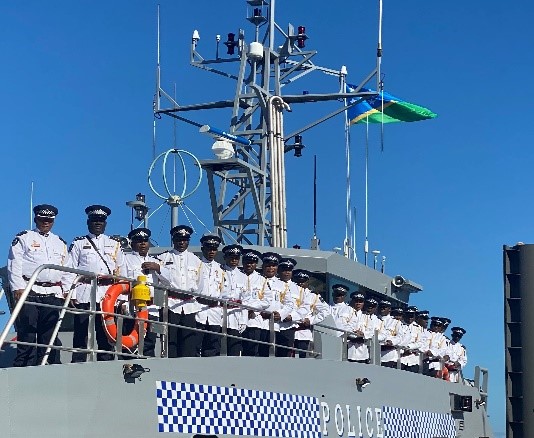
“It is now a Solomon Islands’ ship,” Robert Sisilo, Solomon Islands High Commissioner to Australia, declared when he accepted and received Solomon Islands second Patrol Boat the RSIPV Taro on Friday morning last week.
“And with a life span of more than 25 years, I don’t know if I’ll still be around when Taro is decommissioned. All I know and will always remember is that I was here very privileged and honoured to, on behalf of the Government and People of Solomon Islands, officially accept and receive the new second Guardian Class Patrol Boat RSIPV Taro from the Government and good people of the Commonwealth of Australia,” an elated Mr Sisilo told a gathering of politicians, naval officers, diplomats, the 21 officers and crew of Taro, and Solomon Islanders in Perth who also attended the handover ceremony.
RSIPV Taro can cruise for 20 days at sea without refuelling and is the second of two Australian-made Guardian-class patrol boats to be gifted to Solomon Islands. The first, RSIPV Gizo, was delivered in November 2019 and is already tackling regional security challenges and the delivery of RSIPV Taro will enhance RSIPF’s operational capabilities.
“With the increase of COVID-19 cases on neighbouring Bougainville, RSIPV Taro will arrive at the right time. It will reinforce the RSIPF’s fast response capabilities in the hard-to-reach areas of our western and north western border. It will also enhance our three-phased approach to strengthen surveillance, response capability and protection to ensure the integrity of our sea borders.” Sisilo said.
Under Australia’s $2-billion and 30-year Pacific Maritime Security Programme, 12 Pacific Island nations and Timor-Leste will receive 21 Guardian-class patrol boats. To date 10 vessels have been delivered across the Pacific and Solomon Islands is leading the way in its use of the Guardian-class according to a Rear Admiral of the Australian Royal Navy.
3 countries converge on the Western province, more project and development talks
BY BEN BILUA Gizo
THREE countries are in the Western province this week, Australia, New Zealand and China.
Premier David Gina says this is a first, however, a pleasing development for his province.
It comes to show the interest these countries have for Western province and to help build it, says the premier who is knit up in a tight schedule to host the diplomats.
The diplomatic missions of these countries are in the province to discuss continuing projects as well as potential new ones.
The Australian High Commissioner and his delegation arrived yesterday morning in Gizo immediately embarking on a series of meetings, visits and signing of the PlasticWise Project.
His Excellency, Dr Lachlan Strahan and his delegates met and held discussions with Premier Gina and the Provincial Police Commander of Western Province.
Strahan’s delegation also visited Alpheus Rore Memorial School – less than 15 minutes’ drive from Gizo, before ending the day sealing off the PlasticWise Project at the Western Province Women Centre.
Behind the scene, officials from the embassy of the People’s Republic of China slipped into Gizo visiting some of their projects. The officials also arrived yesterday morning.
Premier Gina was in Noro yesterday for the launching of the Noro Port Lights.
He will meet with New Zealand High Commission delegation today in Noro before returning to Gizo for his meeting with the Chinese delegation.
Officials from the provincial government meanwhile share with Island Sun that this occurrence is interesting and that Western Province will make use of the opportunity under the “friend to all, enemy to none” principle.
This paper understand that Western Province is one of the recipients of the AUD30 million project for infrastructure, health and economic development, so as the AUD25 million Strongim Bisnis Project.
It is unknown what China is bringing to the table for the country’s tourism hub. One thing for sure is that officials of the provincial government are excited at the prospects of more development for Western province.
FOLLOWING the approval of Sinopharm by the World Health Organisation, the National Drugs Medicine and Therapeutics committee will now consider the approval of the vaccine for use in the country this week.
This was confirmed by Prime Minister Manasseh Sogavare yesterday.
“Fellow Solomon Islanders, I am extremely delighted to inform you that the WHO has approved that the Sinopharm vaccine under its Emergency Use Listing (EUL).
“As you know we already have 50,000 doses of Sinopahrm vaccines in the country with this approval from the WHO the National Drugs Medicine and Therapeutics committee will now consider the approval of the Sinopharm vaccine for use in Solomon Islands this week,” Sogavare said.
He said the Ministry of Health and Medical Services technical working group met yesterday to finalise the roll-out plan of the sinopharm vaccine to be presented to the National Drugs Medicine and Therapeutic Committee for approval.
“The approval by the WHO of the Sinopahrm vaccine means that it has met the relevant efficacy and safety standards required from COVID-19 vaccines for administrations to people.
This are the same standards that WHO use to approve the other four COVID-19 vaccines mentioned earlier,” Sogavare said.
He said the country has already 50,000 doses of Sinopahrm vaccines. Sinopharm is the fifth covid-19 vaccine approved by the WHO.
The other four vaccines are Pfizer vaccine, Moderna vaccine, AstraZeneca vaccine and Johnson and Johnsons vaccine.