Ministry of Health and Medical Services Permanent Secretary Ms Pauline McNeil, Honourable Minister Dr. Culwick Togamana and New Zealand High Commissioner H.E. Georgina Roberts
NEW Zealand has donated 28,800 doses of AstraZeneca vaccines to the Solomon Islands via COVAX.
These doses are entirely funded by New Zealand, and are part of the first tranche of a package of 1.6m doses transferred to COVAX for prioritised allocation to Pacific countries.
So far 211,200 doses have been allocated by COVAX under the first tranche to six Pacific countries eligible for support under the Gavi COVAX Advance Market Commitment, with the majority going to Papua New Guinea based on need.
The decision to share New Zealand’s doses to COVAX was made in a spirit of manaakitanga (generosity and respect) and in light of the global shortage of vaccines and the challenges related to global supplies.
Associate Foreign Affairs Minister Aupito William Sio said New Zealand was pleased its donation will save lives. “Dose sharing helps us make the best use of vaccines. We need to do all we can to increase the global supply of vaccines. This means mobilising funding, donating doses, keeping supply chains open, and removing barriers to manufacturing. We encourage all those in a position to do so to consider sharing their vaccines.”
Solomon Islands Health Minister, Dr Culwick Togamana explained that there still remains a huge gap in terms of vaccine supply with the number of eligible people we need to vaccinate and the government is working very hard to secure more supplies of COVID-19 vaccines and strategically roll out the vaccines to minimize risk of COVID-19 community transmission.
“As such, Solomon Islands is very grateful towards the 28,800 doses of AstraZeneca vaccines allocated by the government of New Zealand through its contributions to the COVAX facility for Solomon Islands”, stated the Minister.
The additional supplies will greatly enable us to extend vaccination coverage to our 18 years and above population in western borderline provinces, in the Western and Choiseul Provinces due to the concerning number of cases in Bougainville, neighbor to the west.
These doses are produced by the AstraZeneca manufacturing network, and follow COVAX’s Principles for Dose-Sharing, which provides a framework for economies to share vaccine doses with others that have been secured either via their self-financed COVAX allocations or through bilateral deals.
New Zealand remains committed to supporting Solomon Islands Government with its effort to protect communities from COVID-19 and to support the ongoing management of the impacts of this virus on livelihoods.
MEMBERS of the West Wainoni Council of Women in East Makira of Makira Ulawa Province have started undergoing five series of training on vegetable, fruit trees and food crop productions.
The series of training are funded by the Makira Ulawa Province’s Rural Development Program, and are facilitated by the Department of Agriculture.
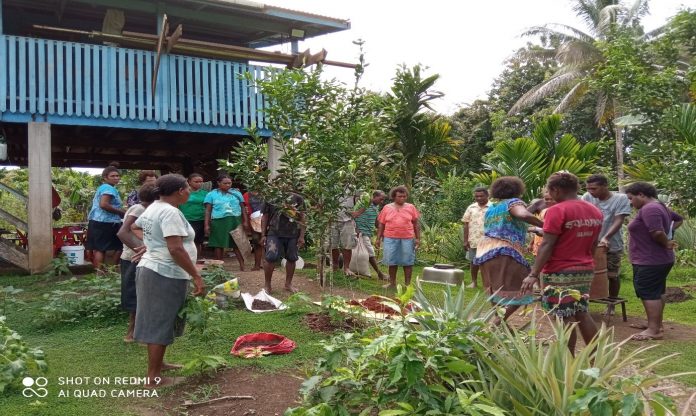
Women in Agriculture Extension Services Officer, Josephine Harunari and Principal Agriculture Field Officer, Petra Urahora facilitated the first ever training on Vegetable Production and Management for 30 participants from the West Wainoni Council of Women from May 25 to 28.
They told our Kira Kira Correspondent that the participants, both men and women members of the West Wainoni Council of Women were given theoretical training in the mornings and practical training in the afternoons on Vegetable Production and Management.
The Agricultural Officers said the participants expressed happiness with the training as it was the first ever to be held for them.
Participants of vegetable production training
They explained as the training was basically on organic farming, the participants learnt soil sterilization (soil mixing) of ground and manure to improve soil fertility – thus improving vegetable quality and production.
The participants, the two senior Provincial women Agriculture Officers explained had learnt new information on vegetable farming practices and production management methods.
And they believe the participants will improve their vegetable farming so they can be able to sell quality vegetables at markets to earn incomes and improve their livelihoods.
Prime Minister Manasseh Sogavare is in provincial capital Buala to be part of the Second Appointed Day celebrations.
He travelled by patrol boat, arriving there yesterday afternoon.
Official celebrations will take place today before Sogavare and his delegation return tomorrow.
Isabel is known as “Solomon Islands’ longest island”.
It is resourced-rich, and has contributed much of its resources to the nation’s development over the last 37 years.
Its leaders and people are hardworking, simple and peaceful. They are known for their strong community spirit of working together.
But, like all nine provinces, Isabel has a long way to go in terms of economic development.
Apart from logging, and recently mining, there were no major projects in the province that would spur economic activities.
This left the people with no option but to till their land.
Small-scale agriculture projects such as kava, coffee, cocoa are some of the economic activities villagers of Isabel are being involved to make money.
Isabel also has an active and emerging youthful population.
These are young people who are ambitious and are looking forward to taking their province to the next level.
The national government needs to critically and urgently explore the potentials that Isabel has and invest in them.
This is important to keep the young people of Isabel in their province and engage them in productive economic activities.
Much of the developments we’ve seen so far basically centered around Honiara. This consequently drew everyone across the country to Honiara and Guadalcanal.
Our politicians loved to talk about rural development but as we can see today, these are mere empty political rhetoric.
For its contribution to national development, Isabel deserves better than what it is currently receiving from the national government.
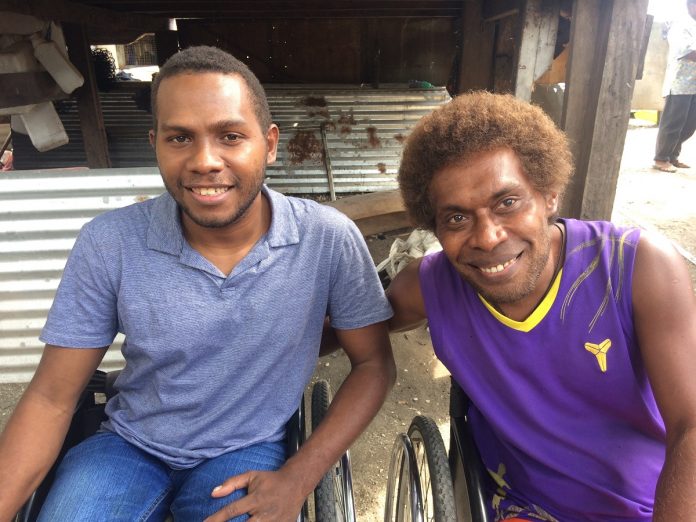
Persons on Wheelchairs, Shedrack and Francis Farase at Mamana Water settlement, Central Honiara
By EDDIE OSIFELO
TWO Persons living with disability have shared their experiences living in Mamana Water settlement in Central Honiara.
Francis Farase and Noela Olo related their stories when some participants including media of the the four-days workshop on strengthening inclusion of person with disabilities in Solomon Islands through communications and outreach, visited them yesterday.
Farase, 35 years, has developed spinal injury when he fell from a coconut tree in North Malaita.
He was 13 years old when the incident occurred.
After the incident, he has spent about 20 years on wheel chair until today.
Farase said he has experienced climate change because his home is closer to sea and needs relocation.
He said accessing decent water is also a problem and sanitation plus community recognition towards person like him needs to be changed as well.
People Living With Disability making a site visit to Mamana Water in Central Honiara yesterday
Furthermore, Farase said there is no pathway for him to move around in the community and towards the road.
Farase is the first born of four in the family, which includes 3 boys and one girl.
His father, John Filia said he plans to move out with his family to a new land.
“I am still struggling to start a foundation on our new home,” he said.
Noela, 30 years, has also supported the sentiment raised by Farase.
She has also come across the similar problems experienced by Farase in the community.
However, Noela, who won about 8 medals in Para tennis competition in Fiji and different states in Australia, said there was little recognition received from the community and the government towards her achievement.
“I am still living in a small house and struggle on my own to develop tennis sport in the community.
“When I want to develop the sport in the community, there is lack of support from the community to assist with balls, bats and rackets,” she said.
Office Manager designate for People with Disability Solomon Islands (PWDSI) Casper Fa’asala said the constitution (Article 56) has clearly stipulated that people with disability have the right to participate fully in society as they are able and that all citizens are entitled to the same right, privileges and benefits.
Mr Fa’asala said though this country’s constitution stipulates about the rights of the people with disability, in practice people with disabilities experience multiple and compound socio-cultural and practical barriers to their participation and exercise of rights.
He said traditional and religious belief systems, negative attitudes and a lack of understanding about impairments are significant barriers to the full participation of people with disabilities and equal access to services.
The policy on disability which is currently being reviewed has been poorly implemented for almost two decades.
The training was organized through the support of the United Nations Development Programs, PWDSI and the Australian Government.
More than 50 participants from People with Disabilities and the media have participated in the workshop.
(Left to right) Stella Waioha, Nelson Lamani and Naomi Tai discuss what's wrong with a covid-19 poster
Persons with disability teach us what the word means
BY IRWIN ANGIKI
You think you’ve had a rough day? Please know that persons with disability live their lives everyday ‘rougher’.
This is mainly because they do not access what abled persons have easily.
Accessibility is a word which is heard and used often but seldom, if not rarely, put into context.
Yesterday, a group of persons with disability along with stakeholders gave a glimpse of just what it means to have access and how it affects life every day.
Day-two of ‘Nothing About Us Without Us’ workshop allowed participants with disability to share experiences and thoughts on how they each can access information.
Desmond (right) making a point during group discussions on a covid-19 poster
Something which abled persons usually take for granted such as a simple poster, for example, is a challenge for a person with disability.
Depending on the impairment type, the challenge varies.
In line with the purpose of the workshop, which is exploring ways aimed at ‘strengthening inclusion of persons with disabilities in Solomon Islands through communications and outreach’, several covid-19 awareness posters were discussed on how they have failed to allow persons with disability access the information they are supposed to impart.
Participants broke up into four groups, each with a different covid-19 poster, and each member contributed how he or she is finding difficulty in accessing the message intended by the poster.
Jone Raqauqau, UNDP media specialist and workshop facilitator, helping out with discussions
This simple exercise reflects how a simple poster poses as a challenge when the society fails to be inclusive in its programmes and educational activities.
Some of the challenges identified in the poster-discussions include: long and complicated word usage, animated pictures are generally incomprehensible, colours clash making it difficult to tell different pictures apart, information cramming, font sizes.
And, preferences include: use short simple words or ticks and crosses (do’s and don’ts), use real persons in pictures, arrange colours appropriately to allow easy distinction of pictures, each poster contains only two or three messages, larger font size the better.
An early afternoon field trip to the homes of four persons with disability vividly showed the utter hardship faced daily in trying to access transport, clinic or hospital for medical attention, school, water, security, hygiene and sanitation facilities.
Other findings include community indifference which give way to persons with disability facing bullying, ridicule and neglect.
Group-one visited Mavis at Banana Valley. The closest vehicle-road access is a 100-plus metre climb up a slope along a heavily gouged road, with crevasses more than a metre deep and a metre wide; result of heavy erosion. In some segments along the road there is only a feet-wide of walk-space for travellers, next to a deep gouge.
Francis Paul (right) presents discussion results in sign language as Stella Damutalau (sitting, left) interprets
Accessing water is a challenge for Mavis. Rain brings a mixture of relief and despair. Rain water is captured in storage containers, but runs empty fast. The community water source, which is some 200 metres down her home gets muddied and filled with debris when it rains. Furthermore, the steep decline to the borehole is slippery and risky.
Mavis speaks fluent sign language, however, apart from her husband, who also speaks the same, there is hardly anyone around in her community who speaks it. This means lonely days with no one to talk to when her husband goes to work in the morning.
Group-one with Mavis (third from right)
Group-two visited Ellena Kelly’s home above Tuvaruhu. Sharing their experience, group-two leader Naomi Tai said Ms Elena’s home is “faraway” from the nearest bus-stop. Where vehicles stop and the walking begins, Ms Tai shares they had to go up slopes, meeting muddy roads and rocky ones along the way.
This long walk leads to a final 60-metre climb up a steep bush road to the home.
Watching Elena climb up the steep slope on one leg supported by her crutches left other participants and the accompanying journalists lost for words.
“I was just filled with admiration, coupled with sadness and respect, watching Elena struggling up the steep slope,” says Sheryl Aumanu, reporter and presenter at SIBC.
Elena follows this path every day on her way to work kilometres away in Honiara and back.
And, with the long distance, she has to wake up earlier than most people in order to arrive at work on time. And, for her safety, she has to arrive home early, before 8pm, to avoid the risk of meeting any disrespectful persons along the road.
Back at home, access to hygiene and sanitation facilities is a task. When it rains, the pathway gets slippery, and Ellena sometimes falls, breaking their ceramic eating utensils on her way to wash them.
Ellena makes the steep climb to her home. Photo by Sheryl Aumanu
Having had a taste of Ellena’s daily experience, Ms Tai describes her as a “strong person”.
Group-three visited Fred Oge at his home in the Henderson area. Likewise, the road to the nearest public transport is a long and inconducive to persons with disability.
The home itself is not user-friendly for a person living with visual impairment.
Access to school and clinic is made challenging by the long road with its rugged conditions. Safety seems to be out of reach with the distance between his home and the nearest police station.
As for education, it is near meaningless since the nearest school does not offer education for a person who is blind. Water and sanitation are also a challenge.
Group-four visited Francis and Noella at the Mamanawata settlement, near the Mataniko river mouth. [Please see story on page 8]
The workshop continues today with day-three at the Heritage Park Hotel conference room.
It is being run by the United Nations Development Programme (UNDP) in partnership with the Ministry of Justice and Legal Affairs through the Public Solicitor’s Office and People with Disabilities Solomon Islands (PWDSI).
Some of the materials that were offloaded at Gallego Company log pond near Alligator on 27 May. Photo: Supplied
BY JENNIFER KUSAPA
A VESSEL ‘suspiciously’ off-loading cargo at a log-pond at Alligator Creek, east of Honiara, last Thursday was earlier cleared by Customs at Noro International Port.
That’s according to Comptroller of Customs and Excise, Jim Sutton.
Gallego Logging Company owns the log-pond and the vessel. It’s not clear whether the entire cargo belongs to them.
The decision to off-load the cargo at a log-pond was widely criticised, with many saying the action has put the country at greater security risks.
Sutton told Island Sun yesterday the covid-19 shipping committee gave the permission for the vessel to be cleared at Noro.
“They’ve paid all monies that are due to the Government,” the Customs boss explained.
He said the vessel then obtained permission to discharge its cargo at Bahomia sufferance port (Alligator log-pond).
Permanent Secretary of the Ministry of Finance and Treasury, McKinnie Dentana on Sunday told a radio talk-back show his officers, police, immigration and quarantine were on site during off-loading.
Police Commissioner Mostyn Mangau said when they were alerted to the off-loading, his officers visited the site and saw Customs officers there.
But one important division, Biosecurity, was not there.
Director of Biosecurity Francis Tsatsia told Island Sun they were not informed of the off-loading so none of his officers were there.
It’s understood among the cargoes were machines.
Tsatsia said:
“Sadly, the information where the vessel will be discharging the machine was not relayed to Biosecurity.
“Hence, I believe no Biosecurity officer was there to do the inspection.
“We are now following the reports to find out where the machines are.”
Meanwhile, Sutton said in light of this incident, they will now review their processes.
“Effective immediately all such authorisations will now be assessed and issued in Honiara by a senior shipping officer,” Sutton said.
“At the moment Customs are looking into the whole sufferance wharves operations.
“There are several hundred in the country but some are now inactive.
“Under the Customs Act, Customs is the only authority to approve sufferance wharves.
“We also authorise importation and discharge of cargo and stipulated where that cargo is to be discharged.
“Customs also have full control over all vessels, aircraft and their cargoes arriving from overseas or departing to leave Solomon Islands.”
METROPOLIS Pacific Pte Limited has confirmed the letter requesting $21.9 million for the payment of 30 houses sent to the Government came from them.
The letter, which was leaked on social media, was addressed to the Minister of Commerce, Industry, Labour and Immigration, Frederick Kologeto on 17th May 2021.
In the letter the company is seeking Government to prepare a payment of $21.9 million for the first 30 completed houses proposed for the Public Servants Housing Scheme at Mamara, North West Guadalcanal.
The letter was also copied to number for Ministers, Permanent Secretaries and the Premier of Guadalcanal Province.
Members of the public have criticised the company’s credibility when the letter was leaked.
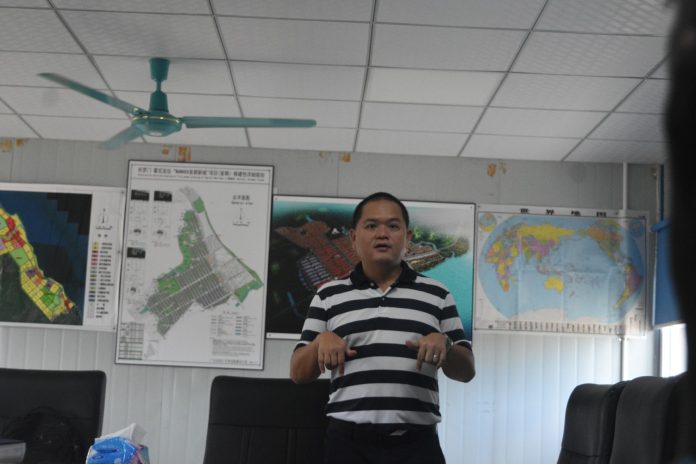
However, General Manager of Metropolis Pacific Pte Ltd, William Ling said the letter was to notify the government of the delivery date for the first batch of houses.
Ling said this communication was a typical notification that “we, the developers, shall have delivered on our promised first batch of brand-new urban houses within the stipulated time frame.”
He said the purchase of the homes in bulk by the government is by way of being an intermediary between developer and the civil servants, in order to meet the demand from this part of the population.
“The homes shall immediately be allocated to civil servants who wish to own their own home.
“The funds used to purchase these houses shall ultimately come from the civil servants by way of their own savings, provident funds or housing credit from banks and financial institutions, and not at taxpayers’ expense,” he said.
“Our commitment to a project of this magnitude and complexity demonstrate our dedication and belief in the improvement of the Solomon Islands economy, the expansion of its community, its potential for industry and tourism, further development, and future investment.
“We welcome feedback and kind criticism, and hope for ongoing support as our project takes off,” he said.
Ling said there are many positive outcomes that can only eventuate with continued momentum, willingness from international investors, cooperation from the Solomon Islands government, and patience from the public.
Earlier, Permanent Secretary of the Ministry of Commerce, Industry, Labour and Immigration (MCILI), Riley Mesepitu clarified that the proposal to buy houses is still to be approved as the Government has set up a Taskforce headed by the Ministry of Public Service to review the Public Service Rental Scheme to compare financing options for the Housing scheme.
Mesepitu said the outcome of the review would be presented to cabinet in June for consideration before any decision can be made.
Opposition Leader, Mathew Wale has also called on the government to explain the claim by Metropolis Mamara Development Ltd for payment in relation to houses built under the Mamara Township Development Project.
METROPOLIS Pacific Pte Ltd claimed it has invested more than $100 million so far on the new Mamara New Capital City on North West Guadalcanal.
General Manager of Metropolis Pacific Pte Ltd, William Ling confirmed this to Island Sun yesterday.
Ling said so far, capital investment into the MAMARA project has exceeded SBD$100 million, which has gone towards the:
construction of the project headquarters;
the first 50 units of housing;
the purchase of construction materials and machineries;
2400 square meters of factories and warehouses, and
the foundation materials for 70 rooms in what will be Mamara Spring Hotel’s main building.
He said Metropolis Pacific Pte Ltd is a private company registered in Singapore.
“All funds are contributed by the Company’s shareholders from their own assets and funds invested and raised honestly from international capital markets such as Hong Kong and Singapore,” he said.
Furthermore, Ling said Metropolis Pacific Pte Ltd, fully invested in the development of the “MAMARA New City” project to promote the local economic development in Solomon Islands, through contributions to the construction industry, tourism industry, hardware and building materials, retail, and catering services.
He said since commencement, the MAMARA project has created local employment opportunities, with more than 120 local employees hired so far, including construction workers, security personnel, logistics workers, landscapers and cleaners.
Ling said the total number of overseas foreign employees employed under the project is currently at 66, who bring in the necessary skills in project management, engineering, technical work and logistics personnel.
He said these foreign employees came from many countries, including Hong Kong, Malaysia, the Philippines, Indonesian, mainland China and more.
Moreover, Ling said last year has seen numerous consultations, tasks and assessments done on the Mamara TasivarongoMavo area and the MAMARA project, including talks with local lawyers, surveyors, environmental assessors (including topographical surveys, environment impact reports, contract drafting and reviews) and leaders within the local community.
A local prominent doctor is appealing to the government to set up non-communicable disease (NCD) clinics around the country.
This is in light of the exponential growth of NCD in the country, against very limited resources to deal with this problem.
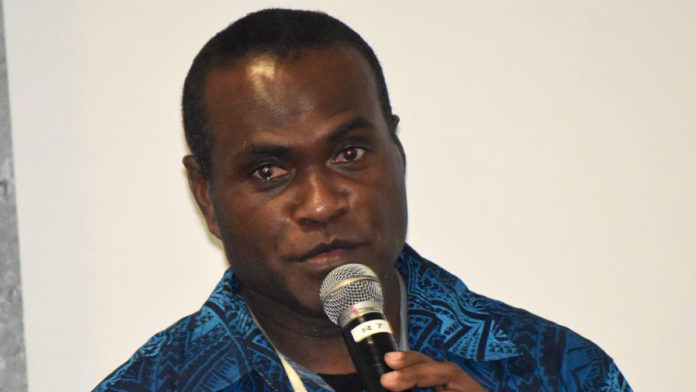
Dr Jones Ghabu, consultant physician for Non-Communicable Diseases and Diabetic Centre, National Referral Hospital (NRH), said a clear evidence is the increasing rate of NCD admission at the NRH.
“My appeal to my beloved government of the day, please we need NCD clinics for all provinces in Solomon Islands.
“My Soldiers are well trained but we have no battleship or tanker to fight,” he said.
Ghabu said the truth and reality is that NRH is the only hospital with a standalone diabetic clinic in the whole country.
“CIP- Tulagi, Isabel-Buala and Temotu and Guadalcanal Provinces have no NCD clinics.
“I have trained their soldiers, they have no tankers or battle ship nor ammunition to fight.
“For Makira, Gizo Hospital and Helena Goldie Hospital-Munda and Temotu, I thank the REC (Eye Team) for sharing their building with us.
“Choiseul -Taro, Malaita-Kiluúfi and Renbel, all shared tables and desks with other public health programmes- no space to manage NCD programmes in this crisis,” he said.
Ghabu said this war is long overdue to be fought. It needs all hands-on deck.
“Now a days clinicians watch helplessly the sad reality of this deadly disease on daily practice and, we only wish this country come together with a slogan UMITUGEDA AGAINST NCD”, a shift in thinking and approach to prevent and control this deadly pandemic-NCD Crisis,” he said.
COMMISSIONER of Lands, Alan McNeil will be conducting a public meeting in Noro, Western province on Thursday at 2pm, specifically to do with Pari Development land.
PARI Development Company Ltd Managing Director, Donald Bato came out in the Island Sun newspaper last week claiming that the money the company collected from people living on its land is to support the company pay their General Property Rates fees to the Western Provincial Government.
The company in March this year had paid $123,464.20 to the Western provincial government. [Island Sun has sighted documents pertaining this]
Meanwhile, McNeil said he is interested to hear from the public what they have to say about that.
“I’m also keen to understand the extent of Pari Development’s land deals and to reassure members of the public residing on the land I took back from the company that I will not be evicting them, and instead I will work towards putting a report to the Land Board seeking to formally offer them land title, something Pari Development never did,” he said.
Explaining this last week, Bato said although PARI had every right to evict settlers off its lands in Noro, it did not for humanitarian reasons.
“We did not want to repeat what Samlimsan and KHY companies did to settlers on their land, which media had reported the companies of forcefully evicting and chasing out settlers. That is cruel and inhuman,” Bato explains.
He said instead they opted to offer the settlers time to, while continuing living on PARI land, look for where else to go.
But, Bato elaborates, while the settlers continue living on PARI land, it is only fair that they help the company pay the provincial land rent fees.
Hence, he said, PARI discussed with the settlers and all agreed on small amounts of contribution from each.
He reiterates an underlying point in this issue which is, PARI has plans to further develop its lands there, but for the very reasons explained above, it cannot at the moment.