BORROWERS are asked to see their banks about any issues over their loan repayment in light of the COVID-19 community outbreak.
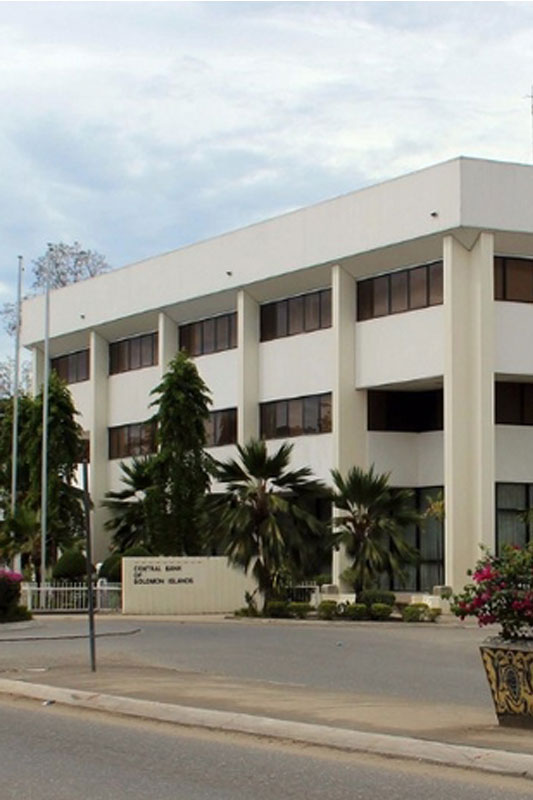
Central Bank of Solomon Islands (CBSI) issued the advisory, Monday.
This came after CBSI waived three regulatory policies for financial institutions.
These are:
CBSI has waived the application of paragraphs 33, 34 and 40 of prudential guideline 2 (PG2) and application of paragraph 7 of PG8. The former relates to classification of loans considered under COVID-19 relief package and loan loss provisioning.
The waiver to paragraph 7 of PG8 allows licensed financial institutions to change or introduce new interests, fees & charges without the 30 calendar days required before implementing such changes.
This waiver is effective for six months from the date, Thursday 3rd February 2022.
In a statement, CBSI said:
“This action is necessary in light of the current COVID-19 community transmission which is adversely disrupting business operations of households and/or individuals resulting in weak cash flows to repay loan commitments on time.
“Meanwhile, CBSI encourages bank customers to talk with their respective bank or credit institution on appropriate COVID-19 relief packages for their consideration during this difficult time of community transmission of the coronavirus.”
THE Government has maintained the $580.2 million for the resource and productive sector in the 2022 Budget.
This is the same estimate made in the 2021 budget where $370.4 million was allocated to Resource sector and $209.8 million allocated to the Productive sector.
However, in the 2022 Budget analysis, it increased the social sector to $130.6 million and $220.8 million to Fundamental.
These estimates are part of the $950 million Development Budget, up by 1.1% from $939.8 million in 2021 Revised Budget.
A total of $4.16 billion budget by the Minister of Finance and Treasury, Harry Kuma is expected to be tabled in Parliament next month.
When he tabled the 2021 budget, Kuma said government had decided to redirect its policy after thoroughly reflecting on our past drawbacks and using this experience to set the basis for future growth and further development in our country.
He said the actual government spending on investment projects in both the productive and resource sectors had drastically declined over the last three years.
“For example, in 2018, government spent $557.5 million on investment projects in both the productive and resource sectors.
“This further declined to $412.5 million in 2019 and to $355.5 million in 2020,” he stated.
Kuma said this downward trend is a concern to the government.
“Both the productive and resource sectors are important pillars of the economy.
“If Solomon Islands economy is to grow and provide jobs for the growing population, then adequate financial resources must be allocated to both the productive and resource sectors.
“This explains why government has redirected resources and increase budget allocations to both sectors to $580.2 million in 2021,” he said.
Kuma said in this trying time, it is very important that our limited financial resources be prioritised and only focus on economic activities that would provide the highest socio-economic benefits to our people.
Under the productive sector:
$25 million for Agriculture Investments.
$100 million for Ministry of Infrastructure Development
$24.8 million for Communication and Aviation investments.
PREMIER of Western Province has called on the government to exhaust all its efforts on the current COVID-19 outbreak.
Christian Burley Mesepitu said availability of life saving equipment such as oxygen and protective gears (PPE) must be a priority.
He said the national government’s fiscal measures should be focused on the well-being of the people so as frontline officials.
Mesepitu suggests that the national government should prioritize its spending on procurement of latest live saving machines and equipment that are already available off-shore.
“COVID-19 is here to stay, as such our national government should seriously consider upgrading the capabilities of our hard-working doctors in specilised intensive health care services and by providing COVID-19 specilised equipment and life-saving equipment for patients.
“Curing COVID-19 in the human body is a very expensive undertaking and we know that we do not have the capacity in terms of vital lifesaving machines, equipment, and oxygen supply and specilised intensive care personals.
“It is time for our national government to call on our traditional partners and organisation, especially traditional trading partners national who have benefited from the logging industry to assist us with needed resources,” he said.
Mesepitu said the number one priority of the national government should be the lives and health of its citizen and the general public than the South Pacific Games and related development.
“All citizen including politician and non-national are not immune to COVID-19 and it is unwise to play around with people’s lives.
“A nation with a healthy population will thrive,” he said.
PARENTS, guardians and students are anxious to know the placements for forms four, six and seven.
However, the ministry of education is silent. No one is working in its offices.
Deputy Secretary of the Ministry of Education James Bosamata when contacted yesterday said that they are currently not working.
“Sorry – we are not working, the best you could do – is to check with Linda and John Liliu,” Bosamata said yesterday.
Contacts were made yesterday but unsuccessful due to no people picking up the Ministry’s phone.
Earlier this year the ministry had assured public that the placement results would be announced by the end of January and first week of February.
Entering the second week of February, and there is still nothing from the ministry.
One concerned parent said the Ministry of Education should release the exam results so that parents and guardians can prepare and save money for school fees.
Patteson Jay said the Ministry in their recent statement said that the results will be released end of January and first of February, but results are yet to be released.
“We are into lockdowns and uncertain situation and some of us already spend our monies for school fees, therefore the Ministry should release the results so that we too can save some money for school fees,” Jay said.
He said they have called to the Ministry of Education but no one responded to their calls.
Therefore, they are calling on the Ministry to inform the people what happened to the results.
The Democratic Coalition Government for Advancement (DGCA) Government has not allocated funding for the proposed Economic Stimulus Package in the 2022 Budget.
Ministry of Finance and Treasury permanent secretary, McKinie Dentana in October 2021 announced there is a possible second ESP depending on the outcome of monitoring and evaluation of the effectiveness of the current ESP payments.
Dentana said the future payments would likely be restricted to bigger recipients such as exporters rather than to small farmers or business-owners.
About $306 million was approved for the ESP programme in July 2020.
A total of $230.1 million worth of projects and grants had been approved and paid up to 22nd March 2021.
In the first phase of the ESP hundreds of farmers and other micro- and small-businesspeople benefited from funding for practical business inputs such as tools or planting material.
In July 2020, $124 million was allocated for immediate measures to help these businesses cope with the economic impact of the COVID-19 pandemic, including $70 million for rural production, $44 million for forestry, fisheries and tourism businesses and $10 million for assistance through the Development Bank of Solomon Islands.
However, in the 2022 Budget Analysis, there is no funding for the ESP.
In the meantime, DCGA is projecting $400 million from external funding for development.
While the Budget Support decreased by 68 percent from $517 million to $308 million.
The ESP was DCGA’s fifth fiscal measure approved by Cabinet in April 2020 to address the negative economic impacts created by the corona virus on the local economy.
The primary objective of the ESP was to assist the productive sector players to maintain production output at all levels of the production chain.
This is to ensure the local economy remains afloat during these challenging times.
However, reports claimed the ESP failed to achieve its objective following the monitoring and evaluation process done in Honiara and the provinces.
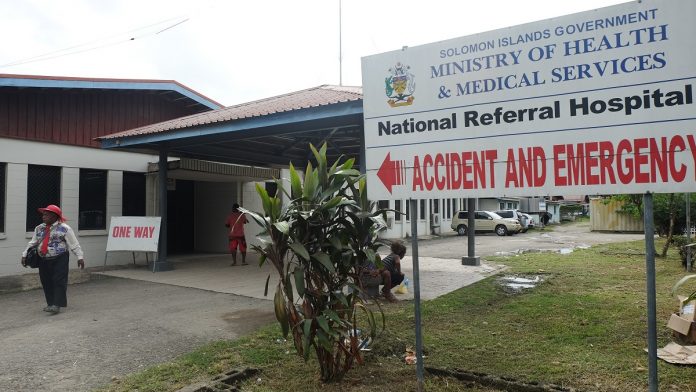
THERE is an increase demand for oxygen cylinder for persons requiring oxygen at the hospital.
Minister of Health and Medical Services Dr Culwick Togamana confirmed this in his covid-19 update on Monday.
“Demand for oxygen cylinder is increasing, for each person requiring the oxygen three large oxygen cylinders are needed per day,” Togamana said.
“Therefore, with the 30 severely ill patients admitted to the hospital a total of 90 large oxygen cylinders is needed per day,” he added.
The minister revealed that the hospital only have 60 of these cylinders, 20 have been transferred to the field Hospital for standby.
Togamana said over the weekend the National Medical Store delivered 15 more oxygen cylinders to the National Referral Hospital Orthopaedic ward that has now repurpose for covid-19 ward.
The National medical store also delivered 14 additional cylinders on Monday.
He said for provinces four oxygen cylinders have been deployed to Hellena Goldie Hospital and 10 will be delivered to Kilu’ufi hospital in Malaita.
The Ministry is working closely with donor partners and private sector firms for additional oxygen bottles including oxygen regulators, Togamana stated.
He said in the absence of sufficient oxygen cylinders, patients are being managed on oxygen concentrators which are effective as oxygen cylinders to provide oxygen to the patients
“Oxygen concentrators are affordable and much more mobile compare to normal oxygen cylinders,” Togamana said.
Minister for Health and Medical Services Dr Culwick Togamana
BY MAVIS N PODOKOLO
HEALTH minister Dr Culwick Togamana says COVID-19 recoveries may have passed the 1000 mark already as most cases have not been recorded.
Togamana on Monday this week said the total number of recoveries available are only quantified recoveries for Covid-19 patients discharged and registered at the health facilities.
“However, I have been informed by my officials that the number of recoveries especially in communities may have already passed 1000 mark. This we can at least derived some comfort from,” he said.
Togamana said more than 50 patients admitted to the National Referral Hospital (NRH) and Central Field Hospital (CFH) since 19th January 2022 have recovered and discharged, in Malaita 10 Covid-19 have returned to negative and two recoveries in Isabel and one in Makira.
“Fellow citizens it is important to note that health will not be able to provide even close to accurate figures because many who tested positive for Covid-19 were advised for home Isolation thus they did not report back when they recovered. These people are not tested before release,” he said.
Togamana additionally stressed that due to under testing there are also those who never been tested but also experienced covid-19 like symptoms and have now recovered.
PREMIER of Western Province says the strategy of having one National Referral Hospital (NRH) has failed the people of this country.
Christian Burley Mesepitu said having one national referral hospital is not only expensive, but also inadequate to provide needed health and medical services to sick patients.
He said it is time for the national government to do away with the whole idea of a NRH strategy and focus on decentralizing health and medical referral hospitals in provincial headquarters.
“Our current situation speaks volume of the failure of this strategy. Our only referral hospital has been overstretched and overwhelmed by COVID-19. This indicates that we should overhaul the NRH legacy and decentralize into Provincial Referral Hospital (PRH) strategy based on provincial headquarters,” Mesepitu said.
He stressed that some provinces are willing to give up their land and resources to build larger hospitals but cannot do so due to lack of political will.
Mesepitu said most people are living in rural areas and that it is important to bring hospitals closer to the people.
He said Western Province always stand ready to welcome possibility of upgrading Gizo Hospital to fight the current COVID-19 outbreak.
“Gizo hospital is among the best facility in the country and the national government should now re-prioritize its strategies and upgrade the Gizo Hospital COVID-19 response capabilities to compliment the National Referral Hospital (NRH) deficiencies,” Mesepitu said.
He reiterated that anti COVID-19 contingency planning for this nation should refocus on decentralizing containment measures.
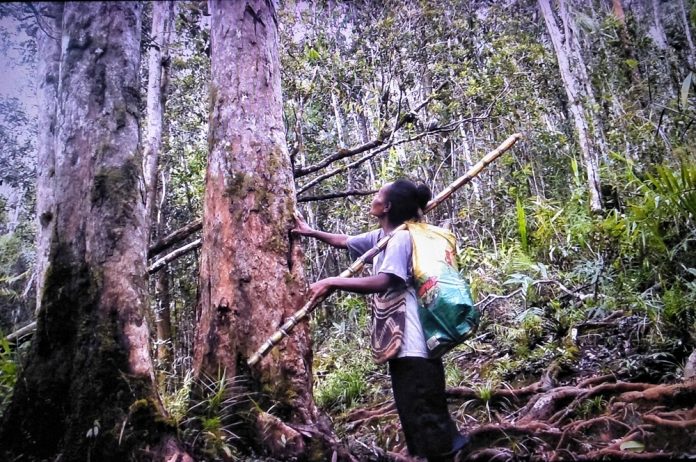
A woman from Hageulu village looking up on one of the Tubi Tree. Photo By. NIPS Media
Women from Hageulu are moving to conserve and protect their Tubi forest in the Highland of Isabel Province.
This comes after a successful consultation headed by a local conservation organization Network for Indigenous People Solomon Islands (NIPS).
In an attempt to build resilience and weave gender approaches to biodiversity governance, the group sets off to do their first consultation with the highland community of Hageulu after the new year.
The Convention on Biological Diversity (CBD) at its 15th Session of the Conference of the Parties (COP15) will adopt an ambitious global biodiversity framework to work towards a vision of Living in Harmony with nature to 2050. To attain living in harmony, NIPS ensures that the first consultation includes Women.
The presence of the knowledge gap on the roles that women play in biodiversity conservation, are unfortunately enhanced with the short falls of addressing gender dimension of biodiversity on national plans and goals that has different impacts on men, women, boys and girls.
With the goal to strengthen gender-responsive ecosystem restoration approaches into national goals and international commitments. Women in Hageulu share their views and experiences on their contributions to conserve and restoration of their forests, especially Tubi forest which is plenty in their area.
Nester Manehia of Hageulu village presenting during the consultation workshop. Photo By NIPS Media
The women shared their goal to successfully nurse the Tubi seedlings and restore their forest which was accidently lit by intruders, with drought enhancing the dissertation. Without the forest the community of Hageulu has to walk the distance through the deserted landscape to reach their village.
Apart from providing shade, the women shared their values during the consultation on the cultural and societal significance they have of the tree species.
Among the outcomes, the community also agreed to work together to nurse the seedlings and restore their once lash forest. NIPS will assist the women to further their plans and activities for Tubi forest restoration whereby the project will go on for the next 3 years.
The rich forest of Tubi trees in the highlands of Hageulu village. Photo by NIPS Media
Biodiversity underpins the ecosystems and their services and functions are vital to life. And while Landscape restoration efforts are a critical strategy for tackling acute societal challenges of our time, including global food security, access to clean water and so on. There is also a growing recognition of the role of women in forest restoration, but there is not much information on their contributions to restoring ecosystems.
NIPS upholds the conviction that indigenous, Lands and Resources are more valuable to indigenous people. With the view that they are life itself and have an integral and spiritual value for communities.
NIPS workshop with Kosisi village. Photo By NIPS Media
The Network for the Indigenous People Solomons (NIPS) on the 5th of January 2022 had successfully held a one-day workshop in Kosisi village, Hograno district, Isabel province.
The project “Support community based protocols for maintaining Bio cultural system, food security and gendered ways of knowing the pacific”. A project funded by Snowchange Cooperative for the (Oceans- Wide Relief Project).
Developments in terms of logging operations have made the Kosisi Community experience deterioration in its traditional knowledge system of protocol for maintaining bio cultural systems, food security and gender ways.
People of Kosisi village at the mangrooves looking for mud shells. Photo By NIPS Media
Najaghu is one of their daily protein and one of the main dish used during special occasions and gatherings in the community. The people have been using traditional knowledge system of protocols for generations like ‘taboo’ to conserve these shells in certain areas.
The community’s rules of taboo sites (conservation sites) have been weakened, these have been raised during the workshop. It was highlighted during the workshop that some of the traditional knowledge system protocols are slowly deteriorating due to logging operations occurring within the Thousand-ships Bay, where Kosisi community is located.
one of the chiefs in Kosisi village catching a mud crab. Photo By NIPS Media (1)
The workshop empowered and encouraged Kosisi Community to revive some of their traditional knowledge system of protocols and promote respect for chiefs, elders, women, and men, girls, under represented and diverse groups.
In terms of gender, women, girls and diverse groups which depend very much on crabs, fish and mud shells for livelihood and income have been victimized due to changes that took place on the logging operations.
Some of the logging and mining operation sites located in the Thousand-ships bay in Bugotu and Hograno District in Isabel Province may lead to marine pollution and also destroying, reefs and sea grass ecosystem where mudshells, crabs, fish and other marine species live.
If such activities continue it will affect the livelihood and food security of the Indigenous Peoples and local communities living within the community.
Young female of Kosisi with a basket of mud shells. Photo By NIPS Media
The Kosisi passage surrounded with seagrass beds and Mangrove forest are rich in food sources and are normally conserved for few months or years using traditional knowledge system of protocols for special occasions and gathering.
A meeting will be held with the community and the logging group and Face-to-face interview to support the Kosisi Community to regain and document its Community Traditional knowledge protocols in order to ensure the maintenance of cultural systems, food security and gendered ways are upheld.
NIPS is currently engaging with the Kosisi community with Snow Change Cooperative on the Oceans-Wide Relief project with the theme – Support community based protocols for maintaining biocultural systems, food security and gendered ways.