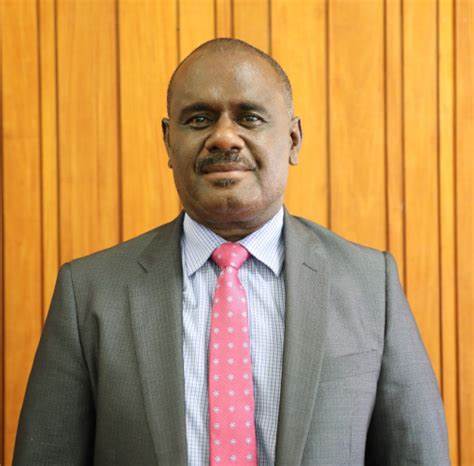
Prime Minister Jeremiah Manele says the Government for National Unity and Transformation (GNUT) will be launching its 100-day program and policy document as soon as possible.
Speaking at the inaugural ‘Meet the Press session’ under his GNUT coalition yesterday, Prime Minister Manele confirmed that Cabinet has approved the 100-day program and policy document for the GNUT.
The Prime Minister said the government will be collaborating with Solomon Islands Chamber of Commerce and Industries (SICCI) to launch the 100-day program and the policy document together as soon as possible.
“We are now working on the policy document that will guide the government in the next four years.
“It is our intention to launch the 100-days program and the policy document together.
“We will be collaborating with Solomon Islands Chamber of Commerce and Industries (SICCI) to launch the 100-day program and the policy document together as soon as possible.
“Please listen out for the announcement of the launch date for these two key documents.” Prime Minister Jeremiah Manele said.
The Media Association of Solomon Islands (MASI) has joined forces with the British Broadcasting Corporation (BBC) to host a transformative five-day Mobile Journalism (Mojo) workshop.
The workshop commenced yesterday under the guidance of BBC facilitator Bashad aims to equip media professionals from all media platforms representatives with essential skills in mobile journalism and visual storytelling.
The Mojo workshop was the first of its kind in the Solomon Islands which aims to revolutionize the local media landscape by imparting participants with not only technical proficiency in mobile journalism but also advanced skills in visual storytelling.
With a keen emphasis on case-driven and self-authored story formats, attendees are set to enhance their storytelling abilities tailored to meet the demands of modern media consumption.
Of particular significance is the workshop’s focus on short-form videos, a format well-suited for social media platforms.
Recognizing the evolving nature of media and the increasing transition from traditional to digital platforms, this emphasis on short-form content promises to empower participants in their journey towards digital media proficiency.
The practical nature of the course is highlighted through field production assignments, providing hands-on experience for participants to apply theoretical knowledge in real-world scenarios.
This experiential learning approach is expected to deepen understanding and foster skill development among workshop attendees.
In light of this collaboration between MASI and BBC, Solomon Islands media practitioners stand compose to emerge as adept storytellers equipped with the tools and techniques necessary to navigate the digital landscape effectively.
The Mojo workshop signals a new era of innovation and empowerment within the local media industry, paving the way for impactful storytelling and enhanced media capabilities.
The case against a man accused of conspiring to commit arson has been re-set to run from June 17-25.
The matter was mentioned on Friday last week.
Court adjourned the case of June 5 for interim mention.
John Damusi is charged with one count of conspiracy to commit felony, namely arson.
Mr Damusi was initially charged with a co-accused, Moses Su’u. However, Court has heard that Mr Su’u had died in April this year.
Prosecution in an earlier session asked court to acquit the deceased, Su’u.
This leaves Damusi to face court alone. He has pleaded not guilty.
Allegations said Damusi participated in a scheme aimed at causing harm to various government national projects and critical infrastructure within Honiara.
Damusi is alleged to have met with other people, along with his dead former co-accused, and had conspired to commit arson in a series of meetings between March 17 and May 6, 2023.
These meetings allegedly took place at Hammock Beach, North West Guadalcanal.
The matter was reported to police and both men were arrested and dealt with accordingly.
Mary-Anne Zurenuoc of DPP acts for state and Delilah Kukura of PSO act for John Damusi.
The increasing number of unnecessary deaths over a space of one month is just alarming.
It is starting to not be spontaneous, as first thought, and occurring too often that it is dangerously close to becoming a trend.
These deaths occur with proximity or involvement of alcohol, youths and common hangout spots in Honiara.
Just the past weekend alone there was report of another unnecessary death which stemmed from alcohol-related disagreements, and some retaliatory violence which led to the hospitalisation of a man before the intervention of the political leaders of the rival groups.
Before that there was a string of killings a week apart from each other, most prominent of which was the death of the member of the elite police PRT unit.
And, before all these deaths, reports of assaults by youths on innocent members of public.
Most of these are recorded in media reports, either on mainstream or on social media.
I am just wondering what is going on here.
And, whether national political leaders, municipal leaders, community leaders and parents and guardians are doing anything at all about it, especially those of which these crimes are reportedly taking place in and those involved, especially alleged perpetrators, are from.
I see that the pub in which the PRT officer was killed has been closed down.
There are also known informal settlements nearby which are known hubs of groups of people known as beligas which to date have not been touched.
Once again, where are our leaders, and is there anything being done?
THE appointment of a new Interim Director for the Solomon Islands National Institute of Sports (SINIS) High Performance (HP) Center by the National Sports Council (NSC) has thrust the organization into the spotlight, but not for reasons it might have hoped.
Amidst a backdrop of controversy surrounding Pacific Games 2023 facilities ownership and management, NSC’s leadership style is under intense scrutiny, with allegations of opacity and political maneuvering.
As the saga unfolds, the media finds itself caught in a whirlwind of challenges.
Attempts to provide clear, ethical reporting are stymied by NSC’s reluctance to engage, preferring clandestine “off the record” discussions.
This cloak of secrecy not only obstructs the media’s quest for truth but also erodes public trust in the transparency of NSC’s operations.
At the heart of the matter lies the contentious issue of PG23 facilities ownership. NSC’s decision to proceed with the appointment of an Interim Executive Director for SINIS, despite objections from the Government citing its illegality, underscores the power struggle between NSC and the National Hosting Authority (NHA).
The move to ban sports federations from the HP Center, ostensibly to safeguard NSC’s interests, only adds fuel to the fire.
Efforts by SunSPORTS to obtain NSC’s perspective on the closure of SINIS were met with silence until a delayed response from NSC CEO Alison Burchel, whose comments, when finally provided, were shrouded in ambiguity and confidentiality.
Burchel’s insistence on off-the-record discussions frustrates journalistic integrity and leaves vital questions unanswered.
The saga takes a dramatic turn with the government’s intervention through the Office of the Prime Minister (OPM), halting the appointment pending proper procedures between NHA and NSC.
However, NSC Chairperson Joe Sika’s conspicuous silence speaks volumes, leaving SunSPORTS to navigate the murky waters alone.
It is only through the Government Communication Unit (GCU) that confirmation of NSC’s breach of the Pacific Games Act emerges, leading to the removal of SINIS’s Interim Executive Director.
Burchel’s past leadership controversies in Fiji cast a long shadow over NSC’s current predicament, raising questions about her management style and accountability.
Georgina Kekea, President of the Media Association Solomon Islands (MASI), laments the absence of a ‘Right to Information Law’ (RTI), which could bolster transparency and hold public officials accountable.
As the NSC saga unfolds, it serves as a stark reminder of the perils of unchecked power and the imperative of transparency in sports governance.
The media’s role in holding organizations like NSC accountable remains crucial, but without legal frameworks to support their efforts, the battle for transparency will continue to be an uphill struggle.
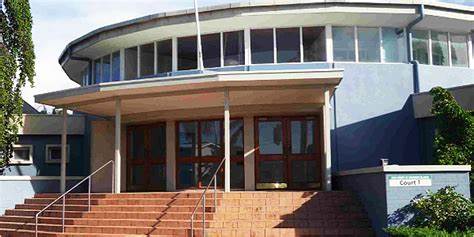
The High Court of Solomon Islands. Photo supplied.
BY MAVIS N PODOKOLO
THE High Court so far has received a total of seven petition cases filed as of yesterday 3.30pm.
High Court Deputy Registrar Jack Taloifuila confirmed this to Island Sun yesterday.
Mr Taloifuila said all petitioners have done their filing and paid their security and petition fees in full.
“These filed petition cases are ready for listing,” he said.
Taloifuila confirmed petitions were filed by
Petitions confirmed by Taloifuila include:
1. Samuel Manetoali against MP Trevor Hedly Manemahaga, Gao-Bugotu constituency
2. Jeremy Manengelea against MP Peter Shanel, Central Guadalcanal constituency
3. Dickson Mua and Peter Osike against MP Oliver Salopuka, Savo-Russells constituency
4. Samson Maneke against MP Dr Paul Bosawai Popora, North Guadalcanal constituency
5. Peter Soqoilo against MP Jimson Tanangada, Gizo-Kolombangara constituency
6. Augustin Auga Maeue and Harry Philip against MP Ben Maenu’u, Lau-Baelelea constituency
7. Anthony Veke against MP Moses Garu, West Guadalcanal constituency
“With that I confirmed that as of yesterday 3:30pm we have received a total number of seven petition cases filed. We are expecting some more to be filed,” Taloifuila said.
Taloifuila adds the due date of election petition is this Friday, May 30, 2024.
Speaking to one of the petitioners, Samson Maneka, he said his petition is filed based on 16 grounds of allegations; one for threatening and 15 for bribery.
L & L Lawyers representing Mr Auga and Mr Philip confirmed a total of eight grounds of allegations – mainly centred on bribery and fraud.
Mr Veke, former member of parliament for West Guadalcanal, confirmed his petition case stands on 17 grounds of allegations.
I am writing to discuss a concerning issue that has persisted for decades.
In an age where information is power, we must uphold the fundamental right of every individual to access government information freely.
Transparency is the cornerstone of democracy; however, barriers too often prevent citizens from exercising their right to know.
We must advocate for greater transparency and accountability within our governments, ensuring that citizens have unrestrained access to information that affects their lives.
By empowering individuals with knowledge, we enable them to make informed decisions and actively participate in civic life.
Moreover, the right to access government information is not just a legal imperative, it is a fundamental aspect of freedom of speech.
When information is withheld or hidden, it stifles public discourse and undermines democracy.
We must educate and raise awareness about our rights, empowering individuals to demand transparency from their governments.
Let us work together to break down the barriers to information access and empower every citizen to exercise their right to freedom of speech.
In doing so, we strengthen our democracy and ensure a more just and equitable society for all.
The settlement's riverside. Photo credit - Morris Nafu.
BY IRWIN ANGIKI
It’s a cool evening with sounds of small waves gently lapping nearby and laughter of children playing in the distance, a recipe for a relaxing moment. But, Kevianga isn’t.
Squinting eyes lost out in the sea, 40-year-old Lemuel Kevianga’s mind is a warzone – torn between worries over the burdens of his people and their struggles against a backdrop of increasing economic challenges, an upward curve in population growth, endless sickness and disease woes, low levels of education, ebbing traditional and cultural values, and the cruel effects and impacts of climate change.
Kevianga is losing sleep over his beloved Lord Howe settlement.
One of Honiara’s oldest & most dense settlements
Nestled in the heart of Honiara, Solomon Islands’ capital, the Lord Howe settlement is home to nearly a thousand inhabitants from the country’s most northern outlier near the border with PNG known as the Ontong Java atolls. Ontong Javans are Polynesians.
At around two hectares and nearly as old as Honiara city itself, the Lord Howe settlement is one of the most dense of Honiara’s 92 informal settlements identified in a 2019 study led by the World Bank Group.
Community built seawall to prevent further erosion and seawater encroachment. Photo credit – Irwin Angiki.
A major study by the Honiara City Council (HCC) and the national government in 2016, supported by the UN Habitat and RMIT University, found the settlement’s population density to be 218 residents per hectare. Honiara’s average population density then was 26.8.
The figures are believed to be higher nowadays, given population growth against the same land area.
Lord Howe settlement is enclosed on all four sides. To the north is the sea, to the west is the Mataniko river, to the east is the city’s only major hospital, the National Referral Hospital (NRH), and the city’s main highway runs along the settlement’s southern boundary.
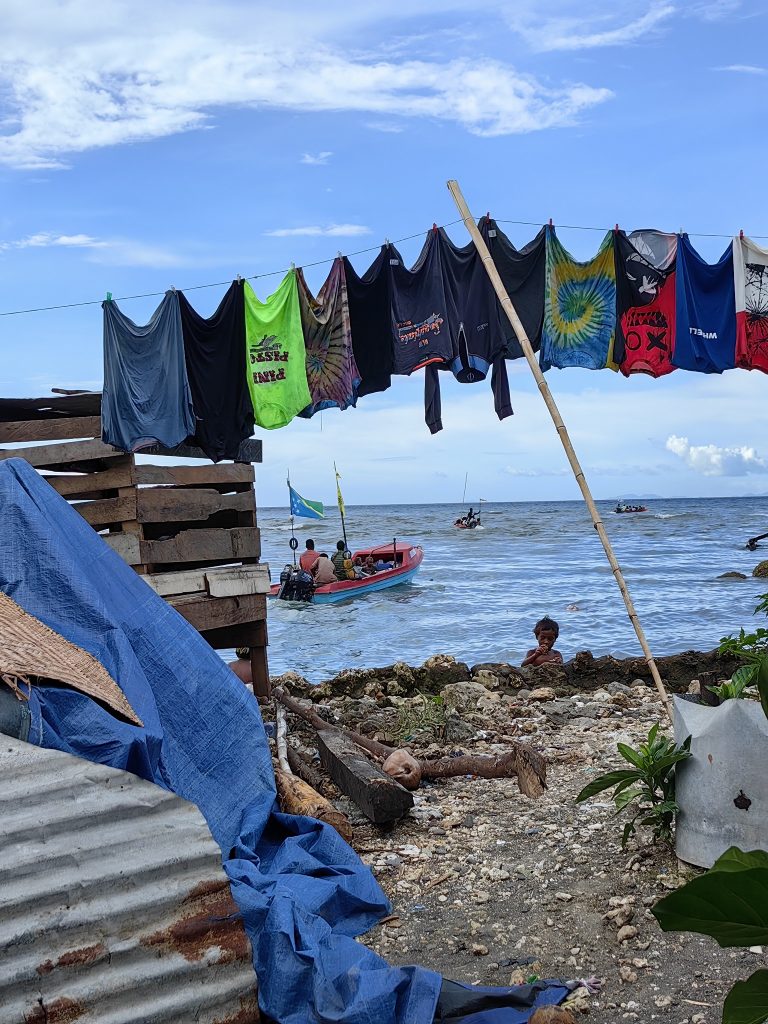
The settlement reportedly began in the early 1960s. It is said the pioneers favoured the location because of its proximity to the sea, allowing them to live some resemblance to their way of life in the islands where they are connected to the sea.
Changing landscape
Kevianga who has been living here nearly all his life said there have been huge changes since his earliest recollection of memory of the settlement.
Being highly prone to coastal flooding, riverine flooding and flooding from the drainage and stream that runs into the settlement, along the years the land has eroded, reducing its elevation level.
The HCC and Government 2016 report said most parts of the settlement, towards the sea, were below the 0.5m high water mark.
Lemuel Kevianga a concerned settlement resident and young leader. Photo credit – Irwin Angiki
Sea wave action during bad weather and cyclones have also eaten away the seafront, bringing the shoreline closer to the first line of houses.
Kevianga’s family home stands on their plot of land which is at the furthest corner of the settlement, right where the sea meets the river at the river mouth.
They have built a concrete wall along the riverbank all the way to the sea front; the freshwater is just five metres away from the stairs to Kevianga’s home, with the sea’s spilling waves gently laving against the seawall only 10 metres away.
However, it wasn’t always like this.
“In the 1970s and beyond it was said one had to walk about 20m from our house towards the river before setting foot in the water. And, to get to the sea, we walked nearly 100m from our house.
“In the 1980s I remember there were few houses after ours, a few metres towards the middle of the river. Over the years the level of the river rose and with flooding, the owners relocated further into the settlement.”
Where Kevianga pointed is near the middle of the river, nearly two metres deep and a busy highway for outboard motor engines.
“The seafront of 1980s is a far cry from what it is today. Sometimes when the delta landscape changes, the sandy beach can be so wide and long that you could fit two soccer pitches along the beachfront, and it stretched from the river mouth all the way eastwards past the hospital seafront.”
School teacher Mrs Rosa Sapivaka, 54, said the devastating flood in 2014 brought major, permanent changes to the landscape of the settlement, washing away huge strips of land beside the river, and more in the seafront.
“Some houses along the sea front have been removed and families relocated further into the settlement as the shoreline was permanently moved further inland.
Kingae – a lost tradition
The beach was the playing ground for the community, where men, women, youths and children gathered in the late afternoons to play soccer, volleyball, rugby, touch rugby or athletics.
One of the water stand pipes the community uses to access clean water. Photo credit – Irwin Angiki.
There was a traditional customary sport called the kingae, which used to be held on this huge stretch of sandy beach; a custom which celebrated the first-born son of each family and involved racing either by canoe along the river and sea, or by running along the beach, similar to a 100 or 200 metre track event.
The last kingae was held in the early 2000s, says Aaron Sangai, 50, who had lived there in the 1980s but had recently moved to Honiara’s inland suburbs.
This was markedly the last time the diminishing beach could afford to cater for the large crowd which this event attracted. The following years, the beach never recovered and this customary practice was halted. Kingae is now only recounted from memory.
Water and sanitation
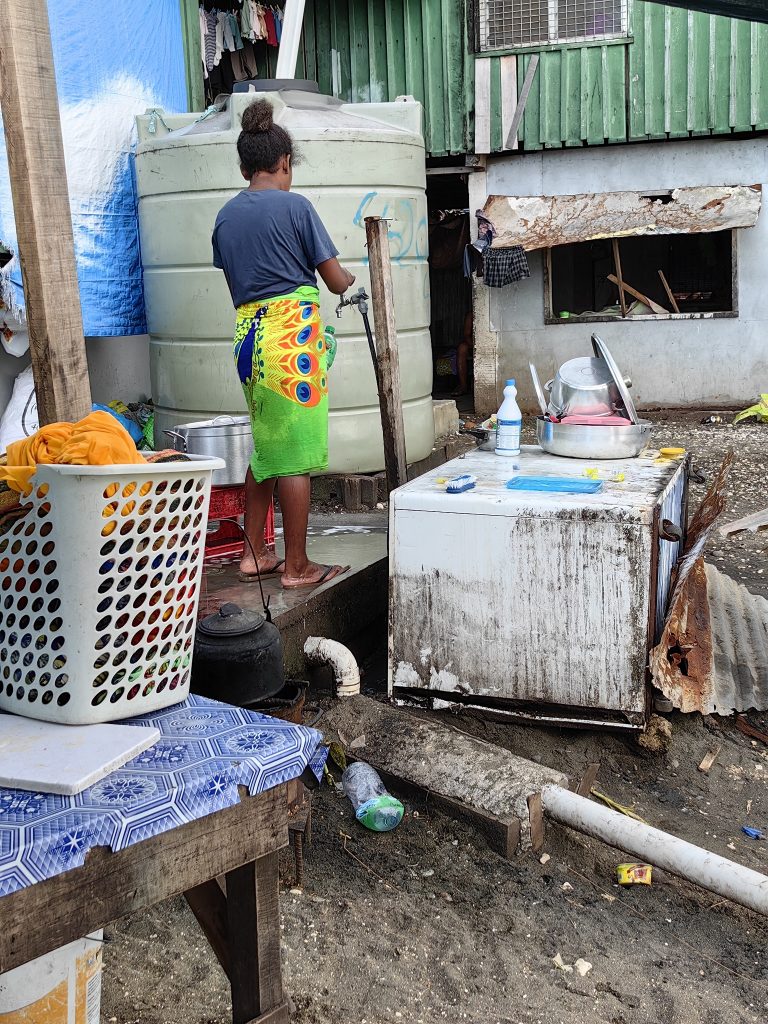
Water tanks to trap rain water was the main source of clean drinking water and has been around since the settlement’s beginning, however, as population growth became significant, water had to be sourced from the country’s water authority.
Following a 2019 study by the World Bank Group for the local water authority, Solomon Water, nearly two dozen stand-pipes are stationed across the settlement, providing clean water to supplement the tanks.
As part of their culture, the settlers use the sea for bathing and defaecation. Hence, most of the houses do not have proper toilets and septic waste management systems, except for the few houses near the highway.
Self-employed Topa Hatigeva, 43, says the further away one builds from the sea the more inconvenient it became to depend on the sea, so they built their own systems.
However, due to the shallow water table it is very challenging to build proper toilets and their waste management tanks.
When it rains, the septic tanks overflow, spilling effluent into the water ways which meander through the settlement.
More frequent rains due to climate change is making matters worse, says Mr Hatigeva, who now resides in one of Honiara’s inland suburbs, but regularly visits and spends time with family members at the settlement.
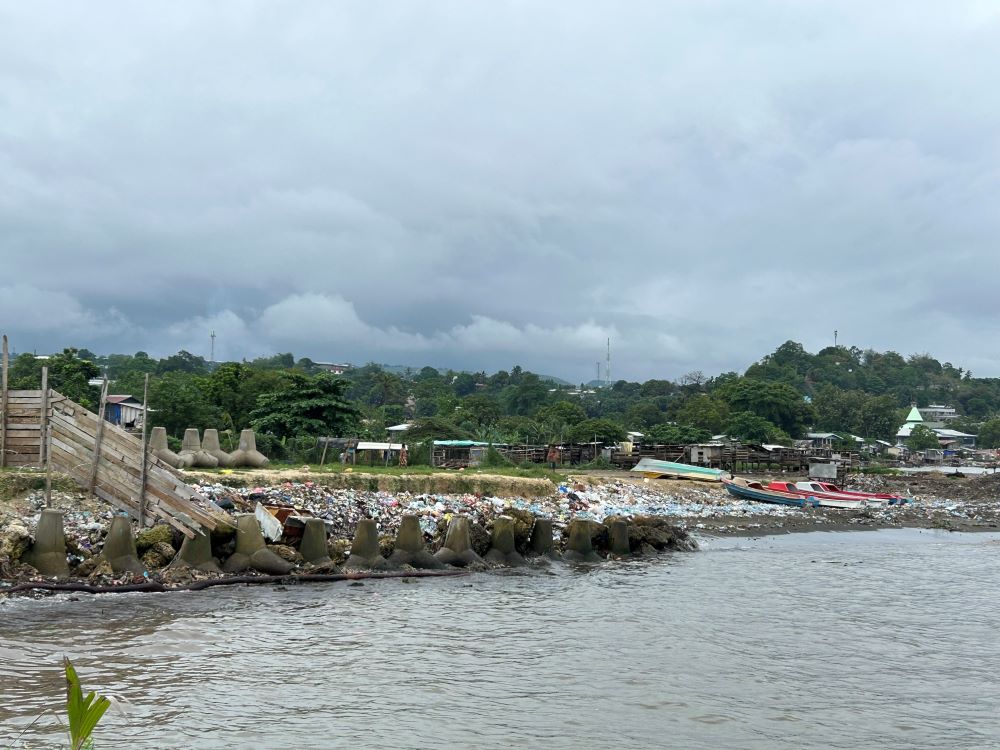
A creek flows into the settlement from across the highway which also adds to the flooding during rains, bringing pollution by way of organic rubbish, plastic objects and wastes from communities upcreek.
Disease, pollution and hygiene
Pollution hits the settlement on all fronts.
A Rapid Coastal Assessment study headed by the South Pacific Commission (SPC) in 2020 found the Mataniko river to contain unsafe levels of pollutants such as sewage and other contaminants, which come from the communities upstream including the light industry at Chinatown.
The adjacent hospital to the east releases waste into the sea which affects the settlement, along with the sea breeze which blows in bad odour.
The highway offers dust and vehicle fumes.
Hatigeva says sicknesses such as diarrhoea, malaria, influenza and the common cold are regular.
Outboard motor highway at rivermouth just metres from nearest house. Photo credit – Irwin Angiki.
“Flooding in every rain, whether huge or small, the sewage and rubbish from the creek running into the settlement is spread throughout the settlement, causes sicknesses, diseases and a lot of inconvenience, and these diseases and parasites spread due to the crowded nature of the settlement, such as coughing, tuberculosis, flu and diarrhoea.
“This disturbs children in their schooling and their growth, and adults in their employment and whatever work they are engaged in. And, now that medicines you have to purchase from the pharmacies, it is an added cost for us.”
Social changes
Mrs Sapivaka believes the deteriorating values in traditional beatitudes and values can also be blamed on climate change and its impacts.
“There is a significant rise in social issues such as domestic violence, the age-group indulging in cigarette and alcohol getting younger, teenage pregnancy and marriage. This is because climate-change related impacts and effects take up most of the parents’ time that they have less and less time to monitor their children.”
Mr Sangai says, “An example are the few incidents over the years in which a man assaults his spouse because of something related to the rainy weather or the very hot temperature, spoiling something in their house, etc.”
Hatigeva says, “When it rains, even moderately, the settlement will flood, which directly means there’s no school that day for the little children, even the older students. This is how more and more students are behind in their studies, and begin to lose interest in their schooling.”
Resilience and community solutions
The Ontong Javans are a hardy people. With very minimal or no government support, the community are fighting back.
Seawall:
A business man from the Lord Howe settlement has given back to his community by building a landfill in front of the settlement to act as buffer against the sea and wave action.
The 2014 flood removed the sandy shore line and brought waves straight to the doorsteps of the nearest houses. Whenever there was rough seas, the waves would wash into the settlement.
“Businessman Tarzan brought it on himself to help the community, and began building the landfill more than a year later,” Kevianga said.
Over the years, several cyclones and cyclonic weather have damaged the landfill, but the businessman returns and refills it, and continues to do so today, expanding and compacting the ground and now lining the shoreline with wave breakers.
River wall:
Community river wall to prevent further erosion. Photo credit – Irwin Angiki.
Home owners of houses near the river have pooled their resources, building a concrete wall along the bank preventing river water eroding what’s left. However, the wall is helpless in the event of flooding.
Rebuilding higher:
Home owners are raising up their houses, not only to accommodate more people and provide more leisure space and cooler spots, but to escape the sinking effect of constant flooding and a sandy base.
“Now the houses in the settlement are getting higher than before, this is because houses over the years have dropped, and in order to combat this, we are building higher. Some are applying concrete slabs under their homes to hold their building in place, and slow down the sinking effect,” Hatigeva says.
Proactive politicians with heart
The Ontong Javans just came through the polls this year, voting in a new charismatic young leader to be their member of parliament who has been involved in community initiatives to help the settlement and people back on the Ontong Java atolls.
MP Polycarp Paea, 47, in an interview said relocation, which is a much-contested topic, is possible and can be done within his four-year term in parliament.
“I have seen firsthand and can say that indeed climate change has affected my constituency so much.
“The main reason I came into politics is to help my people of Ontong Java and Sikaiana, with climate change being in the forefront of issues surrounding these two groups of people since we all come from low lying atolls on the fringes of our country’s border, far away from the big islands.
“I will continue with the ongoing work with non-government organisations to help my constituency against the impacts of climate change. I have already set up a committee which is working on it.
“I will find land to relocate my people, land either here near the capital on Guadalcanal, or in Isabel province or on Malaita province.”
Landfill in progress. Photo credit – Jeremy Gwao.
Meanwhile, Kevianga following our first interview, has successfully been voted as the provincial member of assembly (MPA) for Sikaiana, the other atoll group which makes up the Malaita Outer Island constituency.
Kevianga hails from both Ontong Java and Sikaiana. He is also the Malaita province’s new Finance Minister.
He assures that he will push in his political capacity to help the settlement where he is needed.
There is light at the end of the tunnel for the Lord Howe settlement with a promising set of leadership at the political level working in synergy with community and traditional leaders to find ways forward for this vibrant community.
*Reporting for this story was supported by Internews’ Earth Journalism Network
Court has granted bail for a pastor and two co-suspects who are accused of terrorising a village in Savo island in February this year.
Deputy Chief Magistrate Ricky Iomea granted bail for Pastor Bana, Rolland Fiu and Charles Bane on Tuesday this week at the Magistrate Court.
However, court refused the principal bail in which defence counsel Rochella Palmer sought the court’s discretion over.
Instead, court imposed that the surety for the three accused pays a cash bail of $500 before they were allowed bail.
Court further imposed bail conditions on Bana, Fiu and Bane to reside at Henderson, to report to Henderson Police station every Monday from 8am to 5pm, not to leave Guadalcanal Province without the leave of the court, the surety to pay a cash bail of $500, always attend to court whenever their case listed, not to interfered with the crown witnesses and not to commit any more crime but remain as a law-abiding citizen.
Court suspended the matter for today Friday, for Pre-Trial-Conference (PTC) and for Junior Rollin to take his plea on the charge of possessing a firearm during the incident.
The nine accused namely, Pastor Bernard Bana,34, Charles Bane,72, David Bane,35, Junior Rollin,27, Thomas Fenli,37, Albert Ramo,21, Rolland Fiu,41, Patterson Iugasia, 38, and Jacob Gore,47, are jointly charged with Criminal Trespass and Malicious Damage.
All the accused pleaded not guilty.
Iete Tebakota of Police Prosecution Department act for the Crown and Rochelle Palmer of PSO represent Pastor Bernad Bana, Rolland Fiu, Albert Ramo, Charles Bane and Junior Rollin and Bobby Harunari of PSO represent Thomas Fenli, Patterson Lugasia, Jacob Gore and David Bane.