Home Blog Page 1298

Withdrawal of Taiarata concession lands and Wairokai operations

0

BY GEORGE MANFORD

AUKI

ONE of the Taiarata licensees confirmed to Island Sun in Auki that the Taiarata concession lands have withdrawn from the intended operations at Wairokai in West Are’are in Malaita province.

He said, the deed of assignment executed between our business ventures is terminated for with on the grounds that “A separate account to be created by contractor for Taiarata and its landowners for payments and liabilities.

He said the current arrangement under Iruhau account bears risks of confusion and mixed up liabilities for repayments of advance.

“There is approval in writing from commissioner of forests on deed of assignment.”

“The deed was executed on advice by Mr. Hii one of the land owners said that a declaration will be filed with commissioner of forest and approval.”

“The commissioner however advised Taiarata that this is not being possible.”

The deed is therefore null and avoid and not binding on parties unless approval is given by the commissioner of forest.

An access agreement shall be the option to allow operation to move inland from log pond.

The concern Are’are man also added that the executive of access agreements with both land owners and licensees in respect of lands held under inter zone license.

He also said that the geographical location of concession makes it impossible for machines to bypass inter zone and Taiarata lands.

The negotiations and signing of Marahu log pond agreement for Irora licensee operation in the case where Hera log pond landing is closed or disturbed of in the case where contractor intend to land all machines in one log pond and later disburse to Irora concession.

An improve show of courtesy, communication, diplomacy, and understanding between PCE coordinator and Taiarata chairman and no opportunity given to discuss and rescue issues raised here in.

The executive of written and signed agreement for skidding logs, execution of agreement construction and gravel of access roads and production of approved harvesting plan which must distinguish the separate license concession and over laps may disturb operation.

Those are some issues raised can be solved quickly but some will need finance to resolve.

The Taiarata believes and insists that these issues must be solved to ensure on successful and undisturbed logging operation.

Even though PCE regard me as nobody important I still advice my fellow land owners in Honiara and malaita regarding all matters of concern I have stated, he said.

The effect of this issue is that any movement of machinery of labour beyond Marahu log pond will be deemed tress pass if no proper access agreements are negotiated and signed.

Local Isabelians approve idea for provincial museum

0

BY BARNABAS MANEBONA

LOCALS of Isabel Province approve the idea that the MP for East Fataleka Steve Abana said during his closing remarks at the Kodili Festival 2018 of Buala town needing a museum.

Walter Buku from Bughotu speaking on behalf of local Isabelians said this is such an important idea for their leaders to take note on as such building built will help them preserve and showcase their cultures to the outside world when visiting their provincial capital.

“Not only will it be a place for such but it will also be a place for the province to generate income,” said Buku.

Abana during his remarks at the Kodili Festival 2018 closing said Isabel Province need a small Museum at the province capital so that they keep their artefacts and culture which is another way to honour, translate and transform the way they showcase their culture.

“This is for our children through institution to learn from as well as Solomon Islands by large,” said Hon Abana.

Local leaders cultured on peace building

0

BY MAVIS NISHIMURA PODOKOLO

LOCAL community leaders who have attended the conflict sensitivity training have learnt peace building to transform, reduce and prevent conflict in the country.

Speaking to the participants Florence Swamy Executive director for Pacific Centre for peace building said they have worked very hard to increase the knowledge in peace building, conflict, transformation and human security to encourage and support development that is humane and peaceful in its approach.

She said it is essential for leaders to learn and venture into the knowing of peace building so that Solomon Islands will have a more peaceful nation and to learn to embrace stronger peace vocabulary.

“It is good that you (leaders) have come and sit under this peace building thing because there is a need for us to harmonise your vocabulary on peace building on that we can understand each other better and to avoid irritations that comes from miscommunication when settling conflicts,” she said.

Swamy said if everyone is more competent on how to manage conflicts peacefully there will be no need to resort to violence.

“It is our responsibility to become more conflict competent,” she said.

Furthermore participants also use the space to apprehend several different kinds of interventions to bring about peace and this through humanitarian aid and emergency assistance, peacemaking and peace keeping.

At the end of yesterday’s session participants came to know that peacebuilding is addressing the cause of conflict and grievances of the past in terms of undertaking programs designed to promote long term stability and peace.

MPG to explain its development plan for its substations

0
Former Premier of Malaita Province, Hon Peter Channel Ramohia.

BY SAMIE WAIKORI

AUKI

MALAITA Provincial Government has been urged to explain its development plans for its substations in the province.

The call came following muteness continue to experience from the past until now on this very important matter.

A Auki man said yesterday it seems failure to every successive provincial government of Malaita for not drawing attention to the matter.

Adding that although it might continue to be in government’s policies, prioritisation was lucking to develop the substations.

He said the substations under Malaita province include, Afio in the southern region, Malu’u in the northern region and Atori in the eastern region.

The man explained that since the establishment of the substations some decades ago, they remained undeveloped until then.

“If anyone has recently gone to the substations and have a clear picture of what it look like 20 – 30 years ago, you won’t see any major development difference.

“There are little changes made, but nothing much and no bigger development on the substations as what people expect,” the man said.

He said disbursement of development to the substations is very important as it will pull to establish government services at convenient locations to people.

The man continued that the purpose is many as such centres get develop, it will trigger people will make people go for development just at their doorsteps.

He stressed that as experienced, people all over the province come to Auki to seek services which are better than where they leave.

But if the same services distribute to those substations it will save the cost and not demanding to people to get quality government services, the man said.

He appealed that the public of Malaita province need to know on the matter and province must clarify if they had plan and working on it.

The man said development of those substations is an easy thing as any can image, but having plan in place will eventually trigger the development.

Conflict sensitized training eyes capacity development for community leaders

0

BY MAVIS NSIHIMURA PODOKOLO

A four-day training on conflict sensitivity eyes developing community leaders capacity to embrace a culture of peace, justice and non-violence.

Addressing the workshop Executive director of the Pacific Centre for Peace building and facilitator of the training Florence Swamy explained the training eyes emerging community leaders capacity in terms of peace building in any conflict.

She said this is a way forward to strengthen the coordination and cooperation towards nation building in relation to peace building for leaders capacities to embrace a culture of peace.

“With this at the end of this peace building exercise women’s capacity in the development of strategies that fosters inclusivity, transformative making and increased participation of women, youth and marginalised groups in a decision making structures will be strengthened.”

She adds the intended outcome of this activity is to trained participants to help educate communities and as well as advocate for peace.

Swamy said the knowledge imparted upon the trained participants will be implemented and extended to the community level to work out issues that are point of conflicts.

Hence the four days training will mainly focuses on peace building tools, such as conflict mapping, mediation and restoration of justice to name a few,” she said.

Swamy said they have chosen Solomon Islands to run this training as their work has included working in Solomon Islands and also Papua New Guinea.

The activity got its support from the Pacific Islands Forum Secretariats and the action was funded by the European Union.

It starts yesterday with the theme; Strengthening women’s peacebuilding leadership programme and will ends on Thursday with a peace visual.

Sevev land trust board’s forfeiture of RIPEL FTEs on Russell “void and of no effect”: Attorney General

0

By Alfred Sasako

THE Attorney General, James Apaniai, has dealt a heavy blow to Sevev Land Trust Board (SLTB), which claims it has forfeited all Fixed Term Estates (FTEs) on Russell Islands in Central Province.

“SLTB’s purported forfeiture is … invalid and of no effect”, Mr Apaniai said in an email dated 27 June 2018.

Island Sun has obtained a copy of the email, which apparently was in response to queries by government officials following a declaration by Sevev Land Trust Board that it has forfeited all FTEs on Russell.

Island Sun published the story last month.

In what it described as a “historical milestone”, Sevev Tribal Chief and Chairman of the Sevev Land Trust Board, Leslie Norris, confirmed the takeover to Island Sun at the time.

“We are finally in control. The people of Russell Islands and indeed Solomon Islands should be relieved that after 100 years of foreign ownership of the plantations on Russell, the Sevev Tribe has resolved the ownership issue,” Mr Norris said then.

He also said that his Board had resorted to the action because Lever Solomons Ltd failed to pay up its rentals for the entire Russell Islands Plantation Estates Ltd (RIPEL).

But in his email dated 27th June 2018, Attorney General Apaniai said:

“Section 139 of the Land and Titles Act provides for relief against forfeiture. It does not give power to forfeit FTEs,” Mr Apaniai said in his email, which was sent to a number of officials including Cabinet Secretary James Remobatu, Prime Minister’s Chief of Staff, John Usuramo, his predecessor Robson Tana Djokovic and a Mr Leonard Rotu.

“That relief is in respect of forfeiture by the Commissioner of Lands under section 136. Forfeiture under section 136 applies only to FTEs granted by the Commissioner of Lands. Section 138 makes it mandatory for the Commissioner of Lands to give notice to the FTE holder before forfeiting the FTE,” the Attorney General said.

“Section 12 of the Land and Titles (Amendment) Act 2014 only amends section 139(2) of the Land and Titles Act by reducing the six (6) months’ period within which any challenge to the forfeiture is to be made to 1 month only.

“Reading all these provisions together, it is clear that the position in regards to the actions by Sevev Land Trust Board (SLTB) is as follows:

[a]            the power of forfeiture under section 136 only applies to Grant of land given

by the Commissioner of Lands;

[b]            Section 139 does not give SLTB the power to forfeit land. That section gives a

person aggrieved by the forfeiture to apply to the High Court for remedy within six (6) months from the date of forfeiture;

[c]             Section 12 of the Land and Titles (Amendment) Act 2014 only reduces the six (6) months mentioned in (b) to one (1) month. It does not give power to forfeit FTEs; and

[d]            SLTB’s purported forfeiture is therefore invalid and of no effect, “the Attorney General said.

A tribal land owner said last week the Sevev group was never a land-owning tribe on Russell.

It is understood a recent meeting of the local tribal group has found the Sevev group was never part of the land owning tribal group on Russell.

MEHRD reforming early childhood education

0

BY LYNTON AARON FILIA

MINISTRY of Education and Human Resource Development is working on reforming the Early Childhood Education (ECE) in Solomon Islands with aim to offer quality education, it is reported.

According to the Ministry of Education and Human Resource Development (MEHRD) It is the right of all Solomon Island children to have access to quality early childhood development and preprimary education.

Ministry stated it is their intention to ensure access to quality early childhood development and preprimary education happens to ECE schools across the province.

“We need to understand how our education system can continue to advance so that our dream of all children starting and completing their basic education becomes real,” MEHRD said.

In MEHRD’s report, it stated this is to be achieved through a reform program lead by the ECE unit in MERHD with many progressive activities towards this target already completed.

It also add last year Ministry completed an ECE Road Map as the key document to create a pathway for re-organization and improvement.

The materials were develop as a consequent through consultations undertaken in Malaita, Makira, Choiseul, Guadalcanal, Honiara and Western Province.

Following that another consultation was done with other key stakeholders with the team also carried out an awareness program on the current development of the ECE Road Map.

This road map has been completed by the ECE Task Force and supported by the ECE Technical Advisor including ECE Unit, and consultation done over the past years.As part of this program, MEHRD will provide regulatory guidelines, parenting support to ECE programs for three and four year olds, establish quality standards, monitor and register centres in communities.

The road map also forms the basis for the ECE curriculum review and development.

There are three forums organised by MEHRD for HODs and other stakeholders such as UNICEF and SINU to look into its viability.The ECE team has also compiled a Draft Pre-Primary Year (PPY) curriculum framework.

The draft curriculum was completed and undergoing final review for implementation in this year and this framework will provide pathway for linking ECE into Primary Education.

The PPY curriculum had been planned to be trialed in Malaita, Guadalcanal and Honiara in this year.

Solomon Islands by 2030 aimed to achieve its goal under the Sustainable Development Goals under goal 4—ensure inclusive and equitable quality education and promote lifelong learning opportunities for all.

SIG launches Rapid e-Trade Readiness Assessment in SI

0
SIG launches Rapid e-Trade Readiness Assessment in SI

By Gary Hatigeva

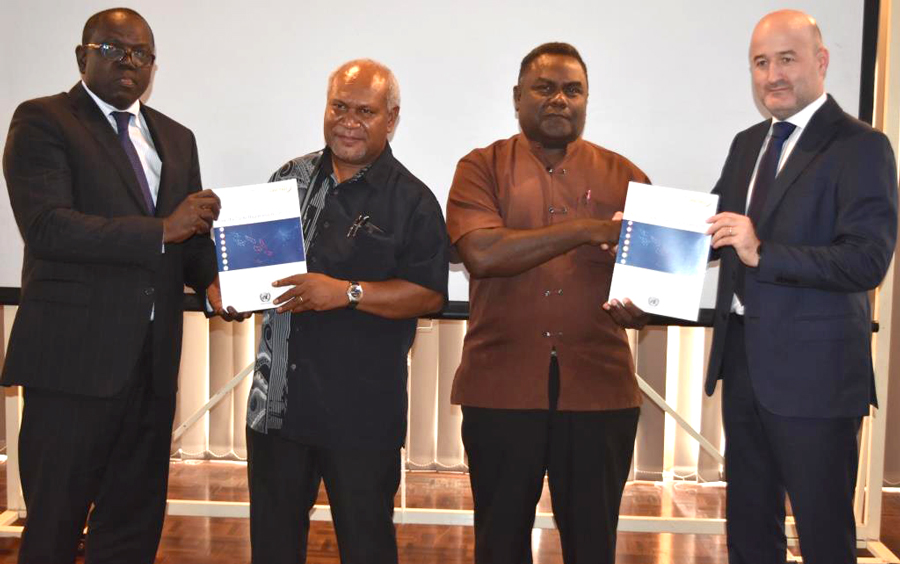
THE Solomon Islands government together with its stakeholders from both, the private and public sector have yesterday launched what has been described as the much awaited E-Trade Readiness Assessment report from the United Nations Conference on Trade and Development (UNCTAD).

With seven policy areas, the report highlights e-commerce readiness assessment and strategy formulation, ICT infrastructure and services, trade logistics and facilitation, payment systems, legal and regulatory framework, e-commerce skills development, and access to financing, as some of the key findings under the e-trade for all system.

In officially launching the report, Mbaye Ndiaye of Enhanced Integrated Framework (EIF) highlighted the importance of the report and the significance of e-commerce to Solomon Islands, which he felt a system that has always been practiced by the private sector, but in a smaller scale.

He said Solomon Islands can fully adapt the system if those responsible ensure that government stakeholders are involved in all its processes and more is taken out to the mass population in the provinces.

The call was also shared by other speakers, who believed the system has the potential to strengthen the vast collection of cultures, languages and geographical differences.

They also believed that with a developed and effective ICT environment, it can strengthen the bonds, and overcome whatever obstacles that Solomon’s geography and other factors pose, which should also help the country to become a genuine player in the global value chain.

Acting PS and Trade Commissioner for the Ministry of Foreign Affairs and External Trade, Joseph Ma’ahanua, who was also guest speaker, pointed out that by identifying the gaps and opportunities in the country’s ICT structure and working together towards developing the system.

“This will ensure that we are able to effectively participate in the world economy. It will help us to develop the many economically viable industries we have, including tourism, agriculture, and fisheries, to name a few, and take advantage of the opportunities they pose for our country’s economic and social prosperity,” the Acting Permanent Secretary explained.

He added that a developed e-commerce environment in Solomon Islands will have spill over effects on the trade, finance, manufacturing, and services sectors, amongst others.

He further added that having the system in place will positively affect the incomes of skilled and unskilled labour in the long run, and will effectively integrate the country into the global value chain.

“The e-trade sector provides numerous and far reaching benefits for the country,” Ma’ahanua further explained with much anticipation and eagerness to go through the findings and recommendations of the report.

Solomon Islands now join some of the small island nations within the Pacific region to have had a Rapid E-Trade Readiness Assessment done on its status regarding the application of the system, which according to experts, best suits the Least Developed Countries.

E-commerce according to experts, is one of the key drivers of growth and innovation in the world today, and has significant potential for Micro, Small, and Medium Sized Enterprises (MSMEs).

If applied properly, experts revealed that the e-commerce can make MSMEs more competitive and allow them to grow and thrive in what is becoming a highly competitive global market place.

UNCTAD has created a “Rapid e-Trade Readiness Assessment” to help countries to quickly identify barriers to further e-commerce development.

These demand-driven assessments provide a basic analysis of the current e-commerce situation in the countries concerned to identify opportunities and barriers.

The resulting reports serve as a valuable input to these countries’ involvement in various discussions related to e-commerce and digital trade.

The launch according to UNCTAD representative, Sven Callebaut, is also a reminder that Solomon Islands can now move from assessment to implementation the action matrix, which many agreed that this is the stage where working together is vital.

Meanwhile, Ma’ahanua while touching on the next phase, he shared similar sentiments stressing that as was seen, this system will need the involvement and inputs of various ministries across th government, and in the private sector.

“It is a highly holistic process, and cannot be put in a single organisation or person’s hands. Thus, it is the duty of each one of us, to take responsibility of this report, and work towards implementing the activities that our skills are best suited,” the Foreign Affairs and External Trade official added.

Also emphasising on the implementation stage, the report suggests the role of international partners in support will be important, and Solomon Islands will continue to require technical and financial support in ensuring that e-commerce is firmly integrated in the private sector and trade development initiatives, and of course within the overall national development agenda.

Traditional knowledge good for environment  

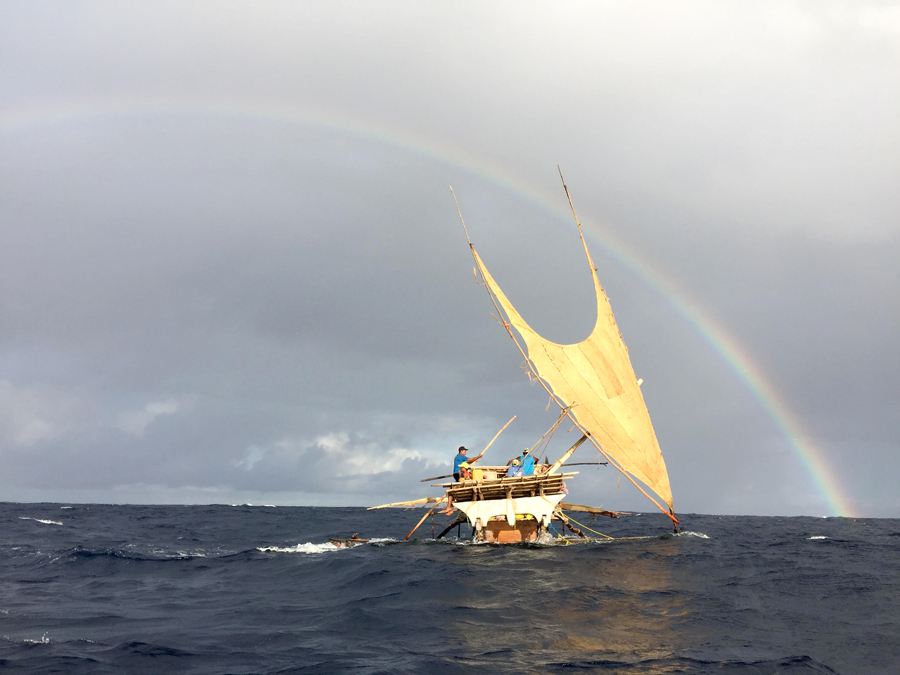
TePuke on the way from Taumako to Ndeni in 2017

BY GEORGINA KEKEA

TePuke on the way from Taumako to Ndeni in 2017

TRADITIONAL skills and knowledge are now considered endangered with only a small group of people still practising ancient wayfinding methods.

In the easternmost of Solomon Islands lies Taumako. Occasionally called the Wilson Islands, the islands of Duff are thought to have first been settled in the ninth century BC, around the same time as Anuta and Tikopia.

The people there depend on traditional farming through slash-and-burn cultivation and are well known for their traditional voyaging skills. However, this way of life is now under threat of trailing out.

“I came here to the festival with the purpose for people to see that we need to preserve our traditional way of doing things.”

Ambrose Miki comes from Taumako. He comes from a long line of builders and is a skilled sailor and navigator.

Though originated from Polynesia, the group of islanders from Temotu province felt that it is their duty to spread the word of retaining the traditional way of doing things, thus their attendance at the 6th Melanesian Arts and Cultural Festival (MACFEST).

“I come from the far eastern part of the country and our islands are vulnerable to the effects of climate change.

“I see a lot of people in the rural area now using outboard motors and I asked, why are they using OBMs? Use of OBM is not good for our environment and they too contribute to the effects of climate change,” Ambrose says.

The people of Duff islands are well known for their skill in voyaging.

‘Vaka Te Puke’ is a traditional voyaging canoe that was used by the people of Taumako for many years.

This style of craft is unique and not found elsewhere in the Solomon Islands or the Pacific.

‘Vaka Valo’ association was established to preserve the traditional ways and methods of building a Vaka Tepuke amidst the lamentation of this skill dying out.

“The traditional way of doing things can help save the world and not just Solomon Islands. It can help us live a sustainable life, become resilient and help save the environment,” says Mimi George.

Dr Mimi George is an anthropologist, sailor and writer specialized in voyaging cultures. In the Vaka Taumako Project she studies Polynesians building vessels and making voyages using ancient technology, materials, tools, and navigation methods.

For some time she had been carrying out research and working with the people of Taumako and says traditional knowledge is very important.

“We must learn and have the opportunity to learn. Because in the future, we will save the world. I am a scientist but I know, traditional knowledge is more than science.

“Everyone must work together. Because in the past, there were the traditional way of doing things already that has helped us live sustainably and in harmony with nature and each other and we know how to make peace.”

The Vaka Te Puke is built mainly from bush materials. It is described as an outrigger canoe with a crab claw sail.

In MACFest, the group from Taumako demonstrated how the Te Puke is built.

Women were tasked to weave the sail mat panels and the men were tasked to sew the panels into a sail as well as adze a steering blade for the Te Puke.

Sail weaving and oar carving were part of the demonstrations done by the group from Taumako.

“Our culture is very important. We must try to preserve and promote our culture. For these sort of voyaging, government must recognize such projects and assist in some ways,” Ambrose Miki, founder of ‘Vaka Valo’ Association says.

It saddens him that while the issue of climate change is rife, we continue to contribute to its effects through the influence of western culture thus forgetting our own way of doing things that are more sustainable and environmentally friendly.

“For future festivals as this, I want it to be custom and culture in its whole sense. Like now, we are here trying to promote our culture and traditions but most young ones are drawn to the live band music that are being performed on the other side of the village.

“How are we to promote our custom and traditions when there is live band music being played at the same time!

“Government should have a contemporary festival of its own so that traditions and culture are left alone to just that so that we will have more people appreciating what we do,” Miki says.

He then encouraged people to engage more in our traditional way of doing things rather than flocking to the city.

“Go back to your home village and get involved in such projects and save the environment. Each one of us originates from the village and all of us have customs.

“Learn, acknowledge, appreciate and accept our traditional way of doing things. It is worth more than money.”

Supported by UNESCO, Ambrose was able to attend MACFest all the way from Temotu.

The Pacific Traditions Society, UNESCO Office for the Pacific States and the International Information and Networking Centre for Intangible Cultural Heritage under the auspices of UNESCO were pleased to support the elders and youths from Taumako to showcase their skills and knowledge at the MACFest.

Balancing Country economic demands with environmental challenges

0
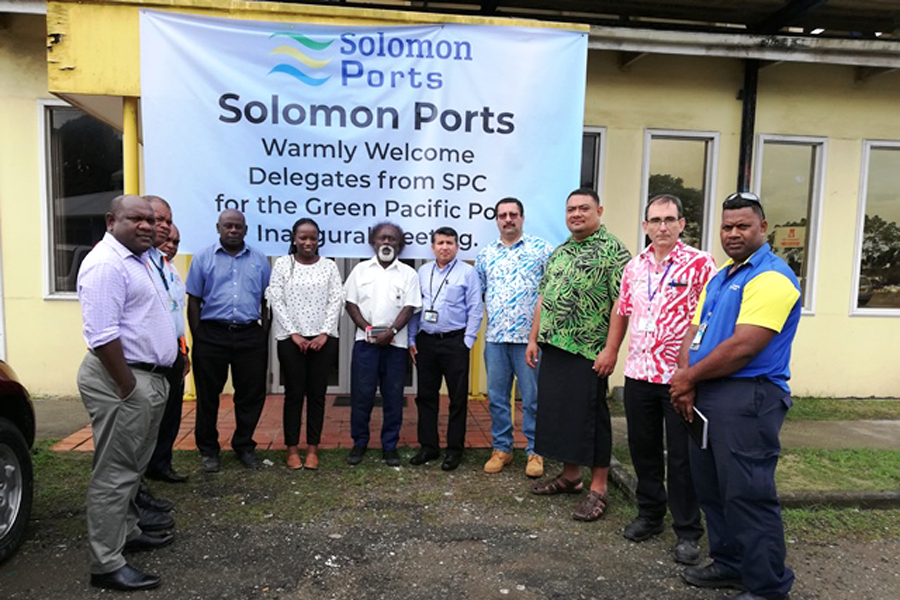
Deligation attending the green pacific ports.

By Ezekiel Talatau

Deligation attending the green pacific ports.

THERE is growing pressure on ports and shipping to slash emissions in the Pacific region.

Reaction to this, the South Pacific commission (SPC) and the Secretariat of the South Pacific Regional Environmental Protection (SPREP), implanting fund under the green pacific ports pilot projects.

Solomon Islands as one of the pacific countries along with Tonga to boost an initiative to promote balance environmental challenges with economic demands in ports, by (SPREP) and (SPC).

A green pacific ports project manager and a maritime port advisor Mr Sitalingi Payne told Island Sun that, the green pacific port is a 1 year pilot project implemented to improve environment with in the ports area.

He added that, the project will also focus on development of strategic, legal and quality legal framework to meet a proficiency and sustainability of ports operation.

The project will also dealing with the energy efficiency and carbon footprint, implementing climate changes and disaster risk management.

This initiative project will also change ports to green and low carbon pacific maritime industry, he added.

Green pacific ports this year is their first visit. After 1 year of working, the team will be back to monitor the progress of the projects.

In terms of policy, Mr Yoli Tom’taravala a Policy and Legal advisor stated that, he is working on the policy to support the environmental laws, marine pollution and handling of waste in the ports area. This will guide ports authority when dealing with the environmental issue within the ports boundary, he added.

With response to energy resources, an Energy consultant Mr Bruce Rowse, stated that, reducing use of energy is significant. Last year, average of 8% of carbon been emitted, which approximately to 15 tonnes of greenhouse gases.

Changes of staff, reduce of use of energy can contributes in reduction of greenhouse gases he added.

Mr Sitalingi Payne also said that, The Solomon Islands ports Authority (SIPA) are very cooperative in supporting this project with the same concept which is also a significant sights the country a currently addressing locally.