Home Blog Page 1017

Beware of ESP con artists

0

GOVERNMENT is warning public to be wary of imposters going round claiming to be ESP workers facilitating applications.

In a statement yesterday, government says:

“It has come to the attention of the Economic Stimulus Package Committee that certain individuals and/or groups are currently going around and claimed they work for the Government and took responsibility to facilitate ESP applications.

This week, the committee had received complaints from several persons who have spent thousands of dollars to certain individuals who claimed to be working for the Office of the Prime Minister and have promised to facilitate ESP applications.

Hence, the ESP Committee wishes to clearly inform the public of the following;

1.         The ESP application deadline was on July 31, 2020.

2.         The Committee does not accept any application that is delivered after the application due date.

3.         The application process does not require any financial requirements; hence, applicants do not require paying any amount of money for the facilitation of their applications.

4.         The only two contact persons regarding the ESP application is Trevor Manemahaga of the Office of the Prime Minister and Cabinet (OPMC) and Rictor Luaboe of the Ministry of Finance and Treasury (MOFT).

5.         Further information regarding the ESP applications can be reached at the Office of the Prime Minister and the Ministry of Finance and Treasury.

The Government through the ESP Committee is fully committed to the accountable implementation of the ESP in the interest of wellbeing of the people, national stability and economic empowerment.

–OPMC PRESS

Covid frets

0

Survey reveals worryingly low confidence in businesses here

BUSINESS confidence at many areas of the economy is at a record low, a new survey has indicated.

The Solomon Islands Chamber of Commerce and Industry (SICCI) 2020 Business Confidence Survey suggests that most businesses (43 percent) expect their business situation to remain the same during the next six months due to the Coronavirus global pandemic.

Twenty-three percent of respondents to the survey expect their situation to deteriorate while 28 percent remain optimistic of an improved business situation for this year, 2021.

The survey, conducted among 46 businesses in December 2020, covered all the industry sectors and different business sizes based on the number of employees.

Thirty-two percent of respondents expect no improvement in the local business environment in Solomon Islands, saying it will remain the same, while another 32 percent expect the general business situation to deteriorate.

Natalina Hong, Chief Executive Officer (CEO) of SICCI, said:

“In many instances, these results are a cause for concern and that is why it is critical that Government create the right settings for future private sector growth to bolster the covid-19 recovery and support businesses,” Hong said.

“As a Chamber, we believe all stakeholders including Government will need to work together to find a better path to follow where the right balance between managing the health and security challenges while also addressing the economic hits,” she added.

The survey found the shortage of Finance (30 percent) and Demand (32 percent) are among the main factors most limiting business ability to expand activities.

The survey also found that businesses are finding it harder to get skilled or specialist labour but easier to get unskilled Labour.

Hong said that this survey results highlighted again the growing challenge of unemployment now facing the Solomon Islands economy.

She added: “There is a clear warning that a possible rise in unemployment is now inevitable as businesses adjust to a new normal.

“The survey highlighted that 36 percent reported a reduction of fulltime employees in the last 12 months, while more than half of the respondents (57 percent) reported also a reduction in profitability.

“The immediate priority for many businesses is survival.”

Sixty percent of businesses that participated in the survey reported a need for improvement in Government services while 35 percent stated it has worsened in the past 12 months.

As for this year (the next 12 months), 35 percent expect Government services to remain the same, 42 percent expected it to worsen and 22 percent are hoping for improvements.

The survey further highlighted that 56 percent of businesses expect changes in Government policy and budget in response to covid-19 to have a negative effect on their businesses.

Twenty-three percent expect positive effects while eight percent expected no effect at all.

Forty-one percent have high confidence their business will survive the extended State of Public Emergency (SOPE) while 34 percent have moderate confidence and 10 percent low confidence.

SICCI has conducted the Business Confidence Survey annually since 2017.

SICCI Membership and Services Officer, Naomi Mara, who takes lead in conducting Chamber surveys, said this exercise is a pulse-test to identify the level of business confidence perceived by participating members from within the Chamber’s diverse membership.

The survey identifies trends and conditions in the private sector.

Increased business confidence is an indicator of economic growth, associated with increased spending and more economic activity.

On the other hand, a decrease in business confidence may indicate a slowing of the economy.

“The data gathered enables the Chamber to consolidate business experience that informs how it progresses issues with Government.

“The outlook for business, also informs the wider private sector and partners to Government, of the standing of the economy as a whole,” Mara said. 

This issue marks the fourth SICCI Business Confidence Survey.

–SICCI MEDIA

Gov’t blamed for NRH nightmare

0
Opposition Leader and MP for Aoke Langalanga Hon Matthew Wale. Photo Credit; Pacificwin NZ Aus Pacific on LinkedIn.

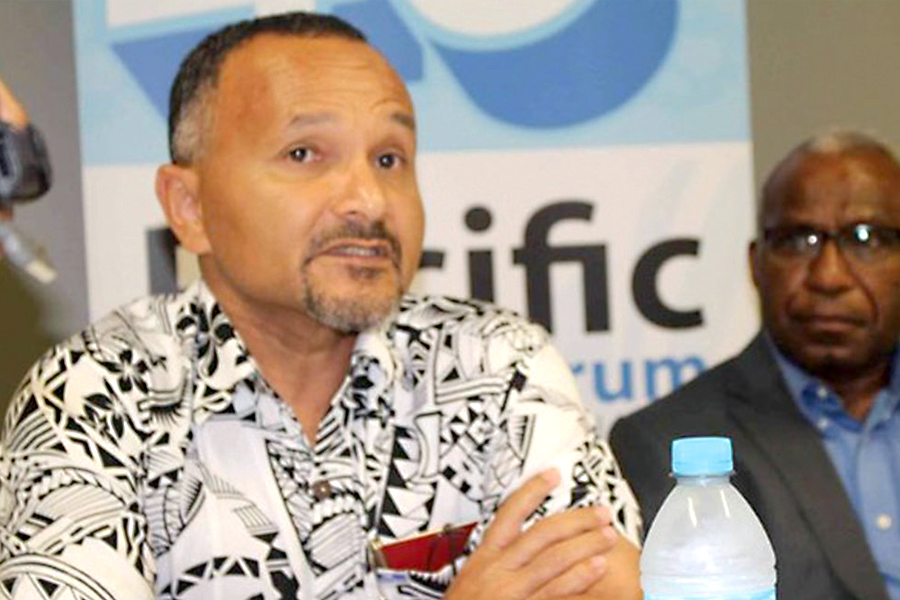
THE Leader of Opposition, Matthew Wale in response to the statements by the NRH CEO Dr George Malefoasi describing bed shortages and other problems at the NRH, says that the government has neglected the NRH for a very long time.

“This is not just because of the diversion of resources to Covid-19 related work. NRH, which is right under the nose of the national government is clear evidence of prolonged government neglect.

“How are we to expect provincial hospitals and rural health facilities, which are far removed from the daily gaze of the national government, to receive adequate attention?” the Opposition Leader questioned.

He said the NRH CEO pointed out the acute bed shortage currently experienced at the Emergency Department, and the in-patient wards, with patients sleeping on the floor, a matter Mr Wale said is just the tip of the ice-berg.

“There are far more serious problems at the NRH that have been neglected by the government for so long. The basic and most serious of these problems is the fact that clinical governance is almost non-existent. And this important matter continues to receive next to no attention from the government. There is a level of incompetence in this neglect that must be addressed,” says Wale.

Further, Wale said that he has received complaints from patients that nurse attendance at NRH is particularly poor.

“There seems to be no control over attendance, and this puts additional pressure on doctors working the shifts. And patients have also complained that nurses are often administering treatment doses at wrong times and with wrong dosage,” says the Opposition Leader.

Wale said these are very serious concerns that NRH, and the Ministry of Health must immediately address, but that it points to inadequacies in nursing training as well.

Wale said there are obviously inadequacies in our nursing training if nurses don’t turn up for work at all or on time, and are administering medicines with wrong dosage.

“Although there is no statics on this particular problem, the government must not delay in eliminating nurse absenteeism and medicines dosage issues. There must be accountability for what should be fairly basic management issues,” the Opposition Leader stressed.

A Parliamentary inquiry into these issues was conducted in 2009, and it seems the situation has not been irreversibly addressed.

Wale said given that this situation has been going on for such a long time, it is clear that the Ministry of Health is unable to deal with it.

“It seems they only see the obstacles and are unable to see solutions to the challenges. There is a sense of resignation on the part of the Ministry in dealing with the NRH issues there is a lot of talk, but little sustainable curative action,” said Wale.

Wale calls on the Prime Minister to seek external help to study the challenges, and bottlenecks at NRH in the first instance, and recommend long term solutions that must include not only quality infrastructure facilities, adequate equipment and medical supplies, but must also include a robust modern clinical governance system.

“Many countries have come through similar development challenges in their healthcare systems, and it is important that we seek to benefit from their experiences. NRH can be and must be better than it is.

“Let’s be ambitious for NRH, said Wale.

“We owe it to our healthcare professionals who work there, and also to the patients and the public to make NRH better.

“The NRH nightmare is due solely to neglect. Perpetual crisis management will simply not do anymore.”

–OPPOSITION PRESS

People must learn to behave responsibly: Court

0
In-court

BY JENNIFER KUSAPA

The Magistrate Court has issued a strong word of advice urging people to learn to behave responsibly and not to take the law into one’s own hand – especially when under influence of alcohol.

Principal Magistrate Augustine Aulanga issued the statement when he sentenced a high-profile national rugby player, Daniel Saomatangi, yesterday to two and half years’ imprisonment for common assault and grievous harm yesterday.

“There is no excuse or exception for that even if you drink alcohol. Therefore, it is important that nowadays, people must learn to behave responsibly and not to take the law into their own hands as a means of resolving their anger when under the influence of alcohol.

“People must also learn to think first and resolve their grudges or anger in lawful and appropriate ways because by not doing so, it will lead to committing a crime like the present case.”

Aulanga, in passing judgement, explains that the sentence imposed will not only reflect Mr Saomatangi’s personal factors but one that must send a clear message to the defendant and the general public that committing grievous harm injury or any serious violent crimes on other persons will not be tolerated by the court.

He said the accused as the one who committed the crime, is not the only person that becomes the centre of focus when it comes to sentencing. The interest of the victims of crime must be equally considered as well and should not be let down by the court.

Aulanga also said that the victims of any case expect justice from the court and they must have a voice when it comes to sentencing.

“Therefore, the courts of this country must be unwavering and stand against serious violent offences and should not shirk or evade their duties when it comes to the need for deterrence.”

ESP approvals include cocoa: Dentana

0
Dentana
Permanent Secretary for Finance McKinnie Dentana.

BY BARNABAS MANEBONA

Part of the Economic Stimulus Package (ESP) approvals completed includes ‘cocoa farmers’ as well.

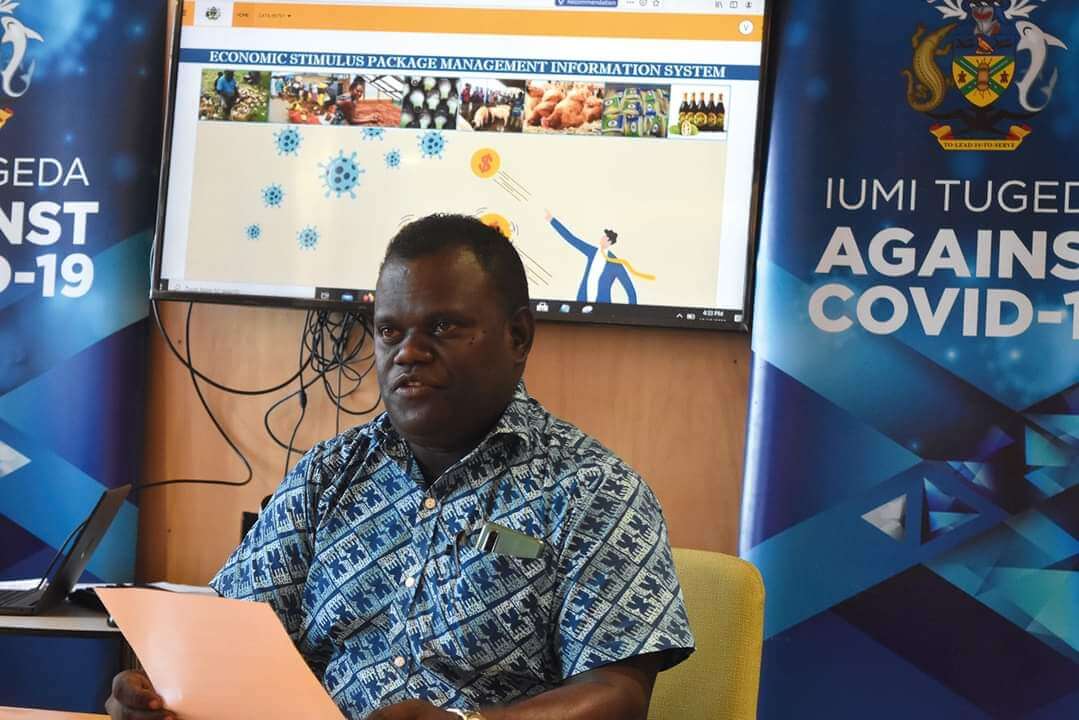
This is according to the Chairman of the ESP Committee and Ministry of Finance and Treasury (MoFT) Permanent Secretary (PS) McKinnie Dentana when asked during this week’s nationwide talk-back show if whether cocoa farmer’s applications once approved will be uploaded as well on website.

Mr Dentana in response said the approvals already completed include cocoa farmers, copra farmers plus all other remaining sector including vegetable farmers and also piggery at provinces.

“Yes part of the approvals completed include cocoa farmers, copra farmers plus all other remaining sector including vegetable farmers as well and also piggery at our provinces,” said Dentana.

A total of 3, 431 approvals have been awarded under the ESP.

The Chairman of the ESP Committee said they have completed the ‘first round’ of approvals on every sector under the ESP as there are up to around 2,123 approved recipients already uploaded and 1,300 are expected to be uploaded later this week and next week.

To note, Mr Dentana said the ‘second stage’ of the process is to do reviewing and monitoring of approved recipients on which they have scheduled it to start at April.

“We give time to recipients, they receive their support now from January, February and March, and hopefully by April they should start their operations. So we scheduled to commence review and monitoring and reporting of the recipients to start in April up to June. This is so that report can be produced before audit can take place around the third quarter of this year,” said Dentana.

ENDs//////

Pandemic bill awaits provincial consultation

0
Solomon Islands National Parliament

BY MAVIS N PODOKOLO

THE Public Emergency Bill is currently waiting on consultations which are being held in the provinces.

Attorney General John Muria Junior says consultations have been done in Guadalcanal Province, Honiara City Council (HCC), and with diplomatic missions, regional originations and private sector like the Solomon Islands Chamber of Commerce (SICCI) and a number of business houses in town.

“This week consultation for some of the provinces especially, Isabel, Central Makira, Temotu and our churches SIFGA and SICA will be done.

“Consultation for provinces was delayed and has not permitted us to bring our provincial representatives to Honiara due to bad weather. After that we will wrap up our consultations,” he said.

Dr Jimmie Rodgers, deputy secretary to Oversight Committee and Secretary to Prime Minister, said they are looking forward to finalising the bill to be tabled in parliament.

Rodgers said when this State of Public Emergency finishes on March 24, the Pandemic Bill should become an Act “where it commences and it will progress on from there”.

“This means we do not need to declare another State of Public Emergency.

“Just to clarify, we need the SOPE we can actually quarantine people and until the World is free of COVID-19, we will still need to quarantine people and that is the purpose of this pandemic bill and why we are working to ensure its ready by then,” he said.

The statement was echoed at the recent covid-19 radio talkback in Honiara.

600k for MPs under ESP to be monitored: Dentana

1

BY BARNABAS MANEBONA

FUNDS of $600,000-each under the Economic Stimulus Package (ESP) received by Members of Parliament (MPs) will be monitored.

Chairman of the ESP Committee McKinnie Dentana said this after being asked if whether the MPs $600,000 funds will be part of the ESP ‘second stage’ process which is to do reviewing and monitoring of approved recipients scheduled to start in April.

Mr Dentana said the reporting is for all recipients of the ESP as it does not exclude anyone.

“The reporting is all recipients of the ESP, so we will write to our Members of Parliament [MPs] as well.

“It does not exclude anyone. All recipient will in one way or another, the team will take information from them,” said Dentana.

Late last year, it was said by the Economic Stimulus Oversight Implementation Committee (ESPOIC) that the allocation of $41,900,000 under the ESP to MPs is given within the ‘ESP guideline’.

The Policy Secretary Fundamental Reform Sector, Officer of the Prime Minister and Cabinet Trevor Manemahaga said what is given to the MPs is not outside of the guideline of ESP.

According to leaked document raising public anger which was described as unverified by ESPOIC, it showed that MPs received $600,000 each while seven MPs received double.

Mr Manemahaga however in a press conference clarified that what is given to the MPs is not outside of the guideline of ESP.

ESP Chairman Mckinnie Dentana had also clarified that the $600,000 ESP allocation to MPs comes under component two of the ESP known as ‘Immediate Recovery Measures 1’ which focuses on productive resources centres.

In document launched during May last year, these measures focus on the productive and resources sectors especially in investing in value-adding targeted products in the agriculture, forestry, fisheries and tourism sectors.

The objective of this element of the package is to increase rural production and employment and diversification of the export and economic base.

These measures include Investment in value added or production of targeted agriculture products like noni, kava, cassava, taro, coconuts and cocoa. This initiative was said expected to cost $70 million, as special feature under this package will include proposal to provide price or freight subsidies on copra and cocoa.  This is to ensure people migrating to the provinces due to Coronavirus (Covid-19) threat to engage in copra and cocoa production.

Mr Dentana further clarified that on top of that, the MPs received additional funds under the component four called ‘Medium to Long Term Growth’ focusing on infrastructures.

The medium-term element of the package focuses on support to stimulate and build the capacity of the economy to develop and grow.

Meanwhile, a total of 3,431 approvals have been awarded under the ESP.

Rugby star jailed

0
National rugby star Daniel Saomatangi.

Two years for drunken assault

BY JENNIFER KUSAPA

A YOUNG rugby player who attacked a man and left his victim with permanent damage to his right eye was jailed for two years six months on Tuesday 17th February.

Daniel Saomatangi was found guilty of one count of common assault.

This was in relation to an unprovoked incident on January 18, 2020 shortly after 2am at the Heritage Park Hotel in Honiara.

The court heard after he came out from the Heritage Club drunk, Saomatangi confronted his victim who was sitting inside his Hilux at the car park area.

Principal Magistrate Augustine Aulanga said the accused was under the influence of alcohol when he punched the two victims – a couple.

“This occurred immediately when they started to argue,” Aulanga said.

“The fact that he was under the influence of alcohol shows he was not able to control his temper and was likely to get angry and involve in a fight much quicker than his normal sense,” he added.

Aulanga said the facts showed that the fighting had already stopped and likewise, they had already separated.

“There wasn’t any provocative words uttered to him from the victim.

“Yet, he ignored those who restrained him and ran straight to the victim and punched his right eye and according to the medical report from the victim had permanently caused loss of visibility to his right eye.”

Aulanga also said that since the defendant had denied the charges and the matter went to trial, he finds him that he is not entitled to any remorse.

Magistrate Aulanga imposed a starting point of three-and-half years’ imprisonment.

“This sentence will be increased by four months to reflect the aggravating factors, making it to a term of 46 months.

“However, this term is reduced by 16 months to reflect his youthfulness, his personal circumstances and the delay taken to finalise this case.

“The final sentence for this offence is 30 months or two-and-half years’ imprisonment.

“By operation of section 44 of the Penal Code, I am precluded from suspending this term.”

Aulanga also said that he was urged to consider the personal circumstances that Saomatanga is currently a student at the University of the South Pacific (USP) Arts Preliminary Programme and being an important or key player for the National Rugby League team of Solomon Islands.

A total of seven reference letters were submitted on his behalf to show that he has been well liked by his family and that he had already taken steps to reform his behaviour by joining religious programmes and activities.

“I have considered those submissions and of the view that matters such as being a student or a key sports player for the country or a devoted religious person does not make you exempted from any punishment as a result of committing a serious crime.

“They should not be allowed to downplay or even trivialise the need to discourage this offence in the country.

“The need to deter serious crimes through the imposition of deterrent sentence as one of the crime prevention mechanisms should be the central focus of the court when it comes to sentencing.

“The offence of grievous harm, as earlier stated, is a serious offence. It is an act of selfish disregard to the safety of others by arrogant persons or those who claimed themselves as ‘iron men’,” Aulanga said.

2 breached SOPE

Permanent Secretary for ministry of health Pauline McNeil.

BY MAVIS N PODOKOLO

TWO foreigners have breached State of Public Emergency (SOPE).

Pauline McNeil, permanent secretary to Ministry of Health said these two breached the State of Public Emergency “in the sense that they were not allowed to disembark the vessel”.

She said they disembarked the vessel and went to a neighbouring village opposite Noro Port, Western Province.  

“They went to nearby village opposite Noro port so we reactivated Western Province Health team who have to follow up on the incident, take their swabs and also swabs of the four local contacts.

“Their test was done at the Gizo hospital and all six tests detected negative,” she said.

McNeil adds that the country’s official covid-19 record still stands at 18.

“Out of that 18 we still have four accommodated and monitored at our central field hospital (Multi-purpose hall). Of that four two are from the UK who have been staying for a longer period of time.

“The additional new one is from the Philippines third repatriation flight and the last patients is the Malaita case reactivation,” she said.

McNeil said for those who have been repatriated from Manila, the health authorities have picked up three reactivated cases.

“These cases have been previous positive in Manila and negative before the date they left for Honiara but they are reactivated when testing was done in Honiara.

“This trio did not count on top of the 18 recorded cases in the country,” said McNeil.

The above sentiment was uttered at the latest covid-19 radio talkback show on Sunday.

40 percent of 108k AstraZeneca vaccine to come first

0
AstraZeneca vaccine. Photo by NDTV.

BY MAVIS N PODOKOLO

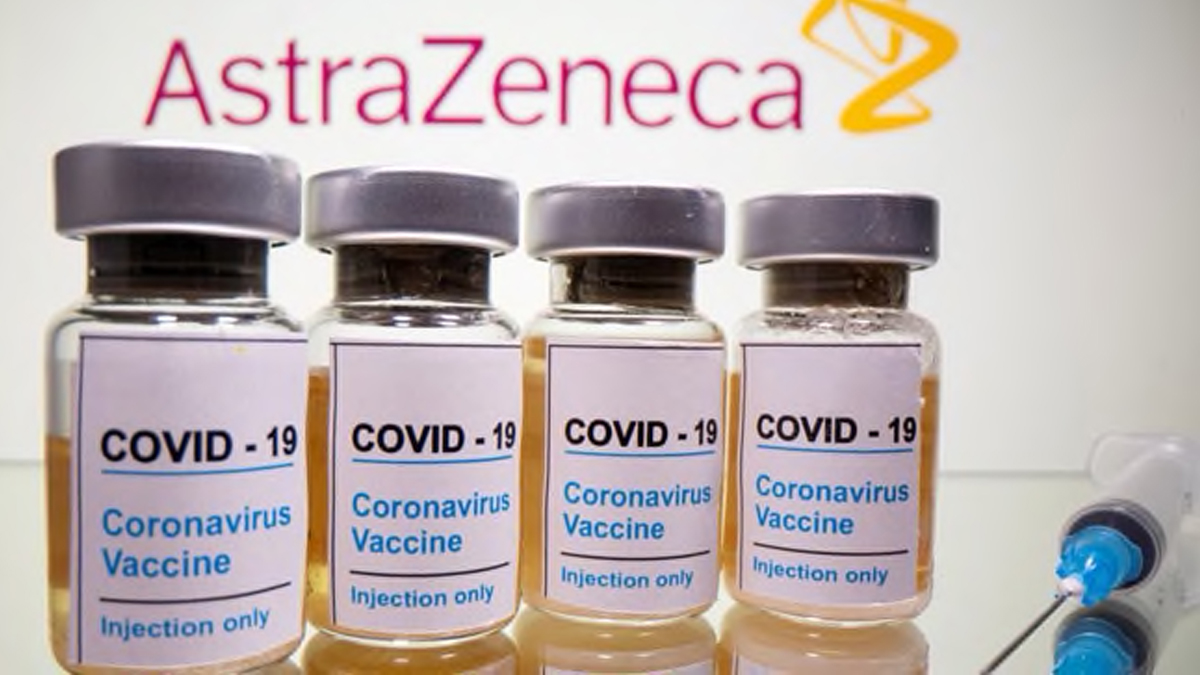
COVAX facility will be offering 40 percent of the approved AstraZeneca vaccine in the next quarter to support the country’s effort against covid-19.

Dr Yogesh Choudhri, technical advisor to the Ministry pf Health and Medical Services, confirmed this during the latest radio talkback show on Sunday.

Choudhri said 60 percent of the AstraZeneca vaccine will be released in the second quarter.

“We received a communique from COVAX facility that they be offering us 108,000 doses of AstraZeneca vaccine for the period of next six months. 40 percent of the vaccine will come in the next quarter and the rest 60 percent will come in the second quarter,” he said.

“The country’s application when the COVAX initially sort expression of interest from us for the Pfizer vaccine for the 0.25 percent of the 108,000 to be vaccinated. That application was not approved they instead offered the communique for 108,000 doses for AstraZeneca vaccine.”

Pauline McNeil, permanent secretary to Health Ministry, said they have drafted a policy document on the vaccines which will be submitted to caucus this week and to cabinet as well.

McNeil said the draft has been finalised and work is now ongoing to put the caucus paper together

She said in terms of the plan of the vaccination, the national deployment vaccination plan is now done.

“We submitted it to COVAX facility to have access to the hundred and eight thousand doses of AstraZeneca so that is pretty much confirmed for that number of doses,” said McNeil.