BY CHRIS ALEX
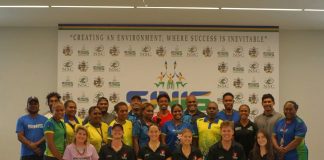
At the recent 16th Pacific Water and Wastewater Association (PWWA) Conference in Honiara, Mandus Boselalu, the country’s lead for Fluvio, captured attention as a passionate advocate for the future of water management.
A key figure among water professionals, Boselalu took the opportunity to share his journey in the water sector, emphasising the significance of collaboration among professionals across the Pacific to build a sustainable water future.
Boselalu detailed the exciting advances in water monitoring brought about by the Fluvio project, which has transformed how the Solomon Islands Water Authority (SIWA) tracks water turbidity.
Previously reliant on manual methods to record turbidity levels, SIWA now benefits from a cutting-edge system developed through the project.
The new mobile app and real-time monitoring stations have revolutionized how water quality is measured, especially in challenging circumstances such as at night or during floods.
“Through the Fluvio project, we’ve been able to digitize data collection and monitoring,” Boselalu explained.
“This makes it much easier to keep track of water quality, especially when weather conditions make manual checks nearly impossible,” he added.
Real-time monitoring stations have now been installed across SIWA’s water sources. These stations automatically record turbidity levels every 10 minutes, transmitting the data to a cloud database.
SIWA can then access these real-time reports and take immediate action when turbidity levels spike, particularly during the rainy season.
This innovation has not only saved valuable time but also enhanced decision-making, ensuring that water quality is effectively managed.
Boselalu also shared the pressing issue of water pollution, particularly concerning the Kongulai water source, which supplies Honiara’s main water supply.
The catchment area has been severely affected by logging operations, which pose a threat to the water quality.
To combat this challenge, SIWA is working on strategies to protect the catchment areas, including establishing a governance system with local landowners.
This collaborative effort ensures that landowners are not only safeguarding the water source but are also compensated for their role in protecting this vital resource.
“We’re not only focusing on protecting the catchment area, but are also working closely with landowners to ensure they benefit from preserving the water sources.
“This partnership will help create a sustainable model for managing our water resources while providing landowners with an income,” Boselalu said.
With the combination of real-time data collection and community collaboration, SIWA is taking significant strides towards ensuring a cleaner, more sustainable water supply for Honiara’s residents.
For feedback, contact:[email protected]