“Effective climate services facilitate decisions that will reduce the impacts of climate related disasters, improved food security, health outcome and water resource management.”
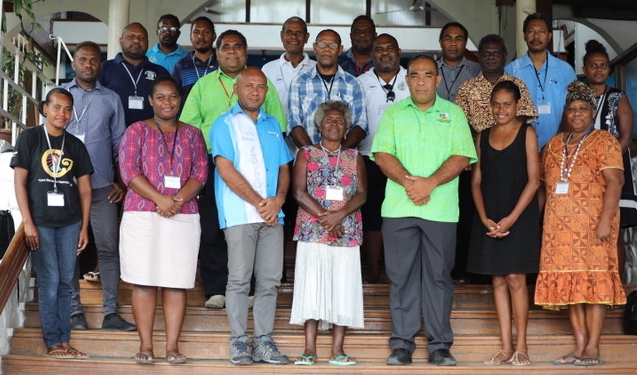
This statement was made by Dr Melchior Mataki, permanent secretary to the Ministry of Environment Climate Change Disaster Management and Meteorology in his remarks to open a National Climate Outlook Forum on November 16, 2021 in Honiara.
Currently Solomon Islands is trying to address the challenges of understanding climate predictions and the use of climate information to improve its own capabilities to better serve the needs of its people.
Today Climate Change plays an important role on informing decision makers about how to reduce the impact of climate related hazards, and it is essential for adaptation to climate variability and change.
“Effective climate services facilitate climate-smart decisions that will reduce the impact of climate change-related disasters, improve food security, outcome and water resource management,” said Mr Mataki.
Realizing these needs the World Meteorological Organization initiated the Global Framework for Climate Services (GFCS) for four sectors that include Agriculture, Health, Disaster Risk Reduction, water Resources and the recent inclusion of Energy.
This framework is important for Solomon Islands given our crops, fish and water that we depend on also depend on weather and climate.
In line with MECDMs corporate plan and the DCCG policy to “strengthen and support the national meteorological service” the Ministry is continuing to expand its weather and climate observation network through support from UNDP.
The workshop was attended by various stake holders from fisheries, water resources, agriculture, health, forestry and representatives media, NGOs and People with Disabilities.
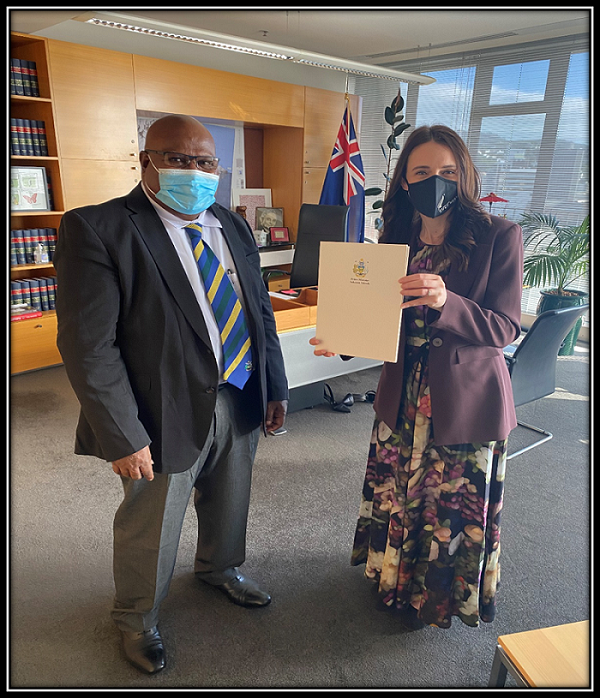
High Commissioner Eliam Tangirongo and Prime Minister Jacinda Ardern at the Prime Minister’s Office, New Zealand Parliament.
Solomon Islands High Commissioner to New Zealand, Eliam Tangirongo presented his Letter of Introduction to Prime Minister, Rt Hon Jacinda Ardern on Monday, November 15, 2021.
Upon receiving Tangirongo’ s Letter of Introduction, Prime Minister Ardern congratulated him on his new appointment.
In response, Tangirongo thanked Prime Minister Ardern for accepting his credentials and endeavours to work in close collaboration with the New Zealand Government.
Prime Minister Ardern conveyed New Zealand’s ongoing strong bilateral support to the Solomon Islands Government and looks forward to work closely with the Solomon Islands High Commission to New Zealand.
Some of the issues discussed during their brief dialogue during the ceremony were on New Zealand’s support in terms of the Covid19 Vaccination roll out and its management in the Solomon Islands, New Zealand’s infrastructure and development support to the Solomon Islands, New Zealand’s support in Education and Climates change, and Solomon Island’s participation in the Recognised Seasonal Employee (RSE) scheme as one of the pressing issues that requires some urgent attention.
Tangirongo informed Ardern on the current State of Public Emergency (SoPE) situation in the Solomon Islands and looks forward to work collaboratively with the New Zealand Government in strengthening and deepening the long standing mutual bilateral relations between the two countries.
High Commissioner Eliam Tangirongo replaces Joy Kere whose term ended in February 2020.
From left to right: Jerry Siota, Dean of Faculty of Business and Tourism Studies shaking hand with Andrew Nihopara, Permanent Secretary of the Ministry of Culture and Tourism with the signed MoU document.
The Ministry of Culture and Tourism (MCT) and the Solomon Islands National University (SINU) signed a Memorandum of Understanding to collaborate in the tourism human development, on Friday November 12.
Permanent Secretary of MCT, Andrew Nihopara and Dean of the SINU Faculty of Business and Tourism Studies, Jerry Siota signed the MoU at SINU School of Tourism and Hospitality Management.
Nihopara highlighted that the MoU is critical at a time when fostering partnerships is important for meaningful engagements and collaborations between Government ministries and other agencies representing key development sectors of Solomon Islands.
“The Ministry is fully committed to undertake and translate the obligations and commitments that are stipulated in the MoU we are signing today into meaningful areas of collaboration, to commence as early as 2022.”
Senior management team of the Solomon Islands National University, Ministry of Culture and Tourism and Tourism Solomons officials posing for a photograph with the signed MoU of collaboration documents.
He pointed the main areas in that collaboration signed in the MoU;
Research collaboration, by encouraging meaningful research to serve the mutual interest of those from government and the Solomon Islands National University’s academic needs;
Entrepreneurship award scheme to the final year tourism and hospitality students’ best proposals, as the incentives to the students at the highest level;
Adopt a notion of becoming job creators than job seekers;
Jointly promoting symposiums, conferences, talk stories, and seminars of issues of importance for tourism;
Participation of the students in trade fairs;
And active engagements and dialogues for the development of the students.
Dean Siota commended the collaboration, as guided by the MoU, for the next three years, is proper for comprehensive partnership for strategic as well for academic engagements for the period of 2022 to 2024.
He thanked the Permanent Secretary Nihopara for recognising the importance of collaboration.
On the same note, he congratulated the School of Tourism and Hospitality Management for that initiative and liaising with MCT for the MoU signing happened.
Jerry Siota, Dean of the Faculty of Business and Tourism Studies, SINU acknowledging the Ministry of Culture and Tourism’s recognition of the collaboration between SINU and Ministry of Culture to develop the tourism human resources at SINU.
“This MoU is not in silo. But it is continuing to link the SINU strategic plan,” said Siota. “Which is to link with stakeholders such as the government ministries, private sector, regional and international universities.”
Thus, the Faculty of Business and Tourism Management was embarking on series of MoUs. And that MoU signing was a start.
Nihopara elaborated that the timing of that collaboration could be renewable and extendable upon its review.
“I can emphasis the fact that translating the signed MoU into practical results for our students is the key,” he added.
The MoU signing was witnessed by SINU senior management, SINU tourism students, Tourism Solomons Head of Sales and Marketing, and MCT officials.
Corruption remains an issue, says TSI deputy chair Kingmele
By EDDIE OSIFELO
CORRUPTION remains a big problem in the Government and business sector.
Vice Chairman of Transparency Solomon Islands, Rodney Kingmele stated this during the launch of the Global Corruption Barometer 2021 Pacific in Honiara yesterday.
It is a snapshot of the views of over 6000 people across the 10 countries and territories in the Pacific.
Kingmele said the results are worrying.
For Solomon Islands based on people who have used relevant public service in the last two months:
60 percent think that companies frequently use money or connection to secure government contracts
33 percent have experienced sextortion or know someone who has used sex to access public service
25 percent were offered bribes in exchange for vote
21 percent paid a bribes for public service
He said only 18 percent of respondents thought that officials who engaged in corruption frequently faced consequences.
“Unfortunately, this is a reflection of the lack of faith and trust that our people currently have in our laws and integrity institutions to be able to adequately deal with corruption,” Kingmele, a lawyer by profession said.
In addition, he said 97 percent of those interviewed said that corruption exist within the government, whilst 90 percent stated that corruption was also present in business sector.
Kingmele said in terms of bribery and personal connections, overall, 21 percent of the respondents say that they have in the past witnessed bribery whilst 36 percent stated that they had witnessed the use of personal connections to access public service.
He said it is also a matter of concern that 17 percent said that they have come across bribery involving the police whilst a further 30 percent stated that they had come across the use of personal connections in dealing with police.
Likewise, Kingmele said 13 percent stated that bribes had been involved in receiving government documents whilst 27 percent stated that personal connections had been involved to obtain such document.
A leading academic Dr Transform Aqorau has offered some advice on how to screen so-called mining companies applying for licences.
This came after Ministry of Mines, Energy and Rural Electrification is screening the application of Nickel Enterprise SI Limited (NESI) showing interest to do bauxite mining on West Rennell.
Dr Aqorau, CEO, iTuna Intel and Founding Director, Pacific Catalyst and a legal adviser to Marshall Islands posted on Facebook that it is not rocket science.
“Ask for their profit and loss accounts; any financial statements if they are listed on a stock exchange somewhere, and ask them to produce evidence of prior mining overseas,” he said.
“Many of these so-called mining companies we are seeing are bogus companies with no history of mining, but because the governance arrangement surrounding mining has become so politically charged, it is a mess,” he said.
Aqorau, who was the former CEO of the Parties to the Nauru Agreement Office said it happens when politicians and ministers allow themselves to be controlled by these Asians (no insult and harm meant).
He said the last genuine mining company that would have set the standard was Sumitomo but they gave up and left.
“Nicolas Biliki was given early retirement when he tried to follow the law and apply tighter controls on applications etc but these Asians ran to the Prime Minister Office and Nicolas was asked to retire early.
“What about the resource owners, what about those who own the land? What effort is there to protect them?” he asked.
Aqorau, also a visiting Professor at Solomon Islands National University at the newly established Institute of Ocean, Islands, and Sustainable Development, said a mining company that uses a law firm as its address is the first indication when due diligence is done, that it probably does not have a known track record of mining.
“It is simple, ask for their profit and loss account, and ask Interpol to investigate if they have any mining experience where they come from.
“The case of Solfish going into mining is a classic example. It is just a grab. Get a few wantoks from China, form a JV and lets mine the crap out of Solomon Islands,” he said.
“Never mind about their laws. Just give their politicians and Ministers stacks of cash.
“They are always broke and need money, so just pay them to ransack their system,” he said.
Dr Aqorau said it is time people and our younger generation stand up and revolt against this practice.
“Our Ministers, Cabinet and Caucus are taking us to the cleaners on resources that do not belong to them.
“Where are the youths, where are our university students? Can’t you see your future is being stuffed?”
SOLOMON Islands has been listed as one of the beneficiaries of an ADB $3million project.
The project is part of Pacific Island with clean energy and focus will be on technical assistance to strengthen the reliability and sustainability of the energy sector and mobilise private sector investments in clean and renewable energy.
The technical assistance facility will support due diligence, preparation and procurement, and reform recommendations for projects such as the Federated States of Micronesia Climate Resilient Energy and Water Project, the Marshall Islands Electrification Project, and the Solomon Islands Sustainable Solar Development Investment Program.
It will also provide technical expertise to prioritize, plan, and prepare investment projects.
The facility aligns with ADB’s Pacific Approach, 2021–2025, which aims to deliver sustainable services wherein renewable energy-based electricity generation has a key role to play.
ADB recently raised its ambition for 2019–2030 cumulative climate financing to $100 billion and is committed to ensuring that at least 75% of its projects will address climate change mitigation and adaptation by 2030.
Island Sun understand that funding will boost the existing projects that ADB is working with the Government of Solomon Islands and Solomon Power to convert electricity networks in five provinces to solar power as part of a new approach to reduce the need for costly shipments of diesel to the provincial centers.
One of the big project is the Tina Hydro which aim to provide affordable electricity and improved accessibility to cleaner, more reliable energy sources for communities now and in the future.
Female Workers at the Soltuna cannery in Noro. PICTURE: FFA
By Brian Lezutuni and Mavis Podokolo
THE Government believes that the $360 million Economic Stimulus Package funding has helped Solomon Islands and its people avoid the worst economic impacts of COVID-19.
When the pandemic closed international borders, shutting down tourism and disrupting exports, it was widely seen as one of the biggest economic challenges the country has ever faced.
Permanent Secretary of the Ministry of Finance and Treasury, McKinnie Dentana said it would be foolish to say the country might recover with the funding set aside under the package, however, government’s policy is stabilising the economy.
“This is to ensure the economy would not deteriorate but stabilized… for the people.
“Based on the scenario we have seen; we are not really deteriorating like what we expected.
He emphasized that small projects and businesses needed to have the capacity to continue and people needed to hold cash money in their hands as the COVID economic crisis hit.
“What is important is the government will continue to earn from the taxes spent by the people,” he added.
The country has faced hardships over the past year with a provisional employment data from the National Provident Fund (NPF) showing that the total number of people employed fell 6.0% to 57,028 by end of 2020.
The Economic Stimulus Package was an ambitious fiscal measure to address the negative impacts of the pandemic on the economy
It focused on three key strategic policy objectives:
1) to ensure business continuity and prevent the economy from declining further;
2) to immediately boost economy recovery by encouraging income generating activities and employment.
3) to promote medium to long term growth
Despite a gloomy prediction at the end of last year about the local economy, PS Dentana said our economy was able to cushion the impact of the pandemic and to maintain its stability.
“We did not only pump money to our local economy through the stimulus package but also other Covid-19 funds from the National Government generated from the quarantine centres.
“The donors have praised us for well managing our Economy we are not really deteriorate.
“Business continues, trading continues, especially export and import is continuing….and commodity continues.
Tuna a bright spot, despite some struggles
Companies that have benefited from the Economic Stimulus Package (ESP) include SolTuna Limited, the multi-million-dollar company employing more than 2,000 Solomon Islanders.
Soltuna received $5 million from the package.
Marketing Manager, Kenwood Harry told island Sun he understands that the $5 million is the government’ commitment in terms of supporting Soltuna and food security for the country.
He said the money helped with some of the company’s costs, but not its full operation.
“I would say …it is not that sufficient but at least we use it for some of our operation inside the company.
Soltuna Marketing Manager, Kenwood Harry
Mr Harry said despite the challenges posed by the pandemic, Soltuna has been able to maintain production at its processing plant.
“Our operation …operated as normal as there is no community transmission recorded here in the Solomons.
Soltuna worker, Sabrina Peli who is employed at the Soltuna’s cannery at the township of Noro is glad that while other industries have suffered adverse impacts as a result of Covid-19, she and her co-workers have been able to retain their jobs.
Ms Peli said people like her are able to find a steady and paid jobs at the company.
“We have many relatives and family who were laid off during the covid-19 crisis, however, we are thankful that despite that, we are able to support our family as we still have our jobs,” she told Island Sun.
Despite the mainly good news, the tuna industry has not escaped problems facing all importers and exporters.
“We are …affected by COVID-19, especially logistics where local supply chain is really affected,” Mr Harry said.
Freight and export challenges
Soltuna has experienced delays in procuring essential materials for its cannery.
“This is we because we only have limited flights coming, due to closure of the (international) border,” Mr Harry said.
Vessels arriving at Noro port have also been delayed, including due to quarantine protocols required before berthing he added.
Soltuna has been quick to respond to new conditions.
Soltuna vessel Solomon Topaz at Noro
“We managed to map out our contingency plan on how we as the company ordered the materials, despite the delay (which) is beyond our control,” Mr Harry explained.
Shipping delays have also affected the volume of tuna exported to neighbouring Pacific Island Countries.
However, within Solomon Islands demand for canned fish is still high.
Mr Harry said local strong demand combined with the absence of COVID-19 in the country, has resulted in Soltuna being able to maintain production, employment and surprising normality.
“The company got through this pandemic and felt the pinch, but it is still surviving,” he concluded.
The future of the ESP
In July last year, a total of $309 million was allocated for the Economic Stimulus Package to help ordinary people and the economy cope with the impact of COVID-19.
Small farmers and business-people were allocated $124 for rural production, forestry, fisheries and tourism businesses. Infrastructure projects, Development Bank of Solomon Islands and companies in essential industries, such as airlines and water supply, also received funding, as did MPs.
Much of the funding was intended as immediate initiatives to be spent within a year.
Back then, few people would have expected that more than a year later borders would still be closed and industries suffering.
After such a huge investment, the Ministry of Treasury and Finance (MoFT) is now assessing the impact of first ESP measures, with the report by its Monitoring and Evaluation Committee expected later this month.
MoFT Permanent Secretary Dentana has said a second economic stimulus package is possible but will depend on the findings of the Committee.
PS Finance Mckinnie Dentana
With borders remaining closed and vaccination rates not yet at levels required for re-opening, it will be some time before business gets back to normal.
And before that there are likely to be new challenges.
Mr Harry says Soltuna is ready for when COVID-19 reaches our shores.
“Should there be any cases recorded we have a plan in place for us to follow so that our work is not disrupted,” Mr Harry said.
“For now our contingency plan is not active ….not until we record any community transmission.
“Then we will activate our plan to not disrupt our production and our economy, as well.
This story is the last of a series supported through funding assistance by PACMAS for its ‘Covering the COVID economy’ Story Grant.
THE Ministry of Health and Medical Services (MHMS) has condemned last week’s newspaper report of a young girl in Malaita who claimed to have her arm turned magnetic, attracting android phone and other metal objects after getting her first COVID-19 vaccine jab.
“This report is not only misleading but more concerning is the fact that it lacks key fundamental principle of journalism which is to tell the truth, truth in a practical and functional sense which we can operate on, on daily basis,” a statement from the ministry reads.
“In this case, the Ministry of Health should have been consulted for a response to the matter prior to publication,” it added.
“This is very important as we continue to deal with vaccine hesitancies and strive to speed up uptake across the country.
“The report last week did not verify the claims at all both with the Ministry of Health and the young girl, the subject of the article.
“The article also displayed total lack of respect for privacy and confidentiality of the individual by proceeding to publish the story without her knowledge and consent.
“This is irresponsible on the part of the media firm.”
The story appeared in the Solomon Star.
The ministry said it carried out an investigation into the claim.
“When out in the field, our investigators managed to locate the young girl and conducted interviews together with nurses of Fauabu clinic, in Malaita.
“The health team managed to verify through her mobile phone number, since she lost her vaccination card that she was vaccinated with 1st dose Sinopharm on the 17th of July in Honiara and missed her 2nd dose which was scheduled for the 7th of August.
“According to her, she experience minor side effects such as general body pain, dizziness, and having poor appetite upon returning to Malaita province.
“These symptoms are all reported adverse events of COVID-19 vaccines.
“At that time, she did not reported any magnetic effect resulting from vaccination.
“It was only after she heard the rumours of phone sticking to the injection site that she decided to check it on herself.
“The health team investigated the claim by placing an android phone against the injection site and the phone failed to stick to her arm despite multiple attempts and with various positioning of the phone.
“She was even asked to stand under the sun but the phone still did not stick to her arm.
“Senior staff and nurses at Fauambu clinic who reported that the young girl visited the clinic twice for her concerns confirmed that based on their assessment, she was booked for referral to Kilu’ufi hospital for further medical assessment and psychiatric analysis due to inconsistencies with her conversation, story and behaviour.
“For instance, the girl reported that she had her vaccination in May 2021 and in a video clip said to have taken her first jab in December 2021, when the vaccines have not yet arrived in country.
“As such based on investigations into the matter, the Ministry of Health would like to assure the public that the claim of mobile phone sticking to the young girl’s arm due to COVID-19 vaccination is not true.
“Nevertheless, it must be noted that metals and other objects sticking to the skin is a possibility under some conditions such as sweaty skin and positioning of the objects etc. and there is nothing new about it.
“Every now and then people experience these incidents of metals and other objects sticking against their skin, these incidents are not due to COVID-19 vaccines.
“COVID-19 vaccines are administered in liquid form as opposed to magnets, which are metal or iron in their physical form and are inserted into the body through the eye of the needle.”
The Ministry of Health kindly requests for responsible media reporting and avoid sensationalizing unverified information as we continue to roll out the COVID-19 vaccines.
“Such reporting is not in the interest of the country and have the potential to have a negative and detrimental impact to the COVID-19 vaccination drive but also for other National Vaccination and Immunisation efforts in addressing diseases which can be prevented through vaccinations.”
Group photo with the Pfizer vaccines as they arrive.
Solomon Islands received 100,620 doses of the Pfizer-BioNTech COVID-19 vaccines yesterday from the United States Government through the COVAX Facility – a partnership co-led by the Coalition for Epidemic Preparedness Innovations (CEPI), Gavi, the Vaccine Alliance and the World Health Organization (WHO), with UNICEF as the key delivery partner.
These latest donations from the American people will contribute towards fully vaccinating 50,310 people, especially pregnant women and children aged 12 to 18 in Solomon Islands, in line with the National Deployment and Vaccination Plan.
These vaccines were handed over to the Government in an official ceremony held at the Henderson International Airport.
In attendance at the handover ceremony were the Minister of Health and Medical Services, Dr Culwick Togamana, leading the government team including the Permanent Secretaries of the Ministry of Health and Medical Services, Pauline McNeil, and Ministry of Education and Human Resources Development, Dr. Franco Rodie, as well as senior executives of the Ministry of Health and Medical Services.
In attendance were also the Director of the United States Embassy Office in Solomon Islands, Russell Comeau, Chief of UNICEF Pacific’s Solomon Islands Field Office, Dr. Zelalem Taffesse, and WHO Country Representative to Solomon Islands, Dr. Sevil Huseynova.
Delivering keynote address at the event, Togamana expressed sincere thanks to the government and people of the United States of America.
Health Minister Dr Culwick Togamana delivering key note address
“It is a tremendous pleasure filled with thanks to receive the 100 thousand and 620 doses of Pfizer vaccines on behalf of our children 12-18 years of age and pregnant mothers,” he said.
“We now have the opportunity to increase vaccination coverage to these groups of people that will greatly contribute towards the overall protection of our people from severe sickness, hospitalization and death from COVID-19,” Togamana added.
“I understand that 2 billion USD has been provided to the COVAX Facility and another 2 billion scheduled for 2022 by the U.S. government.
“The support, as we have seen, has already contributed significantly towards equitable distribution of COVID-19 vaccines across the globe – more importantly to least developed and developing countries and Solomon Islands joins these groups of countries as beneficiaries to this wonderful support.”
The minister also thanked the support of UNICEF for all the preparatory work to receive the Pfizer vaccines from shipment and installation of ultra-cold chain equipment at the National Medical Store including facilitation of necessary trainings.
He also praised the joint partnership of health and education to roll out the vaccines in schools, initially in Honiara and eventually to the provinces.
Permanent Secretary of the Ministry of Education and Human Resources Development, Dr Franco Rodie, also echoed similar sentiments of thanks to the U.S. government for the support with the Pfizer vaccines.
“As we have seen, COVID-19 affects and kills indiscriminately, and children are not immune to the effects of the virus,” Rodie said.
“These vaccines offer us a wonderful opportunity to preserve the health and lives of our children thus can continue with their education and fulfill the life’s goal,” he added.
Dr. Franco Rodie delivering his remarks
“I want to thank Prime Minister Sogavare and Foreign Minister Manele and his team for facilitating my entry into the country and for their continued support and friendship.
“And a special thank you to our UN partners and Ministry of Health colleagues who have helped ensure this delivery was a success,” said Russell Comeau, Director, U.S. Embassy Office in Solomon Islands.
“These vaccines are an important step in not only protecting the health of Solomon Islanders, but also in supporting communities as they work to build back better from the many challenges brought on by the COVID-19 pandemic.
“These vaccines also represent the United States’ ambition to deepen our friendship with the people of Solomon Islands.
“We thank the United States Government for supporting our joint efforts in combatting the ongoing COVID-19 threats faced by children in the Pacific region,” said UNICEF Pacific Representative, Jonathan Veitch.
“We also acknowledge the Solomon Island Government’s strong efforts in their preparedness and response plans to keep communities safe and protected.
“UNICEF, together with our partners, will continue to support the government during this global pandemic.”
WHO Country Representative to Solomon Islands, Dr. Sevil Huseynova, thanked the U.S. government for channeling their support through COVAX Facility, which will greatly ensure equitable distribution of the COVID-19 vaccines across the globe.
“No one is safe until everyone is safe and this means that every single person needs to be vaccinated so that we are all safe.
“This batch of Pfizer vaccines will greatly enable Solomon Islands to achieve increased coverage to various groups who otherwise would not be able to get vaccinated, the children 12-18 years old and pregnant mothers.
Senior Advisors of MHMS Dr Yogesh Choudhri and Dr Elizabeth Rodgers with National Medical STore team preparing to move the vaccines to the ultra cold fridges
“WHO advocates and supports the overall COVID-19 vaccine roll out especially for those in high risk groups that require prioritization and we are pleased to have supported all necessary preparations to receive the Pfizer vaccines alongside UNICEF.
“We will continue to work closely with the government for effective and efficient roll out of the Pfizer vaccines to our children and pregnant mothers,” said Dr Huseynova.
As vaccines are now rolling out around the world, they should complement, and not replace, proven public health measures.
Solomon Islands, like other countries, will continue to apply tried-and-tested measures to successfully prevent and control transmission, such as physical distancing, masks, ventilation and hand hygiene, alongside robust programmes to test, trace, isolate and treat.
COVAX is the vaccines pillar of the Access to COVID-19 Tools (ACT) Accelerator.
The ACT Accelerator is a ground-breaking global collaboration to boost the development, production, and equitable access to COVID-19 tests, treatments, and vaccines.
Ultra Cold Chain provided by UNICEF to store the Pfizer vaccines
Its aim is to accelerate the development and manufacture of COVID-19 vaccines, and to guarantee fair and equitable access to every country in the world.
The United States remains the largest contributor to COVAX, providing $4 billion to support the global effort to provide safe and effective vaccines.
The United States recently reached the major milestone of 200 million doses of vaccines donated globally through the COVAX facility, more than 800,000 of which were donated to the Pacific Islands.
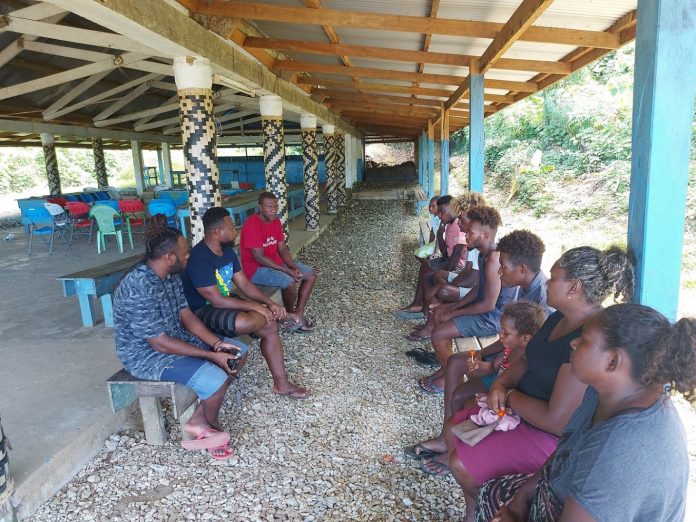
Kia village youths during a discussion session last week on Anti-Corruption
Isabel Province is taking the lead in supporting the Solomon Islands Independent Commission Against Corruption (SIICAC) in the anti-corruption campaign in the province.
This followed the invitation by the Isabel Provincial Government (IPG) for the Solomon Islands Independent Commission against Corruption, SIICAC, to conduct anti-corruption awareness in Isabel Province.
Speaking during a week-long awareness programme conducted by SIICAC in Kia village last week, Member of Provincial Assembly for Kia Ward and Minister of Finance Sam Watson said the awareness program is part of IPG’s preparations to host the International Anti-Corruption Day in Buala on December 9 this year.
Watson said the IPG plans to host the International Anti-Corruption Day following the Premier’s request to the National Government during the Second Appointed Day Celebrations in June this year.
Watson said the IPG is very much supportive to the National Government to establish SIICAC in the Provincial Capital Buala for the rural people to benefit from the services provided.
He said this is part of IPG’s strive to improve and integrate Good Governance in the established Tripod system in Isabel Province.
Watson said the Isabel Provincial Government is striving to maintain Accountability and Compliance following its Clean Audit Report under the Provincial Governance Strengthening Programme (PGSP), for three consecutive periods from in 2014/15, 2015/16 and 2016/17.
He said the IPG is working closely with the National Government by extending its full support to SIICAC in the anti-corruption campaign in the Province.
IPG has supported the recent anti-corruption awareness program through provision of Provincial staff and logistics.
Kia Community members representing the Tripod System in Isabel Province attended the anti-corruption awareness programme.
The Eta Council of Chiefs and Kia Community Representative Chief Douglas Boi Rove thanked the team saying the awareness program was very informative as it was the first time for some of the community members to learn and know about SIICAC and its role.
Boi Rove assured the team that people in Kia village are happy to work with the commission and join in the anti-corruption campaign in our societies.
SIICAC Director General John Kouni thanked the Kia Community, Isabel Provincial Government, Solomon Islands Government and UNDP for the cooperation and support rendered towards the work of the Commission.
The awareness program was facilitated by SIICAC and supported by the Office of the Prime Minister and Cabinet, OPMC, IPG and UNDP.
The Anti-Corruption campaign is a top priority of the Democratic Coalition Government for Advancement (DCGA) under its redirection policy to support and fully establish SIICAC to effectively carry out its mandated role. –GOVERNMENT COMMUNICATION UNIT