Home Blog Page 1668

PM refutes bribery claims on Huawei

0
PM Sogavare

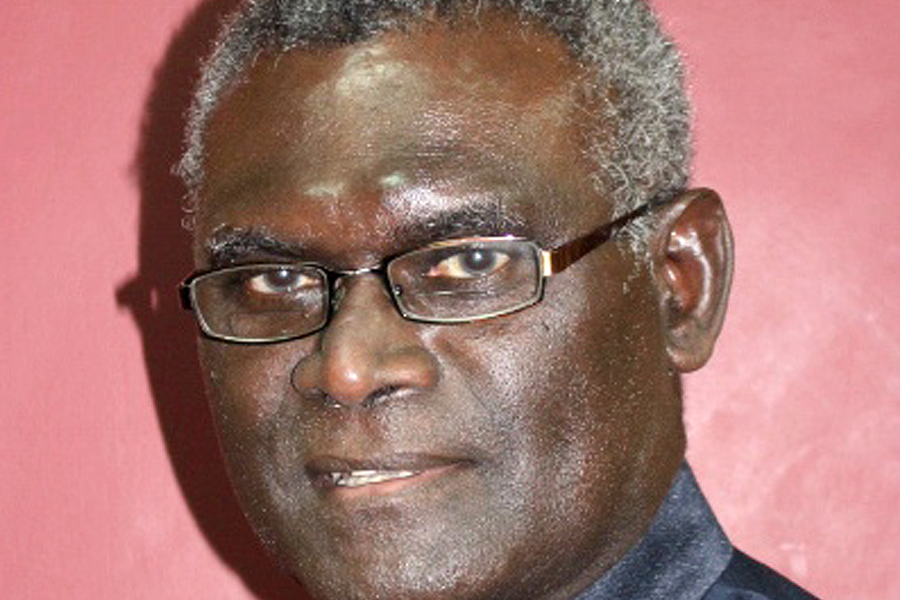
PRIME Minister Manasseh Sogavare has firmly denied bribery allegations by the Media in relation to selection of the Service Provider ‘Huawei Company’ for the Submarine Cable Project in Solomon Islands.

And he said he never received any form of political donation from Huawei.

Earlier, International media has revealed allegations of SBD$40 million political donation from Huawei Technologies regarding the undersea cable project in Solomon Islands to the Prime Minister and other senior ministers which prompted the Opposition Group to call for an investigation into the assertions thus urged the Prime Minister to tell the truth to this nation if he received such inducement from the company (Huawei).

But responding to the media claims, PM Sogavare in a statement issued by the Office of the Prime Minister and Cabinet (OPMC) today, says, the recent allegations by the media are false and lack credibility.

“I wish to state for the record that I strongly deny the reports by Media and have never received any form of political donation from Huawei,” Mr Sogavare says.

PM Sogavare says, “if the Media has evidence of such actions by members of the Government and or public service, please have them reported to the Authorities so proper investigations can be conducted rather than making speculative allegations in the media.”

The Fibre Optic Submarine Cable Project is a national project aimed at delivering fast reliable internet services to the Solomon Islands with the winning bid of the three tenders submitted for supply and installation of the fibre optic cable (FOC), originally being awarded to Xtera Communications, Inc as the least expensive of the three bids at USD$45M.

After comprehensive due diligence and consultations were carried out, it was decided in 2016 by the DCCG in both Caucus and Cabinet, that it would be more appropriate to install a brand new FOC rather than the recovered and refurbished cable being offered by Xtera.

According to the Cole Schotz bankruptcy blog, on November 15, 2016, Texas-based Xtera Communications, Inc. and seven of its affiliates filed voluntary petitions for chapter 11 bankruptcy relief in the United States Bankruptcy Court for the District of Delaware.

The Prime Minister also states that Huawei Marine Networks was also part of the 2015 ADB Tender Process.

Xtera’s bid totalled the sum of USD45 million which consisted supplies of both new cables and recovered and refurbished cables. Huawei’s bid totalling USD53m came 2nd in the overall tender process, however, Huwaei’s bid included the manufacturing of brand new cables.

Alcatel’s bid totalling USD58 million came 3rd in the Tender but their offer included only the supply of recovered and refurbished cable.

“So naturally, Cabinet and Caucus having considered the advantages and disadvantages of available options, a brand new cable was preferred over a second hand cable,” Mr Sogavare says.

Recent media articles have highlighted Canberra’s concern that the Huawei may have links to the Chinese Government and by allowing Huawei to plug into Australia’s telecommunications infrastructure backbone presents a fundamental security issue.

However, in recent bilateral talks between Prime Minister Sogavare and Prime Minister Turnbull both Prime Ministers acknowledge the need for Solomon Islands to develop this important communication infrastructure and assurances have been made to have the security concerns addressed in a manner advantageous to both parties.

“The security concerns of Australia are also the concerns of Solomon Islands and parties are exploring all options to have the matter resolved amicably,” PM Sogavare says.

The Prime Minister is confident and determined to see the issues resolved and delivery of the Submarine Cable Project for the Solomon Islands will commence by next year to provide Solomon Islands with reliable communications infrastructure.

Also in a separate media statement, Huawei Technologies rejected the allegations.

The company stated that the allegations made in the International media (Fairfax newspapers (20/8) regarding the Solomon Islands undersea cable project are baseless and without facts.

“These allegations have no basis in fact, and we denounce this type of groundless coverage. Huawei has never given, implied, nor promised any political donations in relation to this project.

“As a global business entity, Huawei does not involve itself in politics. Huawei forbids all of its global subsidiaries from making any form of political donation, including in places where this practice is legal.

“Cyber security remains a top priority at Huawei. We incorporate strict security protection into all of our business processes, and remain open to working with governments and industries to address global cyber security challenges together.”

NZ High Commissioner Opens East Malaita ECE Centres

0
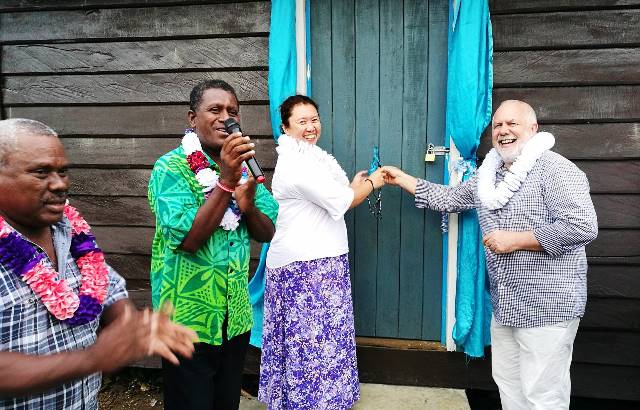
Malaita Premier Peter Ramohia, World Vision's Maria Adelaida Alberto and NZ High Commissioner Don Higgins open the centre at Fouo.

New Zealand’s High Commissioner to the Solomon Islands has reiterated New Zealand’s strong support for education, at the opening of two new Early Childhood Education Centres in East Malaita.

H.E Don Higgins travelled with Malaita Premier Peter Ramohia, officials from the Ministry of Education and Human Resources Development and World Vision to meet community members at Fuou and Maku.

“The earlier children begin to learn, the better. Not only for formal education, but for socialising, sharing and being with each other. New Zealand is very proud to be here in partnership with Solomon Island Government and World Vision to establish these early childhood centres, to train the teachers and to teach the children in Malaita and the Solomon Islands,” said the High Commissioner.

The two new centres are among 17 that have been built in East Malaita as part of a World Vision project funded by the New Zealand Government and World Vision New Zealand.

Malaita Premier Peter Ramohia said the centres would have the important role of preparing students for the start of primary school

“We must put education as high priority because our future is in education. We must engage our children so they can empower our communities to have a good standard of living,” said the Premier.

Fouo Chief Allen Ketai echoed the same sentiments, saying the new centres would improve access to education for his community and help children prepare for their future.

World Vision Acting Country Director Maria Adelaida Alberto says now that the centres are complete, the communities would now take full ownership of the centres and look after its operations.

“This is your education centre, your community and your children. This is for your children’s future that you are preparing for.”

As part of the project, 47 teachers have been trained and up to 648 students have benefitted from the new centres in East Malaita.

In Maku, where three people were killed in a recent boat accident, the delegation expressed their condolence to the community.

Source: World Vision Press

Always learning

0

I made mistakes last time. Perhaps mistakes are inevitable, but I wish it wasn’t the case.

After 15 years of medical training, I thought it would be easy to translate my skills to a new environment. It’s not as if human physiology changes when you cross a border.

As it turns out, scientific principles may not differ, but plenty of other things do. When I undertook my previous volunteer assignment – as Visiting Clinical Lecturer in Emergency Medicine at Divine Word University in Madang, Papua New Guinea (PNG) – I spent a portion of my time supervising students and junior staff in the Emergency Department (ED) of Modilon General Hospital. I learned that what works in Australia doesn’t necessarily work in PNG.

I vividly remember one patient, Ben*. He presented with a descending paralysis nearly 24 hours after being bitten by a snake. His airway was compromised and his respiratory effort poor.

There was no functional intensive care unit in Madang, and only in rare and specific circumstances would patients be intubated – a process that involves inserting a breathing tube into the trachea to facilitate oxygen delivery to the lungs. Patients would then be supported in the operating theatre’s recovery suite or ‘private ward’, a wing usually reserved for VIP patients. The local emergency physician and I quickly decided that Ben needed this level of attention.

The intubation went smoothly. He received anti-venom because it was in stock that week. Basic monitoring was implemented. Care was handed over to the inpatient team. We updated his family members.

Ben died a few hours later. We only found out when we enquired about his progress.

It wasn’t the news we expected to hear. Ben’s emergency care had been timely and effective, despite the Department’s extremely limited resources. His presentation even provided an opportunity for teaching; we’d demonstrated the intubation process, and discussed snakebite treatment.

I was never able to find out exactly why he died. There are many potential explanations, but fundamentally, the environment wasn’t equipped to support someone in such a vulnerable state.

I’ve thought about Ben a lot since then. What could and should we have done differently?

I’ve learned that, in these challenging and resource-constrained environments, less is often more. Rather than a plastic breathing tube, Ben may have been better served by the lateral recovery position and an oxygen mask. That approach would have had significant risks, but it might have limited his exposure to iatrogenic injury. One of medicine’s guiding maxims is ‘first, do no harm’.

I’ve also realised the importance of systems of care. Hospitals are complicated pieces of machinery, and all the parts are interconnected. There is little value in developing components in isolation.

Although clinical care was not the focus of my work in PNG, Ben’s case is illustrative of the challenges of practising and developing capacity in an under-resourced environment. Those of us who visit from outside need to think deeply about what strategies will be safe and effective.

When I got back to Australia, I experienced a sense of guilt that I’d benefited more from my assignment than I was able to contribute. I only hope that, during my brief time in Madang, I was able to have some small impact on the health students I was teaching. They will play a critical role in improving healthcare delivery in the most remote corners of PNG.

Fast forward three years, and I’m sitting in a balcony hammock overlooking Iron Bottom Sound. My (now) wife and I have returned to the Pacific for another volunteer assignment with the Australian Volunteers for International Development program. This time we’re in Honiara, contributing to the Solomon Islands Graduate Intern Support and Supervision Project (SIGISSP). Our first task? Learning how to pronounce the acronym.

Similar to PNG, the central focus of our work is teaching and training. This time we’re helping to develop and implement a transition-to-practice program for Solomon Islanders who have completed their undergraduate medical studies in Cuba. The current group of trainees have returned to Honiara after six months of Spanish language training and six years of medical education.

It’s an exciting time to be at the National Referral Hospital. There are more interns than ever before, and there is a palpable sense of possibility. Our challenge is to help convert the Cuban investment in undergraduate education into an effective medical workforce for Solomon Islands. There are very few doctors outside Honiara, but that stands to change.

The first cohort of Cuban returnees are about to complete their internships. The two junior doctors currently working in the ED have been posted to isolated island communities that have not had a doctor for many years, if ever. Tony is destined for Tulagi, the country’s former capital that was decimated during World War II, and Edwin is heading to Renbel (a portmanteau of Polynesian Islands Rennell and Bellona). Heading to a province as a sole doctor must be incredibly daunting, but I am confident that both of them will have a positive and enduring impact on these communities.
In my work here, I consciously try to apply the lessons I learned in Madang but there are still plenty of challenges. My responsibilities are much more varied than they are at home, and again I find myself learning new skills. In the ED, I supervise interns, but I also contribute to a whole raft of quality improvement activities, including departmental teaching, guideline writing and policy development.

Last week, the ED implemented the Solomon Islands Triage Scale. Based on a South African model, it’s been adapted for the setting by an Australian volunteer nurse advisor who’s also based in the ED. It’s a major milestone on the road to improved emergency care.

On the SIGISSP front, our team of Australian volunteer doctors, along with the volunteer Intern Training Program Supervisor and local colleagues, are assisting with the development of the hospital’s training programs. We’ve been formalising guidelines, developing a syllabus and writing examinations. These are not tasks in which we are particularly experienced, but we’re drawing on our experience and networks to do the best job we can.

We hope we’re doing the right thing, and worry that our colleagues are too polite to tell us if we’re not. Solomon Islanders are not only extremely resilient, they are incredibly forgiving.

I’ve been told on many occasions that international assignments come with their ups and downs. I anticipated that prior to my first volunteer deployment, but I didn’t appreciate that the amplitude would be so extreme.

Working in a clinical environment, the lows seem all too regular. Death and despair are common in the ED, and sometimes the demands are overwhelming. But there are plenty of reasons to keep coming back. For one, the director of my department is an exceptional leader. Having only finished her specialty training 18 months ago, she is one of the most positive and influential role models I have ever worked with. She is leading a range of reforms that will have a marked impact on the quality of emergency care, as well as teaching and supervision, within the ED.

There have been many mistakes and there will be many more. I do a lot more reflecting here than I do at home, and it’s probably still not enough. My job title here is the same as it is in Australia, but the content and the context are very different. That comes with challenges, but it also rewards in abundance.

I learnt a lot from Ben’s death, and I think my local colleagues did too. I hope there will come a time in PNG and Solomon Islands when that sort of system failure is a distant memory. It’s a long way off, but I hope that the Australian volunteer presence is bringing it a little closer.

I strongly encourage you to become part of the effort.

*Ben is a pseudonym used to protect the privacy of the patient and his family.

By Rob Mitchell

Rob’s volunteering assignments are part of the Australian Volunteers for International Development (AVID) program, an Australian Government initiative.

No anti-corrupt bill

PM Sogavare

PM Sogavare removes Anticorruption Bill 2016, Opposition says move politically motivated


THE Opposition Group has come out stating that Prime Minister Manasseh Sogavare’s move to withdraw the Anticorruption Bill 2016 is politically motivated.

Members of the Official Opposition made the statement in a press conference hosted yesterday at the Paul Tovua Complex (PTC).

The Leader of the Official Opposition Jeremiah Manele told the press that the withdrawal of the Bill is politically motivated and is a tactic by the Prime Minister to maintain the support of his members, some of whom are scared of the Bill and have been threatening to desert the Government.

“According to the Prime Minister, the reason for the withdrawal of the Bill is to allow Cabinet time to amend the Bill to accommodate the recommendations contained in the report of the BLC.

“This is a lame excuse.

“This was the same excuse issued by the Prime Minister in the past.

“The Bills and Legislation Committee as part of its recommendation commended the Bill to the House,” said Hon Manele.

The Opposition Leader then added that there is no guarantee that the Prime Minister will reintroduce the Bill after Cabinet has made the amendments.

They said the withdrawal of the Bill is hypocrisy at its best especially from a Government and Prime Minister that boasts too much about fighting corruption head on.

“The withdrawal of the Bill is a slap on the face of the ordinary citizens of this country and I hope the Prime Minister will come to realize this.

“The Prime Minister and MPs who voted in favour of the withdrawal of the Bill have failed the people of this country.

“Mr Prime Minister are you going to listen to the cries of our people or neglect their wishes because of political pressure?” The Opposition Leader said.

The Opposition then added that if the Government fails to introduce the Anticorruption Bill, it will greatly undermine its good governance reform programs, of which the Anticorruption legislation or Bill is the main one.

The Opposition states that it is of the view that the Prime Minister and his Government will never bring back the Bill as promised.

“We challenge the Prime Minister, as he promised this morning (yesterday) to bring the Bill back to Parliament.

“This is the wish of our people and our country badly needs such legislation,” the Opposition Leader said.

PM SOGAVARE MEETS ADB CHIEF

0
PM Sogavare and President Nakao with ADB Officials.

Prime Minister Manasseh Sogavare has met the visiting President of the Asian Development Bank (ADB), Mr Takehiko Nakao in Honiara on Tuesday 22 August 2017.

At the meeting, the two leaders discussed areas of common interests, including, ways to progress sustainable development in Solomon Islands.

Prime Minister Manasseh Sogavare acknowledged the development assistance programmes by ADB in Solomon Islands, notably, its support in transport infrastructure, climate change and ADB’s interest to support the country’s tourism sector.

During his 5 day-visit, President Nakao will discuss ADB’s assistance program with senior government officials and other development partners and visit ADB-supported projects.

He will view some of the latest achievements of the ADB supported Transport Sector Flood Recovery Project and visit the University of the South Pacific campus in Honiara.

The President will also deliver an address to the Prime Minister and Cabinet Ministers this Thursday.

Prime Minister Sogavare and President Nakao are expected to visit ADB-funded bridges in North-East Guadalcanal as well as taking part in a groundbreaking ceremony to mark the start of construction of the University of South Pacific Campus in Honiara.

 ADB has been working with Solomon Islands since 1973 and has approved 19 loan projects amounting to $123.42 million, 15 grant projects totaling $160.52 million, and 75 technical assistance projects totaling $31.2 million.

Source: PMO

MFMR IMPLEMENTS E-MONITORING ON LONGLINE VESSELS

0
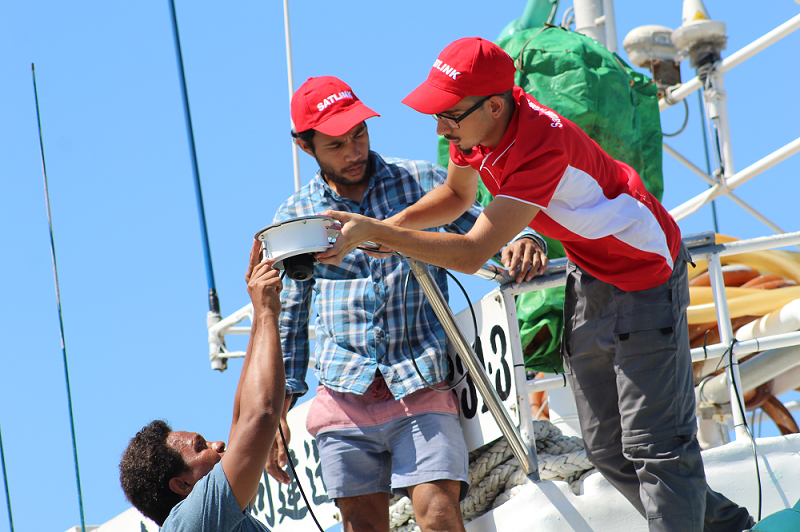
Satlink technicians (L-R) Derrick Tagosia, Jorge Brechtefeld and Eduado Jose mounting a Camera on one of the longline fishing vessels over the weekend. Photo: MFMR Media.

The Ministry of Fisheries and Marine Resources (MFMR) in partnership with The Nature Conservancy (TNC) has started implementing E-Monitoring on Long Line Vessels with two vessels already fitted with E-Monitoring Units over the weekend.

The units are made up of cameras and recording hard drives which will be used to monitor all activities on the fishing deck.

Global Fisheries Limited and Solong Seafoods Ltd – two locally based company vessels were the first to be fitted with e-monitoring devices.

Director of Fisheries, Mr Edward Honiwala said TNC provided the first eight units and the last vessel is expected to be fitted with e-monitoring units by the end of October 2017.

He said introduction of e-monitoring device on longline fishing vessels is important because it will increase the rate of monitoring on Longline Vessels.

Currently the Ministry of Fisheries is doing five percent (5%) observer coverage using human observers on Longline vessels but is required to increase coverage so the introduction of the e-monitoring will solve that issue considering the challenging living conditions faced by observers on longline fishing vessels.

E-monitoring would be seen as a solution to collect both biological and compliance data. These biological and compliance data is vital for proper management of this very important fishery. The Western Central Pacific Tuna Commission recommendation is for member countries to implement electronic solutions for improved data management.

Mr. Honiwala stressed that this system will assist the Ministry of Fisheries with monitoring and compliance as vessel operators will always be mindful of their actions and activities, as they know well that they are monitored through these system.

“This system can also be used for Fish Identification and also to collect other biological data, for example the units can be calibrated to estimate length of fish and so on, he added.

With the support of the New Zealand funded MSSIF Programme to house the related onshore infrastructure, MFMR fisheries technicians will analyse the stored data, collected during the fishing trips, when the vessel is in port for transhipment.

They will remove the hardware and analyse it for likely infringements if there is any during the fishing trip.

The Fisheries Director said this process is important to ensure all locally registered fishing boats comply with the conditions of their license and also measures governing Illegal Unreported and Unregulated fishing inside the country’s Exclusive Economic Zone.

TNC also supported similar projects in Palau, Republic Of Marshall Islands and Tuvalu.

Two Satlink technicians (from Fiji and Spain) were engaged to install units which include cameras and monitor on the two vessels.

The cameras are positioned in three locations (one at the back and two in the mid-section) of the vessels to monitor all activities on board.

 Francis Pituvaka, Communications Officer – MFMR

MEDIA WELCOMES NEW CEO

0
Hilda Lamani second from right (in red) with the new MASI executive members.

The Media Association of Solomon Islands (MASI) welcomes the appointment of Ms Hilda Lamani to the position of CEO of MASI.

The President of MASI, Mrs Deli Oso, previous press secretary to the Prime Minister and now an editor for the Solomon Star newspaper, believes that Ms Hilda Lamani will bring a wealth of business management and financial management expertise to MASI “Ms Hilda Lamani has accepted the position of CEO of MASI”, she said. “We welcome her to the organisation and together with my Executive Committee, we look forward to working with her to build MASI into a strong and proactive organisation”.

Ms Lamani has a Bachelor of Commerce degree in Accounting and Business law from the University of Southern Queensland, combined with her experience working within the media industry as the business and financial manager at the Solomon Star newspaper, provides MASI with the perfect mix of business management skills and intimate knowledge of the media industry.

Mrs Oso explains “it was important that MASI secure a person who could manage and grow a business, understands financial procedures and modern management practices as this will be crucial to the long-term success of MASI”.

“For MASI to survive and grow, being able to manage our finances is critical, and we are very fortunate to have the support of UNDP and the Australian High Commission in providing financial support for MASI, to help us grow and deliver support for our members”.

For Ms Lamani, she is honoured to be the new CEO of MASI, “for me this is a great honour to be able to help lead MASI and grow the organisation”.

“I understand that we have a responsibility to our members to make sure that MASI is financially strong and we cannot support our members and represent the industry unless we remain strong financially and with the strong support from our members”.

Ms Lamani outlines that the immediate priorities for her as CEO is to establish the MASI office, which is suited in suite 211, Hyundai Mall, recruit members and establish financial processes for the organisation, “my first priority is to establish the MASI office,  a working environment where Media Personnel can contact us for more information and become members. If you are not signed up as members now then we would welcome you to sign up. So far we have 45 members who signed up during the July AGM but our aim is to try and double that by Christmas”.

“MASI’s door is open to our members; please feel free to drop in at any time.”

“My second priority will be the hosting of the MASI function on Saturday 26 August for the Previous MASI Board Executives to officially hand over duties to the incoming MASI Board Executives and Farewell MASI’s Media Consultant, Mr Bruce Levett”.

In concluding, Mrs Oso states, “MASI is entering an exciting period of work and my Executive Team, supported by my Vice President, Mr Douglas Marau, are working on a number of initiatives that we hope to share with you soon”.

-MASI PRESS

DEI PACHA ELECTED AS NEW DEPUTY SPEAKER TO PARLIAMENT

0

The Democratic Coalition for Change Government continues to maintain its solidarity which was demonstrated by 25 MP’s voting in support of Hon. David Dei Pacha, MP as the newly elected Deputy Speaker of Parliament.

David Dei Pacha is unopposedly the new Deputy Speaker of Parliament after Hon. Steve Abana, MP from the Government Opposition group withdrew his nomination on the floor of Parliament.

The 25 Ministers who were present today in Parliament were;

  1. Prime Minister – Hon. Manasseh Sogavare, MP;
  2. Deputy Prime Minister and Minister for Home Affairs – Hon. Manasseh Maelanga, MP;
  3. Minister for Education and Human Resources Development – Hon. John Dean Kuku, MP;
  4. Minister for Finance and Treasury – Hon. Snyder Rini, MP;
  5. Minister for Agriculture and Livestock – Hon. Dudley Kopu, MP;
  6. Minister for Rural Development – Hon. Jimson Tanangada, MP;
  7. Minister for Women, Youth and Children Affairs- Hon. Freda Tuki Soriacomua, MP;
  8. Minister for Development and Aid Coordination – Hon. Danny Philip, MP;
  9. Minister for National Unity, Reconciliation and Peace – Hon. Samson Maneka, MP;
  10. Minister for Health and Medical Services – Hon. Dr Kaituu Tautai Angikimua, MP;
  11. Minister for Infrastructure Development – Hon. Stanley Festus Sofu, MP;
  12. Minister for Commerce, Industries, Labour and Immigration – Hon. William Marau, MP;
  13. Minister for Foreign Affairs and External Trade – Hon. Milner Tozaka, MP;
  14. Minister for Forestry and Research- Hon. Christopher Laore, MP;
  15. Minister for Police & Correctional Services- Hon. Moses Garu, MP;
  16. Minister for Fisheries & Marine Resources- Hon. John Maneniaru, MP;
  17. Deputy Speaker National Parliament – Hon. David Dei Pacha, MP;
  18. Chairman of Government Caucus – Hon. Jackson Fiulaua, MP;
  19. Chairman Foreign Relations Committee – Hon. Silas Vaqara Tausinga, MP;
  20. Chairman Education Committee- Hon. Nestor Ghiro, MP;
  21. Chairman Health & Education Committee- Hon. Charles Sigoto
  22. Chairman of Public Expenditure Committee – Hon. Ishmael Avui, MP;
  23. Chairman of Cabinet sub –Committee – RIPEL, Hon. Dickson Mua, MP;
  24. Chairman of Cabinet Sub-Committee – KFPL – Hon. Augustine Auga, MP;
  25. Member of Parliament for Temotu Nende – Hon. Commins Aston Mewa, MP (Backbencher)

Not to mention, Ministers and Backbenchers who were absent due to other commitments but have conveyed their support for the leadership of the Prime Minister Hon. Manasseh Sogavare, MP.

The DCCG continues to maintain the numerical strength with support of its MPs who are committed to ensure key policies of the government are delivered in a timely manner. Unsubstantiated claims and accusations to justify a political agenda that is not in the national interest will only serve to create instability and undermine progress.

In relation to recent speculations, the media is again reminded to be responsible in their reporting.

Parliament was then adjourned today until 28th August, 2017.

The Prime Minister, Manasseh Sogavare, MP requested a special adjournment of Parliament sitting to 28th August, 2017 to give ample time for members of the Parliamentary Public Accounts Committee to deliberate on the 2017 Supplementary Appropriation Bill.

The Prime Minister further added that the Government will also be heavily involved in the visit to Solomon Islands by the President of the Asian Development Bank, Mr Takehiko Nakao.

The visit will coincide with opening of the Mbalasuna Bridge on North-East-Guadalcanal and a visit to Oil Palm Plantations at the Guadalcanal Plains also on North-East-Guadalcanal and the ground-breaking ceremony of the University of South Pacific Solomon Islands Campus at King George the Sixth School Grounds in East Honiara.

Mr Nakao and his ADB delegation arrive in Honiara today.

MOU to destroy ‘Vietnamese Blue Boats’ signed

0
MFMR and Iona signed the MOU.

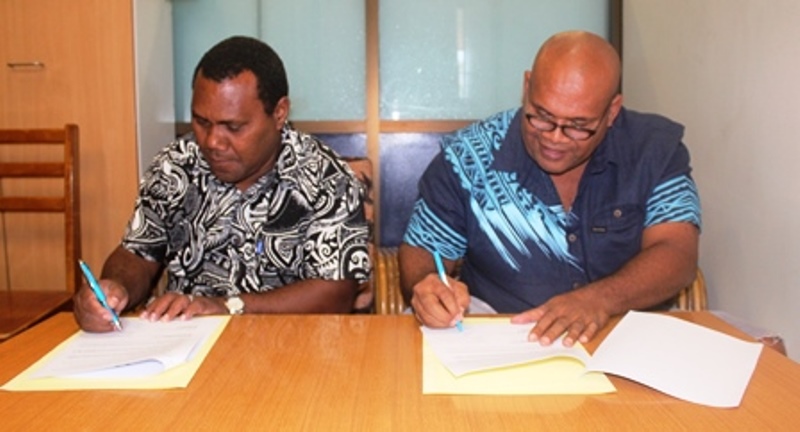
A MEMORANDUM of Understanding to pave way for the destruction of the three ‘Vietnamese Blue Boats’ caught fishing illegally in the Solomon waters has been signed on Friday 18th August 2017 between the Ministry of Fisheries and Marine Resources (MFMR) and a local company – Lona Firi Properties Ltd.

Fisheries Director, Edward Honiwala signed on behalf of the Ministry while Wale Tobata for Iona Firi Properties Limited – the company.

Under the terms and conditions of the MOU, the company is required to destroy the boats within four weeks of signing.

Mr Honiwala said the decision to destroy the boats is in line with the High Court’s decision because the boats have failed to pass their sea worthiness examination as confirmed by the Solomon Islands Maritime Safety Administration.

Iona Firi ompany representative, Mr Tobata said they will inform the Ministry of the proposed date for destruction and it will take place in Malaita soon.

The Ministry of Fisheries, Police and other relevant Authorities will witness the destruction of the boats once a date is set.

Iona Firi Properties Ltd will be responsible for the destruction of the boats at no cost to the government.

As agreed, the boats must be destroyed in an environmentally and ecologically friendly manner in line with environmental and International laws Solomon Islands has signed to observe.

Further to that oil, petrol and any other fuel contained in the boats will be removed by Iona Properties Ltd  before the boats are destroyed.

The fisheries director explained that any property including the oil, petrol or fuel that were removed prior to the destruction belongs to the state unless and until they are disposed or sold in accordance with the Agreement.


Francis Pituvaka

Communications Officer – MFMR

Pacific Met Services increasingly vital – SPREP

0

(PACNEWS) THE director general of the Secretariat of the Pacific Regional Environment Program (SPREP) says there is growing political awareness of the importance of weather services in the Pacific.

Meteorological officials from around the Pacific are meeting in Honiara this week ahead of a meeting by ministers in charge of met offices.

Kosi Latu said one issue that has been discussed is the need to extend or improve forecasting services to some of the smaller countries such as Tokelau and Niue.

He said these islands will need resources to build capacity which is now more likely given international interest in improving forecasting.

“Ten years ago the level of interest was quite minimal. But when you start talking climate change then people start realising that the need for, for example, climate services, is so critical in understanding climate change.”