Home Blog Page 1555

Transforming sand into fertile soil

0

DEAR EDITOR, prompted by reading of the recent visit to the Solomon Islands by the non-resident Israeli Ambassador I remembered reading how in Israel parts of the Negev Desert had been transformed from sand into productive farmland.

I wanted to find out more and came across this information in a magazine called Israel Tourist from which I quote.

“Desert agriculture in Israel is one of the country’s greatest successes, and something at which Israel leads the world. The Negev Desert which covers over 60% of the country has actually shrunk in size over the past century as agricultural activity has turned sand into green fields, the opposite to the desertification trend which much of the rest of the world is battling to prevent. Even in the depths of Israel’s Negev Desert are gems of agriculture amid the harsh, dry conditions, and relatively mineral-deprived sandy soil.”

Israeli company, “Netafim, invented modern drip irrigation technology in the 1960’s. This allowed the precious and scarce water resources of the desert to be used at extreme limits to grow crops. Among the most noteworthy crops grown in the Israeli desert are cherry tomatoes – the modern strain which are found in grocery stores around the world was developed in the Negev. The cherry tomatoes grown in the Negev are 2-3 times sweeter than those found elsewhere due to the amount of water used, and the unique qualities of minerals found in the water. Today, agriculturalists are developing even newer strains of the tomato to increase yields further (already the Negev grows 3-4 times greater yields of tomatoes compared to elsewhere in the world).”

Using drip irrigation methods in the Solomon Islands to convert sand into soil would possibly not be practical and I turned to new developments in China where alternative methods are reported to have achieved great success.

In an article written by Ryan General, entitled “Chinese Scientists Develop Revolutionary Paste that Transforms Desert into Fertile Farmland.”

I came across this interesting report (quote)

“China has reportedly developed a technology that is able to transform desert lands into arable soil that could grow crops and natural vegetation.

“According to CTGN, Chinese scientists have achieved success in growing crops in areas with less than ideal conditions caused by lack of rain and extremely hot temperatures.

“The huge breakthrough was recently presented at the United Nations Convention to Combat Desertification (UNCCD) in September2015 in the Chinese desert city of Ordos, where over 100 countries in attendance committed to setting national timelines to stop desertification by 2030.

“The technology behind the Chinese innovation was developed by researchers at Chongqing Jiaotong University. The scientists developed a paste made of a substance found in plant cell walls that, when mixed with sand, is able to retain water, nutrients, and air.

“One particular location where the plants have been thriving is in a desert in North China’s Inner Mongolia Autonomous Region.

“According to our calculation, there are over 70 kinds of crops growing here. Many are not planted by us but they just grow themselves,” Chongqing Jiaotong University Associate Professor Zhao Chaohua was quoted as saying.

“Over the course of six months, over 200 hectares of sand is being turned into plantations yielding corn, tomatoes, sorghum, and sunflowers. A reforestation project is also currently in the works, which is set to reforest 50% of degraded desert land in three years.”

“The costs of artificial materials and machines for transforming sand into soil is lower compared with controlled environmental agriculture and reclamation,” Chongqing Jiaotong University professor Yang Qingguo said.

“Researchers are looking into expanding their project this fall, with a plan to transform another 200 hectares of desert. In the next few years, the scientists are confident that they can turn over 13,000 hectares more into fertile ground.

“Chinese forestry officials have stated that the area of desertified land in the country has so far been dropping by an annual average of more than 2,400 square kilometers.”

Technological advances in desertified land might help the Solomon Islands especially in advancing re-grow in parts of the country where logging over the years has reduced the ground to sand-like conditions.

I believe the Government of Israel could well be instrumental in aiding the Solomon Islands in such work and, perhaps, the Taiwanese Government too.

Yours sincerely

FRANK SHORT

The human rights issues confronting women and girls

0

DEAR EDITOR, over the weekend I was reading about the level of domestic and family violence in the Cook Islands where the number of reported domestic violence cases dropped from 185 in 2016 to 170 last year but the rate is still considered to be high.

The 2014 Family Health and Safety Survey found violence against women and children is ingrained in Cook Islands society and there are signs that this is still the case.

Education is crucial in bringing the number of cases down and that has to start at a young age in school, including empowering women it has been said.

In the Solomon Islands I believe a conference that was spearheaded by the SIBC has just been held on the ongoing problem of domestic violence and the tragic incidence of sexual abuse of young children.

I await the results of that conference with interest.

In conjunction with my reading of the prevailing situation in the Cook Islands regarding domestic and family violence, I read the very interesting and informative Submission on the Human Rights issues that confront women and girls in the Asia-Pacific region.

As an adjunct to the findings that are likely to emerge from the SI conference, I would really recommend that the participants of that conference get hold of a copy of the document for it is my belief that it contains some valuable recommendations to further the human rights issues that transcend across all the small Pacific nations in terms of understanding and finding better solutions to the scourge of domestic and family violence.

The document is entitled – ‘Submission to the Joint Standing Committee on Foreign Affairs, Defence and Trade.’

It is an Inquiry into the Human Rights issues confronting women and girls in the Indian Ocean – Asia Pacific Region.

It can be obtained from the SECRETARIAT OF THE PACIFIC COMMUNITY BP D5, 98848 Nouméa Cedex, New Caledonia TELEPHONE: +687 26.20.00 FAX: +687 26.38.18

The contact person is the Programme Manager, Linda Petersen.

Yours sincerely

FRANK SHORT

Petition on SI medical health service underway

0

DEAR EDITOR, it was reported from Honiara last today, February 2, 2018, that a petition was being organized by the patients, health workers and their supporters at the NRH and that signatures were being collected to petition the Prime Minister to call for a Commission of Enquiry (COE) into the medical and health service provided at the National Referral Hospital (NRH)

The petition is reportedly aimed at seeing the recommendations set in the 2009 and 2015 Special Select Committee report into the Quality of Medical Services provided at NRH are fully implemented, with special attention on the development aspects of the NRH.

In April 2009 the SI Parliament resolved on a motion to appoint a Special Select Committee to inquire into the quality of medical services provided at the National Referral Hospital (NRH).

Since then only a few of the recommendations have been achieved and the quality of medical services at the NRH is claimed to be poor.

The petitioners support the call for the national government to carry out work on the recommendations adding that the NRH needs a total restructuring.

In undertaking this petition one should not overlook or diminish the dedicated service performed by the doctors, nurses and support staff of the NRH and take into consideration the tremendous services they perform in often not too ideal working conditions.

Likewise, we should not overlook the help that has been given, and continues to be given, by many charitable persons and organizations committed to the welfare of the NRH’s patients, including children, the disabled, the very sick and to the material, equipment and medical supplies needs of the hospital.

Yours sincerely

FRANK SHORT

Curbing the coconut rhinoceros beetle in the Pacific

0

DEAR EDITOR, quoting an article in the Pacific Courier in October2016 I came across this informative article during this weekend.

As the story is already 15 months old I query why it is taking so long for the likely proactive measures mentioned in the article to curb the threat of the rhinoceros beetle causing such widespread damage to the coconut trees in the Solomon Islands?

“SUVA, Fiji— The Pacific Community (SPC) is taking proactive measures to assist Samoa and other Pacific Island countries and territories in their efforts to curb any resurgence of the coconut rhinoceros beetle.

“SPC, with support from AgResearch New Zealand, has dispatched to Samoa’s Ministry of Agriculture 1000 sachets of male aggregate pheromones, called Oryctalure, to trap these beetles (Oryctes rhinoceros) which can cause severe damage when they bore into the crowns of coconut palms to feed on sap.

“Coconut palms cover around 30 percent of Samoa’s land mass and contribute SAT$8 million annually to the Pacific Island nation’s economy.

“In 2007 the total value of exports of coconut products from Fiji, Solomon Islands, Vanuatu, Samoa and Kiribati was valued at 14.4 million.

“The use of male aggregate pheromones, such as Oryctalure, has proven effective in suppressing the beetle’s population and could assist in preventing the spread of a new strain, called the Guam biotype.

“The Guam biotype beetle, believed to be highly invasive and capable of inflicting severe damage to palms, poses a real threat to food security and socio-economic development of Pacific Island nations.

“This new strain of coconut rhinoceros beetle is already present in Guam, the mainland of Papua New Guinea, Palau, Hawaii and Guadalcanal in Solomon Islands and comprehensive research is needed to determine the effectiveness of different pheromones on different beetle biotypes, SPC Entomologist, Dr Maclean Vaqalo, explained.

“One sachet of the pheromones we have sent to Samoa’s Ministry of Agriculture can last up to three months in a trap, depending on environmental conditions. This is an immediate measure that will be used as an early warning system to monitor the likely presence of the Guam biotype, especially at high quarantine risk areas, Dr Vaqalo said.

“Coconut and similar palms thrive in regions where there is no cold season and minimal dry season and, as a result, the coconut rhinoceros beetles are able to reproduce throughout the year.

“SPC, with support from regional scientists, has recently drafted a regional approach to effectively control this new strain of beetle which addresses emergence response and quarantine awareness, exploration of effective biological control measures, and outreach to farming communities to adopt integrated pest management best practices, Dr Vaqalo said.

“The regional approach was agreed to and supported by plant protectionists in the region during the Pacific Plant Protection Organisation and Regional Technical Meeting of Plant Protection (PPPO & RTMPP) meetings held in Nadi, Fiji, in September 2015.

“We’re also providing technical advice and assistance on biosecurity, quarantine and integrated pest management measures for the coconut rhinoceros beetle,” Dr Vaqalo said.

“The regional approach in the area of biosecurity awareness, emergence response and management of the beetle biotypes in the region will only work well if funding is forthcoming to implement the work plan.

“SPC looks forward to working with Pacific countries and territories, as well as scientific institutions and fund donors from within the region and abroad to address the regional approach.”

Yours sincerely

FRANK SHORT

Attracting more overseas visitors

0

DEAR EDITOR, the bid to increase the number of overseas visitors implies extra budgetary support and better Infrastructure, including regular repairs to provincial airstrips.

The Solomon Islands Government is pushing to attract more overseas visitors this year according to a recent article in the Solomon Star newspaper from which I quote a few paragraphs.

“The SI Government is targeting a 9% growth of international visitor arrivals this year.

“Prime Minister Rick Houenipwela made the statement during the 2018 Tourism in Focus, held at the Honiara Mendana Hotel, Tuesday.

“The event gathered stakeholders and tourism operators in the country to discuss and come up with new innovative ideas and approaches that will drive the positive changes in the industry.

“Mr Houenipwela said that in order to realize and achieve the target, the Ministry of Culture and Tourism and Solomon Islands Visitors Bureau (SIVB) needed to cooperate and support stakeholders to build a momentum with strategic and clinical approaches to its activities.

“In September 2017, the global tourism performance registered a strong growth at 6.9% slightly more than double the performance at the same period in 2017.

“Having seen the increase in 2017, I have no doubts that 2018 will be the year to push new boundaries and to challenge the status quo so that visitor arrivals can grow in leaps and bounds to drive new investments to our humble destinations,” the prime minister said.”

Increasing visitor arrivals and encouraging them to stay and tour the country will need extra budget support and better infrastructure including repairs and upgrading to many of the smaller provincial airstrips.

The call for more visitors coincided with a statement to the local media last week by Solomon Airlines Chief Executive Officer, Mr Brett Gebers, who sought to clarify why the reschedule of many of its domestic flights in the recent past was because of unserviceable equipment largely due in part in obtaining spare parts because of eroded runway surfaces due to bad weather and heavy rain.

Mr Gebers reportedly said, “Our domestic aircraft operate in harsh conditions caused primarily by the state of the runways that we operate to.”

He added that rough surfaces of domestic runways cause significant vibration during landing and take-off phases which implied deterioration in certain parts of the aircraft and often this leads to premature failure of components.

“The failure of these components results in schedule disruptions as we must make appropriate repairs on aircraft. We are not responsible for maintaining the runway surfaces throughout the Solomon Islands.”

Importantly, Mr Gebers said, “because of ongoing high costs for maintenance and cancelled or rescheduled fights, Solomon Airlines have offered to pay, and carry out required runway rehabilitation work on many occasions. But each time they were denied approval to do the required work.”

Mr Gebers stressed that their (Solomon Airlines) customers, passengers and crew are of paramount importance and they must come first in their services.

Yours sincerely

FRANK SHORT

FSII and YWPG implore Sigoto to push 2009 health report to Parliament

0
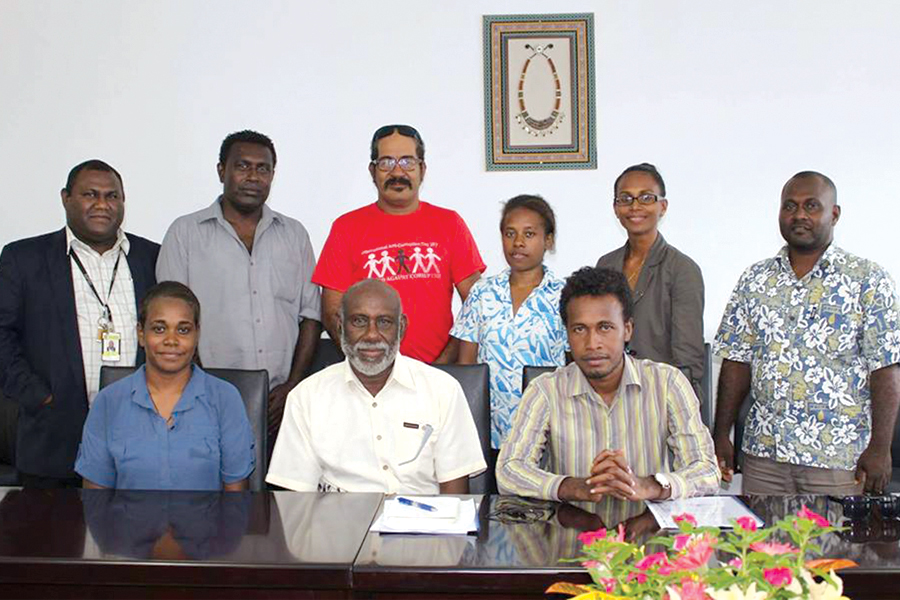
Members of FSII and YWPG with Hon Charles Sigoto (front center) at his office on Friday

BY JARED KOLI

Members of FSII and YWPG with Hon Charles Sigoto (front center) at his office on Friday

CHAIR of the Parliamentary Health and Medical Services Committee, Charles Sigoto is being asked to push the nine-year-old Report on Quality of Medical Services provided at the National Referral Hospital (NRH) through parliament.

Forum Solomon Islands International (FSII) and Young Women Parliamentary Group (YWPG) called on Mr Sigoto, on Friday last week, to push the report to the floor of parliament.

“Since the report was released, not even a Member of Parliament (MP) stood up to champion the document to parliament, and we want Mr Sigoto as Chair to move the report to the floor of parliament,” said FSII Chair, Mr Wilfred Luiramo.

“The Chair has agreed with us to have the report to be tabled in parliament, in parallel with the hospital petition calling on Prime Minister to call for a Commission of Enquiry (COE) into service provided at NRH.”

Sigoto could not be reached when Island Sun called over the weekend, however, Luiramo said there is “green light” shown.

FSII and YWPG believes that the recommendations set in the report were not fully implemented, although some recommendations were addressed.

The unprecedented move also resulted in the two civil society groups calling on legislatures to seriously consider bringing in life-saving machines, similar to the once used in St Vincent Hospital in Sydney, Australia.

“FSII and YWPG want the government to improve services, at least bring in life-saving machines, this is because there was no such recommendation in that report. We want the government to put this as top priority,” Luiramo adds.

He said Sigoto fully agrees and assured them to move a motion in parliament soon.

Island Sun understands that the hospital petition is still ongoing, initiated by NRH patient and local good governance advocator Ishmael Nori.

The petition has been receiving signatories from most patients at NRH and also supporters from the public who believe in this cause.

The partnership move is geared towards accessing quality medical services at the NRH, similar to services accessed by Ministers or Members of Parliament (MPs) at St Vincent Hospital.

Canadian ambassador visits Guadalcanal province

0
Guadalcanal Premier Hon Anthony Veke and Ambassador HE Paul Maddison discussing prospectives.

THE Guadalcanal Province’s Premier Mr Anthony Veke, his executives and officials were honoured to receive HE Paul Maddison, High Commissioner of Canada to Solomon Islands at the provincial headquarter Thursday last week.

Veke thanked His Excellency for taking his time off his busy schedule to visit Guadalcanal province (GP).

Maddison was briefed on the progress of GP’s partnership with Canada through the CITREC programme and how it has touched the lives of the Guadalcanal people.

Veke also expressed his vision to explore other opportunities for Guadalcanal province to see Canada as a market destination for agricultural products.

In his reply, High Commissioner Maddison thanked the leadership of Premier Veke for making his visit possible.

“I would not be here without the leadership of you Mr. Premier, for that I thank you very much. I also applaud you the Executives for choosing to serve your people,” Maddison said.

“It is a great honour for me to be Canada’s High Commissioner to Solomon Islands and I said that very sincerely. There are great potentials for our partnership to result in greater prosperity. However already at this point in time, you (Guadalcanal Province) are trail blazing,” he told Premier Veke and his executives.

On the CITREC programme, he applauded CITREC Chairman and Honorary Consular General Mr Ashwant Dwivedi for his extraordinary amount of energy, enthusiasm, hard work, innovative thinking and service to Solomon Islands, in particular to Guadalcanal Province.

He is glad to see the programme evolve with opportunities for participants to get permanent residency in Canada.

Maddison said that Dwivedi has written to the Canadian Prime Minister Justin Trudeau, met with him, presented him with a shell money and created a deep conversation about Guadalcanal and Solomon Islands with which the Prime Minister got to ask questions about Solomon Islands.

Ambassador Paul Maddison and Guadalcanal Provincial Executive Members and GP-Officials.

Canada as a multicultural and multiracial country welcomes people from all around the world and celebrate their different cultures and faiths.

He said that the outcome of GP-CITREC programme is leading to greater visibility in Canada.

“In Canada, our strength is in our diversity, your people coming in will be bringing in your history, your culture and your pride sharing it with Canadians,” Maddison said

Veke then briefed His Excellency on Guadalcanal province’s government’s position on women development.

“My government is working hard to provide an equal platform for women development. With that edge to make women equal partner in development, Guadalcanal province is the first province in Solomon Islands to launch its Women Development Policy,” Veke expressed.

This was meet with great enthusiasm by Maddison as he told the Premier and his Executives about Canada’s International Development Policy which has a take-line to be Canada’s first Feminist International Policy.

Maddison said, “What it means is that, number one priority of Canadian Government is women and girls. In every project we invest in, it must show how it will improve the lives of women and girls. Whether it is a climate project, agriculture project, freshwater project or any project, we believe by lifting women up, we can make this world stronger, more secure and safe.”

He further told the meeting about ‘Canada’s Fund for Local Initiative’ which local Non-governmental Organization in Guadalcanal can utilise to realise some life changing projects.

In concluding the meeting, Veke thanked Maddison on behalf of the people and government of Guadalcanal province for his encouragements and positive remarks about Guadalcanal’s partnership with Canada though CITREC and the many opportunities to explore for greater prosperity of Guadalcanal.

He sends his best wishes for 2018 to the people and government of Canada through the High Commissioner.

Post meeting, External Affairs Officer for Guadalcanal Province Mr Mcfaddean Aoraunisaka said that Maddison is the third Ambassador to visit Guadalcanal Province since Premier Veke’s government took office in 2016.

Another Ambassador is scheduled to meet with Premier Veke in the coming days which shall be the fourth.

“As a province striving to internationalize itself, such meetings with top diplomats are very important,” Aoraunisaka said.

–GP PRESS

2 new additional GPS in Western province

0
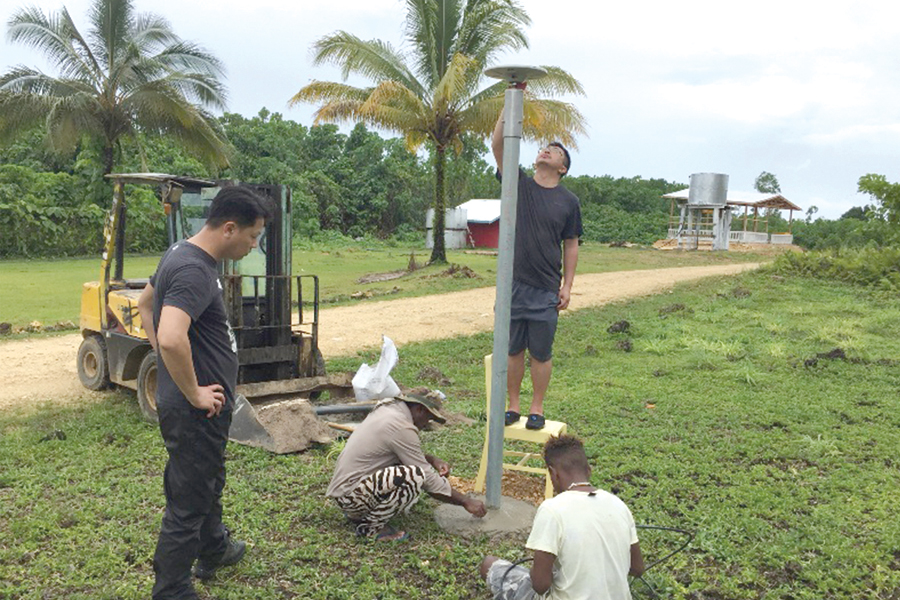
Specialist from Taiwan installed the two new GPS with locals from the western province

BY LYNTON AARON FILIA

Specialist from Taiwan installed the two new GPS with locals from the western province

SPECIALISTS from the Central Weather Bureau in Taiwan have installed two new additional Global position systems (GPS) to its 10 sites built in the Western province last week.

The team consists of three professionals who went to the province last week, and successfully installed the instruments in the Kolombagara and New Georgia islands.

The newly installed systems will read geo-movements and interpret earthquake signals.

The installation include; GPS data, GPS antenna, box and a receiver inside to continue receiving the GPS signal; they are donated by the Taiwanese government.

Since the projected was established in 2009, after the 2007 tsunami and earthquake in the Western province, Taiwan’s Central Weather Bureau have installed 12 GPS Global – which cost around SBD$1M.

They have come to the Solomon Islands twice a year for more than ten times, following up on the project purposely to collect data back to Taiwan for analysis, evaluation and recommendations.

A Postdoctoral Fellow from Taiwan Academia Sinica Institute of Earth Science, Mr Yu-Ting Kuo explained they are interested in the Western province because the region has the potential of having large earthquakes.

Based on this, Kuo said they also do modeling which inspires them with a need to prepare more sites.

“Vella La Vella, Rendova and New Georgia almost on the Pacific plate. But only the Simbo and Lale, the movement is to the Pacific plate, because Simbo is on the Australian plate so that’s very strange and very interesting.

“In 2007, an earthquake occurred near Rendova and created a bigger tsunami in Simbo, Lale and so this area is what we call a seismogenic charger for 2007 and 2008.

“So based on this one, we just think about this area still has a large earthquake occurred potential.”

Jason Chin-Shang Ka said it’s been a good experience working in Solomon Islands especially in the Western province, as from their cooporation and teamwork the project continues to roll there.

Jason said during their project they have done positive research on the project and expect to know more about Solomon Islands.

Meanwhile, the specialist in the county last week comprises of Postdoctoral Fellow from Taiwan Academia Sinica Institute of Earth Science, Mr Yu-Ting Kuo, Associate Professor of Seismology, National Central University Mr Hao Kuo-Chen and Mr Jason Chin-Shang Ka.

Taiwan weather bureau looks at expanding Tec programme in Solomon Islands

0

BY LORETTA BRIGIDIA MANELE

A research team from Taiwan’s Central Weather Bureau under the Tsunami, Earthquake and Cyclone Early Warning system (TEC) program is looking at expanding their network to other provinces in the future.

Mr Yu-Ting Kuo, a postdoctoral fellow from the Institute of Earth Sciences, Academia Sincia in Taiwan revealed this to the paper over the weekend.

He said that for now they are only carrying out research and data collection in Western province but plan to work in other provinces in the future.

“Only based in Western province for now, but in the future we will try to expand the network. There are still several TEC projects that will cover Solomon Islands,” he said.

Moreover, Mr Kuo said that it was back in September 2009 when they came over to the country to begin work in the province.

In addition, he explained that they chose Western province as the location of study because they wanted to know more about subductions leading to earthquakes and tsunamis given that in 2007, an earthquake of 8.1 magnitude had occurred in the province and created a large tsunami.

Furthermore, Mr Kuo mentioned that they are working with the Ministry of Mines and Energy thus, have donated some equipment and also share all the data collected with them.

The Central Weather Bureau of Taiwan is also working closely with the Ministry of Environment, Climate Change, Disaster Management and Meteorology (MECDM) not only in installing GPS but in weather forecasting as well.

Two large gaps that need rapid response over CRB

0
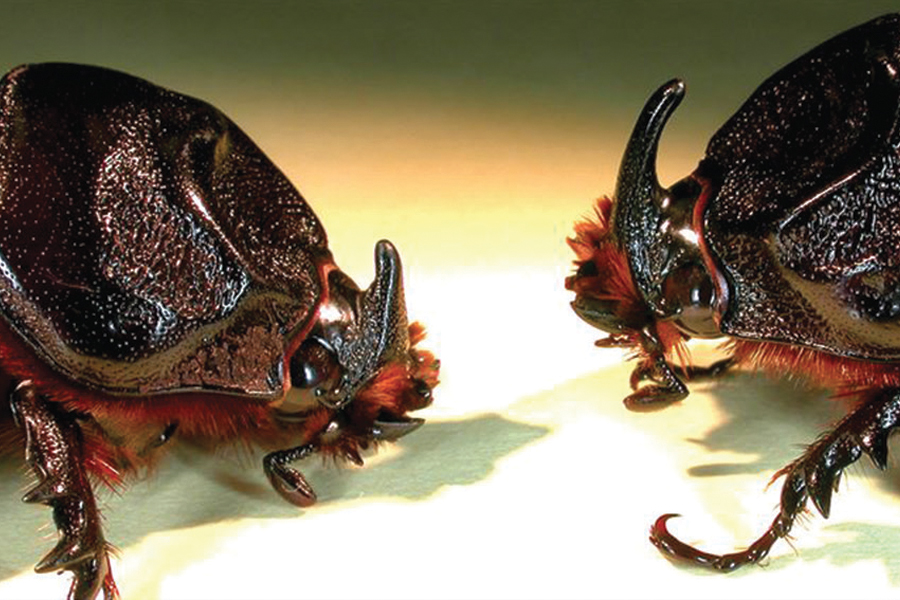
Coconut Rhinoceros Beetle’s (CRB’s).

BY BARNABAS MANEBONA

THERE are two large gaps needing rapid and thorough response if Solomon Islands is to avoid a huge disaster from Coconut Rhinoceros Beetle’s (CRB’s).

One is the need for immediate action to raise awareness’s throughout the country of CRB’s threat seriousness and ways to slow its spread. Secondly is to work with communities to eliminate breeding sites and control the pest in areas already invaded.

Both these tasks are outside the capacity of the current Government or Provincial Staff and finances. It was agreed during a recent meeting by the New Zealand aid project (AgResearch) of “Improving Management of Coconut Rhinoceros Beetle (CRB) in Solomon Islands and PNG that emergency funding based on new action plans is urgently needed to get the activities implemented quickly on the scale needed.

Continuous attack by CRB’s will affect the Oil Palm and Coconut productions of Solomon Islands.

According to Bob Macfarlane the Coordinator of the CRB programme in Solomon Islands last week, hundreds of coconut and oil palm trees in the country have already been killed by CRB attacks.

“The beetle from report has already spread along the north coast of Guadalcanal and has invaded north Malaita, Savo and Ngella,” said Macfarlane.

“Currently the worst effects can be seen around Honiara but if the beetle gets to village coconut plantations, the impacts on copra production and village nutrition will be huge reported.”

It is understood according to the AgResearch meeting that plans for a long-term solution to develop control techniques using new insect diseases are well advanced.

Ministry of Agriculture and Livestock (MAL) Director for Quarantine Bio-security Mr Francis Tsatsia when recently speaking to Island Sun said their Officers are yet waiting for the National Government Budget to be passed in order to help them financially in addressing the CRB threat.

“We have already submitted our budget to the Treasury on the plan of our CRB activities but it is the process for approval at the National Government is what we are waiting for,” said Tsatsia.

Recently, a call was made by local copra producers, farmers and communities around Ngella for the MAL Bio-Security Office and Agriculture Division at Tulaghi to assist them in clearing the CRB threat.

From Ngella locals report, it is not only coconut trees that are affected but betel nut and sago palm trees as well.