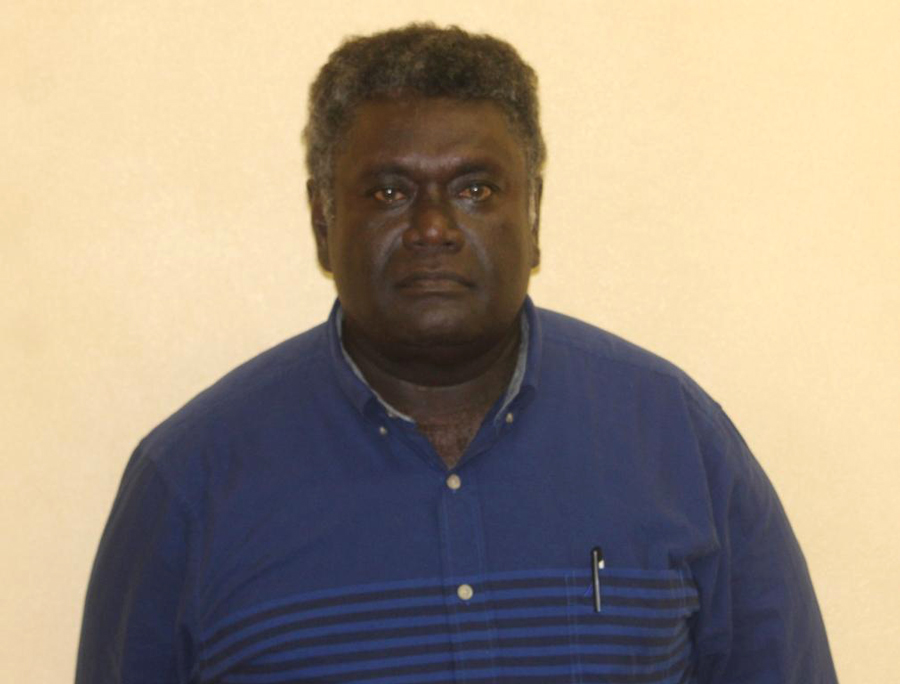
SOLOMON Islands students studying in Philippines have now received second Semester allowances, but not all them yet, it is reported last night.
Some are still to receive theirs according to report reaching Island Sun and are hoping to receive them as early as today.
SISAP students last week raised concern as to why there was very much delay in second Semester allowances.
On Wednesday this week when Solomon Islands National Training Unit (NTU) Director and team were said to hold a meeting with SISAP students at AMA Quezon to address students welfare and other school areas of concern, they were reported questioned much by students as to why there was such delay.
“This goes for reinstate allowances. And the NTU Director responded by saying that they will be discussing our discussions when returning to administration, “said SISAP students.
Other SISAP students finally relieved for receiving second Semester allowances yesterday said now they will be able to pay debts, bills, rentals and visas too.
OPERATIONS at the National Referral Hospital Operating Theatre will scale down due to shortage of Terumo blood bag supplies.
Terumo blood bags are high quality, high-value blood bags designed for the collection, processing and storage of whole blood and blood components.
The Blood bank management on Tuesday issued a notice they are temporary closing down due to shortage of Terumo blood bags.
Director of Medical Laboratory at NRH, Alfred Dofai, said they are facing a tough situation at the moment but assured public that the supplies will arrive next month.
He said they are communicating with the supplier to airlift emergency order as well requesting the Provincial Health centres in the provinces to return some Terumo blood bags to subsidise the shortages.
He said they were supposed to receive 85 cartons of blood bags in July to stock up the laboratory but they only received 25.
“I think the supplier must have run short of supply that is why we only received 25 cartons,’’ he said.
Dofai said 55 cartons of blood bags are still on the way, in the next shipment.
“The situation will affect other sectors and so we have to put priority on emergency cases,” Dofai said.
He assures the general public that they are working with the supplier and the medical store to airlift emergency supplies by this weekend.
He explains the order is bit confusing on the part of the supplier.
He said order should arrive on July and they should encounter this situation.
He said due to the situation they will scale down operation and give top priorities to emergency cases.
ANGRY San Jorge landowners on Isabel have formally asked the Government to “suspend or cancel” Axiom KB Ltd’s Mining Licence, accusing the Company of failing to fulfil terms of the Surface Access Agreement (SAA) it signed with landowners last year.
Private law firm, Whitlam K Togamae Lawyers took out a full page paid advertisement on behalf of the landowners in both newspapers yesterday. The advert appeared in the form of an open letter to the Minister of Mines, Energy and Rural Electrification, Bradley Tovosia, and Chairman of the Mines and Minerals Board, Nicholas Biliki. It was copied to Attorney General John Muria jnr and the Provincial Secretary, Isabel Province.
The advertised highlighted specific SAA clauses, which the lawyer representing the landowners, said Axiom KB Ltd had breached.
It was signed by William K Togamae on behalf of 21 Chiefs who “are the accepted landowners of part of San Jorge Island, Isabel Province, and parties to the Surface Access Agreement with Axiom KB Limited (Axiom), dated 6 March 2018 (Surface Access Agreement)
“We are instructed to advise as follows:
It is a term of the Surface Access Agreement that:
In accordance with clause 9.2(a), Axiom shall make payments to our clients in accordance with Appendix 2 of the Surface Access Agreement for the right to access the land;
In accordance with clause 9.3, Axiom shall make milestone payments to our client in accordance with Appendix 3 of the Surface Access Agreement for the right to access the land;
In accordance with clause 9.4, our clients shall be entitled to hold 20 per cent of the shares of Axiom and Axiom KB Mining Limited, along with other landowners; and
In accordance with clause 10, all payments are to be made to the nominated account of our client by Axiom within 15 working days after the end of each quarter,” the open letter advertisement said.
The advertisement said Axiom has breached the terms of the SAA by failing to make payments as well as to transfer 20 per cent of the company shares to the landowners as stipulated under clause 9.3.
The advertisement said landowners are calling on Minister Tovosia and the Mines and Minerals Board to direct Axiom to comply with the terms of the SAA or to say why its Mining Licence should not be suspended or cancelled.
“While it is entirely a matter for you, and the Board, in our view the matters warrant:
A direction pursuant to s.6(e) of the Mines and Minerals Act to Axiom to comply with the terms and conditions of the Mining Lease by paying our clients the monies due and issuing them the shares that they are entitled to under the Surface Access Agreement;
A show cause notice pursuant to s.71 of the Mines and Minerals Act to Axiom demonstrate why the Mining Lease should not be suspended or cancelled, pending the performance of Axiom’s obligation under the Surface Access Agreement.”
An employee said recently the Company could not meet landowners’ demand for payment because it has been blocked from exporting its shipment of nickel.
“How can the company pay when it has not even exported anything?”, the employee said.
THEY were once seen as “saviour” of institutions they were recruited to administer. These institutions are national icons, but none is headed by a local Solomon Islander – Solomon Islanders who possess the equivalent in qualifications, exposure and experience foreign nationals hold.
Now it seems the tide is slowly but surely turning against the experts recruited from overseas. And as the level of undercurrent rises, no one seems to know which institution will be next.
At least two national institutions – Solomon Islands National University (SINU) and Our Telekom – are reportedly feeling the heat as most, if not all, staff turn against their boss.
At SINU, staff are turning against their new Vice Chancellor (VC), Dr Ganesh Chand for alleged “abuse of recruitment process, speedy appointment and hand-picked TA from Fiji to work for SINU” while turning ignoring local TA and qualified academic staff.
“(The) VC abused the recruitment process and appointed his friends and former colleagues of Fiji National University,” staff said.
They gave an example of the recent appointment of an Internal Auditor from Fiji. He used to work as Manager Audit for Fiji National University and was terminated in 2015 for alleged abuse of process related to tender.
“The VC forced HR (Human Resources) to give an offer to (a) Fijian National for the post of Executive Officer without follow(ing) the due process of recruitment, and this is very clear conflict of interest,” according to information obtained by Island Sun last night.
The staff also accused the Vice Chancellor of “bullying and intimidation of local staff.”
Now the staff association is said to be planning a protest march to have the VC removed, they said.
The association is understood to be seeking the views of the SINU Council before making a final decision on the proposed protest march.
At Our Telekom similar undercurrents are brewing over the recruitment of its Chief Executive Officer from Fiji. Staff are reportedly unhappy and may be pushing for his exit.
There is one other State-Owned Enterprise whose Chief Executive Officer has been accused of recruiting his “wantoks”. It is not clear whether staff are doing anything about this
Island Sun was unable to get comments from individuals featured in this story.
Landcruiser being tendered by MID already sold by Tingoa police officers months ago
BY ALFRED PAGEPITU
A landcruiser which is being tendered by the Ministry of Infrastructure Development (MID) is reportedly “already sold by officers of Tingoa police station”.
The AB1530 Toyota Landcruiser 78 Series, tendered as Item No. 1, at Tingoa station, and described as ‘idle’ was sold months ago for $15,000 by a senior constable of Tingoa police station.
An elder of Tingoa community, requesting anonymity, confirmed this to Island Sun, saying the vehicle was sold to a member of his family.
This means MID is tendering out vehicles which are not available, hence interested bidders will be fooled into applying to buy it.
An MID official answering enquiries on condition of anonymity, says MID is innocent in this issue, since they have been assured by the RSIPF that the landcruiser in question was sitting idle in Tingoa police station.
“RSIPF did not tell us that that particular vehicle has already been sold. It maybe that the Rove HQ are not aware of what their own officers are doing out there in Renbel province.
“MID has no fault in this issue … we simply put in the items which various government offices submit in for tendering. Check with RSIPF, they are answerable for their own mess.”
And, questions are being asked where that purported $15,000 has gone to; has it gone to the police, national treasury or to that constable’s pockets?
“When I saw the advertisement on the Island Sun Newspaper last week, I recognised that particular vehicle because it had been sold to a cousin brother of mine for $15,000,” says the Tingoa community chief.
Island Sun has been following up with the Royal Solomon Islands Police Force (RSIPF) regarding a list of allegations against corrupt policing in Rennell and Bellona province, an issue which has been ongoing for more than two years.
Police Media Unit reacted by questioning Island Sun’s source of information, rather than being concerned about the issue at hand.
“I see you did not have the name of the complainant. How can I be sure that the allegations came from someone in Renbel and not just some disgruntled police officer who had served in Renbel but got removed because of disciplinary issues. I am just making sure that Island Sun is not being used in this instance.”
A day later, Police Media released a blunt response saying they will investigate the allegations.
“RSIPF welcomes any criticism of how it delivers its services to the people of this nation. However, the criticism must be substantiated with evidence.
“For this reason the Assistant Commissioner of Police (ACP) Provincial has been tasked to investigate the allegations of abuse of office, misuse of assets and lack of policing in Renbel Province made by the unnamed person to the Island Sun newspaper. The ACP will report to the Commissioner of Police as soon as possible.”
PUBLIC are expected to dig deeper into their own pockets when the new import duty of 20 cent per kilogram of rice and a good tax of five percent added as of September 1.
At the moment the price of 20kg white rice varies from shop to shop at the minimum price of $155 while the minimum price of 10kg rice is $82.
If the new import duty on white rice comes into effect on September 1, it means the new import duty for 20kg will be $4 and the goods tax will be $7.75 which is total up to $11.75.
This means the new price of 20kg white rice our main staple food will increase to $166.75 while 10kg will increase to $93.75.
If the shop owner don’t control the price with their mark-up prices the price will be skyrocketing.
For rural villages the price will even go higher.
The Ministry of Finance and Treasury in a letter issued on 22 August advice that the cabinet during its meeting held on 22 July 2019 has approved the proposal to implement a new tax on white rice commencing 1st of September.
This will introduce a levy of $0.20 per kg as import duty and goods tax of 5 percent.
This policy is part of the ongoing fiscal measures to help target better health outcomes in the country, particularly aimed at reducing the prevalence of non-communicable diseases which are evidently increasing as should by our national records.
While it is good for our health the price of rice, a staple part of the diet in the country will increase dramatically.
This will affect all communities as we know people are struggling to meet costs to feed their family.
GOVERNMENT has approved the proposal to implement a new tax on white rice commencing September 1.
According to a letter from McKinnie Dentana, permanent secretary of Ministry of Finance and Treasury, cabinet agreed in their meeting on July 22 to introduce a levy of $0.20 per Kg as import duty and goods tax of five percent.
Dentana said this policy is part of the opening fiscal measures to help target better health outcomes in the country, particularly aimed at reducing prevalence of non-communicable diseases which are evidently increasing as shown by our national health records.
Further to that, former Minister of Finance and now Prime Minister, Manasseh Sogavare told media last year that the longer term strategy is to shift the country’s population to the alternatives and chose brown rice instead of white rice.
Sogavare said a bag of brown rice costs about $600 compared to a bag of 30kg white rice which costs only $200.
However he said the easiest option is for the people to shift to local dietaries so that they need not to buy rice.
Island Sun contacted Solraise Ltd to get their bosses to comment on the new import tax but they left the office to attend another engagement.
Solomon Islands has become one of the highest rice consuming country in the region.
Statistics in 2014 shows that one person consumed 100 kg of rice.
The country rice imports stood at approximately 51,888 tonnes at the end of 2013, 31 percent higher than 2012 imported volumes of 39,467 tonnes.
In terms of value, rice import value amounted to around SBD$270 million at the end of 2013 compared to SBD $222 million in 2012.
Member of Parliament for Gao/Bughotu, Samuel Manetoali
BY JENNIFER KUSAPA
THE Member of Parliament for Gao-Bugotu Constituency Samuel Eaney Manetoali has been acquitted of all 18 counts of conversion after the presiding Principal Magistrate Fatimah Taeburi ruled that there was no sufficient evidence to support the prosecution’s case on the charges.
Mr Manetoali was acquitted on the ‘no case to answer’ stage and now is a free man.
On Friday last week defence lawyer Leslie Kwaiga submitted a ‘no case to answer’ submission on the grounds of insufficient evidence.
Magistrate Taeburi ruled that the prosecution should prove beyond reasonable doubt but on this case there were no evidence to prove that Mr Manetoali had convert the sum of $100,000 for his own use.
It was alleged that around mid-December 2014, the newly elected DCC Government made a Cabinet decision to advance a grant of $100,000 to each of the 50 constituencies.
It was alleged that on December 24, the amount of $100,000 was paid to Gao/Bugotu Constituency through SIG ANZ cheque and was processed by the Ministry of Rural Development (MRD).
This cash cheque payment was allegedly paid to the Gao/Bugotu Constituency.
It was further alleged that Manetoali signed out the cheque at MRD on 24 December 2014 and handed it to his CDO at that time.
His CDO cashed the cheque and handed $100,000 to the accused who then on 25 December 2014, allegedly spent the money for a Christmas party which was held at his then Lengakiki residence.
Office of the Director Public Prosecution appears for the crown on the case while L & L lawyers represent the accused.
WESTERN Province Premier David Gina says the government has nothing to hide regarding a proposed provincial ministerial trip to Malaysia.
He made the clarification in an exclusive interview with Island Sun via phone last week.
“My executives have nothing to keep secret to this mission to Malaysia and even my government is not responsible to fund this trip.
“This field trip is not political interest and nothing to do with the provincial government and the people in the province to do a secret mission in Malaysia.”
He explained that a Malaysian investor had approached his government with the proposal to send a delegation over to Malaysia to show them its capacity.
“My entire executive is aware of this trip including the outgoing Minister of Planning and nothing is secret,” said Gina.
He emphasises that the purpose of the trip is to prove what the company is doing in Malaysia in terms of Agriculture.
Gina said the field trip is not yet confirmed but the outcome of the trip will be made known to the public so that people will know what is going on in the province.
The outgoing Minister for Planning and MPA for Ward 9 Dovele, Jennings Movobule, in his response to Island Sun describes the trip as “secret till he caught up with Gideon Tuke and the two MPAs prior to their travel”.
“They try to hide the trip until I myself find out. All alone the Malaysian Company was keeping in touch only with few for their plan to harvest mile 6 and a portion in Kolobangara.”
However, he said nothing personal is going between him and the Premier or those who are dealing with the company “but I feel that this approach is not transparent”.
He said Western Province Investment Corporation (WPIC) issue which was hijacked to deny the rights of the people to have a genuine buyer for the copra is a great concern.
“There are people within Western Province Investment Corporation (WPIC) that are using WPIC for their personal gain. For sometimes now WPIC never provide any report and was never even audited too which has a high risk to transparency.
“WPIC has not been serving its full purpose except it was used by those closer in the circle.”
Meanwhile, Movobule asks the executive to explain to the people especially (farmers) who are running the copra at Noro hiding behind WPIC, as copra is not a reserved business.
Salt water invades Sokopiu area in the West Bugotu District in Isabel Province. Solomon Islands.
BY ALFRED PAGEPTU
Salt water invades Sokopiu area in the West Bugotu District in Isabel Province. Solomon Islands.
SEA level is rising, while storms are intensifying and seasons are becoming unpredictable.
Salt water can reach the lower areas where villagers live and now they have lost trees and coconut trees that supported the coastline.
The sea level rises in the Ysabel Province add to major concerns over the impact of climate change on villagers’ lives in the island.
Santa Ysabel Island is today usually known as Isabel Island. It lies west of Malaita, north of Guadalcanal, east of the New Georgia Islands and south of Choiseul.
Isabel Island is the largest island in what is now Isabel Province, with San Jorge a substantial contiguous island in the south and several smaller islands extending out around Kia in the north.
The salt water never stops moving, waves roll in and recede and the tides keep rising and continue to move closer to the coastline.
Island Sun witnessed firsthand the significant amount of threat that sea level rise, due to climate change has taken the beautiful shores of other parts of Isabel several meters above the ground.
But for some communities that have long lived in harmony with nature, even more subtle climatic changes have profound consequences.
I was in West Bugotu District in the Isabel recently and asked Lot Togasania from Sepi Village over the impact of climate change on villagers’ lives as he witnessed the impacts of the changing climate daily.
“Before, we used to know the seasons, but now the wind, the rain; the cyclones can come at any time. We don’t know when.” Mr Lot says. “Cyclones always used to come when the wind was from the south and west wind, now they come even when the wind is from the east.”
He said Climate change has not only affected the weather, it has affected everything, the people, the sea, the land, even the food we eat has changed and people’s lives have already changed so much.
“Storms now can happen any day and come very quickly,” he says. In July 2015, Cyclone Raquel became the first cyclone on record to hit the South Pacific Ocean in July. It caught Solomon Islanders by surprise and left many villages devastated.
Mr Togasania who resides at Sokopiu passage in the West Bugotu said the people fear what the future might hold.
“We felt that our small islands and shoreline were affected due to sea level rise, and the question begging answers is what it would be like in the future if we are not prepared to withstand its consequences,” Togasana said.
He said many different types of changes always happen daily, but one of the changes is sea level rise which causes more drastic changes that continue to affecting our island.
Togasana said salt water can reach the lower areas where they live resulting in loss of trees that support their coastline.
He said the daily changes usually occur after strong winds, tides, and currents movement. He said before the cyclone, the shoreline was about four meters away from its current position.
The only options he thinks is to plant mangrove trees to support the coastline when sea level rise occurs.
“Ocean never stops moving closer, it continues to eat the shoreline.
“As waves reach further in our shore, it kills the vegetation that holds the ground along the shoreline including coconut trees”. he added.
“Maybe not soon enough this rapid change would destroy our coastal communities”, said Togasana.
He said the sea is beginning to cover their main shoreline and coming closer to where they live.
“If you look over to our coastline, first the sea reaches about more than four meters away from this current shoreline, this is similar to other villages that leave close to the sea”.
“We are planning to build sea wall using stones so that we can protect our trees and most especially our homes”.
The changes are now obvious at Bugotu District and the sea comes much higher to the island than before so the communities are worried that this is like a time bomb, due to the small size of their island.
“We love our home so much, but if nothing is done to protect our island, who knows what is going to happen in the future.
“This is where we call home since our childhood days. My great grandfathers have left us here so this is our village,” he said.
“We ask the responsible authorities to teach us how we can adapt to this global environmental threat, climate change.
Meanwhile, a new study of the Environmental Research, sea-level rise and coastal erosion have already claimed five reef islands in the country, who knows what will happen to other communities within Isabel in the future.
The study, carried out by a team of Australian researchers, provides the first scientific evidence that confirms numerous anecdotal accounts of extreme shoreline changes put forward by scientists and local inhabitants across all provinces of the Solomon Islands.
This has put Solomon Islands, which support a population of roughly 560,000 people, at a much greater risk of inundation due to climate change-induced sea level rise.
When this paper asked about the climate change to the rural populace, they replied we heard about climate change but we didn’t understand how climate change affects our island.
He said villagers are worried for their future generation and most communities within Bugotu District are now experiencing sea level rise and changing weather patterns that contribute to climate change in the rural community.
They are calling on responsible authorities to do more awareness program, based on climate change to educate the rural populace.
Climate change affects all of us, and it is up to all of us to take action to ensure a healthy planet for generations to come.
Today if you happen to visit Isabel Province, you will notice a lot of drastic changes affecting the island.