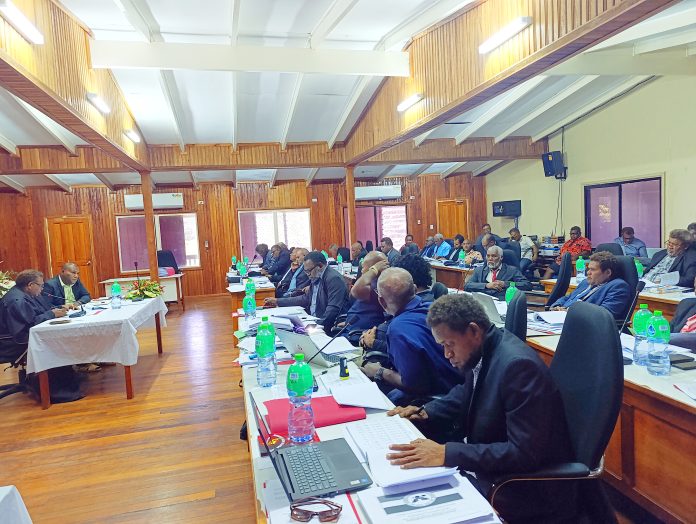
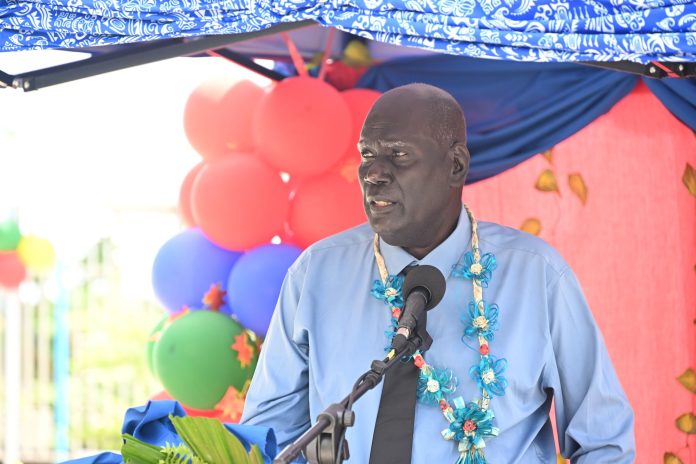
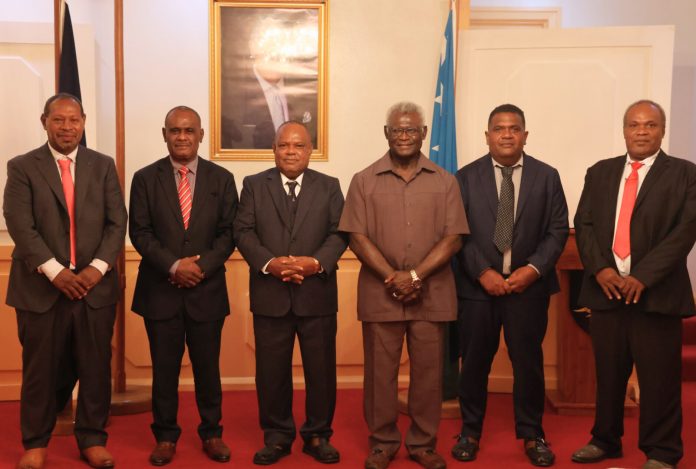
Prime Minister Jeremiah Manele now faces the third motion of no-confidence which is history in the making for the political landscape in the Solomon Islands as well for a Prime Minister to face three motions of his time in office, a remarkable development for a government that is still more than half way through its term.
The latest notice was lodged with Parliament on 17 March 2026, and according to the Clerk to Parliament, it is now under the required seven-day notice period, which lapses on March 23.
It can then be moved from March 24 onward, whenever Parliament next sits.
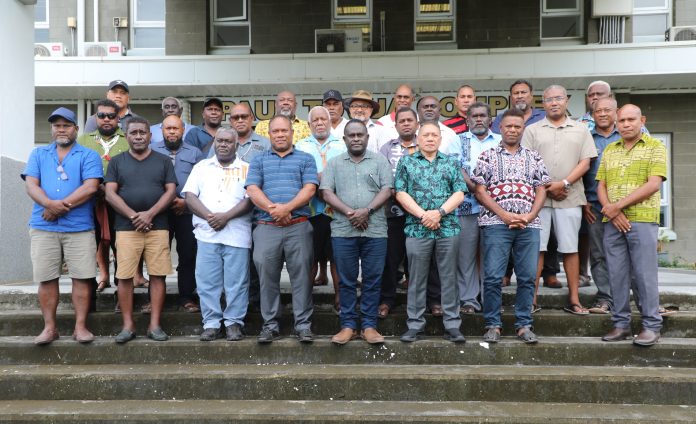
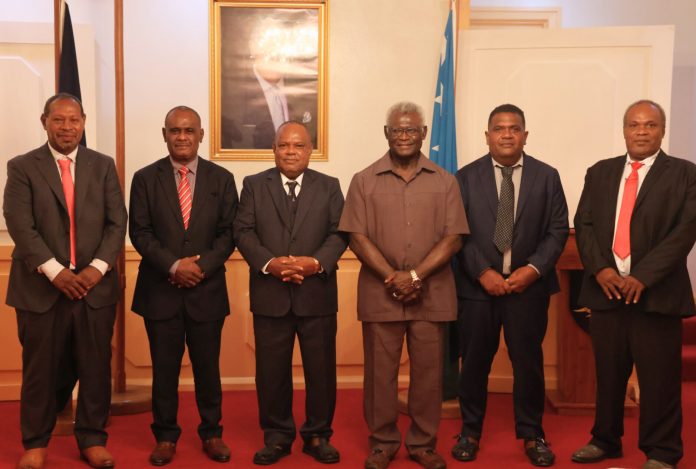
At the same time, the breakaway group says it has formed a new coalition with the Opposition and Independents and claims the backing of 28 MPs as a group photo had been recently circulated on from all media outlets.
To understand how serious this third challenge is, it helps to go back to the first motion in December 2024.
That motion, introduced by Central Honiara MP Gordon Darcy Lilo, was set down for Parliament but never reached a vote.
On the floor of Parliament, Lilo withdrew it after admitting he did not have the numbers to proceed.
Island Sun reported that he also said the challenge had been instigated by disgruntled government ministers, while other reports said that Speaker Patterson Oti refused an attempted deferment and confirmed Parliament would proceed under the standing orders, leaving Lilo to withdraw. In short, the first motion did not fail because Manele won a vote but it failed because the anti-Manele camp could not hold itself together long enough to force one.
The second motion, scheduled for 6th May 2025, followed another major political break. By then, the government had been shaken by defections, including the move of then former finance minister Manasseh Sogavare and Manasseh Maelanga who was the former Minister for Infrastructure and development plus other government MPs to the Opposition camp. But again, the motion never matured into a floor test in Parliament.
Media reports that the motion was withdrawn after Parliament resumed that afternoon, with Speaker Oti explaining it had been removed under Standing Order 31(2) and was no longer on the day’s order paper.
News media also reported remarks in the House acknowledging that the government now had “the numbers,” while another news report said Manele’s side had recovered to 28 members, effectively draining momentum from the challenge.
Later, other news reportsummed up the pattern neatly stating that motions against Manele was withdrawn before debate.
That history and its corresponding trend matters because it tells us something important about Manele’s political leadership so far that the danger has not usually been on the floor of Parliament, but it is more in the shifting negotiations before Parliament sits for the motion.
Both earlier motions were politically serious in terms of it’s due process, but both collapsed before MP’s had to cast a final, vote on the floor of Parliament.
Manele’s strength was his coalition’s ability, at the last moment, to recover enough support to stop the motion from being tested formally on the floor of Parliament. That is why this third motion feels different.
This time the crisis is deeper, because it follows the resignation of 12 cabinet ministers, leaving some key Ministries without ministers, and forcing the Prime Minister to quickly swear in Mary Daniella Zae Garu and Freda Tuki Soriocomua to keep key portfolios functioning.
Still, caution is necessary. A claim of 28 MPs is politically powerful, but in Solomon Islands politics, claimed numbers and confirmed numbers are not always the same thing.
News report stated the 28 member was claim through the new coalition by People’s First Party figures such as Deputy Prime Minster Kologeto and Paul Bosawi with those from the Independent and opposition, while Island Sun reported the same claim from the breakaway side.
But as recent history shows, the true test comes only when members stay united through the full notice period and remain committed when the motion is finally called on the floor of Parliament.
That is exactly where the first two attempts fell apart.
So what might the outcome of this third motion be?
At this stage, the most honest answer is that it is too early to call as Prime Minister Manele had stated earlier this week that it is till fluid.
The current motion appears more advanced than the first two because it comes after a larger cabinet rupture and a more visible realignment of MPs.
On paper, that gives the anti-Manele camp stronger momentum than it had in December 2024 or May 2025.
But momentum is not the same as the expected outcome of the motion.
The same political system that allowed the filing of this motion also gives camps several more days to negotiate, persuade, split, reconcile, or reassemble.
Manele’s own public line, as carried by official government statements, has been to urge calm and stress that constitutional processes will be respected whilst keeping public services operationalize.
The best reading, therefore, is this that the third motion is the most serious challenge Manele has faced so far, but still to early to guarantee a defeat.
If the breakaway MPs truly holds 28 and keeps that bloc intact through maturity day and the parliamentary sitting that follows, then Manele will be in a dire situation of defeat.
But if the numbers change, if one side overstates its support, or if there is a late political bargain in the coming days, this third motion could yet end like the first two as another dramatic challenge that never reaches a decisive vote on the floor of Parliament.