Home Blog Page 939

PM arrives in Temotu

0
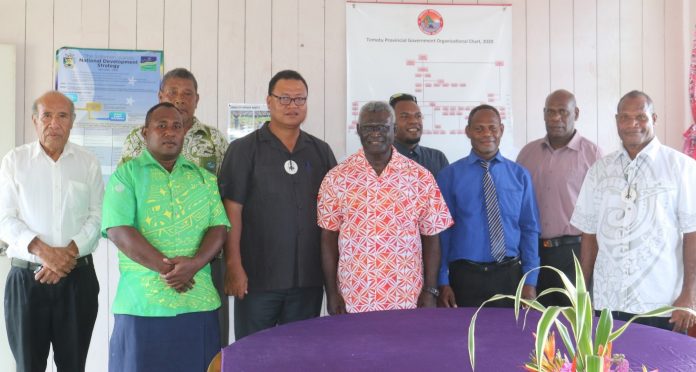
PM Sogavare, Premier Forau and members of the Temotu Provincial Executive.

Prime Minister Manasseh Sogavare has arrived in Lata ahead of the 38th Second Appointed day commemoration of Temotu Province.

The anniversary celebration takes place today.

Shortly following his arrival in the provincial capital yesterday, Mr Sogavare met with the Premier of Temotu Province Clay Forau and members of the Temotu provincial executive.

The Prime Minister met with the Temotu provincial executive to share some information and updates of mutual interest between the Government and Temotu province.

Premier Forau used the opportunity to express support of the Temotu provincial executive and its people to the Prime Minister and the Democratic Coalition Government for Advancement (DCGA).

Forau highlighted shipping as one of the important needs for the province.

Sogavare acknowledged the issues and needs of the province and expressed the Government’s serious concern to address the needs of Temotu Province in the shipping industry.

Sogavare is expected to travel to other parts of the province as part of his trip and as impressed upon Premier Forau during their meeting, one of his main intentions to travel to Temotu as part of joining the second appointed day is “to have the opportunity to listen and witness firsthand, the issues and needs of the people of Temotu Province”.

Sogavare will officiate as Guest of Honour in today’s programme.

He is accompanied by the Minister for Provincial Government and Institutional Strengthening Rollen Seleso.

–OPMC PRESS

Gov’t policies must maximise resources

0
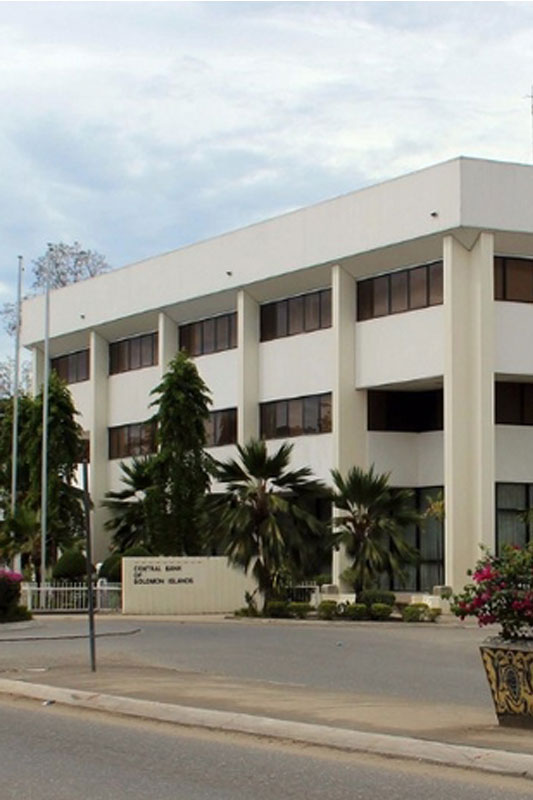
Central Bank of Solomon Islands. Photo by CBSI

BY BEN BILUA
Gizo

THE Central Bank of Solomon Islands (CBSI) highlights that the country’s long-term economic growth depends on how the government drives its policies to fully utilize existing resources.

In a statement released recently, CBSI states that the country has enormous resources capable of driving economic growth in the long term but the absence of strong policies continue to be a challenge.

Resources identified in the report includes; Natural resources, Capital, Human Capital and Technological Progress.

“If a country has a plentiful supply of natural resources and the ability to exploit or make use of them then the economy will be able to expand,” the statement said.

“Having plentiful natural resources does not guarantee economic growth however, the means to exploit them must also exist. In some instances the existence of natural resources and who exploits them has caused conflict and led to reduced economic growth for some countries around the world,” it added.

“When we talk about capital we are usually referring to machinery and equipment which helps us produce goods.

“By increasing the stock of machinery in the country we are increasing our ability to produce goods and hence we are expanding our economy.

“To get machinery and equipment, a country must invest and so the level of investment in an economy will impact future economic growth.

“As we said before, we can work overtime for a while to produce more and we can use machines every day, all day but eventually the machine will break so we must continually invest in machinery and equipment.

“When demand in an economy is high so that we are using our machines and equipment every day, all day (we are working at maximum capacity) it signals to the boss that it may be time to invest in more capital.

“We refer to a country’s workforce as human capital.

“Although we cannot determine the quantity of workers we have in an economy we can influence the quality of the workforce.

“By improving education standards, we can improve the quality of the workforce, this again requires investment.

“The existence of machinery and capital which help us produce goods more efficiently is thanks to technological progress. To improve our ability to produce goods in the future we need technological progress to be on going. Investment again is needed, in education and research,” the report stated.

It emphasized that the government must focus on policies which impact the quantity, quality or ability to exploit the areas identified so that the economy can be able to produce more.

It also states that the policies must focus on the supply side to improve the country’s productive capacity of the economy.

For example, there is a need of strong policies on promoting education and training to improve the quality of the workforce, promote research and development to ensure on-going technological progress, investing in infrastructure (roads, wharfs) to improve the ability to exploit resources and promoting sustainable exploitation of natural resources to ensure the sustainability of economic growth.

ADB approves $1.2B for transport network here

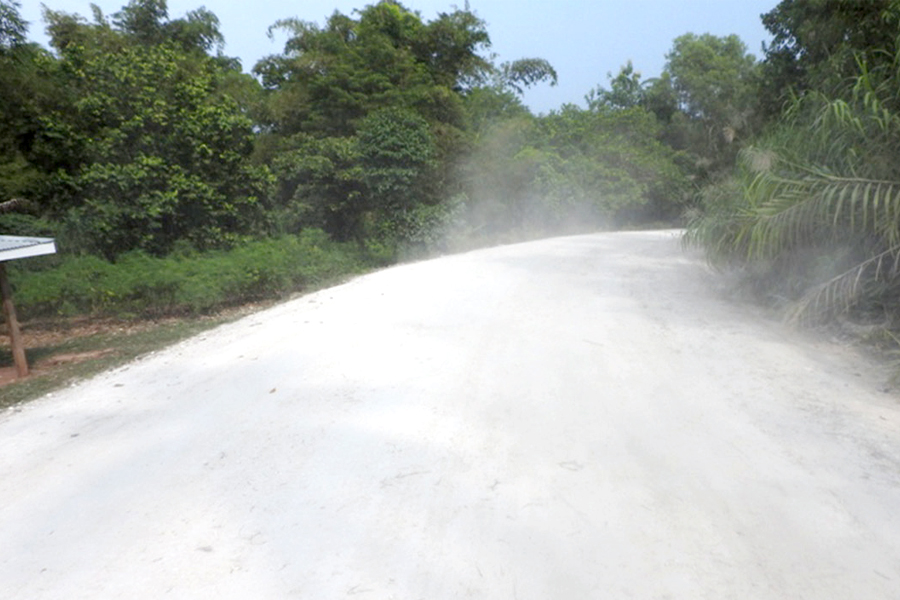
East Malaita Road rehabilitation plan underway.

THE Asian Development Bank (ADB) has approved support of almost USD$150 million (SBD1.2 billion) to boost land and maritime connectivity in Solomon Islands.

ADB is providing a grant of $74.5 million (SBD$595.7 million) sourced from the Asian Development Fund and a concessional loan of $74.4 million (SBD$594.9) for the Solomon Islands Land and Maritime Connectivity Project.

A statement from ADB says the national government is contributing the remaining USD$21.8 million (SBD$174.3 million) of the project’s overall cost of almost USD$171 million (SBD$1.4 billion).

The project will provide urgently needed repairs to one-third of the country’s road network and half of the country’s wharves.

“Considering 80% of the population lives in rural areas, this new investment project will have a measurable impact for hundreds of thousands of people in Solomon Islands,” said ADB Transport Specialist for the Pacific Tomoaki Kawabata.

The project will support the rehabilitation and upgrading of about 35 kilometers of roads in and around the capital, Honiara, the construction of two provincial wharves at Ahanga and Kira Kira, and improvements to the old wharf at Honiara International Port.

The project is set to increase access to markets, clinics, and schools, while supporting the disaster resilience of the transport network in Solomon Islands.

Climate proofing will be a key component of all the road and wharf upgrading under the project.

The capacity of the government’s Ministry of Infrastructure Development will be strengthened by the project, through improvements in the transport infrastructure maintenance practices in Solomon Islands.

It will assist the government in planning, project preparation, procurement, and other transport sector institutional reform.

The ADB-supported project will complement the improvement works on road sections of the east–west Guadalcanal corridor financed by the Japan International Cooperation Agency.

ADB is committed to achieving a prosperous, inclusive, resilient, and sustainable Asia and the Pacific, while sustaining its efforts to eradicate extreme poverty.

Established in 1966, it is owned by 68 members—49 from the region.

EDITORIAL- Time to pursue long-term solutions

0

FOUR bus stops in central Honiara have been closed for use as of yesterday.

The closure will be for an indefinite period of time.

The decision came from a joint meeting held in Honiara last week, attended by the Honiara City Council (HCC) Law Enforcement Division, Traffic Police and the Ministry of Infrastructure Development (MID) Road and Transport Unit.

This is part of efforts to address the daily traffic congestion in Honiara as the city prepares itself for the 2023 Pacific Games.

City Mayor Eddie Siapu says the closure of the four bus stops will allow relevant officers to monitor and assess how best traffic congestion can be addressed.

A review, he added, would be carried out once all assessments are done.

Traffic congestion in central Honiara is now a new issue.

It’s been with us for many years.

There were many contributing factors.

Key among them is the increasing number of vehicles in Honiara.

Yes, the number of vehicles running the roads appears to have increased every month.

These include public buses and taxis.

Closing off four bus stops as part of the effort to address the issue may not really address the congestion.

That’s because the number of public buses entering the city centre will remain the same.

When you see the number of public buses coming in from both sides of the city during the day, you can tell the two bus stops at the Central Market simply does not have the space to accommodate them.

This is where the congestion issue really lies.

The most effective step to addressing it is to control the number of buses coming into central Honiara.

This is where zoning the city comes in. Meaning public buses will be required to serve only the zones they are allocated.

Doing that would reduce the number of buses coming into the city centre, thus minimising the congestion.

Solutions like this must be backed with regulations and enforcement to make them work.

The traffic issue has been with us for many years now. Authorities should have come up with long term solutions years back.

They failed to do that so the problem keeps cropping up every year.

Honiara is a rapidly growing city.

City councillors and other stakeholders must be proactive and think ahead when tackling pressing issues affecting the city.

Short-term solutions will not address the issues.

Gaobata elects new youth body

0
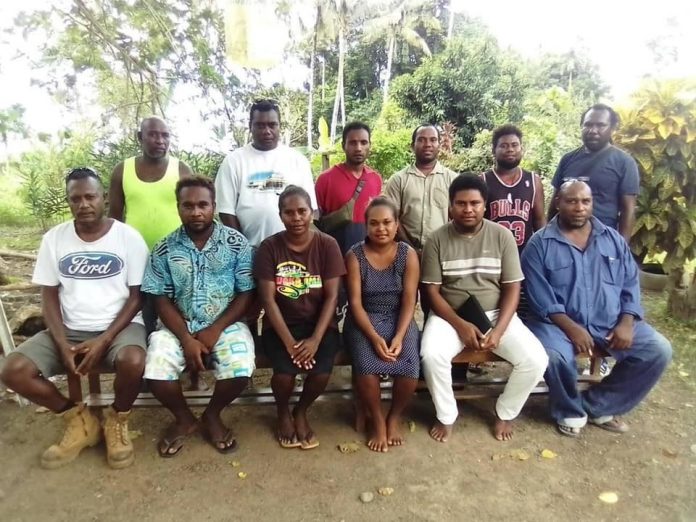
Ghaobata Youth Association members with provincial member John Lee Saki, sitting left.

THE Ghaobata youth representatives in northeast Guadalcanal selected their Ward Youth Association Executive Board on Sunday.

This was confirmed by the President of Guadalcanal Provincial Youth Council (GPYC), Danny Rasile.

He said the event was attended by the MPA for Ghaobata Ward, John Lee Saki, his WDC chairman, two other WDC members, church leaders, chiefs and other community leaders.

Rasile thanked Saki for his support in helping to establish the youth association in his ward.

“I want to personally thank Saki for taking the lead initiative to establish the Gaobata Ward Youth Association,” he stated.

“Saki sees our need and steps in to salvage the moment. His efforts with the Ghaobata WDC’s help, has result in what we’ve seen today,” Rasile added.

He also expressed that he hopes other Guadalcanal MPAs would do the same in the wards.

“We hope other MPAs will follow suit to organize and facilitate the formation of youths in their wards.”

Rasile said only three wards in Guadalcanal have since established their youth associations. These are Avuavu, Tandai and Ghaobata.

The other 18 wards are yet to come up with their youth representatives before establishing their youth associations.

Rasile stated that Savulei Ward is expected to have their youth association established by the end of this month.

In addition, the president also lamented that despite the fact that Guadalcanal youths make up about 80% of the province’s population, they are rarely included in the provincial government budget until this year where about $280,000 was allocated for the 2021-2022 financial year.

Rasile said so far these three wards were established without any support from the financial budget.

Despite the self-sufficient mindset, Rasile expressed that they can’t continue to be ignored.

The Ghaobata Ward Youth Association Board Members are:

1: Jane Saronga – Chairlady

2: Dickson Maeke – Vice Chaiman

3: Cathy Roxy – Treasurer

4: Graeme J Tolugu – Secretary

5: Joseph Pei

6: John Rocky

7: Francis Garimane

8: Ben Turasi

St Dominic’s RTC gets new classroom building

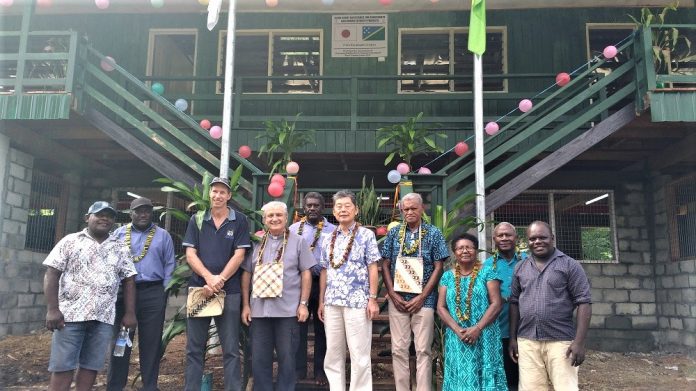
Representatives posed in-front of the newly launched building.

BY MAVIS N PODOKOLO

ST Dominic’s Vocational Rural Training Centre in Gizo has officially received a new double-story classroom building worth SBD$621,000.

The building was donated to the school by the Embassy of Japan in Solomon Islands with the focus to provide more effective technical and vocational education to local youth.

Fr Steven Tee, principal of Dominic’s Centre, said the newly erected double story building marked a milestone for the staff and students of St Dominic’s with the great support from the people of Japan.

New double story classroom building.

“The building will always remind us with our relationship to the people of Japan and St Dominic’s RTC in the future or years to come.

“Therefore, I on behalf of the staff and students of St  Dominic’s RTC highly appreciate you his excellency the embassy, your hard working coordinator and the government of Japan for this great need of RTC project class room,” Tee said.

Ambassador Yasuhiro Morimoto said the success of this project whether it works well or not depends highly on the recipients manage it, being aware of the responsibilities for good management and maintenance to succeed to the next new generation.

Warriors welcoming Ambassador Morimoto

“I hope that the new classroom building will benefit many youth people, and be remembered as a symbol of the friendship between the two peoples of Japan and Solomon Islands for many years to come,” Morimoto said.

He said Japan is willing to continue their efforts in assistance for the educational field including vocational schools to see more happy faces in many places of Solomon Islands and to cultivate cordial relationship between the two countries, Japan and Solomon Islands.

GEF 7 project design kicks off

0
Workshop Participants in session on May 26

AN inception workshop to begin the Global Environment Facility (GEF) 7 Project Initiation Planning Stage gathering representatives from the UNDP Solomon Islands, the Ministry of Environment, Climate Change, Disaster Management & Meteorology and the Ministry of Agriculture and Livelihood was held on May 26.

The Workshop is begin the process of developing an action plan for the project of safeguarding Solomon Islands Endemic and Global Threatened Biodiversity and Ecosystem Services from key threats, particularly invasive alien species and unsustainable land-use practices.

More than 20 representatives from UNDP, partner ministries and civil-society organizations gathered to launch the project development process for the GEF 7 Multifocal Area, which focuses on biodiversity and land degradation thematic areas.

The project’s broader objective is that Solomon Islands indigenous plants, animals, and ecosystems are at a reduced risk from invasive alien species, land degradation and unsustainable resource use with effective government enabling frameworks and capacity, community participation and resilient blue/green livelihoods.

Speaking at the Workshop, Chanel Iroi, Deputy Secretary Technical for MECDM and GEF Operational Focal Point in Solomon Islands, acknowledged the project team and stressed that this workshop initiated a significant process that should be completed by December this year.

Workshop participants

According to MECDM, Solomon Islands is an important biodiversity hotspot across the globe and in the Asia-Pacific region. Solomon Islands has rich species biodiversity on both land and waters. In terms of iconic coastal and marine animals, the country hosts the saltwater crocodile, eight species of whales, nine species of dolphin, dugongs, five species of turtles (Eretmochelys imbricate (CE), Chelonia mydas (EN), Dermochelys coriacea and Lepidochelys olivacea (VU) and Caretta (EN), plus many species of sharks and large pelagic fish. They highlighted that there remains key threats to this wealth of biodiversity, which includes invasive alien species, habitat destruction and land degradation, overharvesting and exploitation of species, and climate change.

At the meeting, the Ministry of Agriculture Deputy Secretary, Michael Ho’ota, highlighted the impacts to the environment that can be caused by no proper farm management practices, this can result in soil degradation, nutrient leaching and depletion causing low soil fertility, as a result, low crop productivity, contamination of water catchment, deforestation and the introduction of invasive fauna & flora species. These are threats to the Agriculture sector in Solomon Islands, which hopefully can be addressed by this project.

MAL is grateful to be a stakeholder in this important project and looks forward to its successful development and implementation.

The workshop ended with UNDP, MECDM and MAL agreeing on steps forward and a plan to deliver the project document by December 2021. The next steps will also involve visiting the targeted sites and Provinces under the proposed Project.

LOGGER FACE CONSEQUENCES

Logging in Solomon Islands. Photo supplied

Sino FID certificate cancelled

By EDDIE OSIFELO

MALAYSIAN logger Sino Capital Solomon Islands Ltd have found themselves again at the receiving end of the law.

After Guadalcanal Province cancelled their business licence last year, and accused them of operating illegally in the province since 2009, the logging company now faces the prospect of closing down its entire operation across the country.

This was after the Foreign Investment Division (FID) issued Sino a notice to cancel their foreign investment registration certificate because of alleged breaches the company had committed.

Registrar of Foreign Investment Lynette daWheya outlined the breaches in the show-cause notice she wrote to the logging company on 6 May 2021.

These include:

  1. SINO has failed to comply to the 15 Annual Survey Notifications reminders issued to the company in 2017 – January, February, March; 2018 – January, February, March; 2019 – January, February, March, 2020 – January, February, March; 2021 – January, February, March.
  2. The company failed to respond or redress the breaches stated in the Show cause notice issued against the company in January 2021 for violations of approvals following the Business Monitoring Joint Agencies Committee (BMJAC) compliance inspections on Guadalcanal Province and Vanikoro – Temotu Province 30 November 2020 – January 2021.
  3. The company has failed to comply with its foreign approval conditions as stated below:
  4. By operating a reserved business activity – a canteen less than 200 square meters on Aola site.
  5. That they have failed to notify Registrar on Tax registrations, obligations and remittances;
  6. That they have failed to notify the Registrar on NPF Registrations, obligations and remittances; there have been inconsistencies in paying SINO Capital SI Ltd employee’s contributions to the SINPF;
  7. Failed to pay for relevant Provincial Business Licences for Aola Camp for years 2004-2021, Guadalcanal Province for total of $5.1 million. Failed to pay for relevant Provincial Business License for Vanikoro, Temotu Province, from 2016-2021 totaling $1,500.00
  8. Failed to pay for relevant resource owners at Guadalcanal Province.
  9. Failed to pay for relevant Resource owners at Vanikoro, Temotu Province.
  10. Failed to pay the penalty issued against the company, $125,000 for non-compliance as per the FI Act 2005 as amended 2009, section 29 (C) (I). Guadalcanal Province.
  11. Failed to pay the penalty issued against the company, $125,000 for non-compliance as per the FI Act 2005 as amended 2009, section 29 (C) (I). Temotu Province.
  12.  

deWheya told Sino that if they wish not to have their certificate of registration cancelled, they must present to her office in written form within 10 working days as of the date her letter, reasons why their certificate should not be cancelled.

Island Sun understands the 10-day notice has lapsed.

When contacted, Sino lawyer Wilson Rano told the Island Sun he has appealed against deWheya’s letter to the Minister of Commerce.

He further claimed the minister has directed FID to withdraw the letter.

Ngati wants Councillors entitlement reviewed in HCC Act

0
Honiara City Councillor, Reginald Ngati

AS the review of the Honiara City Council (HCC) Act 1999 is now underway, Councillor for Vura Ward, Reginald Ngati has called for an amendment in the entitlements of Ward Councillors’.

Cr Ngati said the amendment of the Councillors’ entitlements is important because Honiara city is now expanding, so as the increase of demands for services by residents in the city.

He stated that “just like the national members of parliament, we as ward Councillors too are experiencing the pressure of rising demands by residents’ of the city. We have received requests from voters and ward residents on a daily basis – a normal culture in the local politics.”

Having said that, Cr Ngati said the current entitlements for Councillors is really unfair in their leadership.

For instance, under the current HCC Act, the entitlements of Councillors together with the deputy mayor are only the fortnight allowances, no more no less.

“Unless if there are some other entitlements that was hidden from us that I did not know about. This excludes the City Mayor, as his entitlements are stipulated for under the Parliamentary Entitlements Commission (PEC).

“For those of us ordinary Councillors or non-executive Councillors, our fortnightly allowance is just $1,325 tax-free. Those that holds Chairmanship roles gets more than $1,500, while Deputy Mayor gets $1,900 plus.

“That is the current allowance we are entitled to. We are lucky that the allowances are not taxed,” the Vura Ward Councillor said.

“There is no housing entitlements, no education entitlement, no health allowance, no transportation or ward touring entitlements,” Cr Ngati added.

Under the leadership of Wilson Mamae, Mr Ngati was Chairman for what was referred to as the Councillors Entitlements Committee (CEC) – an ad hoc committee that was formed to look into the entitlements of Councillors.

“When I was with CEC, we have come up with figures and possible entitlements in a report and forwarded it to the Minister for Home Affairs. I wish to see the ministry refer to the report we submitted when reviewing the Act.

“I strongly call on the ministry to seriously consider the review of the Councillors’ entitlements,” Cr Ngati said.

He went on to state that the review of the entitlements is important, because a lot of complaints have been received by members of the public, accusing certain Councillors of owning expensive vehicles, houses, and huge properties when their allowances is very petty.

“However, whether they purchased the items before or during the time they are elected is not the issue here. The issue here is that when a Councillor has no other entitlement and is owning properties and making wealth, that is the problem.

“The point here is that the entitlements does not qualify a councillor to have expensive properties, or look outstanding in this leadership role. You only have your allowance that is paid fortnightly. And also at the end of each Councillor’s term, there is no grands paid – it will just be a return home with no allowances given,” Ngati stated.

Having said that, he is concerned that the fear of Councillors getting off track is either created by those that are creating or revising the Act as there are no provisions that gives Councillors the opportunity and privilege so that when they work and serve their people, they at least have something to count on.

“Therefore, considering the amendement of Councillors’ entitlements in the revised HCC Act is a must. It must be done,” the Vura Ward Councillor strongly stated.

Work on Good Samaritan Hospital Lab progressing

BY MAVIS N PODOKOLO

WORK on the Good Samaritan hospital laboratory is progressing according to Dr Gregory Jilini under Secretary to Ministry of Health and Medical Services (MHMS).

But he explained the hospital will be used for testing of different diseases and not for COVID-19 testing.

“Work on the Good Samaritan Lab is still in progress. It will be a hospital lab. Due to its close proximity to National Referral Hospital NRH etc, COVID testing will still be done at the NRH Molecular Lab,” he said.

Jilini said an official opening will be organized once it is completed.

Dr Yogesh Choudhri Senior technical advisor to MHMS also confirmed that the Hospital laboratory is for haematological and biochemistry tests for the patients of other diseases.

“It is not going to be a COVID testing laboratory. It is for other haematological and biochemistry tests for the patients of other diseases,” said Choudhri.

Pauline McNeil Permanent Secretary to Health Ministry on one of the recent COVID-19 talk back show said the ministry of health are in the process to establishing a laboratory for the Good Samaritan Hospital

McNeil said the laboratory is part of donation from the Solomon Islands Forestry Association.

 “We are thankful for the donation from this private person who have come forward to support Ministry of health,” said McNeil.