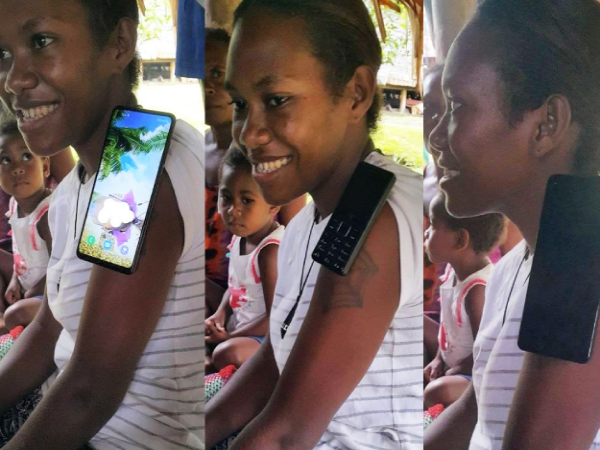
THE Ministry of Health and Medical Services (MHMS) has condemned last week’s newspaper report of a young girl in Malaita who claimed to have her arm turned magnetic, attracting android phone and other metal objects after getting her first COVID-19 vaccine jab.
“This report is not only misleading but more concerning is the fact that it lacks key fundamental principle of journalism which is to tell the truth, truth in a practical and functional sense which we can operate on, on daily basis,” a statement from the ministry reads.
“In this case, the Ministry of Health should have been consulted for a response to the matter prior to publication,” it added.
“This is very important as we continue to deal with vaccine hesitancies and strive to speed up uptake across the country.
“The report last week did not verify the claims at all both with the Ministry of Health and the young girl, the subject of the article.
“The article also displayed total lack of respect for privacy and confidentiality of the individual by proceeding to publish the story without her knowledge and consent.
“This is irresponsible on the part of the media firm.”
The story appeared in the Solomon Star.
The ministry said it carried out an investigation into the claim.
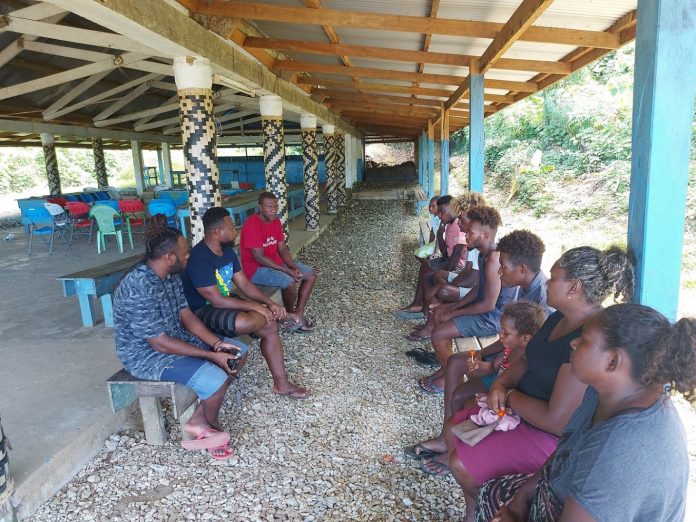
“When out in the field, our investigators managed to locate the young girl and conducted interviews together with nurses of Fauabu clinic, in Malaita.
“The health team managed to verify through her mobile phone number, since she lost her vaccination card that she was vaccinated with 1st dose Sinopharm on the 17th of July in Honiara and missed her 2nd dose which was scheduled for the 7th of August.
“According to her, she experience minor side effects such as general body pain, dizziness, and having poor appetite upon returning to Malaita province.
“These symptoms are all reported adverse events of COVID-19 vaccines.
“At that time, she did not reported any magnetic effect resulting from vaccination.
“It was only after she heard the rumours of phone sticking to the injection site that she decided to check it on herself.
“The health team investigated the claim by placing an android phone against the injection site and the phone failed to stick to her arm despite multiple attempts and with various positioning of the phone.
“She was even asked to stand under the sun but the phone still did not stick to her arm.
“Senior staff and nurses at Fauambu clinic who reported that the young girl visited the clinic twice for her concerns confirmed that based on their assessment, she was booked for referral to Kilu’ufi hospital for further medical assessment and psychiatric analysis due to inconsistencies with her conversation, story and behaviour.
“For instance, the girl reported that she had her vaccination in May 2021 and in a video clip said to have taken her first jab in December 2021, when the vaccines have not yet arrived in country.
“As such based on investigations into the matter, the Ministry of Health would like to assure the public that the claim of mobile phone sticking to the young girl’s arm due to COVID-19 vaccination is not true.
“Nevertheless, it must be noted that metals and other objects sticking to the skin is a possibility under some conditions such as sweaty skin and positioning of the objects etc. and there is nothing new about it.
“Every now and then people experience these incidents of metals and other objects sticking against their skin, these incidents are not due to COVID-19 vaccines.
“COVID-19 vaccines are administered in liquid form as opposed to magnets, which are metal or iron in their physical form and are inserted into the body through the eye of the needle.”
The Ministry of Health kindly requests for responsible media reporting and avoid sensationalizing unverified information as we continue to roll out the COVID-19 vaccines.
“Such reporting is not in the interest of the country and have the potential to have a negative and detrimental impact to the COVID-19 vaccination drive but also for other National Vaccination and Immunisation efforts in addressing diseases which can be prevented through vaccinations.”
Group photo with the Pfizer vaccines as they arrive.
Solomon Islands received 100,620 doses of the Pfizer-BioNTech COVID-19 vaccines yesterday from the United States Government through the COVAX Facility – a partnership co-led by the Coalition for Epidemic Preparedness Innovations (CEPI), Gavi, the Vaccine Alliance and the World Health Organization (WHO), with UNICEF as the key delivery partner.
These latest donations from the American people will contribute towards fully vaccinating 50,310 people, especially pregnant women and children aged 12 to 18 in Solomon Islands, in line with the National Deployment and Vaccination Plan.
These vaccines were handed over to the Government in an official ceremony held at the Henderson International Airport.
In attendance at the handover ceremony were the Minister of Health and Medical Services, Dr Culwick Togamana, leading the government team including the Permanent Secretaries of the Ministry of Health and Medical Services, Pauline McNeil, and Ministry of Education and Human Resources Development, Dr. Franco Rodie, as well as senior executives of the Ministry of Health and Medical Services.
In attendance were also the Director of the United States Embassy Office in Solomon Islands, Russell Comeau, Chief of UNICEF Pacific’s Solomon Islands Field Office, Dr. Zelalem Taffesse, and WHO Country Representative to Solomon Islands, Dr. Sevil Huseynova.
Delivering keynote address at the event, Togamana expressed sincere thanks to the government and people of the United States of America.
Health Minister Dr Culwick Togamana delivering key note address
“It is a tremendous pleasure filled with thanks to receive the 100 thousand and 620 doses of Pfizer vaccines on behalf of our children 12-18 years of age and pregnant mothers,” he said.
“We now have the opportunity to increase vaccination coverage to these groups of people that will greatly contribute towards the overall protection of our people from severe sickness, hospitalization and death from COVID-19,” Togamana added.
“I understand that 2 billion USD has been provided to the COVAX Facility and another 2 billion scheduled for 2022 by the U.S. government.
“The support, as we have seen, has already contributed significantly towards equitable distribution of COVID-19 vaccines across the globe – more importantly to least developed and developing countries and Solomon Islands joins these groups of countries as beneficiaries to this wonderful support.”
The minister also thanked the support of UNICEF for all the preparatory work to receive the Pfizer vaccines from shipment and installation of ultra-cold chain equipment at the National Medical Store including facilitation of necessary trainings.
He also praised the joint partnership of health and education to roll out the vaccines in schools, initially in Honiara and eventually to the provinces.
Permanent Secretary of the Ministry of Education and Human Resources Development, Dr Franco Rodie, also echoed similar sentiments of thanks to the U.S. government for the support with the Pfizer vaccines.
“As we have seen, COVID-19 affects and kills indiscriminately, and children are not immune to the effects of the virus,” Rodie said.
“These vaccines offer us a wonderful opportunity to preserve the health and lives of our children thus can continue with their education and fulfill the life’s goal,” he added.
Dr. Franco Rodie delivering his remarks
“I want to thank Prime Minister Sogavare and Foreign Minister Manele and his team for facilitating my entry into the country and for their continued support and friendship.
“And a special thank you to our UN partners and Ministry of Health colleagues who have helped ensure this delivery was a success,” said Russell Comeau, Director, U.S. Embassy Office in Solomon Islands.
“These vaccines are an important step in not only protecting the health of Solomon Islanders, but also in supporting communities as they work to build back better from the many challenges brought on by the COVID-19 pandemic.
“These vaccines also represent the United States’ ambition to deepen our friendship with the people of Solomon Islands.
“We thank the United States Government for supporting our joint efforts in combatting the ongoing COVID-19 threats faced by children in the Pacific region,” said UNICEF Pacific Representative, Jonathan Veitch.
“We also acknowledge the Solomon Island Government’s strong efforts in their preparedness and response plans to keep communities safe and protected.
“UNICEF, together with our partners, will continue to support the government during this global pandemic.”
WHO Country Representative to Solomon Islands, Dr. Sevil Huseynova, thanked the U.S. government for channeling their support through COVAX Facility, which will greatly ensure equitable distribution of the COVID-19 vaccines across the globe.
“No one is safe until everyone is safe and this means that every single person needs to be vaccinated so that we are all safe.
“This batch of Pfizer vaccines will greatly enable Solomon Islands to achieve increased coverage to various groups who otherwise would not be able to get vaccinated, the children 12-18 years old and pregnant mothers.
Senior Advisors of MHMS Dr Yogesh Choudhri and Dr Elizabeth Rodgers with National Medical STore team preparing to move the vaccines to the ultra cold fridges
“WHO advocates and supports the overall COVID-19 vaccine roll out especially for those in high risk groups that require prioritization and we are pleased to have supported all necessary preparations to receive the Pfizer vaccines alongside UNICEF.
“We will continue to work closely with the government for effective and efficient roll out of the Pfizer vaccines to our children and pregnant mothers,” said Dr Huseynova.
As vaccines are now rolling out around the world, they should complement, and not replace, proven public health measures.
Solomon Islands, like other countries, will continue to apply tried-and-tested measures to successfully prevent and control transmission, such as physical distancing, masks, ventilation and hand hygiene, alongside robust programmes to test, trace, isolate and treat.
COVAX is the vaccines pillar of the Access to COVID-19 Tools (ACT) Accelerator.
The ACT Accelerator is a ground-breaking global collaboration to boost the development, production, and equitable access to COVID-19 tests, treatments, and vaccines.
Ultra Cold Chain provided by UNICEF to store the Pfizer vaccines
Its aim is to accelerate the development and manufacture of COVID-19 vaccines, and to guarantee fair and equitable access to every country in the world.
The United States remains the largest contributor to COVAX, providing $4 billion to support the global effort to provide safe and effective vaccines.
The United States recently reached the major milestone of 200 million doses of vaccines donated globally through the COVAX facility, more than 800,000 of which were donated to the Pacific Islands.
Kia village youths during a discussion session last week on Anti-Corruption
Isabel Province is taking the lead in supporting the Solomon Islands Independent Commission Against Corruption (SIICAC) in the anti-corruption campaign in the province.
This followed the invitation by the Isabel Provincial Government (IPG) for the Solomon Islands Independent Commission against Corruption, SIICAC, to conduct anti-corruption awareness in Isabel Province.
Speaking during a week-long awareness programme conducted by SIICAC in Kia village last week, Member of Provincial Assembly for Kia Ward and Minister of Finance Sam Watson said the awareness program is part of IPG’s preparations to host the International Anti-Corruption Day in Buala on December 9 this year.
Watson said the IPG plans to host the International Anti-Corruption Day following the Premier’s request to the National Government during the Second Appointed Day Celebrations in June this year.
Watson said the IPG is very much supportive to the National Government to establish SIICAC in the Provincial Capital Buala for the rural people to benefit from the services provided.
He said this is part of IPG’s strive to improve and integrate Good Governance in the established Tripod system in Isabel Province.
Watson said the Isabel Provincial Government is striving to maintain Accountability and Compliance following its Clean Audit Report under the Provincial Governance Strengthening Programme (PGSP), for three consecutive periods from in 2014/15, 2015/16 and 2016/17.
He said the IPG is working closely with the National Government by extending its full support to SIICAC in the anti-corruption campaign in the Province.
IPG has supported the recent anti-corruption awareness program through provision of Provincial staff and logistics.
Kia Community members representing the Tripod System in Isabel Province attended the anti-corruption awareness programme.
The Eta Council of Chiefs and Kia Community Representative Chief Douglas Boi Rove thanked the team saying the awareness program was very informative as it was the first time for some of the community members to learn and know about SIICAC and its role.
Boi Rove assured the team that people in Kia village are happy to work with the commission and join in the anti-corruption campaign in our societies.
SIICAC Director General John Kouni thanked the Kia Community, Isabel Provincial Government, Solomon Islands Government and UNDP for the cooperation and support rendered towards the work of the Commission.
The awareness program was facilitated by SIICAC and supported by the Office of the Prime Minister and Cabinet, OPMC, IPG and UNDP.
The Anti-Corruption campaign is a top priority of the Democratic Coalition Government for Advancement (DCGA) under its redirection policy to support and fully establish SIICAC to effectively carry out its mandated role. –GOVERNMENT COMMUNICATION UNIT
Prime Minister Manasseh Sogavare has applauded the leadership of the Solomon Islands National University (SINU) for seizing the opportunity to allow China-funded dormitory project on its premises at Kukum Campus.
The project “Implementation Agreement” was signed on Friday, November 12 between the National Hosting Authority (NHA) and Peoples Republic of China Embassy in Honiara.
The project was proposed to the Peoples Republic of China when the NHA in planning for accommodation spaces in 2023 for the Pacific Games came short of the required accommodation spaces.
Instead of investing in low-cost accommodation just for the games, the NHA consulted with SINU and the PRC Embassy and proposed a dormitory complex that can be used as a Games Village during the games but one that has a lasting legacy of gifting to SINU and the people of Solomon Islands a modern dormitory complex that belongs to SINU.
“I thank the leadership of SINU for recognising this important opportunity to enhance its facilities,” Sogavare said.
The Prime Minister applauded the government and people of the Peoples Republic of China for willingly funding the project which will enhance the capacity of SINU, transforms its image, and provide ultra-modern facilities for students to the level and quality of hotel accommodation.
The Dormitory complex cost approximately 172.4 million Solomon Island dollars [21.4 million US dollars], an amount extremely difficult for the government to investment in its own institution.
According Sogavare, the 2023 Pacific Games is the most important flagship project by the government. Not only will it leave behind its own legacy of sporting facilities for the future and young generations to use, but it is a catalyst for development in other sectors.
Besides the project, the NHA is already consulting with the Ministry of Health for the upgrading of the National Referral Hospital in time for the 2023 Pacific Games as well as with the Solomon Islands Water Authority for the upgrading of the water supply and sewerage systems in the capital by November 2023.
Sogavare urged SINU to look after the facilities once handed down to the institution after the Games.
The project comprised of 3 x 4-story accommodation blocks, 1 multipurpose activity hall and 1 equipment building with capacity to accommodate around 900 students.
West Honiara Constituency accountant, Ogatina Berry, right, hands over the $10,000 dollars to Head of Emergency Department, Trina Sale while CDO, Brian Taupiri, Kristaly Horoto and Dr Rose Naesol look on.
BY EDDIE OSIFELO
WEST Honiara Constituency has donated $10,000 to the Emergency Department at National Referral Hospital yesterday to support its award ceremony and Christmas party.
This came after the Emergency Department has sent an appeal letter to the Constituency office for small assistance recently.
Constituency Development Officer, Brian Taupiri said this donation is to recognize the work of the nurses and doctors at the Emergency Department who helped patients every day.
Taupiri said this was not the first time for Member of Parliament Namson Tran to assist the hospital as in the past it provided wheelie bins, green scrabs and nebulizers.
He passed Tran’s Christmas greetings to the staff as they continue to discharge their duties to serve the people.
Head of Emergency Department, Trina Sale thanked Tran for his kind gesture to help them and recognize their work.
Sale said part of the money will be used to award staff in different roles they play and recognise their efforts and hard work throughout the year.
She said sometimes during their work, they feel as their work are not appreciated.
In addition, Sale said other will go towards the Social and Fundraising Committee headed by Dr Rose Naesol to organize the end year’s party.
Kitano Construction Project Manager Takeshi Iwasaki, center, showing the progress done so far at the new improved Honiara International Airport to Engineering students of SINU, Jeffton Anisi and Jeffrey Fikisi during a site visit yesterday
BY CHARLES KADAMANA
Twenty-five Civil Engineering students from Solomon Islands National University (SINU) have gained onsite experience from visit to the new Honiara International Airport yesterday.
Led by Senior Lecturer Cyril Rachman, the students were updated on the progress of the project and learned what is expected of them after completing their studies.
Mr Rachman in an interview said the site visit helps his students to realise what they learn has huge application in industries which will motivate them in their studies.
SINU Civil Engineering students, staff and officials pose group photo at the newly completed Apron
He said the site visit is part of the student assessment that comes about following their participation at the recent Infrastructure symposium held in Honiara on 21-22 October 2021.
He said Solomon Islands is a developing country where most engineers engaged in infrastructure projects in the country are foreigners.
He said when left it becomes a problem for the country.
Students during their site visit yesterday
He said with more students taking up civil engineering program at SINU it will solve the problem.
“When they go, we can do it,” he said
He said the country for that matter need more engineers because our country is developing.
Two female engineers Dulcie Asuta and Farlaii Floyd with Senior Lecturer Cyril Rachman, left and Tetsuya Ishikawa
“You might not know in the future we might send engineers to other countries instead of sending them for seasonal work scheme.
“We have already sent nurses to Vanuatu and we can send more engineers oversea because we are known as hardworking people,” he said.
He said huge infrastructures are underway towards hosting the 2023 Pacific Games and the work of engineers is important more than ever.
International Cooperation Department Consultant Tetsuya Ishikawa showing the progress of the project
BY MAVIS N PODOKOLO
THE project for the improvement of Honiara International Airport is progressing well with most work on the international apron now 100 percent completed.
Project manager Takeshi Iwasaki confirmed this during a site visit yesterday organised for Solomon Islands National University Students Civil Engineer students and the media.
Iwasaki said for now the focus of the work is on the international terminal building, which is the new departure terminal and on the existing terminal which will be used as an arrival terminal after its completion.
Consultant Sofuku Iwaki Gyros, second from left, accompany the students
He told Island Sun they expect to complete the airport project, funded by the Japanese Government at a cost of about $348 million, by early 2023.
Upon its completion it will be handed over to the Ministry of Communication and Aviation, which is the implementing agency.
“The work progress is going really well despite the eight months delay we experienced last year,” Iwasaki said.
He said he is looking forward to the competition of a brand new international terminal.
The consultant for the project is Gyros Corporation and the contractor is Kitano Construction Corporation.
WKK consultant Shunsuka Mori, right, provide important information to Lavan Taikao
Iwasaki said Kitano Construction has a long history of engagement in the infrastructure development of the Solomon Islands.
“We have had involved in the construction of a great number of major infrastructure projects that you can see around Honiara and in the places like Guadalcanal, Gizo and Malaita.
“Also, aside from the current Airport Project, we are also undertaking the execution of Kukum Phase 2 Road Project under the Japan Grant Aid Project,” he said.
Timothy Taukui demonstrating the making of the Ngama (torch) during the festival workshop for flying fish catching
The Ta’uika Festival, held on November 2 and 3, 2021 on Bellona Island, Rennell Bellona Province, was inaugural hosting of the annual event developed over traditional fishing practices on catching Flying Fish.
Hosted at Ahanga Beach, the western end anchorage of Bellona Island, the Ta’uika Festival 2021 arrangements surrounded the making, finalising and use of the “baka’eha”, the outrigger canoe specifically designed for flying fishing expeditions.
The baka’eha outrigger canoe took two months to prepare, and it should last between four to six years.
The finalising of the baka’eha used for the Ta’uika Festival 2021 event was deliberately set aside to be carried out during the Ta’uika Festival event – to allow young people and the public of Bellona to witness some of the finer details of traditional baka’eha canoe-making.
The complete Traditioanl Canoe for Ta’uika Fishing
As a two-day affair, the Ta’uika Festival 2021 started with an Official Opening on day-one, November 2, followed in the evening with the “Hakaanga” ritual ceremony for the “Bengo” event – the baka’eha first flying fish outing.
The Official Opening involved cultural dance performers ushering in the Festival Coordinating Team, officials and invited guests, chiefs and other community leaders of Bellona Island; the presenting of Official Opening speeches; and refreshments with cultural dance entertainment.
The Ta’uika Festival is developed by the Rock Community – one of the extended families of Matamoana village, Sa’aiho district, of West Bellona.
Participants of the Gender & Family Violence workshop
In welcoming the officials and guests at the Official Opening, Chief Kusolo Tepuke of the Rock Community explained that the main aim of this festival is to put together the opportunity for the young generation of Bellona Island to learn about traditional canoe-making, to learn the skills around making all the necessary traditional tools and equipment for flying fish catching, and especially to witness and experience the details of flying fish expeditions.
Tepuke thanked the Coordinator of the “Oceania Centre for Arts, Culture and Pacific Studies, Solomon Islands Campus, USP, Calvin Rore, for the Campus Collaboration over this festival event, and specifically acknowledged him for being present to officiate the Ta’uika Festival 2021 inauguration.
He also thanked the Centre’s film crew for filming the event for recording purposes and with intentions to develop a film documentary.
Chief Kusol Tepuke of the Rock Community welcominig offical and attendance at the Ta’uika Festival
Chief Tepuke also thanked the Ministry of Women, Youth, Children and Family Affairs, especially the Director of the Women Division, Vaela Falefehi, for responding positively to invitations to be part of the Ta’uika Festival event.
He gave a special thank you to Provincial Women Development Officer, Cyrene Vai, for being present as part of the officiating team and especially to run the Festival Event Workshop on Gender Equality and Family Abuse and Violence.
In explaining the background to the Ta’uika Festival, Tepuke thanked the Ministry of Culture and Tourism for the support they gave to his community which made it possible to bring in and use the expertise of AFT Consultancy for festival coordination, and to bring in the official and technical team from the USP Culture and Art Programme for Melanesia to the event.
Tepuke mentioned that the Director of Culture is currently away in the Dubai World Expo, which impacted on the absence of the Culture Department in this event, but hoped that this departmental support will continue into the future, and departmental officials could attend the 2022 hosting of this festival.
Coordinator of the Ta’uika Festival, Angikinui Francis Tekatoha of AFT Consultancy, also welcomed the USP and Ministerial officials to Bellona Island and to the event, and explained the Ta’uika Festival purpose of addressing the concerns about the growing loss of traditional cultural knowledge, skills and expertise among their young generation.
Coordinator of the Inaudgral Ta’uika Festival Mr Angikinui Francis Tekatoha introducing the Festival during the opening ceremony
Angikinui hoped for the details around the Ta’uika Festival – the Festival Workshops, the preparations and actual Flying Fishing Expeditions, and the sharing of knowledge and skills about the making and use of fishing canoes and all equipment and tools related to Ta’uika fishing activities – to be instrumental in ensuring the passing on of relevant traditions and culture.
The Ta’uika Festival, according to Angikinui, is developed around the annual Ta’uika season in Rennell and Bellona traditions between the months of July to December, where fishing activities surround the catching of flying fish at night with the use of fire torches and mounted nets.
Angikinui clarified to the people attending the Official Opening that the event being put together as the Ta’uika Festival was not a project earmarked for Bellona Island – from government or any other organisation – and not a Research Study pushed forward by any institute.
He explained that the festival is an annual event developed by the Rock Community, and AFT Consultancy coordinating is strictly based on the commitment to ensure sustenance of traditional knowledge and skills through cultural organic applications.
In his remarks, Angikinui highlighted the Women focus of the Ta’uika Festival in acknowledgement of the direct management role of women over family affairs and community productivity throughout the Ta’uika season, while the men are continuously busy with nightly fishing outings, morning rests, and afternoon preparations.
Ms Vai presented her thank you to the Rock Community and to the festival coordinating team on behalf of the Minister and the Permanent Secretary of the Ministry of Women, Youth, Children and Family Affairs for the invitation to run Gender and Abuse workshops for the Ta’uika Festival inauguration.
Provinceial Women development officer Ms Cyrene Vai, Ministry of Women, Youth, Children & Family Affairs addressing the audience
This Ministry, according to Vai, looks forward to expanding the workshop programmes for this festival event in its future hosting, especially to support and strengthen the role of women in community and family management and the part played by youths and children regarding cultural learning during this event and throughout the Ta’uika season.
In his Festival Inauguration Official Opening address, Mr Rore pointed out that his introduction to the Ta’uika Festival led him to recognise the Ta’uika Flying Fish season between the months of July and December in the traditions of Rennell and Bellona islands.
This recognition, Rore explained, led to his realisation that all activities surrounding the Ta’uika Flying Fish season and expeditions are based on relevant knowledge and understandings about annual cycles of stars, moon cycles, and their implications on the characteristics of the ocean and coastal areas, and of diverse wind directions, within Rennell and Bellona traditions and culture.
Rore mentioned his appreciation of the fundamental nature of Ta’uika season and activities to Rennell and Bellona culture, and that he was excited to collaborate over the hosting of this event and to film and record its sustaining through the Ta’uika Festival.
Coordinator for Pacific Outreach Program for Melanesia – USP, Mr Calvin Rore Officially opening the Ta’uika Festival
Rore stated he is very supportive of the development and hosting of the Ta’uika Festival because it is a meaningful vehicle to use specifically for passing on traditional and cultural knowledge to the younger generation.
Day-two of the Ta’uika Festival, November 3, was focused on Workshops on Gender Equality and Family Abuse and Violence, which was put on by the Ministry of Women, Youth, Children and Family Afairs. Another set of Workshops were specifically on the skills around the making and drying of coconut leaf torches used for catching flying fish.
Cultural Dance performance during the opening ceremony
By the end of the second day the festival came to a quiet closure, a sharing of a group meal and thank yous, and promises to do this event again next year, with resolves for a bigger event.
And at this point the second Ta’uika Festival is set for a four-day event on the last week of July in 2022.
Hospital moves to replace doctors whorefuse to take COVID vaccine
By EDDIE OSIFELO
THREE top anti-vax doctors at the National Referral Hospital did not turn up for work following Government’s ‘No Jab, No Job’ policy which came into effect on November 1.
Chief Executive Officer, Dr George Malefoasi confirmed this to Island Sun yesterday.
Malefoasi said they are working on ways to replace these three top doctors.
However, he said the departments are still continuing because they have specialist consultants on the ground.
Permanent Secretary for the Ministry of Health and Medical Services Pauline McNeil told a Radio Talkback show on Sunday that out of the 17 doctors, three of them are still to get their vaccine.
She said three of the doctors still stand on their position not to get vaccinated.
Given their strong stand not to get vaccinated, McNeil said her ministry has respected their decision to not get vaccinated, and that is their stand.
“So, we let them to take their position, and we have appealed to them to reconsider their decision.”
For health workers, she said 76.8 percent of have at least got their first dose.
“Thus, we have thanked all our health workers from Malaita that about 96 percent of them have been vaccinated with at least one dose vaccination.”
The Permanent Secretary has assured that health workers are doing very well, thus she encourages all health workers to get their jab.
MALAITA Premier Daniel Suidani and Auki police have denied any moves to overthrow Prime Minister Manasseh Sogavare.
This was after some Government supporters claimed about 5,000 people are expected to visit Honiara after the proposed reconciliation at Aimela on November 18 to stage a protest against PM Sogavare.
A police officer in Auki said he is aware of a plan for people to come over to Honiara after the proposed reconciliation at Aimela on November 18.
But he said he is not aware of the purpose of the plan.
“We just watch the situation,” one police officer said.
Premier Suidani has denied any moves from his provincial executive to remove Prime Minister Sogavare.
Suidani said the planned reconciliation is purposely to allow tribes in Malaita to reconcile between each other in order to allow development to take place on their land.
He said it is always claimed in the media that no national development can happen on Malaita because of land dispute.
“We want to bring Malaitans together to reconcile to remove the notion of land dispute hindering developments on Malaita.
Malaita 4 Democracy is organising the planned reconciliation.
Suidani said the MARA government is not funding the reconciliation but come out from the expenses of the people.
“The tribes will bring their own food from their gardens to display during the reconciliation.
“We are not supporting it with any funding. This is happening at the initiative of M4D,” he added.