Home Blog Page 759

Demand for oxygen cylinders increasing

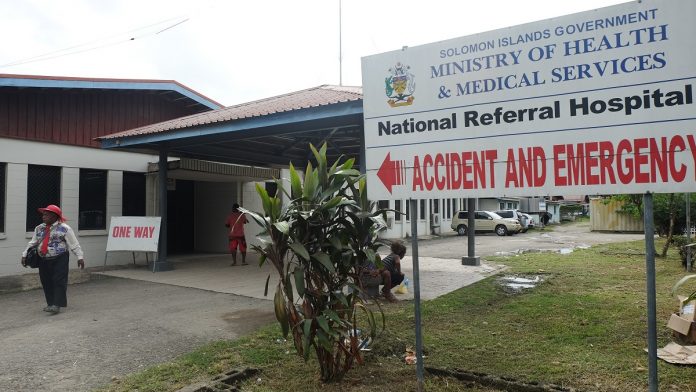
The National Referral Hospital.

BY MAVIS N PODOKOLO

THERE is an increase demand for oxygen cylinder for persons requiring oxygen at the hospital.

Minister of Health and Medical Services Dr Culwick Togamana confirmed this in his covid-19 update on Monday.

“Demand for oxygen cylinder is increasing, for each person requiring the oxygen three large oxygen cylinders are needed per day,” Togamana said.

“Therefore, with the 30 severely ill patients admitted to the hospital a total of 90 large oxygen cylinders is needed per day,” he added.

The minister revealed that the hospital only have 60 of these cylinders, 20 have been transferred to the field Hospital for standby.

Togamana said over the weekend the National Medical Store delivered 15 more oxygen cylinders to the National Referral Hospital Orthopaedic ward that has now repurpose for covid-19 ward.

The National medical store also delivered 14 additional cylinders on Monday.

He said for provinces four oxygen cylinders have been deployed to Hellena Goldie Hospital and 10 will be delivered to Kilu’ufi hospital in Malaita.

The Ministry is working closely with donor partners and private sector firms for additional oxygen bottles including oxygen regulators, Togamana stated.

He said in the absence of sufficient oxygen cylinders, patients are being managed on oxygen concentrators which are effective as oxygen cylinders to provide oxygen to the patients

“Oxygen concentrators are affordable and much more mobile compare to normal oxygen cylinders,” Togamana said.

Togamana: recoveries may have already passed 1000

0
Minister for Health and Medical Services Dr Culwick Togamana

BY MAVIS N PODOKOLO

HEALTH minister Dr Culwick Togamana says COVID-19 recoveries may have passed the 1000 mark already as most cases have not been recorded.

Togamana on Monday this week said the total number of recoveries available are only quantified recoveries for Covid-19 patients discharged and registered at the health facilities.

“However, I have been informed by my officials that the number of recoveries especially in communities may have already passed 1000 mark. This we can at least derived some comfort from,” he said.

Togamana said more than 50 patients admitted to the National Referral Hospital (NRH) and Central Field Hospital (CFH) since 19th January 2022 have recovered and discharged, in Malaita 10 Covid-19 have returned to negative and two recoveries in Isabel and one in Makira.

“Fellow citizens it is important to note that health will not be able to provide even close to accurate figures because many who tested positive for Covid-19 were advised for home Isolation thus they did not report back when they recovered. These people are not tested before release,” he said.

Togamana additionally stressed that due to under testing there are also those who never been tested but also experienced covid-19 like symptoms and have now recovered.

NRH strategy failed big time: Mesepitu

0
The National Referral Hospital (NRH) in Honiara

BY BEN BILUA
GIZO

PREMIER of Western Province says the strategy of having one National Referral Hospital (NRH) has failed the people of this country.

Christian Burley Mesepitu said having one national referral hospital is not only expensive, but also inadequate to provide needed health and medical services to sick patients.

He said it is time for the national government to do away with the whole idea of a NRH strategy and focus on decentralizing health and medical referral hospitals in provincial headquarters.

“Our current situation speaks volume of the failure of this strategy. Our only referral hospital has been overstretched and overwhelmed by COVID-19. This indicates that we should overhaul the NRH legacy and decentralize into Provincial Referral Hospital (PRH) strategy based on provincial headquarters,” Mesepitu said.

He stressed that some provinces are willing to give up their land and resources to build larger hospitals but cannot do so due to lack of political will.

Mesepitu said most people are living in rural areas and that it is important to bring hospitals closer to the people.

He said Western Province always stand ready to welcome possibility of upgrading Gizo Hospital to fight the current COVID-19 outbreak.

“Gizo hospital is among the best facility in the country and the national government should now re-prioritize its strategies and upgrade the Gizo Hospital COVID-19 response capabilities to compliment the National Referral Hospital (NRH) deficiencies,” Mesepitu said.

He reiterated that anti COVID-19 contingency planning for this nation should refocus on decentralizing containment measures.

Hageulu Women move to Conserve and restore forest

0
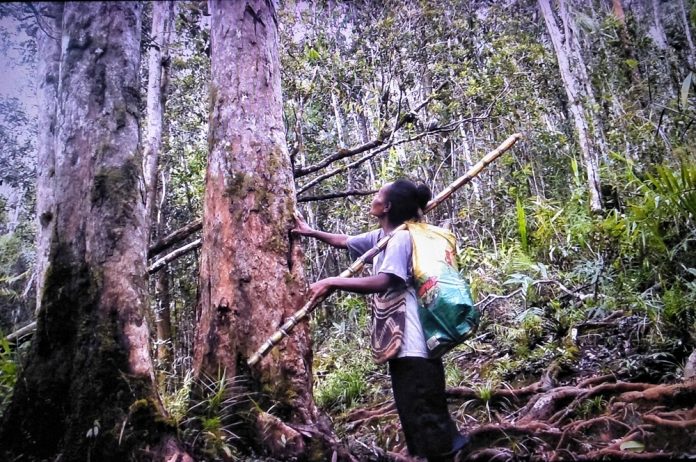
A woman from Hageulu village looking up on one of the Tubi Tree. Photo By. NIPS Media

Women from Hageulu are moving to conserve and protect their Tubi forest in the Highland of Isabel Province.

This comes after a successful consultation headed by a local conservation organization Network for Indigenous People Solomon Islands (NIPS).

In an attempt to build resilience and weave gender approaches to biodiversity governance, the group sets off to do their first consultation with the highland community of Hageulu after the new year.

The Convention on Biological Diversity (CBD) at its 15th Session of the Conference of the Parties (COP15) will adopt an ambitious global biodiversity framework to work towards a vision of Living in Harmony with nature to 2050. To attain living in harmony, NIPS ensures that the first consultation includes Women.

The presence of the knowledge gap on the roles that women play in biodiversity conservation, are unfortunately enhanced with the short falls of addressing gender dimension of biodiversity on national plans and goals that has different impacts on men, women, boys and girls.

With the goal to strengthen gender-responsive ecosystem restoration approaches into national goals and international commitments. Women in Hageulu share their views and experiences on their contributions to conserve and restoration of their forests, especially Tubi forest which is plenty in their area.

The women shared their goal to successfully nurse the Tubi seedlings and restore their forest which was accidently lit by intruders, with drought enhancing the dissertation. Without the forest the community of Hageulu has to walk the distance through the deserted landscape to reach their village.

Apart from providing shade, the women shared their values during the consultation on the cultural and societal significance they have of the tree species.

Among the outcomes, the community also agreed to work together to nurse the seedlings and restore their once lash forest. NIPS will assist the women to further their plans and activities for Tubi forest restoration whereby the project will go on for the next 3 years.      

Biodiversity underpins the ecosystems and their services and functions are vital to life. And while Landscape restoration efforts are a critical strategy for tackling acute societal challenges of our time, including global food security, access to clean water and so on. There is also a growing recognition of the role of women in forest restoration, but there is not much information on their contributions to restoring ecosystems.

NIPS upholds the conviction that indigenous, Lands and Resources are more valuable to indigenous people. With the view that they are life itself and have an integral and spiritual value for communities.  

(Article by: NIPS Comms)

Kosisi Plight To Regain Traditional Knowledge System

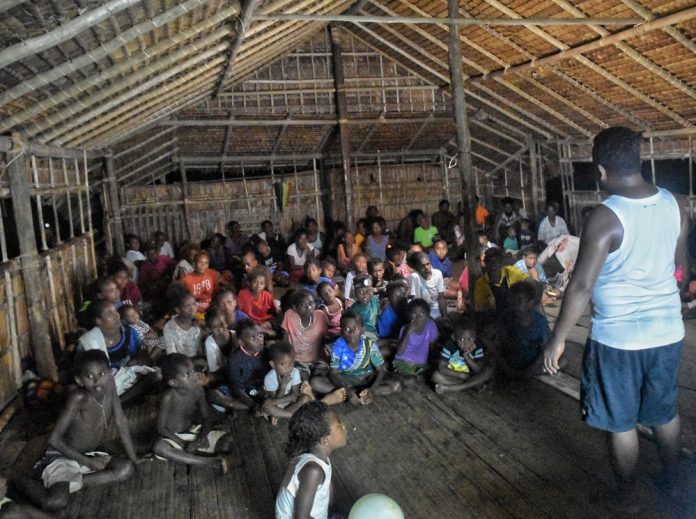
NIPS workshop with Kosisi village. Photo By NIPS Media

The Network for the Indigenous People Solomons (NIPS) on the 5th of January 2022 had successfully held a one-day workshop in Kosisi village, Hograno district, Isabel province.

The project “Support community based protocols for maintaining Bio cultural system, food security and gendered ways of knowing the pacific”. A project funded by Snowchange Cooperative for the (Oceans- Wide Relief Project).

Developments in terms of logging operations have made the Kosisi Community experience deterioration in its traditional knowledge system of protocol for maintaining bio cultural systems, food security and gender ways.

Najaghu is one of their daily protein and one of the main dish used during special occasions and gatherings in the community. The people have been using traditional knowledge system of protocols for generations like ‘taboo’ to conserve these shells in certain areas.

The community’s rules of taboo sites (conservation sites) have been weakened, these have been raised during the workshop. It was highlighted during the workshop that some of the traditional knowledge system protocols are slowly deteriorating due to logging operations occurring within the Thousand-ships Bay, where Kosisi community is located.

The workshop empowered and encouraged Kosisi Community to revive some of their traditional knowledge system of protocols and promote respect for chiefs, elders, women, and men, girls, under represented and diverse groups.

In terms of gender, women, girls and diverse groups which depend very much on crabs, fish and mud shells for livelihood and income have been victimized due to changes that took place on the logging operations.

Some of the logging and mining operation sites located in the Thousand-ships bay in Bugotu and Hograno District in Isabel Province may lead to marine pollution and also destroying, reefs and sea grass ecosystem where mudshells, crabs, fish and other marine species live.

If such activities continue it will affect the livelihood and food security of the Indigenous Peoples and local communities living within the community.

The Kosisi passage surrounded with seagrass beds and Mangrove forest are rich in food sources and are normally conserved for few months or years using traditional knowledge system of protocols for special occasions and gathering.

A meeting will be held with the community and the logging group and Face-to-face interview to support the Kosisi Community to regain and document its Community Traditional knowledge protocols in order to ensure the maintenance of cultural systems, food security and gendered ways are upheld.

NIPS is currently engaging with the Kosisi community with Snow Change Cooperative on the Oceans-Wide Relief project with the theme – Support community based protocols for maintaining biocultural systems, food security and gendered ways.

(Article by NIPS Comms)

NON-VACCINATED TOP MALA TALLY

Malaitans urged to vaccinate as cases continue to increase

BY SAMIE WAIKORI

Auki

NON-VACINATED patients continued to top the list of covid-19 cases for Malaita province.

Chairman of Malaita Emergency Operation Centre (EOC), Dr Rex Maukera revealed this to the Island Sun.

He said since Auki town registered its first case several weeks ago, cases continued to increase and they also continue to receive high proportion of non-vaccinated patients.

Maukera said there were cases of those who complete their vaccine and those who only take their first doze, but their proportion is less to the non-vaccinated.

He said they continue to experience that and it’s an issue for the province since a good number of people refused to take or complete their dozes.

Maukera said the trend of infection has gone up in the province and this needs collective efforts by utilizing required resources at our disposal.

He said the global recommended effort is vaccination so he urged the people of Malaita to get vaccinated.

Maukera said vaccination is activated and provided in clinics across the province where people can access them.

He also said that amidst the situation people must seriously uphold and practice covid-19 measures for the good of everyone and to try to reduce the transmission in the province.

Meanwhile, as of Monday this week, Malaita has reported covid-19 cases in all the five regions of the province.

Earlier, cases were only reported in Luaniua and Pelau of MOI region and Auki town of Central region.

Now cases were recorded in the remaining three regions (eastern, southern and northern) of the province.

Maukera said the 250 cases recorded in the province are from all the four regions.

He said on Monday the province reported 63 new cases, raising the tally to 250, with the potential to continue increasing.

Maukera said breakdown of 63 cases according to official cases announced for Malaita on Monday are as follows:

Nafinua – 24 cases for eastern region

Atoifi – 10 cases for eastern region

Afio – 20 cases for southern region

Faalau – 3 cases for northern region that was announced in the previous data

Auki town – nine cases for central region

Baunani – one pending case for west Kwaio under central region

Maukera said Auki town has so far been the focus for covid-19 cases, before recent reports of transmission in other parts of the province.

He stressed that the provincial health has inadequate resources to deal with the transmission and communities are urged to adhere to covid-19 measures.

“This is very serious and I must reiterate my call to people in the province to continue to:

  • Refrain from social gathering
  • Regular handing washing with soaps and use of sanitizer
  • Wear face mask
  • Social distancing
  • Limit movement within communities, unless need to be
  • Report to nearest clinics if feel with symptoms of the virus

“Covid-19 cases for the province continue to increase on a daily basis and it needs careful adherent to the measures to try and reduce or halt the trend.

“I call on people in the province to work together with front liners and listen out for information on the current situation.”

Nihopara: I’m yet to resign

0
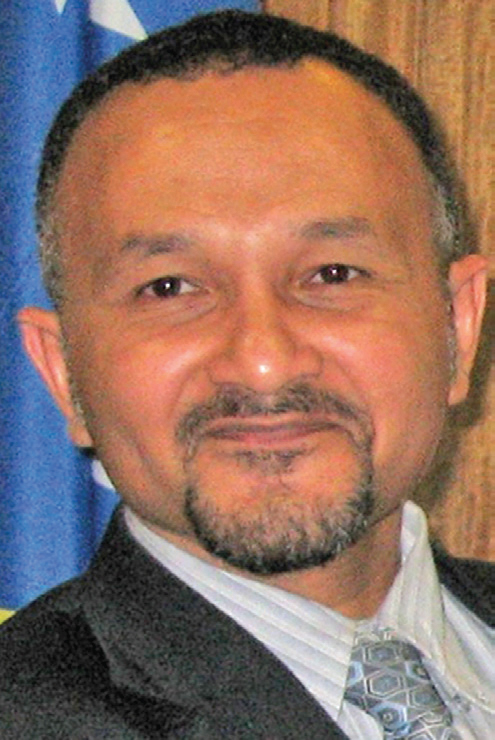
PS Andrew Nihopara

By EDDIE OSIFELO

PERMANENT Secretary for Ministry of Culture and Tourism, Andrew Nihopara is still to tender his resignation letter.

Nihopara is one of the high-profile public servants in the government who refused to take his jab before the  deadline of the DCGA’s ‘No Jab, No Job Policy’ on January 31.

“I am still waiting for my termination letter from Office of Prime Minister and Cabinet and Public Service base on my contract and conditions,” he said.

Nihopara said he decided not to take the vaccination based on his spiritual conviction and medical grounds.

He was first appointed as PS of MCT in 2017 before his reappointed in July this year.

The ‘No Jab, No Job Policy’ has been announced by Prime Minister Manasseh Sogavare since 31st August 2021.

The policy covers any employee of the national or provincial governments as well as state owned enterprises.

Since late last year, most public servants who refused to get their jabs have received half pay and expected to be terminated from their jobs if they do not get their vaccination by the end of January.

Island Sun understands Chairman of Leadership Code Commission, Solomon Kalu and Director of National Training Unit Curtis Kalu are among the officials that refused to get the jab.

Kalu, who held the position for two terms from 2016-2019 and 2020 to 2022, recently reserved his comment because the Nominating Committee is still to make their decision.

He said his contract should be completed by the end of this year.

However, Island Sun understands LCC has already advertised the post in the media.

In the meantime, Mrs Kalu reportedly tendered her resignation because she refused to be vaccinated.

Despite her resignation, the Ministry of Education and Human Resource Development (MEHRD) still gave her time to reconsider her decision.

ADB approves $40.3M to fight COVID-19 here

0
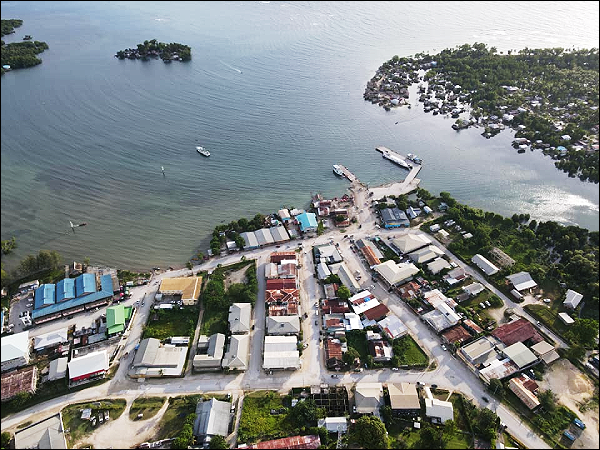
Honiara is the beating heart of the country's economy.

THE Asian Development Bank (ADB) yesterday announced the release of a USD$5 million (SBD$40.3 million) grant from its Pacific Disaster Resilience Program (Phase 3) to help finance the Government of Solomon Islands’ response to community transmission of the coronavirus disease (COVID-19).

Solomon Islands experienced a sharp increase in confirmed COVID-19 cases and recorded its first COVID-19-related death since an imported case was identified on 9 January 2022, with a cumulative 3,182 confirmed cases and 33 deaths, as of 7 February 2022.

Community transmission has been confirmed in six of nine provinces in Solomon Islands, along with ongoing testing in other outer islands.

Honiara has been declared as an emergency zone, with lockdowns and curfews in effect.

A state of public emergency has been in place in Solomon Islands since April 2020 and the country closed its borders, in response to the COVID-19 pandemic.

The National Referral Hospital is closed for normal services and only admitting patients for emergencies and accidents, with over 100 medical staff confirmed positive for COVID-19.

The scale of the emergency is expected to be beyond the capacity of the government’s health sector to meet the immediate expenses needed for adequate public health services during the crisis.

“The ADB financing will help fund the country’s response to this increasing health emergency,” said ADB Director General for the Pacific Leah Gutierrez.

“This quick-disbursing financing will expedite government activities to manage the crisis.”

ADB has extended its contingent disaster financing instrument for the Pacific to include health-related emergencies in the definition of natural hazards, allowing for the release of funds in response to the COVID-19 pandemic.

The Pacific Disaster Resilience Program (Phase 3) fills a financing gap experienced by many Pacific developing member countries hit hard by disasters, providing a predictable and quick-disbursing source of financing for early response and recovery activities.

ADB is committed to achieving a prosperous, inclusive, resilient, and sustainable Asia and the Pacific, while sustaining its efforts to eradicate extreme poverty. Established in 1966, it is owned by 68 members—49 from the region.

Western bars ships from entering its waters

0
PS Jeffery Wickham

BY BEN BILUA
Gizo

PROVINCIAL Secretary of Western Province who is also the chairperson of Western Provincial Disaster Operation Committee (WPDOC) says no ship is allowed to enter the province unless authorised by WPDOC and the National Oversight Committee.

Jeffrey Wickham made the statement as ship owners continue to ignore WDPOC public and health measures travelling to Western Province without following due processes.

He said a number of boats have sailed to Western Province without clearance from the National Oversight Committee and the Western Province Government over the past days.

Wickham stressed that restriction on ships and planes is still enforced.

“I want to make it clear to ship owners that ban on ships and planes is still enforced and I’m extremely disappointed that some ship owners fail to adhere to this advice. You are not only making things difficult for us but also pose a great risk to people of Western Province.

“For safety and proper planning, there are procedures to follow that WPDOC will inform you to satisfy safety protocols,” he said.

Wickham said ships that wish to travel to Western Province must satisfy WPDOC’s conditions and procedure before entering the province.

“If you intentionally ignore this call, come at your own risk,” he said.

Premier of Western Province, Christian Burley Mesepitu said ships who fail to respect Western Province’s safety procedures will be dealt with.

He said his government stands ready to take legal action available under Western Province ordinance.

“If you want your business license cancelled, do it at your own risk. My government will work closely with Western Province Disaster Committee (PDC) to deal with ships that enter our province without our approval,” Mesepitu said.

In the meantime, Wickham calls on Maritime Division in Honiara to increase surveillance on cargo ships that continues to ignore advises.

Gov’t urged to be strategic on new policy direction

0
Opposition Leader Matthew C Wale.

OPPOSITION leader Matthew Wale says the government’s new policy direction to focus on the new reality of ‘living with and emerging successfully’ from the pandemic must be carefully thought out.

Wale cautioned the government in response to the Prime Minister’s announcement of the government’s new policy direction during his nationwide address on Sunday.

“There is a time for everything. It seems premature to be talking about living with covid-19 at this stage,” he said.

The Prime Minister in his address said the government Caucus and the National Cabinet will deliberate on the new Policy direction this week. Once approved, the new Policy will guide the preparation of the 2022 budget among other things.’

The Opposition Leader said the government should not rush in talking about living with COVID yet.

“There will come a time when we will reach that stage but it is too early for that as our vaccination rate is still too low to pursue that approach,” he said.

Wale said any policy direction now should be focused on vaccinating at least 95% of the population with the hope of achieving herd immunity, and urgently address the current health crisis.

He said vaccination must also include those 5 years and older.

“Any policy approach surely needs an epidemiological scientific direction to guide it,” he said.

The Opposition Leader said the government’s new policy should be based on epidemiology.

“My greatest disappointment with government responses so far is the fact that it appears there is a general neglect of sound epidemiology driving it,” he said.

Hon. Wale further calls on the Prime Minister to lead from the front, and not delegate his responsibilities at this time of emergency.

“Infections are out of control, government response chaotic, and many of our people are dying.

“How bad should the situation get before the Prime Minister takes his responsibility to lead seriously?” Wale asks.