Home Blog Page 1615

Graduation of youths following a peacebuilding and livelihoods skills training course

0

DEAR EDITOR, on November 6, 2017, a fourth batch of youths graduated in Honiara following a peacebuilding and livelihood skills training course, delivered in close partnership with the Ministry of National Unity, Reconciliation and Peace (MNURP), Coconut Technology Centre (CTC) and UN Peacebuilding Fund (UNPBF) project.

20 youths from rural communities in North Malaita and the Weathercoast, attended the 2 week course that ended on November 3, 2017.

Those youths were also among the more than 200 youths who attended the Youth Peacebuilding Innovation Forum held in Honiara in October which aimed to promote the role of youth as problem solvers, peacebuilders and economic actors/entrepreneurs.

In attendance at the graduation ceremony was the Director of MNURP, Mr Reuben Lilo, Chairman of CTC Board, Mr Wilson Kikolo and representatives of UNPBF project team.

Director Lilo thanked the UNPBF project and CTC for funding and facilitating the training and encouraged the youths to use their skills and knowledge gained from the training to equip themselves to become persons who can make a difference in their communities.

He said, “You need to be role models for other youths and to be peace advocates and peacebuilders in your communities”.

Speaking on behalf of her classmates, Ms Nelly Baekalia expressed appreciation to the MNURP, UNPBF project and CTC for the opportunity to be part of this training.

She said, “It is a rare chance for us youths from North Malaita and Weathercoast to come together to attend such training. Thank you also for including us in the Youth Peacebuilding Innovation Forum”.

CTC representative Mr Francis Kapini expressed his sincere thanks to the youths for attending this training, despite many challenges to bring them to Honiara from their remote communities.

He said, “We went further into remote communities to recruit this batch of youths, this meant longer distances by boat especially for Weathercoast but we are very happy to have been able to provide this training opportunity for youths from rural areas”.

Each participant received a solar radio to enable them to have access to information and current affairs. In some communities, radio is the only means of communication.

The training covered topics such as peacebuilding and conflict resolutions, basic financial literacy, tree planting, agriculture and cash crops, community resources and opportunities, DME production, value of organic farming, opportunities in native fruit trees and ngali nuts, basic business and pricing and record keeping.

The facilitating partners and trainers included the Ministry of National Unity, Reconciliation and Peace, Ministry of Agriculture and Livestock, Basil Gua, Kastom Garden and Zainatina, Maraghoto Holdings, Royal Solomon Islands Police Force (RSIPF), Solomon Islands Small Business Enterprise (SISBEC), ANZ Bank, Central Bank and Kokonut Pacific.

Source: UNDP Office, Honiara.

Yours sincerely


Frank Short

Graduation of Cuban and Fiji trained medical doctors

0

DEAR EDITOR, the National Referral Hospital (NRH) last Friday, November 3, 2017, held a graduation ceremony for 26 new medical doctors who are soon to begin their work as registrars.

News of the graduation was given in an article in the Solomon Star newspaper, from which I quote:

“Nineteen of the group began their journey to become doctors in 2008, when they went to Cuba to study medicine for seven years. Since arriving home in 2014, they have spent a further three years – including a bridging year – as interns increasing their knowledge and learning clinical skills to meet the particular health needs of the Solomon Islands.

“The other seven graduates studied in Fiji, and began their internship at the NRH in 2015.

“All medical graduates , whether trained in the Pacific Region or outside it ( except University of PNG graduates), are required to do an intern training program in the Solomon Islands before they are fully registered by the Solomon Islands Medical & Dental Board to practice medicine in Solomon Islands.

“All interns undertook a 14-week rotation each in Surgery, Internal Medicine, Obstetrics & Gynaecology, and Paediatrics, while they learned the required skills and professional practices. Shorter rotations were spent in Orthopaedics, Anaesthetics, Ophthalmology, Medical Imaging, Emergency Medicine as well as a placement in a rural or regional healthcare facility.

“With these skills, the new registrars are set to begin their careers working as medical officers in provincial hospitals and health clinics, or to undertake further study to become consultants in specialist areas, such as Paediatrics or Surgery.

“The Chief Executive Officer of the NRH, Dr Steve Aumanu, said:

“The large numbers of trainees has placed significant pressure on the National Referral Hospital, mainly through the limited number of supervisors available to support the interns. However, the variety and number of patients makes the NRH an ideal training facility for junior doctors.”

I am sure we all wish these newly trained doctors much success in their chosen profession and thank them for their decision to help aid and comfort the sick.

Yours sincerely


FRANK SHORT


Joy, peace, progress and prosperity

0
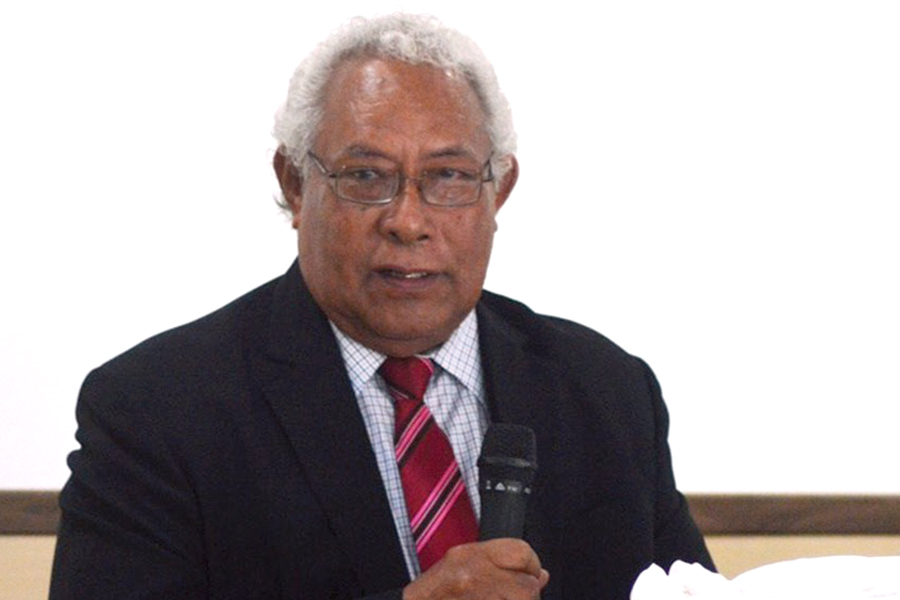
Former Police Commissioner of RSIPF Frank Short

THE title to this piece is taken from the words of the Solomon Islands national anthem and since the country gained its independence in 1978, one might question whether the Solomon Islands has truly witnessed joy, peace, progress and prosperity.

Progress and prosperity are still in the making I believe and while peace might be said to have returned to the Happy ‘Isles there was no joy during the terrible and tragic years commonly referred to as the period of the ‘Tensions’ from late 1998 until the period following the arrival of the Regional Assistance Mission to the Solomon Islands (RAMSI) in 2003.

Progress and prosperity has been impeded since 1978 arguably by the constant change of governments and the game of ‘musical chairs’ played out time after time by elected MPs.

Only one Prime Minister succeeded in remaining in office for his full year term since 1978 and now, for the sixteenth time in the nation’s history, the Prime Ministership has become vacant and a new Prime Minister is to be elected.

The only female Member of Parliament believes the problem with the country’s male parliamentarians is that they are never satisfied.

The outgoing Minister for Women, Youth, Children and Family Affairs and MP for Temotu Vatud Freda Tuki said in Parliament this week this was the cause of internal division.

Ms Tuki is the only woman in the highest decision-making body in the nation and has served in the government for three years.

She said she had seen that leaders in the Solomon Islands were discontent.

“I see that our main problem as leaders of this country is that we are never satisfied as leaders,” she said. “Even if we are put in portfolios that we should implement to prove.”

The SIBC had this to say on the situation (and I quote)

“With a sluggish economy, endemic corruption in government, high unemployment, poor communication facilities, high cost of doing business and a general distrust of politicians, Parliament chose by a majority of 27 to 23 votes to blame the Prime Minister (Manasseh Sogavare) and voted him out of office.

“Several of the Ministers who were part of the problem in Manasseh Sogavare’s cabinet in the past three years think they are now part of the solution and its likely one or more will want to be the new Prime Minister next week.

“One of them was removed for conflict of interest since being named in a Commission of Enquiry into the Ports Authority issue in the past year.

“Many MPs are known to be agitating for more ‘slush funds’ to be made available to them to campaign with in the general elections to be held at the end of 2018.

“The big story however is that Government is virtually insolvent. It has 200 million dollars’ worth of accumulated debts and the recently appointed Minister of Finance has laid the blame for this on the previous Minister of Finance Mr. Snyder Rini who joined the opposition over a week ago.

“A couple of other issues caused by the previous Finance minister were revealed in the debate. The delay in landing a submarine cable in Solomon Islands and the delay in concluding the agreement for a much needed Tina River hydro-electric system were, according to the current Finance Minister and the Prime Minister, also caused by Mr Rini.

“A much discussed item was the anti-corruption bill that most MPs did not like because it might expose some of them to being charged. The latest addition forced upon the Prime Minister is that crimes committed before the enactment of the new Bill in this session of Parliament, would not be prosecuted.”

In an interview with Radio New Zealand International following the PM’s ousting in Parliament, Ms Ruth Liloqula, of Transparency Solomon Islands (TSI), said she was adamant “the government of Manasseh Sogavare was removed because MPs were opposed to the anti-corruption legislation the government was advocating.”

The MPs, including much of Mr Sogavare’s cabinet, who voted for the ouster, have denied it was over the anti-corruption bill, but Ms Liloqula, said TSI had no doubts

Now as the caretaker Prime Minister Manasseh Sogavare has said the shipping grant paid out to some Members of Parliament (MP) have been abused.

He was speaking in Parliament on Monday before he was removed from office during the vote of motion of no confidence.

He told Parliament that around SBD700 millions was given to MPs to buy ships.

“Instead some MPs pay logging machines. Is this not a crime?

“Or how, bulldozer and ship same thing?”

He alleged a Member of Parliament had also asked a business man seeking $2million for boat repairs to increase that amount by $3million so that he could get the $1million as commission.

Last night, Tuesday, following the surprising defection of seven Opposition members a deal was said to have been cemented to form a coalition with the caretaker government, a source close to the new coalition revealed.

A statement from the Caretaker Government confirmed that the Democratic Alliance Party (DAP) and the Solomon Islands People’s First Party MPs had a joined alliance with the remaining 23 Members of Parliament in the Sogavare-led caretaker Government to form the next coalition.

The statement, however, said discussions for their nominations for the Prime Minister’s post were still underway and their nominations submitted to the Office of the Governor-General when the nomination period is officially announced.

Following their defection, the caretaker government now has 30 on its side while the Opposition is now left with 20 MPs.

The 7 MPs were part of the Opposition side which ousted Sogavare during the vote on Monday evening.

In yet another late move, in the form of a press release today, and news that could put an end to some of the concerns expressed by the TSI and others, the news came of what the Solomon Islands Government had in mind in dealing with anti-corruption. Quoting from the press release it said.

“The Deputy Secretary to the Prime Minister who is the Solomon Islands Government focal point for United Nations Convention Against Corruption (UNCAC), Mr Derek Futaiasi, has told the UNCAC biennial Conference of State Parties in Vienna this week that once the Anti-Corruption Bill (ACB) becomes law, a new Anti-Corruption Commission will have authority and jurisdiction to investigate and refer for prosecution all corruption cases that arise from the moment the Bill is adopted as law.

“This year, our government has signed an agreement with the UNDP to give effect to some of the anti-corruption activities in our National Anti-Corruption Strategy. Our government wants leverage from development partners to deliver on its National Anti-Corruption Strategy. For this reason UNDP is being requested to cost-share with Government on this anti-corruption project as well as to further mobilise resources from other development partners.”

“Mr Futaiasi said that in late September this year, South Korea and Vietnam reviewed Solomon Islands’ compliance with the prevention and asset recovery chapters of UNCAC and that the Solomon Islands greatly appreciated South Korea and Vietnam for the support of their experts in overseeing the review process along with UNODC officials.

“In terms of Chapter II (preventive measures), Solomon Islands has progressed: Adoption of a National anti-corruption strategy at the highest level, following extensive stakeholder consultations; a stand-alone budget for the Ombudsman’s Office to ensure its financial independence; and the mandatory nature of the Leadership Code for accountability and oversight provided by the Leadership Code Commission,” said Mr Futaiasi.

“In terms of challenges, we note the need to review and take appropriate measures to promote transparency and accountability in the management of public resources (and in particular Constituency Development Funds).”

“The Solomon Islands has also supported other Pacific delegates to the UN’s peak conference on anti-corruption in urging States parties and other development partners to support small island developing States in their efforts to implement and monitor Sustainable Development Goal 16.

“Solomon Islands’ participation in the biennial Conference of the State Parties to the United Nations Convention against Corruption in Vienna, Austria was facilitated by The United Nations Pacific Regional Anti-Corruption (UN-PRAC) project. The Australian Government is supporting the UN-PRAC Project, a four-year project in the 15 Pacific nations being implemented by UNODC and UNDP.”

Will the Solomon Islands, despite the political turmoil of the past week see the return of a new government committed to truly serving the nation and ensuring from thereon joy, peace, prosperity and progress?   One must hope so.

Yours sincerely


FRANK SHORT

SI shares anti-corruption law plans with UN

0
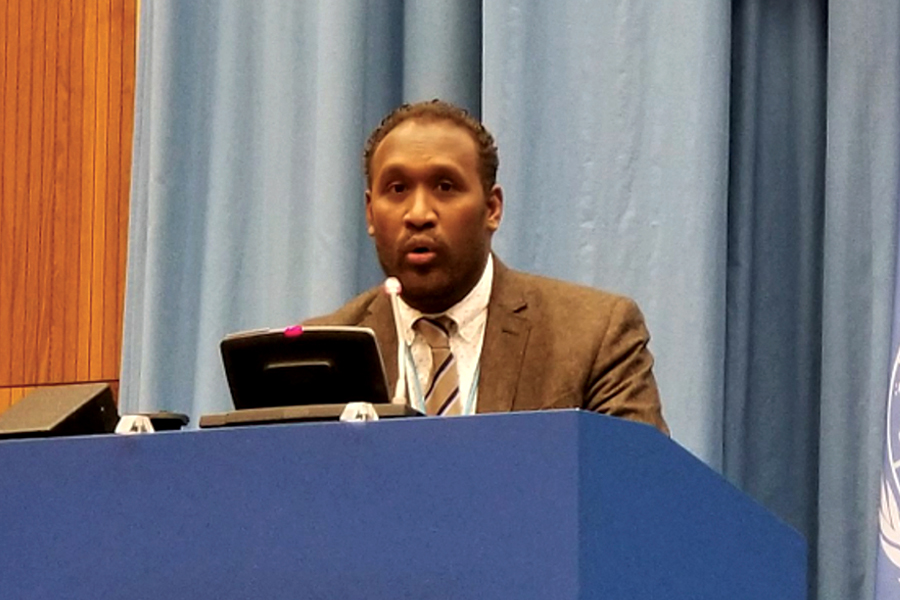
Deputy Secretary to the Prime Minister who is the Solomon Islands Government focal person for United Nations Convention Against Corruption (UNCAC), Derek Gwali Futaiasi.

DEPUTY Secretary to the Prime Minister, who is the Solomon Islands Government’s focal point for United Nations Convention Against Corruption (UNCAC), Mr Derek Futaiasi, has told the UNCAC biennial Conference of State Parties in Vienna this week that once the Anti-Corruption Bill (ACB) becomes law, a new Anti-Corruption Commission will have authority and jurisdiction to investigate and refer for prosecution all corruption cases that arise from the moment the Bill is adopted as law.

“This year, our government has signed an agreement with the UNDP to give effect to some of the anti-corruption activities in our National Anti-Corruption Strategy.

“Our government wants leverage from development partners to deliver on its National Anti-Corruption Strategy.

“For this reason UNDP is being requested to cost-share with Government on this anti-corruption project as well as to further mobilise resources from other development partners.”

Futaiasi said that in late September this year, South Korea and Vietnam reviewed Solomon Islands’ compliance with the prevention and asset recovery chapters of UNCAC and that the Solomon Islands greatly appreciated South Korea and Vietnam for the support of their experts in overseeing the review process along with UNODC officials.

“In terms of Chapter II (preventive measures), Solomon Islands has progressed: Adoption of a National anti-corruption strategy at the highest level, following extensive stakeholder consultations; a stand-alone budget for the Ombudsman’s Office to ensure its financial independence; and the mandatory nature of the Leadership Code for accountability and oversight provided by the Leadership Code Commission,” said Futaiasi.

“In terms of challenges, we note the need to review and take appropriate measures to promote transparency and accountability in the management of public resources (and in particular Constituency Development Funds).”

The Solomon Islands has also supported other Pacific delegates to the UN’s peak conference on anti-corruption in urging State parties and other development partners to support small island developing states in their efforts to implement and monitor Sustainable Development Goal 16.

Solomon Islands’ participation in the biennial Conference of the State Parties to the United Nations Convention against Corruption in Vienna, Austria was facilitated by The United Nations Pacific Regional Anti-Corruption (UN-PRAC) project.

The Australian Government is supporting the UN-PRAC Project, a four-year project in the 15 Pacific nations being implemented by UNODC and UNDP.

–OPMC PRESS

Israel group call on gov’t to clarify ACB

0

BY LYNTON AARON FILIA


THE Remnant of Israel church in Solomon Islands has called on the national government to clarify who owns the Anti-corruption Bill 2017 (ACB).

General Overseer of Remnant of Israel congregation, Mr Tony Kedeau, explains that the ACB ‘since day-one has been the centre of public talks’.

And, his church is confused over who owns the Bill.

“Is it the Transparency Solomon Islands, Solomon Islands Christian Association, Government Steering committee, Government or Civil Society Organization?” Kedeau asks.

“I want to say, Government should come out clear and state clearly who owns the Anti-corruption bill, so that they will not make confusion with their political moves.

“It is better to tell nation straight away who this bill for so that they do right interpretation of it to avoid confusion within government and its people.”

Kedeau calls on the members of parliament to focus on the nation’s interests rather than engaging in political games which do not benefit the country.

“Just give us right conclusion as to who owns the Bill so that they made a right interpretation, and not for political propaganda moves which left people stranded,” Kedeau said.

Perch School calls on HCC for dialogue

0
The bulldozer in the school compound was the one supposed to use for demolishing the school fence which is on its right. Photo Supplied

BY SAMIE WAIKORI

THE Perch Christian School has appealed to the Honiara City Council (HCC) to enter into dialogue over how to settle the matter between them.

Admin Officer of the school, Mr Michael Riola, makes the call following yesterday’s disturbance on Perch’s students undergoing exams by HCC law enforcers.

He insists that the matter can be solved amicably if both parties consult and come up with an agreement with each other.

On the outset, he claims that HCC had permitted Perch school to erect the fence, adding that other authorities also approved of it.

He shares that recent change in tone by the authorities comes as a shock to the Perch school.

Riola also added that there are $300,000 to $400,000 was used in the construction of the fence.

He said it would be a huge financial loss for the school if the fence were to be demolished.

Riola suggests HCC allows the fence to remain until such time that road expansion reaches the area before taking it down.

Riola stressed that most important is the role the school plays to the human resources of the country.

He said HCC should take into consideration the benefit it has on the country and not only to prioritise demolishing of the fence, which will be risky for the school children.

Riola said this is very important and HCC should reconsider their decision and work together with the school to address the matter in a consultative way.

HCC 2018 budget caters school sanitation funds

0

BY MAVIS NISHIMURA PODOKOLO

HONIARA City Council (HCC) 2018 budget has featured sanitation funding for schools under the HCC.

This statement was revealed by the Principal Education Officer (PEO) for Honiara City Council Education Authority (HCCEA) Mr Henson Cornelius.

This is to support schools under HCC on sanitation facilities in terms of renovation and maintenance and building new sanitation facilities.

“We have featured sanitation funding for schools under HCC in the 2018 HCC budget scheme and the amount of money will purposely finances renovations and maintenance and building of new sanitation facilities.

“This idea is not coming out from nowhere to drive us but during our visits and reports stated that the current status of sanitation facilities on schools are said to be very poor and need improvement, hence we (HCC) consider it,” said Cornelius.

He said sanitation facilities may not be featured in the schemes of schools under HCC to support their hygiene facilities but it is good for HCC to take initiative to support schools on these facilities.

Additionally he said before effective learning takes place, individuals including students and teachers must live healthy and adapt in a healthy environment.

Furthermore he stated it is essential for HCCEA to work closely with school managers to avoid disconnection and communication breakdown.

“This is regarding planning of school goals and making improvements on school priority areas and so I urge school managers under HCC to work closely with HCC in 2018.”

Community leaders in Honiara to assist police

0
Community leaders.

CHIEFS, church and women leaders from communities in Honiara are to assist police maintain law and order during the current political situation being experienced in the country.

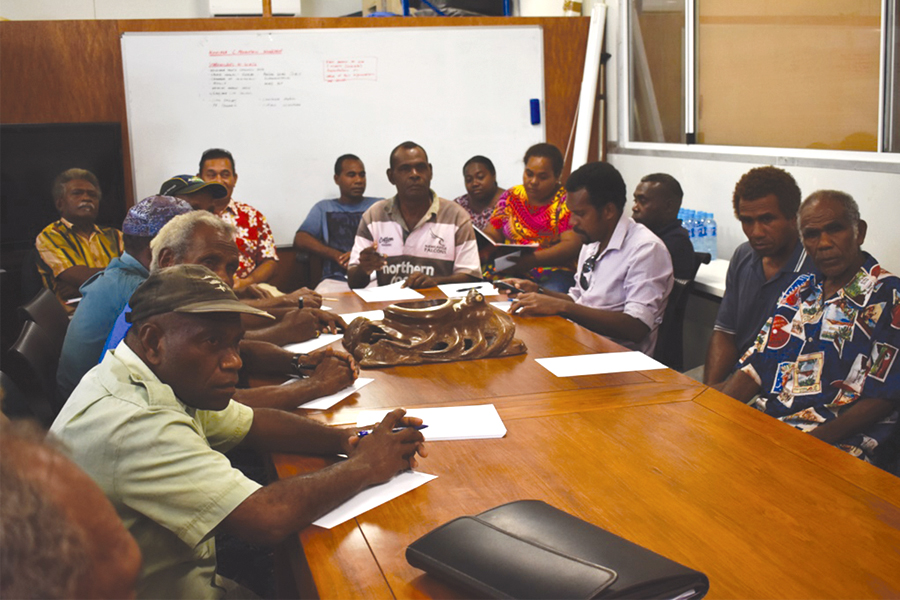
This follows a meeting coordinated by the RSIPF National Community Policing Unit with about 20 chiefs, church and women leaders representing settlements in and around Honiara today.

“As part of the Crime Prevention Strategy, we have called you as community leaders who are members of the community prevention committees in your various communities in the capital to discuss how you can assist police maintain law and order during the current political situation being experienced in the country,” Director of RSIPF’s National Community Policing Unit, Superintendent (Supt) Solomon Sisimia told the meeting.

Supt Sisimia told the community leaders: “It is important that as community leaders, you must ensure the correct information about the current political situation is passed onto people in your communities and to ensure rumours are not passed around.

“Police are out in numbers to make sure that law and order is maintained and that families are safe to move around and ensure normal government services are maintained.”

Some of the leaders who spoke during the meeting welcomed the initiative by the RSIPF to discuss the issues with them.

“We appreciate this meeting so we can be updated on the latest developments with the political situation and the police operations underway. The situation within our communities is normal and people are going about their normal business. Members of the community feel that the current political situation should be left for our National MPs to resolve and that we as a people stay out of it,” said some of the leaders who attended the meeting.

The RSIPF Community Policing Unit will conduct similar outreach meetings in communities in and around Honiara during the coming days.

–POLICE MEDIA

Acting GG issues notice for PM’s election

Acting Governor General Mr Ajilon Nasiu has put all MPs on notice regarding the Prime Minister’s election

THE Acting Governor General (GG) of Solomon Islands Mr Ajilon Nasiu has issued notice for the election of a new Prime Minister to all members of Parliament.

The election of a new Prime Minister shall be on Wednesday November 15 at the Chambers of the National Parliament at 9.30am.

Nomination papers are to be delivered to the Acting Governor General at Government House, starting at 8am yesterday and will close at 4pm on Friday November 10, 2017.

During the process, a list specifying all nominated candidates and their respective nominators shall be submitted by the Acting Governor General to each Member of Parliament prior to the election meeting at the close of nominations.

All members are eligible for candidature and no member shall be a candidate unless he/she is nominated by four other members and no member may nominate more than one candidate.

Any candidate may withdraw his/her candidature at any time before the conclusion of the election.

–GCU

Shipping grants abused

0

CERTAIN members of Parliament (MPs) have been pocketing their share of shipping grants paid out by the Government while others are using these funds to purchase logging machines.

This was revealed by caretaker Prime Minister Manasseh Sogavare in Parliament on Monday before he was ousted by a vote of no confidence.

Sogavare told Parliament the abuse of shipping grants also contributed to the cash flow problem the country is currently faced with.

He said the total amount of money given to MPs to purchase ships can easily reach SBD$ 1 billion.

“There are reports of MPs taking cuts from shipping grants and machineries.

“We had one businessman from the Western Province who come and see me and told me very clear he applied for a project to complete a ship seeking $2 million in funding.

“The advice he received from a MP was to increase the amount to $3 million so that the MP can get the additional $1 million as commission.

“This was an attempt to corrupt a businessman who applied for his project,” Sogavare exposed.

Sogavare said some MPs even used their shipping grant paid to them to purchase a housing estate in White River, east of Honiara.

“MPs are buying houses instead of paying ships.

“And now they cannot rent the place because of the high criminal activities in the area, nobody wants to rent the place, so they don’t make money.

“I think the idea was to rent the houses, make money than buy the ship. But they got caught out,” he said.

“The amount already given to MPs can so easily go up to SBD$700 million or even $1 billion,” he added.

He said the Government policy is clear, which is to pay ships and machines to do road work and road repair, not to buy logging machines, as was the case for some MPs.

“We are just compounding this problem for ourselves.

“No wonder why there’s a cash flow problem, the Ministry of Finance cannot pay up the queue of payments because payments are going to this area.

“By paying logging machines MPs are setting a bad precedence, what if all the other MPs also what logging machines,” he said.

BY PHILIP LILOMO