Home Blog Page 1241

Women Real Deal, only when we support each other

0

BY GEORGINA KEKEA

Ms. Regina Gatu of GPPOL giving her closing remark

WOMEN are encouraged to support each other in their daily work. Speaking during the closing of a session with SIPNET (Solomon Islands Professional Women Network), through the Waka Mere Commitment to Action, Regina Gatu, Sustainable Manager of the Guadalcanal Plains Plantation Limited (GPPOL) says the most complex challenge for women is how we see our fellow female colleagues.

“Do we take time to listen to the things they have to say? Do we appreciate the little things they do? Do we say thank you when we are being showed with curtesy? Do we appreciate the little things they do?” Ms Gatu questions.

She says each one has a unique journey. She said it is about getting from Point A to Point B in life and expecting results and changes as an individual.

“It is about individuals and how individuals are valued by self, by others and their organizations. It is about giving that opportunity for individuals to explore their strength and build on that. It is about acknowledging others who strive to be someone.”

Gatu says only when we start showing support and genuine concerns will we see individuals starting to change and be able to grow positively.

She says how females treat each other both in the workplace and home is very important. Respect for one another and to listen and to give attention, space and mentorship are very important factors to consider if women are to support each other.

“The question I would like for us to take away with us and answer at our own time is, ‘how will I support my sister, mother, friend and colleague so that she can reach her full potential as a leader’? Then we as women can say YES we are the real deal.”

The Waka Mere Commitment to Action is an initiative of the International Finance Cooperation (IFC) and the Solomon Islands Chamber of Commerce and Industry (SICCI).

Recently twenty women representing seven companies have in the country have undergone a Leadership and Management course through the Waka Mere Commitment to Action.

Seventeen of the country’s largest companies (of which GPPOL is one) have signed up and now undertaking measures to move more women into leadership positions, build respectful and supportive workplaces, and promote women to non-traditional jobs.

Yesterday SIPNET hosted an event for the IFC Vice President, Nena Stoilijkovic who is currently in the country.

Paparanghu Women’s Association receive donation from Sigoto

0
Sigoto’s representatives handed over the cooler boxes to the women from Paparaghu Association on Monday.

BY ALFRED PAGEPITU

GIZO

Sigoto’s representatives handed over the cooler boxes to the women from Paparaghu Association on Monday.

PAPARAGHU Women’s Association in Gizo have received 10 cooler boxes donated by Member of Parliament (MP) for Ranonga/Simbo Constituency Charles Sigoto.

The newly formed Paparaghu Women’s Association women consists of women from Simbo and Ranonga who are based in Gizo.

They are involved in cooking at the bonebone fish market and also sell handicrafts.

Speaking to Island Sun Gizo yesterday President Mrs Tamaua Ghemu on behalf of the association thanked MP Siqoto for the donation.

“This donation is vitally important to us as a women group from Paparaghu Women’s Association.

“It is the first ever donation we have received since their Association established early this year 2018.

“We are happy because the cooler boxes will help to preserve drinks and food for them for sale during the day.”

She further thanked Solomon Post Office for allowing the women to use their area for cooking (bonebone), selling of food and drinks and also selling of handicrafts.

Paparaghu in Ranonga and Simbo lingo means “bonebone”

Leadership and management training helps professional women

0
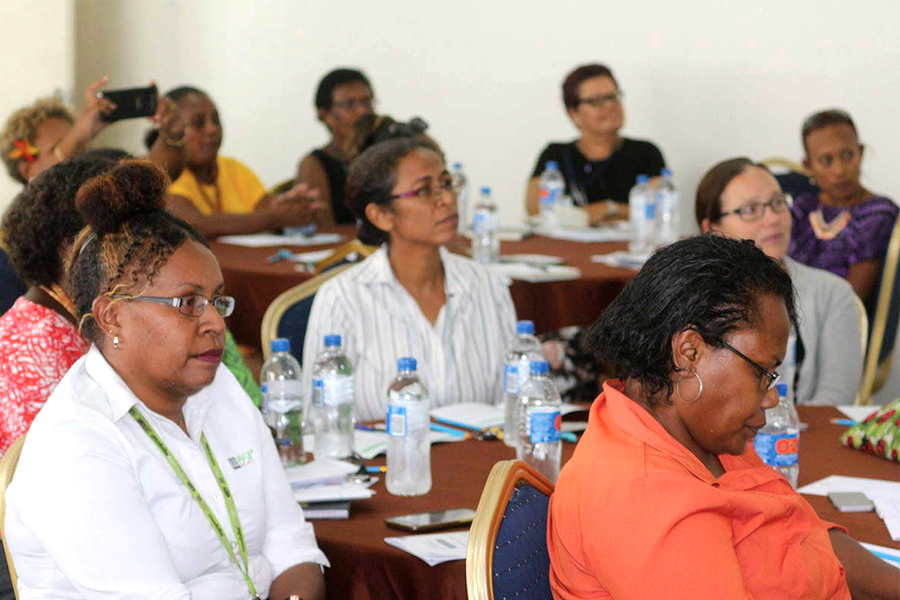
SIPNET members listening to a panel discussion.

BY GEORGINA KEKEA

Ruth Maetala from Waka Mere Committment to Action.

A weeklong training on Leadership and Management has just concluded for women through the Waka Mere Commitment to Action.

The weeklong workshop was mainly on leadership.

Coordinator of the SICCI-IFC Gender Programme, Ruth Maetala said empowering and encouraging women to leadership and management roles in the workplace is one of the focus of this workshop.

She said women in leadership positions are more visible in the private sector than in the public sector.

She said this is attributed to the kind of projects and trainings that the private sector, through the Solomon Islands Chamber of Commerce and Industry (SICCI) had been involved in.

She said this kind of leadership trainings and project through Waka Mere has boosted the women’s confidence and networking skills and also open their eyes to what leadership is.

“Some of those that have attended the workshop said when they go back to their office on Monday, they have started cleaning up their office space and trying to set a standard whereby they can set an example and also raise the standard of being persons in leadership positions.”

SIPNET members listening to a panel discussion.

She said the challenges faced by women in the workplace are also many. She said private businesses aim to make money and the issue of gender is still a sensitive one for some. She said despite that, employers are now starting to realise the importance of recognizing the needs of women and the space they need in order to excel in the workplace. She said the sort of trainings that the women had attended also contributed to the changes being witnessed now in the private sector.

Participants to the weeklong course were awarded Australian accredited qualification after their successful completion of the workshop.

Most of the participants commended the course on leadership saying it had opened up their mind on how they can practically carry out what they have learnt in the work place.

They say the training is practical based, thus very applicable and appropriate for them. The workshop brought together 20 women from 17 companies. These women were mainly Managers and senior staff in their respective companies.

The workshop concluded on Saturday, August 11.

Education is everyday

0
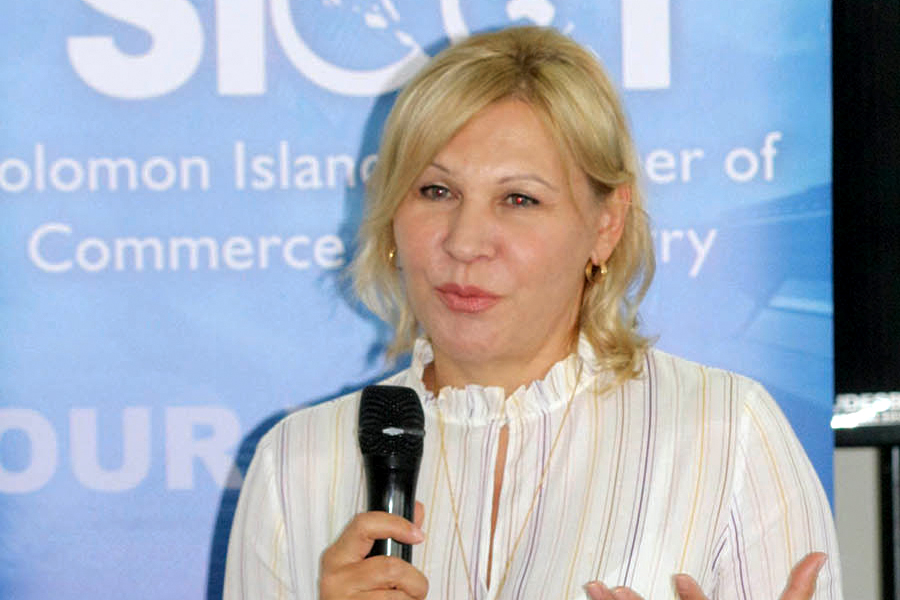
IFC Vice President Asia Pacific Nena Stoiljkovic

BY GEORGINA KEKEA

IFC Vice President Asia Pacific Nena Stoiljkovic

WOMEN are encouraged to pursue education in order to reach leadership positions. This was said by the IFC Vice President Asia Pacific for young girls and women pursuing excellence in their areas of work.

Yesterday Nena Stoiljkovic was guest speaker in an event hosted by the Solomon Islands Professional Women Network (SIPNET).

Stoilijkovic said women and girls that aspire to be leaders must not only pursue the regular education but take courses online, self-taught education and constantly try to improve each day.

She says getting vocational training is one of them.

“And when you get the job that you like, try to do the best that you can. Every day you wake up and think about how you can do best the task that you have.

“Networking is important, your relationship with your superiors but most important, doing right the job that you are given and spotting the right opportunities that come.

“Not shying away from making changes and learning new things but it is really a constant learning journey.”

Stoilijkovic says learning never stops, no matter how high up one is in her position at the work place.

Rethinking Development and what’s next?

0

By Derek Mane

DESPITEa the arguments and debates on the type of development approach to adopt, Solomon Islands continue to implement the SAPs (Structural Adjustment Programmes) policies influenced by the World Bank, and the International Monetary Fund.

Although in some countries, the miracle therapy induced by the SAP has increased their national GDP, people’s livelihood and standard of living, their rural areas remained stagnated or have further deteriorated.

This brings the attention on development scholars to review the effectiveness of the mainstream development model and its goals.

The discussion on alternative development emerged in the early 1970s due to the unsatisfactory level of modernist development prescriptions and its impacts on Latin America, Africa and the rest of the developing countries.

Alternative development theorist believed that the mainstream development (economic growth model) has failed and should be reassessed.

Inspired by the 1975 Dag Hammarskjold Foundation report-“what Now”? A Development alternative proposed by development scholars is to be ‘people centred’ than ‘growth oriented’.

As a concept, this alternative development focuses on ‘alternative development practices’ and the ‘redefining of development goals’.

In the Pacific, particularly in PNG and the Solomon Islands, there are interesting cases of how indigenous communal systems have merged effectively alongside the capitalism framework to enhance rural livelihoods.

In West New Britain, Oro (Popondeta) (Papua New Guinea) and in the Guadalcanal Plains (Solomon Islands), the palm oil companies instead of acquiring land through land alienation processes, they have encourage tribal groups (to register community/communal association-land trust boards) and to retain their land but engage them as out growers of palm oil. By doing so, both the multinational company and customary land owner’s benefit.

However, a more radical version of alternative development practices is seen in Latin America with the Andean Indigenous Buen Vivir (living well or collective living) movement.

The Buen Vivir movement which gain both political and legal status in Ecuador and Bolivia, is grounded on Manfred Max-Neef and Amartya Sen’s development perspectives that put emphasis on ‘integral’ and ‘sustainable’ human development.

Buen Vivir emphasises development through the individual than the society nor is it reliant on or related to the transformation of its institution.

In broad terms, Buen Vivir focuses on the interconnectedness of economics with the political, social, cultural, and environmental sphere, as well as necessities, capacities and potentialities of human beings.

The key elements of this new framework are; equity, democracy, participation, protection of bio-diversity and natural resources, and respect for ethnic-cultural diversity. Buen Vivir envisages a new social, political, economic, and natural-based mode of development that is distant from capitalism.

Nonetheless, alternative development scholars believed that development at the rural level can only be successful, if rural people themselves participate or take control of their own lives.

Furthermore, rural areas need democratic decision-making system, social policies that foster equality as well as social security suitable for local conditions, and sustainable rural livelihood that encourage financial support and approaches that empowers the most vulnerable people in poor societies.

For traditional and closed societies, the alternative development also pays close attention to the nurturing of informal social networks, community cohesiveness or cooperation which are seen as social capital to drive community development.

Community best practices and successful home-grown development initiatives that promote good governance and opportunity for all are hailed as the way forward to develop. In fact, alternative development approach has led to the proliferation of non-governmental organisations throughout the developing world.

In Melanesia and in particular the Solomon Islands, informal social networks and social capital are common and relied upon by many to mitigate their hardship.

Although modernisation, dependency and alternative development theories may assist explaining why our rural areas are not developing, we need to really understand and seek solutions to some very important questions.

These include ‘How do we appreciate the difference between the diverse tribal civilisations and communal attributes that exist in the Solomon Islands? ‘Does communal arrangements, tradition and kastom promote good governance, rural development and eliminate poverty?

‘Is the wantok system as a social capital at the village level immune from such negative impacts? ‘Does the wantok system actually foster stability and livelihood well-being at the village level? ‘What type of wantok system promotes peace and prosperity?

In the Solomon Islands, social relations (can be individuals and groups-tribe) and group arrangement (can be a village to village or other institutions) are key to stability and prosperity. How these relationships are established and managed dictates individuals or households’ access to resource, market and livelihoods.

Although answers to these questions are yet to be investigated, these questions are relevant to the social construct that could be used to critically reorganise local level development models and networks.

The interest here lies on the wantok system as an alternative development practice to alleviate poverty at the village level in the Solomon Islands.

Standing by the SI in the past, today and tomorrow

0

DEAR EDITOR, in previous weeks Prime Minister Rick Hou reportedly said the Solomon Islands had been in the wilderness for the past forty years.

Of course he was speaking metaphorically and not literally of the past for, indeed, the Solomon Islands was never left in the wilderness by it partners and is continuing to get the support it still needs to bring about desired changes in governance, health, education, security, fisheries and agriculture.

New Zealand has raised its ODA Budget to $US1.5 billion in its four-year funding cycle and dedicated its strategic development assistance to help, along with other small Pacific states, climate change, education and issues of pollution and waste management.

It should be remembered, also, that Australia spent an estimated $A2.8 billion on leading its 14-year Regional Assistance Mission (RAMSI) to restore law and order to the Solomon Islands.

Last week the Republic of China Government (ROC) made another substantial gift of medical supplies to the National Referral Hospital (NRH) and reminded us all that Taiwan had been a good friend of the Solomon Islands for the past 30 years and during that time had contributed greatly to the local health sector, teaching assistance, water sanitation, solar lighting and infrastructure projects.

Currently, through the local Taiwan Health Centre, efforts are being made to give nutritional advice to give all communities a better understanding of the need for a proper, balanced diet, to prevent diabetes, the reported main cause of death in the Solomon Islands.

I have mentioned just a few of the friends that have stood by the Solomon Islands during the years since independence in 1978, but we should not overlook all the aid and assistance provided by the USA, the UK, Canada the EU, Japan, Korea, Israel, Germany, Papua New Guinea, Vanuatu, Fiji the UAR, the UN, the World Bank, the IMF, and all the numerous aid and charitable agencies, large and small, including in most recent years, Lions Clubs and Take My Hands Charitable Trust, both from New Zealand.

During the Prime Minister’s visit to New Zealand in June he said the Solomon Islands needed to replace aid with trade and these are his (quoted) words:

“It is politically and economically prudent that Solomon Islands gradually replace aid with trade, which will in turn stimulate a strong economy driven by the private sector and not the government, as the case is at the present time.”

To bring about such a change, the PM explained that the Solomon Islands was looking to review its bilateral aid assistance programs, with a view to incorporating commercial trade activities tied with manufacturing technology; so the Government could bring the technology to transform local agriculture, fisheries, and agro-forestry sector into the manufacturing sectors as well.

In bringing about “trade for aid.” a desirability that I would encourage, I believe there should be more emphasis on the value of public-private partnership and stronger encouragement for development partners to lend their expertise and give important contextual knowledge and guidance.

Finally, I would thoroughly recommend to the Solomon Islands government make a full study of the excellent paper written about the prospects for the private sector development – post RAMSI – submitted in June 2013 by Kings College, London, with the title ‘The Private Sector, the Solomon’s and the Peace-Economic Dividends.’   The paper is available to read on-line.

Yours sincerely

Frank Short

HEBERPROT-P Medication for diabetic foot ulcers is what we want

0

DEAR EDITOR, the information you are going to read is of paramount importance to us significantly to the Highest Officials of the Government which includes the Prime Minister, but most importantly, the Minister and his Permanent Secretary of the Ministry of Health & Medical Services, therefore we must paid utmost attention and immediately take action because faith without action is death or nothing at all.

Because what I am going to introduce to us all is new & essential to most of us in this country, but is not a stranger to some 30 countries around the world including the United State of America, Europe and Asia.

Our medical Doctors who had graduated from Universities in Cuba are not strangers either.

To-date it has reached more than 30 countries.

Created and Invented and manufactured in Cuba by none other but their Hero Fidel Castro in 1986,Heberprot-P product accelerates the healing of diabetic foot injuries and according to Cuban experts reduces by almost 70 percent the risk of amputation of the cases treated.

Even to-date, Cuban enterprise Heber Biotech and US company Mercurio Biotech have agreed to work together to make Heberprot-P, a Cuban developed medication to treat diabetic foot ulcers in the US.

Given the success of the product, a Memorandum of Understanding was signed between the United States Department of Health and Human Services and the Ministry of Public Health of the Republic of Cuba, on June 13, 2016, hoping that the Cuban developed medication will soon be available for patients in the United Sates.

So my question is, if these countries (30) are now benefiting from this drug or new invented medication, why can’t Solomon Islands follow suit?

After all, we have diplomatic ties and relationship with Cuba and our High Commissioner is also based in Havana, Cuba, Our Medical students are currently studying doing their degree and masters in Cuba, so why wait.

It is my humble view and indeed plea to our Prime Minister to direct his Minister and Permanent Secretary to seriously consider this very vital new invented medication (Heberprot-P) which I believe will alleviate or greatly reduce the current amputees level and foot ulcers to zero.

Solomon Island is no exception as more patients are diagnosed with diabetic foot ulcer annually.

This complication increases the risk of amputations of the lower limbs. It is estimated that over the last five years, the number of amputees and foot ulcers in the Solomon Islands has increased from 5,000 to 10,000, with negative consequences for families and health systems, and with great social and economic implications.

The costs involved in caring for our patients is phenomenal.

This medication is the answer for our entire Diabetic foot ulcers at the surgical ward and elsewhere in the country, and the quicker we have it here the better, therefore it must be pursued with relevant authorities in Cuba immediately. Our Surgical Ward badly needs it.

As such, I am demanding that an urgent Memorandum of Understanding be negotiated and signed between Solomon Island Government & and Ministry of Public Health of the Republic of Cuba on this arrangement for this new medication be urgently ordered and be available into our country.

Finally we the Patients at Surgical Ward, would like to make our plea to the Minister of Health & Medical Services, Prime Minister & Cabinet, if you have the guts, please do it.


Star Dora

Bed 24, Surgical Ward

National Referral Hospital

New University here next year

0
ACOM Archbishop George Takeli holding a copy of the new teacher’s course materials which was handed over to the ACOM leaders on Wednesday.

BY LYNTON AARON FILIA

ACOM Archbishop George Takeli holding a copy of the new teacher’s course materials which was handed over to the ACOM leaders on Wednesday.

THE Anglican Church of Melanesian (ACOM) will establish a University named John Coleridge Patterson University (JCPU) with enrolment beginning next year.

This was highlighted by ACOM Archbishop George Takeli during the handover ceremony of teacher’s material yesterday, which is the contributing course book for the proposed university.

Takeli said that the new university is not to pose extra competition for the existing institutions but rather to increase quality tertiary education opportunities for the country’s growing population.

“The population of Solomon Islands is estimated to reach a total population of more than 700,000 people, and more than half of this population rate will be youths and those of learning age level.

“With this population growth, there is obviously an urgent need to establish one or more universities in the country to meet the education needs of our learning national population.”

He believes an additional university will not affect the enrolment of the existing ones because of Solomon Islands fast growing population.

Takeli explains that ACOM is the largest Christian denomination in Solomon Islands, which has grown by 50 percent in the last 10 years and will by 2019 reach an estimated 200,000 followers – half of which are youths and learning-age group.

“And so, establishing the JCPU for our church is part of our strategic aim to provide access to tertiary education.

“That is particularly to serve the strategic goal to developing the overall human resource for leadership and services in our church and nation as a whole.”

MMF calls on Mala MPs to show CDF audit reports

0
MMF’s newly-elected president, Martin Housanau

By Mike Puia

MMF’s newly-elected president, Martin Housanau

THE Malaita Ma’asina Forum (MMF) has called on all current members of Parliament (MP) from Malaita province to prepare and show to Malaitans their audited reports on how they used the Constituency Development Funds (CDFs) under their discretion.

The Forum made this call in light of growing concern over transparency and accountability around these public funds.

The Forum’s newly-elected president, Martin Housanau, said the people of Malaita province want to see audited reports on how these CDFs were being used over the past years.

Housanau said for too long the people of Malaita have been denied their right to information into these funds.

CDFs are, in principle, intended to better link MPs with their constituents and provide a rapid response mechanism for delivering small-scale services to local communities.

These funds are growing each year as proportion of the budget outlays and in absolute dollar amount allocated to MPs.

These funds make up a large part of the country’s budget, supplemented by grants from Taiwan.

People’s knowledge about how these funds are managed by MPs and their staff on a day-to-day basis, how effective and sustainable CDF expenditures are and the impact of these CDFs on voter behaviour and attitudes of MPs themselves are some of the issues around the fund that makes it controversial.

“The people of Malaita province have all the right to know how their MPs used these funds,” Housanau said.

The Forum directed this call to the 14 Malaitan MPs and the three Honiara MPs.

The Honiara MPs were included as most Malaitans live in these constituencies.

The Solomon Islands Electoral Commission is currently working on the voter list to be used in the National General Election early next year.

Housanau said Malaita MPs should have their audited CDF reports ready before they go out to their constituencies to do their campaign.

He said MPs who failed to have their records audited violated the Constituency Development Funds Act 2013 which requires the use of public funds be audited by the Auditor General under the provisions of the Public Finance and Audit Act.

The CDF Act, which is shorter and not detailed, is the first and only legislation specifically covering CDFs.

Housanau said having the CDFs audited is a law therefore all MPs must comply.

He said the Forum will explore legal avenues to ensure MPs in the province who failed to have their records audited are held accountable to their people.

Housanau said MPs handling of public money has already contravened the national constitution which clearly stipulated that MPs are only legislators.

Chiefs unhappy with leaders over Malaita Day event

0
Chief Ismael Bongi speaking on behalf of the chiefs attending the Malaita 2nd Appointed Day which was celebrated yesterday at the National Auditorium.

BY LYNTON AARON FILIA

Chief Ismael Bongi speaking on behalf of the chiefs attending the Malaita 2nd Appointed Day which was celebrated on Wednesday at the National Auditorium.

CHIEFS of the Malaita province attending the open forum are disappointed with Malaita’s 36 provincial members and 14 Members of Parliament for not supporting the province’s 35th Second Appointed Day.

Malaitans residing in Honiara celebrated their province’s big Day but they were not satisfied with the event due to less support shown from their top leaders.

On Wednesday, they held an open forum that dealt with important issues relating to land, which is a crucial aspect for Malaita’s development in the near future.

Speaking for Malaitan chiefs, Chief Ismael Bongi said Malaitans who attended the Malaita 35th anniversary of the 2nd Appointed Day are not happy with their 36 provincial members and 14 members of Parliament.

Bongi said this is a big event for Malaita, but its leaders have not shown support, which resulted in participants to the open forum being served only sandwich and biscuits as light refreshments.

He said this implies a bad picture to Malaita communities in Honiara that their most anticipated event is treated as ‘just another programme’.

“It seems like the 36th anniversary coming up next year; people will be feeding with snacks,” Bongi said.

“That is why we, people of Malaita are looking for MPs see and know the importance of Malaita 2nd Appointed, and we need that intending candidate on next election.”

In addition to that, Bongi conveys disappointment with the event’s organising committee, citing lack of awareness and promotion beforehand.