Home Blog Page 1231

Man dies in fatal accident at Dala

0

BY SAMIE WAIKORI

AUKI

MAN has died at Kilu’ufi hospital on Saturday as a result of a fatal accident at Dala area in West Kwara’ae on Friday night.

A witness told this paper that the accident happened on Friday night where four men were brought to the hospital, one later died.

The person said the truck involved in the accident was a three-tonne truck owned by Harbour Light shop in Auki.

The witness said the truck was fully loaded with cargo and was on its way down the north road during that night on business purpose as they use to trade with shops down that area.

The person said the truck passed Dala area and when climbing up a hill going up to Forcim Market area, it encountered mechanical problem and the engine died.

The witness said after then the truck started to slide uncontrollably down the hill.

The person said some men who believed to be crews of the truck were at the back with the cargoes.

The witness said when the truck kept sliding, the crews leapt in an attempt to escape accident, and unfortunately they injured themselves.

The person said shortly after that four men were brought to Kilu’ufi hospital and one of them died the next day.

The witness said the other three are now recovering.

Defence lawyer needs time to see client

0

BY JENNIFER KUSAPA

THE defence lawyer representing an accused facing four charges of sexual offences has sought more time to see his client for instruction.

Ben Alasia of the Public Solicitor’s Office told the court yesterday that the matter was for plea but since other disclosures in relation to the other counts having just been provided with the disclosures, he needs time.

Mr Alasia said adjourning to Friday this week will be convenient for the defence.

This is the case of a 69-year-old man who is alleged of sexually assaulting a three-year-old girl.

The allegation said that the old-man was charged in relation to the incident which occurred on February 16 of this year at one of the squatters in Honiara.

He was arrested in May and was remanded in custody.

The prosecution also told the court yesterday that looking at the nature of the offence committed to very young children, the crown’s position is to have the case committed to the High Court for trial.

The case then adjourned to this Friday for plea and also for indication of the form of preliminary inquiry to be conducted on the case.

Rajah Abe of the Office of the Director Public Prosecution appears for the crown while Ben Alasia of the Public Solicitor’s Office is representing the accused.

Dala School lauds reforestation programme

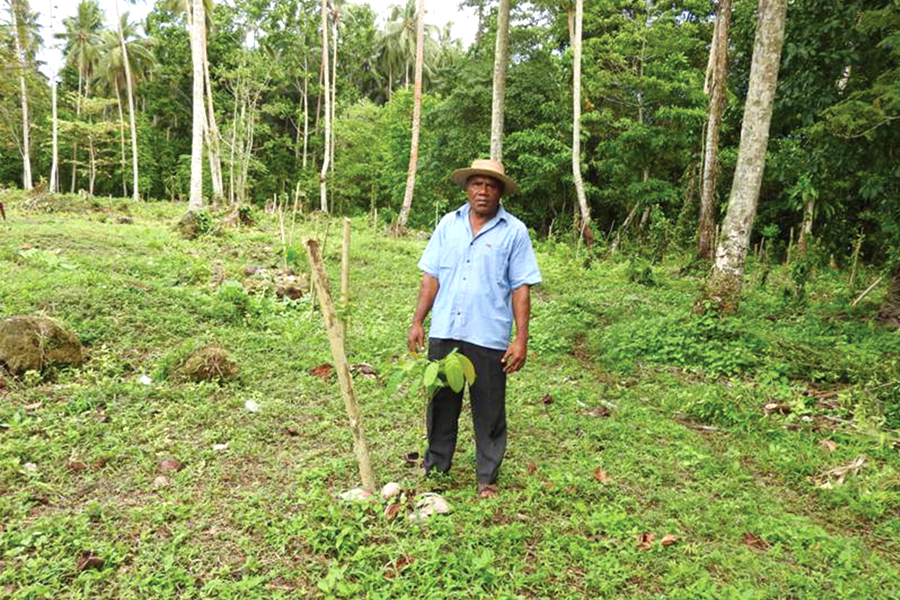
Head of Agriculture Department of Dala Catholic Secondary School, Mr Henry Gwao standing with one of the mahogany tree planted in the school under the School Reforestation programme.

BY SAMIE WAIKORI

AUKI

Head of Agriculture Department of Dala Catholic Secondary School, Mr Henry Gwao standing with one of the mahogany tree planted in the school under the
School Reforestation programme.

ST John Dala Catholic Secondary School has applauded the reforestation office in Auki for the school’s reforestation programme.

Head of Agriculture Department of Dala School, Mr Henry Gwao made the statement describing it as an important programme which needs to be taught in schools.

He said around mid this year staffs from the reforestation office came and introduced the programme at the school.

Gwao said during the programme awareness was conducted for students and more than 70 mahogany trees were planted on the boundary of the school.

He said there’s no specific subject for the programme in the school, however his department took up responsibility on the programme in the school.

Gwao said students continue to learn on the importance of the programme to ensure they grow up with the knowledge.

He stressed that having the knowledge is important for their future to do right decisions to protect their forests

Also it will give them opportunity to decide change to the current trend of logging as it continues to harvest the country’s forest with no reforestation initiative.

Gwao said in school his students continue to learn on the programme as they keep monitoring the trees planted in the school.

He said the trees also useful for the school as they may process into timbers and build the school with in future times.

Fiji awaits Solomon Islands after Macau test

Solomon Islands striker Benjamin Totori in focus mode against New Zealand during last September’s Oceania World Cup Qualifier match at Lawson Tama Stadium in Honiara.

BY ROMULUS HUTA

THE national soccer side jetted out of the country yesterday for Macau ahead of today’s international friendly showdown while another fixture awaits them in Suva next month against Fiji following confirmation by Solomon Islands Football Federation (SIFF).

Led by caretaker head coach Moses Toata and assistant Eddie Marahare, today’s encounter will be played at the Estádio Campo Desportivo in Macau.

Yesterday’s departure saw Toata and Marahare could only brought with them 15 players due to unavailability of five others namely Micah Lea’alafa, Andrew Rarangia, Jerry Donga and under-19 duo John Aeta and Patrick Taroga.

Lea’alafa was not unavailable for the tour due to club commitment in New Zealand while Donga was omitted from the squad in the eleventh hour for disciplinary reasons.

Aeta, Taroga and Rarangia were left out through visa problems.

However, the quintet is expected to re-join the squad upon return from Macau as they prepare for the Fiji tour.

Lone overseas-based player and veteran striker Benjamin Totori will captain the team against their Asian opponents.

Toata said the team have limited period of time to prepare for the international friendlies.

“To be honest we are not well prepared for the friendlies because we only have three weeks of training and for me it’s not enough”, he said.

Thus, Toata is taking many positives from the players’ involvement with their clubs in the Telekom S-League.

“The good thing is the boys are in a competition like the S-League and also most of the players we picked are experience international players.

“That’s why we based our selection on experience given the limited time to prepare.”

“Maybe for other friendlies matches or build up to the Pacific Games could be a different set of players,” Toata added.

“We know Macau is ranked lower than us but they are playing at home so we need to play our strong team against them.

“It’s very important to win the friendly since FIFA will consider the result for our overall ranking.

“We have confirmed to play Fiji in a one off international after the Macau trip.

“A positive result against Macau will definitely put us in a good shape ahead of the game with Fiji”, Toata stressed.

Meanwhile, the Bula boys, Fiji football side have moved into camp to prepare for the international friendly with Solomon Islands.

Solomon Islands last meeting with Fiji was a 0-0 draw at the Pacific Mini Games last year in Vanuatu.

MSG supports forest protection

0
Home to alot of endangered species, conservation of our forests are important.

BY GEORGINA KEKEA

APART from felling trees and exporting logs and timber, there are other lucrative ways to make money says Stanley Wapot Program Manager Sustainable Development of the MSG Secretariat.

Speaking to Island Sun recently, Wapot says countries like Solomon Islands and Papua New Guinea can earn money in the tourism sector, like their fellow MSG members Vanuatu and Fiji.

Recently Wapot was in Honiara for a consultation with stakeholders and Forest agencies to discuss how they can work together to protect the country’s forest.

Currently MSG Secretariat is exploring options to partner with members in supporting livelihood-oriented community initiatives towards local, national and global objectives on forest protection.

Wapot says the Secretariat believes that Forests of Melanesia are vital natural asset that supports the livelihoods of the majority of the people who are rural based subsistence farmers.

But while the programme seeks to save the country’s forest, on the other hand, forestry sector brings in a lot of money for the government.

“PNG and Solo are the same in the Melanesian countries but we have options too where we can make money out of our resources. Agriculture sector or non-timber products. Timber is not the only source of income” Wapot says.

Program Manager Sustainable Development, MSG Secretariat, Stanley Wapot speaking during a consultation session with SIG & Stakeholders while looking
on James Palmer also from MSG Secretariat and Fred Patison, SPREP.

The MSG Secretariat team since April 2018, had been holding discussions in Papua New Guinea and now in Solomon Islands.

Currently more than 100 logging companies are in operation in Solomon Islands, with most operations carried out said to be unsustainable.

“Suppose you look at Fiji and Vanuatu, they are prioritizing tourism. They do not cut timber or involve in mining. They work really hard in the tourism sector and that’s where they get their money from and it goes straight to the local people. Solomon Islands has a huge potential for tourism.”

Wapot says there is money through forestry but it is not sustainable.

He said tourism and agriculture are the two most important sectors that the country needs to focus in.

However, Wapot says the most important thing to consider as well is people’s attitude and behavior.

He says this is why Solomon Islands and PNG might lag behind in tourism and agriculture.

Wapot says they are looking at two sites in the Solomon Islands to conserve and they are working closely with local groups to identify areas to conserve.

He says this is why the discussions they have in the country is important towards MSG’s goal of preservation of forests for MSG member countries.

“I believe, sometimes we under estimate our people in the rural area. Though they might not have good education in the classroom, their knowledge and way of doing things had been around for a long time. It is the educated people that had brought in new ideas that ruined our people’s forests and thoughts. They have managed to live sustainably in their communities till now. Why not give them a chance to try and learn about preservation of our forests?”

The Forests in Melanesia are said to provide a full range of services – including wildlife and plant habitat, food, medicines, fresh water, clean air, carbon sequestration, timber, fuel wood, flood regulation and erosion control, nutrient cycling, climate regulation, aesthetic and spiritual values.

The MSG Secretariat is working in partnership with Griffith University of Australia for the last six years.

Griffith University contributes mainly technical assistance to the Sustainable Development Programme of the Secretariat.

Home to alot of endangered species, conservation of our forests are important.

Isabel leads SI in post-mining rehab

0

By Ezekiel Talatau

ISABEL province is leading the country in post mining rehabilitation work, ensuring that the environment is restored after the extractive stage has passed.

Speaking to Island Sun, Mr Paul Ikoi, a landowner and a nursery technician for Sumitomo, said that the rehabilitation project is initiated in partnership with the ministries of Mines, Environment and Forestry.

Ikoi shares that it has not been an easy road for the company’s experts as they struggle to find suitable soil, and also decontaminate areas which have been touched by chemicals.

In 2016, former Minister of Mines Mr Samson Maneka visited the sites and said that the works Sumitomo has done impressed him a lot.

He added that Sumitomo has gone beyond the legal obligation to work with the community during the exploration stage.

Such reports is an important legal condition for any mining company to undergo rehabilitation mining areas after mining, he said.

The project was put to an end after the project is accomplished, creating a history landmark for the government and the people in Isabel province.

Ikoi reported that he is currently trying to put this area as an environmental protection site where Environmental students and researches all over the world could come and learn from this project as it is one of the success project in Solomon Islands.

He added that, he is still looking for a fund that could help him to carry out this project for the future of this country.

To date, locals are continue to look after the area and monitoring the growth of the trees planted within the area.

TSI concerned on traditional governance bill

0

TRANSPARENCY Solomon Islands (TSI) is deeply concerned after being informed by the Office of the Prime Minister and Cabinet that the ill-informed/ill-conceived Traditional Governance Bill 2018 will go before the parliament during this sitting.

TSI is of the view that should Solomon Islands government be serious about building a cohesive and vibrant peaceful society and grow the economy and the human resources of Solomon Islands, this bill will do the opposite.

TSI calls on the Solomon Islands Democratic Coalition for Change (DCCG) Government to delay this bill and carry out much wider inclusive consultation throughout the country first.

TSI is of the opinion, that the consultation SIDCCG did early this year is very selective and not inclusive.

It has ill-informed the bill and unfair because it targets specific groups of people that would agree with it and also benefit from it, and excludes women, elders of the communities who are not chiefs, youth and all members of the community.

It was mostly just chiefs. Whilst they may benefit from the foreign structure suggested, most chiefs will fall through the cracks because there is only so many that can sit in these structures.

Guadalcanal chiefs are yet to be consulted and why the rush?

Transparency Solomon Islands urges the government to accommodate or allow people with opposing views to be heard during consultation and not just what the drafters want them to hear. This is what informed decision is about.

“If this bill ends up as law it will weaken and eventually wears away the leadership systems in rural Solomon Islands, a leadership system that is inclusive and appropriate for the communities, tribes where these are accepted by them according to their tradition and practices,” TSI said.

TSI is of the opinion that when it comes to land, the proposed bill is gender biased and does not accord women the importance that custom accords them in land matters.

“As per our argument previously on this same issue, a possible solution to what this drafting instruction is trying to address is to assist tribes/communities to improve their own structures under the current legislation and the constitution.”

“The end result of the bill would be thoroughly subjected to Central Government control and regulations and call on right thinking Solomon Islanders to raise your concern on this proposed bill.” TSI said.

Transparency Solomon Islands understands government frustration when more than 80 percent of land in this country is customary land and does not directly accessible to the government for its development plans.

–TSI PRESS

Parliament passes goods tax amendment bill

0

By Gary Hatigeva

PARLIAMENT has late yesterday, passed the Goods Tax (Amendment) Bill (Act) 2018 after members of both sides of the house agreed to adopt it and voted for its passage in its third reading.

The bill is enacted by the national parliament of Solomon Islands to amend the Good Tax Act in relation to the way the sale value of certain goods is calculated, and for other related purposes.

The amendment seeks to improve compliance to ensure those who are registered for the purpose of goods tax pay the same value as unregistered importers who are required to pay at the port.

The bill does this by setting an uplift value of 130% on goods imported by registered persons.

The Bill amends section 21(1) of the Goods Tax Act (Cap 122) by adding paragraph (c) so that even if a registered importer quotes their certificate at the port of entry, they will be liable for goods tax at the uplift values of 130 percent.

The commissioner of Inland Revenue according to the passed amendment Act will still be responsible for the collection of revenue from registered importers.

While supporting the bill, members of both the opposition and independent groups warned and reminded the government not to overlook key stakeholders in its consultation programmes on any changes made to what will have direct impacts to the private sector.

The government was also told that it is important works of the tax reform goes through before responsible stakeholders can start introducing other things, and was therefore cautioned that at the end of the day, one will also have low income earners that will bear the brunt of any increase or changes in taxation.

The BLC report further however pointed out that already, in an environment where Solomon Islands is a tough place to do business and also just for low incomes earners to survive, we might as we relook at this.

The government was further reminded that this taxation reform should be a holistic program that looks at three different stages.

After scrutinising the bill, the Bills and Legislation Committee (BLC) made strong recommendations for the government to consider, one which was that for any business entities who chose not to comply or evade the country’s taxation laws, be blacklisted, their names published, and they are barred from accessing government contracts and services

It was also suggested that the Ministry of Finance and Treasury carry out the overall reform of the taxation regime in the country to encourage compliance and avoid arbitrary taxation.

“Fairness dictates that the calculation of goods tax on goods must exclude customs duty on such goods,” the Committee states in its report.

The recommendations reiterated that important stakeholders in the economy must be consulted on any changes to any aspects of our taxation system, and for the government to ensure that in the final bill, the capital equipment imports that are not for resale are exempted from goods tax and the government to consider other tax options on such imports.

Meanwhile, the committee applauds the government’s efforts to enhance compliance with the country’s tax laws and ensure equitable treatment of importers.

The issue on tax evasion has been a government long time concern that some people who are registered for goods tax purposes are undervaluing goods at the wholesale level so to pay less or evade paying goods tax and the passage of this amended law will be embraced as the hope to stop it.

“It is hoped this bill (Act) will contribute to increase revenue to the government under goods tax.”

Traditional & custom bill in parliament

0
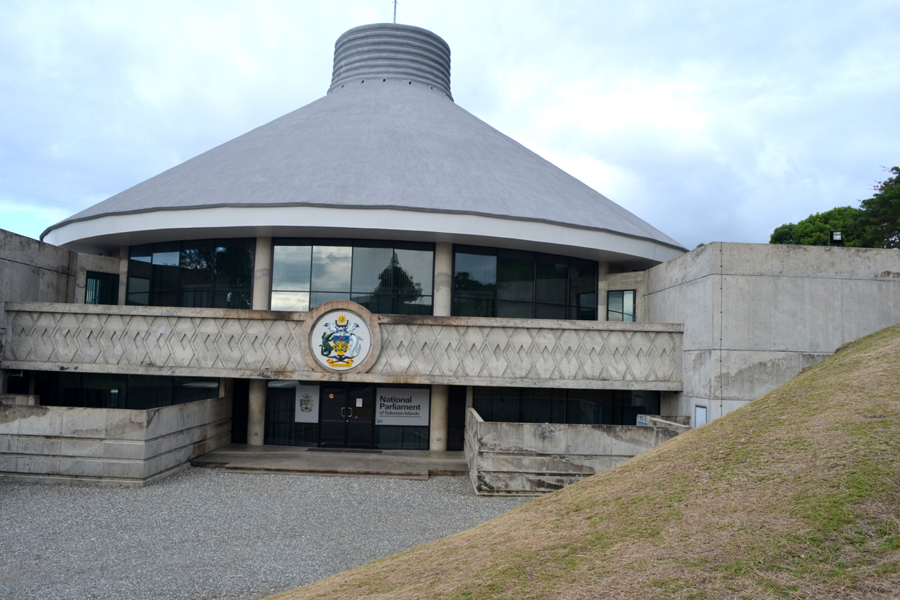
Solomon Islands National Parliament

By Gary Hatigeva

THE Traditional Governance and Customs Facilitation Bill 2018, has made it through its second reading in parliament and is now set down for debates, but that will happen after it is to put before the Bills and Legislation Committee (BLC) for its scrutiny.

This is an Act designed under the Ministry of Unity, Peace and Reconciliation, to provide for the recognition of Traditional Governance System, amending the Provincial Government Act 1997, and other related matters that deal with the traditional and custom practices in Solomon Islands.

According to its objectives, the proposed law looks to empower and allow for tribal chiefs and traditional leaders to participate in decision making on social and economic matters in the country, whiles at the same time, provides a frame work for the promotion and preservation of Traditional norms, protocols, values and practices.

The proposed legislation also aims to provide a framework for the institutionalisation, management and regulation of traditional governance systems.

Once enacted, the bill will enable the traditional governance system to become part of the formal governance system, as it will also fulfil intentions to preserve the customary governance system, for the future generation of the country.

As described and explained in the bill, the Roles of traditional governance and leadership maybe identified as an act of responsibility that is expected or vested upon them when they are in leadership levels or upon being appointed to take such responsibility.

It also identifies the Roles and matters of traditional nature or on subject issues that have direct relations to the structure and context of our society, and of which is important to the social and economic aspirations of the country.

Presenting the bill before moving a motion for its second reading, Minister for the Ministry of National Unity, Peace and Reconciliation, Commins Mewa explained that making this bill become realised was an agenda of the former government and he thanked the now Solomon Islands Democratic Coalition for Change Government (SIDDCG) for maintaining the policy which according to the Minister, is what the people needed for the purpose of governance for the traditional system.

Mewaw further added that the subject of social harmony and stability are prominent when it comes to the roles of chiefs or traditional leaders, and therefore pointed out their roles directly complement or to a certain extent, supplement formal state’s institution’s roles particularly, in the areas conflict management and resolutions.

This form of leadership according to Mewa, has the ability to pursue in brining those contentious social matters that are detrimental to the state, or for example, security issues, with regards to law and order within the bounds and this according to the government, needed the formal recognition.

“The theme for this year’s Anniversary Independence Celebration is redirecting our journey at 40 and the introduction of this bill, which when passed, will become the flagship legislation for our traditional governance system, as it also resonates well with this theme.

“Since independence 40 years ago, we have not provided our chiefs and tribal leaders, who reside and interacted with our people on a day to day basis, the platform for them to participate in formal decision making,” the Minister added.

He then pointed out that the governance system has not fully recognised the roles of chiefs and tribal leaders in all communities and empower them to expand and increase their roles, and the minister said this bill also aims to fulfil that.

“This Traditional Governance and Customs Facilitation Bill when passed and implemented, will add meaning and value to other acts of parliament, which will initiate reforms or amendments especially laws or natural resources development aspects on forestry, mines, agriculture and fisheries.

“I believe there will be realisation by all Honourable colleagues that this bill will facilitate partnership by our people who are the resource owners on developments, instead of being spectators, and it will also build more direct and tangible benefits to our people.

“If there is a time and opportunity for us to recognise, strengthen and empower our traditional leaders and traditional governance system and structures, it is now,” Minister Mewa said.

He further added that the bill gives leaders the perfect opportunity to give a voice and power to the traditional and tribal leaders.

“We have promised our people especially, our traditional and tribal leaders that we will enact legislations to recognise, strengthen and empower their roles and responsibilities, this is the bill.

“We owe it to our people to pass this bill and this is part of the redirection of the journey as we reach 40 years, and this is also an opportunity to give a voice and empower our traditional leaders and this also adds value to the call for a redirection to our country,” he said.

The bill if passed, will also establish a ministry of its own, to develop and implement policies relevant to improving the Systems provided for in the Act, as well as facilitating the institutional reforms across the Government for the purpose of achieving the objects of the Act.

Called the Ministry of Traditional Governance, it will also consult with the Ministry of Provincial Government to assist provincial governments to make Ordinances codifying customary law, and other functions related to the administration of this Act determined by Cabinet.

Meanwhile, the Minister responsible for the tabling of the bill highlighted that before parliament debates and move to pass this very important bill, it is worthwhile to refresh the minds with the roles, conscience, and structures of traditional governance and leadership.

The bill has a major advantage according to experts involved in the its compilation, will also allow for the management of customary properties and this, they said, will give an upper hand to tribal and traditional landowners who are expected to get high benefit in return.

Following its presentation on the floor of parliament after its second reading, debates into the bill was adjourned, with no actual dates on its return to parliament for deliberation, but the government according to insiders, is anticipating its return after the ‘Goods Tax Bill’, the ‘Supplementary Appropriation Bill 2018’, the ‘Solomon Islands Maritime Authority (SIMA) Bill 2018’, and the ‘Legal Profession Bill’ are dealt with.

Democracy vs Development in West Makira constituency

0

DEAR EDITOR, one notable feature of democracy is the majority always wins. This is mostly expressed during voting – a common system of electing leaders in democratic nations. These leaders in turn are elected purposely to become the mouthpiece and the voice of its people being represented in the governing house.

Equally important as well is that they are elected to facilitate, coordinate and fulfil the development aspiration and visions of the represented populace – a popular notion being widely uphold nowadays as a result of the dual function nature of our MPs better described as legislator and a development planner.

Thus we see on a general perspective that a leader has a direct link with the development of our country hence our respective constituencies. Moreover, it is interesting to see that respective leaders have different development visions, goals and objectives, plans and programmes for its followers, and that it is of their high interest to see their development dreams come true. And so is the people.

However for a leader with such development visions, the possible and probably the most favourable step to undertake towards fulfilling his or her development dreams is to get into the highest governing body – the parliament.

And this is where most have a problem with, because the key to that round house is with the people. And they cannot give you on granted purposes. They can lock you in and lock you out anytime they want or whenever they wish. Infact this peculiar right is granted to them by the legitimate principles of democracy.

However, experience tells that the way we applied these rights can either have positive or negative impacts on development initiatives we undertake.

To the West Makira constituents how we use our rights to put someone up there in the parliament is not explicit neither subtle and is quite undetectable but it can be deduced from our political history and two real practicable observable facts.

First of these two facts is, there has been too much playing around with the key to the round-house since late S S Mamaloni reign comes to an end and; secondly, we uphold psychologically, a typical development ideology that implies that major and wholesome developments are practical initiatives of life that can occur overnight.

Too much playing around with the key to parliament can be clearly comprehended when we glance back on our political history since Mamaloni’s reign ends. To be straight, since the beginning of this 21st century, we have locked in and thrown out four respective leaders successively, with full completed terms.

Each leader embarking on its own route to developing west Makira based on his development ideologies. And interestingly to note, each successive one never picks on from where his former ends – an act based on self-realisation which does not promote the “all” but the “I”. None the less, looking at this political scenario, can we draw something out that has a relative effect on our progressing developments?

In other words, what is the effect of toying around with this key on our development strive? Or to an extent, do you think we can have a consistent, logical, economically relevant and priority, and a fast-paced progressive developments?

Answering these questions will enlightened us why we need to be more careful with the key we hold to parliament, And hopefully would give us better understanding on why we need to apply key rightly in the best interest of our development strive.

In addition, how we use our voting rights appears to be rooted from a kind of development project ideology that implies that major significant developments projects can happen overnight.

And the effect of this ideology is clearly seen in the political scenario just recently described. In other words, we are often dissatisfied with every leader we appoint probably because they might have not done any major significant developments projects which can address the entire constituency socio-economical needs and wants. However we need to scrutinise such mindsets because practically it is wrong and does not conform to practical natures of project implementations.

Literally, huge projects that can have an entire effect on our constituency cannot happen in a day neither in a year except on very rare occasion, in the Solomon Islands context and setting. There are a lot of factors contributing to this and it is not the MP that delays the process or doing nothing.

Let us get informed that project implementation is a difficult task that does not demands a day to get it done. In fact development planners, project managers and implementer know all too well the difficulty and the complexity of the task. It’s not that easy as we might think as well as not too soon as we might expect. Practically four years is sufficiently not enough.

And to you all the MPs of this country whom you have managed to give in and developed your constituency with whatever resources being possibly available to you, I commend you for your hard work.

But in truth, implementing major significant development projects that could have a dynamic effect and satisfy us all (should we ever be satisfied) is a difficult task that demands time and energy. And this is one reason why only a few insignificant projects taking place in the first four years.

And as you have experienced these insignificant projects are merely community, household or personal projects. But let me tell you the truth, unless these insignificant projects were in line with the constituency development plans and policy ,they are the least of projects the MP and his team should spend their time and energy on; but somehow they were done as means to pacify our self-gratification and self-centred interests.

Huge constituency development projects that can have a whole effect on the entire constituency generally needs more than four years or so. Thus the ideology that implies that wholesome developments can happen overnight must be discarded.

These two facts then have exposed two very abstractive notions on developments which can be stated as: voting leaders one after another hinders progressive development but result only with a stagnant development.

And secondly, sufficient time is needed by a leader to fully implement his development plans and visions, thus I reckon two terms in the parliament is reasonable.

So far I have seen nothing too negatively serious about our current leader’s performance relating to his work. After all he’s far better off than the others before him. In fact he made a difference by compiling his team in a transparent and procedural manner. That is his CDO, project manager and the accountant were chosen on merit through application for the respective post while in the past hand-pick is the usual practise which is a typical of corruption.

Not only that, but already he has done some significant changes in our socio- economic development. He has invested a lot too in the education sector-a worthwhile investment in which you will see its fruit in the next ten years or so. Moreover there are still more good things yet to come and we are picking up. And though we are a bit slower, we are accelerating.

Our worst fear however, at this remaining months is, if this current development scheme and programme comes to halt once more, by electing another new MP, as we have been doing all along, then definitely we are sliding down again to square one.

Consequently the status qou is maintained and worst still (instead of moving forward, we are not only moving backward but rotating on a dead end cycle. This is why we can describe our development situation as a stagnant development situation)

It’s high time we take a serious consideration on our previous practice on electing leaders. It’s time we should focus and think more heavily on the progression of our development rather than on preferring leaders.

It is time we evaluate the effect of putting one leader after another on our development strive. And above all, it is really high time we identify and honestly state who really is to be blame for the slow development progression we are experiencing. To be frank, our MPs are totally out from any form of blames, for don’t you remember that the government is of the people, by the people and for the people.

This statement apparently states (clarify) that all responsibilities and hence blames falls on you: not the MPs. Nonetheless, in regard to changing an MP, let that be an ad hoc matter. In fact time and nature will tell exactly when to change a leader. Let us not rush hence to change a leader just for the sake of ticking somebody different.

Of course we will have additional candidates vying for that sacred chair in this upcoming national election as well definitely they are going to cause imbalance on our minds. However it is important that we know and understand that such is the ways and natures of democracy, which if we carefully considered, are just illusions and fancies of the system. To be straight, these are the deceptive parts of democracy that carry ones minds away from the current development scheme and programmes that are going on.

So let us not focus, dwell and fooled around on those impractical natures of democracy, rather let’s be pragmatic towards our development strive.

And this can be truly achieved through communicating, cooperating and collaborating with our MP which apart from other modes, can be simply shown through our ballot papers by appointing him on another second term. This might sound a bit undemocratically but this is an expedient approach for the sake of speeding up worthwhile developments in west Makira.

To conclude democracy provides legitimate principles whereby we can exercise our rights based on our free conscience to choose and elect leaders. But exercising some of these rights can have an impact on certain aspect of live, in particular, our development strive. So far we have been using these rights to prefer leader after leader that we do not realise that it has a detrimental effect as well as a hindrance to our progressive development.

It is time we turn around and exercise our rights wisely for a positive and a progressive development in our constituency.

Finally lest we forget, all our leaders envision a healthy, active, wealthy and a prosperous constituency – not bad things. They just need time to fulfil those dreams.

Long live west Makira!

Hansel Sau

USP Solomon Islands