
Home Blog Page 298

Solomon Islands dangerously dependent on extractive industries: PM Manele

0

BY NED GAGAHE

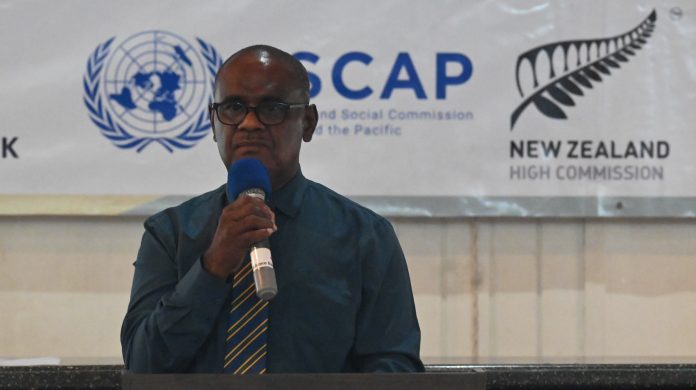
Prime Minister Jeremiah Manele warns that Solomon Islands remains dangerously dependent on extractive industries such as logging, fishing, and mining—sectors that take from the country’s land and sea but fail to create lasting prosperity for its people.

Mr. Manele made the remarks at the launch of the National Development Strategy (NDS) Medium Term Review Report and four related strategic documents at Mendana Hotel in Honiara on Friday, October 17, 2025.

Speaking on Economic Growth (Objective One) under the NDS, the Prime Minister said the country’s economic structure remains fragile and overly reliant on resource-based industries.

“Our economy remains dangerously dependent on logging mainly, followed by fishing and mining—extractive industries that take from our land and sea but did not really build lasting prosperity,” he said.

He revealed that the government’s targeted GDP growth rate of 3.5 percent by 2020 and 5 percent by 2025 has not been achieved, with Solomon Islands only managing to reach 3 percent in 2023.

Mr. Manele attributed this shortfall to deep-rooted structural challenges, including limited diversification and regulatory barriers that continue to constrain private sector development.

On Poverty and Basic Needs (Objective Two), the Prime Minister highlighted persistent social and economic challenges.

He said while the country’s Human Development Index (HDI) improved from 0.507 in 2010 to 0.565 in 2020, it still fell short of the targeted range of 0.625 to 0.675.

“Twenty-three percent of Solomon Islanders—nearly one in four—cannot meet their basic needs. Seventeen percent of our population suffers from malnutrition,” he said.

However, Mr. Manele said there are reasons for optimism, pointing to the Seasonal Worker Programme, which contributes around SBD 500 million annually to the economy.

“That’s 500 million reasons to believe that when we nurture real opportunities, our people thrive.

“But that’s not enough. What else can we do? Certainly, there is so much more that we can do collectively,” he said.

The Prime Minister said his government will continue to explore strategies to diversify the economy and create sustainable pathways for inclusive growth and development.

For feedback, contact: [email protected]

Modernisation of public service imminent: Kumi

0

BY SAMIE WAIKORI

The Member of Parliament for Temotu Nende, Stephen Kumi, says the modernisation of the public service is crucial as the country moves forward.

Speaking during the debate on the Public Service Bill 2025 in Parliament last week, Kumi highlighted that as the nation plans for the future of public service delivery, modernisation is not just necessary, it is imminent.

He noted that the new bill strengthens the legal framework guiding service delivery, while introducing modern systems and technologies that will enhance efficiency, responsiveness, and the ability to address emerging challenges.

Kumi also emphasised the importance of integrity among public servants, stating that ethical values such as honesty and moral uprightness must be upheld.

“It ensures that government employees serve with integrity, respect, and dedication—thereby enhancing public trust and confidence in government services,” he said.

He further stressed the importance of the principle of merit in public service, noting that appointments, promotions, and rewards should be based on ability, performance, and qualifications rather than favouritism or political interference.

“The principle of merit requires a strong legal framework. This means clear laws and regulations must govern how the public service operates,” Kumi explained.

He added that such a framework should also establish fair remuneration packages, define organisational structures, and provide legal guidelines to ensure the public service functions effectively and consistently.

Drawing from over nine years of experience working in the provinces, Kumi recommended that disciplinary committees be decentralised to better address misconduct at the provincial level.

“There are public servants in the provinces abusing their powers—some even misuse government vehicles,” he said.

Kumi concluded by reiterating that the push for modernisation aims to build a professional, ethical, and capable public service that operates with transparency and effectiveness.

For feedback, contact: [email protected]

Respecting boundaries between politicians and public servants important: Wale

0

BY SAMIE WAIKORI

Leader of the Parliamentary Opposition Group and Member of Parliament for Aoke Langalanga, Matthew Wale, has emphasized the importance of understanding and respecting the boundary between elected representatives and public servants.

Wale made the remarks during the introduction of the Public Service Bill 2025 in Parliament last week, referencing past instances where this boundary was breached, leading to abuse of power and corruption.

He explained that while political governments come and go, their primary role is to provide policy leadership and direction for the country. These policies may be legislated into law, but it is the public service that is responsible for implementing them.

“Once policy decisions are made, it is the public service that must implement them. It is not the role of politicians to directly carry out those decisions.

“This is the boundary between political leadership and the public service—and it must be respected by both for our system of government to function effectively,” he said.

Wale stressed that the public service, being unelected, must not assume the policymaking responsibilities of elected leaders, just as politicians must not interfere in the execution of policy.

“We have witnessed too many cases where this boundary has been deliberately crossed, and in almost all of those, some form of power abuse occurred,” he added.

Wale also underscored the concept of trusteeship, saying that both elected representatives and public servants are entrusted with power and resources on behalf of the people.

“This principle of trusteeship is fundamental to public service. When those in public office, whether elected or appointed neglect or disregard it, abuse and corruption follow,” he stated.

He calls for the principle to be embedded in the ethics curriculum of the Institute of Public Administration and Management (IPAM), using real-life case studies to help trainees understand its application in practice.

“A government must have a strong and professional public service bureaucracy. It remains the most efficient, consistent, and rational mechanism for implementing laws, managing public resources, and delivering essential services to citizens,” Wale said.

For feedback, contact: [email protected]
NDS review exposes deep challenges in health, education and environment

1

BY NED GAGAHE

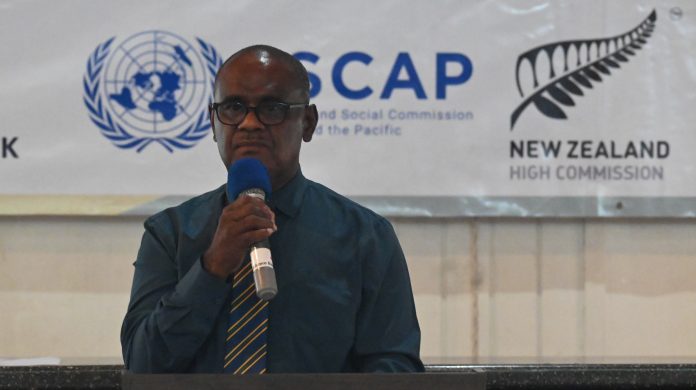
Prime Minister Jeremiah Manele has urged decisive national action to address critical health, education, and environmental challenges, stressing that Solomon Islands’ long-term future depends on it.

Speaking at the official launch of the National Development Strategy (NDS) Medium Term Review Report and four related strategic documents at the Mendana Hotel in Honiara last Friday, October 17, 2025, Mr Manele said while there has been progress in some areas, the country still faces serious setbacks in health, education, and environmental sustainability.

“Let me share a stark reality: non-communicable diseases, diabetes, heart disease, cancer, now account for 70 percent of deaths in Solomon Islands. Seventy percent! Our target was 10 per 1,000. We’re seven times worse than where we should be,” he said.

He revealed that Solomon Islands currently has one doctor for every 4,000 people, with the situation even worse in some provinces.

He said access to healthcare, particularly in remote and rural areas, remains difficult due to poor infrastructure, staff shortages, and lack of medical supplies.

However, he said there are progress in maternal and child mortality, describing it as a sign of hope that should encouraged.

“We should celebrate that. But we cannot celebrate ourselves into complacency when so many other health challenges remain unaddressed,” Manele said.

On education, the Prime Minister said while enrolment numbers have improved, quality remains a pressing concern.

“Enrolment without quality is a hollow victory,” he said. “We must strive for excellence, not just in attendance and placement.”

Manele said many schools still face infrastructure gaps, limited trained teachers, and a shortage of learning materials.

Turning to environmental issues, the Prime Minister painted a grim picture of the country’s declining ecological health.

He revealed that over the past four decades, the Environmental Performance Index has dropped dramatically from 51.1 to 26.7.

“Walk through our forests and you’ll see the scars of unsustainable logging. Dive in our reefs and you’ll see coral bleaching, depleted fish stocks and pollution,” he said.

“Visit our coastal communities and you’ll hear stories of shorelines disappearing, of saltwater intruding into fresh water, of traditional food sources vanishing.”

Manele described the environmental decline not only as an ecological issue but as a national crisis that cuts across all aspects of life.

“This is not just an environmental crisis. This is a cultural crisis. An economic crisis. A moral crisis,” he emphasized.

Despite the grim outlook, the Prime Minister acknowledged areas of improvement, particularly in disaster risk management, where the country has become more capable and organized in responding to cyclones and other natural disasters.

“When cyclones strike, we are better prepared, better organised, better able to protect our people.

“If we can manage disasters, we can manage our environment—we must,” he said.

For feedback, contact: [email protected]
‘WRONG TIMING’

0

Trade Union questions govt move towards defence force amid many unresolved welfare and resource challenges with RSIPF

BY NED GAGAHE

The Solomon Islands Council of Trade Unions (SICTU) is questioning the government’s plan to establish a Solomon Islands Defence Force (SIDF), saying it is misguided and ill-timed while the Royal Solomon Islands Police Force (RSIPF) continues to face serious welfare and resource challenges.

In a strong worded statement, SICTU President Tony Kagovai said the union recognises the government’s intentions to strengthen national sovereignty and self-reliance but believes such ambitions are misplaced when the country’s existing security institutions are struggling.

“The government must first fix the foundations before building something new,” Kagovai said.

“How can we talk about forming a defence force when the RSIPF, our primary security institution, is being systematically failed?”

According to Kagovai, the government, through the Minister of Police and National Security, Jimson Tanangada has outlined the proposed defence force as means to fill capability gaps in maritime surveillance, border protection, disaster response, humanitarian relief, and national emergencies.

But SICTU argues that the RSIPF already has a Maritime Department that performs many of these functions, including patrols of the country’s Exclusive Economic Zone (EEZ).

“Before spending vast public resources on a new defence structure, the government must explain why the existing RSIPF capacities are deemed insufficient and why investment cannot be scaled within the current framework,” Kagovai said.

He said SICTU’s main concern is not just about structure, but about priorities while the government talks about future security capacity, it continues to neglect the welfare of police and correctional officers who currently bear the country’s security burden.

Kagovai also raised alarm over what he describes as deliberate interference by the Ministry of Police, National Security and Correctional Services in delaying the Annual General Meeting (AGM) of the Solomon Islands Police Officers Association (SIPOA) — the official body representing RSIPF and Correctional Services officers.

He said despite approval from the Police Commissioner, the Ministry’s Human Resources Directorate has continued to block the meeting.

“This is not an administrative oversight; it is a deliberate attempt to silence the collective voice of our officers,” Kagovai said.

“How can the government talk about nation-building and resilience when it actively suppresses those on the front line?”

SICTU further highlighted the ongoing welfare crisis faced by police and their families due to the lack of an active SIPOA body.

The union said officers continue to endure difficult working conditions, low pay, and inadequate support for their mental and physical wellbeing despite carrying heavy responsibilities in disaster response, maritime security, and public safety.

“These men and women serve our nation with dedication, yet their welfare is neglected. There is no proper platform to advocate for their needs,” Kagovai said.

In its statement, SICTU outlined three immediate actions it wants from the government:

  • Address Current Failings First: Drop the Defence Force proposal and focus on strengthening the RSIPF and Correctional Services with adequate funding and support.
  • End Interference with SIPOA: Direct the Permanent Secretary and HR Directorate to facilitate the SIPOA AGM without further delay.
  • Commit to Welfare Dialogue: Enter into genuine dialogue with a duly elected SIPOA board to address officers’ welfare and working conditions.

Kagovai concluded that any talk of a defence force is meaningless unless the RSIPF, the foundation of national security, is properly supported.

“A defence force can only be a strategic investment if it stands on a solid foundation. Right now, that foundation is cracking. The government must fix the welfare and morale of our police before building anything new,” he said.

For feedback, contact: [email protected]
‘PSB 2025 will lay a foundation for a renewed Public Service culture’: Choylin

0

BY SAMIE WAIKORI

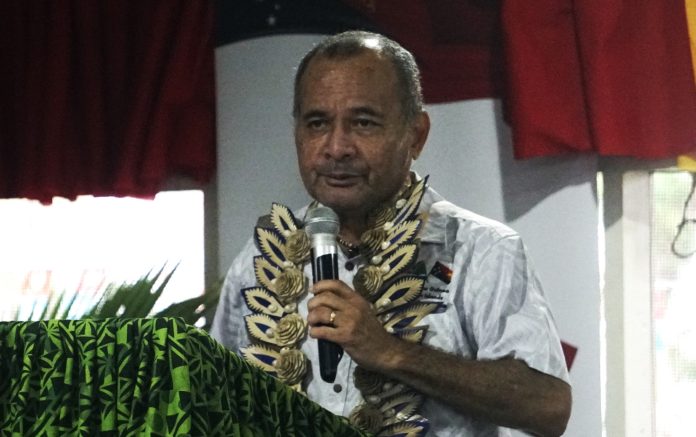
The Minister for Culture and Tourism and Member of Parliament for Ngella constituency, Choylin Yim Douglas, believes the Public Service Bill 2025 will lay a foundation for a renewed culture within the public service.

She made the statement when contributing to the second reading of the bill in parliament last week, highlighting the objectives of the bill.

The minister highlighted two important areas, customer service and cultural obligation, where public servants often get criticized for.

“Too often, our public servants are criticized for poor customer service, for not treating clients, visitors, or members of the public with courtesy and respect.

“This must change. The public service must remember that we are here to serve the people.

“Every interaction between a public officer and a member of the public reflects the face of government,” Choylin said.

She emphasized that good customer service must become an essential part of our work culture, built on respect, empathy, and professionalism.

The minister said another important issue is cultural obligations, as it sometimes affects work ethics within the public service.

“We all value our culture. It defines who we are as Solomon Islanders.

“However, when cultural obligations interfere with the performance of duties, for example, absenteeism due to prolonged social or cultural engagements, it affects productivity and undermines the efficiency of the public service,” she stated.

The MP stressed that clear codes of conduct and accountability mechanisms within the bill will help to strike a balance.

“This is by respecting our culture but also ensuring that public servants uphold their professional duties and responsibilities.

“Beyond this, the bill also reinforces the principles of professionalism, good governance, ethical leadership, and honesty within the public service.

“It emphasizes merit-based employment, integrity in decision-making, and accountability for results.

“These are the hallmarks of a modern, effective and trusted public service, one that delivers for the people and upholds the values of transparency and fairness,” she said.

The minister expressed her strong support for the bill, as it represents a bold and necessary step forward in transforming the public service into one that is more dynamic, professional, and truly dedicated to serving the nation.

“I believe this bill will lay the foundation of a renewed public service culture, one built on excellence, integrity, and service to the people of Solomon Islands,” she said.

For feedback, contact: [email protected]

PSB 2025 to address longstanding gaps within Public Service: Garu

0

BY SAMIE WAIKORI

The Member of Parliament for West Guadalcanal constituency, Mary Daniella Garu, says the Public Service Bill 2025 will help to address long-standing gaps and bring much-needed reforms to the Public Service of the country.

Contributing to the debate on the second reading of the bill in parliament last week, the first-time MP described the bill as a transformative piece of legislation.

“As someone who has served in the public service, I speak from experience when I say this bill addresses long-standing gaps and introduces much-needed reforms.

“This bill introduces a robust performance management framework, a system that will ensure accountability, transparency, and merit-based progression within our public institutions.

“It establishes professional standards in a dedicated professional standard unit, which will help restore public confidence in the integrity of our service,” she said.

Moreover, Garu underscored the prioritization of the bill, especially on workforce development and training for public servants.

She emphasized that the bill provides a structured approach to identifying skills, gaps, building capacity, and nurturing future leaders within the public sector.

“This is not just about efficiency. It is about empowering our people to serve with excellence.

“I believe this bill lays the foundation for a modern, responsive, and people-centred public service. It also aligns with our national vision for good governance and sustainable development.

“But more importantly, it reflects our collective aspiration for a public service that is fair, inclusive, and accountable to the people it serves,” the MP added.

As a former public servant, she witnessed these shortfalls within the organization, which she believes can now be addressed through this upgraded piece of legislation.

For feedback, contact: [email protected]

‘Government will consider 67 recommendations on Public Service Bill 2025’: Manele

0

BY SAMIE WAIKORI

Prime Minister, Jeremiah Manele, has assured parliament that recommendations made by the Bills and Legislative Committee on the Public Service Bill 2025 will be looked at.

The recommendations were presented in the BLC report, and compiled during the consultation stage of the bill that was carried out with government line ministries, CSO, NGOs, and other stakeholders.

According to PM Manele, the Bills and Legislation Committee report made 67 recommendations on the bill.

Speaking during the debate on the second reading of Public Service Bill 2025 last week, he explained that about 10 of the recommendations were for new clauses or policy suggestions, while 57 recommendations were based on the clauses of the bill.

“As highlighted by the Minister of Public Service, we will look at these recommendations during the committee stage of our deliberations next week.

“And where possible, we will accommodate or take on board the agenda and use Standing Order 51 to accommodate some of these recommendations,” he said.

Manele said his brief examination of the recommendations highlights important areas with the public service in the country.  

“My cursory inspection of the accepted recommendations emphasizes legal clarity, ethical governance, and institutional accountability across the Solomon Islands Public Service,” he said.

The PM thanked the chairman and members of the Bills and Legislation Committee for putting together the recommendations for consideration in the bill.

For feedback, conact: [email protected]

Public Service Bill promotes GNUT policy statement: PM

0

BY SAMIE WAIKORI

Prime Minister, Jeremiah Manele, says the Public Service Bill 2025 will become a key legislative instrument under the Human Capital Development Pillar.

The Human Capital Development Pillar is among the four pillars of the GNUT policy statement.

The four policy pillars are; unity and stability, economic transformation, infrastructure development, and human capital development. 

Speaking during the debate on the second reading of Public Service Bill 2025 last week, Manele stressed that the Public Service bill is a key legislative instrument under the Human Capital Development Pillar that reflects the government’s commitment to strenghten the capacity, professionalism, and integrity of our public service.

“In particular, this bill sets the basis for the implementation of the nine policy statements of GNUT under the Ministry of Public Service.

“This bill is also critical to advance the government’s priorities in the other three pillars of economic transformation, infrastructure development, and unity and stability.

“Because the bill addresses the workforce, the hands, legs, and eyes, and institutional functions that will lead and support implementation of any Government policy, including the transformation agenda of GNUT,” he highlighted.

Moreover, the PM said the bill is timely, considering the crucial need to reform the public service.

The policy objectives of the Public Service Bill 2025 are clear and seek to;

  • Promote a professional and responsive public service
  • Provide a clear and comprehensive legal framework
  • Strengthen accountability and transparency
  • Clearly define the roles and responsibilities of key office holders
  • Outline the rights and obligations of all public offices
  • Promote uniform employment and management practices
  • Create a platform for continuous improvement and innovation

“I can attest with confidence that the objectives are sound, internally consistent with each other, and will strengthen and improve our public service,” he said.

Manele further stated that the Public Service Bill 2025 represents a bold and necessary step toward modernizing and reforming the public service.

“It reflects our collective commitment to building a responsive, ethical, and accountable public service, one that is equipped to meet the demands of today and the aspirations of tomorrow.

“The incorporation of some of the key recommendations in the Bills and Legislation Committee further enhances the bill’s integrity and relevance,” he said.

For feedback, contact: [email protected]

MoU, foundation towards promoting SI-PNG economy

0

BY JOHN HOUANIHAU

The Memorandum of Understanding (MoU) signed between Papua New Guinea Solomon Islands Business Council (PNGSIBC) and Solomon Islands Chamber of Commerce and Industry (SICCI) sets the foundation for collaborative efforts towards promoting the Solomon Islands (SI) and Papua New Guinea (PNG) economy.

PNGSIBC President Ernie Gangloff expressed this during the PNGSIBC meet and greet event held at the Honiara Golf Club on Friday October.

Prime Minister Jeremiah Manele joined as the guest of honour to mark a historic moment for SI and PNG government and the private sector for the first ever joint networking event.

Speaking at the event, PNGSIBC President Mr. Ernie Gangloff said that this is a first step to focus on just PNG and Solomon Islands in promoting trade between the two countries.

He said that the vision for the Chamber and the Council is to work in a shared partnership and collaboration to grow the economy of both the countries.

“As we’ve identified the impediments to business, we had a meeting with the Prime Minister, and we shared our views on how we can address and support the government. And by sharing that, and supporting the government, we have support from the private sector,” he said.

President Gangloff said that his team got a warm welcome from the Prime Minister, Jeremiah Manele.

“We did when we were last in Sydney, when we met with our Prime Minister. So, as I said, we have support from both political heads, and both parties in the Solomon Islands,” he said.

He said that both governments will work to address work-free visa permits to allow workers to travel vise versa to both countries without tough restrictions.

“What we’re hoping, at the end of the regime, from the visa, will be visa-free. So, there will not be requirements for things like work permits. There will be certain laws in the process, again, that are legal by the legal government status. We hope that that will allow employment across borders to be much easier, as for free. Because we believe we’re going to grow the economy and we should be supportive,’’  President Gangloff said.

For feedback, contact: [email protected]