Home Blog Page 297

Fisheries awareness conducted in Rennell

0

BY JOHN HOUANIHAU

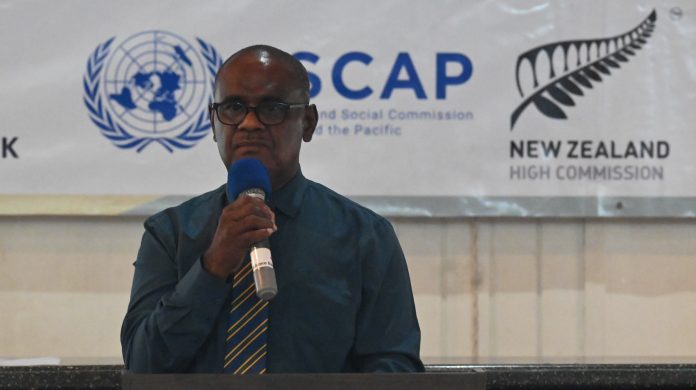
The Solwata blo iumi, Kipim fisaries blo Solomon Aelans team from the Ministry of Fisheries and Marine Resources (MFMR) successfully completed an awareness campaign on Rennell Island.

The Inshore Fisheries Regulations Awareness Campaign in partnership with the Renbel Province Fisheries Division was held on Rennell Island from October 14-17, 2025.

Ministry of Fisheries said the campaign which aims to strengthen understanding of fisheries rules and promote responsible use of marine resources was carried out at three schools and three communities that were not covered in previous visits.

The ministry in their statement said more than 147 students and teachers from New Place, Henua, and Moa schools, and 72 community members from Kaagua, Tigoa, Avatai, and Teavamagu joined the sessions.

These sessions included interactive presentations, role plays, and quizzes with small prizes awarded to participants.

All sessions were held in Pidgin and local dialects to make sure everyone could fully participate and learn.

Key messages from this campaign were;

-Protect coastal fishing areas from overharvesting

– Follow rules that help manage fishing and protect marine ecosystems

– Respect size limits and seasonal bans so fish can grow and reproduce

– Taking responsibility as stewards of the ocean resources

The team is said to have received valuable feedback on improving community compliance and outreach, and participants requested more awareness on marine species of concern, traditional fishing practices and inshore marine export requirements.

As noted, this Solwata blo iumi campaign will continue to spread awareness to help communities across Solomon Islands.

For feedback, contact: [email protected]

MoU foundation for stronger SI-PNG partnership

0

BY JOHN HOUANIHAU

The Memorandum of Understanding (MoU) signed between Papua New Guinea Solomon Islands Business Council (PNGSIBC) and Solomon Islands Chamber of Commerce and Industry (SICCI) aims for a stronger partnership between two nations.

SICCI Vice Chair Gordon Denty said during the PNGSIBC and SICCI meet & greet event held at the Honiara Golf Club following the MoU signing in Honiara last week.

“Today, we are not only witnessing a fruition of shared vision and aspirations, but we are actively laying the foundation for a stronger partnership between our two nations. A partnership that will drive growth, prosperity, opportunity for both SI and PNG,” Mr Denty said.

He acknowledges the enduring government to government relationships, guided by the leadership of the two Prime Ministers, whose commitment has cemented the shared vision, which the two private sector institutions, the PNGSIBC and SICCI, formalised through the signing of a MoU.

“On behalf of the SICCI, I register our sincere appreciation to the Prime Ministers James Marape of PNG and the Prime Minister Jeremiah Manele of SI for their leadership and foresight in advancing this partnership,” he said.

He said that for far too long, the immense potential for trade and investment between the two economies remained underexplored while both nations family and political ties have been strong, thus commercial bridges needs reinforcement.

“MoU signing is indeed the architectural blueprint for building that bridge. This MoU lays the foundation for growing and strengthening our two economies. It represents a shared commitment to drive economic growth, build and expand trade, unlock investment opportunities and foster a more conducive environment for our enterprises to thrive,” Denty said.

He said that the MoU provides a strategic framework for deeper engagement between the private sectors of both countries, serving as a platform for dialogue, networking and collaboration and will translate into practical opportunities for trade, investment and innovation.

“Ultimately, it strengthens economic cooperation between PNG and SI to stimulate private sector growth and resilience,’’ Denty said.

For feedback, contact: [email protected]

Australia, MAL to launch climate-resilient agriculture project

0

BY NED GAGAHE

The Australian High Commission and the Ministry of Agriculture and Livestock (MAL), will officially launch the design phase and stakeholder consultation workshop for the Solomon Islands Climate Resilient Agriculture Development Programme tomorrow.

The event will be held at Club HP, Heritage Park Hotel, from 9am to 1.30pm.

This landmark Australian-funded initiative aims to strengthen agricultural productivity, resilience, and inclusivity across the country, particularly as communities face growing climate challenges.

Agriculture remains the backbone of Solomon Islands’ economy, sustaining more than 85 percent of the rural population and playing a critical role in ensuring food security, livelihoods, and national growth.

The program will be jointly launched by the Minister for Agriculture and Livestock, Hon. Franklyn Derek Wasi, and the Australian High Commissioner to Solomon Islands, His Excellency Rod Hilton.

According to organisers, the stakeholder consultation will bring together government agencies, development partners, farmers’ representatives, and private sector actors to help shape a shared vision for a climate-resilient agricultural sector.

The initiative represents a major step forward in Solomon Islands’ efforts to adapt to climate change impacts while promoting sustainable and inclusive growth in rural communities.

For feedback, contact: [email protected]

Former Malaita Premier Suidani passes on, tributes pour in

0

BY NED GAGAHE

Former Premier of Malaita Province, Daniel Suidani, has passed away yesterday morning at the National Referral Hospital (NRH) in Honiara.

The sad news of his passing was confirmed by his former advisor and close friend, Celsus Talifilu, who made the announcement shortly after his death.

“It is with deep sorrow and heartfelt sadness that we announce the passing of Honourable Daniel Suidani, Member of the Malaita Provincial Assembly for Ward 5, West Baegu/Fataleka, who passed away this morning at the NRH,” Talifilu said.

Following the news, tributes began pouring in from within Solomon Islands and abroad, with many describing Suidani as a fearless leader whose voice and principles shaped the country’s political conversation in recent years.

“The late Daniel Suidani will be remembered as a fearless leader who stood firm in his beliefs and defended the voice of his people. His legacy as a principled and outspoken Premier of Malaita will continue to inspire generations of Solomon Islanders,” one community leader said.

“It feels as if Malaita has lost one of her brightest sons.

“Suidani’s leadership was not just political, it was deeply personal to many of us who saw him as a true warrior for truth and justice,” said a grieving resident.

Another commentator reflected, “The nation mourns the passing of a man whose convictions shaped national discourse and drew global attention to Solomon Islands’ democracy. Whether admired or opposed, Daniel Suidani’s influence on the country’s political landscape is undeniable.”

Late Suidani first rose to prominence when he became Premier of Malaita Province in June 2019. During his tenure, he became widely known for his outspoken opposition to the Solomon Islands government’s diplomatic switch from Taiwan to the People’s Republic of China (PRC).

Under his leadership, the Malaita Provincial Assembly issued the “Auki Communiqué,” which called for a moratorium on investments linked “directly or indirectly with the Chinese Communist Party.”

His bold stance won him admiration from supporters, particularly in Malaita, but also drew criticism from within the national government.

In 2020, he announced plans for a provincial referendum on Malaita’s autonomy, an unprecedented move that underscored his determination to protect the province’s interests.

However, in February 2023, Suidani was removed from office through a vote of no confidence.

He was later disqualified from the provincial assembly after refusing to recognise the One-China policy. Despite these setbacks, his political career continued to resonate deeply with the people.

In 2022, he founded the Umi for Change Party (U4C), through which he continued advocating for transparency, good governance, and Malaita’s right to self-determination.

He was re-elected to the Malaita Provincial Assembly in April 2024, and in March 2025, the High Court ruled that his earlier dismissal from office had been unlawful, a decision seen by many as a vindication of his fight for justice.

Beyond politics, Daniel Suidani was regarded as a grassroots leader, a man who connected with ordinary people, built relationships with community chiefs, women, and youth, and grounded his leadership in indigenous values.

“He was a man of courage and conviction. Even when the pressure was great, he stood firm for what he believed was right for Malaita,” said one supporter.

Island Sun understands that in early 2021 when Suidani was Premier he had been suffering from chronic and increasingly severe headaches, described by doctors as “throbbing” pain in the frontal and temporal region which required advanced scanning and treatment outside the country.

The condition was described as a “probable brain space-occupying lesion” — a term referring to a suspected mass in the brain.

Due to the complexity and seriousness of his condition, Mr Suidani travelled to Taiwan for further diagnosis and treatment.

The trip, however, drew political attention at the time, as it occurred amid tensions between the Malaita Provincial Government and the national government over diplomatic relations with China and Taiwan.

The national government reportedly deemed his overseas trip “unauthorised,” saying it contravened the country’s One-China policy.

Further details regarding funeral arrangements will be made known in due course.

Photo: Supplied

For feedback, contact: [email protected]

Boost for teacher education as SINU partners with Australia

0

BY NED GAGAHE

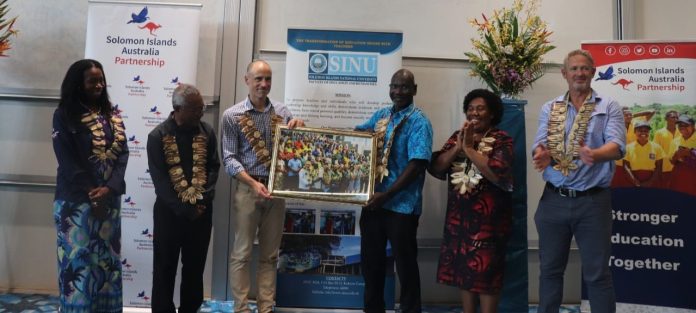
The Solomon Islands National University (SINU) and the Solomon Islands–Australia Partnership have launched a major new initiative to strengthen teacher training and improve education standards across the country.

The launching ceremony was held at SINU’s Panatina Campus Lecture Theatre on Wednesday, October 15, 2025.

The event brought together key representatives from the Australian High Commission, the Ministry of Education and Human Resources Development (MEHRD), Catalpa, and the University of Melbourne to celebrate a shared vision of preparing workforce-ready teachers who can deliver high-quality education to children across the nation by 2033.

Among those in attendance were Permanent Secretary of MEHRD, Dr Franko Rodie, Australia’s Deputy High Commissioner to Solomon Islands, the Dean of the Faculty of Education and Humanities, Dr Patricia Rodie, and SINU’s Pro Vice-Chancellor Academic, Associate Professor Dr Eric Katovai.

Speaking at the event Mrs Rodie described the partnership as “a true reflection of what can be achieved through shared vision, commitment, and collaboration”.

She highlighted the ongoing review of the Bachelor of Teaching (Pre-Service) curriculum and the design of a new Teacher Training Facility that aims to give trainee teachers more hands-on, practical learning experiences.

Pro Vice-Chancellor Katovai said the partnership marks “a milestone moment” for SINU and for teacher education in the Solomon Islands.

He said the initiative aligns closely with SINU’s Academic Master Plan 2026–2030 and national education priorities, emphasising quality, inclusivity, and innovation in teaching and learning.

“Although today we celebrate the launch, much has already been achieved.

“Through the Stronger Education Together (SET) initiative, our faculty has begun reviewing the teaching curriculum with support from Catalpa and the University of Melbourne, upgrading ICT tools for educators, and planning the development of a state-of-the-art Teaching Laboratory at SINU,” Katovai said.

The new Teaching Laboratory will simulate real classroom environments to help trainee teachers bridge the gap between theory and practice.

The partnership will also focus on strengthening mentoring systems, building research capacity, and supporting SINU to generate locally relevant evidence to inform education policy and practice.

The launch concluded with the unveiling of the partnership photo, student performances, and closing remarks by Dr John Sisiolo.

Rodie said the day was not just the beginning of a program, but strengthening of a commitment — to our teachers, to our children, and to the future of education in the Solomon Islands.

Photo: SINU

For feedback, contact: [email protected]

Failed sanitation project raises concerns

0

BY BEN BILUA
Gizo

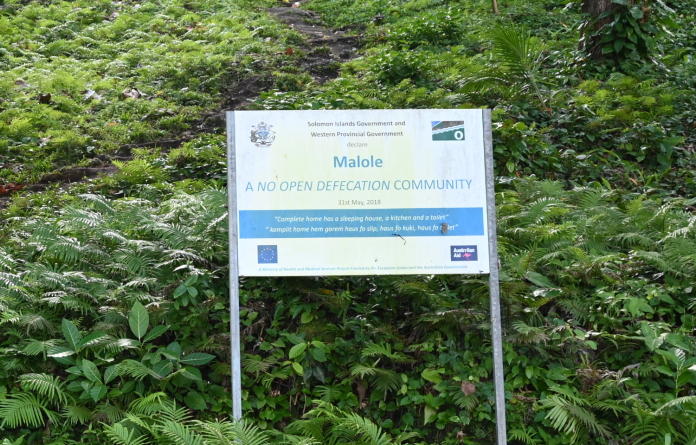
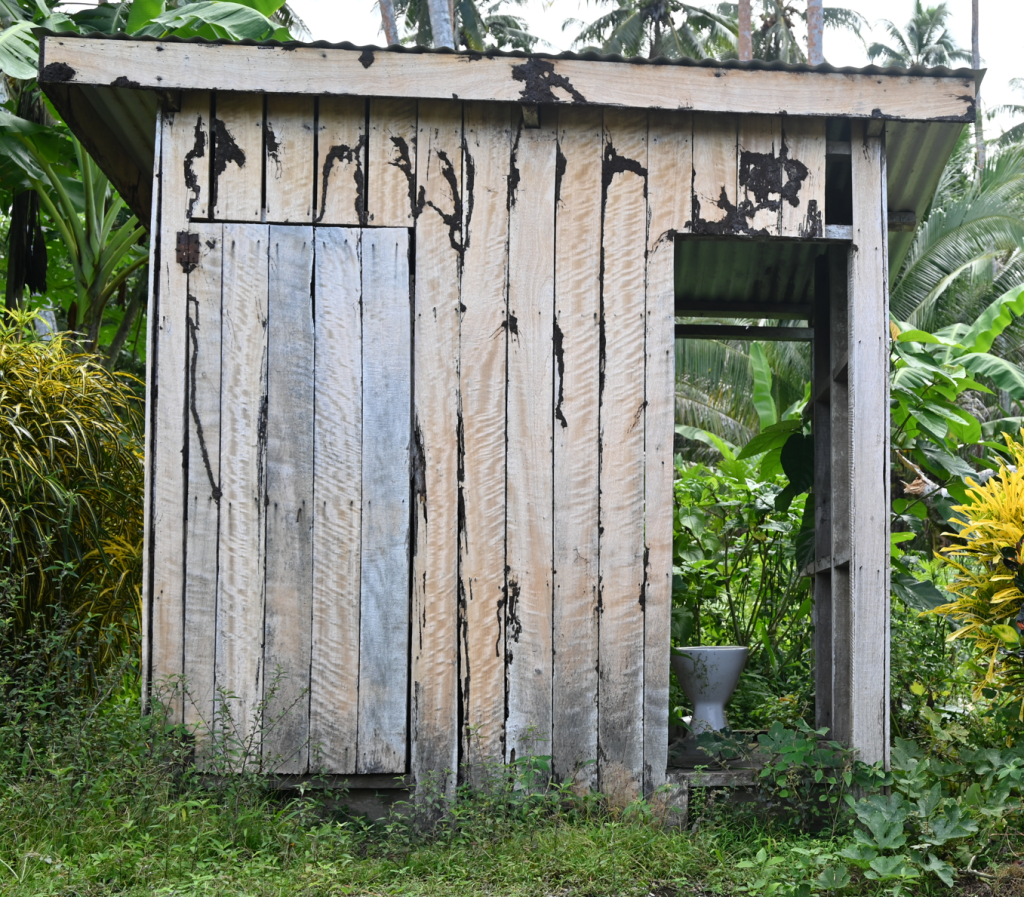
A sanitation project that aims to eliminate open defecation in Marava community, Ranongga Island, Western Province, has come under heavy criticism for being incomplete and ineffective.

Three years after the initiative was launched, residents say the project to make Marava a “No Open Defecation” zone has failed to achieve its goal due to the lack of water supply.

In an exclusive interview with Island Sun, community member Denty Aqolo expressed frustration, saying that while toilet houses were built, they remain largely unusable.

“This is the reason why I said the project is incomplete. These people constructed flush toilets, but there is no water supply. How can we use these toilets without water?” Aqolo questioned.

He said residents are forced to carry water from nearby streams just to flush the toilets – a daily burden that defeats the project’s purpose.

“This development adds to our hardship instead of solving the problem,” Aqolo added, calling for future projects to include proper water infrastructure.

He also said the Marava Community has no water supply so people use a nearby stream to collect water.

Aqolo said there are potential water sources close to Malole village suitable to provide enough water for the community.

He calls on other donor partners to help his community with a water supply project.

Niubare Community Chief, Rodrick Tikera, shared similar concerns, noting that many of the toilets built under the same initiative in his community also lack water connections.

“I don’t know what happened to the project. It’s been over three years now and no one came back to finish it,” he said.

Speaking on behalf of Niubare and Marava women, Magaret Tikera said keeping a household without proper water supply is a huge challenge.

She said women have to walk to the streams to collect water for cooking, drinking and also for the toilets.

“It has been very difficult and painful for us women to do this job every year. Sometimes I wonder whether there is a government or leaders to help us,” Tikera said.

She said water is important not only for the toilets but for daily household chores.

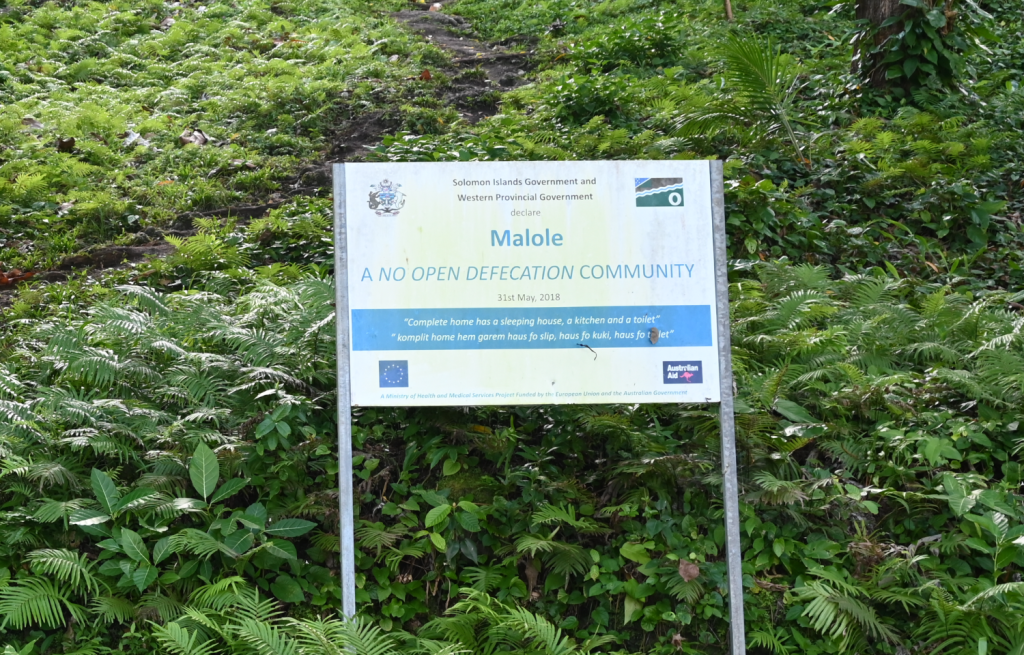
A billboard at Malole village identifies the project as being funded by Australia Aid and the European Union, with support from the Solomon Islands Government and Western Provincial Government.

The Marava case highlights a broader issue that while donor-funded projects are often rolled out across Solomon Islands, questions remain about their planning, implementation, and long-term sustainability.

*Reporting for this story was supported by Pacific Media Assistance Scheme (PACMAS)

For feedback, contact: [email protected]

Public Service Bill 2025 aims to revitalise public sector: Ghemu

0

BY SAMIE WAIKORI

The Minister for Provincial Government and Institutional Strengthening and Member of Parliament for Ranongga Simbo, Wayne Osopo Ghemu, says the Public Service Bill 2025 will revitalise and bring greater clarity to the public service in Solomon Islands.

Speaking during the second reading debate of the bill in Parliament last week, Minister Ghemu described the legislation as comprehensive, both in the institutions it establishes and the principles it upholds.

“In terms of structure and content, this bill is miles ahead of the outdated Public Service Act of 1988.

“The new Public Service Bill provides for an independent, high-performing public service, and establishes a modern legal framework for organisational structure and remuneration,” he said.

He added that the bill promotes greater accountability and transparency in public service governance.

Ghemu further noted that the legislation clearly outlines the responsibilities of key public service institutions, including the Minister, the Public Service Commission, Permanent Secretaries, and other related bodies.

In addition, the bill defines the rights and obligations of public servants and sets out mechanisms and principles to ensure uniform employment and management practices. These practices are to be based on core values such as merit, fairness, and equal opportunity.

“Alongside these value-based principles, the bill must also embrace the value of trust. Trust is essential for safeguarding public servants, especially in the context of service delivery and good governance,” he emphasized.

He affirmed that the objectives of the bill are well-aligned with its substantive provisions, highlighting a strong consistency between the bill’s intent and its content.

Photo: Supplied

For feedback, contact: [email protected]
LESSON FOR GOVT

0

Despite billions in funding, PM Manele questions if enough has been invested in our people

BY NED GAGAHE

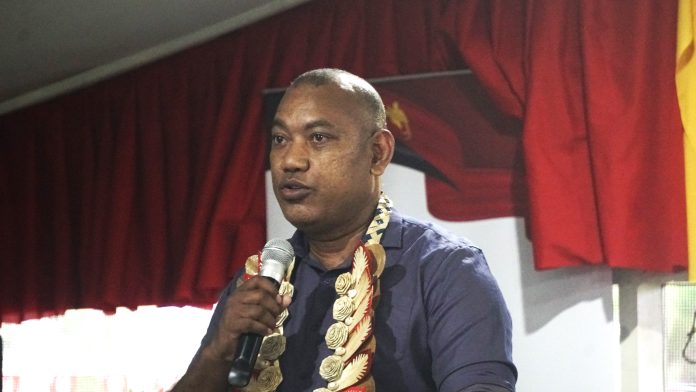
Prime Minister Jeremiah Manele calls for deeper reflection on how national development funds are being used, questioning whether the country has invested enough in its people despite billions poured into infrastructure and growth projects.

Speaking during the launch of the National Development Strategy (NDS) Medium-Term Review Report last week, Prime Minister Manele revealed that between 2016 and 2021, a total of SBD 13.6 billion was committed to advancing the nation’s development priorities.

Of this, 65 percent (SBD 8.8 billion) came from development partners, while the Solomon Islands Government contributed 35 percent (SBD 4.8 billion).

Breaking down the figures, the Prime Minister said 54 percent (SBD 7.4 billion) went towards economic growth initiatives, 22 percent (SBD 2.95 billion) to poverty alleviation and rural development, 13 percent (SBD 1.8 billion) to governance and public order, 9 percent (SBD 1.2 billion) to health and education, and only 2 percent (SBD 237 million) to environmental sustainability.

“These numbers tell a story. They show we have prioritised economic infrastructure, roads, ports, and buildings, but its translation to real economic growth has been very thin,” the Prime Minister said.

He added a sobering question: “Have we invested enough in our people? In their health, their education, and their environment?”

Mr Manele said the findings of the review provide important lessons for the government to act upon.

“So, what do we do now? Do we throw up our hands in despair? Do we blame COVID-19, blame climate change, or global forces beyond our control? No, we take responsibility,” he declared.

He said the Government for National Unity and Transformation (GNUT) is already taking decisive steps, guided by four key pillars, Economic Transformation, Infrastructure Development, Unity and Stability, and Human Capital Development.

The Prime Minister added that the NDS Review outlines five strategic priorities to guide the nation’s path forward, with recommendations under each of the five NDS objectives to ensure that future investments better reflect the needs of Solomon Islanders and deliver tangible improvements in their daily lives.

For feedback, contact: [email protected]
The long walk for education

2

BY BEN BILUA
Gizo

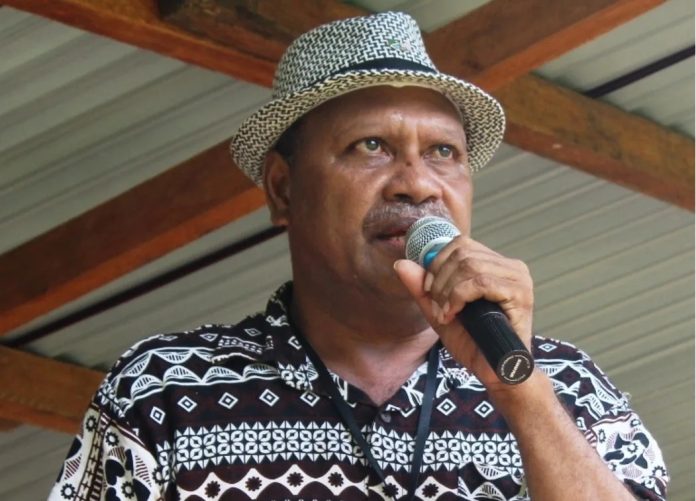
Education slogans like “access to better education,” “education for all,” and “inclusive education” sound noble and inspiring but for the children of Marava and Niubare communities on Ranongga Island, Western Province, those words ring hollow against the harsh reality of their daily lives.

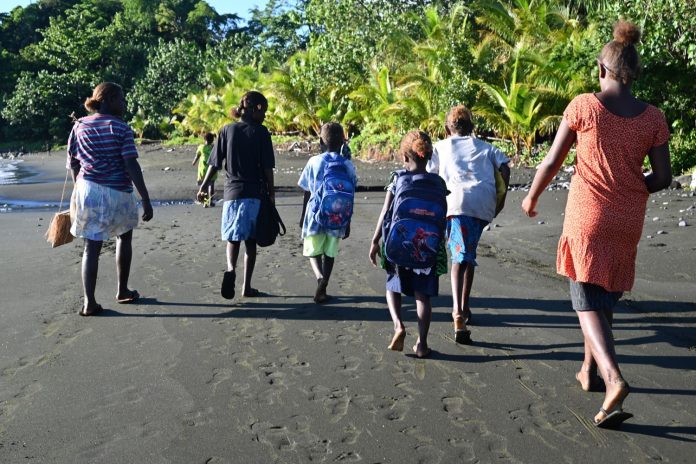
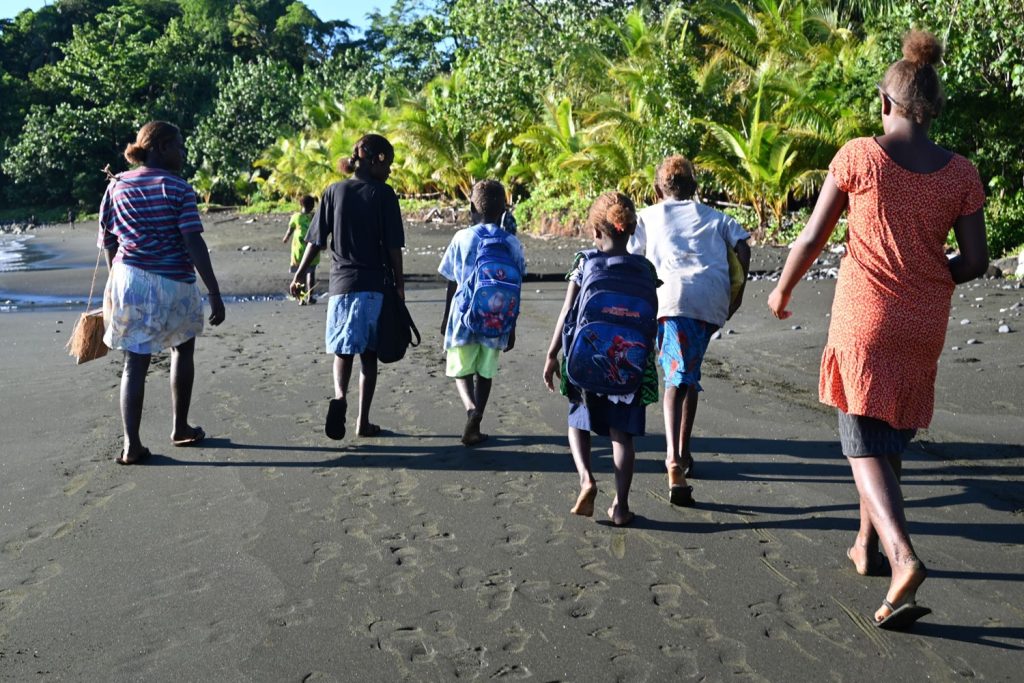
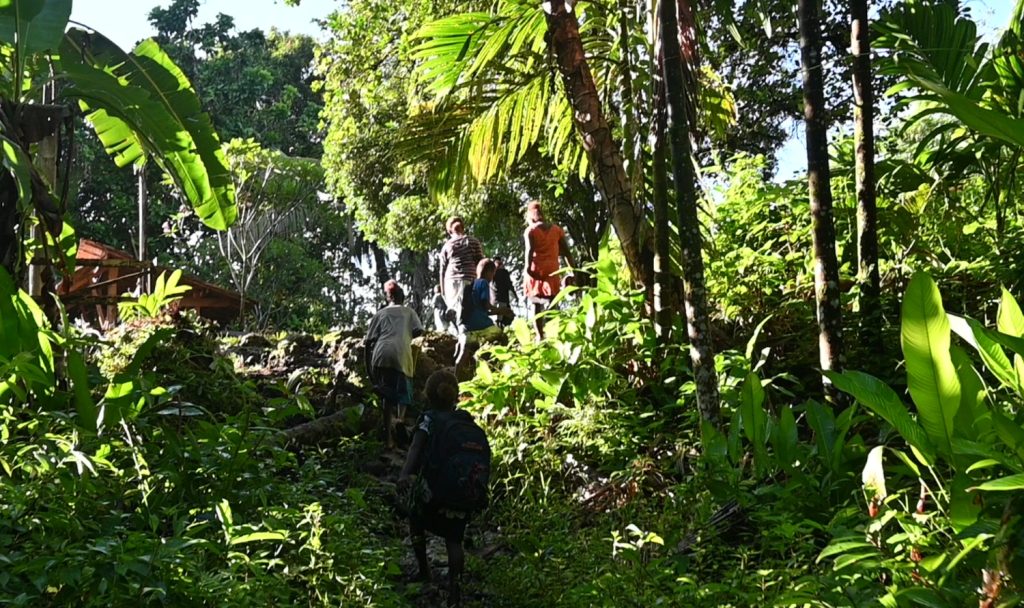
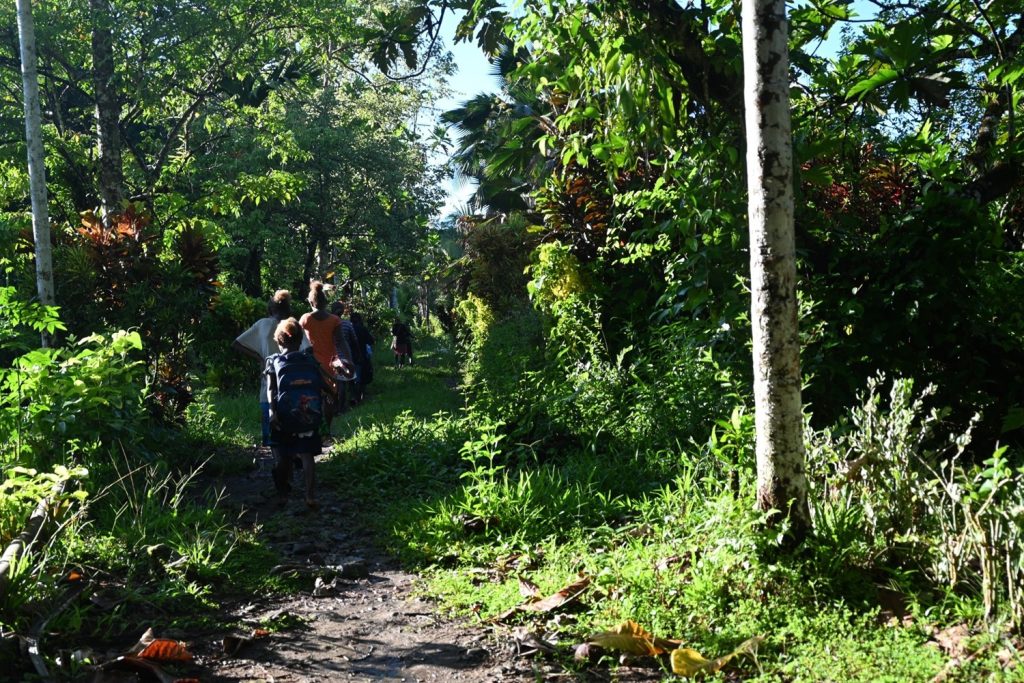
Every morning before sunrise, children lace up worn-out slippers or go barefoot for a two-and-a-half-hour journey to Pienuna Primary and Secondary School.

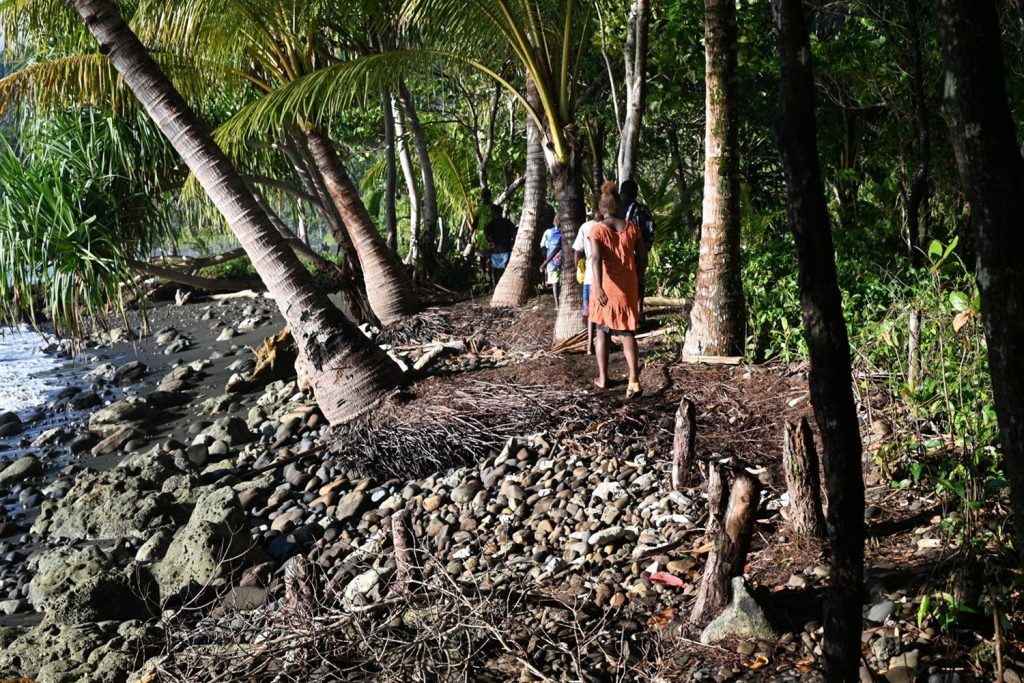
Along the way, they cross four rivers, climb treacherous slopes, and tread over sharp rocks that have bruised and bloodied countless feet. Some never make it to class; others return home with tears and injuries after slipping on the unforgiving terrain.

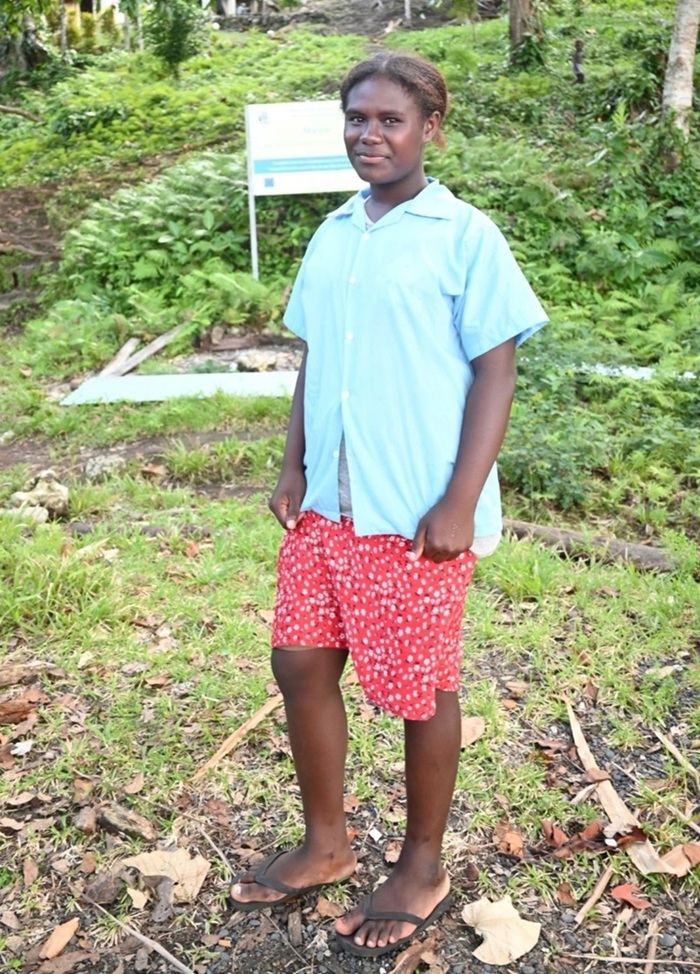
For 14-year-old Larrender Goletaru, this is a path of both pain and purpose. She has walked this same road for the past seven years, the same road her aunt, Mabent Sidu, once took three decades ago.

“I wake up every morning at 5:30, get ready, eat breakfast if I’m lucky, and start trekking.

“Sometimes heavy rain meets us mid-way, and we hide under coconut trees. When my books and uniform get soaked, I just turn back home,” Goletaru shared softly.

When the rivers flood, students rely on community canoes, fragile wooden canoes that sometimes capsize, forcing them to swim back to safety.

Hunger, too, is a constant companion.

“Sometimes I walk to school with an empty stomach. If my parents have no money, I just go without food until 4 p.m.,” she said.

“But I keep going because I believe education is my way out. If I quit, all my parents’ sacrifices will mean nothing,” Goletaru added.

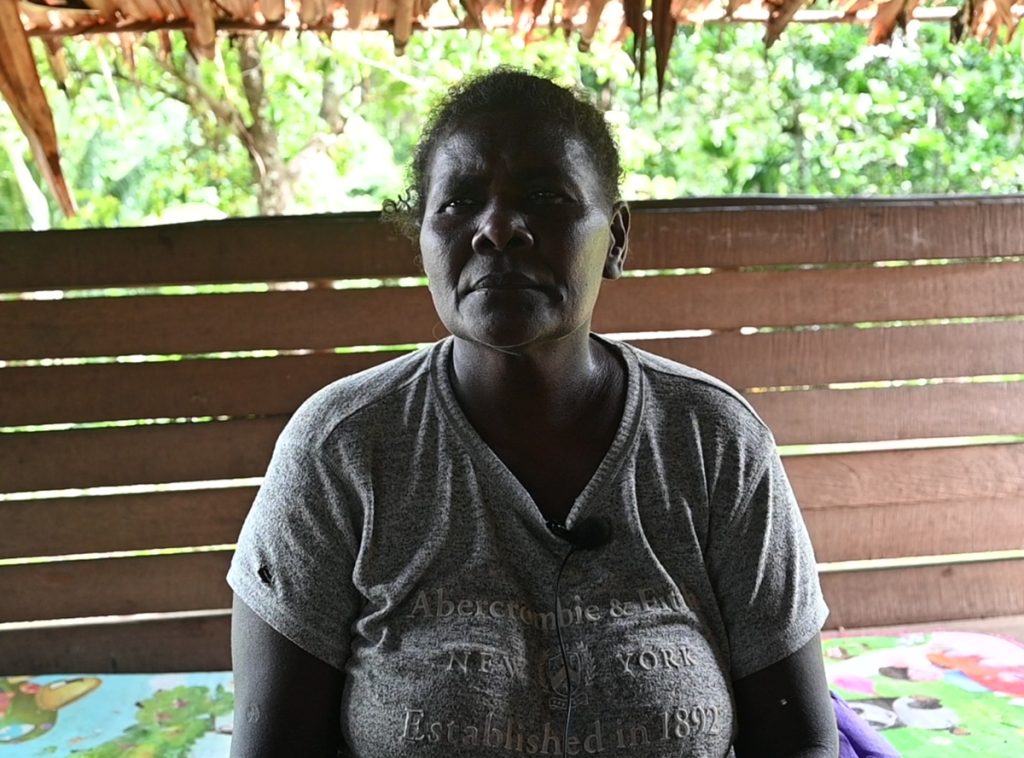
Her aunt, Mabent, knows that pain too well. Once a determined student herself, she gave up her schooling after years of struggle.

“Our parents wanted us to succeed, but the suffering was too much,” Mabent recalled.

“Now, seeing my niece walking the same road, it breaks my heart. We parent still struggle to support our children, sometimes they leave home with no breakfast, no lunch, not even a coin for food,” she said while her eyes socked with tears.

For elders like Denty Aqolo of Marava, watching the children pass by each morning is both pride and sorrow.

“I see them walk past my house every day,” he said quietly.

“It hurts to watch, but what can I do? I’m just a village elder. The government must come and see for themselves, see our pain and feel our struggles,” Agolo said.

In Marava and Niubare, education is not just a right, it’s a test of endurance, courage, and faith.

These children carry not only their schoolbags but the hopes of generations who still wait for fairness in the distribution of basic services such as education and health.

Until that day comes, they will keep walking, across rivers, through rain, and over rocks, chasing a dream that, for now, feels as distant as the classroom they struggle to reach.

*Reporting for this story was supported by Pacific Media Assistance Scheme (PACMAS)

For feedback, contact: [email protected]
SICTU, ACTU slam Australia’s backflip on 30-hour work week for Pacific workers

0

BY NED GAGAHE

The Solomon Islands Council of Trade Unions (SICTU) has expressed deep disappointment over the Australian Government’s decision to revoke its commitment to a 30-hour work week for Pacific Islands workers under the Pacific Australia Labour Mobility (PALM) scheme, a move described as a betrayal of Pacific partners and workers’ rights.

SICTU in a strong statement said the reversal represents not just a policy change, but “a significant setback for workers’ rights and a breach of trust that undermines the very spirit of partnership” the PALM scheme was built on.

SICTU National Secretary Adrian Tuhanuku said the decision effectively abandons Pacific workers who contribute to the Australian economy under challenging conditions.

“Our counterparts at the Australian Council of Trade Unions (ACTU) have rightly fought for Pacific workers to receive the same standard working conditions as their Australian counterparts,” Mr. Tuhanuku said.

“The 30-hour work week was a hard-won victory for fairness and dignity. Its revocation is a betrayal of that progress and leaves our workers vulnerable once again.”

He said the policy reversal maintains the outdated 120-hour monthly average, a loophole that allows employers to vary work hours from week to week, often resulting in long periods of underemployment and lost income.

“This decision prioritises employer flexibility over the physical and mental health of our workers.

“It risks institutionalising a lower standard of working conditions for Pacific workers doing the same jobs as Australians,” Tuhanuku said.

SICTU also criticised the timing of the announcement, just weeks before the Pacific Australia Labour Mobility General Meeting scheduled to take place in Honiara from 3–6 November, calling it “disrespectful and diplomatically insensitive.”

“To make such a unilateral decision on the eve of a meeting to be hosted here in our capital, where we are meant to engage as equal partners, is a severe diplomatic misstep,” Tuhanuku said.

SICTU has called on the Solomon Islands Government to raise the issue at the highest bilateral level with Canberra and seek an official explanation from the Australian Federal Government, noting that the reversal has not been announced on the official PALM scheme website.

The Australian Council of Trade Unions (ACTU) also condemned the Albanese Government’s decision, warning that more than 14,000 PALM workers across the Pacific will be worse off every year as a result of the policy backflip.

In a media release issued on 15 October 2025, ACTU said the government’s move to abandon the guaranteed 30-hour work week “is a backwards step for workers’ rights in Australia.”

“Employers can hold the PALM program to ransom by threatening to use backpackers instead of PALM workers every time changes are made to prevent exploitation,” ACTU President Michele O’Neil said.

“Workers’ rights should not be discounted for migrant workers. The Government must take extra steps to protect these vulnerable workers and ensure they are not exploited on this program.”

ACTU said that without a weekly minimum, PALM workers could again face situations where they work insufficient hours to meet living costs or repay debts for accommodation and transport — deductions often controlled by their employers.

The union movement in both countries is urging the Australian Government to reinstate the 30-hour minimum by April 2026, as originally promised, and ensure transparency and consultation with Pacific governments and trade unions in future decisions.

Both ACTU and SICTU reaffirm their support for the PALM scheme as a mechanism for mutual benefit and skills development, but stressed that its credibility depends on fair and equal treatment for Pacific workers.

“The PALM scheme must continue to be a vehicle for mutual benefit and shared prosperity, not a source of exploitation and broken promises.

“The Australian Government must reverse this decision and honour its commitment to fair work for our people. The credibility of the entire scheme among Pacific workers depends on it,” Tuhanuku said.

For feedback, contact: [email protected]