THE Auki murder suspect into the FE Travellers motel death incident of December last year has appeared for the second time before the Auki magistrate court on Monday this week.
The case was adjourned for May 29 to allow for a preliminary inquiry to be carried out by investigators.
The preliminary inquiry will lead to the admission and confession by the two witnesses of the murder case, the court highlighted.
Suspect Prudence Buia will again appear on May 29 at the Auki Magistrate court.
The suspect was arrested towards the end of April by the Auki police and was remanded at the Auki correctional centre in Auki.
Police have applauded both parties to the incident for remaining calm and allowing police to carry out their investigations.
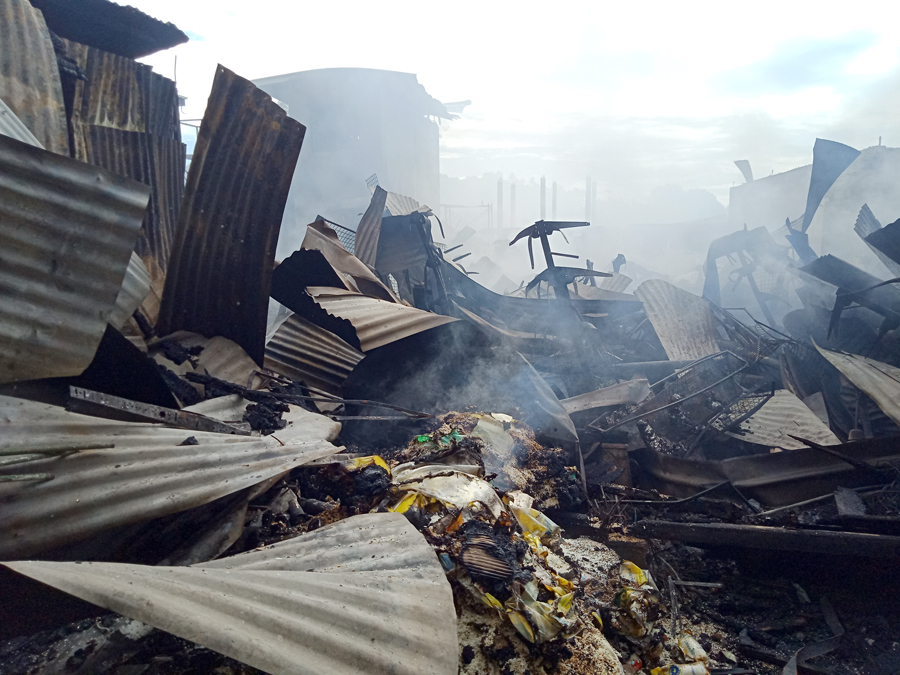
This is what is left of the ABA corporation store in Chinatown after Thursday morning’s fire.
Aba Corporation promises return after devastating fire
BY ALFRED SASAKO
This is what is left of the ABA corporation store in Chinatown after Thursday morning’s fire.
SOLOMON Islands lost a huge part of its commercial history last night, when an early morning fire destroyed the Aba Corporation’s 68-year-old shop and warehouses in Chinatown.
Nothing could be saved as the flames with intense heat quickly spread through the timber structure. Large stocks valued at millions of dollars were destroyed.
Quick action by fire fighters helped stop the fire from spreading to nearby buildings. Marks left by the intense heat could still be seen on brick walls of nearby buildings with blackened windows.
Yesterday only the smouldering remains of the building that once housed the Aba Corporation Business Empire remained. The scene resembled that of a huge explosion. Remains of burnt out can food were strewn all over what was once the entrance to the popular shop.
Island Sun yesterday visited the smouldering remains of the three buildings – two warehouses at the back and the popular shop at the front. It was a sorry sight.
It was a devastating experience for the Aba family, but it may not be the knockout blow as the family has vowed to rebuild.
“We will be back,” a distraught member of the Aba family who wished to remain anonymous, told Island Sun yesterday outside the site where the Aba Corporation once stood.
Three generations of the Aba family once lived here – the parents of their parents, their own parents and the children, now all grown up, but still regarded the building as their family home.
Fire inspectors are expected to start shifting through the ruins today in their search to establish the cause of the fire.
Fire fighters suffered their first setback yesterday, when the fire hydrant in Chinatown was allegedly turned off, according to people who evacuated from nearby buildings in the early hours of yesterday morning.
“The fire tank truck had to travel back to Rove to get water for the three fire engines which fought the flames that had engulfed the building,” a member of a family that lived in a nearby building told Island Sun.
“Fire fighters did a fantastic job, but their efforts were hampered by the fact that the water hydrant in Chinatown was turned off. We merely bundled our kids and drove out from our house because the heat was quite intense,” the man said.
An official from the Solomon Islands Water Authority (SIWA) told Island Sun last night that as far as he knew the fire hydrant near Quan Chee Motors in Chinatown was operating.
Insurance people are also expected to start assessing the damage. Police have cordoned off the area.
The fire which reportedly started around 4am had completely destroyed what the Aba family of three generations had built shortly after the Second World War.
The Aba Corporation building was one of just three timber structures, which survived the destruction of the ethnic tension and the 2006 unrest which destroyed many of the shops in Chinatown.
The other two buildings are the QQQ and Dr Kwan’s building, also in Chinatown. Now that Aba Corporation is gone, there are only two timber structures left.
Some observers said one of the reasons the Aba Corporation stood out amongst the people of Solomon Islands was because while everyone else closed up shops and left during the ethnic tension, Aba Corporation remained open throughout.
“The people of Solomon Islands see Aba Corporation as one of theirs. That is why Aba Store as the company is commonly known throughout Solomon Islands was very popular.
“The destruction of the Chinatown shop is a great loss, not only to the Aba Corporation but also to the businessmen and women and ordinary folks who had come to know the Aba family,” one observer said last night.
MORE than 30 public service officers underwent the Gender Mainstreaming and Sensitisation Workshop for Human Resources Managers and Gender Focal Points yesterday.
The one-day workshop at the Rock Haven was aimed to enhance understanding on gender focal point (GFP) on gender, gender mainstreaming and functions for GFPs in the Public Service.
The workshop also aims to encourage critical conversation on gender inequalities in the public service, in policies and programmes, and equip GFPs with basic gender analysis tools and skills for gender mainstreaming work in their respective ministries.
The aim is to prepare GFPs to support the MPS Gender Adviser to implement activities under the SIG PS Transformation Strategy, Strategic Thrust 6 – Sensitising Gender in Governance.
Permanent Secretary for the Ministry of Public Service Mr Nego Sisiolo said yesterday’s workshop signifies the beginning of the process of formalisation of the gender focal point system within the Public Service.
He adds, such was timely and relevant within the Ministry of Public Service because organising such events comprises of public servants, directly translates real and tangible action in the Solomon Islands Public Service Transformation Strategy 2017 – 2021.
“A fundamental argument for increased representation of women in public service is that when the composition of the public sector reflects the composition of the society it serves, government will be more responsive and effective,” he adds.
Sisiolo said closing gender gaps in public administration is important to ensuring truly inclusive development and democratic governance.
“The issue of gender inequality within our Public Service is very striking and cannot be ignored,” Sisiolo said.
Ministry of Women, Youth, Children and Family Affairs said Women’s Development Division (WDD) within MWYCFA continues to implement activities in the National Gender Equality and Women’s Development Policy 2016 – 2020 (EVAW).
To achieve the gender mainstreaming, WDD with relevant stakeholders set actions to gender sensitise corporate and human resources policies of the Solomon Islands Government.
The workshop is organised by the Ministry of Women, Youth, Children and Family Affairs and the Ministry of Public Service.
VILLAGERS from Anorara to Taba’a, ward 15 in East Malaita, will soon experience the benefit from the road being constructed towards their communities.
Provincial member for ward 15, Martin Aniana said the eight kilometre road has only 1km left to reach Taba’a, which is also close and easier to connect with the Okwala road in central Kwara’ae.
It is said that the hardships that used to be faced with transport during marketing and going to the clinic will be solved.
“In the past our villagers have to walk eight kilometers to reach transports and area health centres for medical attention.
“But today transport services have reached our communities in highlands in east Malaita.
“Through our working together with the landowners and our member of parliament Hon Manasseh Maelanga makes things easier for our people.
“I appeal to all members of Parliament to work closely with the provincial ward members in terms of development in our constituencies and meet the cries and heartfelt needs of our people back in our rural areas.
“It’s our long term plan to develop east malaita constituency through infrastructures and other developments in the future and we are almost achieving it.
“Maelanga is the key contributor towards this project for his own people in East Malaita,” Aniana revealed.
TAIWAN Technical Mission (TTM) has propagated more than 100,000 vines to local farmers in the Guadalcanal Plains.
After seven months of hard work with the Tetere Beach Farm and communities across the Guadalcanal Plains, Taiwan’s Embassy through TTM has increased propagation of sweet vines to 100,000.
The vines are estimated to be planted in more than three hectares with the aim to improve sustainability of sweet potato production to GP local farmers and target communities TTM has worked with.
TTM said the success of the Taiwanese method of planting potato came about after farmers witnessed for themselves the high yield attained from the introduced method.
Since then, TTM has worked closely with Mr Samuel Basoi, one of the local farmers who own the Tetere Beach Farm.
After seeing the success of the Taiwanese method, Basoi encouraged the Tetere community to venture more into farming particularly sweet potato.
He appreciated knowledge and skills acquired from the TTM saying such have guided them with useful farming techniques.
“We thank the help from Taiwan to guide us the farming technique. Crop science can raise the quality of food, health and life, Agriculture is just like a new weapon in this era.”
TTM Officer Mr Charles Huang said, “We still have a lot of works to improve the propagation, at least we can ensure the amounts of kumara vine are enough for farmers within 5km radius.”
He urges local farmers around the country to call in at the Tetere farm with their request, including how many vines they need, and arrangements can be done.
Deputy Secretary Health Improvement, Ministry of Health and Medical Services Dr Nemia Bainivalu
BY BARNABAS MANEBONA
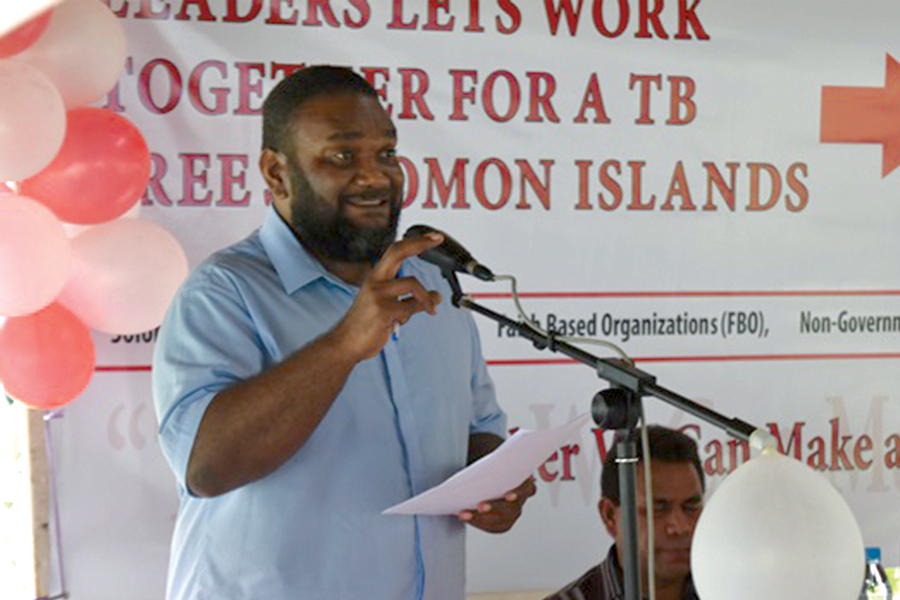
UNDERSECRETARY for Health Improvement under the Ministry of Health and Medical Services (MHMS) Dr Nemia Bainivalu recently said more efforts are still needed to fight Tuberculosis (TB).
This is because the disease still represents a public health problem in the country.
Solomon Islands has reached the WHO Western Pacific Region’s goal to reduce by half the morbidity and mortality from all forms of TB by 2015, relative to 2000 levels.
“In this respect, MHMS has already undertaken a strategic prioritization of high impact interventions aimed at addressing the remaining challenges in the framework of a country dialogue which led to the planning of high impact activities focusing on high burden geographic locations and key populations affected by the disease,” said Bainivalu.
“These interventions have been included in the TB National Strategic Plan 2018-80, which was developed in 2017.
“The immediate purpose of the interventions is to ensure universal access to TB care and prevention through improving institutional and human capacity within the health system, empowerment and involvement of communities with meaningful patient support, collaborative activities with other disease programs including child and mother health, and engagement of all health care providers beyond the TB programme and the public sector.”
He added that their ultimate goal is to speed up the current decline of the burden of the disease so as to reach the internationally agreed targets in the framework of the ‘End TB Strategy and the Development Goals’.
World Health Organisation’s (WHO) representative Mr Dilip Hensman during the recent 2018 celebration of World TB Day said that ending TB will only be achieved with greater collaboration within and across governments, partners from civil society, communities, researchers, the private sector and development agencies.
“This means taking a whole of-society and multidisciplinary approach in the context of universal health coverage,” said Hensman.
SANTUPAELE community in Kolombangara Island stands to benefit from a newly built school building supported and funded by the Rural Development Project (RDP).
The official opening and handing over of keys to the building was held at Santupaele village yesterday.
A Mr Adrian Atitao told Island Sun Gizo from Santupaele earlier this week, the handover marks a milestone for Santupaele and surrounding communities.
He adds that the school building stands to benefit the community now and in the future.
“Our thanks to RDP who assisted a lot in the completion of the building for our children.
“The new school building will improve and develop our children’s learning in school and we are proud owners of the new school building that will cater for our young children who always victim to seek schools daily, paddling to Kukudu and Varu,” said Atitao.
He said the school will provide Early Childhood (ECE) and Primary, although it has plans to move to class six.
THE wish to have more women in parliament is being blocked by a number of barriers, it is reported.
These barriers are stated in the National Gender Equality and Women’s Development Policy 2016-2020, of the ministry of women (MWYCFA).
It reports that Young Women’s Parliamentary Group found during a training in 2014 that most people support the idea – but in theory only.
It was noted that despite the high support, only a few actually voted for women candidates.
One of the highlighted disadvantages cited is the prevailing practice of vote-buying, since women tend not to indulge much in the habit as compared to men.
Another problem is how most cultures prefer male leadership over females’.
Interestingly, there is a general tendency among voters to simply avoid voting for a candidate who is perceived to have a very low chance of winning.
A MWYCFA report in 2015 reveals that there is little progress in increasing the participation of women in decision making and leadership.
While the number of women in senior occupations has increased, the number of women in managerial posts has decreased.
The Solomon Islands Government recognises that intervention cannot only be targeted towards women’s representation in national parliament but also in the number of women in formal employment.
The achievement of equal participation of women and men at all levels of decision making, governance and leadership requires a complete approach to addressing the barriers to women’s participation and representation in the first place.
In this instance, that Solomon Islands Government recognises the important role played by civil society organisations at the provincial and local level to encourage and raise awareness on the right of women to participation and representation in public life.
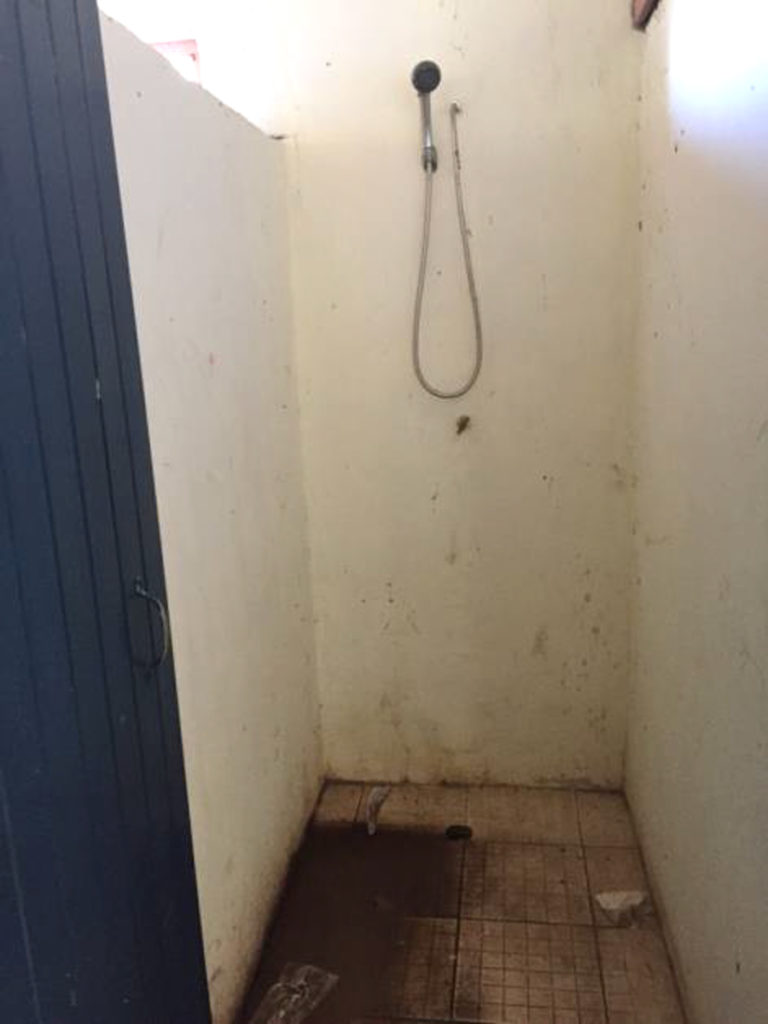
Where shower facilities lack privacy and cleanliness, girls and women prefer to attend to their hygiene needs at home
BY GEORGINA KEKEA
Where shower facilities lack privacy and cleanliness, girls and women prefer to attend to their hygiene needs at home
WITH the increase of preventable diseases, a timely research was conducted in 2016 on the menstrual hygiene management in the Pacific.
Titled the Last Taboo: Research on menstrual hygiene management in the Pacific, the report speaks volumes of the challenges women and girls in the Solomon Islands are faced with in regards to Water, Sanitation and Hygiene (WASH).
The report revealed that WASH facilities in schools, workplaces and public places are inadequate to meet the needs of menstruating girls and women.
Challenges includes lack of water for handwashing and personal hygiene, poorly maintained facilities lacking in privacy, lack of available options for the safe disposal of soiled sanitary items.
Inadequate WASH facilities contribute to unhygienic menstrual management practices (such as improper disposal of soiled materials), or the preference to return home to change soiled materials- and is likely a factor in absenteeism.
For Solomon Islands, women and girls aged 15-54 years makes up more than 27 percent of the total population.
Water, sanitation and hygiene access is some of the lowest in the region with only 54 percent of the population have access to basic water sources and only 13 percent have access to basic sanitation.
This study revealed how managing menstruation hygienically, effectively and with dignity can be challenging for girls and women in low and middle-income countries like Solomon Islands.
From research gathered in the report it is evident that government, communities, school authorities, stakeholders and employers needs to increase their support and understanding to provide basic WASH facilities for women and girls.
On the outset, Australia in its 2017 Foreign White Paper Policy has promised to share its water management expertise to help enhance agricultural productivity, improve health outcomes, strengthen economies and reduce poverty.
Also through the membership of its Prime Minister in the United Nations/World Bank High Level Panel on Water, Australia is optimistic that it will be able to assist its neighbours in this initiative.
In the White Paper, Australia says it will deliver $100 million ‘Water for women’ programme over seven years (2017 – 2024).
This is to improve water access, sanitation and hygiene practices across the Indo-Pacific region.
The ‘Water for Women’ programme is in response to evidence that gender approaches to WASH can contribute more effectively and be sustainable in WASH outcomes as well as improvements in women’s and girls’ well-being and offer an entry point to facilitate changes in gender relations, norms and attitudes.
Gender equality and social inclusion are central to the Water for women programme.
This will help ensure that women and girls have equal opportunity, representation, work and involvement in WASH programs, and benefit equally from their outcomes.
Advancing gender equality through implementation of Sustainable Development Goal 6 – the Water Goal – will see a world where women and girls do not bear the time burden of walking long distances every day to collect water for their families, where fewer babies die as a result of mothers giving birth in unhygienic health care facilities and girls no longer miss school because there are no appropriate menstrual hygiene management services.
The Water for Women Fund will work with civil society organisations (CSO) on innovative ways to improve water, sanitation and hygiene, focusing on women, girls and people with disabilities in the poorest human settlements. The Fund will also support a WASH research programme.
The Water for Women programme is part of Australia’s commitment to the High Level Panel on Water.
The High Level Panel on Water is committed to ensure availability and sustainable management of water and sanitation for all which is Sustainable Development Goal (SDG) 6, as well as to contribute to the achievement of the other SDGs that rely on the development and management of water resources.
SOLOMON Power in Gizo is said to continue with its set-up and connection of power lines towards west Gizo.
This resumption follows a memorandum of agreement between landowners of Niumada and Titiana and Solomon Power and the Western provincial government on April 24, 2018.
Solomon Power had previously connected powerlines but was halted by Niumada landowners in 2016.
With the agreement, Settlements as far as Saeraghi stand to benefit and have power when the project is completed.
Provincial secretary Jeffery Wickham thanks the landowners of the two communities for the agreement established with the two authorities.
He also acknowledges the support provided by Atkin Kamaka, Chairman of Government Caucus and MPA for ward 19, North Rendova leading up to the signing of the agreement.