Home Blog Page 1359

3 components for airport facelift

0
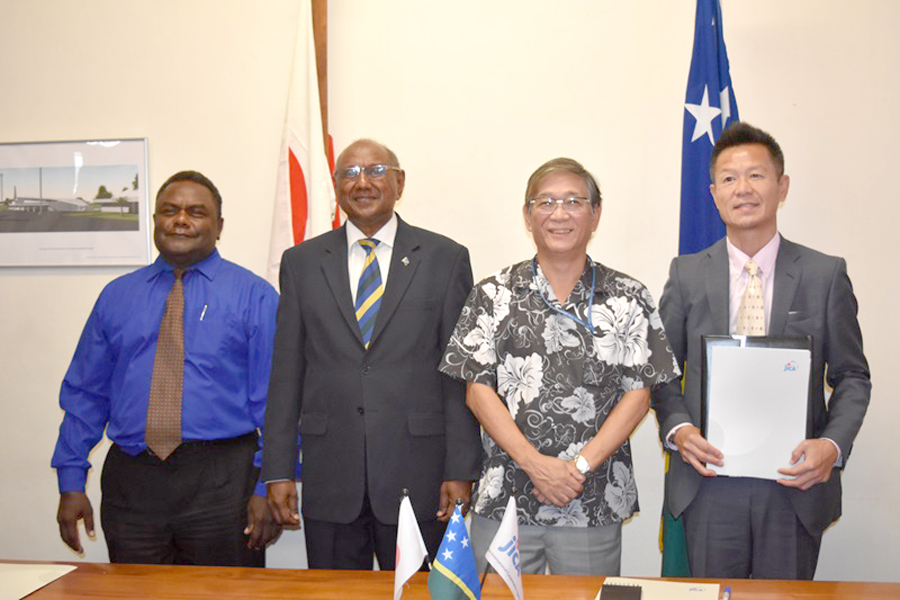
L-R PS for Ministry of Communication and Aviation Mr Moses Virivolomo, Minister Milner Tozaka second left, Japan Ambassador HE Shigeru Toyama and Mr Takashi Tayama Chief Representative of JICA, PNG Office

BY LYNTON AARON FILIA

IMPROVING the Honiara International Airport is designed into three components aimed to enhance airport convenience for both International and domestic terminal.

Last week, Chief Representative for the Japan International Cooperation Agency (JICA) Office in PNG, Mr Takashi Toyama the first component targets the expansion and rehabilitation of buildings and construction of a new international departure terminal building.

The existing international passenger building will be renovated to accommodate domestic passenger terminal and international arrival terminal, he adds.

Toyama said such new arrangements are expected to boost the convenience of passenger between international and domestic terminal and to contribute to the tourism industry.

The second component provides various special equipment and facilities necessary for the improvement of airport operation and safety.

L-R PS for Ministry of Communication and Aviation Mr Moses Virivolomo, Minister
Milner Tozaka second left, Japan Ambassador HE Shigeru Toyama and Mr Takashi
Tayama Chief Representative of JICA, PNG Office

The third component will cover civil work in which the current aprons will be equipped with four spots of international aircrafts and six spots of domestic.

There will also be a new taxiway constructed with current taxiway renovated.

The improved airport has two taxiways and will realise the smoother traffic in the airport in which two taxiways are separately allocated to inbound and outbound aircraft.

Improving the Honiara International Airport Mr Toyama said they expect a drastic reduction in the waiting time of taxiway evacuation.

He said JICA targets early 2019 as the commencement of implementation of the project.

Toyama said they would like to emphasise the importance of Solomon Islands government’s active engagement in the speedy realisation of prerequisite obligation of the government.

He said selection of quarry site and contract for crushed stone production is their concern and disposal of UXO is critical condition for launching the project.

Minister for Ministry of Foreign Affairs and Trade Mr Milner Tozaka thanked the Government and people of Japan for such as tangible project which will bring another facelift to international gateway to Solomon Islands.

“I wish to reiterate our gratitude to your government for the assistance rendered and please be assured that my government will ensure that this project reaches its completion,” Tozaka said.

$350M cost to taxpayers

National Parliament of Solomon Islands

MPs begin drawing funds under Constituency Machinery Grant

BY ALFRED SASAKO

MORE details have emerged about the Constituency Machinery Grants (CMG), the monster being created to return MPs at the next national general election early next year.

Island Sun was given a comprehensive brief on the CMG following its expose last week, that donors may be unknowingly funding official corruption.

Sources told Island Sun that the National Transport Fund (NTF) co-funded by Australia, New Zealand and the Asian Development Bank (ADB) is safe.

“The NTF has a tight set of guidelines controlled by donors so it is pretty safe,” the sources said.

“In fact, the CMG was created because politicians could not get their hands on the NTF. Instead, they have targeted the Shipping Grants in the Ministry of Infrastructure Development (MID).”

In the brief over the weekend, Island Sun was provided details of how the CMG works, where the money comes from, and who will undertake infrastructure projects.

In doing so, civil contractors have been locked out from the deal, which will cost taxpayers an estimated $350 million this financial year.

The money, vired from the Ministry of Infrastructure Development appears in the Ministry of Rural Development Budget this year.

It was transferred there so that Members of Parliament can have total control over its spending.

MPs will be able to use the funds allocated to their constituencies to order heavy equipment and machinery from overseas.

These machines and equipment will then be hired out to pre-selected contractors of their choice, who may not necessarily be qualified engineers to build roads, airstrips and wharves.

And because spendings by or under Constituency programmes are exempted from tax, MPs will not pay duties on the machinery and equipment that some have already ordered for their infrastructure projects.

Sources told Island Sun on the weekend, two members of Parliament have reportedly drawn part or all of their shares of the $350 million earmarked for RCDF grants in this year’s budget.

Each Constituency would receive $7 million in RCDF grants which is being administered by the Ministry of Rural Development this financial year.

What many MPs intend to do with the money is to order heavy equipment and machinery from overseas for infrastructure projects.

Some MPs may have arranged to lease machines and equipment, although the preference is for MPs to own these expensive machines so that they could hire them out as their own to undertake Constituency work, sources said.

“Many have already placed orders as the MPs want to take total control over spendings on infrastructure projects in their constituencies. They want to do this in the period leading to the election, which is expected to be held in February or March next year,” the sources said.

“The $350 million was vired from a number of heads, particularly from the Ministry of Infrastructure Development (MID), which ended up with a zero budget for the Shipping Grants this year.

“The two MPs have engaged companies or individuals without the knowledge of MID engineers.

“The normal tender process was also avoided in granting contracts for building Constituency infrastructure projects.

“This is a great concern because without supervision by qualified engineers from the MID which is the designated authority on civil works, there is a lot of things, including safety at stake.

“For example, one of the MPs has engaged an Asian to do upgrading work on an existing airfield, using the MP’s machinery and equipment.

“The next infrastructure project would be the construction of a wharf. These two projects demand the attention of qualified engineers prior to and after construction to ensure the quality of work measures up,” the sources said.

According to sources, the other MP has built a road in his Constituency without the knowledge of the Ministry of Infrastructure Development.

“As expected, the road construction cuts through a number of customary land whose owners came to Honiara recently, demanding answers from the MID.

“MID simply told the customary landowners that the Ministry had nothing to do with the road works. They were simply advised to see their Member of Parliament,” the sources said.

Meanwhile the creation of the Constituency Machinery Grants (CMG) is reportedly adding to the severe cash flow problem being experienced by the Government.

“What is happening is this. Because MPs are exempt from paying import duties and other taxes on goods purchased in the name of their constituencies, the government is losing heaps on duties.

“This is impacting on government revenue.

“The other negative aspect is that the CMG has literally shut out infrastructure projects from civil contractors. As a result, civil contractors too are not paying any tax because they are not given any projects at all,” one businessman said.

Women’s absence in leadership restricts half of SI voices heard

0
Mrs Anika Kingmele.

BY MAVIS NISHIMURA PODOKOLO

Mrs Anika Kingmele.

THE chairlady of Women’s Right Action Movement (WRAM) Mrs Anika Kingmele highlighted that the absence of women in leadership and decision making restricts half of the country’s voice from being heard.

She revealed this at the weeklong Solomon Islands Practice Parliament for Women (SIPPFW) in Honiara.

Kingmele said only half of the country’s voice is heard in discussions on various developments that impact women’s lives, many of which end in negative results for women which are also major violations of women’s rights.

“I would say we need more women in village and community committees, we need more women in the provincial governments, non-governmental organisations and church governing bodies, we need more women in the provincial assemblies and in the round house.

“Because of this very fact WRAM and other women organizations are established to address violation of women’s rights in this country which stems from gender inequality due to the imbalance of power between women and men.”

Kingmele furthered, much of this is to do with ignorance but many times it is also to do with reluctance, insecurity on people’s part to want know about women’s rights.

She said WRAM’s work now and into the future will continue to address gender inequality brought about by the power and control that men have over women and which have resulted in many violations of the rights of women and girls of this country.

Schools receive certificates for donating blood

0
Vura Community High School receiving their certificate of award for donating blood.

BY ELLISON.T.VAHI

Vura Community High School receiving their certificate of award for donating blood.

SCHOOLS in Honiara yesterday received certificates of award for free donation of blood to the Red Cross.

Speaking during the presentation, the MC for the event said that Red Cross is very happy to award the schools with the certificates.

She said that the award is to show their appreciation to the schools for the good heart they have for free donating of blood to the National Referral Hospital.

“It’s a good feeling because the students want to help. Every drop helps.”

Thanking the schools for their donation of blood, she urges and appeals to all good citizens of this country to spare time to donate blood.

She said that everyday there is a great demand for blood in our nation’s hospitals and as well shortage of blood.

Highlighting the importance for donating bloods, Alfred Dofai, Director-Medical Med Lab NRH (MHMS) added that the current short supply is a primary reason to donate blood, but the need is always present.

He said that the reason for the call to donate blood is simply that they feel it is the right thing to do. After all, about one of every seven people who go to a hospital end up needing donated blood as part of their treatment.

Also, there is no such thing as synthetic blood. In other words, it can’t be manufactured so donations are the only way to keep the supply stocked.

He adds that donated blood is used for a wide range of circumstances that can potentially affect anyone, which is also a main reason people donate. Patients undergoing treatment for injuries suffered during an accident often rely on donated blood to save their lives.

Dofai also said that by donating free blood to the Red Cross Volunteers, ‘we are bridging ourselves with the sick’.

Vura Community High School receiving their certificate of award for donating blood.

Battling plastic pollution is still on

Battling plastic pollution is still on

By Ezekiel Talatau

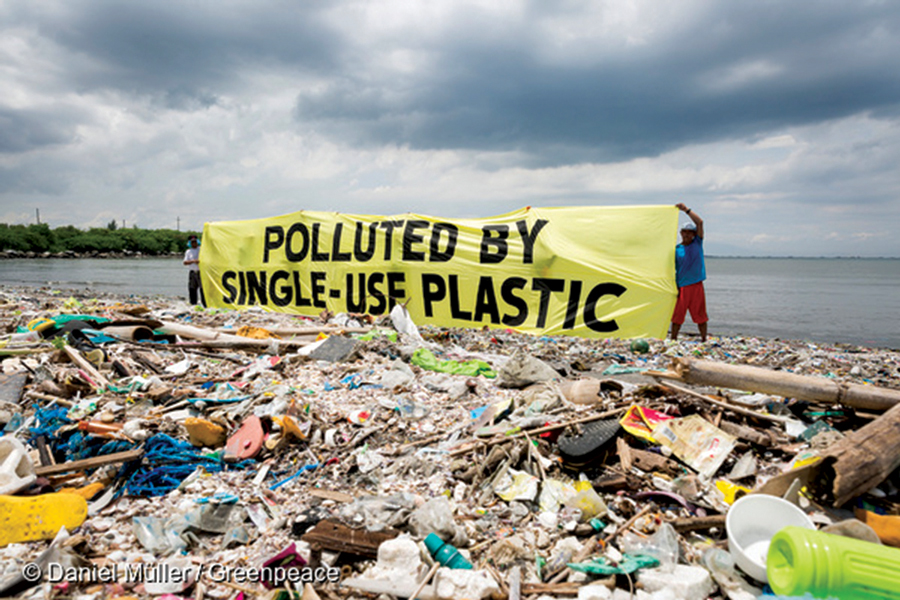
BATTLING plastic pollution is still on and many countries around the world still face challenges to control it.

Yesterday, a marine Biologist from the Auckland University of Technology, Steph Borrelle, said that plastics are found everywhere and in all corners of the ocean from Antarctic to Arctic and at the deepest point of the ocean “The Mariana Trench”.

Plastics end up in the ocean creating a harmful environment for marine life.

In Bangkok recently, a team of marine veterinarians with the help of volunteers removed 18 bags of plastics (8 kg) from the stomach of a dead male pilot whale.

Videos uploaded on YouTube evidently shows marine animals ingested plastic and straws and some are entangle.

Youth dialogue addresses anti-corruption and integrity

0
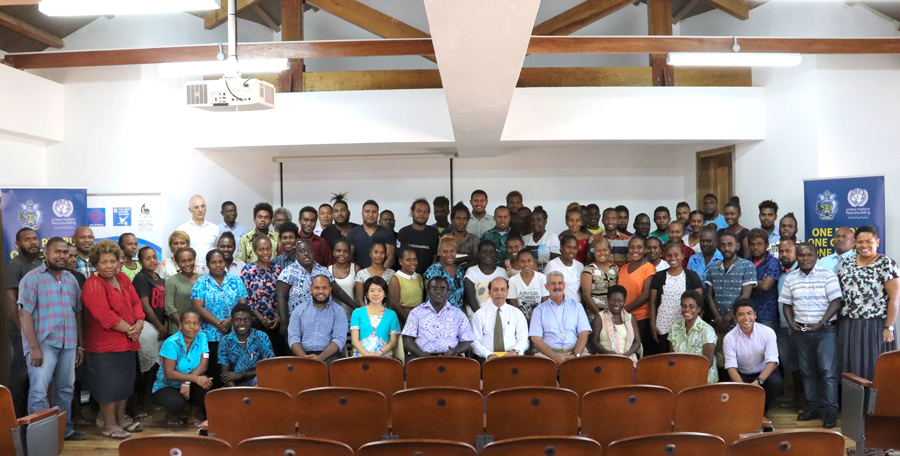
More than 60 students and youth members of civil society joined the Anti-Corruption and Integrity Dialogue for Youths. (Photo: UNDP)

TO discuss the importance of integrity and good governance in Solomon Islands, more than 60 university students and youth members of civil society participated in the Anti-Corruption and Integrity Dialogue for Youths, which concluded on Wednesday.

According to the 2015 World Bank Worldwide Governance Indicators, Solomon Islands is very corrupt and has weak accountability and integrity institutions.

As corruption remains a broad social and economic challenge, anti-corruption efforts require the participation of all sectors, including young members of the community.

Interactive sessions during the two-day dialogue encouraged participants to discuss how they can advance anti-corruption efforts. (Photo: UNDP)

Interactive sessions during the two-day youth dialogue facilitated by the UN Peacebuilding Fund (UNPBF) project in partnership with the UN Pacific Regional Anti-Corruption (UN-PRAC) Project, the Pacific Youth Forum Against Corruption (PYFAC) and Solomon Islands National University (SINU) allowed participants to increase their awareness of issues related to corruption and good governance in the country.

The dialogue also enabled youth to establish a network to advocate for integrity and advance anti-corruption efforts.

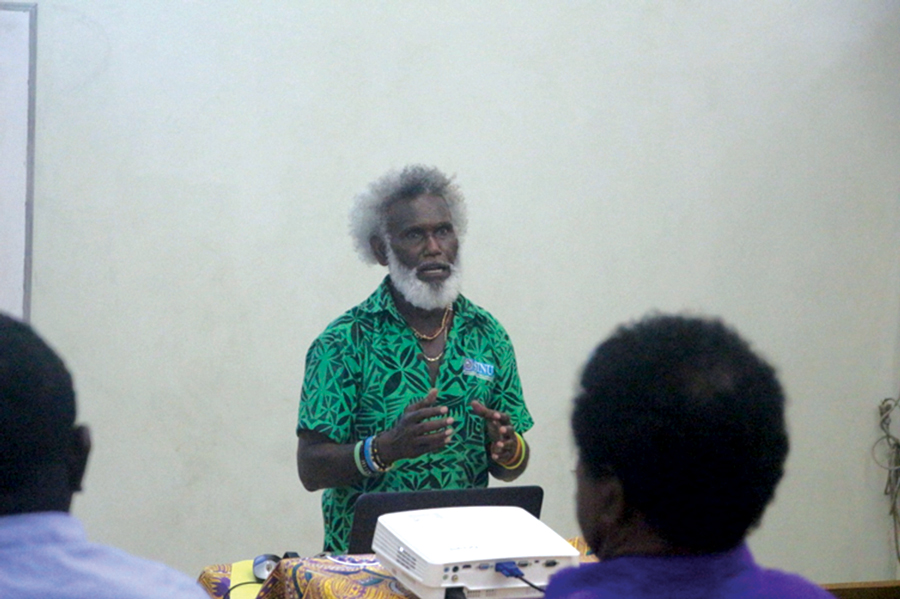
In opening the dialogue, Acting Pro Vice-Chancellor (Academic) and Dean of the SINU School of Natural Resources and Applied Sciences Professor Prem Rai highlighted the prevalence of corruption.

“We need to acknowledge that corruption is widespread and part of everyday life. Society has learned to live with it. Some even accept it as an integral part of their culture. But we must figure out how to deal with it, how to eradicate it. Some say corruption is like cancer; it will kill us one day if not treated. Some say it is like termites that make the society hollow from within, a society that cannot grow out of poverty and misery because of corruption.”

Professor Rai added, “I believe young people have a fundamental role to play in bringing a new culture to society, but they are also vulnerable. It is therefore important to empower youth, raise their awareness and understanding about corruption and to build their capacity to stand up against it.”

More than 60 students and youth members of civil society joined the Anti-Corruption and Integrity Dialogue for Youths. (Photo: UNDP)

Echoing a similar sentiment at the opening, UNDP Country Manager Azusa Kubota emphasised that young people have the agency to combat corruption in the country.

“Corruption is not unique to Solomon Islands. However, to a certain extent, cultures and social norms can make it difficult for these practices to exist and persist. Such environments start with individuals who value honesty and integrity. I’d like you to think about the roles that young people can play in achieving a society and the future that we all want.

“To foster positive change in the country, it is critical to listen to the voices of youth. Youth want to be heard, and they want to be part of the solution, not the problem,” Kubota said.

Representatives from the religious community, government ministries and NGOs were among the presenters who challenged participants to envision that solution.

Irimah Johnlee, a second-year law student at the University of the South Pacific Solomon Islands Campus, said the dialogue showed her how she can use her skills and collaborate with her peers to impact the country.

“Most of the youths and people in the village are not aware of anti-corruption efforts. Maybe I can be the voice in that area to tell them about what anti-corruption is,” Johnlee said.

The Anti-Corruption and Integrity Dialogue for Youths made possible through UNPBF, UN-PRAC, PYFAC and SINU was the first in a series of discussions on the role of governance in shaping the future.

–UNDP & UN WOMEN JOINT PRESS

SINU to offer bachelor of business, tourism & events management in 2019

0
Director of Institute of Tourism and Hospitality Charlie Panakera

THE Director of the Institute of Tourism & Hospitality of the Solomon Islands National University Mr Charlie Panakera revealed this new Bachelor programme during his presentation to the Ministry of Culture & Tourism and Stakeholders on June 13 at Kukum campus.

This programme is designed to be different from the Bachelor of Tourism offered by other regional Universities, Panakera said.

This is to avoid competition in the job market. Festivals, conferencing and events management is the fastest growing market segment in the Solomon Islands and Pacific Islands nations, therefore, this programme will address the skills gaps in service industry.

The design of the programme is focused on “job creation” – graduates confidence to be entrepreneurial and to move away from the paradigm of “job seekers”.

It is a three and half year programme; the first two years will be theory and after that students will go on a SIX months internship programme before coming back for their final year.

“I want my students to be ready to get their hands dirty before they graduated and coming to work for you,” said Panakera in front of the stakeholders.

He said companies that provide internship opportunity for his students will have high chance to hire the students once they graduated.

During the discussion, the stakeholders indicated the need for the Government to step in and help the Institute in securing internship opportunities from companies overseas.

At the moment, we want tourism industry to take over the income from logging industry; however, tourism industry needs to generate five times more income in order to equal what we receive from logging.

“This means all of us (Gov’t, stakeholders and SINU) needs to work extra hard together to reach that goal.”

Panakera concluded his presentation by calling on the Stakeholders and the Government to establish an Industry Advisory Board (IAB) to guide the Institute of Tourism and Hospitality.

The programme concluded with a reception and wonderful cultural performance by the tourism students.

–SINU PRESS

Piece of net found in mackerel colorado tin

Tin of Makarel colorado which contain apiece of net and string

By Ezekiel Talatau

Tin of Makarel colorado which contain apiece of net and string

THE latest in the string of weird findings inside canned products is a piece of net and string, which was discovered in a Makarel Colorado tinned fish.

On Thursday afternoon, a Melanesian brother, Christom Aujari reported the finding to Island Sun.

He said they were at Tabalia and had opened the tin for their lunch when they noticed the string.

Upon pulling it out, they found that it was attached to a piece of net, about 10.16 cm in length.

He said the discovery is an appetite killer for them, and calls on responsible authorities to step up in their roles and make sure that the people of Solomon Islands are protected from such contamination to the food they access in shops.

Deserving Solomon Islands youth

0

DEAR EDITOR, later this month, 27 year old Millicent Barty will be travelling to London where she will receive HM The Queen’s Young Leaders Award in recognition of the fine work she has done to educate and empower young and under-privileged people throughout the country.

Millicent will be the fourth young Solomon Islander that I am aware of in recent years to be been honoured by such a prestigious award and deservedly so.

Last week in Honiara during a workshop under the auspices of the UNDIP more than 60 young people told the UNDIP organiser that they wanted to be part of the solution to the problem of corruption and not to be seen as the problem.

In the wider sense, I truly believe the vast majority of young people in the Solomon Islands want to have a voice and to contribute to society in the best possible way, as exemplified by young Millicent and the previous awardees of the Queen’s Award.

In the past few days one has read of the alleged criminal activities of some youths in both Honiara and in Kirakira but with the lack of unemployment opportunities throughout the country and especially in the rural areas, it has to be accepted that some young people will go astray.   I am not defending what it has been alleged they have done but merely once again making my point that youth unemployment is a primary factor in unlawful activities.

Youth@ Work programmes have assisted many young people with “job experience” and promoted entrepreneurship but I concern myself, greatly, that those Youth @ Work graduates, however deserving, are not yet finding work.

As I write, as part of its vision for a vibrant private sector, leading to better lives for the people of Solomon Islands, the Solomon Islands Chamber of Commerce and Industry (SICCI) foresees the importance of encouraging young people to take up entrepreneurship and be part of this vision going forward into the future.

I really do hope the initiative being driven by the SICCI will have the outcomes anticipated.

For many years I have written about the need for job creation, and job opportunities for young people, but my hopes have been dashed so many times and today I understand the overall unemployment rate is around 35 percent.

The Prime Minister has talked about lessening international aid and promoting trade and I fully support such ideals.

I truly wish that one or more of Solomon Islands current aid partners would do the same as I have often mentioned about what I have experienced here in Thailand.

At Bangpoo in the Eastern sector of Bangkok, there operates a successful electronics switch gear factory under the management of Taiwanese managers.

The factory employs, on a three shift system, more than 10 thousand young people in its operations and satisfies the job needs of whole communities while allowing for export products to international markets.

Yours sincerely

FRANK SHORT

Solomon Islands: Replacing aid with trade

0

DEAR EDITOR, when addressing the New Zealand Pacific Council in Auckland recently, Prime Minister Rick Hou spoke about the need for the Solomon Islands to gradually curtail aid and to replace it with trade.

The PM said, “It is politically and economically prudent that Solomon Islands gradually replace aid with trade, which will in turn stimulate a strong economy driven by the private sector and not the government, as the case is at the present time.”

To bring about such a change, the PM explained that the Solomon Islands was looking to review its bilateral aid assistance programs, with a view to incorporate commercial trade activities tied with manufacturing technology; so the Government could bring the technology to transform our agriculture, fisheries, and agro-forestry sector into manufacturing sectors as well.

Highlighting my own views and suggestions via the local media, Prime Minister Hou went on to add, that considerable economic benefit could be gained through trade cooperation agreements.

He said trade agreements are designed to create import/export business opportunities in fisheries and processed seafood products, down-stream processed wood products, agricultural products – coffee, pineapples, pawpaw, sugar cane, and forest products.

The PM actually missed the potential of exporting coconut water which is hugely in demand in the USA and in several S-East Asian countries.

Prime Minister Hou said the Solomon Islands has abundant resources, but faced a number of challenges that needed to be addressed before realization of harvesting the potential of trading via trade agreements.  He explained these as-
 
“(a) Lack of technological know-how to utilize these resources to its capacity. The country has lacked up till now, appropriate technology for converting these resources into value-added marketable products for export and import substitution or domestic consumption. 


“(b) There is huge potential for technology that will transform subsistence agriculture into commercial agricultural farming products, fisheries and other aquatic resources into manufactured and processed fisheries and seafood products.

Then PM then said such challenges could be addressed, “ if we remain focused and committed.”

During a recent visit to Honiara the accredited Ambassador of Israel promised to help the Solomon Islands in several ways and, if I remember correctly, with health issues and in agricultural production.

 Agriculture in Israel is a highly developed industry and Israel is a major exporter of fresh produce and a world-leader in agricultural technologies despite the fact that the geography of Israel is not naturally suitable for agriculture. More than half of the land area is desert, and the climate and lack of water resources do not favour farming.

 Despite such set-backs Israel produces 95% of its own food requirements, supplementing this with imports of grain, oil seeds, meat, coffee, cocoa and sugar.

Being focused and committed, as the PM said, it would seem prudent and a practical to see if the technology needed to turn local subsistence farming into commercially profitable farms could be obtained with the expertise on offer from Israel.

Yours sincerely

Frank Short