Home Blog Page 1356

Pacific Islands leaders affirm vision to PALM process

0
Pacific Island Leaders at the Forum

BY MAVIS NISHIMURA PODOKOLO

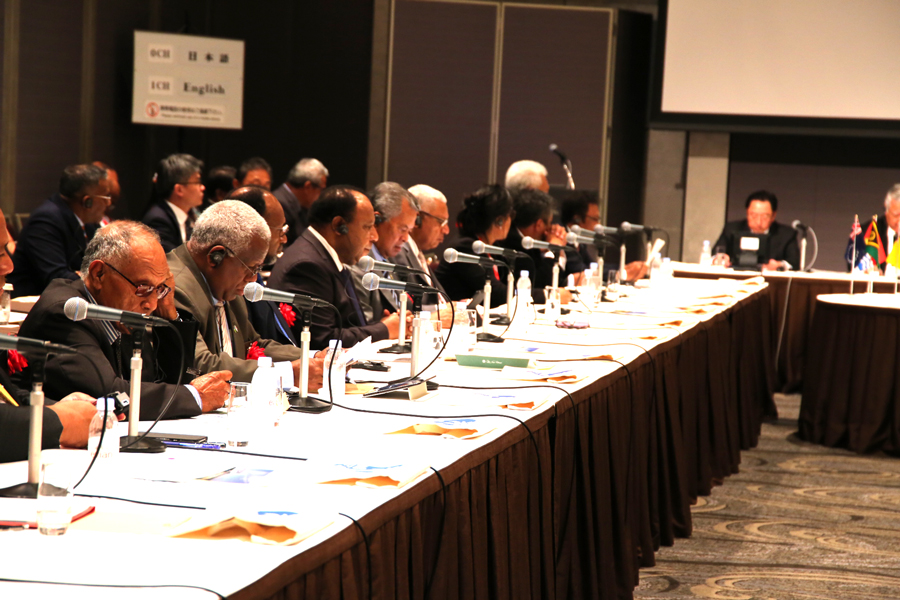
PACIFIC Island leaders to the eighth Pacific Islands Leaders meeting in Japan have affirmed long-term efforts to shape their partnership through the PALM process, will be guided by some shered vision.

The visions include maintaining stability through rules –based order, commitment to the respect for serenity, rule of law and peaceful resolution of disputes in accordance with international law and pursuit of enduring prosperity, self-sustained and sustainable economic development underpinned by open markets and facilitation of trade and investment, strengthened connectivity and enhanced resilience of societies;

Also strengthening the flow of and exchanges between peoples: active people-to-people exchanges to enhance mutual understanding assist development and invigorate economic activities; and supporting regional cooperation and integration: advancement of robust regional institutions, with a view to greater regional cooperation and integration.

Prime Minister Shinzo Abe expressed his acknowledgment to the commitment of the Pacific Islands Forum (PIF) members to regional cooperative and collective action as articulated in the “Frame work for Pacific Regionalism” to realise the visions of the PIF leaders for a region of peace, harmony, security , social inclusion and prosperity.

He said the Government of Japan will continue an unwavering determination of support to Forum Island countries in areas that best reflect their needs, utilising means of Japan’s strength.

Breaking the silence, let the conversation begin

0

BY GEORGINA KEKEA

A global day to break the silence and build awareness will be held on Monday 28th May at the Maranatha Hall.

Menstrual hygiene day aims to bring awareness about the fundamental role that good menstrual hygiene management (MHM) plays in enabling women and girls to reach their full potential.

MH Day raises awareness of the challenges women and girls worldwide face due to their menstruation and highlights solutions that address these challenges, including through media work.

Many of those challenges faced by girls and women globally is said to be faced by our girls in the country as well.

In Solomon Islands, a study on MHM found that girls face multiple challenges from menstruation in a school setting, including lack of water and adequate ablution facilities, barriers to accessing absorbent materials, inaccurate information on menstruation and menstrual hygiene, beside cultural barriers.

The impacts of these challenges were absenteeism, feelings of shame or embarrassment and lack of concentration and reduced participation in class.

The determinants’ of these menstruation-related challenges in schools that were identified by girls and their teachers includes quality of school WASH facilities, availability of hygiene materials, access to accurate information about menstruation and support from school managers and teachers.

From the study, based on biggest barriers identified, recommendations were to improve school policies, facilities and resources available to manage menstruation at schools, give girls knowledge and skills to maintain their menstrual hygiene safely and effectively at school and to improve national policies and monitoring of MHM in schools.

“While we need to work towards targeted solutions to address the multiple barriers, one of the first steps required is to start a conversation around the issue, to break the silence and the secrecy that surrounds the topic,” a statement from the Under Secretary of the Ministry of Education and Human Resources Development (MEHRD) says.

Mr Ambrose Malefoasi the programme is hoped to provide a platform for greater inter-sectoral collaboration and partnerships to advance the agenda of MHM in the country.

MEHRD in partnership with UNICEF, will mark the day with an advocacy event involving government officials, NGOs, Church leaders and other practitioners to reflect on solutions and actions.

Schools soon expected to lift standards in water, sanitation and hygiene

BY GEORGINA KEKEA

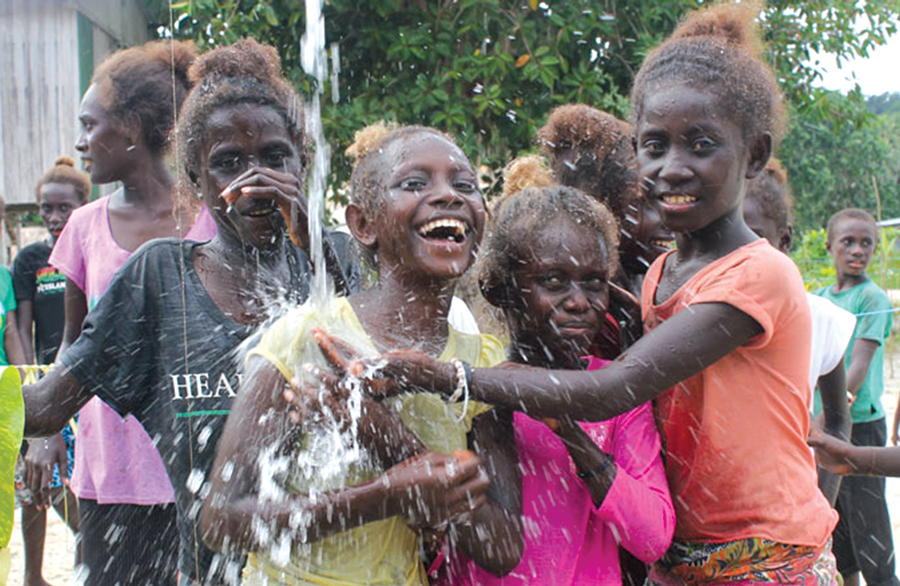
Young students from Western province enjoying their new water supply.

A study on Menstrual Hygiene Management (MHM) in Solomon Islands revealed that lack of proper WASH facilities have impacted greatly on girls. Girls are particularly vulnerable to dropping out of school partly because many are reluctant to continue their education when toilets and handwashing facilities are not private, not safe or simply not available.

When schools have proper, gender-separated facilities, an obstacle to attendance is removed. Adequate water, sanitation and hygiene (WASH) facilities and MHM intervention improves the quality of education experience for both female students and teachers. Where pads and education were provided, shame, lack of confidence, insecurity and difficulty in concentrating were improved by approximately 25 percent.

Though there is no specific goal, target or indicator on MHM in the Sustainable Development Goals (SDGs), SDG 5 speaks of gender equality whilst SDG 4 is to ensure inclusive and equitable quality education and promote lifelong learning opportunities for all and SDG 6 is about ensuring availability and sustainable management of water and sanitation for all.

Based on one of the study’s recommendations, the Ministry of Education and Human Resources Development (MEHRD) in partnership with UNICEF will soon launch a National Standards for WASH in Schools.

MEHRD’s Under Secretary, Ambrose Malefoasi in a statement says, WASH is schools is globally recognized as a key intervention to promote children’s right to health, education and clean environment and to influence a generational change in health promotion behavior and attitudes.

“If school have access to clean and appropriate toilets, functioning handwashing facilities with soap, sufficient and safe drinking water and have developed adequate hygiene skills, they will be healthier, perform better in school and positively influence the hygiene practices among their family members and the wider community”.

The National Standards for WASH in schools will guide infrastructure and hygiene improvements across all schools of the country.

After the launch of the WASH standards, schools will start receiving this standards to improve their overall water, sanitation and hygiene status.

The National Standards for WASH in schools will be launched on June 5, 2018.

US training ship, Golden Bear hosts reception

0
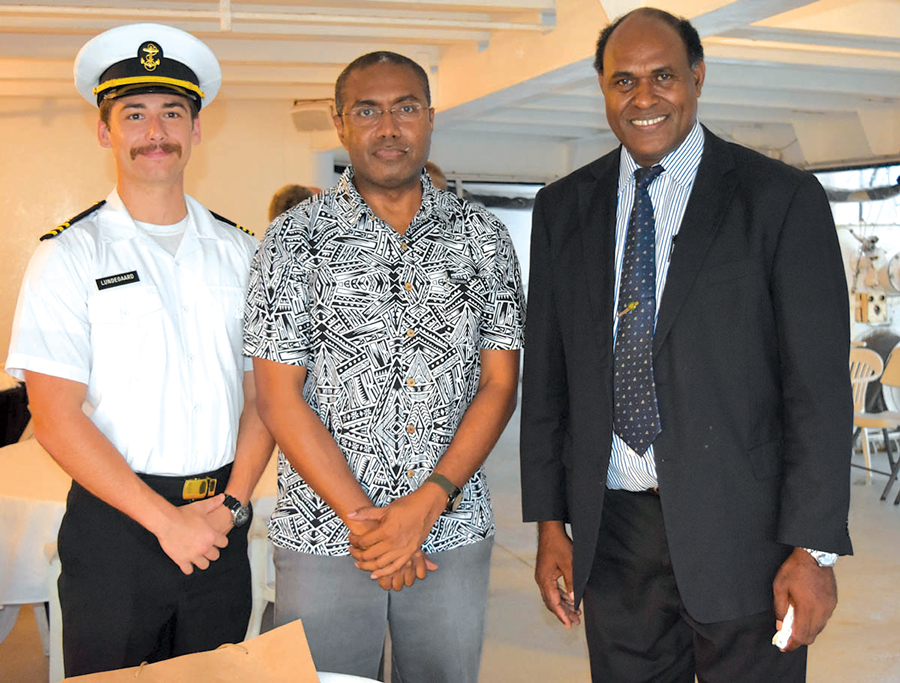
PS Foreign Affairs, Peter Kenilorea Jnr & Fisheries Minister, John Maneniaru pose for a photo with an officer on board the Golden Bear.

BY GEORGINA KEKEA

A reception was held last night on board the United States Training Ship (USTS), Golden Bear.

USTS Golden Bear is currently berthing in Honiara after it arrived from Samoa on Wednesday. USTS Golden Bear is operated by the California State University Maritime Academy (CSUM) in Vallejo, California which is a four-year accredited university dedicated to education seafaring professionals for maritime careers.

Cadets from CSUM routinely participate in summer cruises in various regions aboard TS Golden Bear.

Their training on board the vessle is is to develop their leadership skills and making practical application of classroom knowledge in all areas of demanding shipboard operations, while simultaneously experiencing new cultures and building relationships throughout the global community.

Last night a number of dignitaries and diplomats attended the function hosted by Captain Harry Bolton USMS, Commanding officer on board the USTS Golden Bear.

Director Institute of Maritime Studies SINU, Starling Daefa & Deputy Head of Mission, British High Commission, Paul
Dryden & an officer on board the Golden Bear.
PS Foreign Affairs, Peter Kenilorea Jnr & Fisheries Minister, John Maneniaru pose for a photo with an officer on board
the Golden Bear.

National security policy consultation with schools

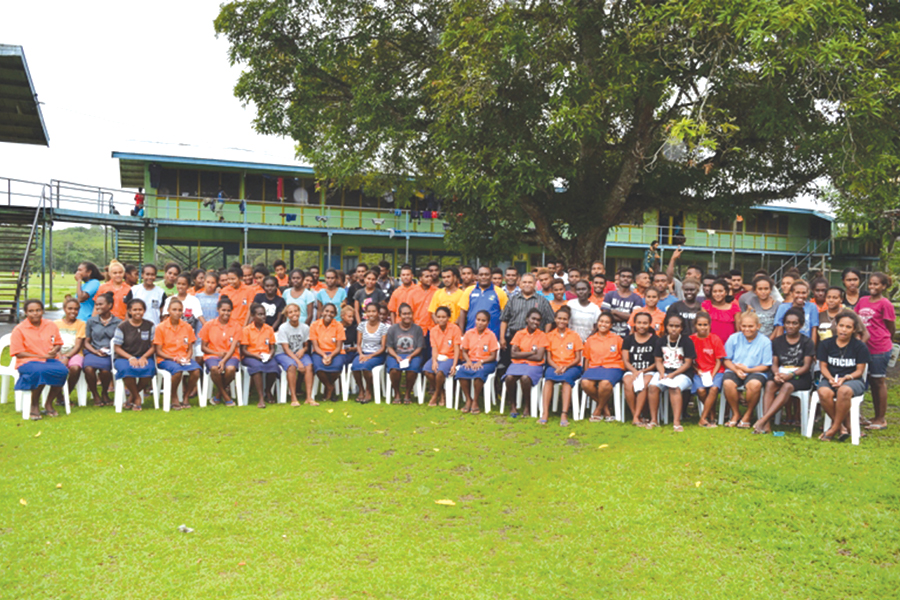
Students from Tenaru school pictured in group photo during the consultation session on the proposed Solomon Islands National Security Policy

BY LYNTON AARON FILIA

A Team from the National Security Policy Division of the Ministry of Police National Security and Correctional Services recently held one week consultation talks on the proposed Solomon Islands National Security Policy with selected schools in and around Honiara.

The consultations were held with staff and students from Selwyn College, Honiara High School, Betikama Adventist College, Don Bosco Technical Institute at Henderson, King George VI Secondary School and St Joseph’s Tenaru.

Led by the National Security Policy Consultant, Mr Bernard Bata’anisia, the team also comprised of Chief Immigration Officer, Mr Chris Akosawa and Foreign Relations Officer, Mr Ronny Horo.

The discussion with the staff and students are focused on the proposed National Security Policy with aim to seek views and inputs from the staff and students.

National Security Policy Consultant, Mr Bernard Bata’anisia, said the Policy is important so that the country could devise strategies and mechanisms to address many security challenges confronting Solomon Islands.

He added since independence Solomon Islands did not have a National Security Policy in place and such makes the country vulnerable to all sorts of security challenges, both internal and external including threats to national interest, sovereignty and territorial integrity.

Students from Tenaru school pictured in group photo during the consultation session on the proposed Solomon Islands National Security Policy

Bata’anisia adds another important issue is how to manage and effectively coordinate our two international maritime borders with Papua New Guinea in the North bordering Western Choiseul and Malaita provinces and Vanuatu in the eastern border of Temotu province.

It is therefore important that we address these border issues security challenges in a more effective, coherent and coordinated way to ensure the country is safe and secured as well as its citizens and resources, says Bata’anisia.

Chief Immigration Officer Akosawa informed the students they need to keep Solomon Islands and its borders safe to keep an eye on who is entering the country.

He added with the proposed New National Security Policy, it would enhance work of the various Law Enforcement Agencies in carrying out their work more effectively and coordinated.

Meanwhile, Students from the various schools in the discussions raised issue of influx of foreigners and businesses entering the country and the need to properly check and monitor these so that their activities are not detrimental to the safety and wellbeing of all Solomon Islanders.

The students also supported the development of the National Security Policy to ensure a proactive and coordinated approach in addressing security issues.

Such programme is part of the National Security Policy wider Consultation with stakeholders in the country with a view of presenting the final report to Cabinet by end of October or early November 2018.

The team will also meet with provinces, the private sector as well as civil society and non- governmental organisations.                    

Maepioh tells voters to respect winning candidate

1
Former Western Province Premier Hon. Wayne Maepio

BY ALFRED PAGEPITU
GIZO


WESTERN Province Premier Wayne Maepioh has appealed to voters of Gizo-Kolombangara to respect whoever is announced as the new member of parliament.

Counting begins at 7am in the Western provincial capital town.

On Wednesday, voters polled in the 12 stations around the constituency, and at 7pm stations closed, with boxes sealed to be opened for counting.

Maepioh told Island Sun Gizo yesterday preparatory jobs have been done by Returning Officers (RO), Assistance Returning Officers (ARO) and the election officials.

“I hope all registered voters cast their ballot to elect the newly MP for Gizo/Kolombangara.

“I would like to thank all the electors, supporters, public and voters to maintain peaceful voting in all polling stations within Gizo and Kolombangara Island.

“Police operations and high visibility will continue throughout the constituency and they will work with the election officials at the counting room.”

Maepioh thanked the national government and the electoral commission, the RSIPF and others who have supported and assisted in the by election.

SINU expands network with Romania

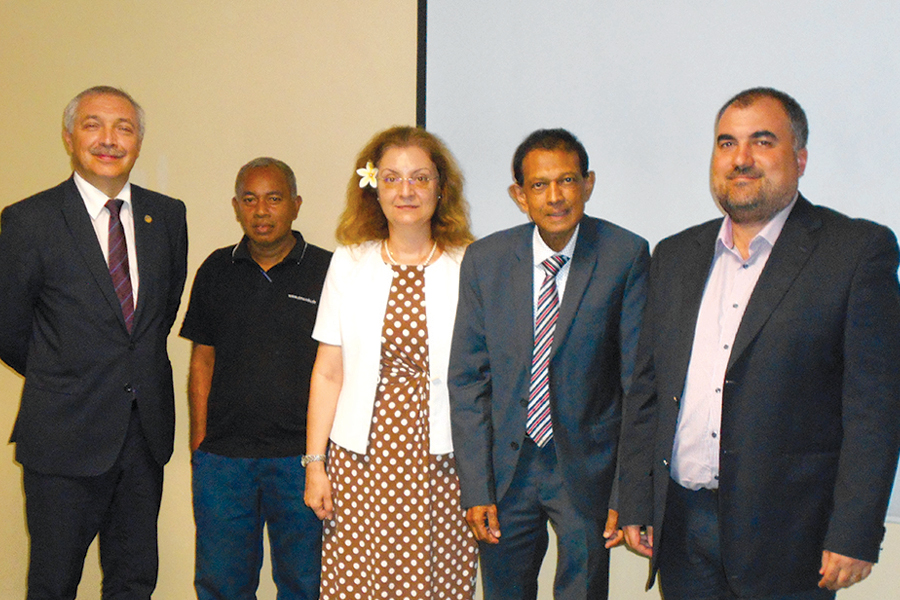
From Left to right: Professor Leonard Azamfirei Rector and Professor of University of Medicine and Pharmacy in Romania, Dr. Hugo Bugoro Acting Director/Research of SINU, Ms Daniela Gatman, Ambassador at Large and Special Representative of Romania in UN Security Council, Professor Basil Marasinghe Acting Vice Chancellor of SINU and Mr. Nastase a Senior Official from Romania.

BY LYNTON AARON FILIA


SOLOMON Islands National University has expanded its link with Romania, opening the door to any of the country’s 92 universities.

On Wednesday, SINU held a brief ceremony to welcome a team of senior officials from Romania.

The delegation was led by Ms Daneila Gatman, Ambassador at Large and Romania’s Representative at UN Security Council.

Among the other members were Professor Leaonard Azamfirei, Rector and a Professor of Anesthesiology and Intensive Care, University of Medicine and Pharmacy of Tirgu Mures and Mr. Nastase, a Senior Official from Romania.

Gatman suggested the relationship between Solomon Islands and Romania should be further strengthened, adding that there are opportunities for SINU to collaborate with some of the 92 universities in Romania.

Azamfirei appreciated the rapid development SINU has made in a very short period and suggested that his university and SINU can collaborate in several areas.

From Left to right: Professor Leonard Azamfirei Rector and Professor of University of Medicine and Pharmacy in Romania, Dr. Hugo Bugoro Acting Director/Research of SINU, Ms Daniela Gatman, Ambassador at Large and Special Representative of Romania in UN Security Council, Professor Basil Marasinghe Acting Vice Chancellor of SINU and Mr. Nastase a Senior Official from Romania.

He said as he is specialised in intensive care, he could be of some assistance to Post Graduate Programme of Emergency Medicine currently being conducted at SINU.

There are also other experts in various areas such as pathology and pharmacy who may be able to contribute.

While thanking the Romanian delegation, Acting Vice Chancellor of SINU Professor Basil Marasinghe said he welcomes cooperation between universities in Romania and SINU.

Marasinghe also noted that some of the universities in Romania are among the top 600 universities in the world.

With this, SINU can gain by collaborating with some of the Romanian universities as SINU is doing now with some of the leading universities in the world, Marasinghe said.

Solomons Gold chocolate wins 2 medals at the prestigious academy of chocolate awards in London

0
Solomons Gold chocolate wins 2 medals at the prestigious academy of chocolate awards in London

SOLOMONS Gold chocolate has again put the Solomon Islands Cocoa Industry on the map, when they won two bronze medals at the prestigious Academy of Chocolate Awards 2018 in London last week.

Solomons Gold was honoured to be recognised with a bronze medal for their Dark Nib 75 percent Solomon Islands Single Origin chocolate in the Bean to Bar (under 80 percent cacao solids) category. They also won Bronze for their Dark Mint 70 percent cacao chocolate.

Over 1200 entries were received from artisan chocolate makers around the globe.

Solomons Gold chocolate wins 2 medals at the prestigious academy of chocolate awards in London

Solomons Gold chocolate is made at C-Corp’s bespoke factory at Mt Maunganui in New Zealand, only using the best Solomon Islands cocoa beans.

C-Corp Limited Managing Director, Mr Clive Carroll, said, “We are excited about Solomons Gold winning these Medals. The Medals are testament to the massive contribution of the Solomons Gold chocolate team in New Zealand, our supportive growers in the Provinces and our dedicated staff in Honiara.”

C-Corp started up its chocolate making activities in 2014.

They specially select and grade the best Solomon Islands dry beans they receive from growers at their Ranadi warehouse in Honiara, and then export to New Zealand.

C-Corp pay growers a premium of 20 percent over the ruling Honiara cocoa price for any dry cocoa beans which make ‘Chocolate Grade’.

Solomon gold chocolate

C-Corp NZ not only make artisan chocolate, but also cocoa products such as cocoa nibs and various chocolate products which go into health food shops and boutique food manufacturers.

Mr Carroll commented, “What makes us different from most other chocolate makers is that we directly manage the entire supply chain from the selection and hand grading of the best cocoa beans in the Solomons, right through to the roasting and crafting of our Single Origin products in New Zealand. We are 100 percent committed to Solomon Islands beans.”

Island Cocoa, a chocolate maker from the UK, also won a Bronze Award for their 72 percent Solomon Islands Single Origin chocolate.

One of their directors, Martyn O’Dare, was in Honiara recently attending Chocolate Week.

–SOLOMONS GOLD

Leaders battle imbalance between conservation and development

Participants of the Integrated Forest Management Project Provincial Inception workshop held at the Mendana Hotel on Wednesday.

BY LYNTON AARON FILIA


DEFORESTATION and climate change affect sustainable dependency of Solomon Islands’ communities on traditional agro-forests and subsistence fishing for food and livelihood needs.

Over the years, there has been an ongoing tug-of-war between conservation and development in Solomon Islands although the country has pledged to battle national issues related to the Sustainable Development Goals.

Despite the challenges, the government through Ministry of Environment, Climate Change, and Disaster Management (MECDM) and the Global Environment Facility (GEF) have held an inception workshop with Guadalcanal provincial officials yesterday.

The workshop was hosted purposely to introduce to the province and the participating communities project ideas and to inform participants the rationales and linkages to the national development efforts, frameworks and polices.

During the Integrated Forest Management Project Provincial inception workshop held yesterday, MECDM’s Permanent Secretary Dr Melchior Mataki said there is an imbalance between conservation and development.

He said development has taken priority over and above conservation which has resulted in natural resources sector particularly terrestrial resources being in a dire situation and in need of resuscitation.

“What is clear as well is that people and institution are both source of imbalance as well as the fulcrums to rebalance conservation and development and between planning and doing for now and the future,” Mataki said.

Hosting the inception workshop with GP officials is part of the Ministry’s action plan with responsible authorities together with the GEF as a way forward to rebalance conservation and development.

Assistant Food and Agriculture Organisation for Solomon Islands Mrs Rosemary Kafa said they have worked with the SIG in a project to address consequence of unsustainable land and natural resource management.

She adds, FAO is also supporting government to look at addressing logging practices and related land malpractices which impose rapid loss of critical forest ecosystems.

Meanwhile, Solomon Islands forests provide multiple benefits to its population but not limited to protection of critical water resources, prevention of soil erosion, timber and non-timber forest products as well as important contributions to local food security and family health.

The country’s economy is heavily dependent on its timber industry, which brings in about 15-17 percent of government revenue and 67 percent of foreign exchange earnings.

Despite its importance, the country’s 2014 timber harvest (2.1 million cubic metres) was approximately seven times greater than the recommended sustainable harvest levels.

Poorly conducted logging operations currently have major negative impacts socially especially landslides destroy farms and cause conflict between communities.

And also environmentally, it imposed negative impacts with the increased of GHG emissions, siltation of coral reefs, degradation of forest ecosystem services and biodiversity, fragmentation of critical habitat.

Overwhelming turnout in Gizo-Kolo by-election

Electors look for their names in front of Gizo B polling station.

BY ALFRED PAGEPITU

GIZO

Electors look for their names in front of Gizo B polling station.

WEDNESDAY 23 May saw an overwhelming turnout for the Gizo-Kolombangara by-election polls.

It is reported that even when polling closed at 7pm, some stations still had queues.

Mr Christian Siale, the Western province registration manager yesterday said voting across the constituency was peaceful and had run smoothly.

A spokesperson from the Titiana polling station said literally hundreds turned up to exercise their right to vote.

“I’ve come to vote for the future of this constituency and hope today’s by-election result will be fruitful for the people of this constituency.

“I am very excited to see a lot of grassroots people young and old were lined up to vote.”

Counting will start at 9am today and the winner of the election should be made known around midday.

Police have been working hard in retrieving ballot boxes from 12 polling stations in the constituency when voting closed at 5pm on Wednesday.

When voting closed at 5pm, the first five ballot boxes on Gizo Island were collected by the police and transported to Gizo town.