Home Blog Page 1147

SI could lose natural forests by 2036: Report predicts

0

By Gary Hatigeva

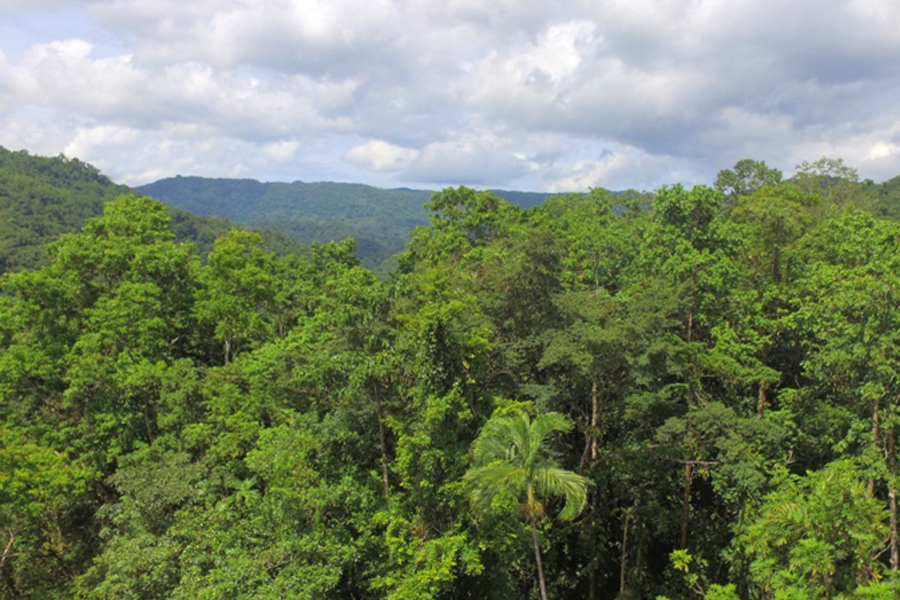
REPORT from Anti-Corruption Non-Government Organisation, ‘Global Witness’, has revealed that if activities on unsustainable and illegal harvesting of trees continue, the Solomon Islands’ natural forests are predicted to be commercially exhausted by year 2036.

In its report that was released yesterday, Global Witness pointed out that these practices on the once untouched paradise of the Solomon Islands has triggered the alarm to go off, as it now indicated a major potential loss for the country, and these activities have also put China’s reputation as a global trading partner at risk, new reports showed.

The NGO pointed out in its report revealing satellite imagery and drone photography, how the Solomon Islands’ tropical forests often portrayed in travel magazines as ‘untouched’ are being logged at nearly twenty times the sustainable rate, with Chinese companies alone importing twelve times more than is sustainable.

The report claims that despite being the largest importer of logs from the Solomon Islands, China requires no checks to ensure timber coming from the Islands or elsewhere is not illegally or unsustainably logged.

The report finds that in 2017 alone, the Solomon Islands exported enough timber to fill Beijing’s Olympic stadium even though the entire country is less than twice the size of the Beijing municipality, with around 3 million cubic metric tonnes of logs.

“The small country is smothered in 12,613 km of logging roads: twice the length of the Yangtze River, one of the world’s longest rivers. This small group of islands is China’s second biggest source of tropical logs, after Papua New Guinea (PNG),” the report reveals.

Together, Solomon Islands and PNG supply a surprising 50 percent of China’s tropical log imports and there is evidence of widespread risk of illegality in both countries’ forest sectors Timber from the Solomon Islands is at high risk of being illegal under its domestic laws.

Records have also shown that Solomon Islands is second to PNG, in terms of logs being exported to China, more than double of the logs being imported from Mozambique, Nigeria, Republic of Congo, Cameroon, Ghana and Zimbabwe, which was constantly growing in cubic metres since 2006 up to 2016.

This makes purchasing it a commercial risk for Chinese companies and China’s major wood trading partners – including the US, UK, Japan, South Korea, Canada, Australia and the EU, all of which have laws in place that require companies to check that timber is legally harvested at source.

The impact of this was seen in a recent $13 million fine of criminal charges to giant American flooring retailer, Lumber Liquidators, in relation to imports of flooring made in China using illegal wood.

The report published yesterday revealed a high risk of illegal and exploitative practices by logging companies on the ground in the country (Solomon Islands), and also showed that there is a high risk logging companies doing not to get the permission of local landowners to log in the way required by law.

It also revealed there is a high risk that companies log in prohibited places and harvest protected species, and there is also a high risk that companies do not pay the taxes they owe to the people of this country.

Global Witness through its statement called on China to put in place regulations requiring companies to carry out due diligence to check that timber is, at a minimum, and legal in its country of harvest.

The group then warned that if the practice carries on unchecked and this major carbon sink is lost, it will have disastrous and severe impacts on the country’s biodiversity as the global climate is already being pushed to danger point.

Meanwhile, Campaign Leader, Global Witness, Beibei Yin, stressed that while the Solomon Islands are marketed as a pristine tropical idyll, their investigation shows that the reality is very different.

“The hugely unsustainable rate of logging, the high risks of illegality and the fact that the industry does little to benefit local people all create a bleak picture of islands far from unspoiled or unexploited.”

“While China is taking serious and positive steps to address environmental degradation and to reduce pollution and carbon emissions at home, it is overlooking an important aspect of its ecological footprint, that the raw materials that it sources from abroad.

“If China continues to buy its wood with ‘no questions asked’ from the Solomon Islands it jeopardises its own business interests as well as efforts by its trading partners to improve governance, prevent environmental degradation, and mitigate climate change,” he stressed.

The Global Witness Campaign Leader said this revelation or report has the power and chance to make this change.

The Anti-Corruption NGO however recommended that the Solomon Islands government should immediately place a moratorium on all existing logging operations and review the issuance of their permits and the operations themselves for legal violations, and permits found to have been issued or operated illegally should be cancelled.

But until such time as a moratorium is imposed, the group stressed that the Solomon Islands government should create a publicly accessible electronic system of documents related to the issuance and oversight of logging operations

It further recommended that Solomon Islands should re-join the Extractive Industries Transparency Initiative, extending the coverage to forestry

“The Solomon Islands should employ an independent organisation or expert company to verify the volumes, values and species of logs that are exported in order to check that the logging companies are paying the correct amount of taxes,” the concerned NGO stressed in its recommendations.

This is an issue that is not new to a Pacific Island leader, the Governor of the Northern Province in Papua New Guinea, Gary Juffa, who has taken strong stance to deal with, on behalf of his people.

Island Sun was able to catch up with Governor Juffa who was here in Honiara as guest speaker of an environmental summit to talk about his experiences on illegal logging in his country, agreed that often times, end users don’t really know their products are originated from, with bad efforts to mask where the logs are coming from.

It was however revealed that the Chinese Authorities are now working on its new efforts to make a positive contribution with regards to its activities, what is happening around the world, and how it interacts with businesses, individuals and countries.

“I’ve been approached on this, and for the first time, I see China emerging as a nation that is concerned about this subject matter, and that is a positive, it just needs to translate down this concerns down to its agencies and responsible companies,” Governor Juffa said.

Juffa also agreed to Global Witness’s call and added that one other solution to the highlighted matter can be, for the country to empower people with the right tools, so they can take the leading action to stop illegal logging in Solomon Islands, which will come at a cost and will also be challenging.

“But steps would have to be taken for this course to save our natural resources,” the outspoken Governor shared.

Murder accused to enter plea on next appearance

0

BY JENNIFER KUSAPA

THE accused into the murder incident at the Tasimboko area on North East Guadalcanal will appear again in court on November 1.

22-year-old Fredrick Soniatavu is charged with one count of murder in relation to the incident which occurred in June this year.

Yesterday the court adjourned the case to November 1 for plea to be entered and also for the election of preliminary inquiry.

The accused was further remanded in custody for his next court appearance.

The Prosecution in remanding the accused said that the accused is facing a serious charge of murder in which once convicted life imprisonment was the penalty for such offence.

The Office of the Director Public Prosecution appears for the Crown.

Man to face trial in Lata

0

BY JENNIFER KUSAPA

THE court has adjourned the case against an accused facing various charges of criminal offence and his trial will be heard in Lata, Temotu province in December this year.

The case was mentioned at the Honiara Magistrate Court yesterday.

This is the case against Mathias Ngalir who is faced with counts of threatening violence with intent to intimidate, damage property, trespass at night, uses threatening words in public and going armed in public.

The case was mentioned in court yesterday and since the incident occurred in Temotu, the trial will be conducted in Temotu.

This is said to also also ease the problem of transporting witnesses to Honiara for court proceedings during the trial.

Police Prosecution Service is prosecuting the case in court.

Don’t be fooled

0
Fake account of PM of Solomon Islands as IMF Agent

Public alerted on fake Facebook accounts impersonating Prime Minister Rick Houenipwela


BY GEORGINA KEKEA

PRIME Minister Rick Houenipwela is the latest victim of impersonation in the social media platform of Facebook.

On Thursday, the Prime Minister’s Office was alerted that alias users were impersonating Rick Houenipwela, Prime Minister of Solomon Islands, while the other is Rick Houenipwela, US Agency for International Development worldwide Agent.

In a statement issued yesterday, the Prime Minister’s Office called on the general public not to be fooled by these impersonators.

“It has come to our attention that someone has created a fake Facebook account using the photo, name and details of the Prime Minister. PLEASE do not be fooled by this impersonator. The Prime Minister has NO Facebook account nor has he been on Facebook ever. Please do not accept request from this person and help report him. We suspect he/she might be a scammer,” the notice from PMO said.

The issue of fake accounts on Facebook is a major concern worldwide. While Facebook has a real name system policy, in some countries, it is illegal.

In terms of fake Facebook account, in the court of law, it is not illegal but it is against Facebook’s terms and conditions.

If Facebook finds out that a person creates a fake account, they have the right to delete the account.

In Solomon Islands, the country does not have a social media policy yet but an inactive ICT policy is in place.

In this instance, the best the Prime Minister’s office can do is to report the fake accounts to Facebook to have the accounts deleted.

There are instructions on Facebook to help victims report fake accounts to the administrators.

“We are working with the ICTSU to track down the person and we are treating this matter very seriously,” the statement from PMO said.

In August 2012, Facebook estimated that more than 83 million Facebook accounts were fake accounts.

Fourth win for Henderson Eels

0
Joses Nawo goes past John Aeta of Marist during their mid week clash on Wednesday.

Four TSL matches confirmed for weekend

By Taromane Martin

Joses Nawo goes past John Aeta of Marist during their mid week clash on Wednesday.

HENDERSON Eels FC climbed a spot up the 2018-2019 Telekom Soccer League table after claiming their fourth win in round one.

H/Eels defeated Marist FC 3-1 in their TSL mid week clash yesterday at the Lawson Tama Stadium to see them move into second place with 13 points.

Surprisingly it was the youthful Marist who looked more threatening in the first half against the experienced Eels side but saw their final touches letting them down.

Eels had to wait until the second half to score their first goal after a sloppy performance in the opening 45 minutes saw the scores tied nil-all at half time.

Joses Nawo opened the scoring for Eels 56 minutes into the second half. Tuti Zama added their second before Obed Ofea sealed the win despite a late Patrick Taroga consolation goal for Marist.

Eels Head Coach Eddie Marahare said he was pleased with the way his players responded after their half time talk and a sloppy first half performance.

“I think the first half we controlled the game but I think the players were a bit rush in the final third,” Marahare said.

“The message for the second half was we need to be patient. Whilst we are controlling the game we need to be precise and make good decisions.

“The players responded positively and got three goals for us even though it should be more than that.

“But overall I’m happy with the way the players responded after out half time talk,” he said.

Meanwhile four matches are set for this weekend at the Lawson Tama, Competitions Manager Mr Gabriel Riotarau said.

Matches for this weekend will see Real Kakamora FC taking on Western United FC, Saturday at 2pm followed by KOSSA FC and Henderson Eels at 4pm.

“I’m sure it will be a tough game. While I respect them (KOSSA) we are also desperate for the three points come this Saturday,” Coach Eddie Marahare said.

Sunday’s matches will see FC Guadalcanal taking on Marist FC at 2pm followed by Solomon Warriors FC and Malaita Kingz FC at 4pm.

Miss Solomon ready

0
Ms Corina Dettke competiting durint eh 10th National Body Building Championship in Honiara last month.

Local Body builders leave Monday

By Taromane Martin

Ms Corina Dettke competiting durint eh 10th National Body Building Championship in Honiara last month.

SOLOMON Islands Body Building Federation (SIBBF) first ever Miss Solomon, 24 year old Corina Dettke says she is happy, excited and honored to represent the country at the 24th South Pacific Body Building Championship in Suva.

Ms Dettke will join 14 other local male body builders to compete against other regional body builders for the SPBBC in Suva which starts October 26-28 this month.

The 24 year old who was crowned the first ever SIBBF Miss Solomon during the 10th national body building championship at the Multipurpose Hall last month said training for the regional championship as a figure competitor has been intense after competing as a bikini and fitness competitor early this year.

Despite the challenges faced she said she is happy doing what she loves and will concentrate on staying focused until they leave next week.

“Training has been very intense because the girls I will be competing against in Fiji have been in the sport and training for some years now,” she told SunSPORTS yesterday at the SweatBox gym.

“I train two to three times a day. My work outs usually takes five hours, this involves posing, learning the quarter turns and walking.

“I’ve only been competing for a month. My first competition was only three weeks ago. I took part in a bikini category in Australia then fitness at the national championships last month but for Fiji I have to go under the figure category which requires more muscle and physique.

“This requires me to have more muscle, build my strength and learn all the posing, walking and the quarter turn moves.

“It’s challenging as everything is different from the bikini and fitness competitions I did the past month. I had to learn all of this in a matter of three weeks so that was a lot of pressure on me.

“But it is a good challenge; I enjoy it that is why I’m doing this. Every day I’m learning new things such as about dieting, what to eat and not to eat, how to gain muscle, strength and overall just how to stay positive every day.

“I have to be happy every day, which I am. I love doing this because I know I’m doing it for a purpose. If there wasn’t any purpose then I wouldn’t be willing to put my heart and soul into this,” she adds.

She said she looks forward to meeting the other body builders during the championship and hopes other girls can also take up the sport in the near future.

“I’m looking forward for the championship, to meeting the other competitors, learn from their experiences and gain inspirations from them which I hope the boys are also looking forward to.

“I just need to stay positive, maintain have good people around me supporting me every day because this is not an easy sport where you can just come and do it. Every day you have to be prepared both mentally and physically for it.

“For the future yes I look forward to competing again next year at the next national championship because it be good to show other girls that girls can also be in the sport of body building.

“I hope to see some girls taking up the sport in the near future as well. Give it a try, if you don’t like it then it’s not for you. At the end of the day there is always a sport for everyone,” she said.

Meanwhile, SIBBF athletes for the 24th South Pacific Body Building Championship in Suva will leave the country on October 22, President Pius Mamae confirmed.

Renbel ready to host

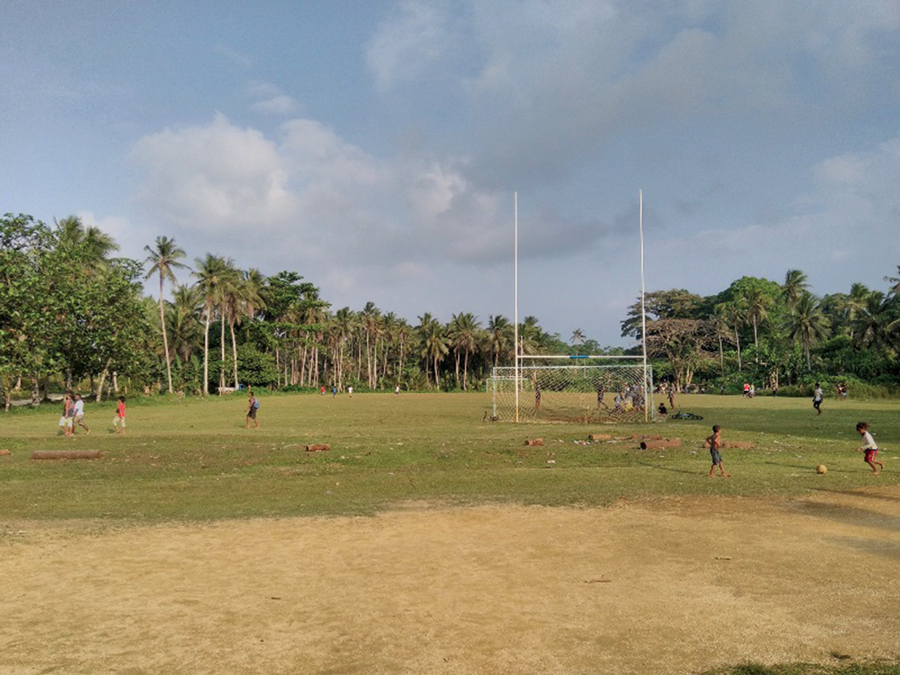
Gongona rugby field will host the rugby competition of the upcoming Solomon Games

By Taromane Martin

THAT is the message echoed by Chief Executive Officer for the 2018 Renbel Solomon Games Mr Golden Kiloko yesterday.

Mr Kiloko along with a delegation from the National Olympic of Solomon Islands (NOCSI) and the Ministry of Home Affairs was in the province last weekend to assess preparations on the grounds for the games.

The CEO in a statement yesterday said he is confident Rennell and Bellona Province is ready to host the games next month despite so many doubts and negative perspective regarding groundwork.

“We are ready to host the games. Initially there were so many doubts and negative perspective over the past months regarding Renbel hosting the game especially on its ground preparation, but I can confidently said that Renbel is ready to host the game,” Kiloko said.

“We have had the opportunity to carrying out inspection and final assessment on the ground work preparation of sports facilities and game support services in Rennell this week especially on accommodation, catering, transportation, water, sanitation, ceremonies logistics etc along with the Under Secretary of the Ministry of Home Affairs and President of NOCSI, and from the assessment.

“I can say that 95% of work on both the sports facilities and support services are done, Just need final touches on some of the facilities and our LOC is working around the clock to complete them within the next two weeks ahead of the game dates 26th November to 7th December, 2018.

“We have also arranged and engaged communities in Rennell to be responsible and cater for the games supports services as we want them to get advantage and take ownership and be part of the game, especially pride of bringing the game to our homeland.

“During the assessment, and considering the short time period, our LOC had decided to reduce the initial number of sports from 17 to 10 with an estimated number of 1,900 athletes and officials, and this will assist us to host a more efficient and manageable game.

“The individual sports selected were based on avail of its sports facilities at the host province; athletics, basketball, football, netball, rugby 7s, touch rugby, futsal, swimming, table tennis and beach volley and indoor volley,”

“All in all, I would say that RENBEL is ready to host the game in style comes November and we are looking forward to welcome our athletes and officials to our beautiful shores,” he said.

Kiloko on behalf of their taskforce thanked the Under Secretary of the Ministry of Home affairs and President of NOCSI who did their final assessment on the ground work preparation of the game as part of the process of hosting the game.

Meanwhile sports facilities that are ready and confirmed by the CEO for the 7th Solomon Games in Renbel are:

Two soccer field (Lavaghu & Kagua), two basketball courts (Lavaghu & Tahanuku), netball court (Tupuaki), volley court (Lavaghu & Tupuaki), beach Volley (Lavaghu), Futsal court (Tahanuku), rugby 7s field (Ngongona), touch rugby (Ngongona) table tennis (Tupuaki) and swimming (Lake).

Indigenous peoples are agents of change to reach sustainable development

0

BY ELLISON VAHI

INDIGENOUS Peoples and their traditional knowledge and practices are essential to reaching the United Nations 2030 Sustainable Development Goals and to climate change mitigation.

This was in relation to the International Labour Organization (ILO), as the United Nations specialized agency dedicates to the rights of workers, employment opportunities, and social justice.

In accordance to the 2016 report, it shows that 370 million peoples all over the world have been identified as Indigenous or Tribal Peoples.

This 5 percent of the world’s population is estimated to care for 22 percent of the world’s surface and protect 80 percent of the world’s remaining biodiversity.

It shows that, despite their invaluable role in sustainable development and protecting the environment, Indigenous and Tribal Peoples remain widely disadvantaged, making up 15 percent of the world’s poor.

Indigenous and Tribal Peoples are commonly denied access to a full education, employment, and social mobility due to discrimination and unequal resource distribution.

Social, cultural, economic, and political differences have also drawn a line between Indigenous Peoples and governments, leaving Indigenous Peoples out of important decision making processes.

Additionally, Indigenous and communities in states of poverty are excessively affected by climate change.

According to the United Nations Permanent Forum on Indigenous Issues in July 2018, it shows that Indigenous Peoples are among the first to experience the direct consequences of climate change, due to their dependence on and relationship to the environment and its resources.

This occurs even though Indigenous communities are some of the most involved in the mitigation of climate change and in protecting the environment.

It also shows that deforestation on land managed by Indigenous Peoples with protective rights over their lands was low while deforestation on unprotected land has more percentage.

In relation to, some recent examples of natural disasters has highlight the drastic effects of climate change on Indigenous communities, such as landslides, droughts, tsunamis, cyclone and earthquakes that hamper the traditional driving practices of Indigenous Tribes.

Yet, Indigenous Peoples who advocate for environmental conservation and against extractive projects that contribute to climate change also face threats, criminalization, violent attacks, and even death.

These has let the ILO to echoed the importance of Indigenous in environmental conservation and in reaching the United Nations Sustainable Development Goals, echoing a discussion panel of Indigenous representatives at a High Level Political Forum on Indigenous Issues.

Resources and impacts to SI food and culture

0
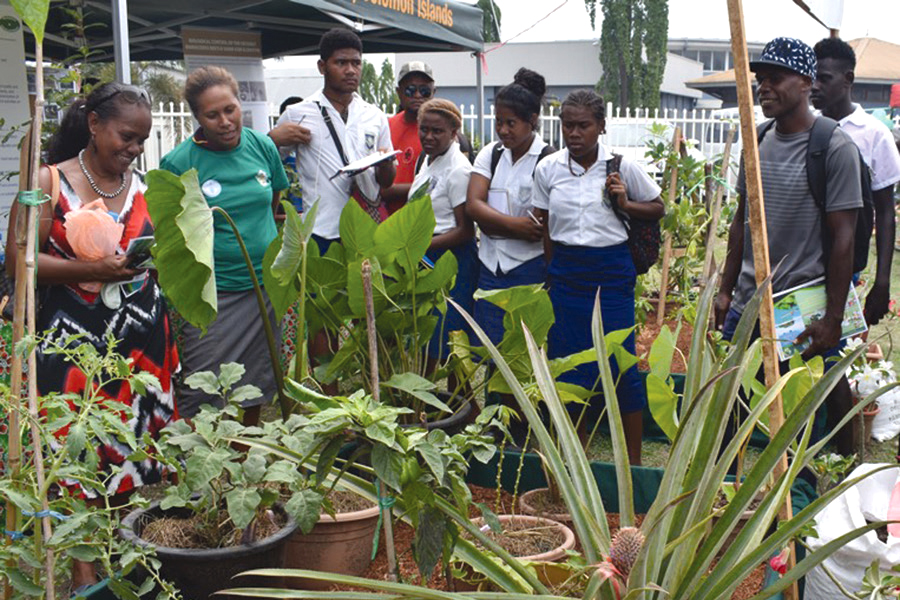
Students being made aware about the importance of our local foods

BY ELLISON VAHI

THE country’s agriculture, farming and food culture did not have a widespread beginning.

According to reports from the ‘solomonislandsculture- resource’, very few plants and animals are indigenous to the land.

Through the years the country’s agriculture and farming has expanded due to settlers, oceanic agriculture and world influences.

Therefore, due to our resources and impacts the islands have adopted a European influence in foods and culture.

While the history of the country starts about 30,000 years ago, over the years, settlers brought a variety of foods, aside from what the surrounding waters had to offer.

Coconut is one of the staple foods of the islands and is believed to have been grown prior to the settler’s arrival. Coconut has made its way to the islands by water current and has become part of the eatable goods.

Students being made aware about the importance of our local foods

The coconut is used for its water, milk and flesh; becoming one of the most essential foods of the island diet.

The diet on the islands has been constantly changing with the waves of people that welcome the land.

This creates an increasingly diverse selection of plants and animals, including taro, sugar cane, rice, yams, pork, sea food and more.

The European influence is extremely specious, however old diet traditions are still noticeable among our locals.

Despite natural traditions, new restaurants with different ethnic backgrounds are constantly opening up and gaining popularity, both by foreigners and locals alike.

The European tradition of coffee, tea, bread, fruit or sometimes fish or rice for breakfast is prominent among the inhabitants of the Solomon Islands.

Lunch is traditionally the biggest meal of the day, which is an experience that can last up to a couple of hours and is typically enjoyed at home.

However, this is not a practice that is followed by all. In addition, most of the traditional foods are served with rice as a base and taro is used to prepare the food in a variety of ways.

Taro and yams are staples of the South Pacific diet. Also, Tapioca is commonly included into the diet.

Drinks are usually made with kava root. Kava root is known for its relaxing effect however it is not considered a drug.

Avoidance of tap water and drinks made out of tap water are obvious due to potential contamination.

Dining custom on the Solomon Islands is usually much unplanned; slowness is common and understood.

No main custom roles are followed, but you should eat what is offered to you and no more than another guest. Meals are a social practice.

In the meanwhile, although the country did not start with a broad range of resources and traditions, those aspects have grown over time due to settlers and worldly influences.

In regards to the food culture, Solomon Islands have adopted a significant similarity to European values.

Now, the Solomon Islands are a place of variety and collaborations. If travellers would like to enjoy the unique relationship between Native and European culture, then the Solomon Islands is the place visit.

Taiwan, a home away from home

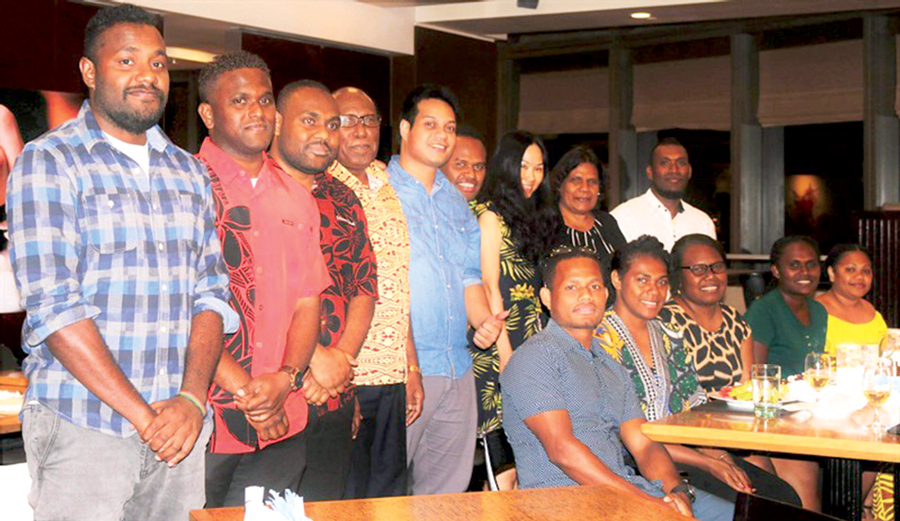
Ms. Kuei Mi with 2018 SI Graduates in Taiwan.

BY LORETTA BRIGIDIA MANELE

FOR one Solomon Islands student studying in Taiwan, the country will always be his home away from home.

In June this year, Kuei Mi-Li, who comes from Taiwan and has been teaching Mandarin at the Solomon Islands National University (SINU) travelled back to her country for her holiday.

During her stay, she got the chance to meet 24 Solomon Islands students studying at various universities who had just graduated.

Among them, Li met Michael Siwainao Jnr, President of the Solomon Islands Student Association in Taiwan (SISAT) which was established back in 2004, the same year Taiwan began its award of scholarships to Solomon Islands students.

She said that Siwainao who is doing his Bachelor of Diplomacy and International Relation at Tamkang University told her about his experience of studying in Taiwan.

According to Li, Siwainao chose to study in the country because of its uniqueness.

More to that, he had three reasons as to why he wanted to study in the country popular for its Taipei 101 building in Xinyi District, night markets and friendly people.

Ms. Kuei Mi with 2018 SI Graduates in Taiwan.

Siwainao said he picked Taiwan to pursue tertiary studies because he not only wanted to learn the most commonly spoken language in the world, Mandarin, but also wanted to experience being educated in an Asian country and lastly because Taiwan is a great friend of Solomon Islands as the two countries share and exchange similar interests in politics, economic sector and so on.

He rated learning the language as “very important” and not only if you’re studying in Taiwan because it will be a gateway for opportunities in the future.

She stated that after spending four years in Taiwan, Siwainao now refers to Taiwan as his second home and is very grateful to have taken up the scholarship to study there.

Li said he finds that the universities in Taiwan provide a very high quality learning environment for students.

Siwainao also expressed that the country is safe with high quality living standards and an education system that has provided qualified human resources.

He sees Taiwan as a country paving its way forward in in innovation, technology, science and much more.

Siwainao mentioned that although Taiwan may or may not be recognized as part of some major international organization, it has the status of being called a “state”, adding that recent innovations have proven that if Taiwan is to be included in the international organization, the country will play a major key role.

“All these innovations and improved way of living all come down to human resources. The education system in Taiwan has provided the best platform to educate students. Lastly, Taiwan is a democratic state and provides freedom around you”, he said.

It was not just about living and studying in a foreign country for Siwainao but also about experiencing something that made him feel closer to home despite the distance of being thousands of miles away.

Li stated that he spoke of his experience about being chosen to join other international students in a workshop and conference in 2017 hosted by the Indigenous organization in Taiwan.

During the four days’ workshop Siwainao got the opportunity to work with the Amis Tribe in Dulan community located in Taitung County in the east coast of Taiwan.

His first impression when he got there was similar to the feeling of returning home during his school holidays.

“The aboriginal culture and way of living is very similar to ours (Solomon Islands). The traditional methods of hunting, fishing, farming, clothing and cooking are very similar”, said Siwainao.

He told her that he remembered that in Dulan community they have the “big man” system where there is a council of chiefs that deals with community issues or other tribes.

“The decision making body system is very much alike to where I am from (West Are’ are) and that is why I can relate”, said Siwainao.

Li said he is affirmative that the various experiences that he has gained in Taiwan will definitely help him in the future and for the betterment of Solomon Islands.

“From the moment that Taiwan welcomed me to when I had lost my belongings and retrieved them to the achievements I received while in Taiwan, I am so thankful for the Government of Taiwan (MOFA) and the good citizens. I will always call Taiwan my second home from Solomon Islands”, said Siwainao.