BY NED GAGAHE
Ministry of Education and Human Resource Development (MEHRD) has reaffirmed its commitment to inclusive digital transformation in education and calls on all stakeholders to share the responsibility in building a stronger, connected learning environment across the country.
Speaking at the opening of a two-day Education ICT Master Plan workshop on Monday, August 4, 2024 at Mendana Hotel, MEHRD’s Deputy Secretary (Corporate Services), Coldrine Kolae, described the digital transformation effort as “a shared home”—one that cannot be built by government alone.
“This home is not being built by the government alone.
“Education is a shared responsibility, as emphasised in the Education Act 2023. Every ministry, school, teacher, parent, and development partner has a role to play,” Kolae told participants.
He said the ICT Master Plan 2026–2030 provides a shared blueprint that aligns investments, coordinates actions, and ensures that every contribution—be it a classroom device, a teacher training, or a data system—fits into a larger, unified structure.
“In this way, we are not just building in parallel, but building together toward common goals,” he added.
He outlined key achievements already in place, such as:
- Extending school connectivity through SIG Connect
- Expanding digital learning content via iResource
- Piloting new computer labs and devices with support from LiteHaus International
Kolae said these efforts are the early foundations of a digital learning space that Solomon Islands students and teachers are now starting to explore with growing curiosity.
However, he warned that much of the digital ‘home’ remains unfinished, with many schools still lacking reliable power, affordable internet, and sufficient digital tools.
“Teachers often lack the scaffolding to grow their digital skills. If we are to complete this home and ensure it stands strong, we must address these gaps.
“With unpredictable winds driven by forces like Artificial Intelligence, (AI) we must ensure our foundation is solid and our doors are open to all,” said Kolae.
He outlined the four core pillars of the ICT Master Plan of which are as follows:
- iKonnect – improving internet, power, and ICT infrastructure in schools
- iTeach – equipping teachers with digital skills and tools
- iResource – expanding access to quality, curriculum-aligned digital learning content
- iManage – strengthening data systems and school-level digital administration
Kolae encourages stakeholders to ensure that this “digital home” is open to all learners by investing in accessible, low-cost solutions like mobile apps, offline content, radio, text messaging, and broadcast platforms to overcome financial barriers.
“Let today be a space for reflection, planning, and renewed purpose,
“Together, let us continue building a home of learning that is strong, inclusive, and ready for the next generation—so that all our children have a place to grow, connect, and thrive,” he said.
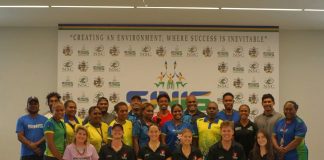
The two-day workshop brings together key government divisions, education partners, and technical experts to finalise and validate the Solomon Islands Education ICT Master Plan 2026–2030, with support from UNICEF and the Global Partnership for Education (GPE).
For feedback, contact:[email protected]