BY RICHARD MENANOPO
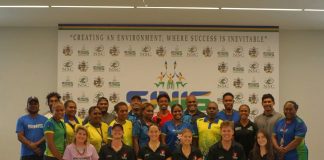
A group of students from the Solomon Islands National University (SINU) took their classroom learning beyond lecture halls this week by visiting the Solomon Islands National Institute of Sport (SINIS) to explore the growing importance of ethics in sport.
The visit, carried out by students undertaking the SNU600 Ethics Studies course under SINU’s Faculty of Education and Humanities, focused on understanding how ethical values influence leadership, decision-making and behaviour within the sporting sector.
The students met with SINIS Performance Manager for Portfolio Three — Racquet, Aquatic, Target and Individual Sports — Jimmy Luitolo, who shared practical insights drawn from his experiences working in sports development and athlete management in Solomon Islands.
Speaking after the interview session, student representative David Kikolo said the discussion gave the group a clearer understanding of how ethics shapes sporting environments both on and off the field.
“We came to SINIS to conduct an interview with Mr Jimmy Luitolo to gather information and perspectives on ethics in sport.
“Through the discussion, we gained valuable insights from his experiences and understanding of how ethical principles play an important role in sports,” Kikolo said.
Kikolo said the engagement formed part of the students’ course assignment and will contribute significantly to their ongoing research work.
He also acknowledged the support provided by the National Sports Council (NSC) and SINIS staff for accommodating them during the visit.
“We sincerely thank the NSC and SINIS staff, especially Mr Jimmy Luitolo, for his time and willingness to share his knowledge with us.
“We appreciate the opportunity to engage directly with professionals in the sports sector and learn from their experiences,” he said.
Luitolo, in response, commended the students for selecting ethics in sport as a research topic, saying such discussions are important in shaping responsible future leaders.
“Ethics is an important foundation not only in sport, but also in education, leadership and community life.
“Discussions like this help students understand how ethical leadership and decision-making can positively influence sport, education and society,” Luitolo said.
He encouraged the students to apply the lessons learned through their studies, in their future careers and personal lives.
“The understanding they gain now will become valuable in their workplaces and communities in the future, whether they become teachers, leaders or professionals in other fields,” he added.
Students who participated in the visit included David Kikolo, Barbara Awao Manetei, Joyce H. Fafale, Betrice Vahimana and Rayline Neretaba.
The SNU600 Ethics Studies course covers a broad range of themes including ethical leadership, environmental ethics, political and government ethics, as well as ethics in sport.
As part of their assignment, the students selected sport ethics to better understand how values such as fairness, respect, accountability and integrity are applied in real-life sporting situations across Solomon Islands.
The National Sports Council, through SINIS, continues to support educational and research initiatives that aim to develop future leaders while strengthening awareness around the role of sport in national development.
Photo credit: NSC
For feedback, contact: [email protected]
Editor: [email protected]