Home Blog Page 866

Review of Archives Act will strengthen public records

0
PS Andrew Nihopara

BY JARED KOLI

THE Amendment of the ‘The Archives Act 1994’ will create a stronger obligation for government ministries to surrender sensitive public records to the National Archives of Solomon Islands (NASI).

This is according to the Permanent Secretary of the Ministry of Culture and Tourism Andrew Nihopara.

Mr Nihopara told Island Sun in an interview this week that the Government is currently working on reviewing Act.

He said his ministry is working to establish the National Archives Advisory committee, and then that committee will meet and document the necessary adjustment and amendment that they want for the current Act.

Mr Nihopara said since The Archives Act 1994 was in place, it provided for the establishment of the National Archives of Solomon Islands.

It also provided for the establishment of the Archives Advisory Committee or Council, that looks after all the affairs of the Archives.

“Anything Archives have to do need to be passed by the board, unfortunately the Act hasn’t been activated since it came in.

“So there has not been an establishment of a national Archives Advisory Committee. But the mandate to change the provisions within the Act or any mandate with regards to the work of the national archives has to be endorsed by the National Archives Advisory board,” Mr Nihopara said.

He said the new digital preservation that is currently carried out by NASI needs to be captured in the Archives Act when it amended.

“The other one is creating much stronger within the Archives Act to obligate ministries or government to surrender sensitive public records to the Archives because that is required by law.

“There are records that need to be kept here on what is known as 30-year rule. This means sensitive records cannot be disclosed to the public, but will be held at the National Archives for 30 years, before it can be made public.

“These are the provisions we want to strengthen in the Act. The other one is to make the Archives become more accessible centre for both domestic and international students that want to access historical record,” he said.

Nihopara said at the moment, government ministries do not comply with the Act to surrender government records to NASI which calls for its review and amendment.

“No ministry, even the Ministry of Finance, perhaps due to ignorance, know that there is an Archive Act that requires them to surrender public records to The National Archives.  

“There has been an awareness going on, we have partnered with the public service ministry to reach to other ministries to create awareness about the public records management.

“But that’s about the record management policy, then when it comes to some sensitive public service records which is what mention in the Act, no body seem to be aware of.

“So we probably make the necessary amendments in the act, and perhaps that would also give weight to us to reach out to them and say, you’re obligated under this act to surrender certain types of public records to the NASI,” Mr Nihopara said.

British High Commissioner visits the National Archives

0
British High Commissioner to Solomon Islands His Excellency Brian Jones briefed about NASI's ongoing work during his visit to the National Archives

BY JARED KOLI

British High Commissioner to Solomon Islands His Excellency Brian Jones on Tuesday paid a visit to the National Archives of Solomon Islands (NASI) to see firsthand the work that is currently underway at NASI. 

NASI is currently digitising the country’s analogue records in its repository.

Mr Jones was received by the Permanent Secretary (PS) of the Ministry of Culture and Tourism Andrew Nihopara and Government Archivist Julian Chonigolo.

They briefed the British High Commissioner and gave him a tour to the digitising room, sorting room and later to the repository where all analogue records are kept. The visit was made after the British diplomat learned from a recent article published by this paper of the new digital preservation technology that NASI is currently using.      

Jones told PS Mr Nihopara and Government Archivist that the work that NASI is doing is vital.

“Especially to students to learn from the history and understand how all of that process took place. That is really vital if you look at everything, from individual learning all the way to the progression of state, and what is the future of the constitution, you have to know what has started from the beginning,” he said.

“My initial inspiration was the piece in the newspaper recently about digitising the records. And how you independently acquired the equipment to do this, and the hard work that was going on to protect these records,” Jones said.

Government Archivist Julian Chonigolo said the archives currently holds the British Solomon Islands Protectorate (BSIP) administrative records, which it is currently digitising as well as pre and post-independence and other private records.

Ms Chonigolo said the largest private holding belongs to the Church of Melanesia. 

“We also have some challenges, big challenges. We have problems with storage and need a bit of expansion.

“I won’t deny the Solomon Islands Government is very helpful under the digitisation project, but I think we need to continue from there,” she informed the British High Commissioner.

She said there was a small expansion in 2018 of the repository area, but they still need to equip it.

“That is also one of the challenges because we can’t find a lot of supplies here on the equipment we need.”

She told Jones that the most recent documents stored in the archives are the Townsville Peace Agreement and the controversial Report of the Solomon Islands Truth & Reconciliation Commission.

PS Nihopara informed the British High Commissioner that the Government is currently working on reviewing ‘The Archives Act 1994’. 

Nihopara said at the moment, government ministries do not comply with the Act to surrender government records to NASI, which calls for a review and amendment on the said Act.

“No ministry, even the Ministry of Finance, perhaps due to ignorance, know that there is an Archive Act that requires them to surrender public records to The National Archives.

“There has been an awareness going on, we have partnered with the public service ministry to reach to other ministries to create awareness about the public records management.

“But that’s about the record management policy, then when it comes to some sensitive public service records which is what mention in the Act, no body seem to be aware of.

“So we probably make the necessary amendments in the act, and perhaps that would also give weight to us to reach out to them and say, you’re obligated under this act to surrender certain types of public records to the NASI,” Nihopara said.

In response, HE Jones said to place a requirement for Government to archive certain documents is a valuable task that should be done.

“If it is digitised the right way, it makes it a global asset, researchers everywhere can look at it and make use of the service,” he said.

Nihopara said the plan is to make adjustment on the Act to enable research, and at the same time, make money out of it to contribute to the government coffers. Researchers wanting certain types of documents can pay to access it.

“But those have to be captured in the amendments to the Act,” he said.

The British High Commissioner took a tour around the building and noted the challenges and issues touched on.

If Delta covid-19 enters SI, we will suffer: PM

Fiji braces for more cases as the Delta covid-19 variant wreaks havoc

BY MAVIS N PODOKOLO

PRIME Minister Manasseh Sogavare has warned that if the Delta variant of covid-19 gets to communities in Solomon Islands before they are vaccinated, people will suffer because it is highly transmissible.

Sogavare echoed this to encourage people to get vaccinated due to Delta variant, which WHO has described as the ‘fittest and fastest’ variant of covid-19, being highly active in our neighbour Fiji.

“The Delta variant is highly transmissible. If the Delta variant gets to our communities before they are vaccinated, our people will suffer. We will see not just an explosion of COVID-19 cases, but sadly, we will also see an explosion in deaths due to COVID-19 infection,” he said.

He said the current outbreak of the Delta Variant in Fiji started with just two people returning from India in April this year. At that time Fiji only had 67 cases and two deaths since the beginning of the Pandemic. However, from mid-April to yesterday, Fiji registered an additional 6,094 cases, 28 deaths (in two and a half months).

“Fellow citizens if COVID-19 breached our borders, our quarantine stations and get into the community, the picture in Solomon Islands would be much worse than what is occurring in Fiji right now.

“This is the reason we must all get vaccinated to ensure our population is safe even if COVID-19 breached our borders.

“If all adults in Solomon Islands are vaccinated, then we have a chance of protecting our population below 18 years of age that cannot be vaccinated.

“I encourage all those who have been vaccinated, to share your testimonies. Some will have had mild side effects. Stand up to give people the correct stories. Encourage all adults to get vaccinated. If you had some side effect with the first dose, there is much less side effect with the second dose,” Sogavare said.

He adds by urging people using social media to use the platforms to encourage people to get vaccinated, not to create doubts.

“As I had mentioned in my previous address, we only recorded 4 cases of reactions, which our health experts have treated on the spot. All four people are well and healthy. They are now protected against COVID-19,” Sogavare said.

Court acquits man over accident at Foxwood

0

BY JENNIFER KUSAPA

THE man who was arrested and charged over a traffic accident which occurred in 2020 at the Foxwood area has been acquitted.

Deputy Chief Magistrate Ricky Iomea acquitted the man charged with one count of Causing death by reckless and dangerous driving under the traffic offences Act.

The accused entered a plea of not guilty and a trial was conducted and the court found him not guilty and acquitted him.

This is the case against Simon Peter Sonithagea who police alleged to have caused the death of a man at the Foxwood Road area.

DCM Iomea in his judgment said prosecution failed to prove beyond reasonable doubt the charge against the accused.

“The existence and non-exclusion of those possibilities by the Prosecution lead only to one conclusion, that I am not satisfied beyond reasonable doubt that the accused caused the death of the deceased,” Iomea said.

Iomea said having assessed the evidence from the prosecution witnesses, what the three witnesses thought about the speed at which the accused was travelling based on the sound of the car engine at that time is not sufficient to assist the court in drawing the inference the accused was travelling at a very high speed which was dangerous to the public at that material time.

“It is unreliable and not safe to rely solely on that evidence to find that the accused was driving dangerously,” Iomea said.

Iomea also said the deceased was lying on the road and whether he was still alive or already dead before the accused ran over him remains unknown at the conclusion of evidence in the trial.

“The possibility that the deceased fell from another vehicle earlier or died from a natural cause or murdered by somebody and dumped on the road before the accused ran over him remains open and have not been excluded on the evidence by the prosecution at the conclusion of the entire evidence in the trial.”

False pretence case returns to court

0

BY JENNIFER KUSAPA

THE case of a man alleged of lying to a retired doctor for money will be mentioned in court before Principal Magistrate Felix Hollison.

This is the case of a 45-year-old man Sam Ngedea who was accused of obtaining more than $40,000 from a retired doctor in 2018 and 2019.

Prosecution charged the accused with 25 counts of false pretence and 21 counts of demanding with menace.

This is regarding the allegations occurred between December 3, 2018 and July 20, 2019 where he lied to an elderly doctor and obtained more than $40,000.

Prosecution said the accused collected the monies from the victim on various occasions as compensation, accusing the victim of trying to have sex with a woman he claimed was his mother.

Prosecution also alleged Ngedea during those times would appear using names such as George Ben, John Lake and Peter.

It was also alleged that the incident was a “make-up” by the accused, making prior arrangement with that woman to meet the victim on the case.

Steward Tonowane is appearing for the Crown while Lazarus Waroka from the Public Solicitor’s office is representing the accused.

Traffic incident halts meeting

0
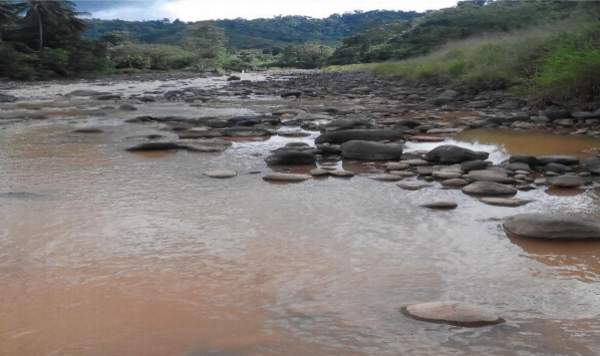
Turarana river, where the WinWin mining company is operating.

By EDDIE OSIFELO

THE traffic accident at Tenaru, east of Honiara, on Wednesday night which resulted in five people confirmed dead has affected the meeting between Win Investment Ltd and Turarana Landowners Taskforce and other leaders.

The meeting was scheduled at Henderson Police Post conference room from 10am to 12 noon yesterday.

However, the meeting could not take place because the vehicle involved in the accident belongs to a person in Turarana village.

Therefore, people in Turarana could not travel down town at this time to avoid any dispute with relatives of the deceased.

The so-called Taskforce called the meeting for the company to clarify outstanding issues and due payment need to be settled relating to the mining operation on Turarana tenement.

One of the Directors of Win Win, Charles Meke said a new date will be set for the meeting because of the traffic accident.

The taskforce said failure to meet with them, the company expect to see all four tribes would stage a road block on 13th July, which is the deadline of the 14 days’ notice issued on 29th June to Win Win.

Win Win does not recognize the existence of Taskforce as it was set up outside the 24 trustees of Turarana where Win Win signed the Surface Access Agreement and Surface Access Rights Agreement with them.

In a letter sent to the Managing Director of Win Win mining Company Ltd on 1st July, the four landowning tribes (Garavu, Lasi, Koe’naho and Manuki) tribes who owns the Turarana tenement where the company is operating, agreed on this during their extra ordinary meeting held at Turarana village on Wednesday 30th June.

Some of the log of claims which are dued payments are:

1.            Premium – $26,000 (Surface Access Agreement)

2.            Access fee – $250,000 (SAA)

3.            Rental payments – $1,000/square kilometer multiply 12 square kilometer – (2018-2021)

4.            Campsite payment – $3,000 per month from 2018-2021

5.            Pits

6.            Damages

However, Elemelek Vamule, mines officer in the Ministry of Mines, Energy and Rural Electrification confirmed the royalty payments of the landowners are still with Central Bank of Solomon Islands.

Vamule said CBSI can only release the payments once the landowners sorted out their land boundaries and open a bank account.

He said so far there were 19 shipments of the minerals made so far and the company overseas has already paid eight shipments to CBSI.

Vamule said this is in accordance with Mines and Mineral Act that payments must be made within three months on the day of shipment.

Further to that, he said regarding information of the company’s operation, no one can access it because of its confidentiality and its property.

Vamule said under the Mines and Mineral Act, the ministry cannot issue the information of the company until it loses its tenement and move out after three months.

Meke said Bred Bank has willing to help open accounts for the company, 24 trustees and the employees.

Meke said work is ongoing to sort out the land boundaries on the tenement as well.

Win Win has extracted alluvial deposits on the stream beds of Mamasa and Turarana to get the minerals, especially gold.

The company started operations on Mamasa in October 2019, however the company discovered the tenement had low alluvial deposits on its stream beds.

Win Win is now operating on Turarana which is believed to have high alluvial deposits.

Youths form ward comm ittees

0
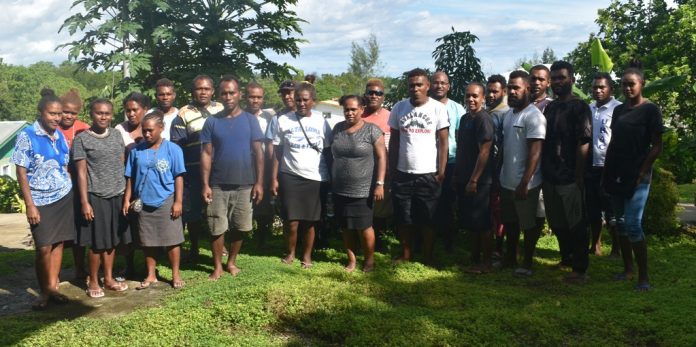
Youths attended the ward youth formation meeting yesterday in Auki.

BY SAMIE WAIKORI

AUKI

FOUR wards in Malaita have established their Ward Youth Committees during a meeting yesterday in Auki.

They are wards one, two, 29 and 30.

The establishment of the ward committees is to fulfill the National Youth Council (NYC) policy under MWYCFA to have a bridge of youth committees or councils from community level up to the national level.

Malaita Youth Coordinator Francis Samo said the purpose of establishing the youth committees is to facilitate youth issues from community level through the chain of committees up to NYC.

Also for youth programs and activities planned at the national level to channel down through the committees.

He said the idea behind the initiative is by establishing pathway for voices and issues affecting youths in the country to bring to the national government and to be heard.

Samo said this is important as it will help national government through the ministry of youths (MWYCFA) for proper planning on youth programs and activities for the country.

He said so far only five wards in the province; ward 28, one, two, 29 and 30 have formed their Ward Youth Committees and they will require to form Community Youth Committee as the least committee establishment on the chain.

Samo also said that formulating the committees is also a platform to enable youths to organize themselves in their communities and wards to work with other relevant stakeholders like WDCs, constituency office and partners to address issues face.

He said the provincial youth desk was the responsible body for youths in the province and will continue to liaise between youth committees and NYC at the national level on youth issues.

Samo said after establishing these five ward committees, the Malaita Provincial Youth Council province has 28 wards yet to establish their Ward Youth Committees.

He said a total of 25 youth participants attended the meeting yesterday and formed youth committees for wards one, two, 29 and 30.

Samo said the youth ward formation meeting was supported by Malaita provincial office.

Seasonal work for us in Aussie under threat

Pacific Seasonal workers

BY BEN BILUA
Gizo

Red tape and a new seasonal work visa for people from Asian nations are threatening opportunities for Solomon Islanders to work in Australia.

In June, Australian agriculture Minister David Littleproud, announced a new ‘seasonal agricultural workforce visa’ for citizens of Southeast Asian (ASEAN) countries. It would be based on the working holiday-maker (or backpacker) visa which has much lighter regulation than visas currently offered to Pacific workers.

“There is desperate shortage of labour all around the country, not necessarily just in agriculture but more broadly,” Canberra-based Professor of Finance, Satish Chand, told Pacific journalists on Tuesday.

However, Australia’s tough visa policies and requirements are pushing employers away from hiring Pacific workers under the Seasonal Worker Programme (SWP) and the separate Pacific Labour Scheme (PLS) for technically or vocationally qualified workers, experts say.

Regulations to allow commencement of the new agricultural visa for people from ASEAN nations have not been drawn up yet.

“There are great Pacific Island workers ready to come and work in Australia, but we’ve made the system very difficult,” said Caleb Jarvis, Trade and Investment Commissioner, Pacific Trade Invest Australia.

“We can’t then turn around and offer ASEAN easier conditions to entry into Australia.

Commissioner Jarvis said opening up Australia’s labour market to Pacific Islands is absolutely necessary to help the Pacific economies recover after COVID.

“That’s the one lever Australia can pull up almost immediately and open the gates, because Australia is currently going through critical labour shortages across most industry sectors in metropolitan areas and rural areas.

“So, this is a great time for Australia to step up and really show their commitment to the Pacific,” Jarvis said.

Professor Satish Chand from the University of New South Wales agrees.

He believes there should be a Pacific-wide visa for workers with technical and vocational skills and wants to see Pacific workers given the same access as New Zealanders to work in Australia.

“If we were to be a real value, a real family, then I think we should have much freer mobility of workers throughout the region,” he said.

Prof Chand says the initiative would be of particular value to young people as the region charts a path out of the COVID economic crisis.

He is calling for recognition of technical and vocational qualifications as the basis for a Pacific Skills Visa that could be implemented across Pacific Forum countries.

“We have to have people who are trained as electricians, mechanics and carpenters be able to work abroad as qualified tradespeople.

“But more importantly, people who are already upskilled, we want recognition of their qualifications abroad, so this has to be the job of the government.

On the agricultural visa, Professor Chand believes the problem is too many visas with different rules creating a race to the bottom.

“I think there’s a lot of exploitation that takes place of our workers,” he said

“It’s partly because of all the red tape linked to the Seasonal Worker Programme with approved employers having a complete monopoly on the workers,”

“What happens is that our seasonal workers compete with …working holiday-makers. And then they also compete with undocumented workers – these are illegals.

 “And when you have this competition across visa classes, what you have is a race to the bottom.

“So, if you have a worker who’s undocumented, who’s illegal, who who’s willing to work at $10 an hour, then that sets the benchmark for everybody else,”

“I, for one, am in favour of just a one agricultural visa for everybody,’ Professor Chand said.

Last month, Secretary General of Pacific Islands Forum, Henry Puna stressed that Pacific nations are concerned that Pacific workers could be squeezed out of the Australian market by workers from Asia.

He said Pacific heads of mission in Canberra had expressed these concerns to the Australian government.  

Seasonal work is seen as one of the most effective ways to relieve the economic pressure COVID is placing on Pacific people and economies.

On Tuesday, Pacific officials began a series of online meetings leading up to next week Forum economic and trade ministers’ meetings next week.

In his opening address, Secretary General Puna told officials: “This meeting is an opportunity for us to have a robust collective discussion on forward- looking and innovative, collective solutions that can inspire and propel economic recovery across our Blue Pacific Continent.”

Traditional knowledge complements resilience

0
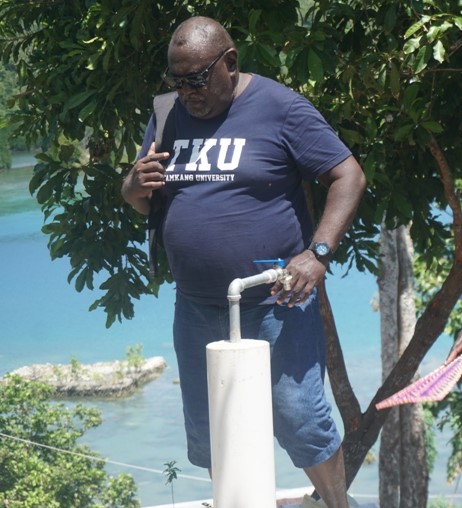
Freedom Tozaka, a chief from Vella

BY BEN BILUA

Gizo

EXPERTS say reviving traditional knowledge can complement resilience of the Pacific region.

Research carried out by Siosinamele Lui of Secretariat of the Pacific Regional Environment Programme (SPREP) on tradition knowledge found that countries in the Pacific have traditional resilience mechanisms, which exists and have been practised over decades.

Speaking to the media cohort for the Pacific Resilience Meeting (PRM) 2021 earlier this week, Lui said contextually, traditional knowledge and modern scientific are similar, they just use different languages.

“Traditional knowledge has climate and weather indicators like scientific indicator which modern technology rely on these days,” Lui said.

“Our ancestors have season to plant root crops, harvest and also they can predict the weather. These knowledges are still practiced in many pacific island countries,” she said.

Lui said there is a need to review and merge traditional knowledge into scientific knowledge to build resilience in the Pacific.

Speaking of traditional knowledge, Freedom Tozaka, a chief from Vella Island in Western Province (Solomon Islands) said people in his community are still depending on traditional knowledge passed down from their ancestors to survive.

“We are island people, and we can predict the weather, know when to travel by sea and also when to plant our root crops like taro,” he said.

“Traditional knowledge is in our system and many times we depend on traditional knowledge to survive.”

Tozaka said globalisation and the changing weather patterns due to climate change present new challenges to traditional knowledge weather and climate indications.

He said frequent rainy seasons and sea level rise has applied pressure on food security and also people’s way of life.

“Our traditional knowledge on weather is that we have only two season, wet season which last from November to April and dry season from May to October. We expert Western trade wind known as Koburu and Eastern Trade Wind Ara around these seasons. Currently strong wind can hit any time so as heavy rain,” Tozaka said.

Tozaka acknowledges that there is a need to merge scientific and traditional knowledge to establish effective reliance mechanism and policy that would help communities mitigate disasters.

SI sets to graduate from LDC by 2024

0
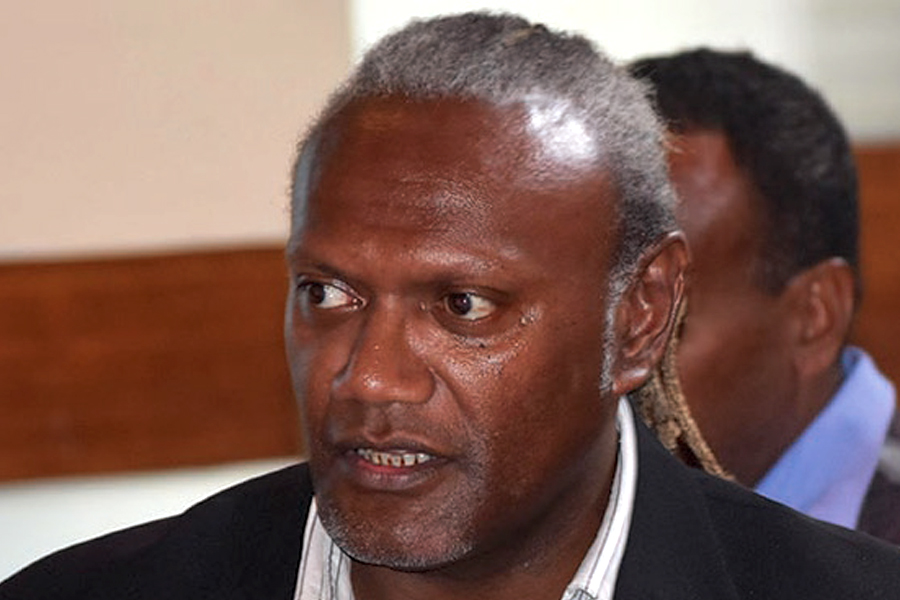
Prime Minister Manasseh Sogavare.

SOLOMON Islands is scheduled to graduate from the category of Least Developed Country (LDC) by 2024.

Prime Minister Manasseh Sogavare highlighted during his 43rd Independence Address on Wednesday this week.

The Prime Minister said while LDC graduation has potential benefits such as a heightened sense of national progress that accompanies a move out of the lowest rung of the development ladder, the COVID-19 pandemic has severely affected LDC’s and Small Island Developing States.

“Solomon Islands is already facing deep economic contractions and suffering the socio economic consequences of lockdowns and travel restrictions. There are likely serious consequences on our development trajectories,” he said.

The Prime Minister said there is also the risk of future regress in graduation eligibility.

Prime Minister Sogavare said financing needs will be difficult to cover and likely to widen poverty gaps and make achieving the Sustainable Development Goals and leaving no one behind more difficult.

As such, he said it might be necessary to reconsider a delayed LDC graduation.

“The Government is undertaking further analysis and using recent results of a few studies on the socio- economic impacts of COVID-19 to guide discussion on the issue of LDC graduation,” he said.

Prime Minister Sogavare said it is important to ensure a smooth transition is crucial.

The Prime Minister said smooth transition implies that the loss of international development partner support measures and preferential treatment granted by the fact that SI is an LDC should not harm our countries development progress.

“The smooth transition strategy should also outline the direction to ensure the transition builds from existing plans and strategies, bridge gaps within economic growth sectors that would also contribute to improve the social sectors of the country,” he said.

He said it should also be more innovative to accommodate changes of the new normal brought about by the COVID-19 pandemic.

The theme for this year’s independence is “Our Country, Our Children, Our Future: A resilient, peaceful and united Solomon Islands”.