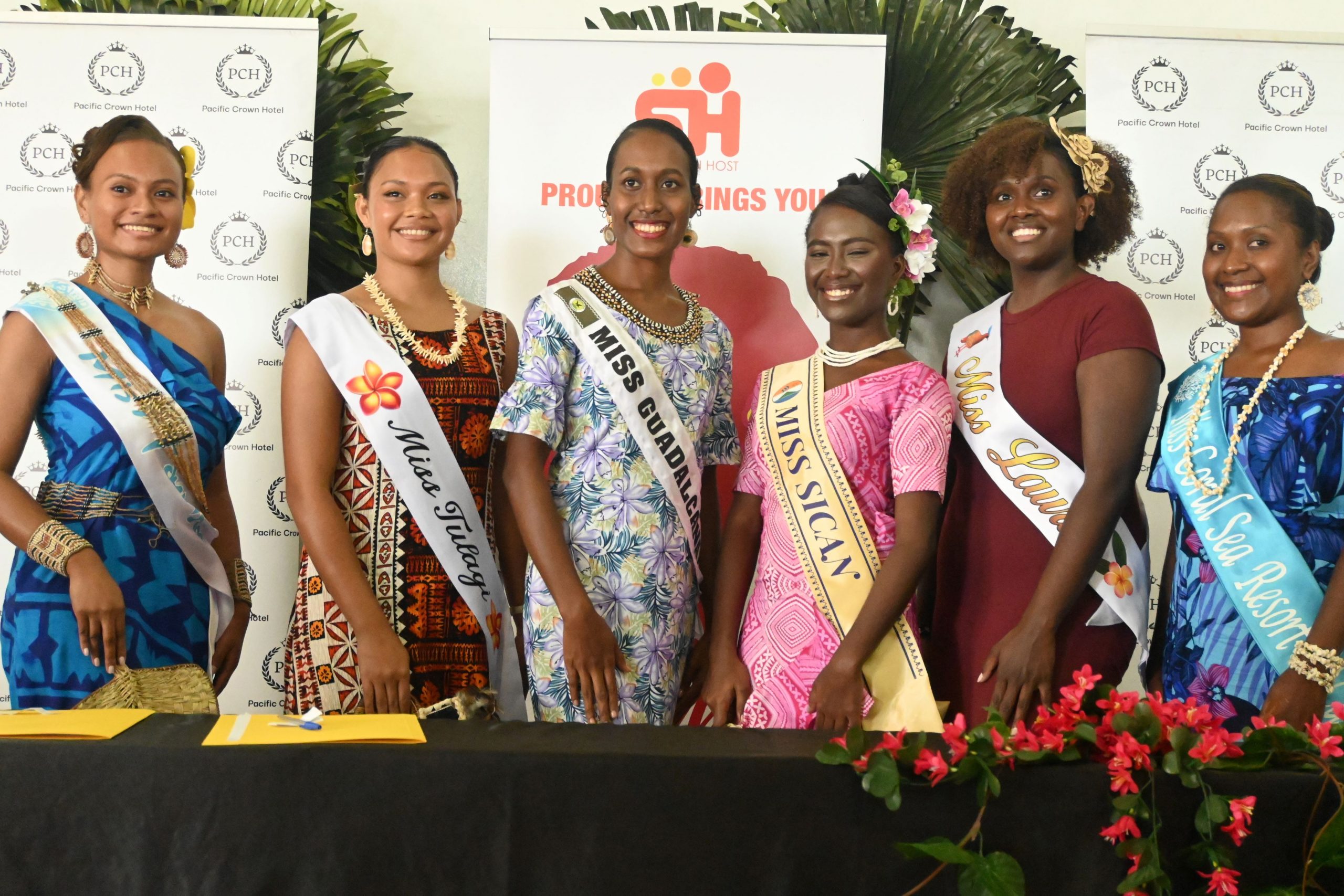
THE six young women slated to contest in the upcoming Miss Solomon Islands Pageant (MSIP) next month have been officially introduced yesterday.
The introduction took place during a press conference hosted at the Pacific Crown Hotel, the sponsor for the 2024 MSIP.
The 2024 contestants are:
Miss Solomon Islands Climate Action Network (SICAN), Azarinnah Zolela Stevens,
Miss Tourism, Kerrie Faradatolo
Miss Tulagi, Zayniellar Soakai,
Miss Guadalcanal, Ezinma Kausua,
Miss Coral Sea Resort and Casino, Sharllyma Aruhane,
Miss Lauru, Elsie Polosovai
Each contestant was given the opportunity to presented themselves alongside their respective chaperone and sponsors.
Solomon Host Chief Executive Officer and Director of the MSIP, Joyce Konofilia, acknowledged the contestants for their participation
“Thank you for being brave and raising your hands to contest” Konofilia said.
“I just want to encourage you to enjoy it, make friends and learn as you go and read more on the theme for this year -Women empowerment for Sustainable Development” Konofilia added.
She also extended her appreciation to their respective parents, families and sponsors for their support towards the girls.
Konofilia noted that the number of contestants had reduced from an initial 11 to six due to a lack of sponsors.
The people with disabilities in the Solomon Islands were represented at the Pacific Disability Forum which runs from 8th – 10th July at Tanao Waterfront Hotel, Lautoka in Fiji.
Casper Fa’asala Chief Executive Officer of People with Disabilities Solomon Islands (PWDSI), told Island Sun in an exclusive interview on Wednesday this week.
“The Meeting happened here in Lautoka, Fiji at the Tanoa Waterfront Hotel. It Starts on Monday 8 July and concludes on Wednesday 10 July,’’ he said.
He said that the Pacific Disability Forum (PDF) has a vision for achieving disability inclusion and equity within climate and disaster resilience.
According to Fa’asala, this vision is fixed in its draft strategy for Disability Inclusive Resilience (Pacific Disability Inclusive Resilient Development Strategy (the Strategy) which covers ten years from 2023-2033.
“PDF acknowledges that this vision cannot be achieved without the help of partners to realize its vision in the Pacific, which is one of the most disaster-prone regions in the world,’’ he said.
He stated that the ten-year draft Strategy is an extensive and detailed document that strives to outline strategic actions in pursuit of its working vision for achieving disability inclusion within climate and disaster resilience
“The draft strategy also offers opportunities to review and include regional gender commitments made by Pacific leaders through the Revitalized Pacific Leaders Gender Equality Declaration and the 2050 Strategy for the Blue Pacific continent.
“The review of the draft strategy importantly also offers opportunities for self-assessments using the Pacific Resilience Standards (PRS), a practical tool that aims to strengthen the effectiveness, quality, and integrity of resilience-building efforts and interventions such as the formulation of a regional disability inclusive resilience development strategy.
“The regional convening is supported through UN Women Fiji MCO, and one of its programs, the Women’s Resilience to Disasters (WRD) program. In bringing a collective and resilient pathway to the PDF vision, UN Women is supporting PDF to convene the regional event of partners, stakeholders, and Organisations of Persons with Disabilities (OPDs),’’ he said
Mr Fa’asala said that it is proposed that this convening will ensure that this vision and the accompanying strategy are inclusive, equitable, gender-responsive, and resilient through the ten years of implementation.
He stated that the key objectives of the workshop of the three-day regional convening will have these specific objectives:
1. To create a space that facilitates a direct and trusted conversation between stakeholders and partners with ODPs and the Pacific Disability Forum (PDF), that will provide insights into strategic thinking for a ten-year disability-inclusive resilience strategy.
2. To ensure a review and strengthening of the draft Disability Inclusive Resilience Development Strategy, which considers women’s resilience to disasters and is gender-responsive.
3. To convene a capacity support dialogue and learning on resource mobilization for Pacific ODPs that will contribute to the resilience of their work.
“The event is expected to deliver the following results,(a) Support the PDF and regional ODPs to have a resilient and trusted space with partners and stakeholders that will be in place throughout the ten-year implementation of the disability-inclusive resilience development strategy. (b). The formulation of a gender-responsive, disability-inclusive resilient development strategy. (c). The sharing of learnings and contextual ideas and best practices for resource mobilization. (d). Improved understanding of WRD by partners and stakeholders across PDF and the regional ODPs,’’ said Mr Fa’asala.
Prime Minister Jeremiah Manele has said China is Solomon Islands’ largest trading partner.
The Government for National Unity and Transformation (GNUT) leader made the statement during his first keynote address at this year’s 46th Independence anniversary in Honiara.
He said that the GNUT Government is already collaborating with the private sector and smallholder farms during the first hundred days.
“We have made great steps in progressing market access opportunities with the People’s Republic of China with exports already possible for several products including noni juice, roasted Cocoa, other value-added chocolate products, roasted coffee, and sawn timber.
“As it is with most countries in the Asia-Pacific region, China is our largest trading partner,” he said.
He said that the GNUT is expanding these products and has in the past week finalized tax-based discussions on product-specific sanitary and phytosanitary protocols.
“That will pay the way for exports of any aquatic products captured in the wild or cultured aquatics such as seaweed and roasted cocoa and coffee beans and spices such as turmeric, ginger, and chili,” said Manele.
“This afternoon (Monday 8th July) I will be leading a high-level delegation to China accompanied by several ministers.
“We hope to finalise and sign the Memorandums of Understanding during this visit to enable the Solomon Islands to trade directly with China on these four additional product categories. We will continue to expand the commodities that we will export to China,” said the PM.
He stated that the GNUT hopes that farmers in rural areas can earn money by exporting these products to China.
He stressed that the government is trying to expand our economic base to involve the agriculture and fisheries sectors in international trade.
“Trade and investment are a vehicle to reinvigorate growth, inspire diversification of opportunities, and catalyze partnerships with the private sector.
“Our government’s policy of friends to all and enemy to none paves the way to tackle and enhance productive capacity and trade to achieve our development aims,” he said.
He said that the Government has started work on the country’s first-ever national export policy that will enable the Solomon Islands to export commodities in this evolving global economic environment and set a path towards diversification and a subsequent industrialisation policy.
“The institutional and policy guidelines will guide policymakers to enhance the role of trade as a key driver to economic growth and to raise the level of human development and improve living standards for Solomon Islanders.
“As you will all know, our narrow economic base is very vulnerable to external economic shocks.
“Therefore, this government is trying to broaden our economic base,” he said.
The trial involving five people, including newly elected Member of Parliament for North East Guadalcanal Jamie Lency Vokia, is scheduled to commence next week from July 15-19 before Chief Magistrate Emma Garo.
During the final interim-mention in court yesterday, prosecution informed court that there had been a change of prosecutors.
Initially, the Director of Public Prosecutions was the counsel in carriage of the file. However, due to a family issue that required his attentions, the court vacated the previous trial date and reschedule it for July 15.
The Director of Public Prosecution reassigned another prosecutor within their office to handle the case, and crown have no issues with the trial commencement date.
The defence counsel for the five accused also informed the court that they have no objections to the trial commencing next week and the five accused were all appeared in court.
Court suspended to July 15 for trial. Bail for all accused extends.
Ethel Claudia Lency Vokia and his co-accused Jaimmie Lency Vokia and Rose Tala and Polycrap Peresini and Beason Moses are jointly charged for one count of conspiracy to defeat justice and interference with the witness, contrary to section 116 (b) of the Penal code cap 26 to be read with section 21 (a) of the Penal Code (cap 26).
Ethel is also facing a separate charge of Election Bribery contrary to section 126 (1) (a) and (b) (ii) of the Electoral Act 2018.
It was alleged that Jamie obstructed the due course of justice and Ethel and the three other defendants aided and abetted him between 20 January 2020 and 27 January 2020 in Honiara, preventing a woman who was lawfully bound to appear and give evidence as a witness from appearing and giving evidence at the High Court.
This was during a High Court hearing of the Election Petition case lodged against Jamie.
Jamie lost his seat after the High Court found him guilty of three counts of briberies at the Election Petition hearing in 2020.
A bye-election was held later in 2020, which Jamie’s wife Ethel win the Parliament seat for Northeast Guadalcanal.
It was further alleged that on 7 January 2018, Ethel gave $250 to a person with the intention of influencing that person and two others to vote for Jamie at the 2019 National General Election.
Vernon Taupongi from Public Prosecution Office appears for crown and Walter Rotumana of Rano & Company appears for all accused.
THE People’s Alliance for Change, Reform and Advancement (PACRA) provincial government of Makira Ulawa province (MUP) has announced its key priorities for the progress of the province. Premier of MUP Stanley Siapu in his traditional opening remarks to welcome the 11th assembly of MUP to a full assembly meeting at Kirakira yesterday to debate the province’s original budget 2024/2025 He said the PACRA government is committed in its pursual to realise its people are self-reliant, social and economic self-sufficient. Siapu said in the pursuit PACRA will adopt an all-inclusive and impartial development approach to materialize the expected policy outcomes, by accomplishing the following priority segments: • Explore the provinces legal competencies • Capacitate and strengthen the legislature office • Re-establish and strengthen the province’s community governance regime • Embark on programs to empower the people • Strengthen the provinces revenue base • Embark on an infrastructure development program • Enter into a foreign sister – sister province relationship • Establish and legalize the premier’s secretariat • Pursue a customary land registration & land use program • Instigate and pursue fundamental reform programs • Review and capacitate the provincial public service cadre • Prepare the provincial government to adopt the federal government system He said the province’s political and development journey will not be easy, but with people’s political will, determination and well-planned programs and policies, the people will receive and delivered. Siapu along with the mentioned priorities the PACRA government will explore the legal competencies provide for in the Provincial Government Act 1997, Solomon Islands Constitution (Ch.12) and the province’s attained devolution orders (1,2&3). He said these will equip the government to manoeuvre in exercising its policies, instructions and ordinances. Siapu also said another area PACRA government will work towards as part of its priority is to approach national government to provide transport logistics support and assist the province with a fleet of road maintenance machines to maintain run-down roads in the province.
The People’s Alliance for Change, Reform and Advancement (PACRA) Government of Makira Ulawa province led by premier Stanley Siapu is setting a new direction to lead the province forward.
This is summed under the slogan “Building a Prosperous and Happy Makira Ulawa Province” adopted by PACRA with focus to bring the province to new heights.
Presenting the traditional opening speech to the 11th assembly of MUP during a full assembly meeting at Kirakira yesterday, Siapu clarified that the adopted slogan is a pillar of significance providing a foundational road map that sets a new direction for Makira Ulawa province.
He added that it is designed to address the underlying bondage that hinders fair distribution of socio-economic prosperity in the province.
Siapu said one which PACRA will ty to address is to ensure people realise their potentials by making great use of it to replace the dependency syndrome.
“PACRA government will embark on fundamental reforms and programs to empower the people of this province to steer them away from the dependency syndrome that is alarmingly infesting the rural populace, turning able into disable,” he said.
Siapu said the PACRA government will embark on fundamental reform program to prepare MUP in redirecting, reforming and transforming its major sectors to realize sustainable socio-economic development for people of the province.
He said the PACRA government also planned to address the provincial manpower gap to fully realise its policy direction and to attain its mandatory.
Siapu furthered that as way forward for MUP, PACRA government will re-establish the province’s 3rd tier governance system.
He said this is people’s government that will directly involve people’s participation in the province’s governance, let alone development aspirations.
According to the premier, MUP government only owned 2.2% of the provinces land mass, leaving 97.8% in customary ownership.
He said in a layman’s perspective, all development initiatives and projects belong to and own by the people of Makira Ulawa province.
“Therefore, central to any rural based development are the people and PACRA Government upholds the philosophy,” Siapu said.
In that he said the PACRA government believes in trying other alternative ways to boost advancement and progress the province in terms of developments
Siapu added that another area his executive will deliberate is on a sister province relationship, as an alternative to encourage economic and social exchanges and involvement for both sides.
He said PACRA government is committed to assist in private sectors in Makira Ulawa province to drive the provinces production sector forward.
Siapu said these areas include; fisheries, agriculture, livestock and tourism are the backbone of the province’s economy, where government will support the sectors through sectoral policies and ordinances.
Solomon Island’s team celebrate a goal at the OFC Men's U-19.Championship 2024, Fiji v Solomon Islands, FFS Football Stadium Apia, Monday 8 July 2024. Photo: DJ Mills / www.phototek.nz
BY ELTON LONARATHA JNR
THE Solomon Islands national U19 men’s football team is on the brink of a historic achievement as they stand just two victories away from qualifying for their first-ever FIFA U-20 World Cup.
The young Solomon Islanders have their sights set on the prestigious tournament, to be held in Chile in 2025, and are determined to make their mark on the global stage.
Currently, the team is leading Group A in the Oceania Men’s U19 Championship, being hosted in Apia, Samoa. With six points under their belt, they are in a strong position to advance to the semifinal and potentially the grand final of the tournament.
This would not only be a monumental achievement for the team but also a significant step towards their World Cup dream.
Today, the Solomon Islands will face Tahiti in their final group match, knowing that a draw or win will secure their position at the top of the table.
The game, taking place at the FFS Football Field 2 in Apia, promises to be a thrilling encounter as Tahiti also seeks to solidify their place in the semifinal.
Group A contenders Tahiti and Fiji are neck and neck, vying for the second spot in the group. Both teams have three points each, and their final fixtures will be decisive in determining their fate. Fiji, in particular, has a straightforward path to the semifinal, as a win against Vanuatu today will secure their place.
Meanwhile, in Group B, New Zealand has already punched their ticket to the semifinal with two convincing wins. They will face Papua New Guinea (PNG) in their final group match, with the outcome determining their opponent in the next round.
New Zealand is seeking their ninth title in this tournament and aims to continue their dominance in Oceania football.
The host nation, Samoa, is also in contention for a semifinal berth. They will face New Caledonia tomorrow, with the winner advancing to the first semifinal against the Group A leaders.
The final group fixtures for today hold significant weight. At noon, Vanuatu will take on Fiji, both seeking to keep their World Cup dreams alive. The later game at 3:00 pm between Tahiti and the Solomon Islands will be a crucial battle for group supremacy and a step closer to the World Cup.
Tomorrow’s Group B matches will conclude the group stage. PNG will face a formidable New Zealand side at noon, followed by New Caledonia vs Samoa at 3:00 pm, with both teams eager to secure the remaining semifinal spot.
Only the top two teams from each group will advance to the semifinals, and from there, the winners and runners-up will earn their tickets to the FIFA U-20 World Cup 2025.
The Solomon Islands’ potential World Cup debut has captured the imagination of their nation, and the team carries the hopes and aspirations of their country on their young shoulders.
As the tournament reaches its climax, the young Solomon Islanders remain focused and driven. Their journey towards potential qualification has already inspired a generation, and they are determined to leave their mark on the Oceania Men’s U19 Championship and, ultimately, the FIFA U-20 World Cup.
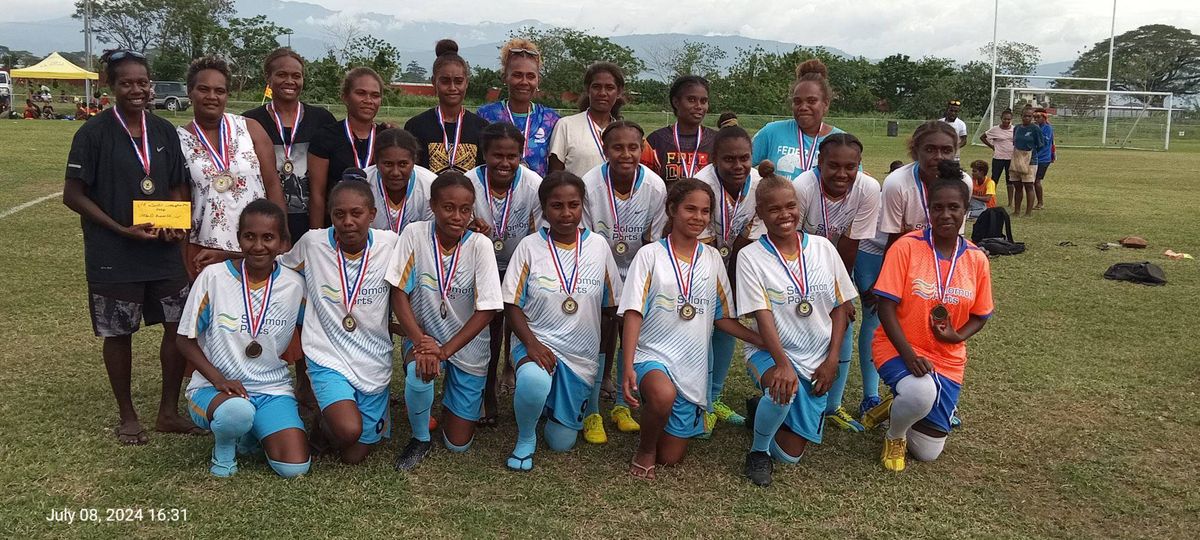
THE Malango Women’s Football Club (FC) concluded their campaign in the second edition of the Guadalcanal Football Association (GFA) Women’s Championship with a well-deserved Bronze medal, leaving them hopeful for an even stronger performance in the next tournament.
A total of six teams from across the province competed in a round-robin format, with players aiming to impress and secure a spot in the final squad that will represent Guadalcanal in the upcoming Women’s Solomon Cup later this year.
The championship concluded on Monday at the DC Park in East Honiara, with the final round of fixtures followed by an awards ceremony to recognize the winning teams.
National women’s striker, Jeminah David, featured for her home club and made a significant impact, contributing to the team’s impressive third-place finish.
“I am incredibly proud of our team’s performance, especially given the challenges we faced throughout the week,” David said. “This is a big improvement from past years, and I want to thank our guest players for their contributions. We are also grateful to our families, friends, and supporters who cheered us on. We hope to build on this momentum for the next edition.”
The tournament showcased the growing talent and potential of women’s football in the province, and the Malango Women’s FC has certainly left their mark, setting their sights on future success.
Meanwhile, the order of presentation for the second edition is as follows:
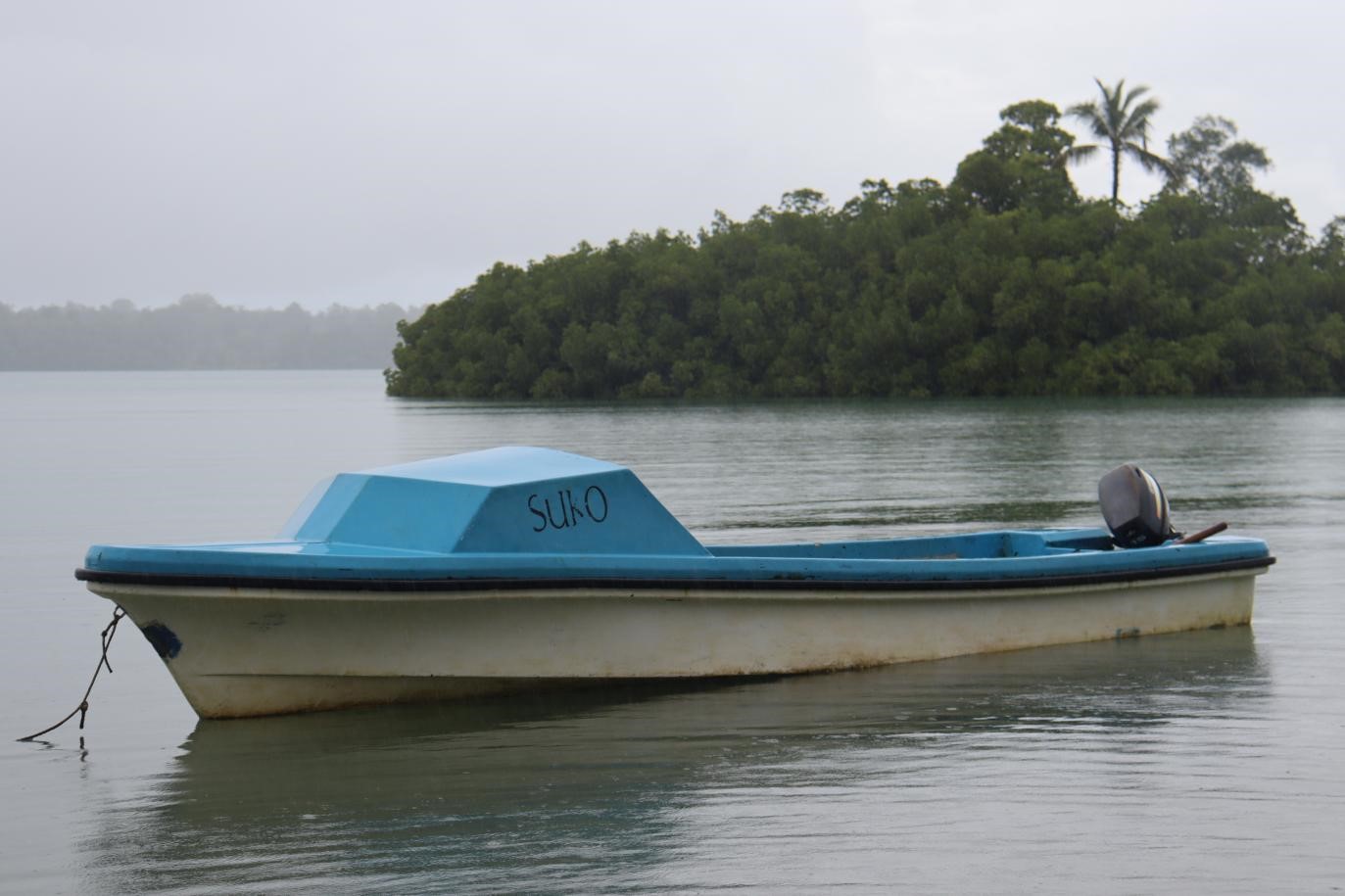
Mr Boti’s Out Board Motor and boat given to him by the former Member of Parliament during his first term in parliament. Photo credit - MAVIS PODOKOLO
Many voters in West New Georgia Vonavona constituency in the Western Province are deeply dissatisfied with the lack of transparency, management and distribution of Constituency Development Funds (CDF) according to a recent voter survey conducted by two female Journalists shortly before the April national elections.
Conducted in the constituency of West New Georgia Vona Vona, the voter survey reveals deep levels of dissatisfaction with how CDF funding has been managed and distributed with 92 per cent or respondents saying that had not received any assistance from the outgoing MP’s CDF during the life of the last parliament.
Introduced in the 1990s, the CDF is designed to act as a crucial resource for Members of Parliament to address the needs of the communities and promote development at the grassroots level.
However, our survey revealed a range of concerns regarding the management and distribution of CDF funding in the North West New Georgia constituency.
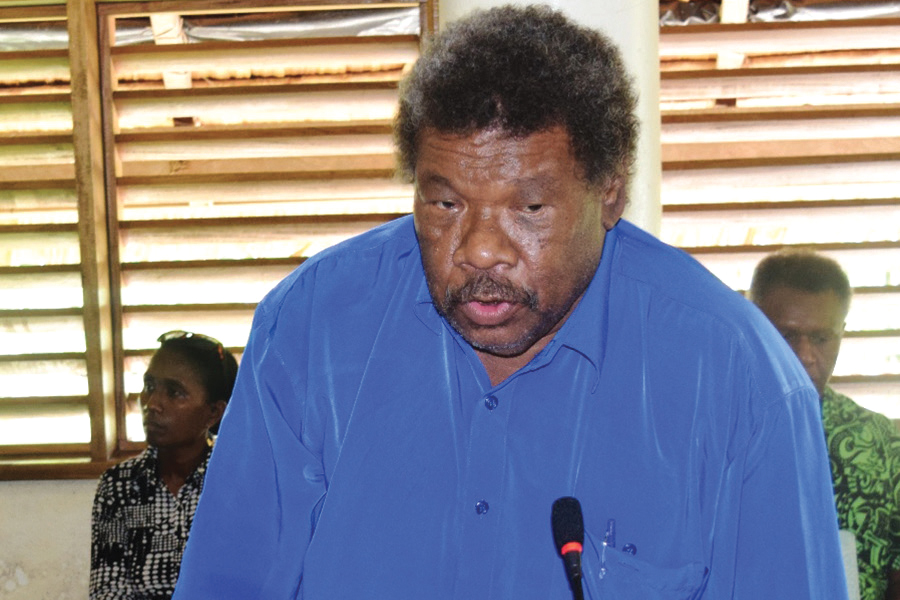
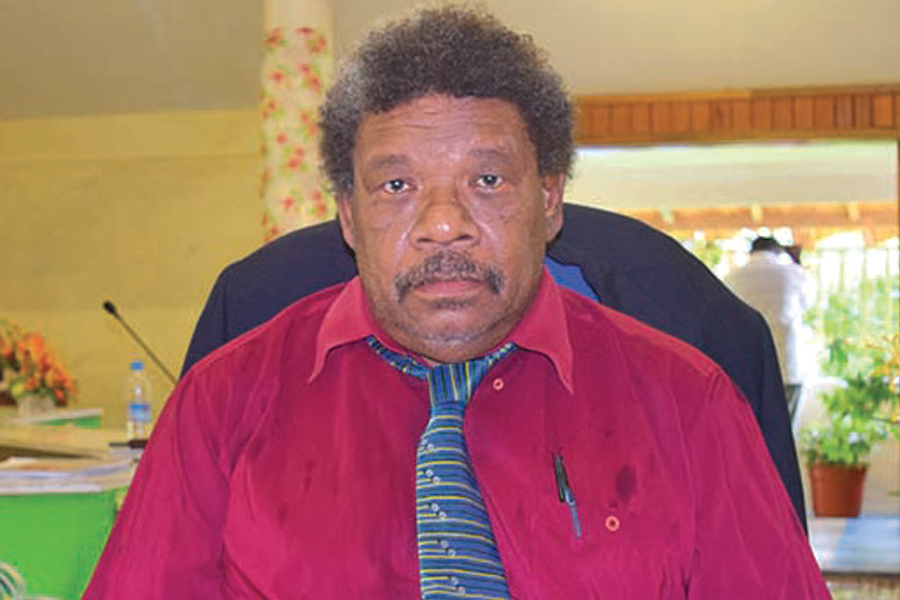
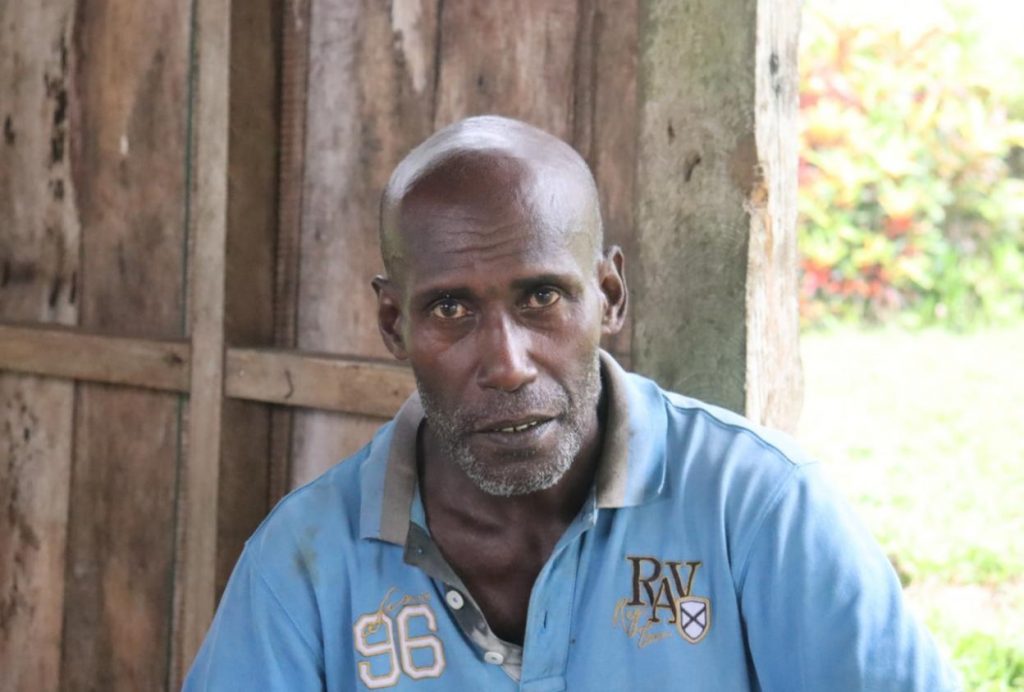
Almost all of those surveyed raised concerns about a lack of transparency, and called for a systemic change in the management of CDF funds. According to the voters’ survey carried out in West New Georgia Vonavona constituency almost 85 per cent of those who took part in the survey said they did not know who was the Constituency Development Officer responsible for managing the funds. Samson Boti one of the outspoken respondents echoed “this lack of transparency in identifying the key personnel accountable for the utilisation of public funds reflects a concerning trend of opacity within the system”.
Samson Boti. Photo credit – MAVIS PODOKOLO.
The survey participants unanimously voiced their desire for greater transparency and accountability in the way the Constituency Development Funds are distributed.
This collective call for change is underscored by high levels of frustration and disillusionment among the electorate regarding management of CDF funds.
The survey results also support the concerns expressed nationally that the distribution of CDF funding is now heavily influenced by politics with over 92 per cent of respondents saying that they believed they had been denied access to any CDF funds support because they had not voted for the former member in previous elections.
This perceived bias in assistance provision based on political affiliation raises serious ethical and governance concerns.
It not only undermines the principles of democratic representation but also exacerbates existing socio-economic disparities within the constituency.
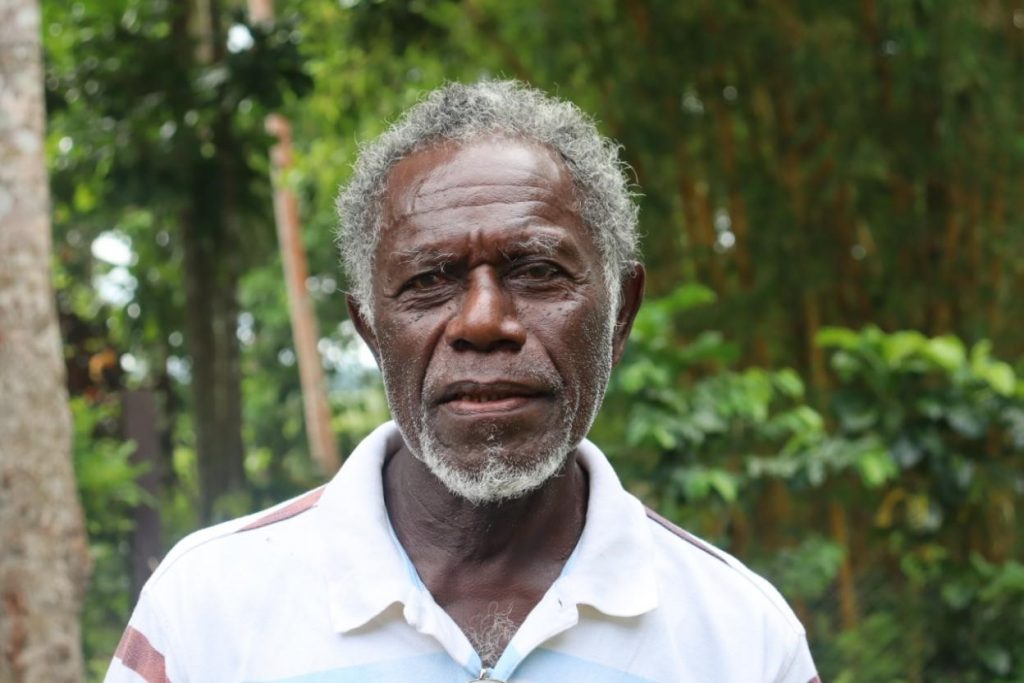
Jeffery Sione from Rawaki says addressing this issue is paramount to fostering inclusivity and ensuring that CDF resources are allocated based on genuine need rather than partisan interests.
The voters survey also highlighted almost 70 per cent of respondents highlighted water, education, and health as their primary concerns, reflecting a pressing demand for essential services in the constituency.
Whilst almost 40 per cent identified said jobs, economic opportunities and financial assistance as key areas needing to be urgently addressed.
The diverse range of needs underscores the multifaceted nature of development requirements within the constituency, suggesting a more comprehensive approach to address these issues effectively is needed.
A third of those respondents who said they had been denied access to support under CDF were women, highlighting the role gender plays in the disparity of access to development in the country.
Pastor Malin Mitau from Konguaqorana,Vonavona lagoon echoed the importance of amplifying the voices of women in decision-making processes related to resource allocation and development initiatives.
Pastor Malin Mitau.Photo credit – MAVIS PODOKOLO
“By ensuring gender-inclusive participation, policymakers can gain valuable insights into the unique challenges faced by women and devise targeted interventions to address their specific needs, thereby promoting gender equality and social inclusivity,” Mrs Mitau said.
Former Permanente Secretary for Ministry of Rural Development, the ministry responsible for the CDF funds Samson Vuilu said under the newly passed CDF ACT 2023, 40 percent of the funds will be allocated to activities categorised as resources and private sector activities.
Another 20 percent will be allocated to essential services like Police and health and the remaining 20 percent will be accorded to social and Cultural obligation for leaders.
“The intention here is to support our economic to grow so we can self-sustainable. We cannot rely on our friends overseas,” the former PS said.
He said the new CDF ACT 2023 will not only help our rural people and communities better understand their roles under the new law but will also help them to use it accordingly.
PS Viulu adds the CDF ACT 2023 focuses on strengthening good governance, to ensure improved and effective delivery mechanisms of the constituency Development Funds and to promote equal and inclusive participation of all Solomon Islanders in development.
In the survey many recipients as well as non-recipients of CDF funding are pushing for reforms that will foster greater transparency, enhance community engagement, and promoting gender-inclusive participation.
Ronald Kere a respondent from Rarumana village says “there is a need to build trust, promote development, and uphold the principles of good governance within a constituency.”
Ronald Kere. Photo credit – MAVIS PODOKOLO.
Solomon Islands has 50 constituencies scattered across more than 700 inhabitable islands.
Malaita Province, with the largest population has 14 constituencies followed by Western and Guadalcanal provinces with eight constituencies each.
Makira and Temotu provinces have four constituencies each and Honiara, Choiseul and Isabel three constituencies each.
The country’s smallest province, Rennell and Bellona has one constituency.
The size of the population in each constituency also varies widely across the nation with less than 4000 voters registered in the smallest constituency compared with some of the largest constituencies which have more than 10,000 voters registered according to the Solomon Islands Electoral Commission’s electoral roll which was updated ahead of the recent national election.
However, each MP receives the same amount of CDF funding regardless the size of their constituency’s population.
According to the provisional results of the 2019 census Western Province has a population of almost 72, 500.
The end result on the ground is not reflective of such a large investment in development, with very little sign of sustainable development.
Many villages are still without running water, schools are few and very distant from communities and clinics are not staffed or lack basic drugs.
In the review documents tabled in Parliament it was revealed that each MP in the last parliament received 6.8 million in Constituency Development Funds to provide support to their constituents which would be a cumulative CDF allocation exceeding SBD$3 billion over the last decade.