Home Blog Page 458

Sovereignty more than a constitutional principle

0

BY JOHN HOUANIHAU

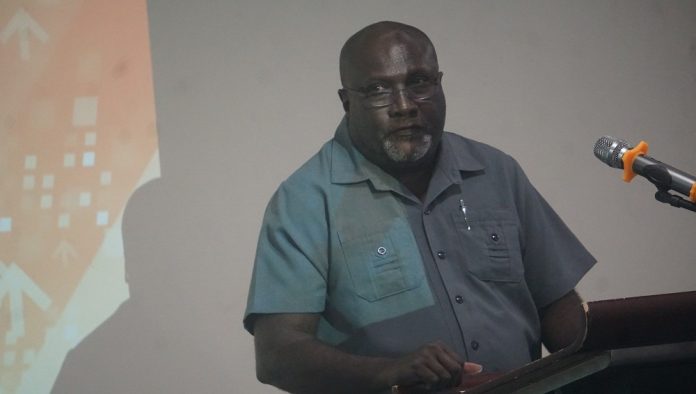
Sovereignty is more than just a constitutional principle—it is the soul of the nation, said Jimson Tanangada, Minister of Police, National Security, and Correctional Services.

“GNUT remains unwavering in ensuring that every decision concerning policing, national security, the nation’s independence, national interest, and long-term stability is protected,” Tanangada stated.

He emphasized the government’s commitment to promoting policies that prioritize the political and economic autonomy of the Solomon Islands.

“We aim to ensure that Solomon Islanders safeguard our resources, make our decisions, and secure our future for ourselves,” he said.

Tanangada also stressed the importance of maintaining national security free from external influence or manipulation.

“While we value regional and international partnerships, our approach will always be guided by one singular focus: the security, dignity, and sovereignty of our people,” he added.

He acknowledged the global nature of security challenges, which require collective responses.

GNUT is committed to fostering stronger security cooperation with regional bodies such as the Pacific Islands Forum, and bilateral partners including Australia, China, and New Zealand.

“Solomon Islands will remain neutral and will not be used to target or antagonize any third party. Security and cooperation must address our specific needs, whether it’s tackling transnational crime, strengthening maritime border control, or preventing emerging threats like human trafficking and illegal fishing,” Tanangada said.

He explained that through these partnerships, the Solomon Islands will enhance its capacity to protect borders, maintain peace, and defend territorial integrity while preserving neutrality.

“As we speak, GNUT is already advancing important security infrastructure, including the development of the Lofang border facility. We thank the Government of Australia for partnering with us on this critical project,” he noted.

Tanangada highlighted the nation’s borders as the frontline of national security and stressed the importance of modern, well-equipped border infrastructure at Lofang, located along the boundary between Shortland and Papua New Guinea.

“Illegal border crossings, unregulated trade, and biosecurity threats are recurring issues in this region. GNUT’s vision includes constructing border patrol facilities, installing surveillance systems, and deploying well-trained personnel to safeguard this critical entry point,” he explained.

He said that securing the Lofang border is essential for protecting the country’s sovereignty and economic interests.

Tertiary education Act amendments progress

0

BY INDY MAEALASIA

PROGRESS is underway on amending the Solomon Islands Tertiary Education and Skills Authority(SITESA) Review Act 2017, with the Ministry of Education and Human Resource Development(MEHRD) taking significant steps to streamline the functions of the Qualification Authority.

MEHRD Minister Tozen Leokana updated the parliament during the Sine die motion last week.

This amendment was one of six priority activities outlined in the Government of National Unity for Transformation(GNUT) 100 days’ policy.

“Our ministry has worked on streamlining the functions of the Qualification Authority and I’m happy to inform you that work is in progress to amend the SITESA Act” Minister Tozen Leokana said.

Minister Leokana stated that a specific section of the act has been reviewed and drafting instructions with recommendations will be forwarded to the Attorney General Chamber for consideration in 2025.

He stressed that supporting the streamlining of SITESA is necessary and vital.

“…this is to ensure that the courses and the qualifications offered by training providers such as SINU, Rural Vocational Training Centers or other tertiary education providers are quality assured, accredited and recognized and relevant to our development goals,” he said.

In addition, the amendment aimed to produce highly qualified and skilled graduates.

SAFENET program expands to Renbel

0
Minister for Women Youth Children and Family Affairs Freda Rotutafi Rangirei.

BY INDY MAEALASIA

THE Minister of Women, Youth, Children, and Families Affairs (MWYCFA), Freda Rangirei, has informed Parliament last week during a sine die motion that the SAFENET program will be expanded to Rennell and Bellona Province in 2025.

 “..we began the process of establishing nine provinces SAFENET, including Honiara City and we have one more to go which is Renbel province. We will establish it next year, 2025,” the minister announced.

SAFENET is a network of service providers working to combat sexual and gender-based violence (GBV). It includes both government and non-government organizations (NGOs) offering vital support and referrals to survivors of violence.

In her address, Minister Rangirei also expressed gratitude to the Australian Government for its ongoing support to the SAFENET program. “I would like to sincerely thank the Australian Government for its generous funding, provision of vehicles, and overall support to all SAFENET members,” she said.

In efforts to combat violence nationwide, Rangirei also highlighted the country’s progress in tackling domestic violence, noting that Solomon Islands is the first in the Pacific region to implement a Domestic Violence Counselling Guidelines policy

 “…this year we have started implementing of counselling guidelines and we have created a registry to assist the qualified counsellors,” she shared

She emphasized that significant efforts are being directed towards preventing violence, especially against women and girls.

“…..next year, we will put even more emphasis on prevention campaign,” Rangirei noted.

The Minister emphasized that the successful rollout of these planned initiatives in 2025 is made possible by the increased budget allocation for the Women’s Development Division

NRH faces essential supply shortage

0

BY JOHN HOUANIHAU

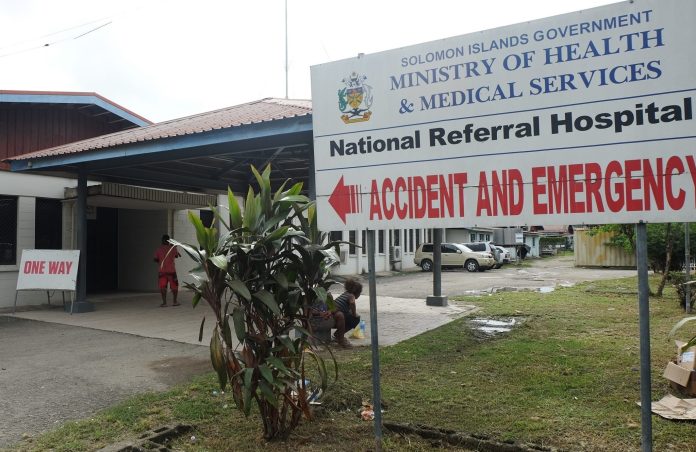
The labor ward at the National Referral Hospital (NRH) has been experiencing a prolonged shortage of essential medical supplies.

Reliable sources informed the Island Sun newspaper last Friday that critical items for mothers in labor are currently unavailable. Additionally, the hepatitis test kit is in limited supply at the hospital’s medical laboratory.

“I am uncertain about the issues at the higher level. It could be related to the pharmacy or financial constraints. I cannot say for sure, but this is the situation we are facing here,” stated the spokesperson, who wished to remain anonymous.

In a recent incident, the spokesperson recounted that a husband was sent to procure necessary items from two pharmacies in Honiara.

“Consequently, mothers undergoing cesarean sections are required to supply these items that are not available at the NRH pharmacy. The labor ward lacks urine bags, cord clamps, betadine, and surgical gloves. Typically, they acquire these supplies from the People’s Pharmacy, while surgical gloves and shaving equipment are obtained from Hyperchem Pharmacy. At that time, the man was sent to these two pharmacies to obtain the necessary items before his wife underwent the operation,” the informant explained.

The spokesperson emphasized that these items are essential for the daily operations of the labor ward.

“Without these items, the procedure (C-section) cannot be performed. These items must be available following the operational protocol. We encountered a shortage six months ago,” said the insider.

The source revealed that the labor ward typically handles between 400 to 500 deliveries each month, with approximately 100 of those requiring procedures such as operations or vacuum extractions.

“Any delays in the availability of these items can have serious consequences. In the event of an emergency, timely action is crucial. A delay could potentially result in the loss of life,” the source emphasized.

“Each month, the department submits a report to the head of the department before it is forwarded to the Medical Superintendent and CEO. They are fully aware of these circumstances, yet no feedback has been received thus far,” the informant stated.

The source also noted that non-sterile gloves have become the primary choice during operations, replacing sterile gloves.

“Non-sterile gloves are advised for non-surgical procedures, as they pose a risk of infection to all involved, including nurses, mothers, and infants during operations. The hospital should be prepared for emergencies, which necessitates that all essential items are readily available,” the insider concluded.

Jullian Joveris, a mother who gave birth at approximately 2 a.m. on Thursday, December 19, shared her experience with the Island Sun.

“Upon my arrival, the nurses informed me that the infant had soiled the baby basket. Consequently, they indicated that I would need to undergo an operation. My husband and I then signed the necessary documents, after which we received a list of essential items required for the operation, including a urine bag, gloves, cord clamps, and several other supplies,” Joveris said.

She recounted how her husband went out to procure the items, only to find that the local pharmacy had already closed for the night.

“He returned and requested the necessary items from a doctor for the procedure. I am uncertain whether he was able to purchase the items from the doctor, but that is what he conveyed upon his return. I felt anxious due to the unavailability of these supplies; nevertheless, I successfully delivered my baby,” Joveris said.

DPASI concludes 2024 on a high note

0

BY JOHN HOUANIHAU

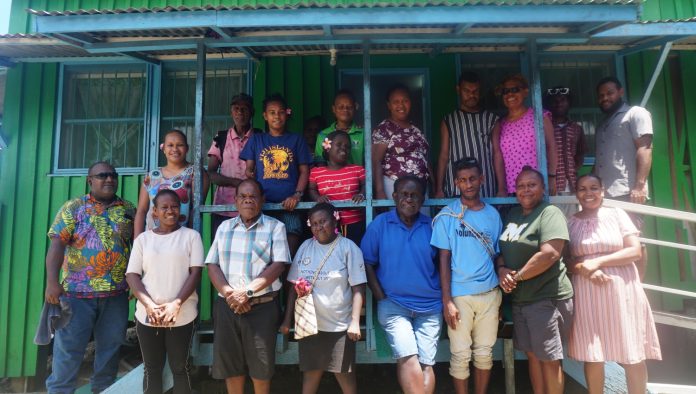
The Disability People Association Solomon Islands (DPASI) has ended the year on a positive note, agreeing on two new programs for 2025.

The first initiative is the establishment of a Savings Club for DPASI employees and individual members nationwide. The second is the commencement of consultations with the Ministry of Commerce in early January 2025 to establish an Integrated Cooperative Society for People with Disabilities in the country.

During a one-day workshop held last Friday, DPASI discussed these two critical agendas, which will guide the association’s direction moving forward.

DPASI also announced that its office will close for business from Friday, December 20, and will reopen on January 6, 2025.

DPASI CEO Casper Fa’asala emphasized the importance of exploring innovative ideas to support people with disabilities and their affiliates.

“The objective is to identify and agree on priorities for next year. This includes considering new programs and innovative ideas to drive our efforts forward,” Fa’asala stated.

He told Island Sun that a major goal is to create employment opportunities for people with disabilities.

“The aim is to engage them not only in production but also in managing the cooperative society once it is operational,” he explained.

Rural farmers: Lifeline of the nation

0

BY JOHN HOUANIHAU

Rural farmers are the lifeline of this nation, says Minister of Police, National Security, and Correctional Services, Jimson Tanangada.

Mr. Tanangada highlighted the challenges faced by rural farmers, noting that their hard work in copra and cocoa farming has often been undermined by a lack of market access and unfair prices.

“The re-establishment of CEMA will revitalise our agriculture sector, ensuring that our farmers receive fair value for their products. It will create jobs, boost rural incomes, and foster economic resilience,” he said.

He recalled discussions with numerous farmers in Gizo-Kolombangara who shared their frustrations over the absence of markets and adequate support.

“Through CEMA’s re-establishment, we are giving these farmers a renewed sense of hope and a platform to succeed,” Mr. Tanangada said.

He emphasized that coconuts have always been a dependable crop for Solomon Islanders.

“I strongly urge our people to plant coconut trees and engage in copra production. If we are unable to process copra ourselves, we can request the government for technological support to enhance production processes,” he said.

“This is how a partnership works: we do our part, and the government supports our efforts. Let us revive the copra industry,” he added.

Mr. Tanangada encouraged Solomon Islanders to adopt a purposeful approach to daily life, whether it involves planting coconuts, cocoa, or palm oil, tending seedlings, fishing, or running small businesses.

“Every action matters. We must work harder, work smarter, and work together,” he urged.

He challenged every household, community, and young person to reflect on one simple question: What can I do today to help myself and my family?

“The answers are right in front of us—on our land, in our seas, and in our hands,” he said.

Motion a wake-up call: Sogavare

0

BY JOHN HOUANIHAU

Minister of Finance and Treasury Manasseh Sogavare has described this year’s Motion of No Confidence against Prime Minister Jeremiah Manele as a wake-up call for members of the GNUT government.

He stated that if the motion of no confidence had been passed, it would have had serious implications for peace, stability, national unity, and security.

Sogavare emphasized that Parliament would have been irresponsible to pass the motion, disregarding unfulfilled promises of support.

“I’m saying this because, while the motion is worded to target the Prime Minister directly, it is the only constitutional method under parliamentary democracy to remove the sitting government from office. This makes any motion of no confidence very serious and places huge responsibilities on its sponsors to handle the matter with utmost care,” Sogavare said.

He further explained that the serious implications of such motions have not always been emphasized in every motion of no confidence brought before Parliament since independence.

“It has continued this way for 19 years post-independence and remains so today. Instead, what has often been the cause of instability is personal dislikes of individuals,” Sogavare said.

He acknowledged that while the recent motion is now “water under the bridge,” it should not be dismissed as merely a failed attempt to topple the government.

“This does not mean that we can just pat ourselves on the back and return to business as usual. It is a serious, serious wake-up call,” he stressed.

Sogavare reminded members of the government bench that being in government is a privilege that must continuously be earned by meeting the expectations of Parliament and the people.

“If there is any lesson to take from the attempted motion of no confidence, it is this: the government has made big, significant policy statements, and we must be fully committed to delivering on them. Nothing less will suffice,” he concluded.

POLICY FOR MOI

0

Malaita Provincial Government sets strategy framework for resettlement

BY SAMIE WAIKORI

The Malaita Provincial Government has established a policy framework for the resettlement and establishment of a provincial substation in the Malaita Outer Islands (MOI).

The policy is part of the Malaita Provincial Government’s broader resettlement and essential infrastructure initiatives for the development of MOI.

According to the Elijah Asilaua-led Malaita Economic Cooperation and Transformative Government (MECTG) redirection policy, a new substation is proposed for MOI.

“The MOI substation will establish the essential infrastructure and services needed for the fifth region of Malaita Province,” the policy states.

“This aims at creating an office for substation administration, as well as a police post to support both domestic and national security on the northern Solomon border.

“The need for education, health, and other related services infrastructure—including an airstrip, telecommunication, and energy—has been identified as essential for the MOI sub-region,” the policy says.

Currently, four substations exist on the mainland of Malaita, including Afio in the southern region, Malu’u in the northern region, Atori in the eastern region, and the central region at the provincial headquarters in Auki.

Meanwhile, the Malaita Provincial Government will work with the Solomon Islands Government (SIG) to review the resettlement policy framework for MOI.

“The MOI resettlement policy aims to address the impact of sea-level rise caused by climate change on the low-lying atolls of Malaita Province.

“The policy seeks to review the resettlement policy framework as a tool for project implementation to outline resettlement objectives,” the policy adds.

The Malaita Provincial Government and SIG will cooperate on arrangements, funding mechanisms, and other strategic legal interventions necessary for the resettlement of the MOI community on the main island of Malaita.

Fanalei community benefit from the seaweed farming  

0

BY SAMIE WAIKORI

Seaweed farmers at Fanalei in Small Malaita are benefiting from seaweed farming activity. This is after one of their recent sales, where they sold more than 100 bags of seaweed product in Honiara.

A staff from Malaita Provincial Fisheries Office in Auki, Alick Konamalefo revealed this upon report the office received from the farmers.

He voiced that apart from Lau lagoon in the northern region, Fanalai is among other areas in the province with large seaweed farming activities.

Adding that for southern region, Fanalei has the largest farming activity as well as the main supplier of seaweed seedlings for farming in the region.

 “Seaweed farmers from Fanalei community engaged in this fisheries economic activity for sometimes and they are reaping the harvest.

“With their recent sale, it boosted their interest into the program and MPFO encourages them for more meaningful engagement in it.

“This is the ultimate goal of the program, to support coastal communities with income to help improve the livelihood of people,” Konamalefo said.

He said MPFO is proud of the achievement and urge Fanalei community and seaweed farmers around the province to continue on the program.

Konamalefo said the provincial fisheries office is always committed to provide assistance through trainings and other technical areas to support farmers on the program.

SIPA commissions historic domestic seaport passenger terminal

0

BY INDY MAEALASIA

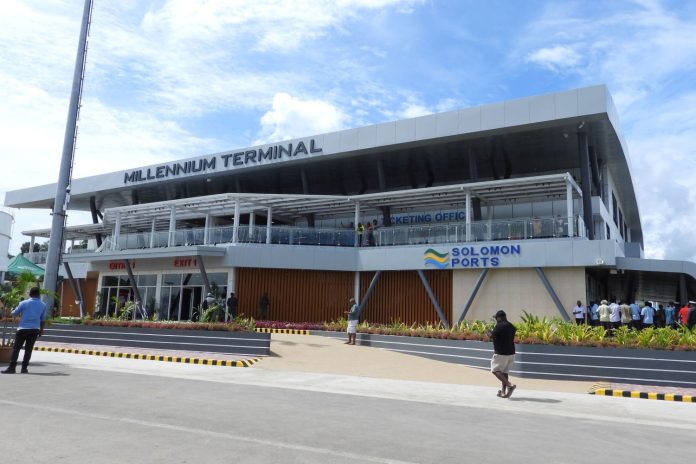
SOLOMON Islands Ports Authority (SIPA) has made history yesterday with the commissioning of its Domestic Seaport Passenger Terminal.

The furnished state-of-the-art infrastructure, dubbed as the “South Pacific’s largest domestic passenger terminal”, is designed to enhance convenience and passenger comfort, particularly for inter-island travel.

Speaking at the opening ceremony, Chief Executive Officer (CEO) Eranda Kotelawala described the ‘Millennium terminal’ as a “significant achievement and a great milestone for Solomon Ports”

“… not only for the ports but also for the industry, for the people and the Solomon Islands as a whole,” he added.

Kotelawala further highlighted the terminal’s self-sustainability, noting that revenue generated from its commercial spaces would be reinvested into maintaining and upkeeping the terminal.

Fully funded by SIPA, the three-floor terminal, which cost just over SBD$100 million, features a range of amenities, including cafes, a ticketing office, passenger waiting areas, shops, paid toilet facilities, and others.

The CEO expressed his deep appreciation for the teamwork that turned the vision of this landmark project into reality.

He particularly acknowledged the contributions and dedication of the local contractors and SIPA staff during the nearly two years of construction.

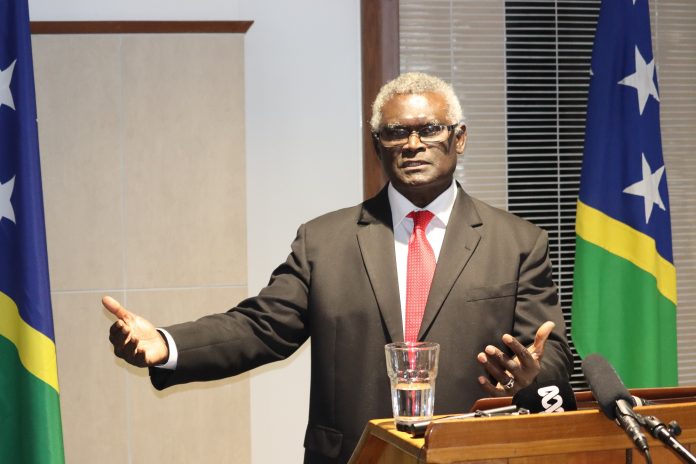
In his keynote address, Prime Minister Jeremiah Manele underscored that the terminal represents far more than just an infrastructure project but a symbol of “progress, a tangible manifestation of our collective ambition, and a milestone” that changes the way the country connects with the outside world

“This is a moment that every Solomon Islander should cherish, as it marks a significant step forward in our nation’s growth and development,” Manele noted.

Passengers traveling to their home Islands will now enjoy the comforts and some of the services provided

“…the building is fully functional but some of the services will start to move in because it’s Christmas so they will slowly move in-all of the shops and the cafes and everything…they can come in, rest, grab something and then it will continuously improve in the next couple of days and weeks,” Kotelawala told local media.