Home Blog Page 399

It takes a whole village to educate a child: Rodie

0

By Loretta B Manele

Educating a child needs the collaboration of all partners.

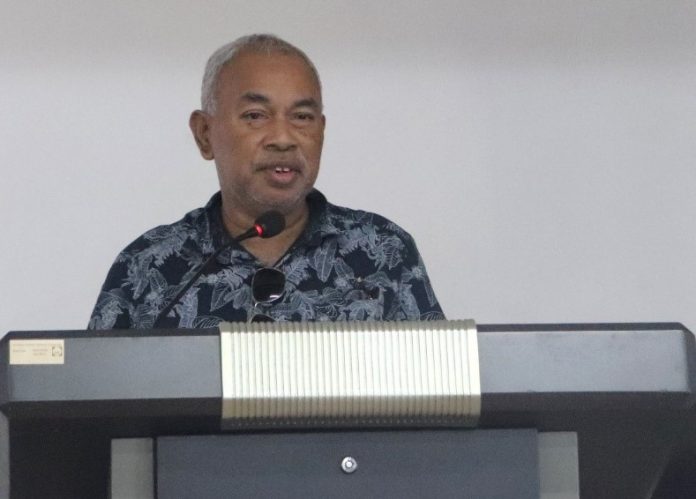
Dr Franco Rodie, Permanent Secretary for the Ministry of Education and Human Resources Development (MEHRD) expressed the sentiment at a recent function hosted at Mendana Hotel to celebrate the work and end of the ESSP (Education Sector Support Program) partnership between Solomon Islands, Australia and New Zealand.

Addressing Rod Hilton, Australian High Commissioner and Rebecca Williams, Acting New Zealand High Commissioner, he said their state government partnership has been a backbone of ESSP.

Rodie voiced that their brave innovation and continued investment in children’s future have had a profound and lasting impact.

“The success stories that you have heard, whether in classrooms, through the voices of teachers, or in communities, speak volumes of your invaluable contributions.

We cherish it as a symbol of true partnership and our shared aspirations.”

Rodie also took the opportunity to thank the education ministry staff, education providers, teachers, students and all stakeholders.

“This success is yours, not mine.

It is the result of your hard work, resilience, and passion. Today we celebrate not just the program, but the spirit of cooperation and unity that defines us, one people, one country.”

It takes a whole village to educate a child and together we have made a difference.”

Rodie also gave a special acknowledgement to the ESSP Project Management Team.

“Our technical advisors, your commitment to ensuring effective communication, consultation, planning and decision-making has been invaluable.”

Rodie stated that there was an increase in local technical advisors since 2022 and this has strengthened their ability to pass practical initiatives empowering our people with skills needed to drive sustainable development, especially in the education sector.

He pointed out that one of the most significant outcomes of the ESSP has been the strengthening of its institutional capacity.

Rodie said through hands-on experience, they have honed their abilities in financial management, governance, compliance, procurement, curriculum development, professional learning and infrastructure improvement.

For feedback, contact: [email protected]

Do your booking for clearing of cargos: Ports

0

BY JOHN HOUANIHAU

Ports Authority has called on drivers and customers to do bookings at Solomon Ports before clearing their cargos or containers.

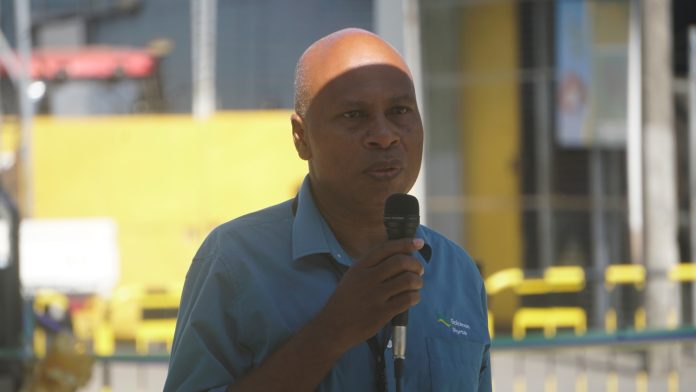
Solomon Ports chief information officer (CIO) and Manager special project Ellison Pade told media during the commissioning of the newly completed Port Terminal Gatehouse Exit last week.

“We have a new system here, and we encourage you to do the booking so your cargos are put aside. By doing so, you just come in, fill in the documents and go straight to pick up the cargo, which is already put aside,” explains Pade.

He said that this will also help with the traffic management and cargo that come in and out of the ports to reduce congestion at the ports, especially cargo and vehicles.

He said that after picking up the containers, drivers or customers can then drive towards the new overhead exit gate for the documentation process.

“The gates are automatics. When the documentation process is completed, wait for the gate to open before you drive out. Just be careful when the documentation process is finished. You wait until we open the gate, then you drive out,” said Pade.

For feedback, contact: [email protected]

‘Traditional food preserving methods important’

0

BY INDY MAEALASIA

DR Hugo Bugoro, a researcher at the Solomon Islands National University (SINU), has emphasised the importance of maintaining traditional food preservation methods to combat climate change and ensure food security.

Recognising the significant impacts of climate change on the Solomon Islands, Bugoro stressed the urgent need to actively maintain these techniques.

He explained, “Climate change adaptability is essential. There are techniques that can help us navigate different weather patterns. Historically, we have seen how preserved food has allowed us to survive difficult times.”

Bugoro reiterated the importance of safeguarding these traditional practices, noting that they are vital for enhancing food security.

“Revitalising these techniques supports sustainable solutions and fosters cultural resilience in the face of modern challenges such as climate change and globalization.

“These practices are key to ensuring long-term food security for the nation.”

For feedback, contact: [email protected]

Solomon Islands seeks higher Pacific engagement visa quota from Australia

0

BY NED GAGAHE

Solomon Islands High Commissioner to Australia, Robert Sisiolo, has called for an increase in the country’s allocation under Australia’s Pacific Engagement Visa (PEV) scheme, citing demographic trends and community size.

Speaking in a recent interview with local media in Canberra, Australia, Mr Sisiolo said the current annual allocation of 150 visas for Solomon Islands does not reflect the nation’s growing population or the size of its diaspora in Australia.

“For us in Solomon Islands, we have a fast-growing population—larger than most Pacific Island countries, apart from Papua New Guinea, which has around 12 – 13 million people,” Mr Sisiolo said.

“Compared to others, our population in Australia is relatively small, but that’s also why this programme is important for us.”

He proposed an increase in the annual quota to between 200 and 500 visas, arguing that the country is on track to surpass Fiji in population by 2032, if not earlier.

The PEV programme, launched in 2023, offers up to 3,000 permanent residency places each year for eligible nationals from Pacific Island countries and Timor-Leste, with allocations determined in consultation with each country.

For feedback, contact: [email protected]

MEHRD working on TVET draft policy

0

By Loretta B Manele

The Ministry of Education and Human Resources Development (MEHRD) is in working progress with the national Technical and Vocational Education and Training (TVET) policy.

Dr Franco Rodie revealed this when he spoke at an occasion organized to mark the end of the ESSP (Education Sector Support Program) partnership at Mendana Hotel earlier this week.

The partnership for the education sector is between Solomon Islands, Australia and New Zealand.

In his remarks, he said education minister, Tozen Leokana, has been very supportive and keen of the reform program and in developing the skills of young people through vocational education and training (TVET).

“I have observed that he’s very keen in developing skills of young people. I’m referring to those competencies, skills, which can be applied in real-world situations.”

On this note, he said the minister had asked him if he could be able to draft a national TVET policy of which they’ve done.

In relation, Rodie stated that for now, thanks to the Australian government, they are waiting on the TA who will spend 20 days to review the draft policy.

He acknowledged Leokana for believing in his team and staff.

“So, thank you, minister, for your enthusiasm, interest and for believing in my team and staff.”

For feedback, contact: [email protected]

Church workers taught to read Holy Scriptures in Aiwoo language

0

In the Reef Islands, the Mikilinave Aiwoo Translation Ministry is committed to see the Scriptures translated into the Aiwoo Language.

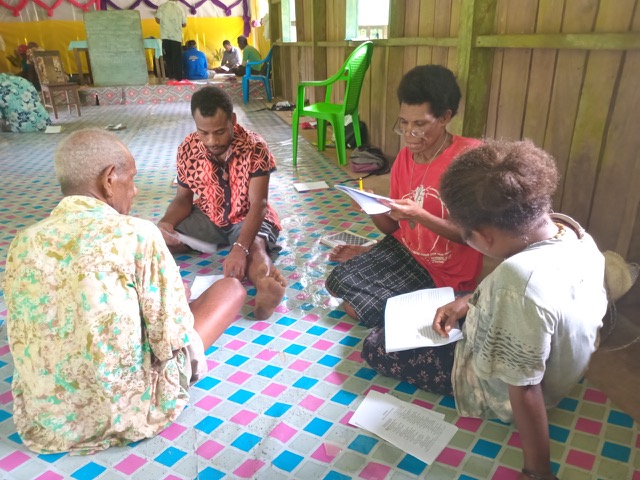
Catechists practise reading Aiwoo reading materials. Photo credit – Martha Matzke

Eighteen clergy and 31 catechists are said to be equipped the Holy Scriptures in the Aiwoo language following two sets of training by Solomon Islands literacy group, SITAG.

The book of Mark has been published and the books of Luke and Matthew are due to be consultant checked later this year, a statement by the Ministry last week said.

While Reef Islands Clergy recognise the value of the reading of Scriptures in Aiwoo, many have expressed a desire for training that would enable them to be more confident and fluent readers.

In response the Mikilinuave Aiwoo Translation Ministry planned an Aiwoo Reading Fluency training, the statement said.

A one-week training for priests and pastors, led by SITAG Literacy Consultant Timothy Matzke was held from March 17-21 in Otelo Village.

During the workshop, participants were introduced to a transition reading primer to help them understand the differences between reading English and the Aiwoo Language.

The clergy members spent time practising reading in Aiwoo and Pijin, the statement said.

During the morning devotional sessions, Timothy shared foundational principles from Scripture and the history of Bible translation.

These sessions led to participants gaining a better understanding of the importance of communicating the Gospel in a language that the people understand and value.

The clergy members expressed gratitude for the greater understanding they gained from this teaching, the statement said.

It is hoped that the clergy will continue to practise their Aiwoo reading skills and feel more confident in reading Aiwoo Scriptures and liturgies during church services.

During the closing of the training, Pastor James Lenube of the Kingdom Salvation Centre speaking on behalf participants said, “Because you came, you have woken us up to the real purpose God has given each of us.

“You have helped us see that we have been using a ‘borrowed’ language in our church ministries. You have taught us the value of using our language – the language of the common people.

“Aiwoo is the language of the people and a real language which we should be using.”

A similar training was successfully held the following week, March 24-28, for catechists, the statement said.

As a result of the two trainings, 18 clergy and 33 catechists are now better equipped to read Aiwoo Scriptures.

My first journey to the most remote island Tikopia

0

After several years working with the Small Grants Programme funded by the Global Environment Facility (GEF) and administered by UNDP, I thought I had a good sense of what “remote” meant in the Solomon Islands. I’ve been to the Reef Islands in Temotu Province before, and coming from a community in the Western Province myself, I know what it’s like to live far from Honiara or any major urban center. But nothing prepared me for Tikopia.

Tikopia isn’t just remote. it’s another world

Tucked away in the southeastern corner of Solomon Islands, this tiny volcanic island—just 5 square kilometers—is a green jewel surrounded by endless blue. Home to around 1,200 people of Polynesian descent, Tikopia is steeped in tradition, culture, and community governance that has withstood the tests of time and climate.

When I first heard about the St Luke Community Faea Water Project, I was excited. After more than 20 years of hardship, five communities—four in the Faea District and one in Ravenga—were finally getting back access to clean, sustainable water through a network of dams and 31 standpipes. That’s 576 people now drinking, cooking, and washing with clean water, right at their doorsteps. It is a milestone achievement. And I have been eager to witness it. But getting there was no easy feat.

  • The journey: crossing into the unknown

The most common way to reach Tikopia is by ship. However, our team took the less common—and riskier—modality: by boat. As we left Lata, the provincial capital of Temotu Province, the feeling was quite different from any of my previous trips within Solomon Islands. It was as though we were traveling to a place beyond the edge of the known world, crossing vast stretches of ocean where we were just us, a compass, offline GPS maps, and a lot of trust in the sea.

Hours passed, and the ocean seemed endless. Even with my experience traveling across different provinces in Solomon Islands, this journey was something else entirely. It reminded me how isolated some parts of our country truly are, and how service delivery—something we take for granted on urban centers — is a challenge many communities live without for years, even decades.

  • Tradition first: a visit to the chiefs

Upon arrival, our first obligation was to observe traditional protocol. Tikopia is governed by four chiefs, and visiting each of them is not just a matter of respect—it’s a vital part of connecting with the community.

What struck me most was entering the chief’s thatched hut, designed with a tiny doorway that requires you to crawl on your knees. It’s humbling, purposeful, and symbolic—a physical reminder of the required humility in the presence of leadership. These structures aren’t just ceremonial. They’re built with a deep understanding of the local climate. Designed to withstand fierce cyclones, they are a perfect example of traditional knowledge shaping resilient living environments long before the term “climate adaptation” entered our vocabulary.

  • Water is life—and now, it’s within reach

The highlight of my visit was seeing firsthand the impact of the St Luke Community Faea Water Project. For years, families had relied on rainwater tanks and a decaying 1980s-era water system that had dwindled to a single, usually dry standpipe. During droughts, mothers and children walked long distances, sometimes carrying water in containers for hours.

Now, with two newly constructed dams and a network of standpipes throughout the five villages, water is at their fingertips.

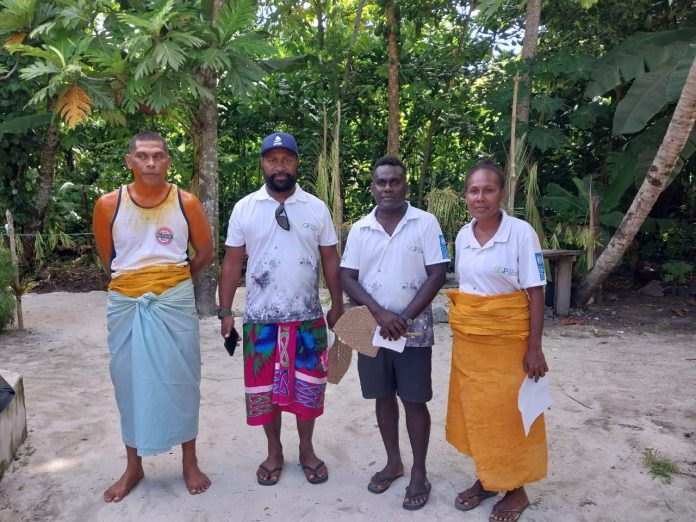
I spoke with Mr. Pae Seivaea, the Chairman of the St Luke Community, who told me, “This project has relieved one of our longest-standing burdens.” The joy and pride on his face said it all. For the first time in decades, the community no longer has to choose between collecting water or going hungry from time spent away from their gardens.

  • Masi and the spirit of resilience

But water is not the only challenge, Tikopia’s resilience runs deep, also in their food systems. Another fascinating aspect of Tikopia’s resilience is the traditional food preservation of a local delicacy known as masi. This fermented cassava pudding is stored in underground pits and is a critical food source, especially during times when the island’s food gardens are destroyed by cyclones or droughts.

This knowledge of food conservation is not merely a cultural practice but a food preservation method in an island where scaricity is common. In a place so isolated from the rest of the world, where the next shipment may not arrive for weeks or even months, these traditional methods of storing food ensure that the islanders can endure harsh times when their regular sources of sustenance are wiped out by natural disasters. This ability to plan and store food long-term, using natural methods, reflects generations of wisdom and survival instinct.

Reflecting on Resilience and Community

As I reflect on my journey, I am filled with awe and admiration for the Polynesian people of Tikopia, whose resilience is evident in every aspect of their lives. They have withstood cyclones, droughts, and the limitations of living in such isolation, adapting to the challenges they face with grace and ingenuity. Their ability to make the most of their resources, preserve their traditions, and live in harmony with nature is a powerful reminder of the strength of the human spirit.

The Tikopia people embody the essence of resilience. They have faced hardships that many of us can hardly imagine and have found ways not only to survive but to thrive in a world that offers few external resources. Their strength, unity, and resourcefulness are an inspiration, and I leave the island with a deep sense of respect and admiration for their way of life.

A hope for connection

As I bid farewell to Tikopia, I can’t help but wish for better connectivity for the island. While the isolation of Tikopia has preserved its unique culture and way of life, improved access to resources—such as regular shipping services and more reliable communication with the outside world—would help the islanders navigate the challenges they face more easily without erasing the beauty of their traditions. This project has shown what’s possible when communities lead and development partners listen and support. The people of Tikopia earned every drop of that clean water through their patience and resilience. It was the first time the Small Grants Project support an initiative in Tikopia. But hopefully it won´t be the last. Because in Tikopia´s quiet strength, I saw not just resilience—I saw hope.

*Article supplied by UNDP Communications

By Teiba Mamu

Small Grants Programme, Solomon Islands

‘Climate change places heavy burden on women of Marovo Lagoon’

0

BY INDY MAEALASIA

THE Impacts of sea-level rise on the local mangrove ecosystem surrounding Marovo Lagoon, Western Province has significantly affected women more than men, according to research conducted by Dr Mary Tahu, a researcher at the Solomon Islands National University (SINU).

The findings shed light on the disproportionate challenges faced by women in resource gathering and food security due to rising sea levels, prolonged tidal patterns, and changing coastal ecosystems.

“When there’s sea level rise, most of these youths and women tend to travel further to get food, and that’s why it becomes a burden and also it affects them more. It is a threat to food security,” she said.

Previously predictable low and high tide cycles have been replaced by prolonged tidal patterns, with high tides lasting up to three months and low tides stretching as long as seven months.

Tahu stressed that these changes have disrupted traditional shell harvesting practices, making it increasingly difficult for women to sustain their families.

“When there’s sea level rise for three months or so, it also causes women, it is hard for them to harvest most of these shells and food. And when they are especially responsible to provide for the family, this affects women more,” she said.

Despite these negative impacts, Tahu said the research also uncovered surprising benefits of climate change for mangroves. Rising sea levels have enabled mangrove seedlings to float and establish roots in new locations, increasing mangrove coverage in areas where they were previously absent.

For feedback, contact: [email protected]

East Honiara constituency aims to strengthen education

0

BY INDY MAEALASIA

East Honiara Constituency has reinforced its commitment to education through its latest support for Vura Community High School.

During a ceremony held this week to hand over material assistance to the school, Constituency Development Officer (CDO) Leslie Lamani highlighted the constituency’s dedication to advancing education.

“In our plans for East Honiara, education is a key area of investment, and we have extended similar support to several schools across the constituency,” Lamani said.

He expressed gratitude to the school principal and administration for proactively reaching out to the constituency office for assistance. “On behalf of the Member of Parliament (MP) Morris Toiraena we considered the school’s request and are pleased to provide support,” he added.

For feedback, contact: [email protected]

‘Not all goods under price control Act’

0

BY JOHN HOUANIHAU

Not all products sold in Honiara shops are subject to the Price Control Act.

Director of the Consumer Affairs and Price Control Division within the Ministry of Commerce, Industry, Labour & Immigration Geoffery Dan Hou’ua said in an interview with Island Sun.

Mr Hou’ua said this when he clarified the concerns raised by citizens regarding the rising prices of goods.

“When we conduct our assessments, we gather all relevant documentation, including records from the shipping companies, suppliers, customs, and our shipping agents. Therefore, we do not simply propose casual figures for businesses to set their prices,” he explained.

He said that the Price Control Act applies specifically to food items, household groceries, and fuel, including LPG, which are essential for consumers.

Hou’ua said the necessity of these items, stating, “For instance, food is a basic need that no one can forgo. Fuels are vital for transportation, and LPG is also important”.

He further said that the price control act also requires precise markup percentages for businesses.

“For instance, companies such as Wholesales, Super Power, Low Price, George Wu, and Sol Tuna etc are permitted a maximum markup of 10%, with a price increase limit of 6% and 13% for retail shop,” Hou’ua said.

He said that the Division changes prices twice a year, with one change typically published in the gazette around February or March and another around July or August.

“The most recent gazette was issued on Thursday, 20 March 2025. The delay was due to the procedural requirements involving the Attorney General’s chambers, the Minister, and the Prime Minister’s Office before publication,” Hou’ua explained.

Hou’ua also mentioned that numerous factors contribute to price inflation.

“This may include increases in prices of products overseas, shipping or transportation costs, among others,” he added.

For feedback, contact: [email protected]